
UPDATE 6 p.m.: This story has been updated to reflect the size of the fire has been adjusted to an estimated 800 acres and that it remains 0% contained.
For much of the summer, residents in Pinedale watched smoke drift into western Wyoming from fires burning hundreds of miles away.
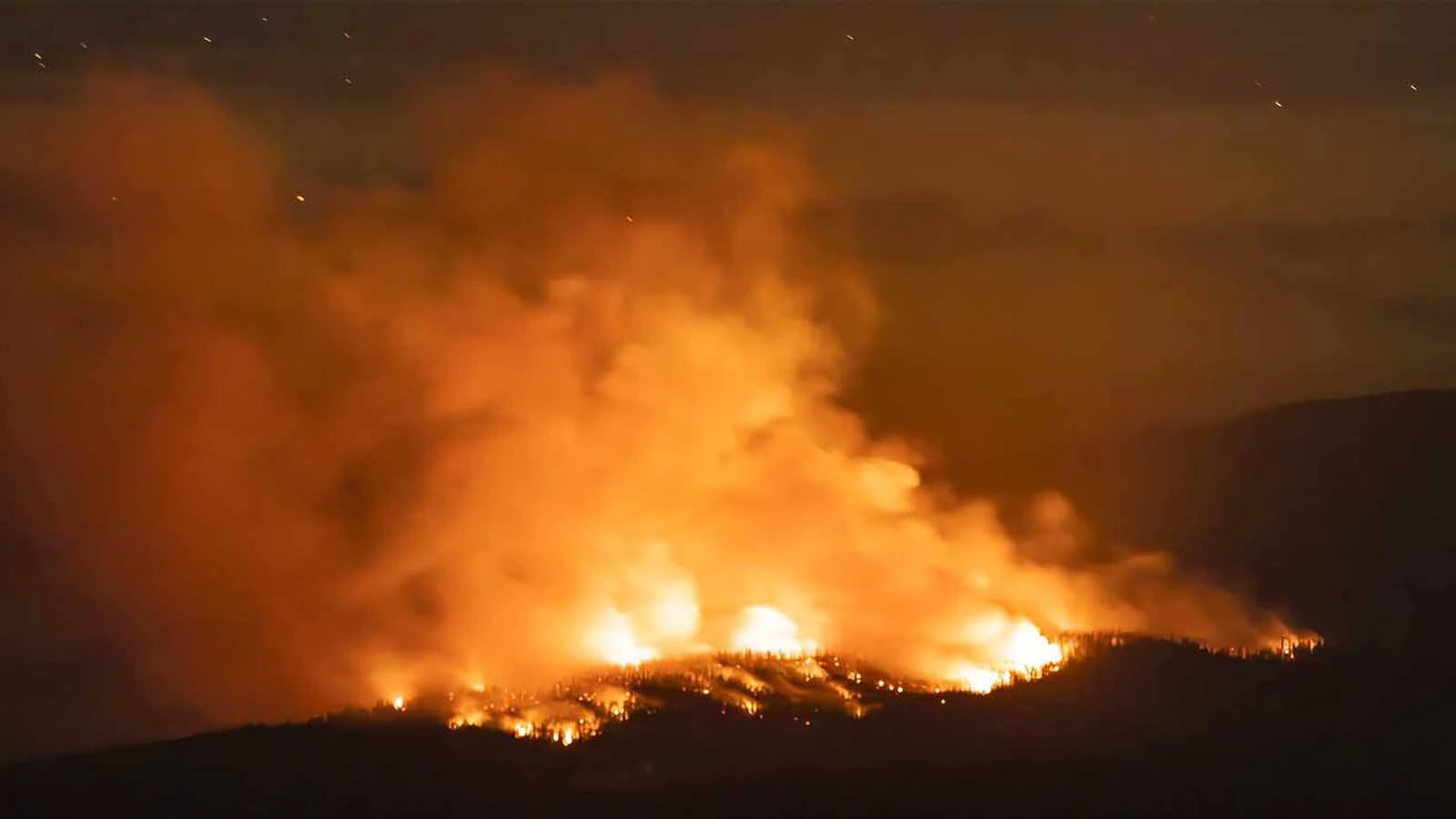
Tuesday night, the smoke finally came from their own backyard.
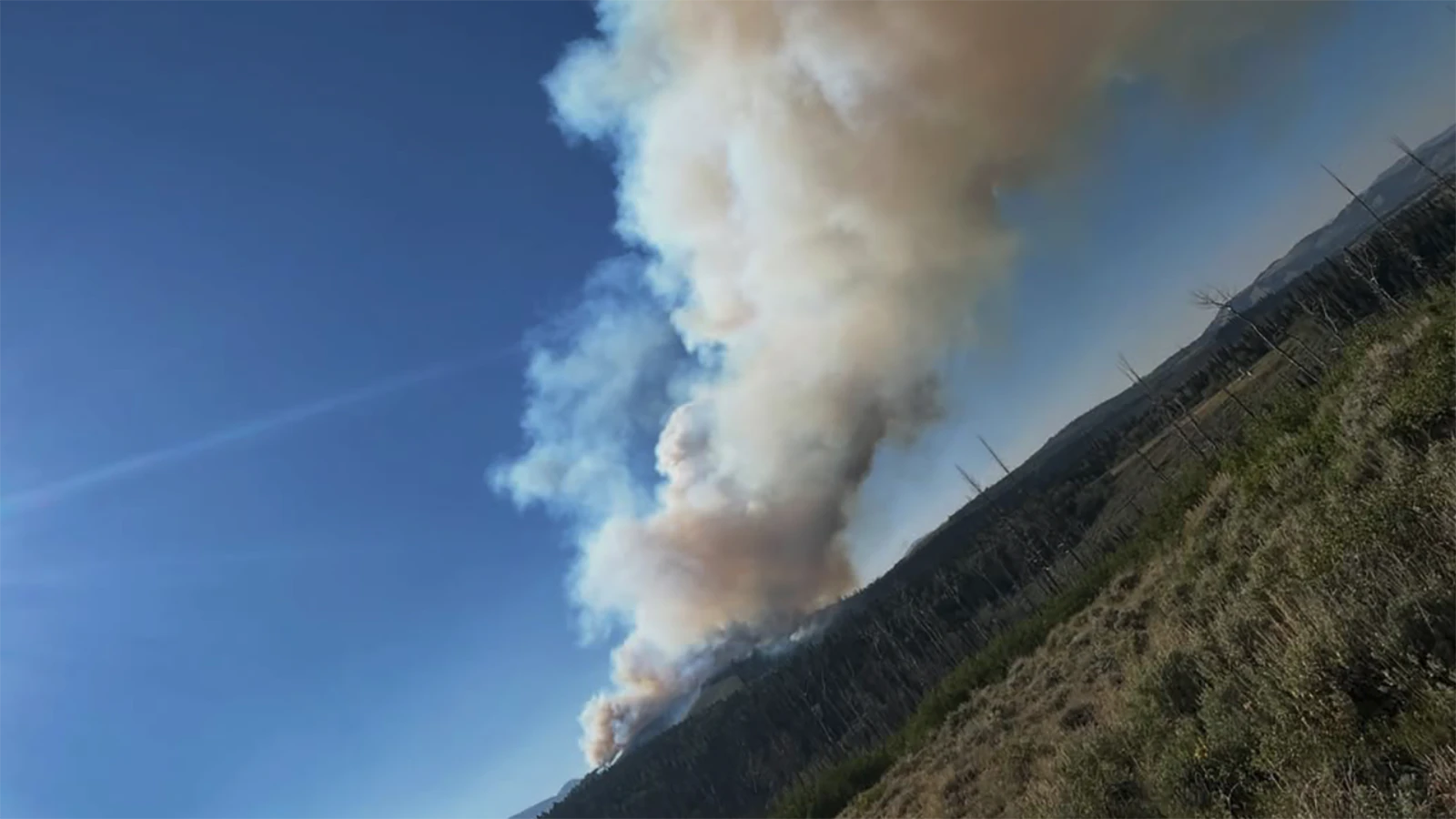
"It was our first plume of the summer," longtime Pinedale wildlife photographer Dave Bell told Cowboy State Daily. "We've had smoke off and on, and the smoke's been thicker lately from other places, but this is the first smoke plume we've had in our surrounding mountain ranges all summer long. That's always a sad sight to see."
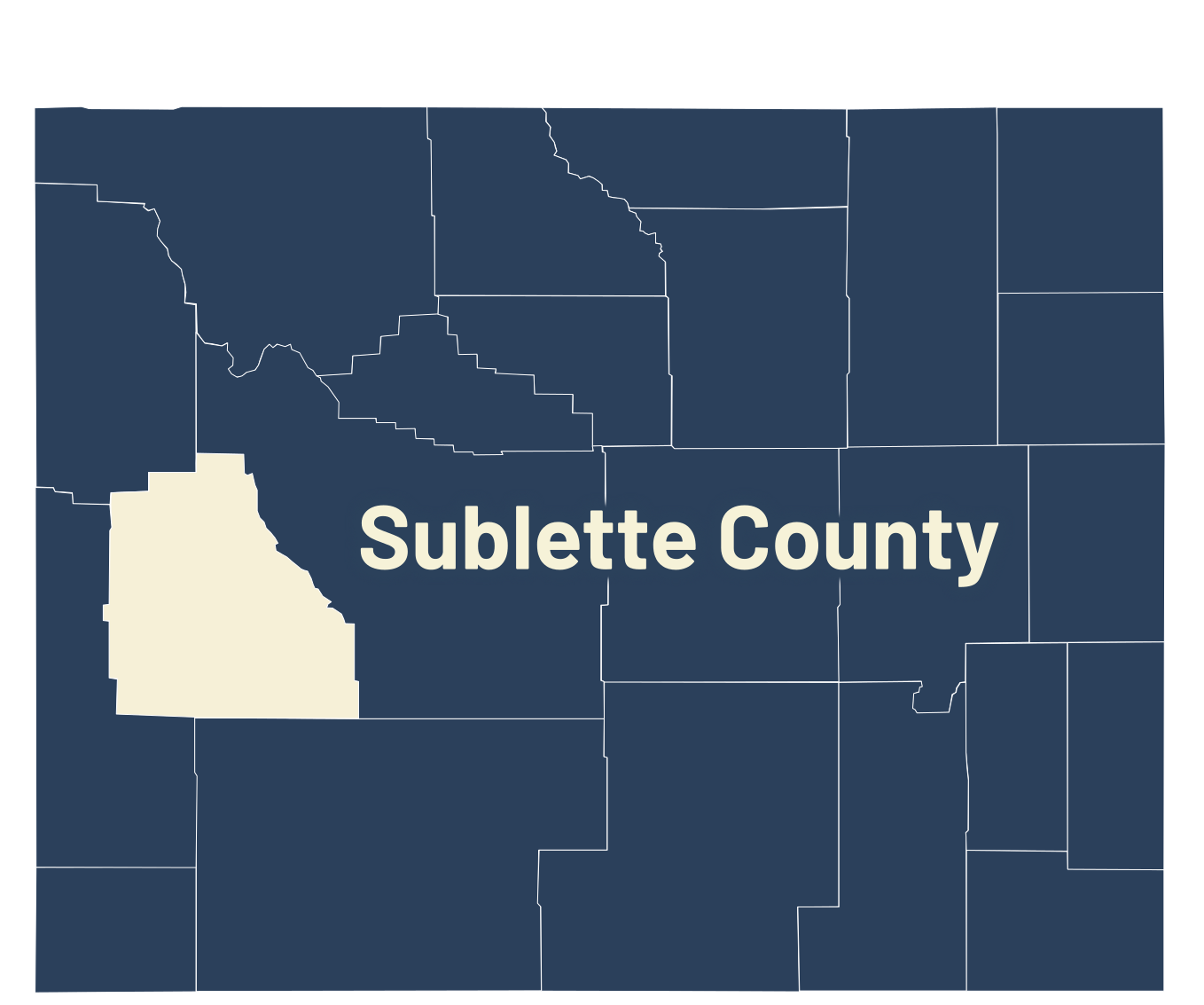
The Bare Fire, burning north of Bare Pass and east of Bare Creek on the Big Piney Ranger District of the Bridger-Teton National Forest, grew to an estimated 800 acres Tuesday after exhibiting active fire behavior that included torching and spotting.
It's so far 0% contained.
The wildfire also spread from national forest land onto adjacent Bureau of Land Management property before moderating during the early evening, says the U.S. Forest Service.
The cause remains under investigation.
Response Escalates
As the fire grew, the firefighting response expanded with it.
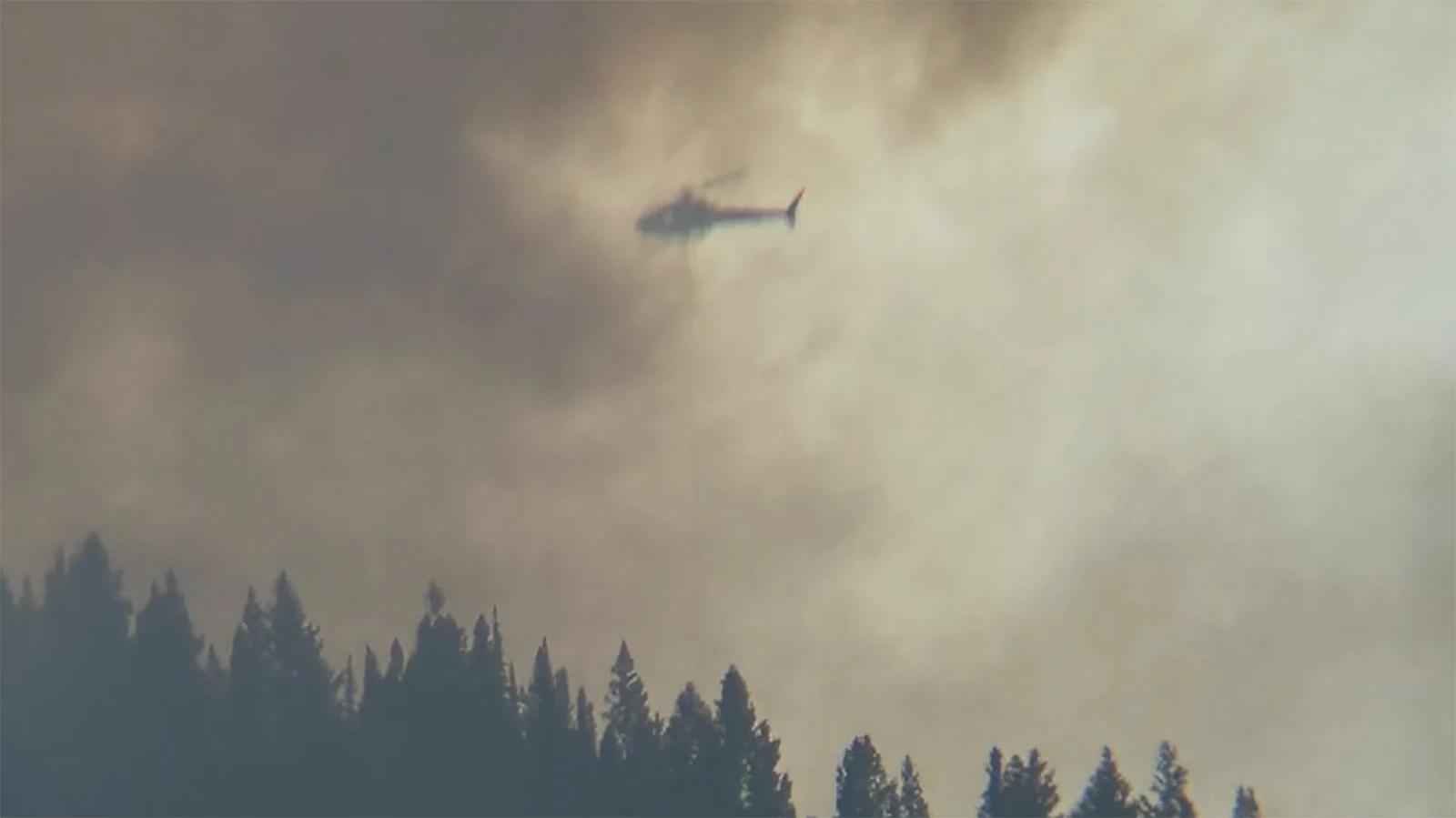
Resources assigned to the fire include one Type 1 helicopter, two Type 3 helicopters, smokejumpers, a suppression module, one water tender, one Type 3 engine, three Type 6 engines and additional firefighting personnel.
The U.S. Forest Service has also ordered a Type 3 Incident Management Team, a multi-agency organization of wildfire specialists used when a fire becomes more complex than local forest personnel can manage alone.
Fire managers are using both direct and indirect suppression tactics.
Direct attack involves engaging the fire's active edge to stop its spread, while indirect confinement means firefighters work farther away from the flames to steer or contain the fire using terrain and firelines.
Wednesday, crews planned to strengthen an established anchor point before constructing a direct fireline along the north and south flanks of the blaze. Helicopters will continue dropping water to slow the fire's spread along its eastern edge.
The public is being asked to avoid Bare Creek Road (Forest Service Road 10046) and South Cottonwood Road (Forest Service Road 10050) while firefighters work. A forest closure order is expected.
Stage 1 fire restrictions remain in effect throughout the Teton Interagency Dispatch area, including the Bridger-Teton National Forest, Grand Teton National Park and the National Elk Refuge.
Fire danger remains rated High, meaning new fires can start easily and spread quickly.
Double-Edged Sword
Bell, who has spent decades photographing Wyoming wildlife and landscapes, said the fire is burning in one of his favorite corners of the state.
"The Wyoming Range is sort of Wyoming's best-kept secret," he said. "It's just a beautiful, beautiful area."
Unlike the neighboring Wind River Range, the Wyoming Range receives fewer backpackers because it lacks a federally designated wilderness area, Bell said.
The thick timber also provides abundant fuel.
"You can tell the healthy forest from the old forest," Bell said, noting that previously logged areas have generally regenerated well. "A lot of fuel over there, as there is everywhere, and once they start, they're hard to put out." f
Although watching smoke rise over the Wyoming Range is difficult, Bell said wildfire also plays an important ecological role.
"Fire is a tragic event when it occurs, and it's kind of ugly for a while, but the net result is good for everything," he said.
He said fire clears dead and downed timber, opens wildlife migration corridors and encourages new vegetation, including aspens, to sprout.
"Fire's ugly. It's dangerous, but you see some of these old burn scars with the kinds of vegetation that's coming up in them. It's kind of just how it works," he said.
Bell quickly added that he wasn't cheering for the fire.
"I'm not saying I'm welcoming this. Don't get me wrong," he said. "It's not all bad either."
Watching The Mountains
The Bridger-Teton National Forest and the U.S. Forest Service did not return Cowboy State Daily's requests for additional information before publication.
Based on the fire's location, Bell said he is not especially concerned about homes but noted ranchers with cattle grazing allotments in the area are likely watching developments closely.
Otherwise, he described the surrounding landscape as "just timber pretty much."
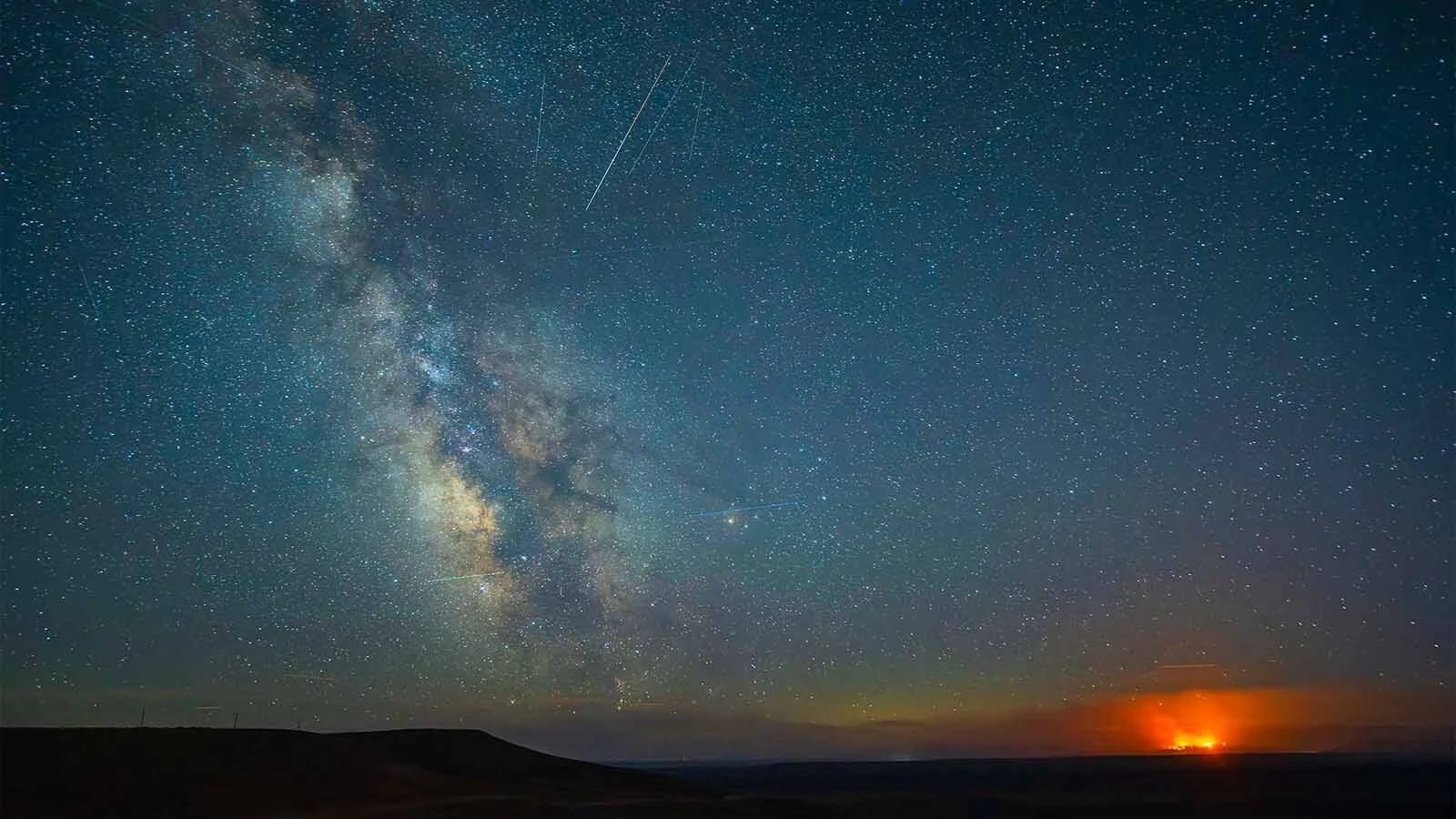
Tuesday night, Bell drove out to photograph the fire beneath a clear Wyoming sky. While changing lenses to capture the growing blaze, he noticed something else.
"The Milky Way sort of dominates the sky," he said. "Then I got a meteor in the middle of it."
By Wednesday, the mountains themselves had disappeared from view.
"I can't see the Wyoming Range from my house this morning," Bell said. "It's completely gone."
Kolby Fedore can be reached at kolby@cowboystatedaily.com.


