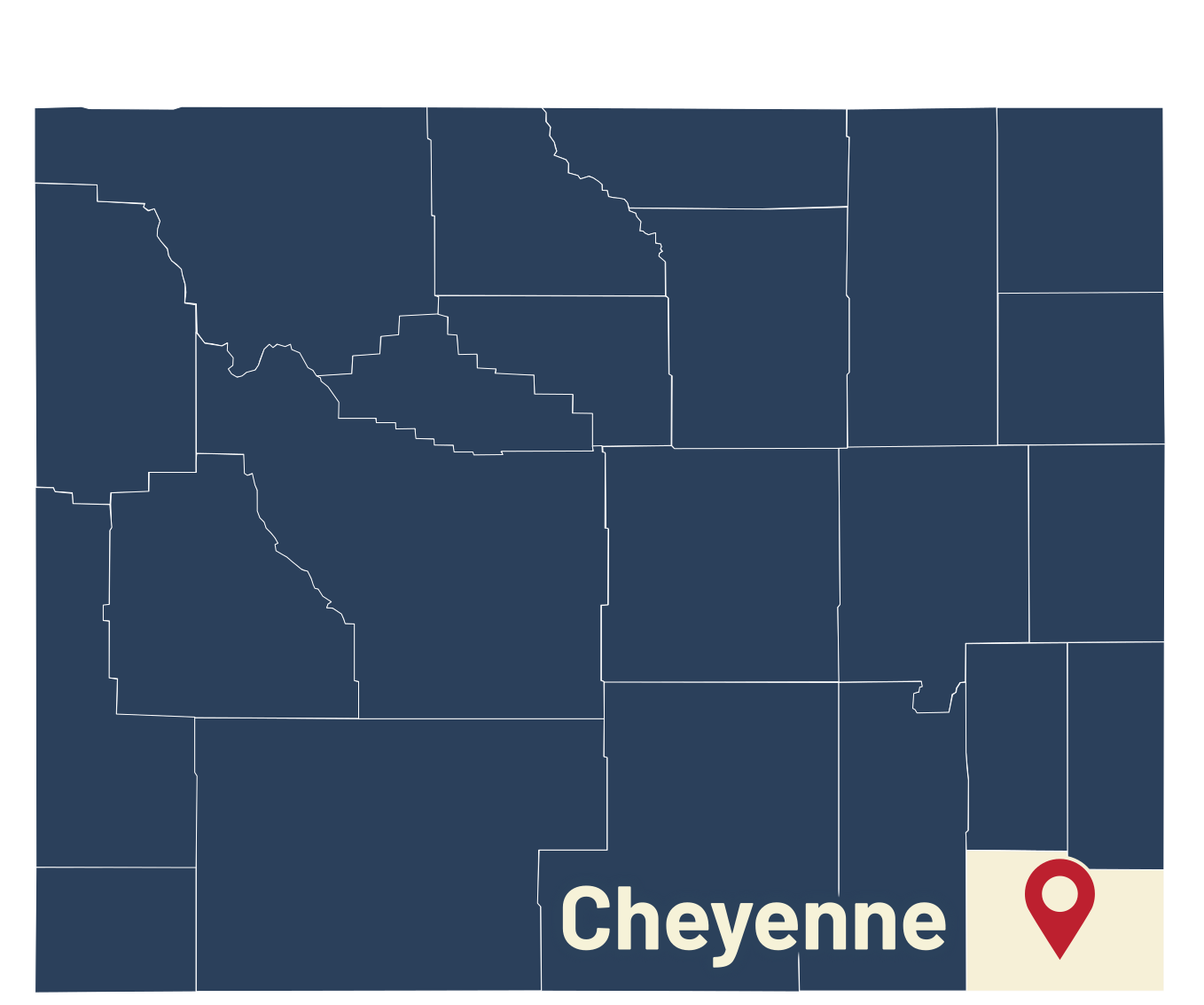
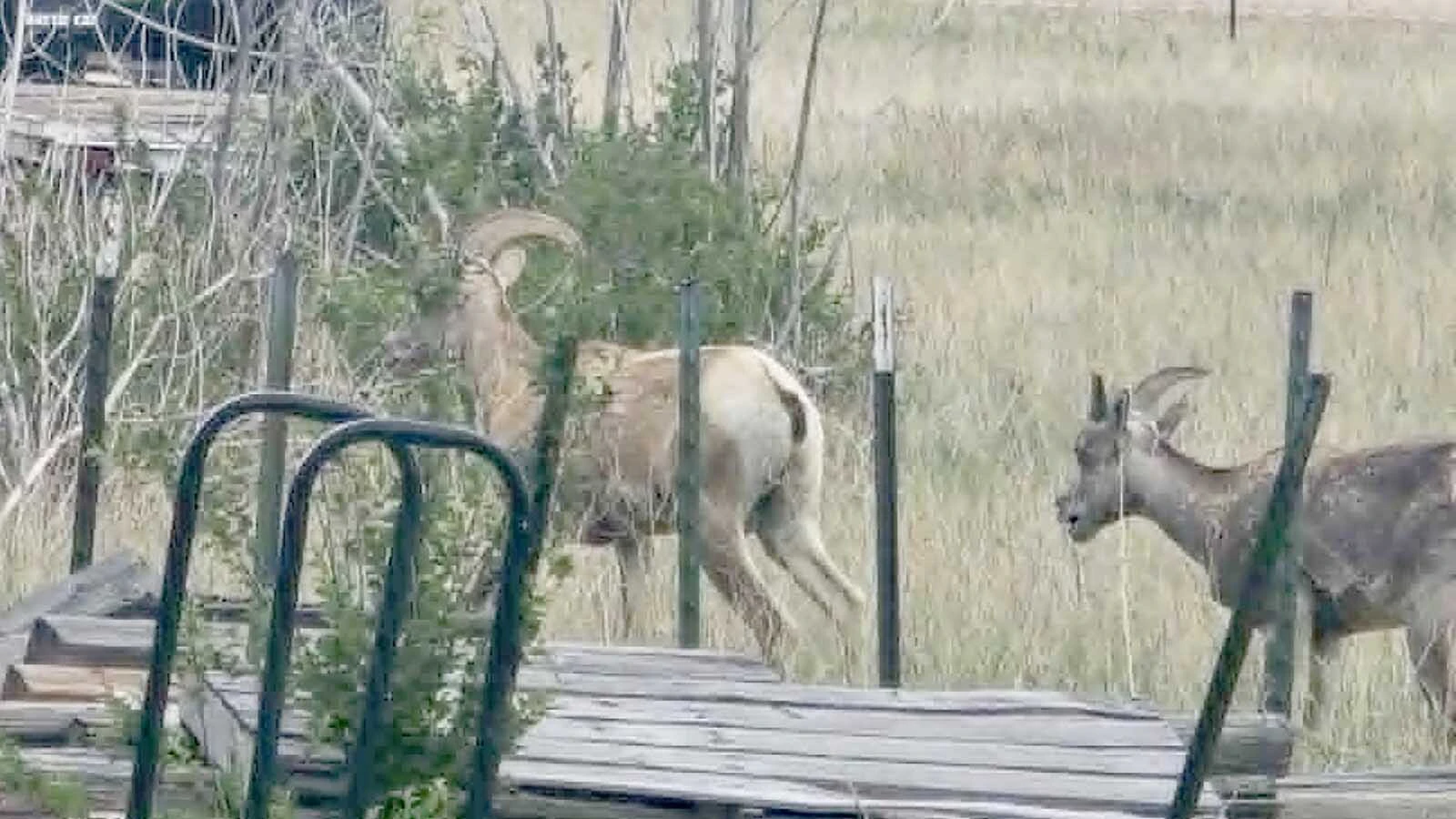
A pair of young Rocky Mountain bighorn sheep rams that wandered into Cheyenne were killed by game wardens out of concern that they could catch pneumonia from domestic livestock and transmit it back into wild sheep herds.
The rams, thought to be between 1 and 2 years old, were killed last week, Game and Fish spokeswoman Amanda Fry stated in a Monday email to Cowboy State Daily.
Meat from the rams was donated to Wyoming first lady Jennie Gordon’s Food from the Field program through the Wyoming Hunger Initiative.
Bighorn sheep can pick up diseases from domestic stock and spread them back into their herds with devastating effects, according to Game and Fish.
Pneumonia is the disease of greatest concern, Fry said.
“We do not know which area/herd these two came from,” she said. "The closest two wild sheep herds to Cheyenne are west of Scottsbluff, Neb., and in the Iron Mountain area (in southeast Wyoming)."
Biologist and wildlife researcher Jack States lives near a bighorn sheep herd in Sinks Canyon in the Lander area.
He told Cowboy State Daily that he doesn’t agree with the Game and Fish policy of killing bighorns that might have come into contact with domestic sheep or other livestock.
“My opinions are contrary to the current management policy,” he said, although he’s willing to consider whether or not long-term data reveals “that management policy actually works.”
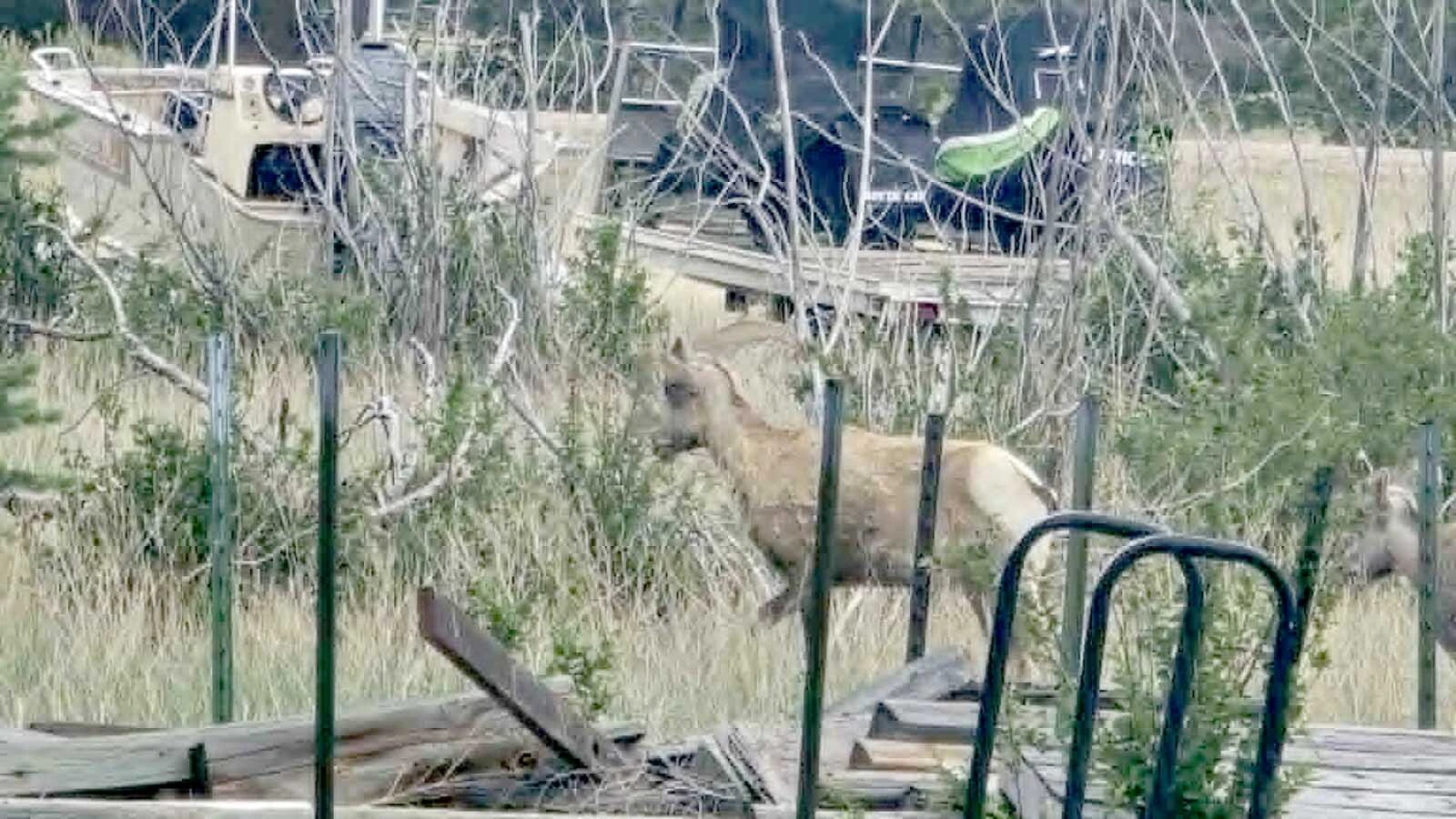
Spotted The Day Before
Cheyenne resident Valarie Grace told Cowboy State Daily that she spotted the rams late on June 7 in the yard of her parents’ house on the outskirts of Cheyenne.
“We have no idea where they came from. They took off after we spotted them and they were still going when we last saw them,” she said.
She said that at the time, she was worried that the rams might run out onto Pershing Boulevard and get struck by vehicles.
States said that young bighorn rams can have a propensity to wander, usually because they’re seeking to stake out new territory.
It’s unlikely that the rams were planning to stay in Cheyenne, Fry added.
“Suitable habitat for bighorn sheep tends to be steep, open, higher elevation, rocky slopes,” she said. "While there have been occurrences in the past of young sheep showing up in lower elevation municipalities in southeast Wyoming over the last couple of decades, it is not common.
“These sheep were likely traveling on a stream corridor seeking out suitable habitat and reached Cheyenne city limits."
Pneumonia No Joke For Bighorns
While bighorn sheep are hardy enough to survive Wyoming’s worst weather in its roughest terrain, they are highly susceptible to disease.
Pneumonia outbreaks, sometimes transmitted from domestic sheep, can be bighorn conservationists’ worst nightmare. In some cases, entire herds are nearly wiped out.
The legendary Ramland Whiskey Mountain bighorn herd near Dubois is a fraction of what it once was, having struggled for decades with pneumonia infections that just won’t go away.
Game and Fish and others have concluded that letting potentially infected wandering bighorns return to the wild isn’t worth the risk, Fry stated.
“If suspected commingling has occurred, Game and Fish will euthanize the wandering bighorn sheep to protect the rest of the wild herd from disease, as is outlined in the statewide Bighorn Sheep/Domestic Sheep Working Group Plan,” she stated.
Is There Another Way?
States admires the Sinks Canyon bighorn herd and was a huge fan of Bam-Bam the ram, who gained a legendary reputation for his love of people, peanut butter and ramming visitors’ vehicles.
States recalled an instance of bighorns from the Sinks Canyon herd being euthanized after suspected exposure to domestic sheep.
"I did complain about that, because their (Game and Fish’s) policy was to euthanize first and test later,” States said. “I really wanted them to test first and then euthanize, if those diseases were present in those wild sheep."
In some instances, wandering bighorns could be quarantined, States said.
He thinks that “capturing them until agents could determine their origin and health status” might be better than killing bighorns.
Katie Cheesbrough, executive director of the Wyoming Wild Sheep Foundation, told Cowboy State Daily that the policy of euthanizing sheep that might have had close contact with livestock was “based on the best available science” when it was implemented.
Newer technology, such as GPS wildlife tracking collars, might not make that necessary in every instance, she said.
However, Game and Fish made the right call with the Cheyenne rams, Cheesbrough said.
“Game and Fish can’t know the travel path they took along the way and they can’t know where they were headed,” she said.
So, euthanizing the rams “was the prudent thing to do,” she added.
Mark Heinz can be reached at mark@cowboystatedaily.com.