LARAMIE — The closure of any rural Wyoming hospital is “an economic earthquake” in a rural state that already has huge holes in its access to health care.
That’s the message Natrona Collective Health Trust (NCHT) CEO Beth Worthen had Friday during a statewide Healthcare Policy Summit at the Hilton Garden Inn.
If that’s true, Wyoming could have up to six tremors — three within the next two to three years — if hospitals now at risk of closure actually shut their doors.
“It doesn't just mean patients drive farther. It means the employer anchoring that town's economy disappears,” said Worthen. "The payroll that sustained the main street, the school funding, the housing market — gone.”
Worthen said she’s worried that the future of these institutions may be impacted by an initiative Wyoming voters will see on their ballots in November’s general election, when they will be asked to exempt 50% of a primary residence’s assessed value from property taxes.
Worthen noted that many of Wyoming’s rural hospitals and the 18 hospital districts statewide depend on local property tax revenue to operate.
They are already dealing with the loss of 25% of property tax revenue that the Legislature approved in 2025, she said.
"That (property tax) revenue is part of what keeps emergency departments open, labor and delivery wards staffed, and the lights on in communities where no private operator would stay,” said Worthen.
NCHT, Wyoming’s largest private foundation, is not taking a position on the ballot initiative.
But Worthen said voters need to understand that a significant reduction in property tax revenues in a community where a hospital is already operating on thin margins “isn’t a separate question from rural hospital sustainability. It's the same question.”
Thin Margins
To understand how thin hospital margins really are, Jeff Sollis, CEO of St. John’s Health in Jackson, shared how much his hospital receives in payments.
Sollis said 60% of the payer mix is from Medicare and 6% from Medicaid. A total of 29% is from health insurance payments, and 5% is self-paid by patients.
"We get paid around $90 million from Medicare and our costs are $120 million,” he said. “Medicaid reimburses us $2.8 million for $10 million of work. We lose about $43.7 million a year from providing services.”
Sollis said it’s only when private insurance pays that St. John’s is able to make up some of the difference, which annually leaves the hospital 5% in the hole.
“We have to figure out how we get to a 5% gain so we can reinvest in our people, our facilities, and technology,” he said. “So, it’s a very challenging set of circumstances.”
Maternity Desert
About 22% — more than one-fifth — of Wyoming is considered a “maternity desert” where communities don’t have birthing facilities or an obstetrical physician, the Wyoming Department of Health reports.
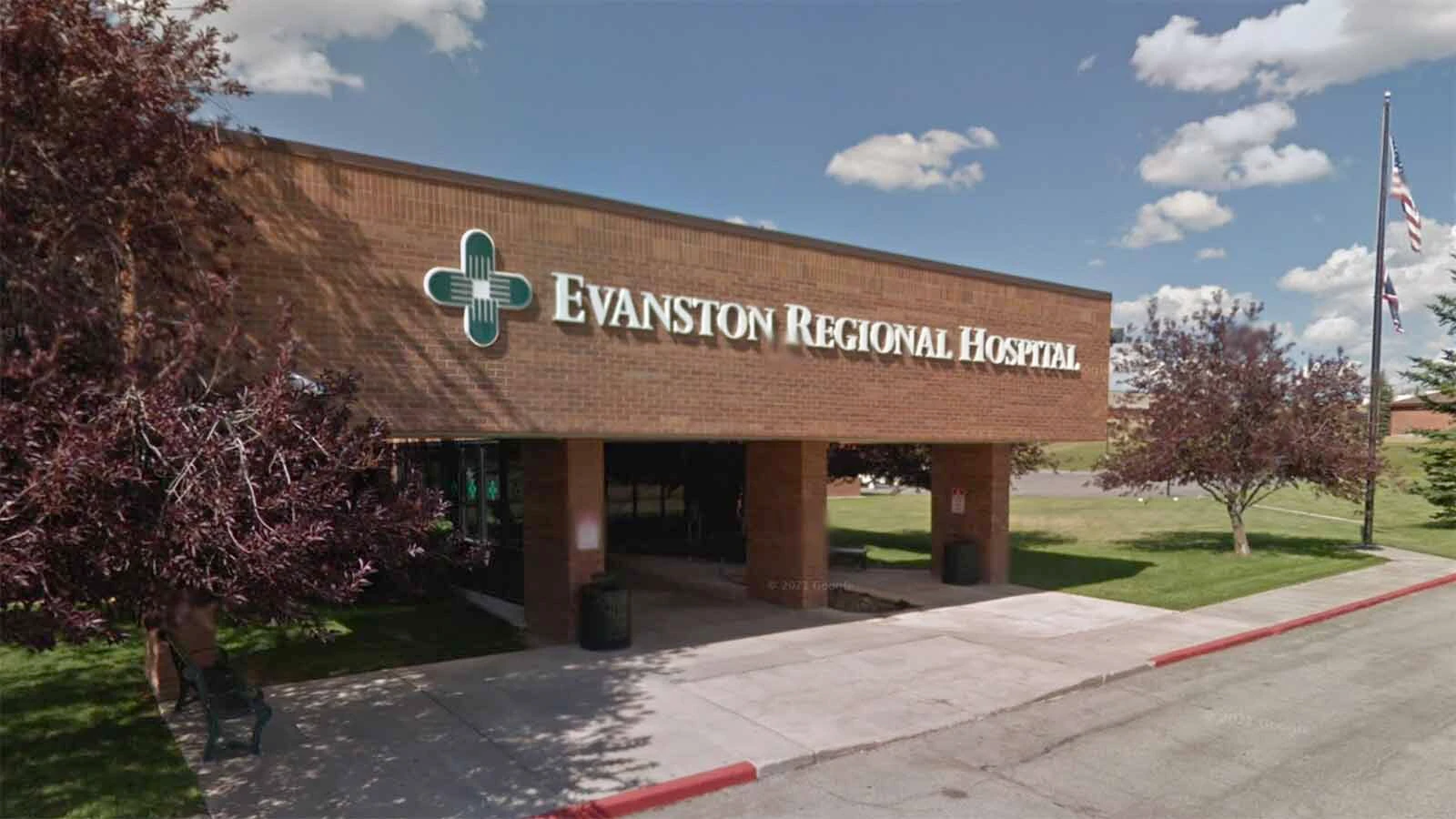
Since 2022, hospitals in Evanston, Rawlins, Kemmerer and Wheatland have closed their labor and delivery wards, Worthen said.
Wyoming now has 16 birthing hospitals across 97,000 square miles, she said, adding that hospitals find it exceptionally difficult to recruit and retain OB-GYNs.
Casper, a regional hub for health care services, had six OB-GYNs 18 months ago. Now there are two.
Marguerite Herman of Healthy Wyoming, which has long advocated for Medicaid expansion that the Legislature has repeatedly elected not to do, attended the summit and addressed the maternity desert issue.
“It’s one of those things where you have high fixed costs and low volume,” she said. “It’s just not going to pencil out for a hospital in Rawlins to have a full maternity ward.
“But at the same time, is this something that the state owes its residents, to not have to travel more than 100 miles to deliver a baby in the freezing winter?
Herman said the state may need to find supplemental money, whether it’s from the state or federal governments, to provide critical birthing centers in rural areas.
Worthen openly wonders if Wyoming officials have the political will to do that.
“Other states, like Alaska, are doing things better than we are, and they actually have more challenging geography than we have,” Worthen said. “We need the will to put the pieces together to keep our children here.”
Worthen, a sixth-generation Wyomingite, said her son Connor is a game warden in Saratoga, and his wife Kylie just graduated from the University Law School.
She said they want to have children, which fills Worthen “with a combination of joy and dread.”
The nearest obstetrician to Saratoga is in Laramie.
Worthen said that in the summer, it’s a lovely 45-minute drive over the Snowy Range, but in winter the trip must be made on Interstate 80, and the drive time at least doubles.
“A woman in her ninth month is not calculating that drive in ideal conditions,” Worthen said. “Two of my three children have left Wyoming for opportunities they couldn’t find here. I want to see my grandchildren born here."