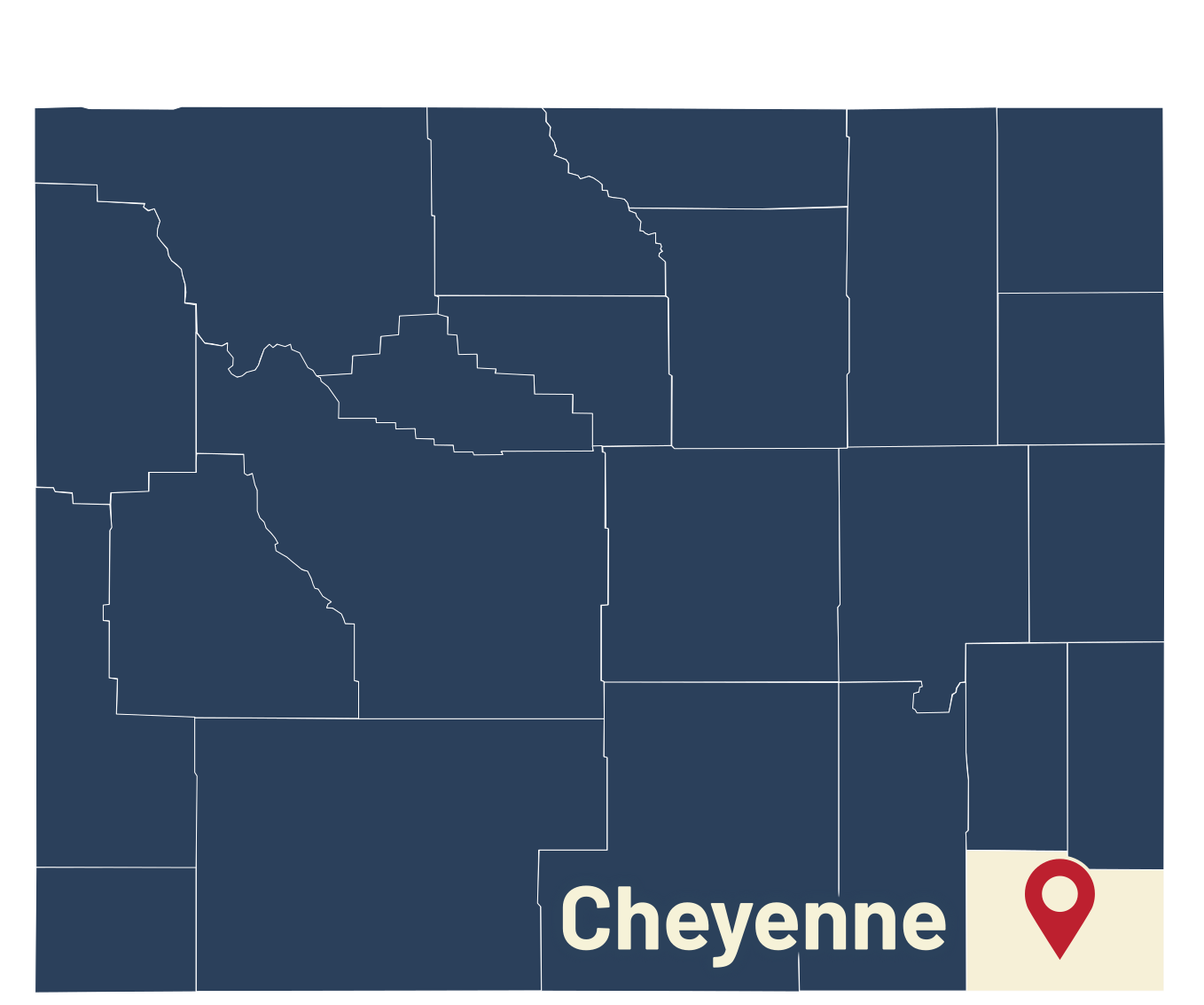
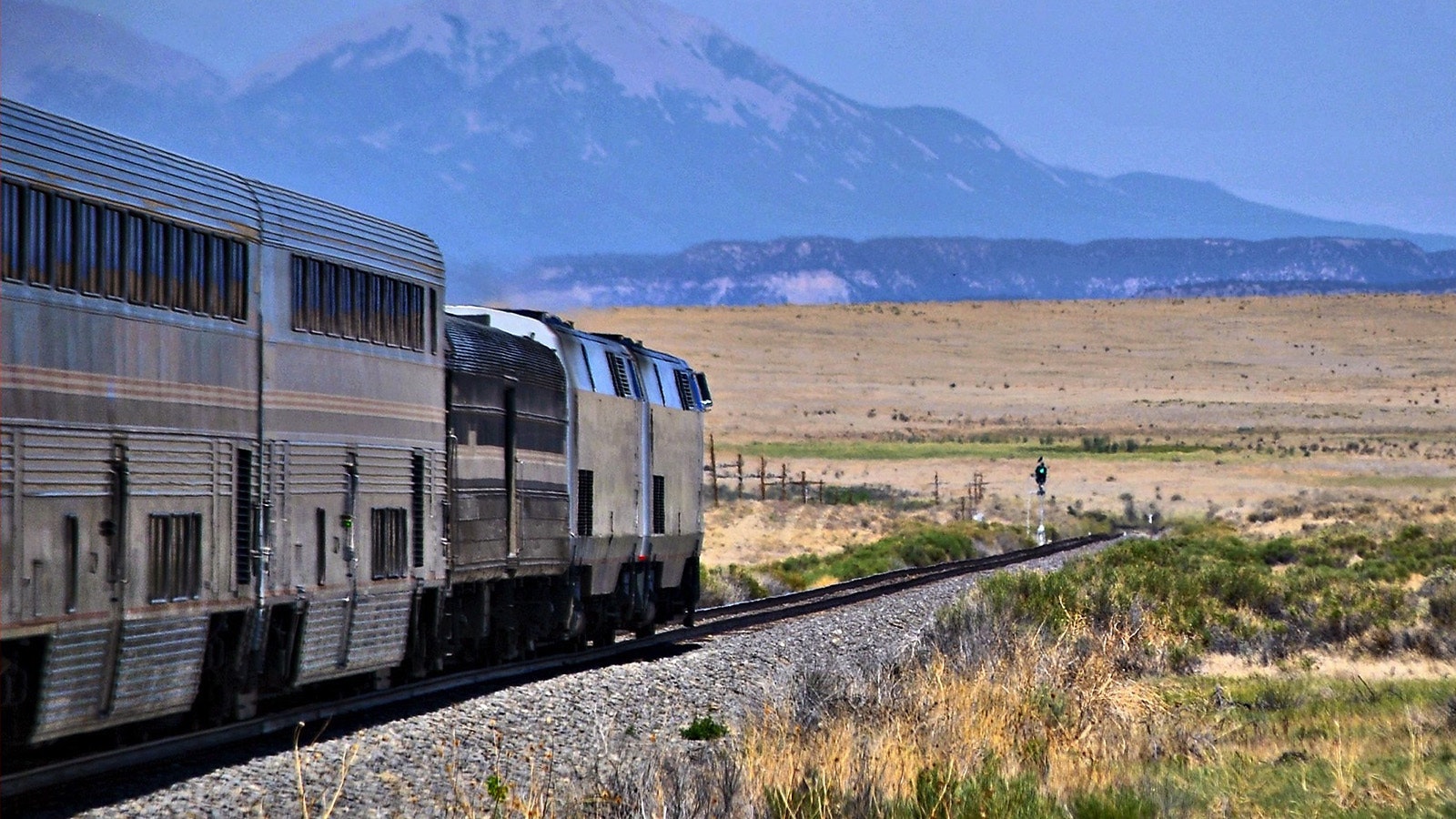
The addition of Cheyenne to a proposed Colorado passenger rail project has longtime boosters in both states more confident than ever the service will happen.
The reasons for such optimism over bringing passenger rail service to Wyoming are two-fold.
First, the Front Range Passenger Rail district is hopeful it can build an effective infrastructure, unlike inherent problems that doomed previous efforts.
Meanwhile, the economic case for Cheyenne officials and residents to go all in on the proposed Colorado rail system is stronger because the benefits to the capital city taking advantage of increasing Front Range population appear clear.
Still, while signs for FRPR success in Colorado are encouraging for starting in 2029, supporters say, both the district and Cheyenne officials agree expansion to the north won’t happen unless Wyoming develops a funding system to support it.
Wyoming and South Dakota are the only two contiguous states with no passenger rail service. Wyoming hasn’t had service since the Pioneer route was discontinued in 1997, though Amtrak serves Laramie, Rock Springs and Evanston with buses.
Never Say Never
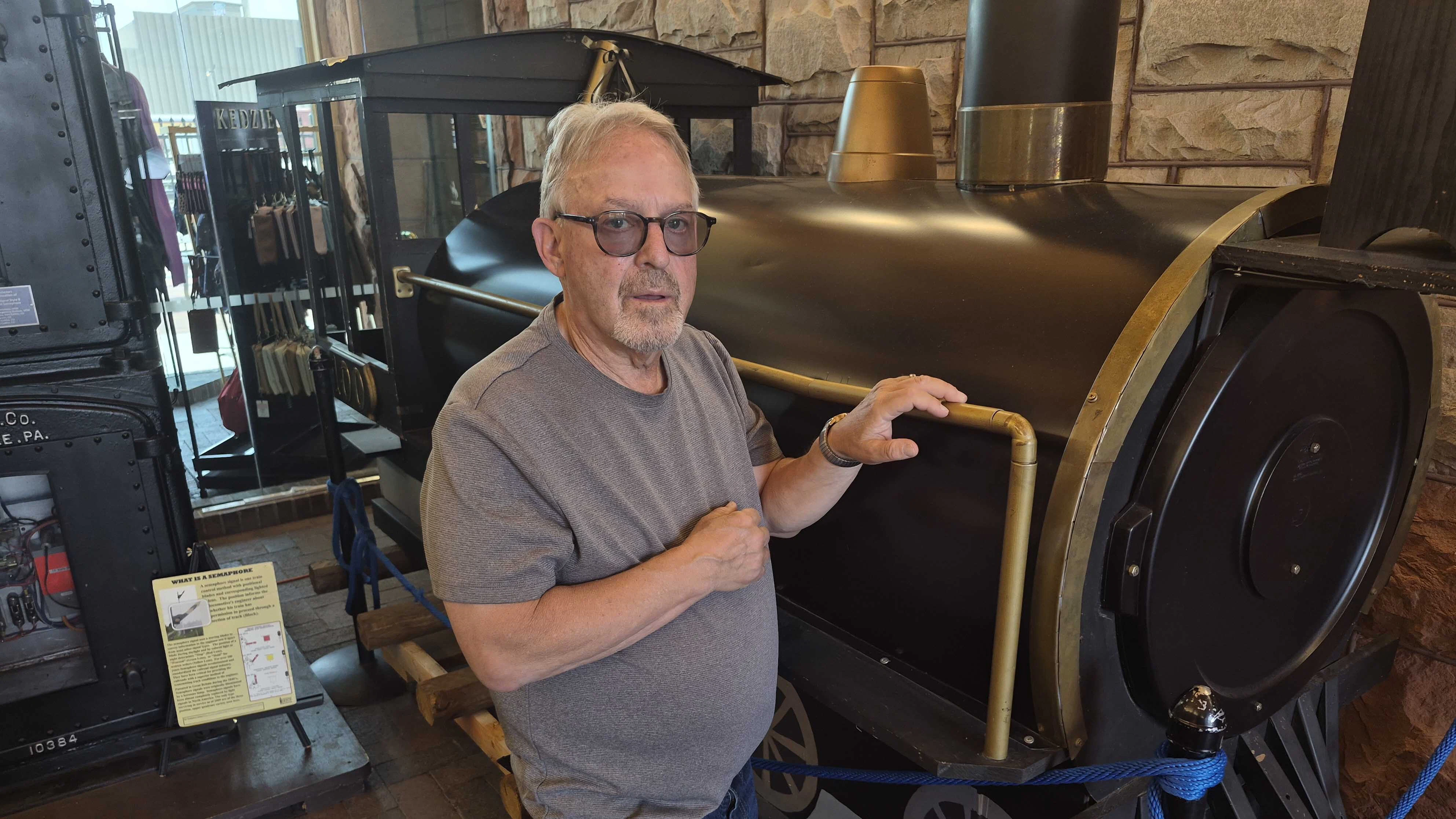
Never Say Never, a Cheyenne group determined to make it happen, has been meeting with FRPR officials for the past three years. It also is trying to solicit interest from state lawmakers, the Wyoming Department of Transportation and the City of Cheyenne.
One member of the group, Michael Rudolph of Cheyenne, was a NASA engineer who worked on the 2020 Mars rover project. His job was finding bugs in the software that directs the precise movements of the camera that serves as the eyes of the vehicle.
“If we can go 140 million miles to Mars, we ought to be able to go 45 miles from Cheyenne to Fort Collins,” quipped Steve Borin, a regional business developer and the founder of Never Say Never.
“Cheyenne is listed as a potential future extension, but Colorado has no political incentive to push north,” added Borin, a regional business developer. “Their taxpayers are not paying for Wyoming’s benefit.”
Once the initial phase is up and running between Denver and Fort Collins, he said, Cheyenne must use its resources to join the FRPR district.
“If we don’t, all we’re going to get is a bus ticket to the border,” Borin said.
Colorado Project Optimism
James Flattum of the FRPR district is clearly hopeful.
“I think there’s a strong consensus that a future connection to Cheyenne is full of potential,” he said. “When you look at the distance between Fort Collins to Cheyenne, it’s really reachable.”
Another positive aspect, he added, is that north of the Denver suburb of Westminster all of the existing track to be utilized is owned by the Burlington Northern Santa Fe Railroad.
“We have such a strong working relationship with them,” Flattum said.
Oddly, the downturn of Wyoming’s coal production and moving it by train is working in Cheyenne’s favor.
“What has changed in the world over the last 20 years is there are significantly fewer coal trains running on this alignment,” Flattum explained. “BNSF’s strategy is to send those trains on a different alignment to Nebraska from Denver.”
A major milestone was reached in the FRPR’s plans, he added, when the group recently released its delivery plan, a document intended to show the full picture of its short- and long-term vision.
“We’ve got to make sure that we’ve got a ‘spine’ in Colorado that really connects our core centers and this kind of first act that we’re contemplating,” Flattum said. “And the more successful we are in securing a reliable and frequent service here in Colorado, the easier and quicker it’s going to be for us to expand to Wyoming, and south to Trinidad, Colorado, and perhaps Albuquerque, New Mexico.”
Flattum said FRPR is taking an incremental approach to keep costs low, starting with three trains a day between Fort Collins and Denver over the next three years using revenues voters approved in 2024.
The FRPR Board will make a decision by the end of August whether to pursue a sales-tax initiative for Colorado’s general election in November.
“We’d be able to fund up to 10 trains a day between Fort Collins and Denver, and then eight trains a day to Pueblo with a 0.333% sales tax,” Flattum said.
That is expected to generate about $295 million annually.
Bedroom Community?
The Front Range continues to grow and housing costs also are rising fast. Fort Collins is considerably more expensive than Cheyenne.
“As Denver's metro expands northward, Cheyenne becomes an increasingly attractive bedroom community — if the commute is solved,” Borin said. “Without rail, it stays out of reach for anyone working in Fort Collins.”
According to a Never Say Never fact sheet, the cross-border commuter market already exists at a meaningful scale:
• Approximately 7,100 Colorado residents commute into Wyoming for work — nearly three times the number going the other way.
• About 1,600 workers from Larimer and Weld counties (Fort Collins/Greeley) commute specifically to Laramie County each day by car.
• Roughly 20% of Cheyenne's workforce commutes from outside the city, including northern Colorado.
Borin said a University of Wyoming economist has noted that Wyoming's economy would be stronger if those Colorado commuters lived in Wyoming.
“They’d spend their paychecks on Wyoming mortgages and groceries instead of Colorado ones,” Borin said.
Never Say Never claims that by spending between $300 million to $400 million on infrastructure, Wyoming would get about $1.4 billion back over the next three decades in tax revenue and economic activity.
“The mechanism is not a subsidy,” Borin said. “It's removing the coordination barrier — cross-state planning, zoning authority — that only the government can remove, then letting market forces do the rest.”
Borin maintained that “the window to act cheaply is now.” He estimated land near a future Cheyenne station can be acquired today for $10,000 to $20,000 per acre. After a rail announcement, he predicted, it will cost five to 10 times more.
“A $2 million to $4 million land acquisition today is the most asymmetric public investment Wyoming could make — small downside, very large upside, and it keeps all of its options,” he said.
Loving The Depot
Flattum said the FRPR is impressed with Cheyenne’s preservation of its historic Union Pacific Depot. He said it’s an example of how forward-thinking Cheyenne is.
“Whenever we come up and visit, the depot gives us a huge amount of inspiration,” the FRPR official said. “How cool would it be if we can work together to bring trains back to this station?
“Really, all you’re going to have to do is build a connector track to get to the station facility,” Flattum added. “If Cheyenne specifically wants in, whatever is going to be possible under Wyoming law and Wyoming politics, if they pass funding as well, we do have a very realistic path in terms of engineering and project execution.”
He described expansion to Wyoming as "very doable, but it’s really going to have to come down to voters in the Cheyenne metro area — do they fundamentally want it?”
Kerry Drake can be reached at: Kerry@CowboyStateDaily.com