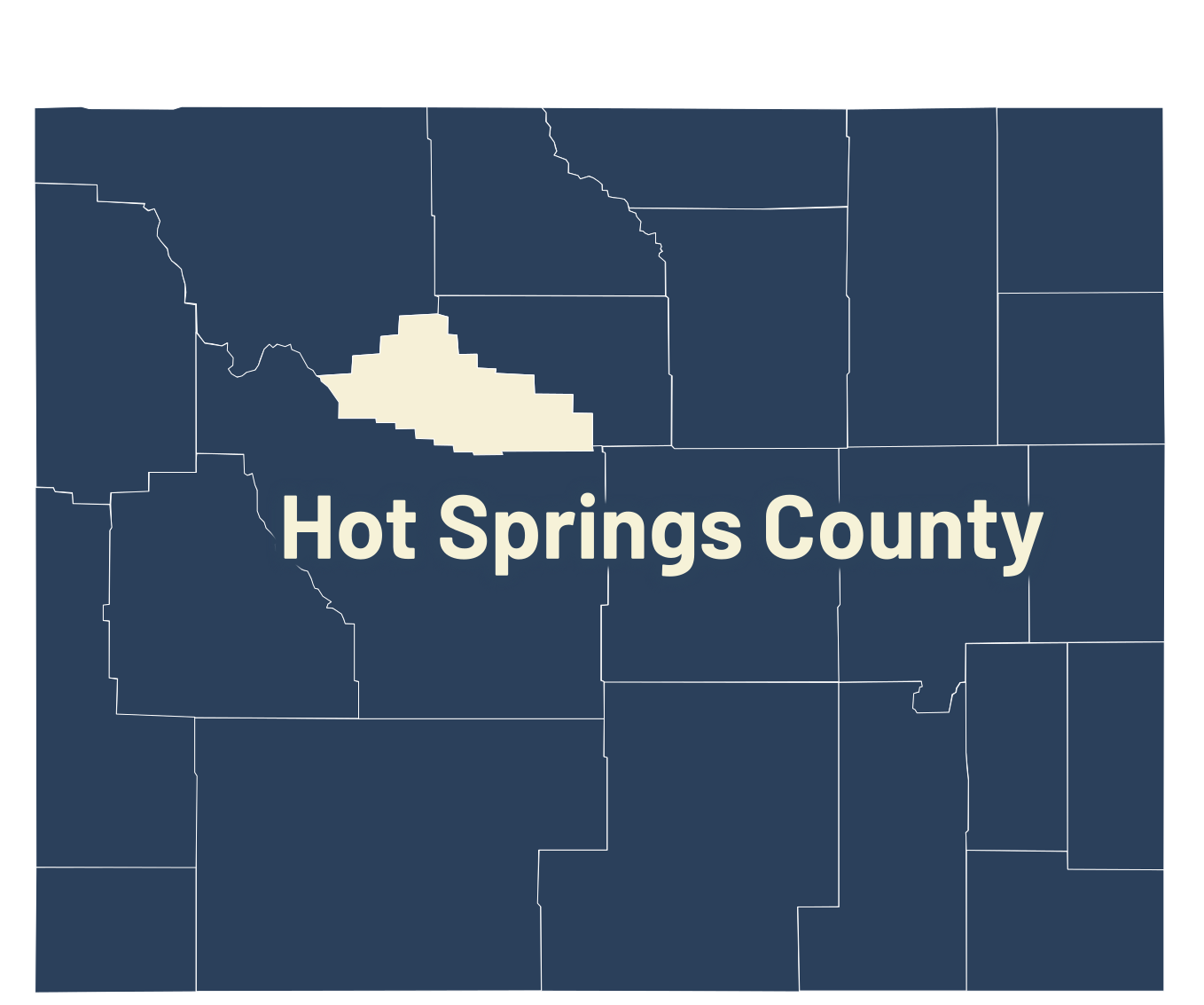
Jack Baird, who runs sheep and cattle on over 30,000 acres near Thermopolis, calls cheatgrass "a little thief" because it robs moisture from native grasses on the sections of land he uses for grazing.
Fellow rancher Chip Axtell of Hot Springs County estimates at least 20% of his own rangeland and farm have been taken over by cheatgrass, which is only green in the early spring and late fall. This limits where he can graze his cattle and is especially damaging during a drought.
“Cheatgrass grabs up all the moisture, so the native grasses get pushed out,” Axtell said. “If you keep stressing the land further with grazing or drought, it just becomes the predominant grass that's around.”
More than $32 million has been lost in agricultural land and wildlife habitat last year due to cheatgrass, a fast-growing invasive weed known. It is an ecological nightmare for wildlife and land managers.
University of Wyoming researchers estimate if cheatgrass continues to spread, annual losses could exceed $109.8 million.
Cheatgrass, also known as downy brome, literally creates a drought state on the landscape even when Wyoming is not in a drought. Since the 1800s, this invasive weed has been choking out native grasses and “cheating” them out of the nutrients and soil.
“It is actually a pretty pathetic grass with a minimal root system,” Nancy Fleming, the Wind River Bighorn Basin District's invasive annual grass coordinator, told Cowboy State Daily. “But it’s seed production is tremendous.”
One cheatgrass plant can produce 200 seeds viable for up to 11 years. Thousands will sit in a seed bank in the first few inches of soil, just waiting to germinate.
“The cheatgrass takeover has been going on for over a century,” Axtell said. “It grows wherever there's a disturbance in the ground such as a two-track, or any digging. The cheatgrass comes in because the seeds get started in that disturbed ground.”
Axtell said he has been battling cheatgrass his entire life and tries not to graze all the grass in order to leave the native grass healthy and keep the cheatgrass at bay.
“There's no silver bullet when it comes to invasive annual grasses, particularly cheat grass,” Fleming said. “Cheatgrass is something that we're managing. It's not something that we will eradicate.”
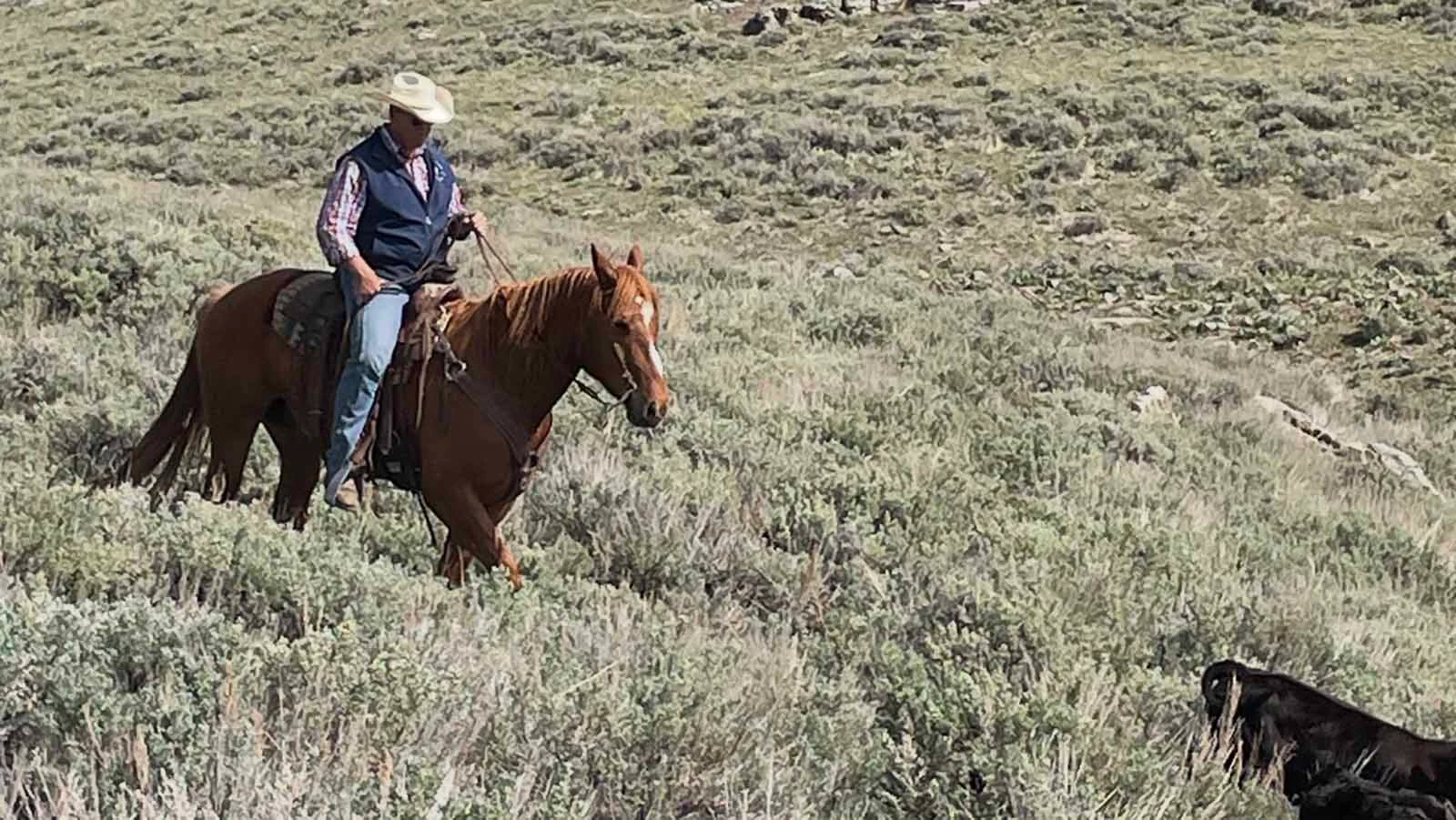
Chip Axtell told Cowboy State Daily that approximately 20% of his ranch and farm have been taken over by cheatgrass. The invasive weed has worsened the drought conditions by taking the moisture from native grasses. When cheatgrass dies in June, it no longer has any value for grazing. (Jennifer Axtel) 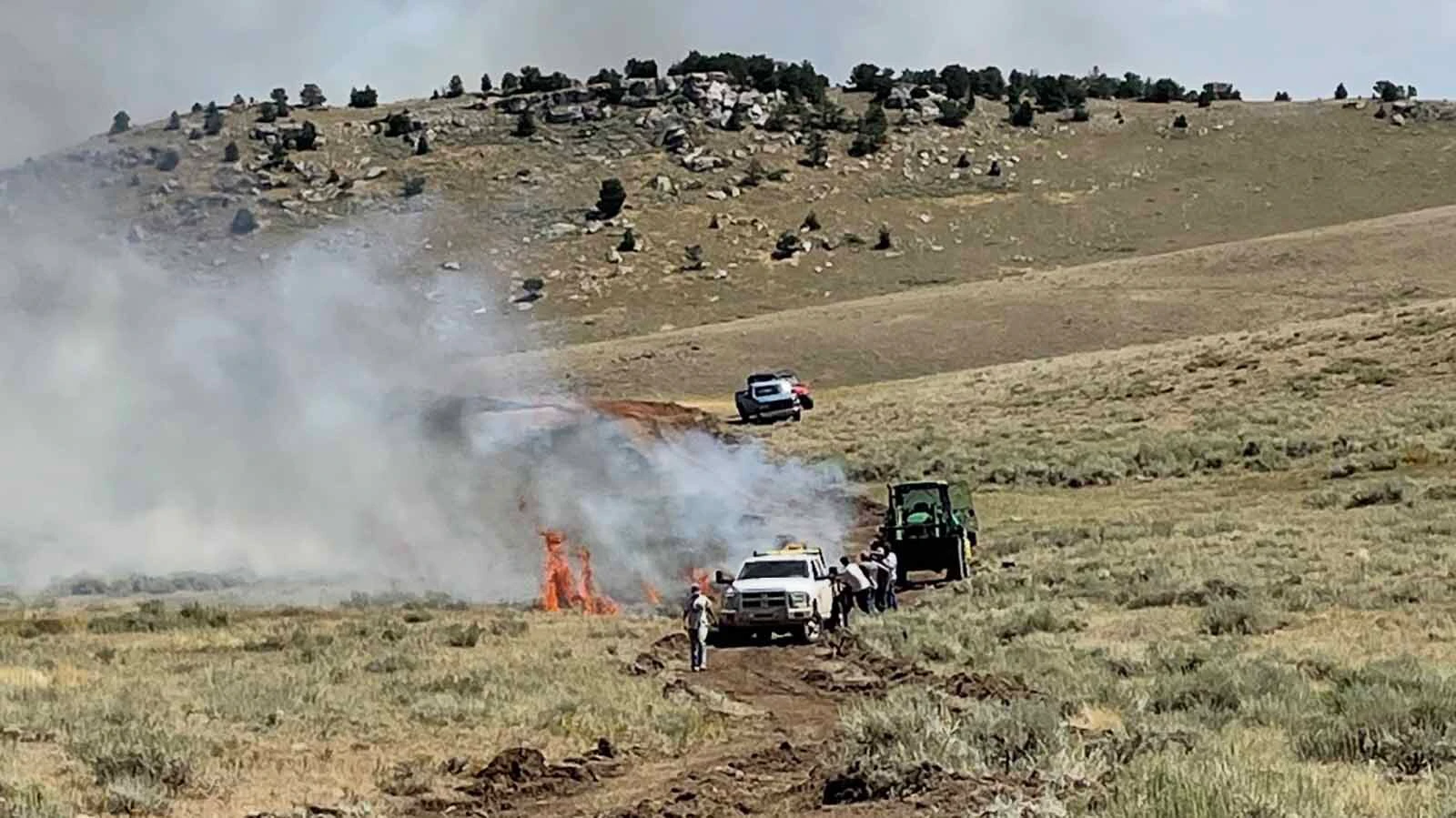
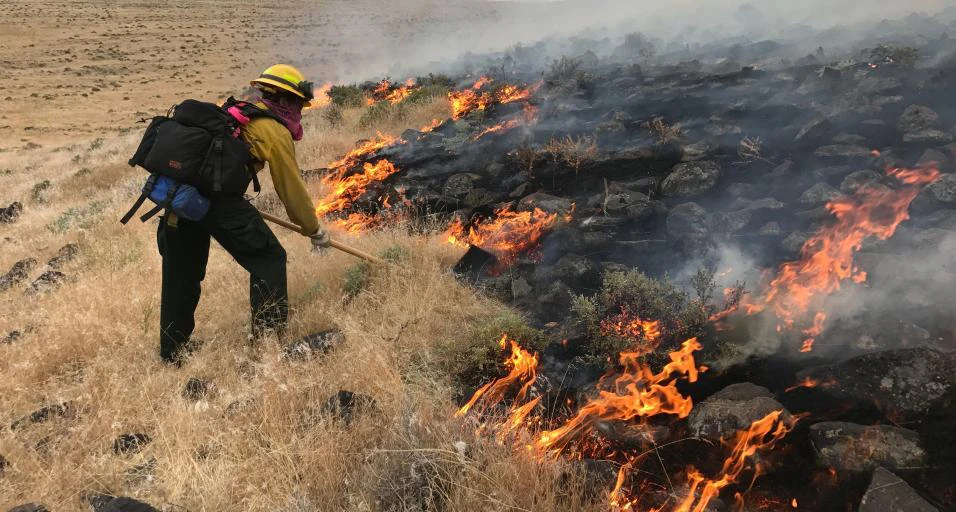
The Red Canyon fire from August 2025 created a disturbance that will help cheatgrass to grow and take over the burned areas. Over $8 million is being used to prevent the cheatgrass takeover. (Jennifer Axtel) 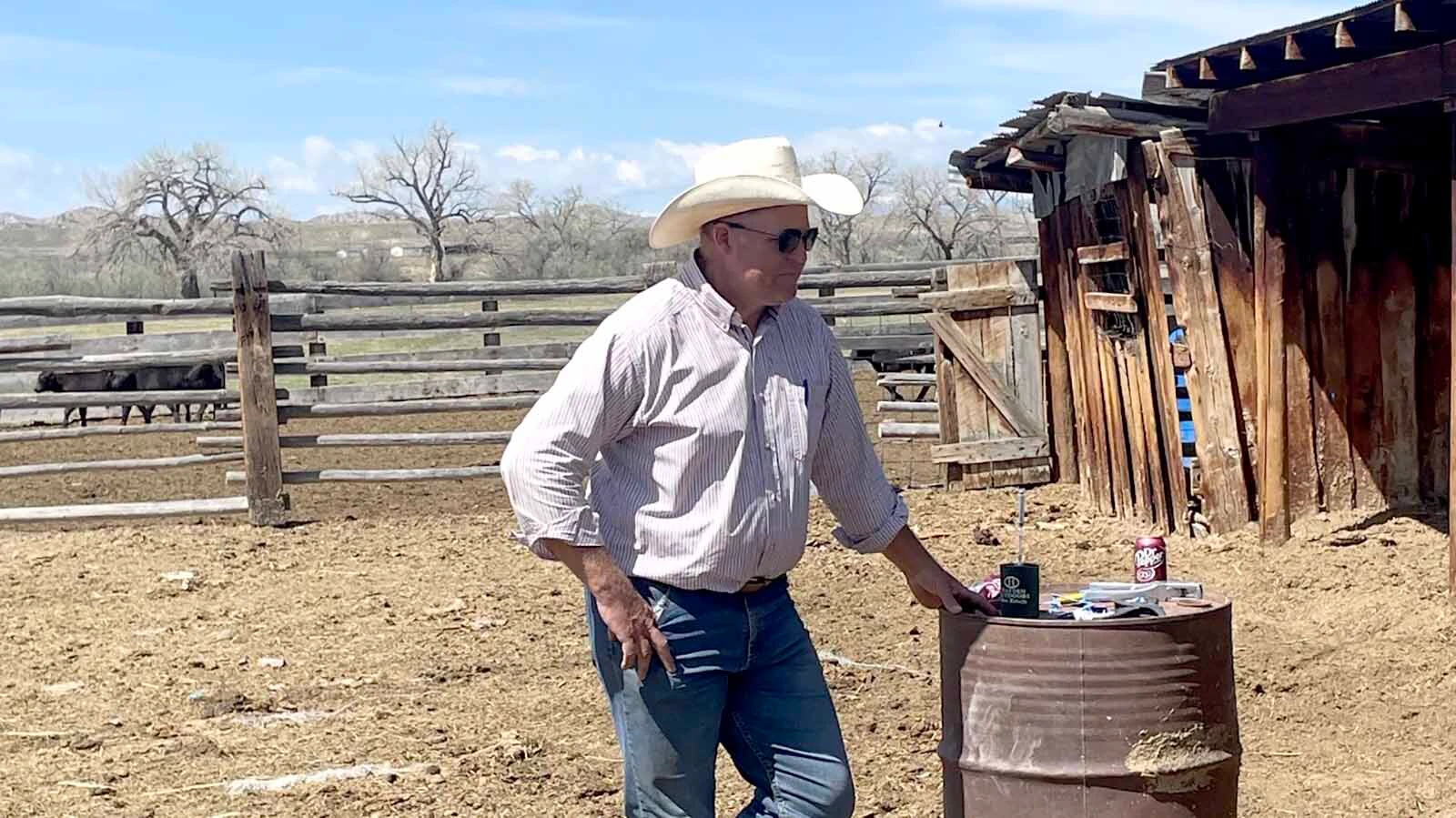
Chip Axtell told Cowboy State Daily that approximately 20% of his ranch and farm have been taken over by cheatgrass. The invasive weed has worsened the drought conditions by taking the moisture from native grasses. When cheatgrass dies in June, it no longer has any value for grazing. (Jennifer Axtel)
The Evil Enemy
Cheatgrass is an invasive annual grass that's not native to North America. It came from Europe and Eurasia in the mid- to late 1800s as a contaminant in seed and straw, according to the United States Geological Survey (USGS).
“It's been noted in every state in the lower 48 but it's causing more destruction in the Western States because of our climate,” Fleming said.
Cheatgrass grows in the winter and sprouts its roots under the snow. It is the first plant to green up in the spring. As an annual, it dies off each year and has a different growing cycle that Wyoming’s native perennial grass.
Cheatgrass’ sole purpose is to produce as much seed as possible before dying off every June. Then in becomes another type of menace: Fuel for fire.
“It takes one lightning strike to get a fire started,” Fleming said. “That fuel load created by dead cheatgrass helps spread the fire quickly through this country.”
The USGS reported that cheatgrass has disrupted the fire cycle in sagebrush habitat and other western ecosystems, leading to more frequent and more intense burns. Those fires subsequently destroy native grasses and sage.
“Invasives come back the next year and so the fire doesn't affect them,” Fleming said. “As a result, we see this reoccurring, increased fire cycle that is not typical for this area.”
Fleming said fires typically burn every 30 years in grass and sage ecosystems, but thanks to cheatgrass they are occurring every five years or sooner.
Last August, the Red Canyon Fire burned more than 126,000 acres outside of Thermopolis. Several organizations are monitoring the land to beat back the expected surge of cheatgrass. The fire started from a lightning strike on Axtell’s ranch and spread to neighboring ranches.
“Cheatgrass has the first opportunity to get the moisture and get started,” Axtell said. “With this fire, they're really watching to see where it's going to come back.”
Axtell said a grant for more than $8 million has been allocated to fight cheatgrass in the burn area. He is hopeful that by being proactive they will keep the cheatgrass to a minimum.
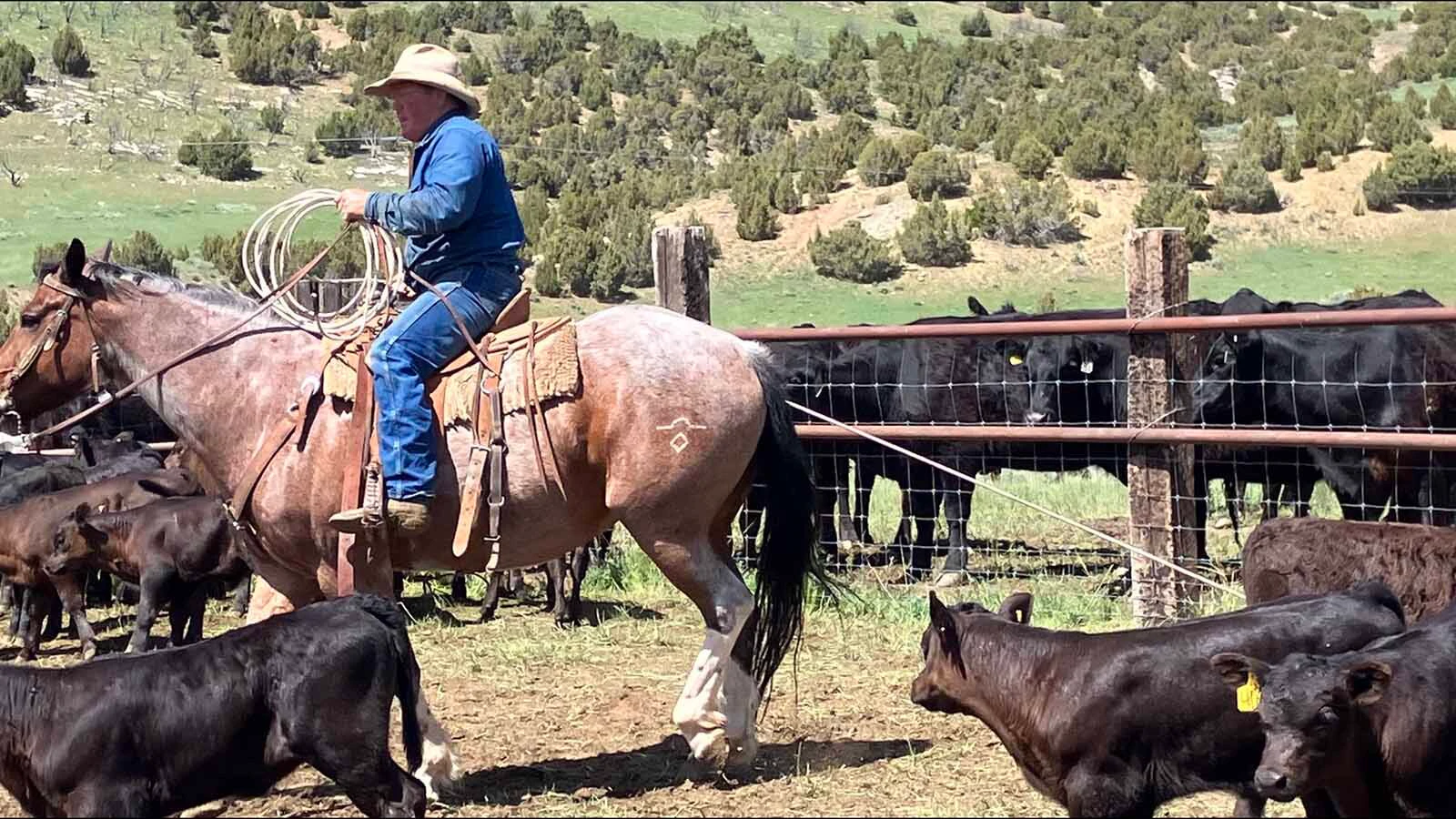
Rancher Jack Baird said that cheatgrass can be beneficial in the summer and during the winter as green nutrients for his cattle and sheep. When it dies in early June, it is then useless as forage. For that reason, Baird prefers the native grasses since even after they die, they can be used as feed. However, the cost of eliminating cheatgrass with herbicides is high at $50 an acre. (Ellen Baird) 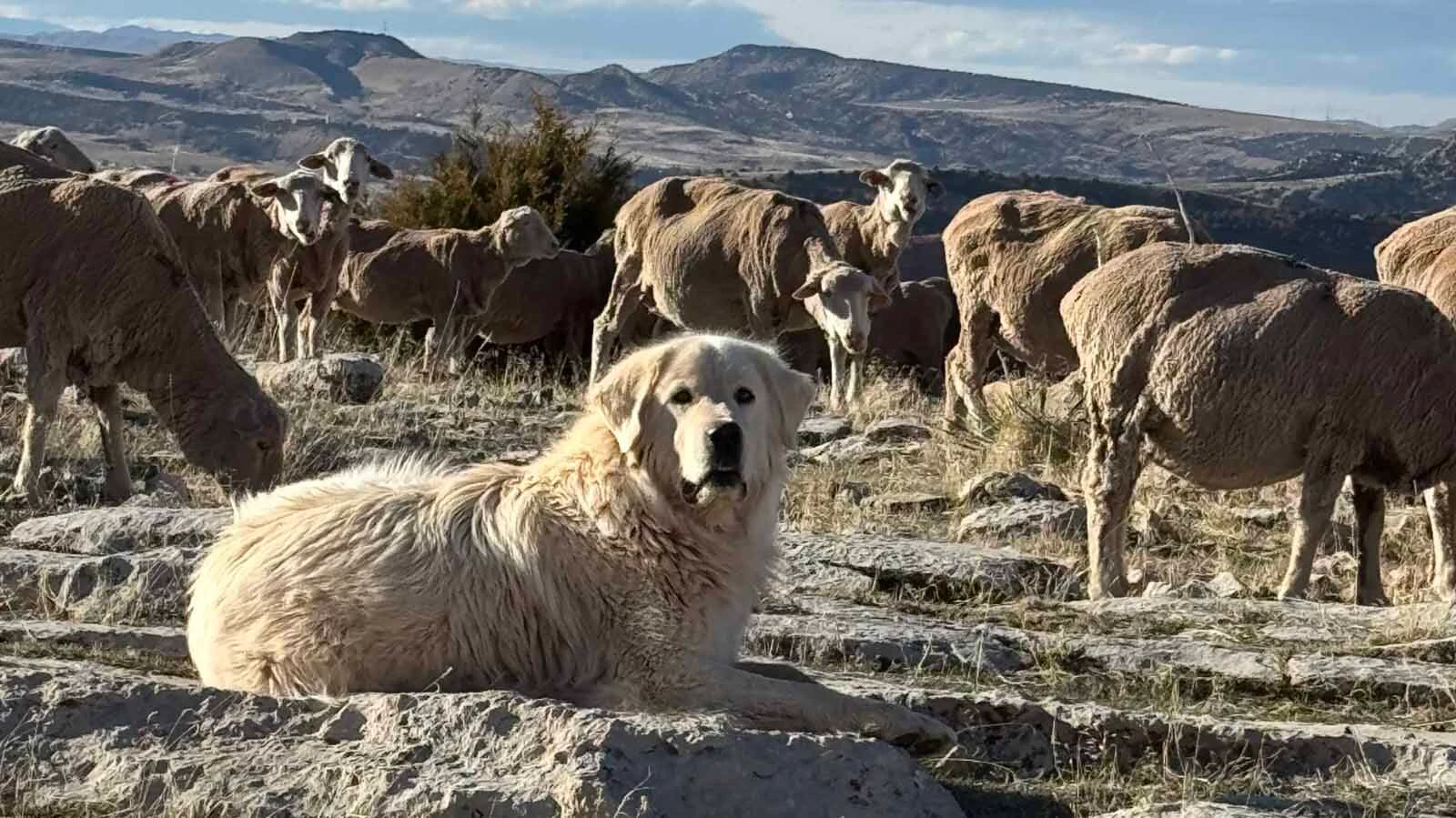
Rancher Jack Baird said that cheatgrass can be beneficial in the summer and during the winter as green nutrients for his cattle and sheep. When it dies in early June, it is then useless as forage. For that reason, Baird prefers the native grasses since even after they die, they can be used as feed. However, the cost of eliminating cheatgrass with herbicides is high at $50 an acre. (Ellen Baird) 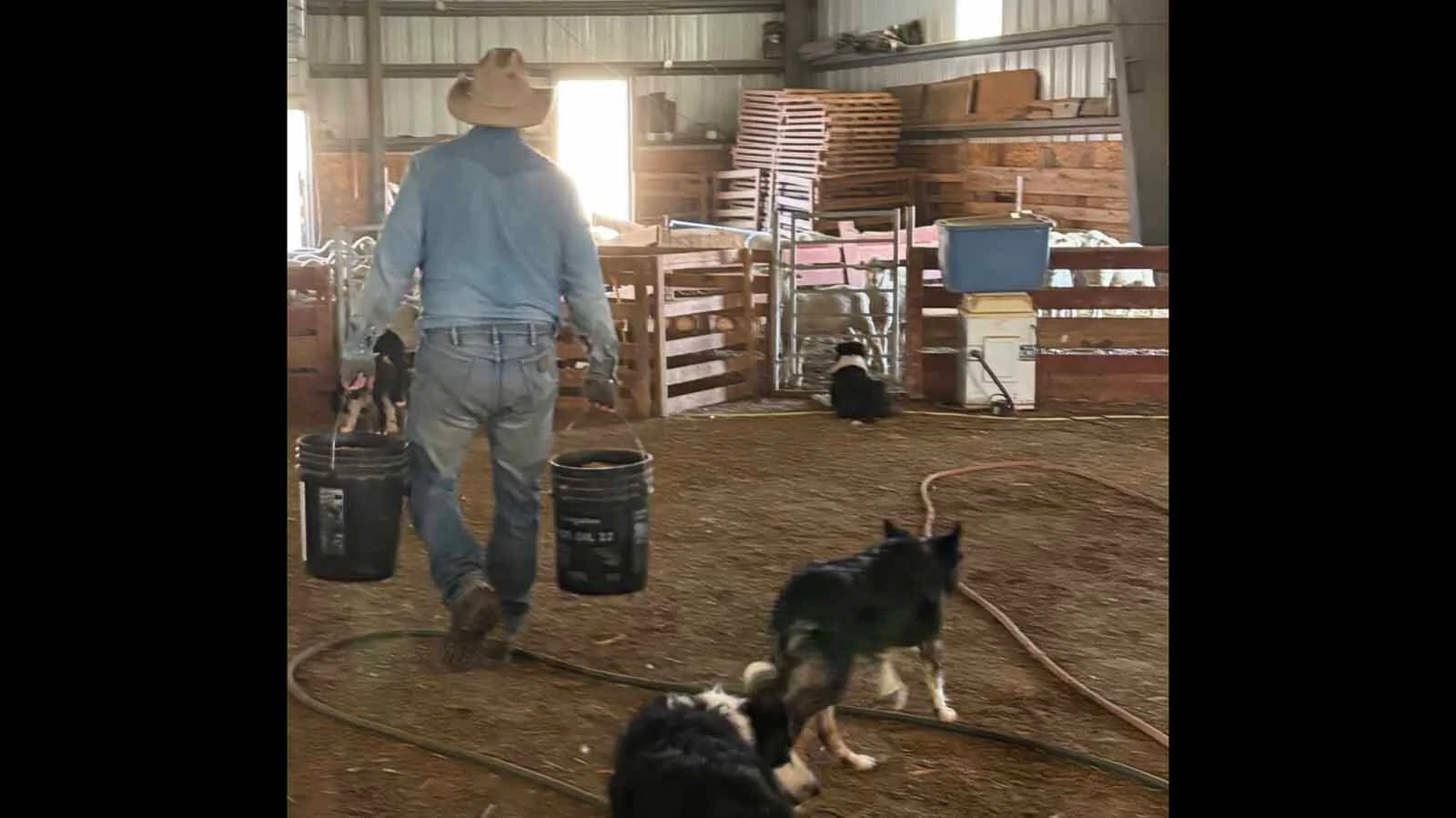
Rancher Jack Baird said that cheatgrass can be beneficial in the summer and during the winter as green nutrients for his cattle and sheep. When it dies in early June, it is then useless as forage. For that reason, Baird prefers the native grasses since even after they die, they can be used as feed. However, the cost of eliminating cheatgrass with herbicides is high at $50 an acre. (Ellen Baird)
Benefits of Cheatgrass
“When it's green, cheat grass actually has some decent protein and a forge quality to it,” Fleming said. “But it's only green from April to maybe June which is a very short window.”
Baird admits that because the cheat grass can be beneficial, he has mixed emotions about the expense of eradicating it.
“If you get a good fall rain, it might stay green under the snow until December or January,” he said. “Those cows are getting green feed and getting protein naturally from the cheatgrass.”
Baird said cheatgrass can be up to 18% protein in the early season, but cattle will have little of the grass to graze. The good grass, according to Baird, might only be 6% protein in the winter, but even when it dries it still has good feed value.
Cheatgrass, on the other hand, has no feed value once in dries in the spring.
Although experts say they can only manage the weed, not eradicate it, they are seeing successes.
“The best tools that we have for long-term management is herbicides,” Fleming said. “We have been using products like Rejuvra to treat invasive annual grasses on a large-landscape scale.”
The goal is to target seed sources. Plants would not only grow but viable seed would also be eliminated.
Baird had five acres sprayed with the herbicide and noticed the cheatgrass was not as productive. However, the herbicide's expense makes the treatment prohibitive on much of his 30,000 acres of grazing leases and private property. It is close to $50 an acre to treat, he said.
So far, Fleming said, studies have shown if an area is treated twice, much of the cheatgrass will be eliminated and native grasses can regain their lost foothold.
“What we're finding is that when you treat, your perennial grass production nearly doubles in the treated areas and your annual grass does nothing,” Fleming said.
By eliminating cheatgrass, Fleming said studies show the perennial grass has access to nutrients and water.
“Our grass feels good again,” Fleming said. “It's not in a drought state anymore nor being suppressed. It's actually being vigorous, more productive.”
Fleming said that these more resilient, productive, perennial species would then be more competitive when cheatgrass re-enters the landscape.
Landowners have access to the herbicide at local weed and pest offices and can apply for grants to apply the chemical.
“Rejuvra is fairly new, and it's kind of a proven chemical, so we probably will get on a program now,” Axtell said. “Before, there was no guarantee that what you were going to use with Plateau or other chemicals was really going to give you that great of control.”
A Work In Progress
Axtell said that as more people treat for cheatgrass, it will help.
“You would no longer have neighbors who aren't treating while you're still battling cheatgrass coming in from around you,” Axtell said. “It's helpful that the chemical is so good at what it does.”
For those who are concerned about using an herbicide, more labor-intensive options are available, although these techniques have not been as effective. Axtell said they have tried these techniques themselves but have seen little effect against cheatgrass.
“We try not to graze in the spring and graze in the fall and let those natives propagate and come back,” Axtell said. “We've tried grazing with goats. We've tried real early spring grazing with high intensity and then getting off to try to graze out the cheatgrass.
“It just seems like once it's there, it's really hard to re-establish some natives.”
Baird said current drought conditions have actually naturally helped in the battle against the cheatgrass.
“Down on my BLM allotment, where it was basically a monoculture of cheatgrass, there was absolutely nothing green there at all,” Baird said. “The cheatgrass didn't have the moisture, so the deep-rooted native grasses took hold before the cheatgrass even had a chance to germinate.”
Fleming said she has visited other states where the cheatgrass had destroyed wildlife habitats and agricultural lands, and said it was heartbreaking.
“I work really closely with the BLM, and every single year, we're spraying a large section of public land for invasive grasses,” Fleming said, “The idea is, hopefully, we can start connecting larger chunks of property together by working with private landowners on larger projects.”
Jackie Dorothy can be reached at jackie@cowboystatedaily.com.