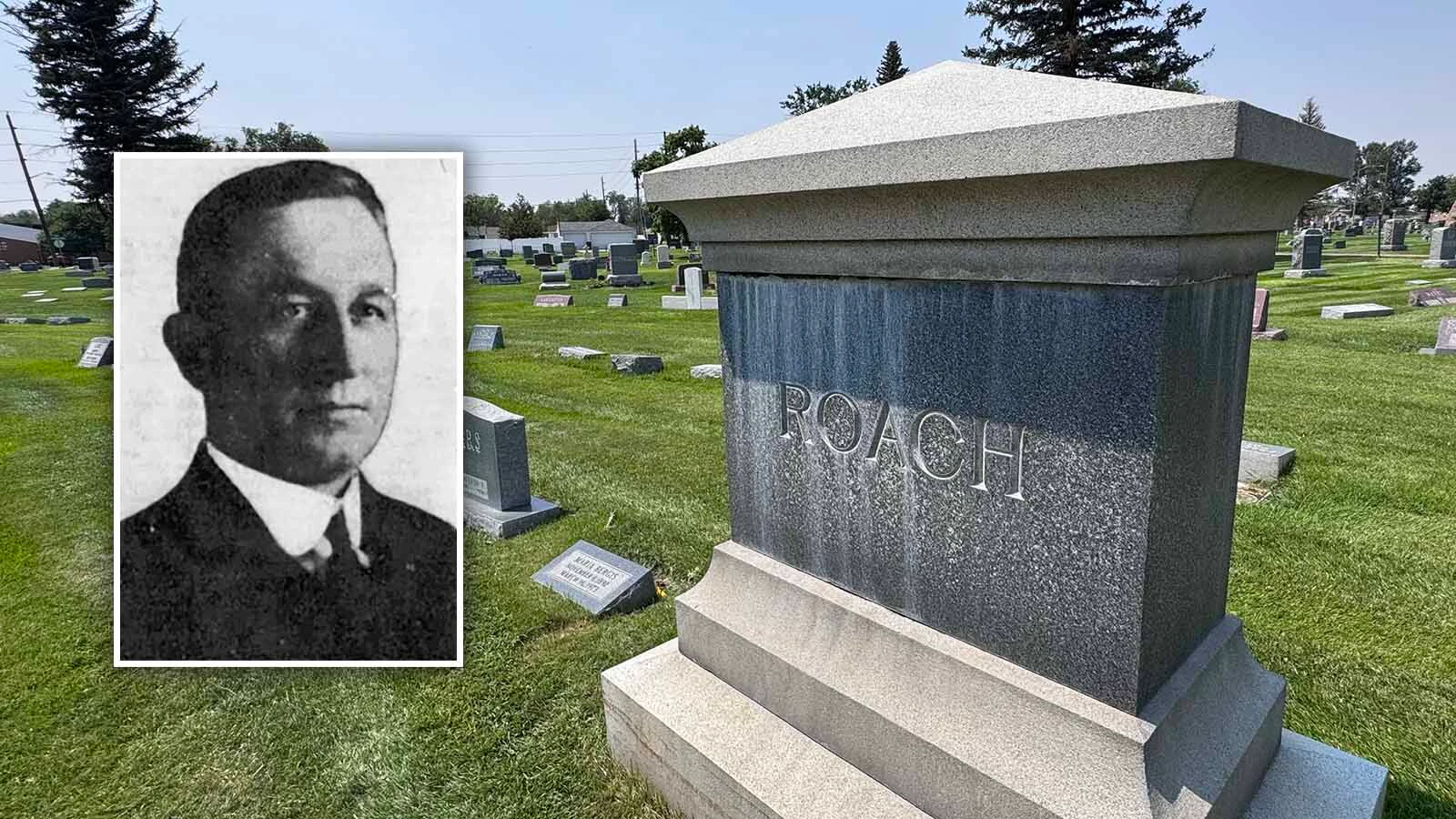
He was a longtime cowboy and foreman on a noted cattle ranch, cattle inspector for a few months, and gained the respect of Laramie County while serving as undersheriff.
Frank Roach stepped into the top job when his predecessor died in 1912 of kidney disease.
After being elected in 1914 and serving his own term, the 42-year-old sheriff headed out to investigate the reported theft of three horses and gear from a cattle ranch 18 miles west of Cheyenne on Sunday morning, April 30, 1916.
The ranch was owned by Hans Nielson, but ran by Niels Nielson, who was no relation to his boss.
Married two years, Roach and his wife had just become parents of a baby boy. His wife was a Scottish immigrant and daughter of a banker who invested in Swan Land & Cattle Company. The couple met while Roach worked for Swan as foreman.
His wife was still recovering from the birth.
Once at the ranch, the sheriff and one of the Nielsons tracked the thieves through light snow that had fallen the previous day to the Colorado line and lost the trail as the day wore on. They came to ranch on the Colorado side and the rancher contacted neighboring ranches to warn them about horse thieves in the area.
At the Webster ranch just to the south, the matron of the ranch had news Roach wanted to hear.
“Two men answering the description given by him were at that moment eating a meal she had given them in her home,” the Fort Collins Express reported on May 4, 1916. “She was requested to hold them at the ranch house if possible.”
However, the suspects, Clyde B. Pearson, 27, and Cornelius Gray, 21, known as “Pete Burns,” heard the conversation and told Webster they would not stay in her barn. Instead, the went into the ranch’s pasture, camped in a box canyon and started a fire.
Box Canyon Camp
When Roach, Nielson and three other ranchers recruited as posse members arrived, they could see the fire but noted the box canyon gave them an advantage if they tried to arrest them there.
Roach decided to wait until morning and figured they would return to the ranch’s barn for fresh horses. Instead the pair came back in the early morning for ammunition. They were not afraid to use bullets they already possessed.
Before Monday’s dawn on May 1, Roach and Nielson were shot and killed. The horse thieves mounted and tried to get away.
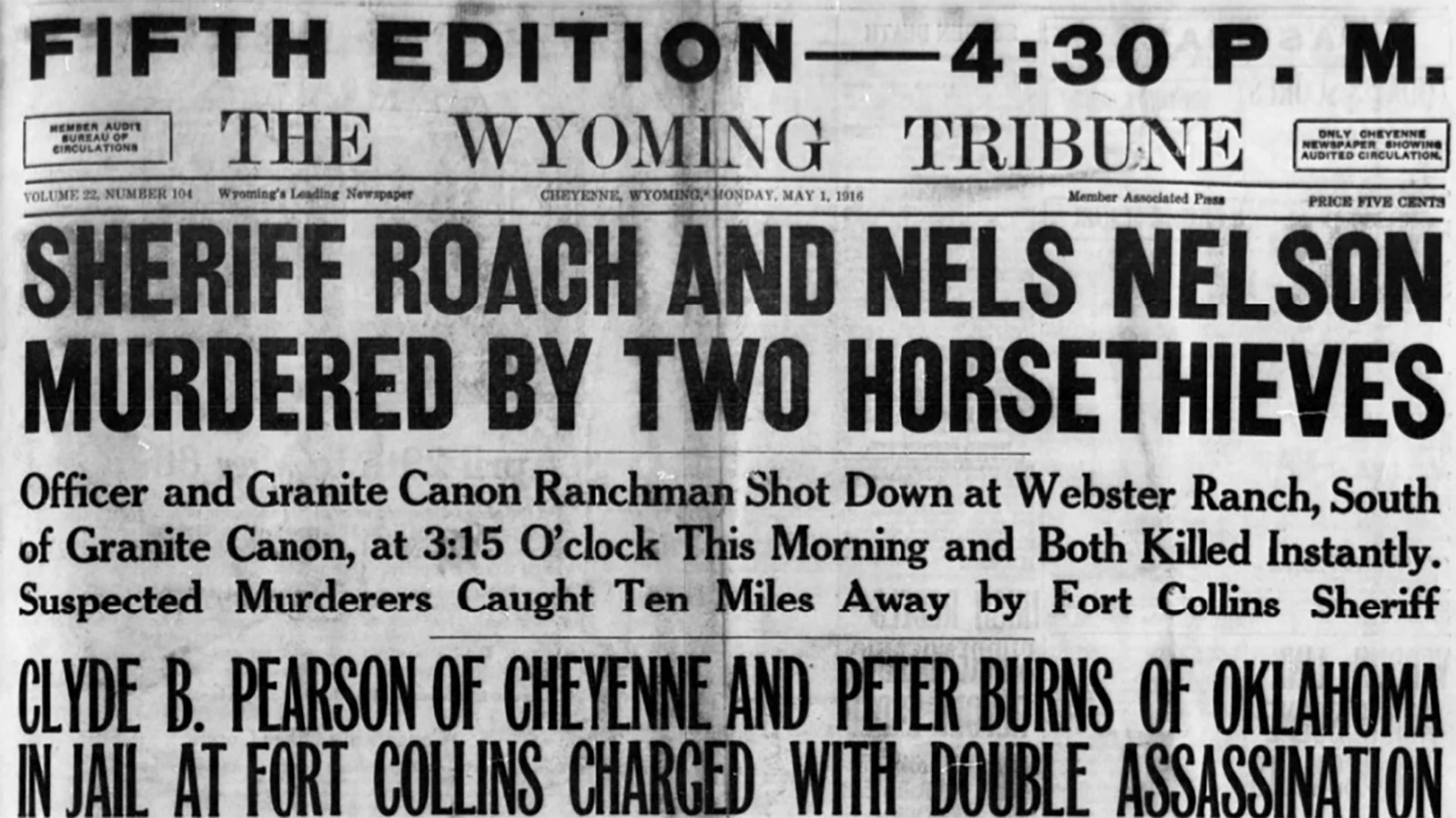
“Sheriff Roach and Nels Nelson (sic) Murdered by Two Horse Thieves,” the Wyoming Tribune reported in its fifth edition of the day on May 1, 1916, as it provided hungry readers with new information on the killings. “Officer and Granite Canyon Ranchman Shot Down at Webster Ranch South of Granite Canyon.”
Now, 110 years later, that sacrifice received special recognition from the Laramie County Sheriff’s Office.
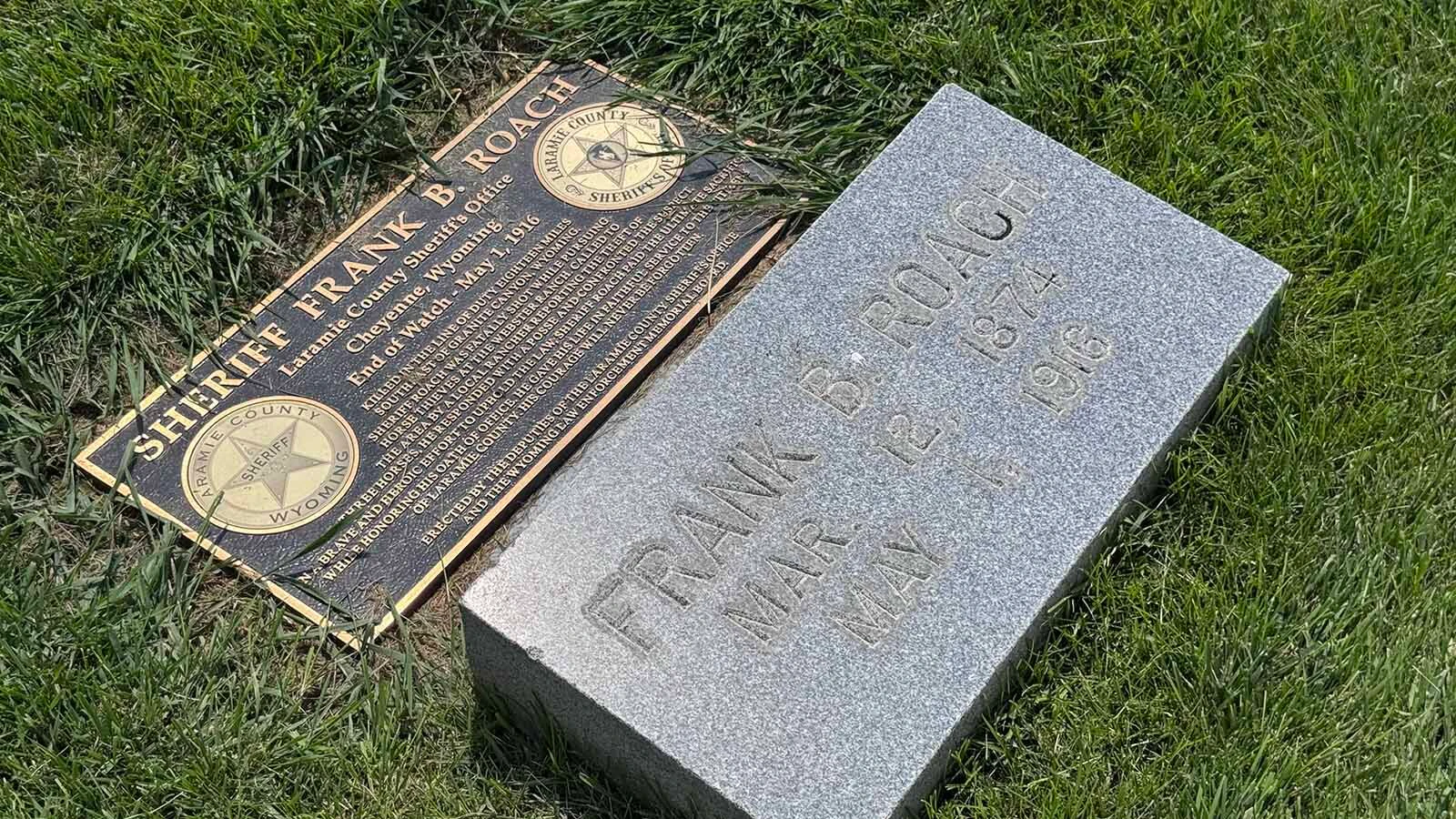
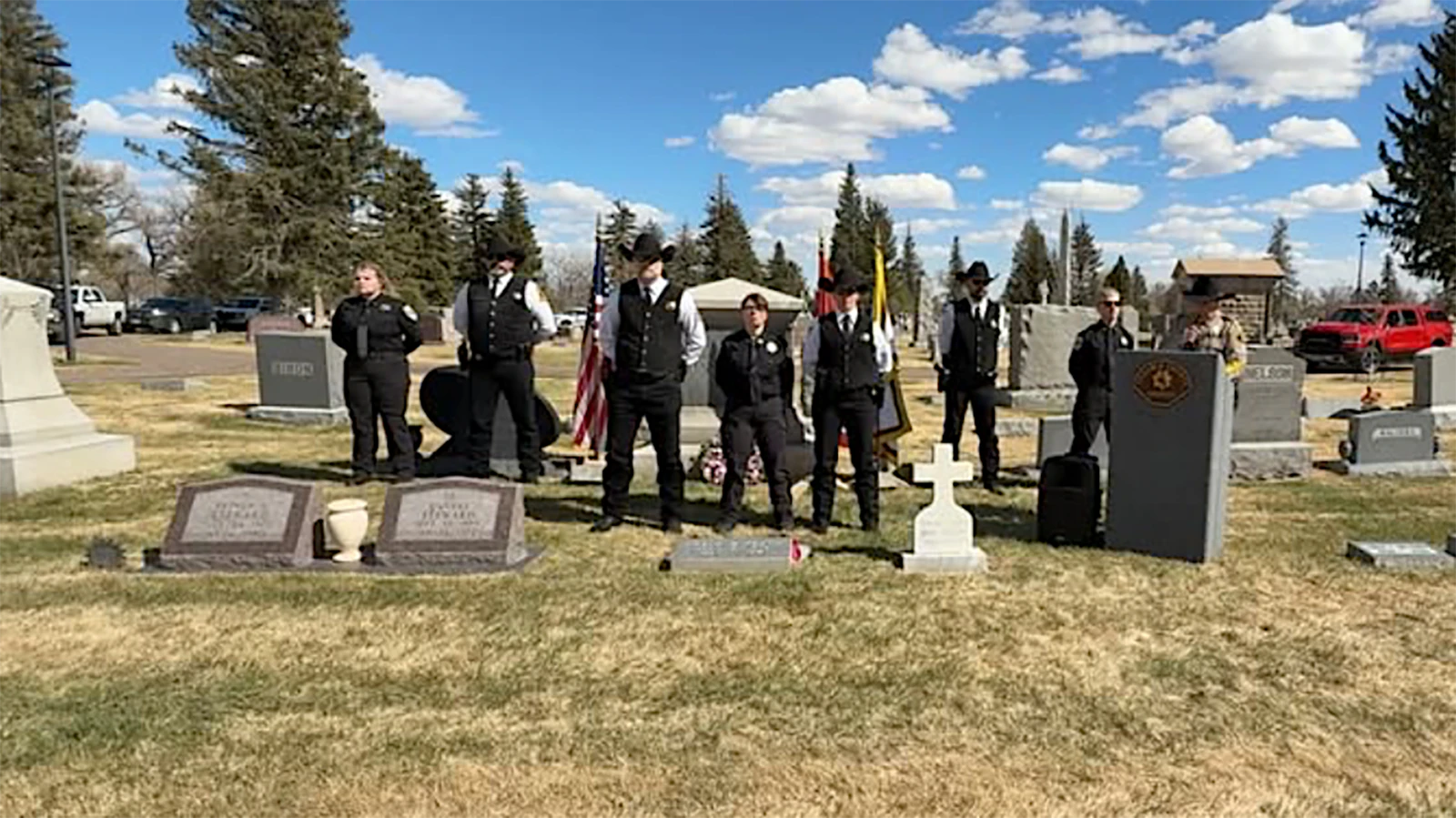
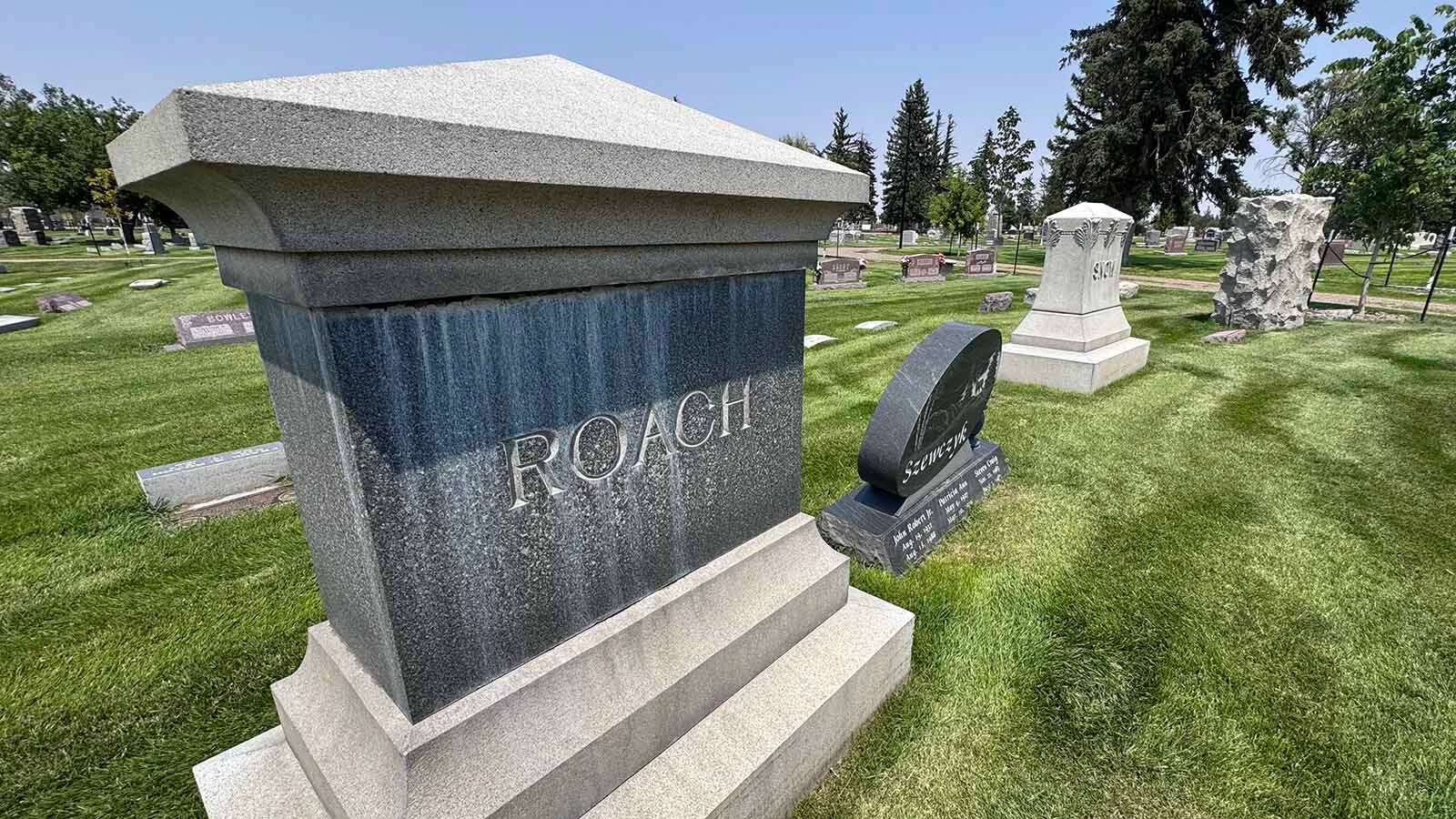
On the anniversary of Roach’s death and at his gravesite in Cheyenne’s Lakeview Cemetery,
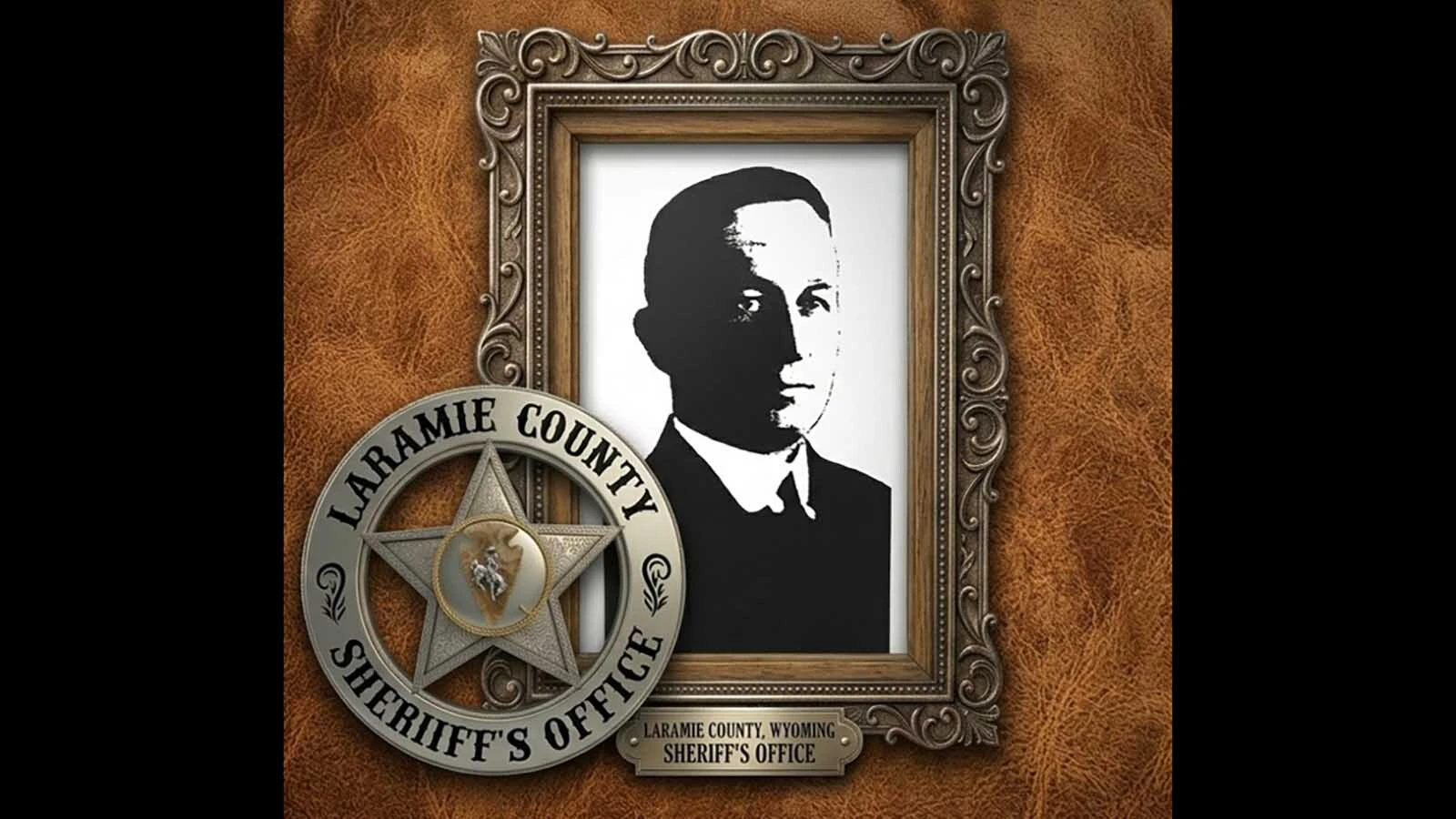
the department recently honored Roach and other officers from the county who have given their lives in the line of duty. A special marker characterizing the significance of Roach’s service and sacrifice was installed at his grave site and the department also introduced a five-point ring and star badge similar to what Roach wore.
Laramie County Sheriff Brian Kozak said he was “humbled” and thankful for department deputies “correcting” an oversight and making sure that Roach’s sacrifice is always remembered.
Honoring Legacy
Kozak plans to incorporate Roach’s sacrifice into part of the process of training new deputies.
“As sheriff, I will personally take deputies to the grave site to emphasize the meaning of the badge which is modeled after the one that Sheriff Roach wore,” he said. “The five points of the star represent our values — brave, resilient, accountable, no-nonsense, dedicated and completing our mission, which is ‘Riding for the Brand’ as one team to fight crime.”
By all accounts in newspapers of the day, Roach took his law-enforcement role seriously and had the respect of those who knew him.
Born in Sussex County, Delaware, in 1874, Roach arrived in Wyoming 20 years later and joined the young men arriving in the West to wrangle cattle. He became foreman at the Swan Land & Cattle Company from 1902 to 1905.
In 1909 he was a cattle inspector for the state and then from September 1909 to February 1910 for the U.S. government. In 1910, he joined the Laramie County Sheriff’s Office as undersheriff. When Sheriff Lewellen Hughes died in January 1912, he was appointed sheriff to serve out his term.
When Roach came into office, his brother Alonzo S. Roach was serving as the sheriff of Platte County. Alonzo Roach would go on to become warden at the Wyoming State Prison in Rawlins.
Newspaper accounts show Roach was busy the month before his death chasing train robber William Carlisle. In August 1915 he was searching for a man who entered a ranch house and assaulted the rancher’s 20-year-old wife and their child.
An earlier case in 1913 had Roach arresting a respected ex-Cheyenne police officer who had served as a first sergeant in the U.S. Army. The man was illegally rustling cattle from a rancher. Hides from the rancher were found in a well.
On the early morning of his death, Roach had sent Nielson to the Webster Ranch barn and Floyd Russell and Perry Williams to a cabin as he kept an outside watch.
One of the posse members, Art Russell, reportedly crawled down to see if the pair were at the fire. He overheard them talking about needing ammunition and planning to bypass the ranch and going to a sheep camp to get it, according to the Wyoming Tribune on May 1, 1916.
The Tribune stated the information for its story came from Laramie County Attorney Sam Thompson. It was confirmed by those ranchmen at the scene who returned to Cheyenne.
Thieves Gone
Once reporting what he heard to Roach, Art Russell later crawled back out to the camp and found the pair gone.
He followed what he thought was their trail and it led him away to another ranch. When he arrived he learned Roach and the others had been ambushed, the newspaper reported.
Meanwhile, at the ranch after alternating watch duties between the three, at 2 a.m.
Roach entered the cabin, sent Williams out and relieved him at about 3:30 a.m. Williams told others that a few minutes later shots were fired and he opened the door to the cabin when a voice yelled “Git back in there” and a bullet flew by.
When Williams and Floyd Russell ventured out at dawn, they found both the sheriff and Nielson dead from gunshots.
The Fort Collins Express reported on May 4, 1916, that the gunmen, Pearson and Gray, were found later in the day riding the stolen horses on a road by the sheriff and a deputy from Larimer County.
When the law officers in a vehicle passed the pair, they stopped and the sheriff leveled his rifle on Pearson. But the deputy found himself facing the barrel of Gray, who pulled the trigger but the revolver did not fire.
The sheriff quickly covered both as the deputy pulled out his weapon. They arrested and disarmed the pair.
Once in Fort Collins, a posse from Cheyenne that included the county attorney and Charles B. Irwin, the rodeo promoter, arrived to ensure a proper investigation and to interrogate the suspects.
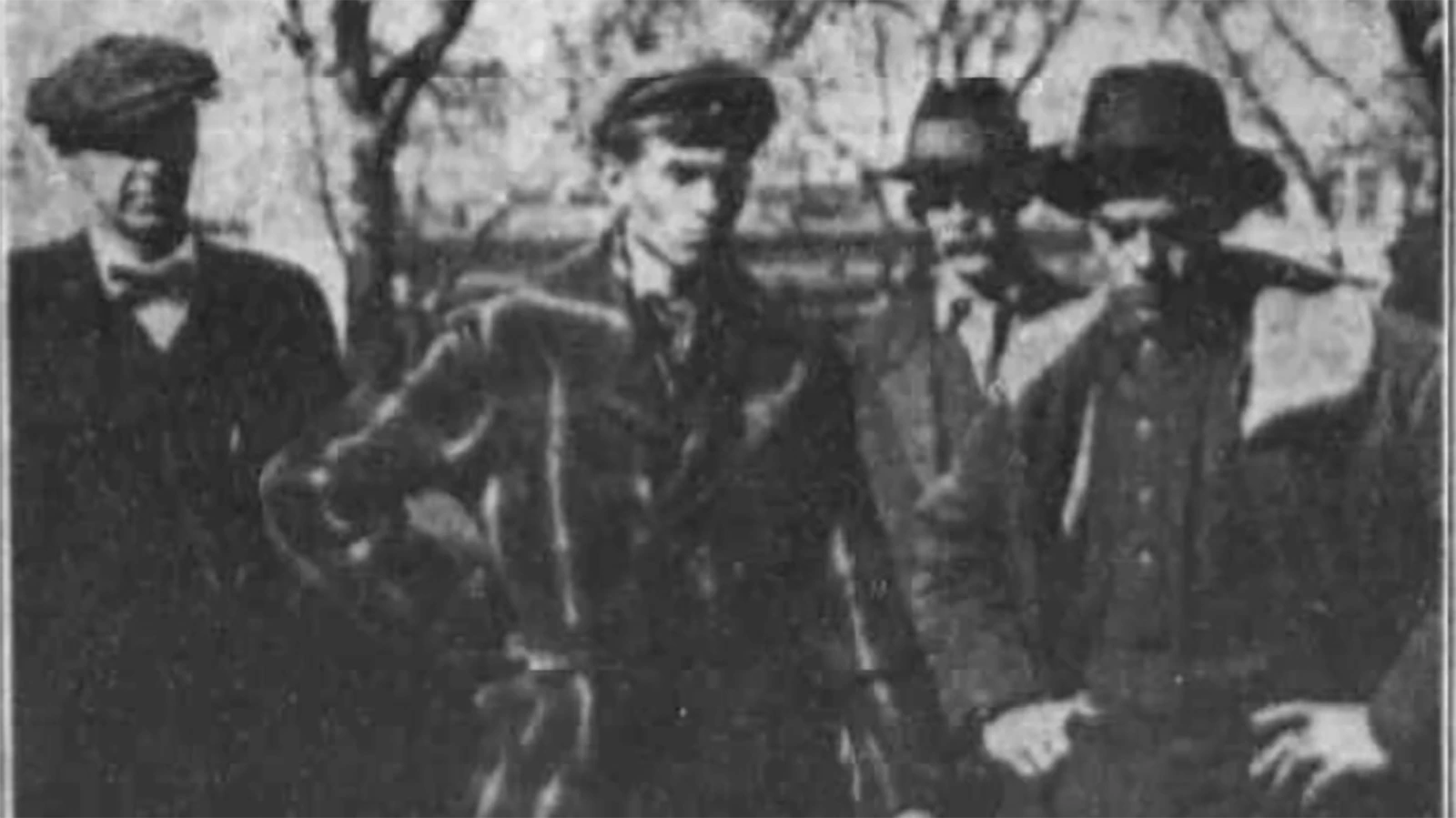
An initial “confession” was debunked and a second was signed by Pearson, who told W. C. Thomas, a friend of Roach’s, that he and “Pete Burns,” who was really Gray, had met 10 days before the shooting.
The newspaper reported Thomas convinced Pearson that he “was a close friend and admirer of the prisoner” as he obtained the details of the shooting.
In the confession, Pearson told Thomas they stole the horses and saddles from Nielson because he had once worked for him and did not like him.
Pearson claimed on the morning of the shooting he and Gray went to the barn and found Nielson and took him at gunpoint outside, and took his gun away from him. Pearson said he gave Nielson’s weapon to Gray, the Wyoming Tribune reported on May 2, 1916.
Gunman’s Story
Pearson said he ordered Nielson to walk ahead of them and met Roach and told him to “throw up his hands and do it quick.”
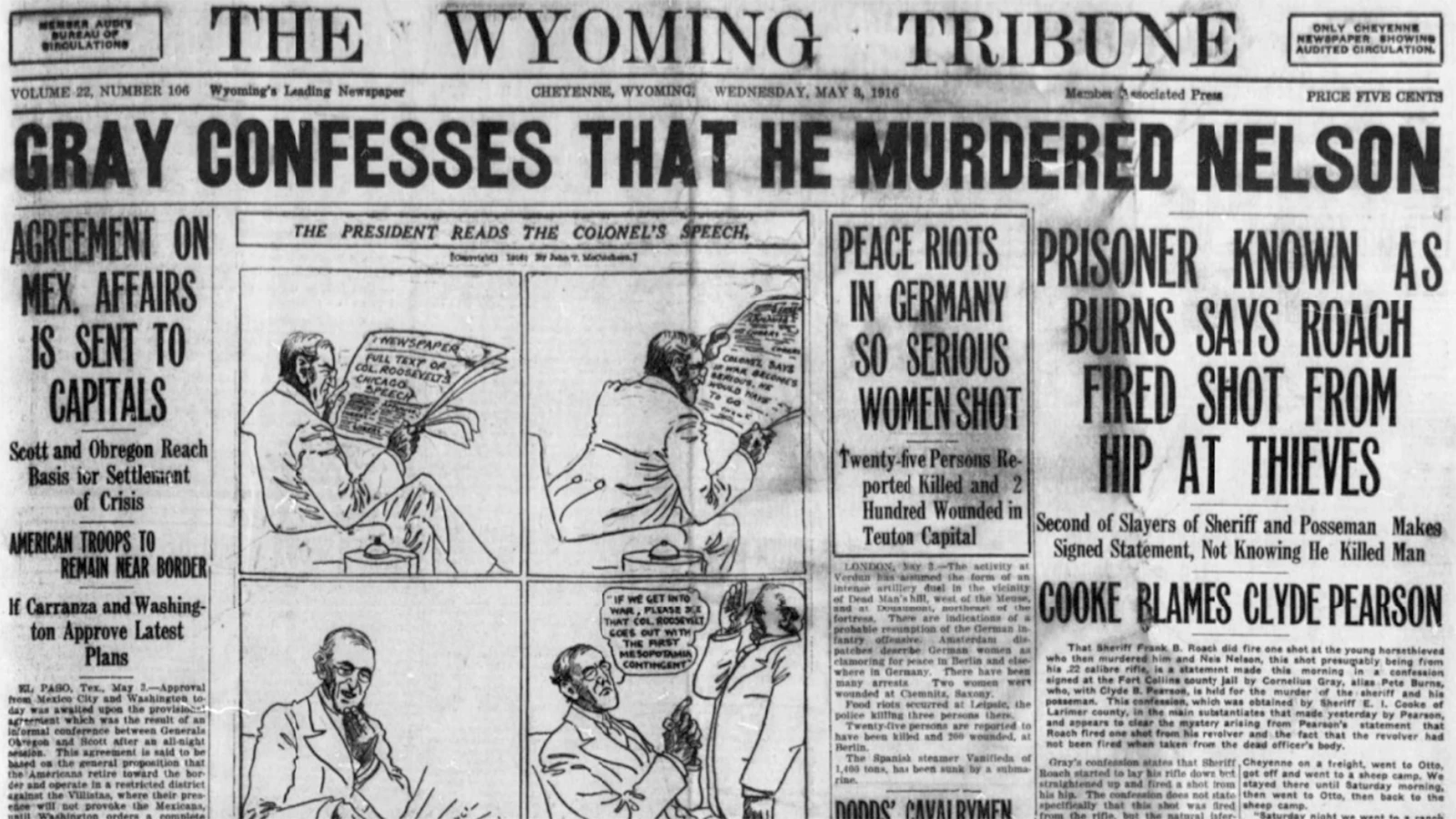
Pearson told Thomas that the sheriff said he had to put his rifle down and stepped over to put it on the ground and then put his hands in his pockets and “took a hip shot at me and hit my horse under the chin.”
“Then we both commenced firing. I fired three shots. I shot Roach and Burns shot Nielson,” he said.
Laramie County Undersheriff Orrin Babbitt said the “confession” Pearson made still did not line up with the evidence in the case.
Babbitt told the Cheyenne State Leader on May 3, 1916, that the evidence showed there was no confrontation with the horse thieves by the sheriff and that he was ambushed from behind by an assassin he was unaware was there.
Babbitt said Roach when found by those at daylight still had his revolver in his holster and it had not been fired.
His sweater and overcoat were buttoned over it. When his rifle was recovered from Pearson, it was loaded with four shells and not been fired.
“The bullet that ended the life of the courageous sheriff of Laramie County entered the back of his head,” the Leader reported. “He therefore was not facing his assassin. He could not have engaged in any conversation with him for he was looking the other way.”
Roach was walking toward the barn when he was ambushed and shot by one of the thieves.
Babbitt told the paper Nielson likely died because he was surprised by a thief as he came out of the barn and then saw the sheriff shot and broke away from the thief and was shot in the abdomen, but fell about 30 feet away near the sheriff’s body.
‘Hip Shot’ Did Not Happen
The story told by Pearson about Roach’s “hip shot” at him was to “make the crime less heinous," Thompson told the Leader.
“Pearson cannot bring himself to say that he shot at an unsuspecting man, and so he fabricates a story of a conversation in order to make it appear that Sheriff Roach opened fire upon him and shot him in the heat of battle,” the newspaper quoted Thompson.
Newspapers reported that if the two thieves had been brought back to Cheyenne, there likely would have been an immediate hanging by mob justice.
Roach’s funeral was held at their home next to the jail due to his wife’s physical condition.
Undersheriff Babbitt had asked the prisoners, including the train robber William Carlisle, to be quiet so as not to disturb the widow in her grief who was on the other side of the wall from the jail. They agreed.
The Wyoming Tribune on May 2, 1916, reported Carlisle had respect for the sheriff whom he had gotten to know following his arrest.
“My hands are not clean, there’s lots of things I’d do, but I wouldn’t shed human blood, I wouldn’t kill a man for anything,” the Tribune quoted him. “These fellows ought to be hung, I hope they swing.”
People from Wheatland, Laramie and Colorado joined hundreds in Cheyenne to pay their respects for the fallen sheriff.
The Wheatland Times reported on May 3 that Roach’s brother and sheriff of Platte County immediately headed for Cheyenne on hearing the news of his brother’s murder.
“The affair is of special local interest because of the wide acquaintance with Frank Roach (many) had throughout this section.
He rode the range in this county for several years and everyone knew and respected him,” the Times reported. The newspaper described him as a “man of courage, fidelity, and faithfulness to every obligation.”
The Funeral
Newspapers described the sheriff’s funeral as the largest they had seen in the city, with hundreds in the street outside his home and lining the road to the cemetery.
The Cheyenne Police Department and mounted troops from Fort D.A. Russell provided an escort for the hearse to the grave. All Cheyenne businesses shut down for the event. Among the mourners were friends from the Swan Land & Cattle Co.
Both Pearson and Gray were tried and convicted by separate juries in Fort Collins for the murders of Roach and Nielson. Pearson was sentenced to hang and Gray to life in prison.
Pearson’s sentence was commuted by the governor to life in prison.
In 1953, another Colorado governor commuted Pearson’s sentence to 97 years to life allowing him to become eligible for parole. He was paroled that year on good behavior.
Prior to his release he told a reporter that he had been a stockholder in Chicago’s Selig Polyscope Co. in 1912-13 and had persuaded early Western film star Tom Mix from the 101 Ranch in Oklahoma to movie work.
In 1932, Gray had obtained trustee status at the Canon City Colorado Penitentiary and walked away on July 12. He was captured in September of that year in Wichita Falls, Texas and returned to Colorado.
In May 1960, Gray was paroled. He was 65 and had served 44 years. He still could not get the story of Sheriff’s Roach’s killing straight.
He said he and Pearson, who he referred to as “Skinny,” were on horses and were riding in a place called Horseshoe Bend when confronted by a mounted posse at 3 a.m.
“We got off the horses, I yelled to the men we had them covered,” he told The Associated Press in a story reprinted in the Grand Junction Daily Sentinel on May 26, 1960. “One of the sheriff’s took a shot at me, it hit one of the horses. I was scared and started shooting. I fired four shots.”
Gray’s freedom only lasted four months. He was arrested on a parole violation for possessing a weapon. Despite numerous pleas for release again, he spent the rest of his life in prison and died in Canon City on Nov. 10, 1965.
Efforts to determine Pearson’s death and burial place were unsuccessful as were efforts to trace Roach’s wife and son, who appeared a couple of times in newspapers following the sheriff’s death as they visited Roach’s brother’s wife and family.
Contact Dale Killingbeck at dale@cowboystatedaily.com
Dale Killingbeck can be reached at dale@cowboystatedaily.com.