
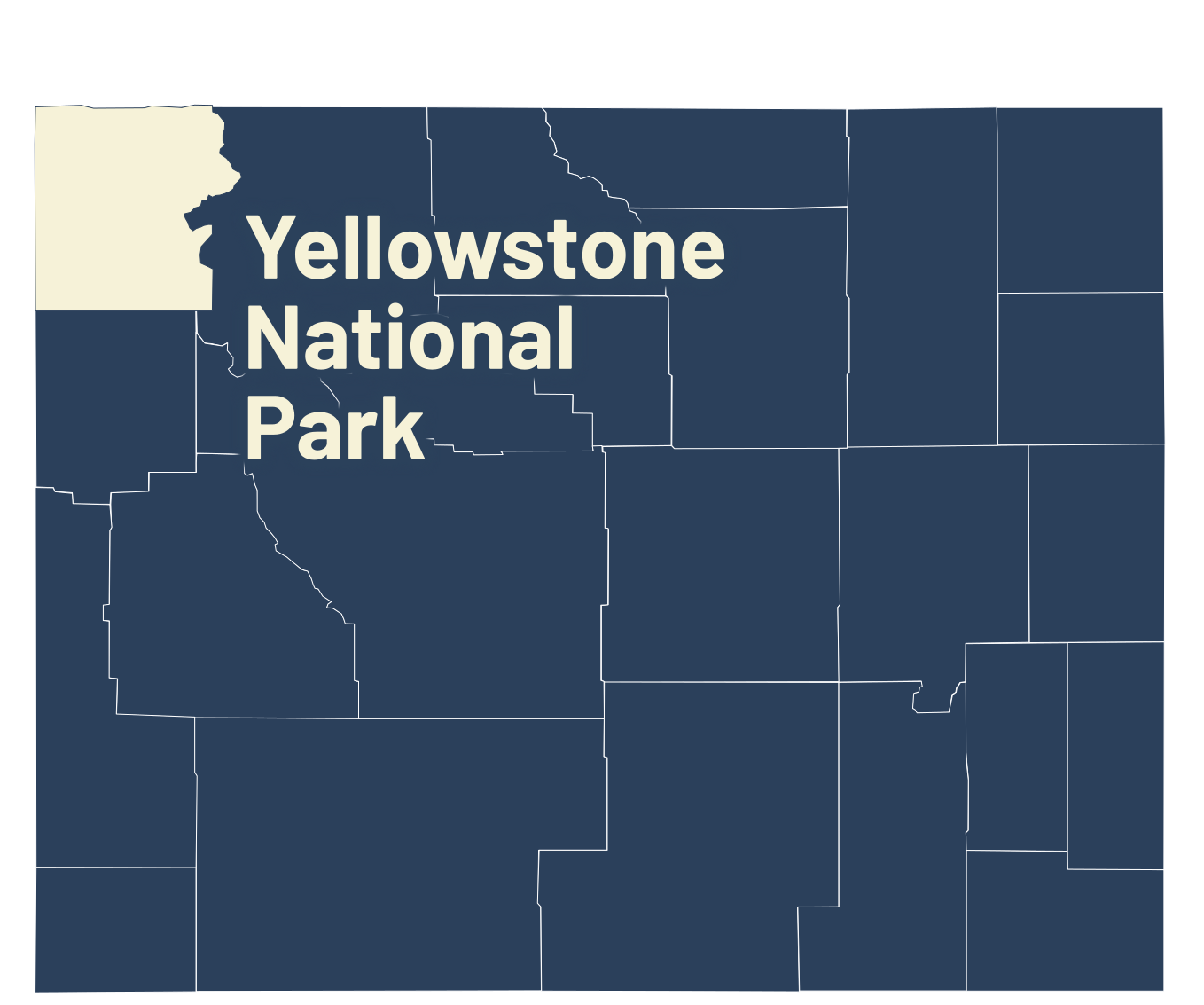
It seems Yellowstone National Park’s only pay phone is finally off the hook.
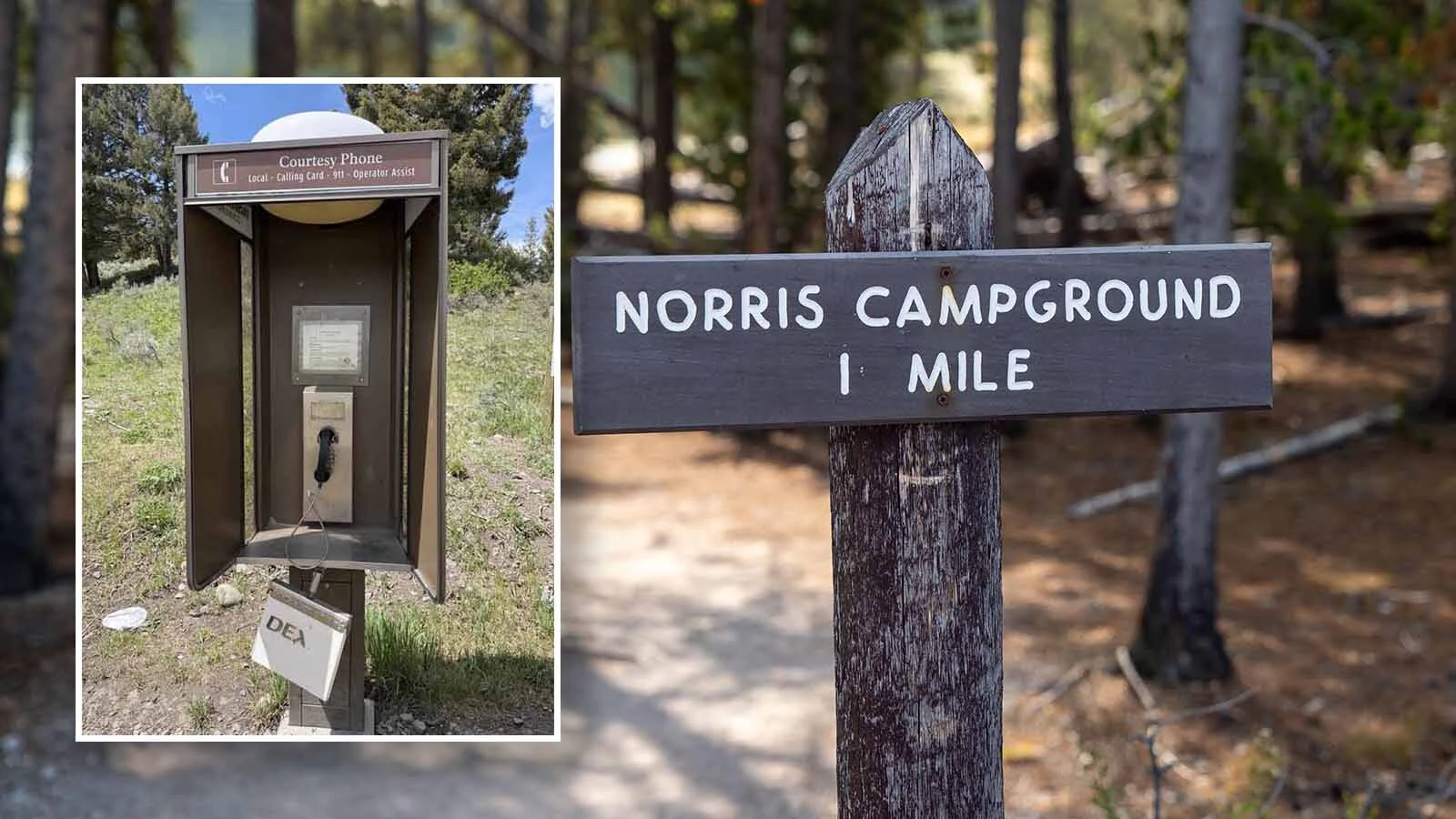
Photographer Kim Bird made a pilgrimage to what was Yellowstone’s only working pay phone at the currently closed Norris Campground. When she picked it up, all she heard was the sound of silence.
“I posted a photo of this phone booth a couple of years ago and still had a dial tone,” she said. “I took a photo again and checked this year — no dial tone.”
Pay phones have become increasingly rare in modern society, but they still had an important place in remote areas like Yellowstone. Still, nothing lasts forever.
The loss of the Norris Campground pay phone might have something to do with the campground itself. With visitation at an all-time high, the campground shows no signs of reopening.
That means there’s no need to place a call from the now-defunct Norris payphone.
Finding Phones
Yellowstone enthusiast Christina Spindler has been making a point of keeping track of Yellowstone’s remaining pay phones. As of 2026, they’re in various states of disrepair.
“The pay phone in Lake Village was working in 2021, and the courtesy phone at Norris Geyser Basin was operational last year,” she told Cowboy State Daily.
Spindler said Yellowstone’s pay phones were more than just conveniences for tourists. Their purpose is clearly expressed on the signage at their booths.
“Most campgrounds run by Xanterra have one at the main building for emergencies,” she said. “This is crucial in a place with little to no cell coverage. Many of them have instructions on the phone about what to tell the dispatcher about where you are, recognizing that most everyone is a tourist.”
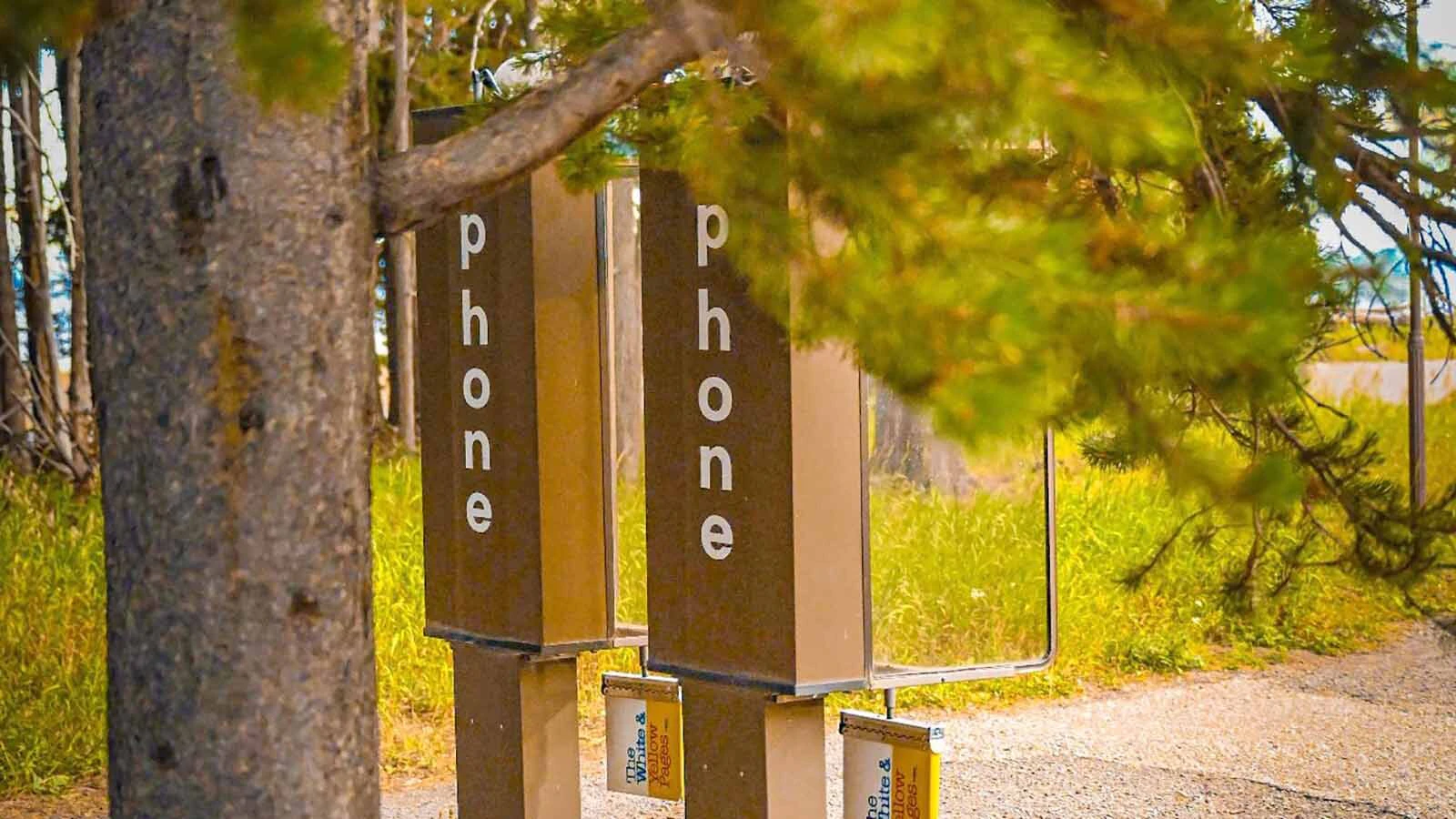
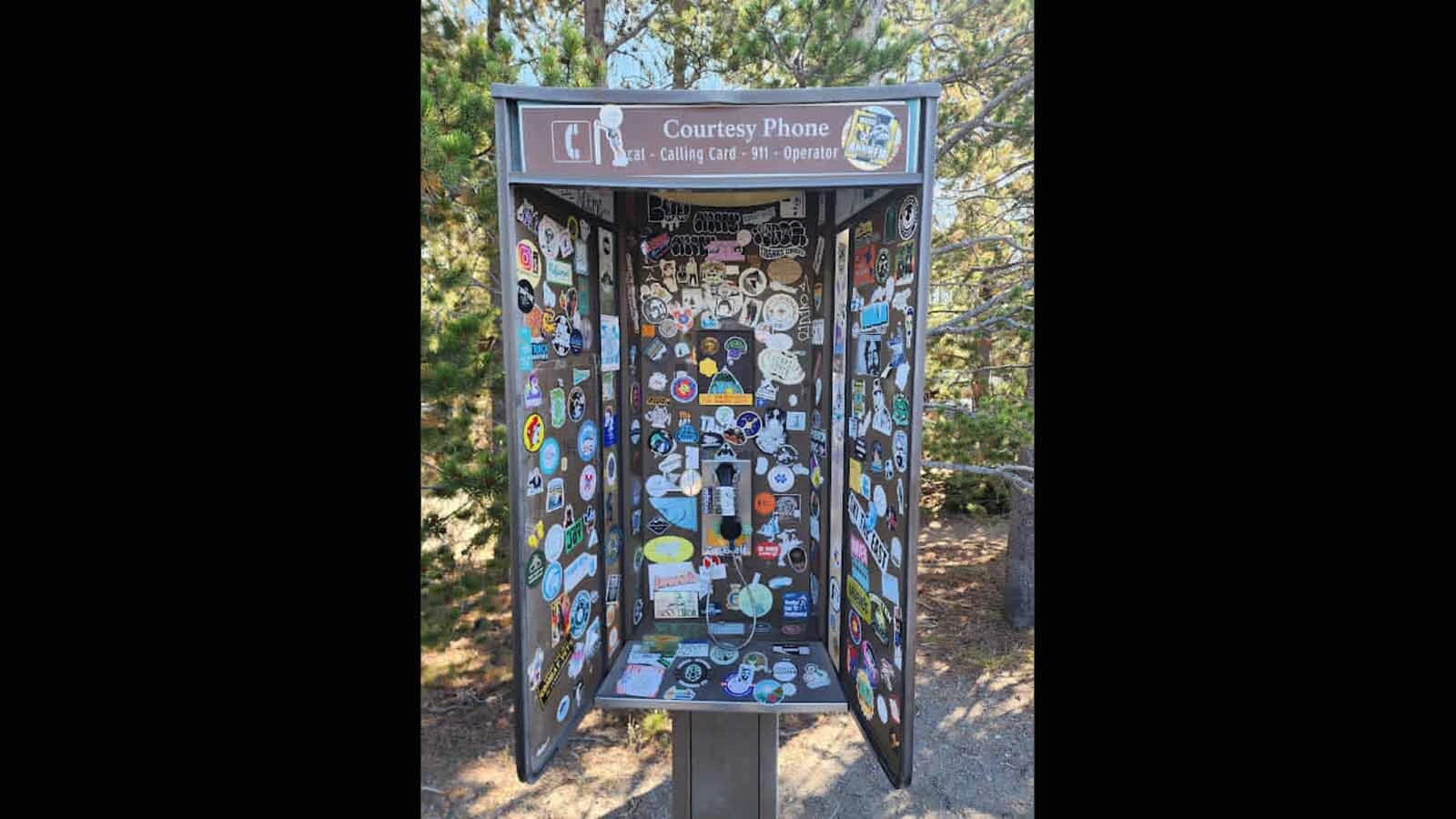
That purpose has become increasingly irrelevant as cell coverage improves in the developed areas of Yellowstone. The publicly accessible pay phones have transformed into sticker-covered relics of a bygone era, with their White and Yellow Pages books still attached, but missing the most important part.
“The phones (from many pay phones) are long gone,” Spindler said. “A lot of people are enjoying snapping photos of them.”
Critical Calls
Author and historian Jeff Henry used many a Yellowstone pay phone in his nearly 50-year career as a ranger and winter keeper in the park. He could recall one particular instance in which the pay phone at the Norris Campground saved people from a dangerous situation.
“My friend Arden Bailey had a late pickup of guests at Mammoth in February 1996,” he said. “He picked up people very late at Mammoth and was on his way to Canyon when his snowcoach froze at Norris.”
Henry said there was an extreme cold snap that February. Temperatures at Canyon Village reached 50 degrees below zero.
With a cold-crippled snowcoach full of people, Bailey used the Norris payphone to contact the communications center at Mammoth. TW Recreational Services Inc., Yellowstone’s hotel concessionaire at the time, sent another snowcoach to pick up Bailey and his guests.
“That was a pretty critical situation, with a snowcoach driver and five to 10 people stuck between Mammoth and Canyon,” he said. “The pay phone was critical in that instance.”
Thirty years later, the same call could have been accomplished with a cellphone.
Yellowstone Superintendent Cam Sholly discussed the ongoing installation of fiber optic cable throughout the park during National Parks Day in Cody last month. He framed it as a necessity for modern tourists and workers.
“We've got a workforce in the 21st century working with a 56k modem from the late 90s,” he said. “You can’t keep up to speed with a workforce that doesn’t have the right tools to do the job. Installing fiber optic is not only improving recruitment, retention, and our workflow efficiencies, but also giving visitors access to high-speed Wi Fi where they want it.”
Fiber optics cables have been and will continue to be installed along Yellowstone’s main road corridors in the years to come. That would make the remaining pay phones even more antiquated.
The same could be said for the campground where Yellowstone's last working pay phone was known to exist.
No More Norris
Along with all of Yellowstone’s campgrounds, the Norris Campground closed during the COVID-19 pandemic in 2020. However, it’s stayed closed ever since.
According to the National Park Service (NPS), the Norris Campground will remain closed “for the foreseeable future” due to its remote location and inadequate staffing for maintenance, emergency, and law enforcement incidents.
NPS spokesperson Linda Veress confirmed, “There is no change in (the campground’s) status at this time.”
When visitation and demand for campgrounds is higher than ever and growing, why keep the Norris Campground closed? Quite a few reasons, actually.
Henry never spent much time at the Norris Campground, but he was aware of persistent issues there. The biggest of these was water.
“The potable water at Norris is very poor,” he said. “I remember even during the 1988 fires, when it was obviously hot, dry, smoky, and dusty, and people were really craving a drink, even then, people didn't like drinking water at Norris.”
One of Henry’s friends is the water treatment specialist at Norris. Even now, when the campground’s been closed for years, Henry said she’s stationed there year-round.
“She’s there even in winter, when she’s treating water or nobody but herself,” he said. “Even when she’s treating water for coworkers, there's not much demand for water there.”
Despite being closed to tourists, most of the infrastructure at the 112-site campground remains intact.
Because of its potable water problems, remote location, and the modernization of other campsites, Henry doesn’t think there’s any urgency or priority to reopen the Norris Campground. However, he doesn’t doubt it would be a popular place for tourists.
“The demand for campsites in the park is so huge,” he said. “Even though Norris is not as centrally located to major attractions as other campgrounds, I'm sure it would fill every night. I’m just speculating, but I think it’s probably closed because of the water supply.”
Jim Holstein with Yellowstone Tour Guides heard a different explanation during a conversation with Sholly in 2023.
“It’s a lack of staffing,” he said. “They don’t have the housing that they need, they’ve had to put several people on the job (managing) the parking lot and making sure it doesn’t back up into the intersection and beyond. Housing has gone toward that (rather) than the campground.”
Holstein said Sholly also acknowledged the antiquated infrastructure in the area and framed it as too costly to prioritize.
“It’s been having troubles with water supply and antiquated sewage systems,” he said. “They don’t have the money to get it up to snuff again.”
Andrew Rossi can be reached at arossi@cowboystatedaily.com.


