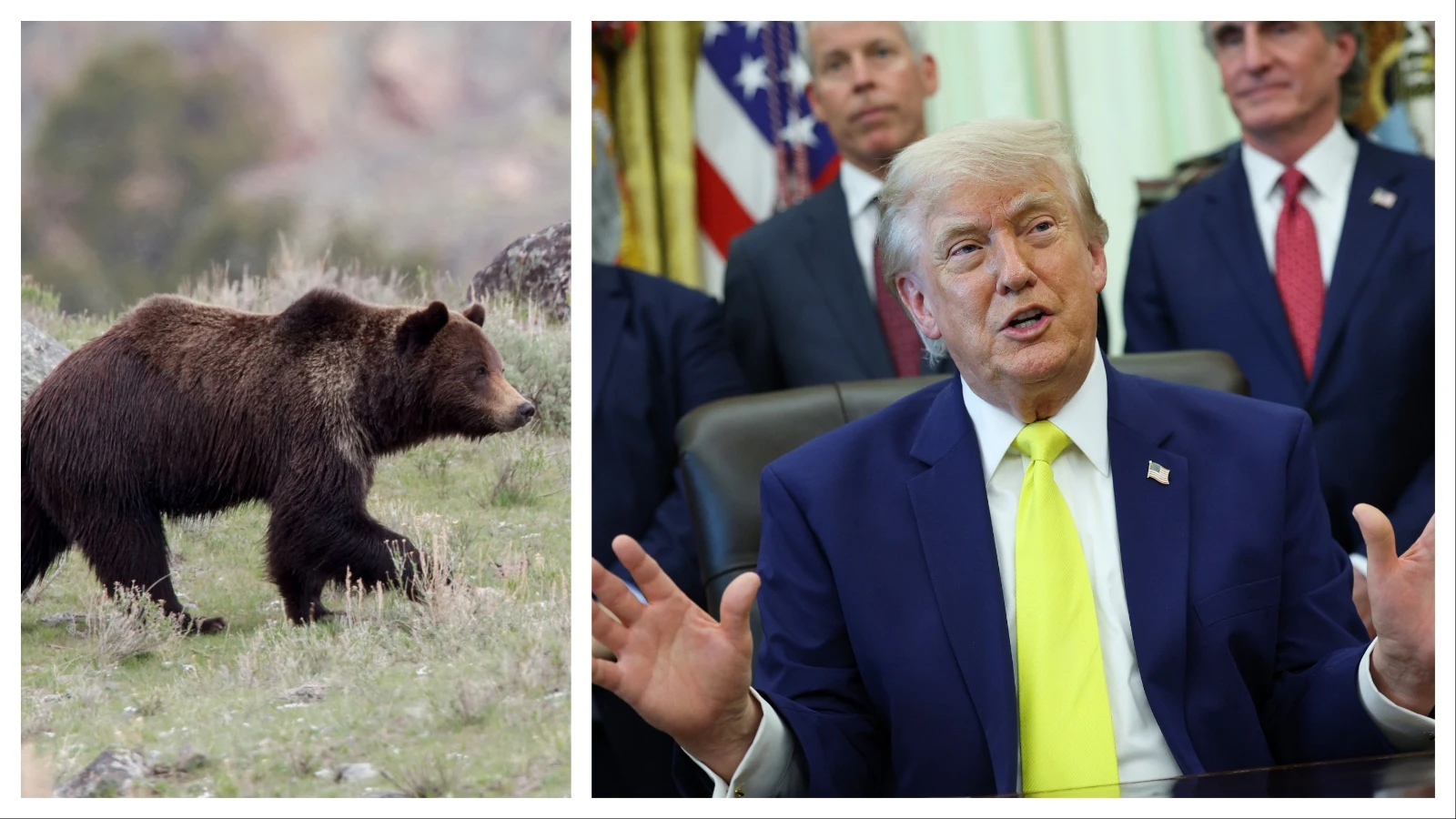
To clear the way for a roughly 43,000-acre Montana logging project, the Trump administration wants to shrink the definition of “secure” grizzly habitat from 2,500 acres down to 1 acre per bear.
Environmental groups are suing to stop it, saying that will ruin vital grizzly habitat corridors and get bears killed by trigger-happy poachers on logging roads.
However, a retired Wyoming forester argues that logging is highly beneficial for grizzlies and black bears.
At issue is the proposed Larabee Hat project in Powell County, Montana; between the Continental Divide headwaters of the Little Blackfoot River and Highway 12 near the town of Elliston.
Over the next 15 to 20 years, the project would entail building 16.8 miles of new roads and 17,696 acres of logging. That would include the commercial clear-cutting 3,210 acres and 706 acres of noncommercial thinning.
There would also be 13,791 acres of intentional burning as part of the proposed forest management plan.
Shrinking the definition of “secure habitat” for grizzlies would clear the way for road construction and other activities, according to a coalition of environmental groups suing to stop it.
Research indicates that a female grizzly with cubs needs roughly 2,000 to 2,500 acres of secure habitat, at least 1/3 of a mile away from any roads, because “most grizzlies are killed within one-third mile of roads.” That’s according to the Alliance for the Wild Rockies, one of the groups behind the lawsuit, filed in U.S. District Court against the Forest Service and U.S. Fish and Wildlife Service.
‘Grizzly Bears Thrive In Disturbed Environments’
Retired forester Karl Brauneis of Lander told Cowboy State Daily that as he sees it, claims that logging will ruin bear habitat are hyperbolic.
He said that during his career with the Forest Service, he saw the opposite.
“It’s actually very beneficial to grizzly bears to harvest timber,” he said. “Grizzly bears thrive in disturbed environments.”
Black bears benefit too, he said, because bears are “opportunistic omnivores.”
Clear-cutting timber can boost renewed growth of wild berries, which bears love, Brauneis said.
And “the rodent population just booms,” providing another food source for bears, he added.
Brauneis stated his arguments for the economic and habitat benefits of logging in an article he wrote for Smokejumper Quarterly magazine.
He stated the “environmentalists and single-species management biologists” got it wrong when they claimed that grizzlies can’t survive without vast swaths of land undisturbed by human activity.
Grizzlies now frequent settled or busy areas, such as Togwotee Pass, he stated in the article.
Bears Get Shot From Roads
Alliance for the Wild Rockies spokesman Mike Garrity told Cowboy State Daily that the Larabee Hat project isn’t the first attempt at shrinking the definition of secure bear habitat for logging projects.
It’s been previously attempted on national forests in Montana and met with legal challenges, he said.
If the Larabee Hat project gets the green light, it could set a bad precedent that could threaten grizzlies across the northern Rockies, he said.
More logging roads means less habitat for grizzlies, Garrity said.
“Female grizzlies will avoid roads and they will train their cubs to avoid them too,” he said.
Also, grizzlies are frequently illegally shot from roads, he added.
“It’s a crime of opportunity,” Garrity said.
“The killings are documented. Some of them are prosecuted, but not all of them are,” he said.
In a statement from the Alliance for the Wild Rockies, Garrity argued that the Larabee Hat project would also threaten a grizzly habitat corridor connecting the Greater Yellowstone Ecosystem and Northern Continental Divide Ecosystem.
"If that corridor is seriously degraded, which this project will do, it will prevent genetic exchange between the bears in those two isolated ecosystems leading to irreversible inbreeding,” he stated.