
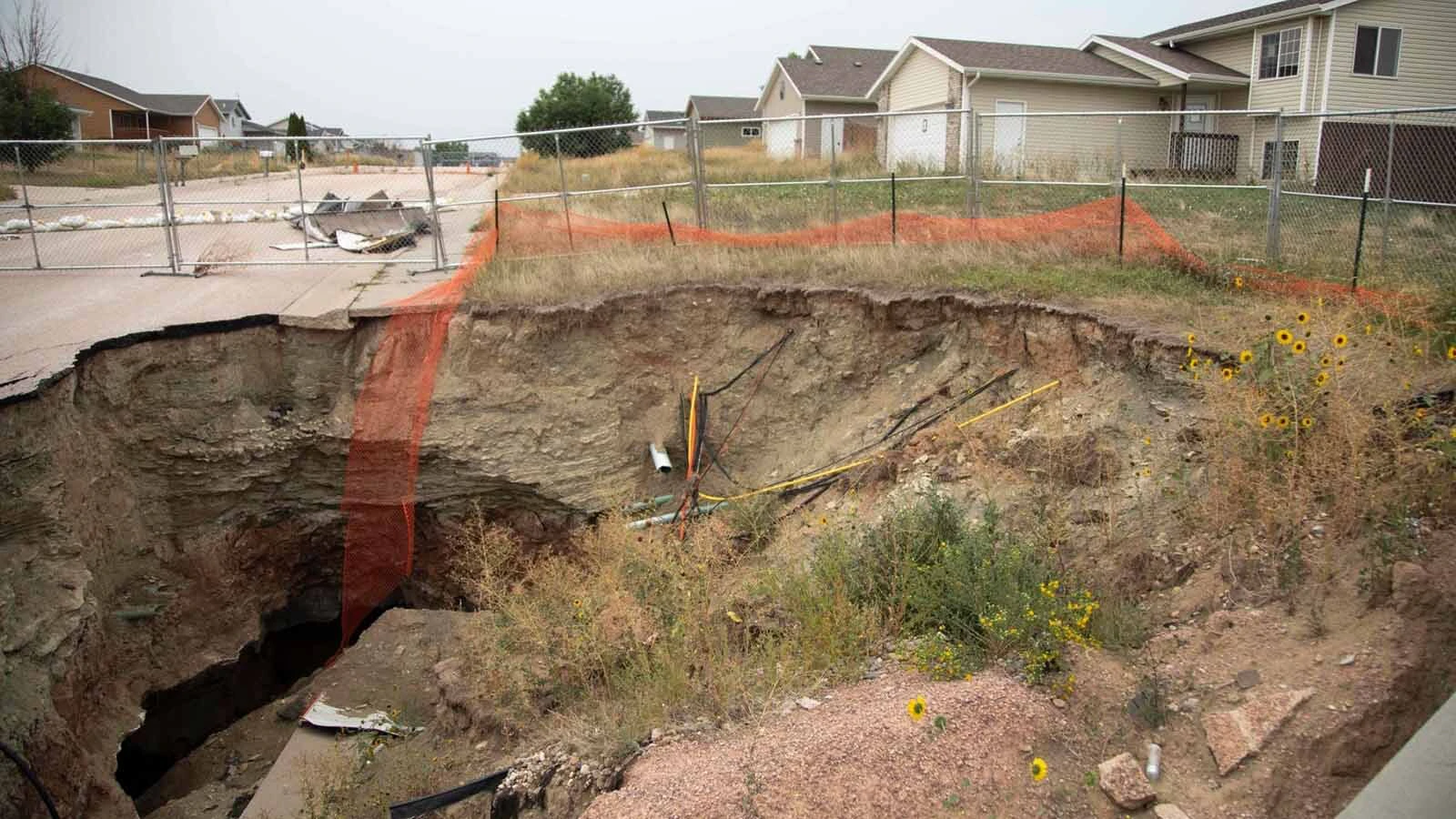
BLACK HAWK, S.D. — Six years after a massive sinkhole opened in a residential neighborhood in the South Dakota Black Hills about 55 miles from the Wyoming border, homeowners are still living in financial limbo.
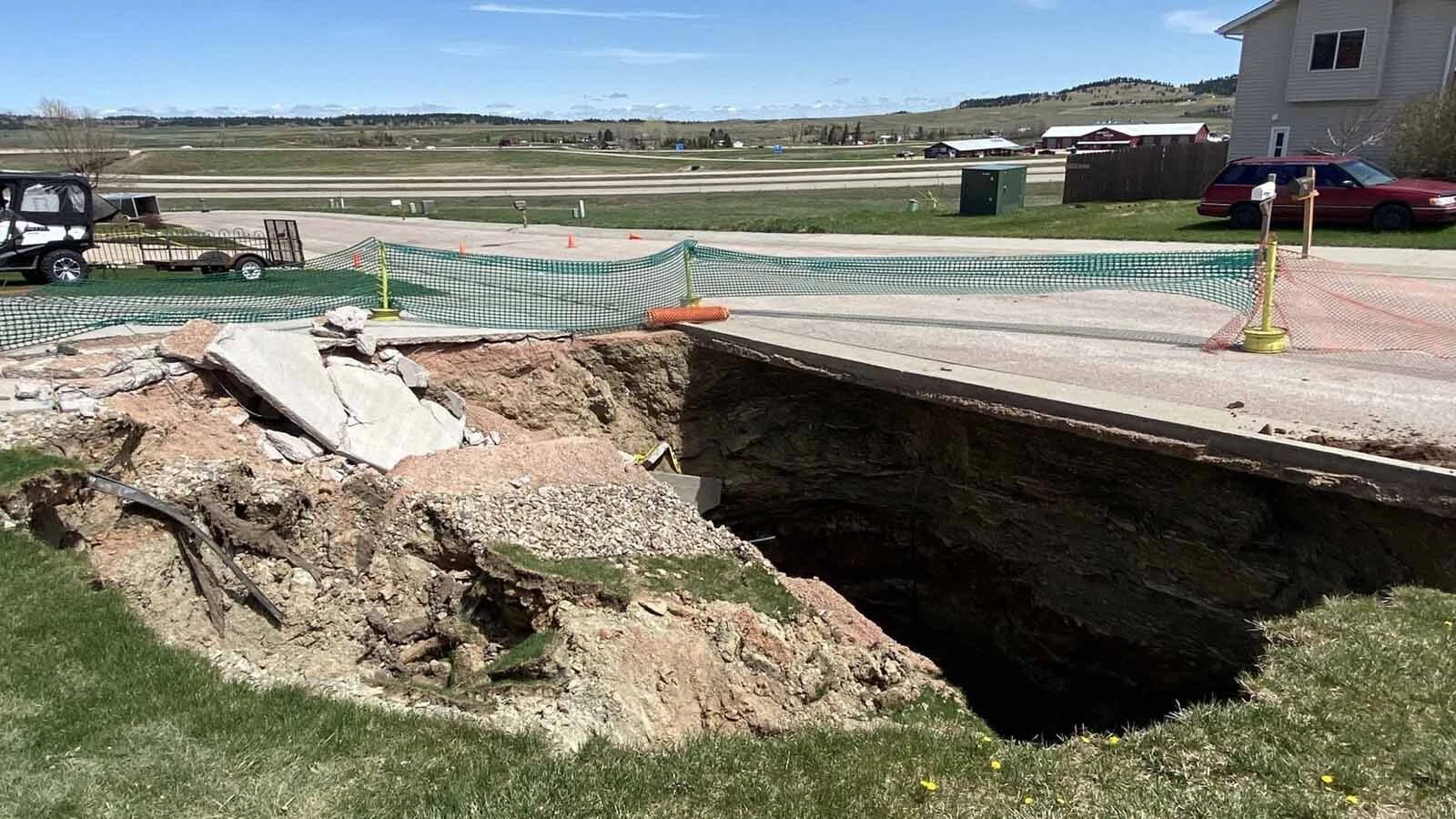
The 85-foot-deep sinkhole — and roughly 100 feet wide and 650 feet long — revealed a sprawling abandoned underground gypsum mine beneath the Hideaway Hills subdivision near Black Hawk, South Dakota.
In the years since, dozens of homes have sat abandoned and deteriorating while property owners wait for answers, compensation and accountability.
Their homes are essentially worthless. Many families are still making mortgage payments on houses they can’t safely live in while a lawsuit over who bears responsibility inches through the court system.
A pending South Dakota Supreme Court decision could determine whether affected residents have any path forward financially.
“We do not yet have an opinion from the Supreme Court,” said Kathy Barrow, an attorney with national law firm Fox Rothschild, who represents the homeowners in the case.
“There is no timeline, unfortunately,” she added. “It could be six months, next year sometime.”
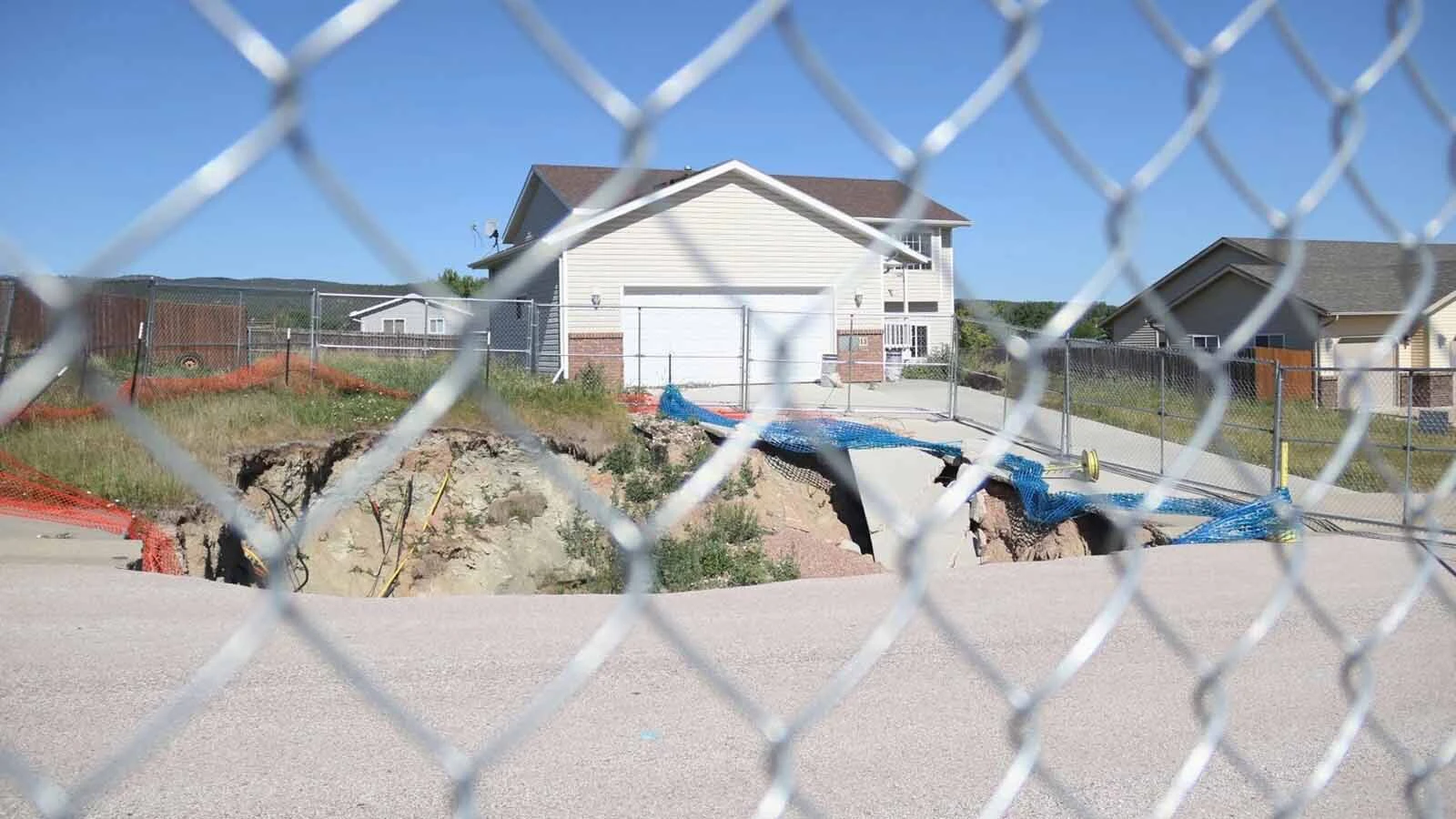
Six years after a huge sinkhole opened up in a subdivision near Black Hawk, South Dakota, victims still waiting for relief. The disaster highlights the difference between Wyoming’s abandoned mine safeguards and South Dakota’s limited protections. (Courtesy Rapid City Journal) 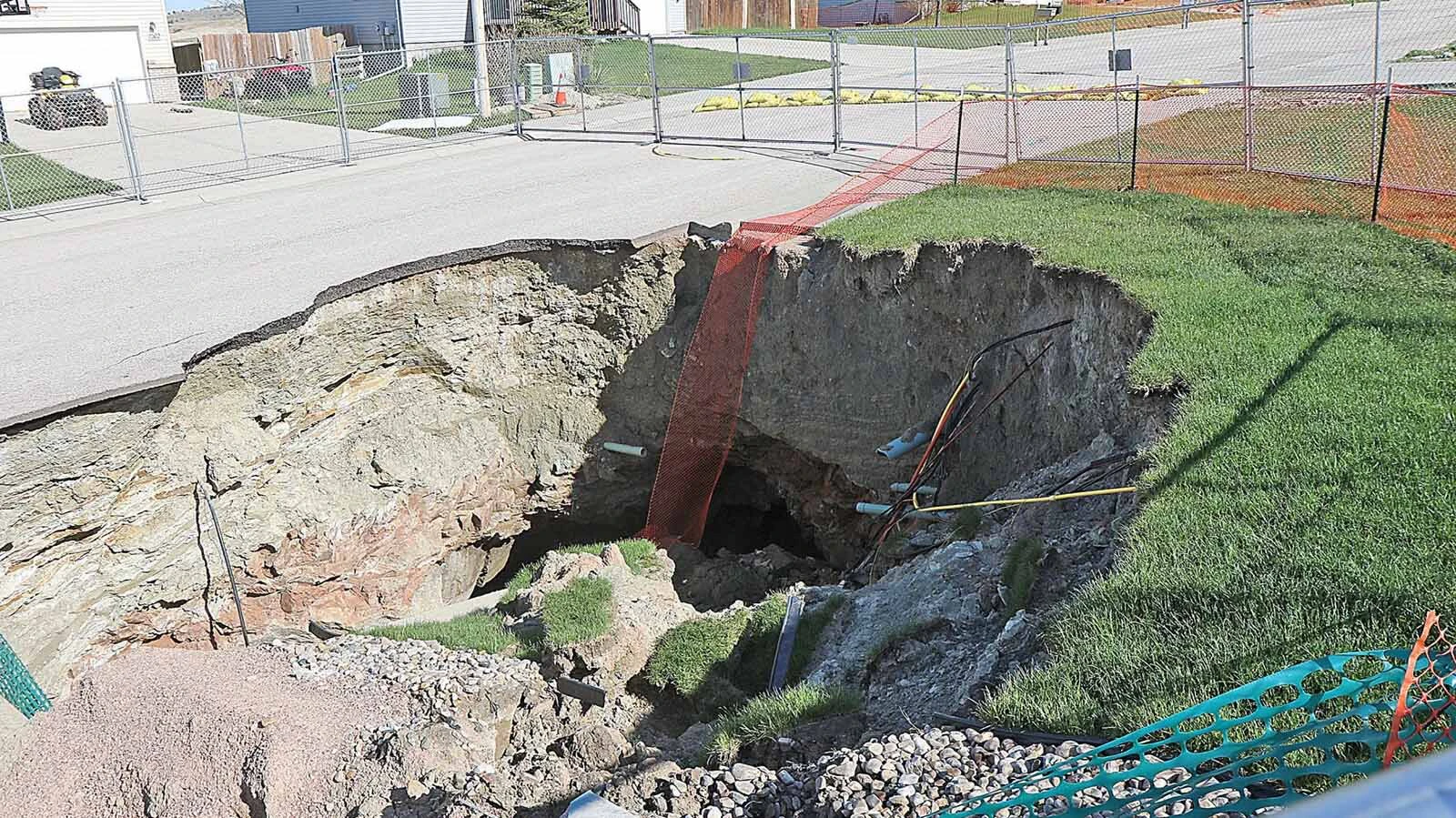
Six years after a huge sinkhole opened up in a subdivision near Black Hawk, South Dakota, victims still waiting for relief. The disaster highlights the difference between Wyoming’s abandoned mine safeguards and South Dakota’s limited protections. (Courtesy Rapid City Journal) 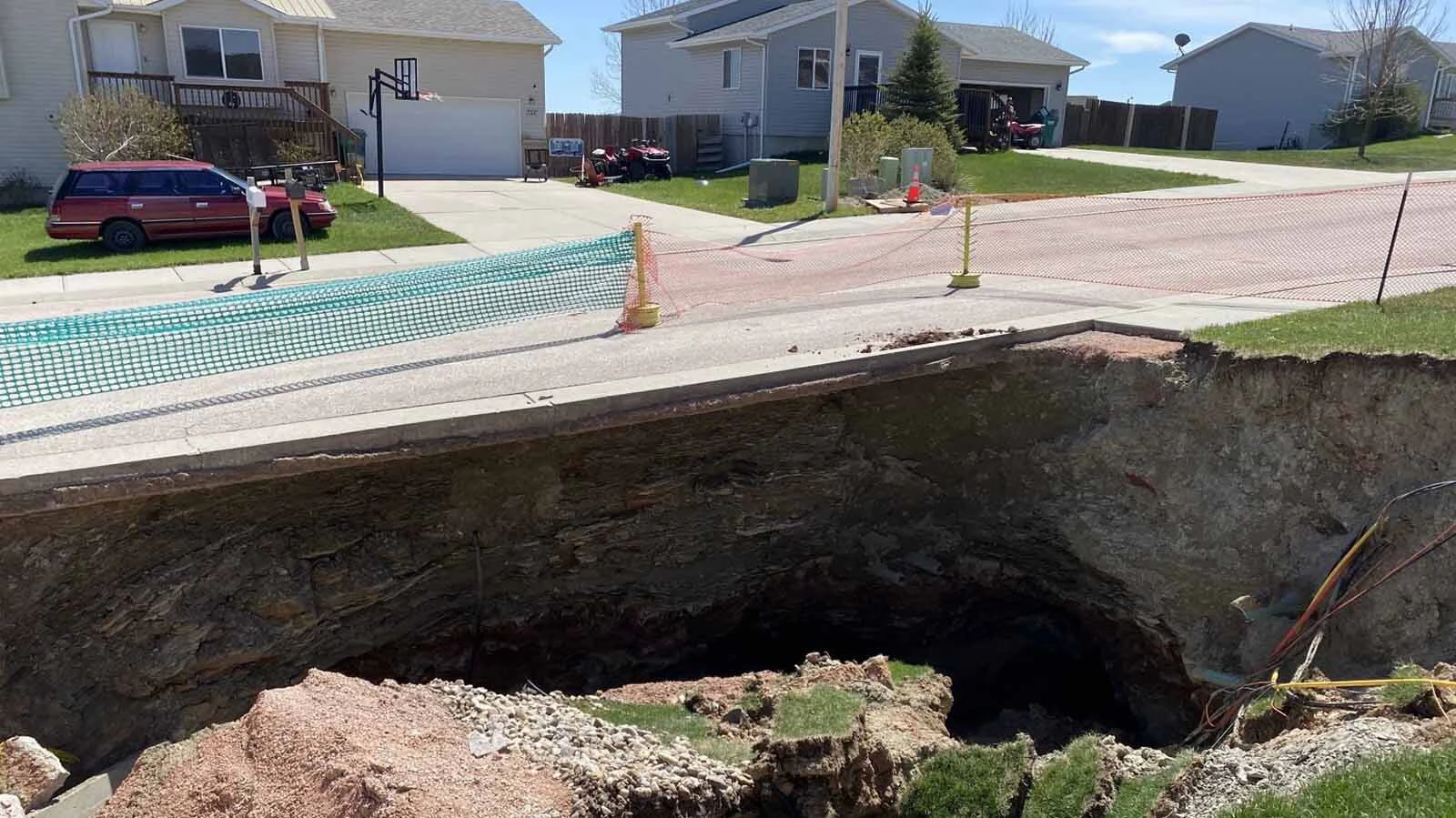
Six years after a huge sinkhole opened up in a subdivision near Black Hawk, South Dakota, victims still waiting for relief. The disaster highlights the difference between Wyoming’s abandoned mine safeguards and South Dakota’s limited protections. (Courtesy Rapid City Journal)
What Lies Beneath Hideaway Hills
The disaster traces back decades.
For more than 50 years, gypsum mining operations carved a network of underground tunnels beneath the area. ‘
In the mid-1980s, the state of South Dakota bought land there for gypsum mining activities connected to a nearby cement plant.
The state later reclaimed roughly 16 acres of mined land and reseeded it for rangeland use before selling the property to a developer in 1994. The land was eventually sold again to other developers, who built the Hideaway Hills subdivision in the early 2000s.
Residents began moving into the neighborhood around 2005.
Just a few years later, homeowners started noticing cracks in foundations and shifting ground.
Then in April 2020, the earth gave way.
The sinkhole opened near where resident Albert Reitz had been mowing his lawn.
Authorities initially evacuated residents from 13 homes because of concerns about ground instability.
Subsequent testing revealed the problem was far more extensive than initially believed.
Studies later determined all 153 homes in the subdivision were uninhabitable because of underground instability tied to the abandoned mine workings.
A study led by geological engineering professor Mohammad Sadeghi of Montana Technological University found additional underground tunnels beneath the subdivision and warned of continuing geologic risk.
Researchers also raised concerns that mine workings could extend beneath Interstate 90.
Meanwhile, property values collapsed.
“The ground is continuing to deteriorate,” Barrow told Cowboy State Daily.
She said the instability reaches far deeper than anything tied to subdivision construction.
“What the developers did was not the cause,” Barrow said. “The ground instability goes deeper than any ground the developers would have touched.”
Six years after a huge sinkhole opened up in a subdivision near Black Hawk, South Dakota, victims still waiting for relief. The disaster highlights the difference between Wyoming’s abandoned mine safeguards and South Dakota’s limited protections. (Courtesy Rapid City Journal) 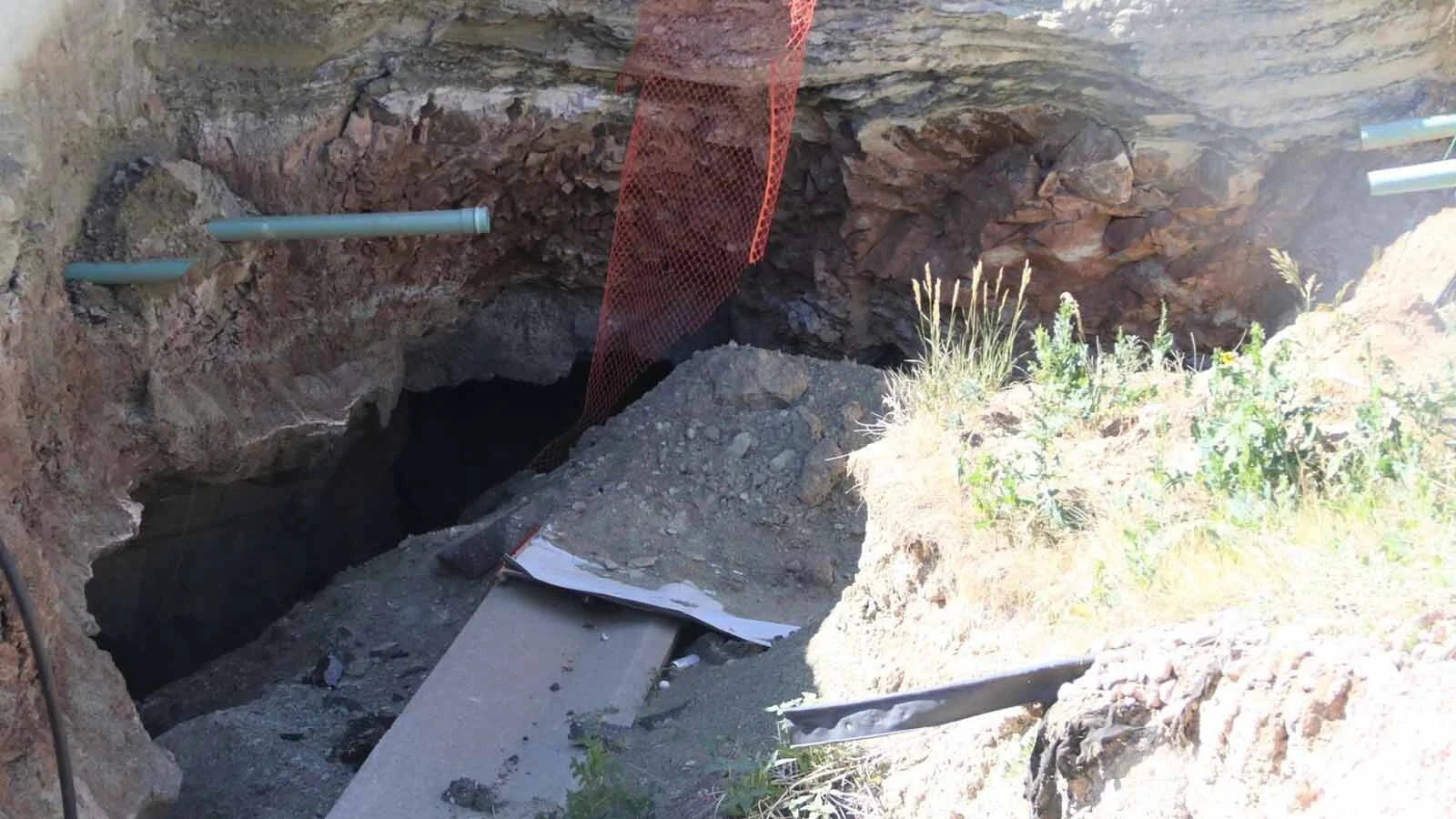
Six years after a huge sinkhole opened up in a subdivision near Black Hawk, South Dakota, victims still waiting for relief. The disaster highlights the difference between Wyoming’s abandoned mine safeguards and South Dakota’s limited protections. (Courtesy Rapid City Journal)
Homeowners Seek $60 Million
In 2024, Hideaway Hills homeowners filed a class-action lawsuit against the state of South Dakota seeking more than $60 million in damages.
The lawsuit argues the state bears responsibility because of its mining activities and because homeowners were never informed about the risks lurking underground.
Barrow argued the land was originally intended for pasture use — not residential development — and said residents had no warning about the underground dangers.
The state disputes those claims.
South Dakota argues it is not liable because it did not conduct underground mining operations at the site and says the mine collapse would have happened regardless of the state’s activities.
South Dakota Circuit Court Judge Eric Stawn ruled in favor of the state in September 2024, finding the state immune from tort liability claims.
Barrow argues the case was never framed as a tort claim in the first place.
A year after the circuit court ruling, victims asked the South Dakota Supreme Court to hold the state accountable. That decision is pending.
Meanwhile, the subdivision remains largely frozen in time.
A chain link fences surrounds the sink hole. The concrete is cracked and pale with weeds growing up in the cracks. Uncut grass is brown and long.
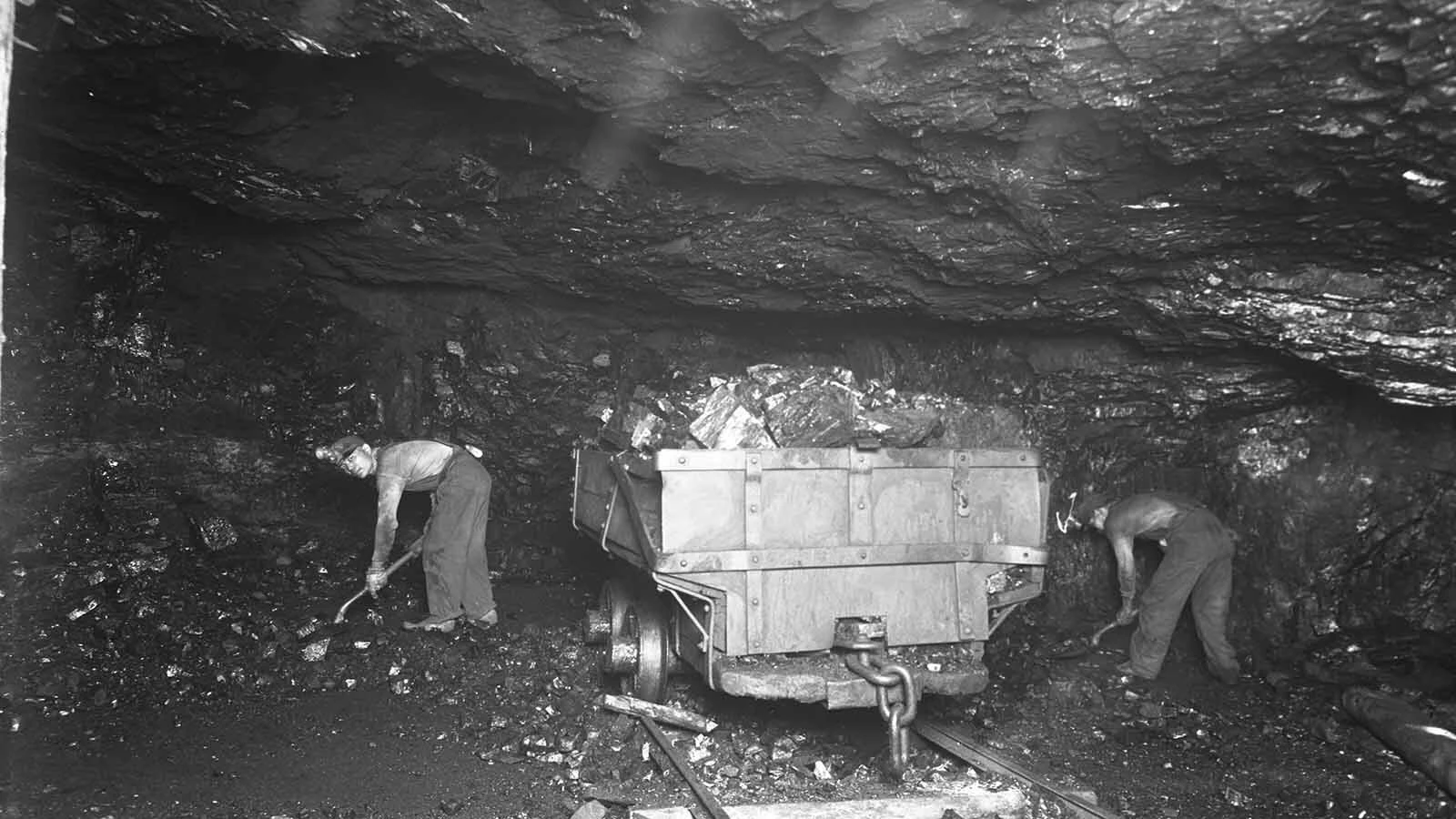
Coal mines ran extensively underneath Rock Springs, Wyoming. (Wyoming Abandoned Mine Lands Division) 
Coal mines ran extensively underneath Rock Springs, Wyoming. (Wyoming Abandoned Mine Lands Division)
Why Wyoming Is Different
The Hideaway Hills disaster highlights a major difference between South Dakota and Wyoming when it comes to abandoned mine reclamation.
Wyoming participates in the federal Abandoned Mine Land program, an initiative designed to protect public health, safety and the environment by identifying, reclaiming and restoring lands and waters degraded by historic mining practices.
The program is funded by fees collected from every kind of coal that is produced, according to Keith Guille, outreach manager for the Wyoming Department of Environmental Quality.
Wyoming, a coal-producing state, maintains a state-administered Abandoned Mine Land program through its Department of Environmental Quality.
Because South Dakota is not a coal-producing state, it does not administer such a program, according to the South Dakota Department of Agriculture and Natural Resources.
Guille said Wyoming’s abandoned mine reclamation work is funded through fees collected from current coal production.
“Obviously it’s about public health and safety,” Guille said. “That’s why we do abandoned mines.”
Wyoming’s AML division routinely performs underground reclamation work by grouting abandoned mine tunnels with concrete slurry to stabilize the ground above them.
Some of those abandoned mines lie hundreds of feet beneath existing communities, Guille said.
Rock Springs is one example where underground mine reclamation has continued for years. Similar abandoned mine concerns also exist beneath parts of Gillette and the Hanna area, Guille said.
Because abandoned mines predate 1977, before modern mining regulations existed, maps are often incomplete or inaccurate, making underground reclamation especially difficult.
“It’s a moving target when you talk about underground abandoned mines,” Guille said. “It’s a long work in progress.”
Wyoming residents also have access to the Wyoming Mine Subsidence Insurance Program, which allows homeowners to purchase insurance coverage against ground collapse caused by abandoned underground mines.
South Dakota has no comparable state-administered abandoned mine land program because the federal AML system is funded through coal production fees, and South Dakota is not a coal-producing state.
For Hideaway Hills residents, that distinction has become painfully clear.
Six years after the sinkhole opened, many are still waiting to learn whether anyone will ultimately be held responsible for the ground beneath their homes giving way.
Kate Meadows can be reached at kate@cowboystatedaily.com.


