
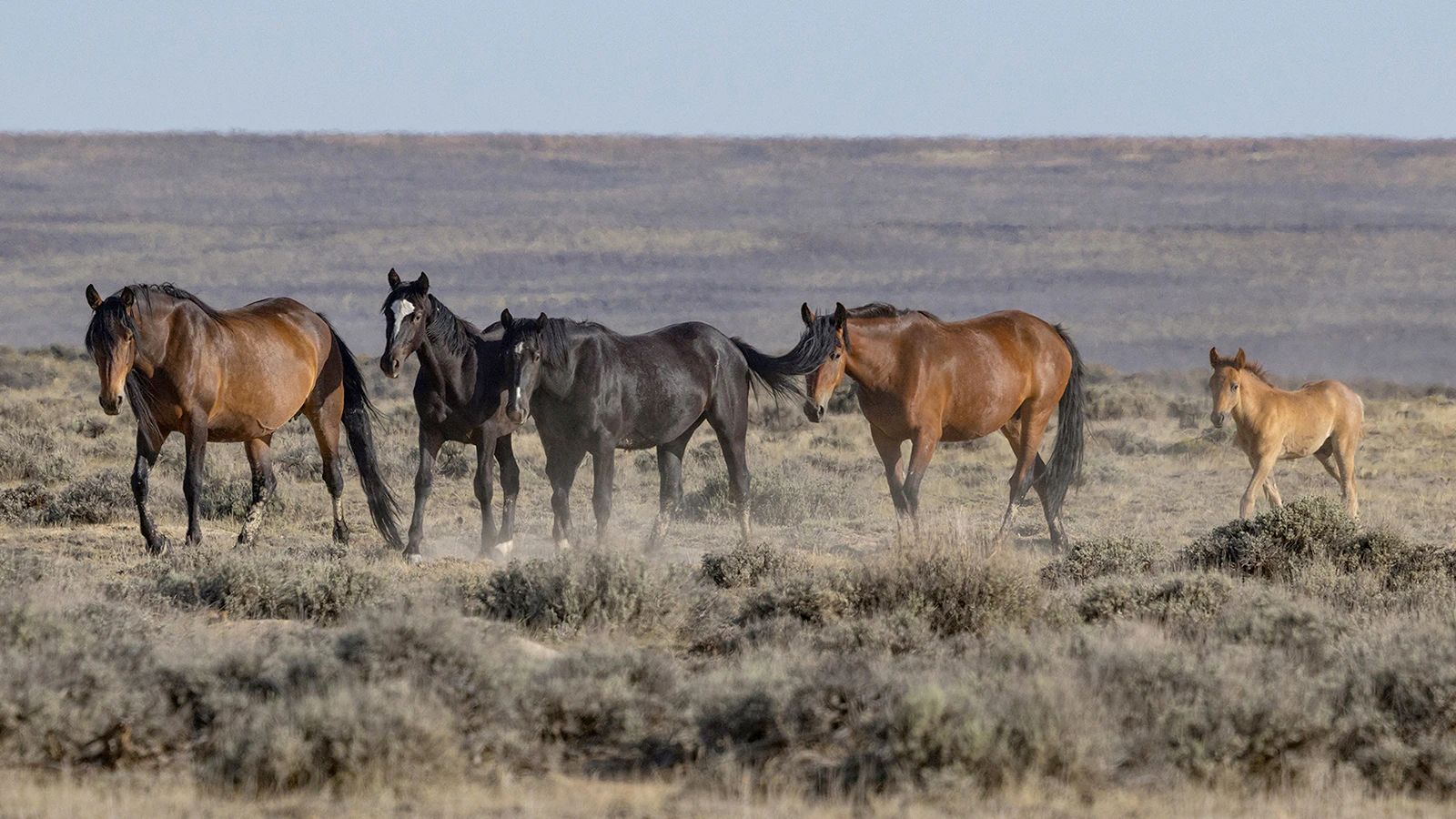
Horse advocates are claiming a New York Times investigation proves their allegations that mustangs rounded up by the Bureau of Land Management have been funneled through dealers who sold them for slaughter.
That includes horses from Wyoming, wild-horse advocate Suzanne Roy told Cowboy State Daily on Thursday.
“We got a brand number for those horses,” said Roy, who worked on the investigation as a consultant for Skydog Ranch & Sanctuary out of Bend, Oregon.
Roy and Skydog Ranch & Sanctuary founder Clare Staples previously told Cowboy State Daily that horses passed through the Wind River Ranch near Lander were sent to dealers who sold them to slaughter.
They claimed the BLM broke its own rules in doing so because the agency isn’t authorized to send horses to slaughter, either directly or by proxy.
Skydog claimed in a statement Thursday that the Times investigative piece proves their allegations. The group said it sent a letter to U.S. Department of the Interior Secretary Doug Burgum demanding an immediate shutdown of all BLM wild-horse sales.
Horses captured during BLM roundups went to livestock trader Brandon Jones in Ohio, who bought them for $25 each, the Times reported Thursday.
According to livestock inspection records, mustangs sold by the government were sent to slaughterhouses in Canada, the Times wrote.
A request for comment sent from Cowboy State Daily to Burgum’s office wasn’t answered by publication time.
The BLM denies that it’s funneled horses to slaughter.
"The Bureau of Land Management does not sell or send wild horses or burros to slaughter, and allegations that individuals are violating federal law or the terms governing the sale of these animals are taken seriously,” according to an email from the agency's national press office Thursday evening. "Violations of these laws may result in criminal fines and imprisonment. When BLM receives credible evidence of potential violations, the agency reviews that information and refers appropriate matters to law enforcement.”
The BLM said its mission remains to protect wild horses and burros, and to control their numbers though roundups and adoptions or sales, "while longstanding federal safeguards and BLM policy prohibit their sale for commercial processing. Those who abuse the program or attempt to circumvent its protections should not be confused with the thousands of responsible Americans who provide good homes for these animals.”
Mule Deer Foundation president and CEO Greg Sheehan, former head of the U.S. Fish & Wildlife Service, said there have beencases of horses going from the BLM to slaughter sale dealers.
"A little bit of what they (horse advocates) describe has happened. But that was abuse of the system; any system can be abused,” Sheehan said. "Are there a few cases? Yes, there are, but it’s not systemic.”
‘They’re Part Of Our Heritage’
Roy said to her knowledge the BLM might respond to the allegations of funneling horses toward slaughterhouses by changing the wording in its regulations.
Current policy is that the BLM can’t “knowingly” have horses sent to slaughter, she said. And it might add “recklessly or negligently” to that wording.
However, changing the BLM might be meaningless without “the will to enforce it,” she said.
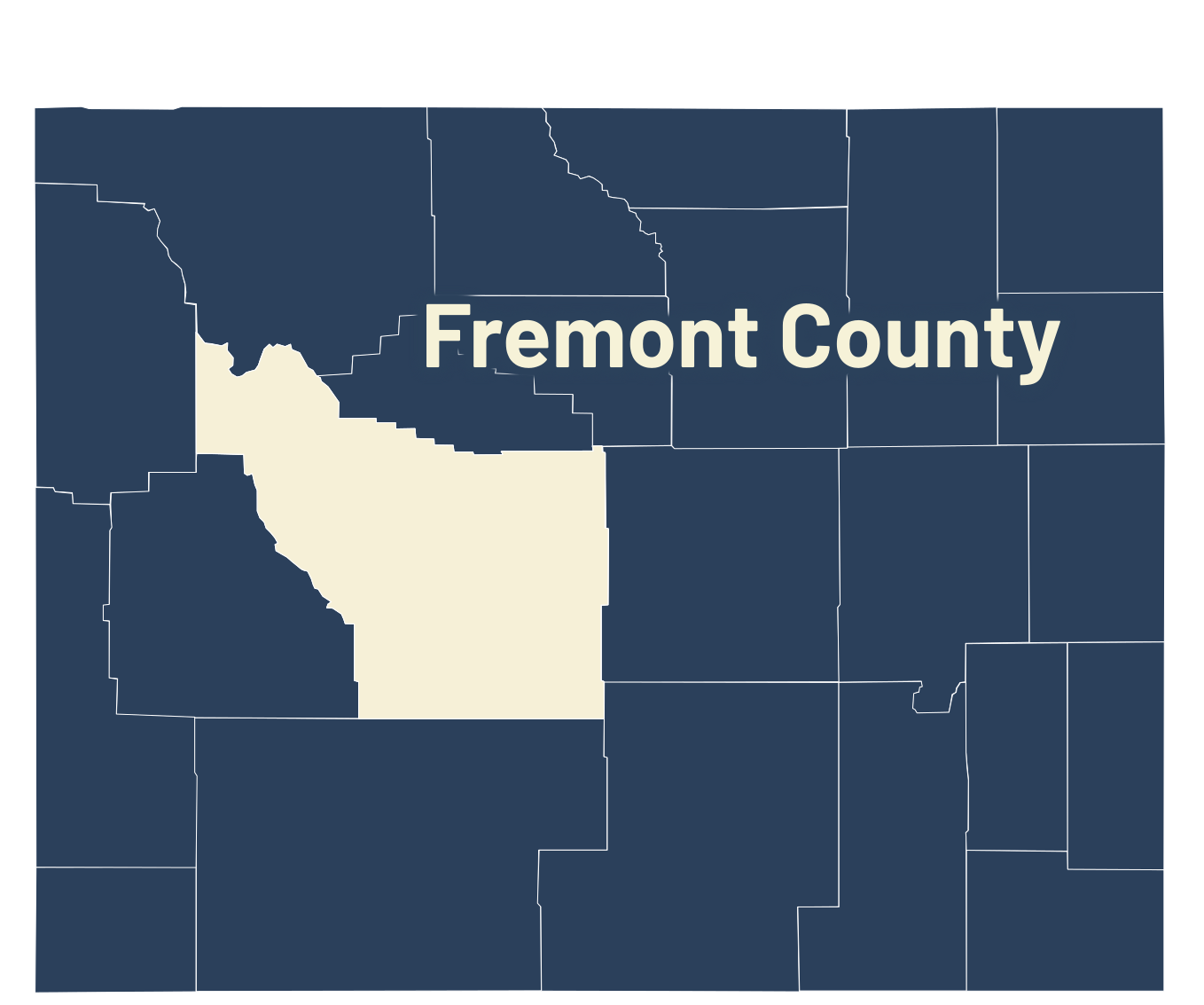
Fremont County Rancher Troy Corbett told Cowboy State Daily he grazes cattle on the North Lander Complex herd management area for mustangs.
He said he doesn’t believe the allegations leveled at the BLM.
“The BLM operates very well with that program, and I don’t think that (sending horses to slaughter) is anything they would have done intentionally,” he said.
The BLM rounded up horses from the North Lander Complex a few years ago, and that made a significant difference for the better, Corbett said.
“Given the dry conditions, had they not done that we would not be able to graze our cattle out there this year,” he said.
The roundup “was a life-saver for us, and for the horses,” because it brought the mustangs’ numbers back down to the land’s carrying capacity, he said.
Controlling mustang numbers is vital, but sending horses to slaughter should be a last resort only, Corbett added.
Corbett said he appreciates mustangs running free on the open range and he doesn’t want them to ever be completely eliminated.
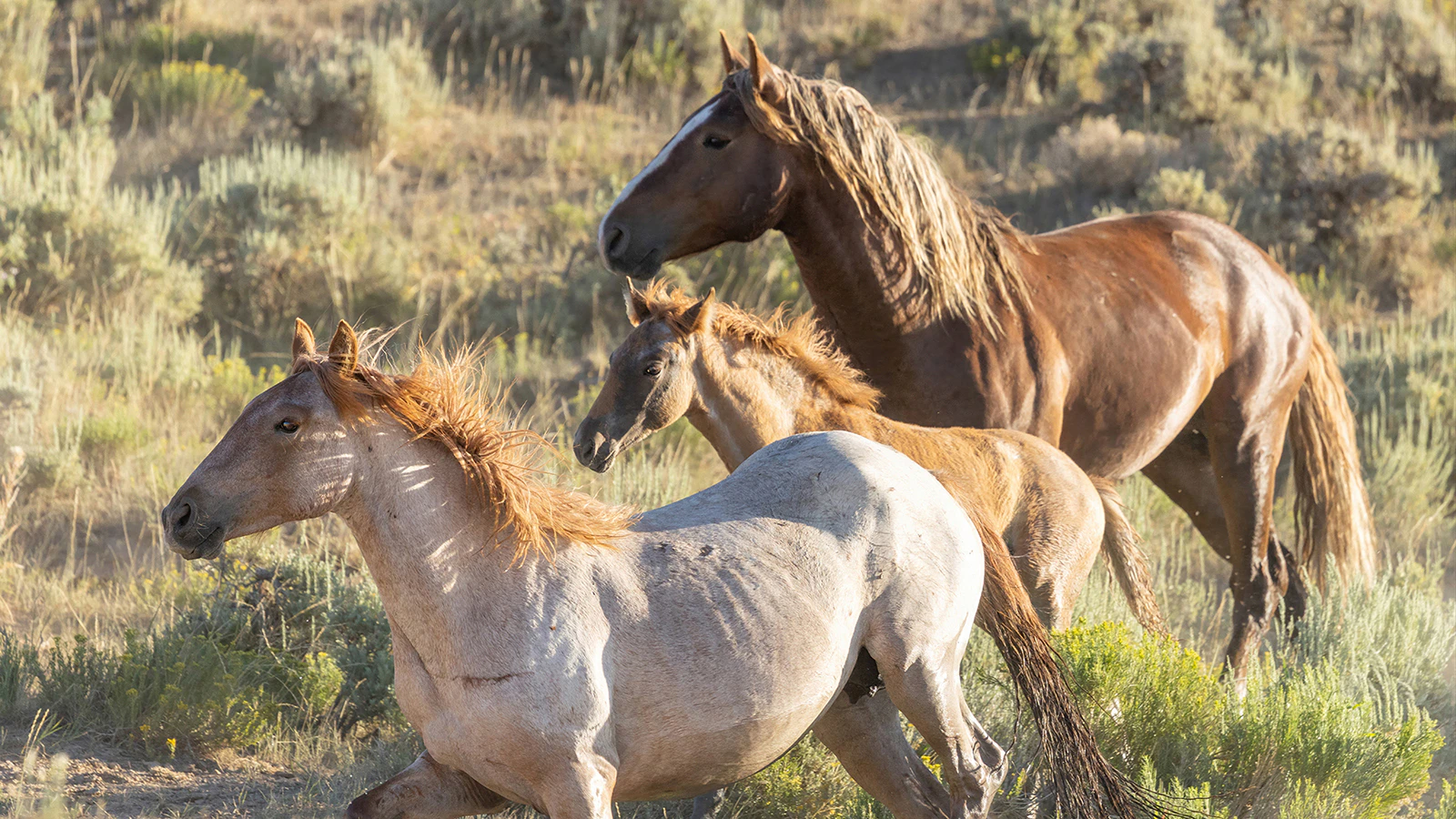
“They’re part of our heritage too. They came from ranch horse herds to start with,” he said.
'Trying To Find That Balance'
Sheehan said competition between mustangs and wildlife, such as deer, “is a very real thing.”
Sheehan knows the mustang controversy well, having previously worked as the BLM Utah state director, the director of the Utah Division of Wildlife, and director of the U.S. Fish and Wildlife Service.
“We have wild horses in Utah,” he told Cowboy State Daily.
He noted the BLM can’t adopt out horses “at scale,” or hundreds to a single party at a time, which makes a slaughter sale operation profitable.
Rangeland management is a delicate balancing act for the BLM, Sheehan said.
"Horses, wildlife, and livestock — that's kind of a triangle of mouths trying to get to the food out there,” he said. "Trying to find that balance is difficult for land managers."
Mark Heinz can be reached at mark@cowboystatedaily.com.


