
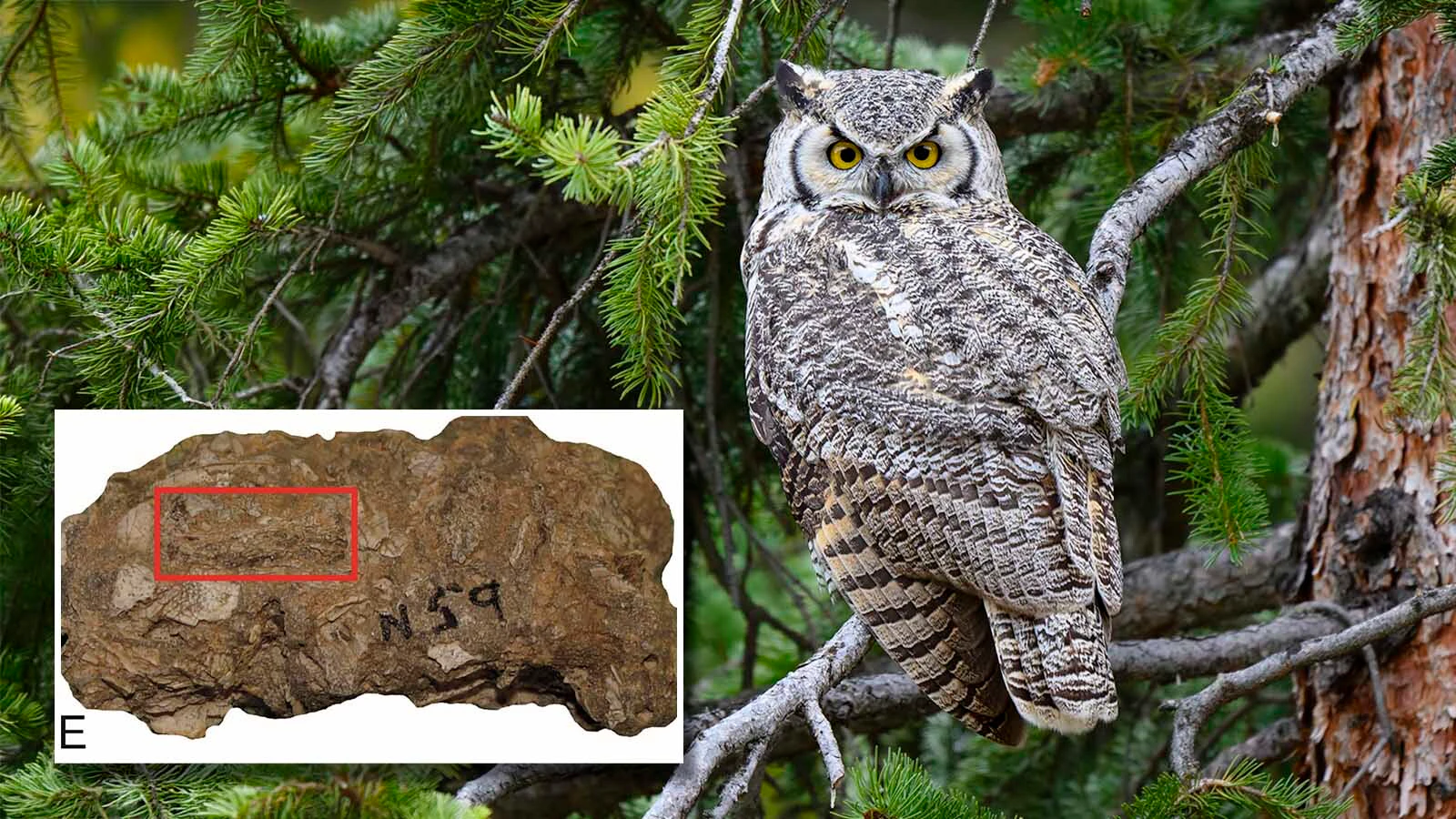
Another incredible first-of-its-kind fossil has been vomited up from the rocks of Wyoming: the oldest owl pellet in the fossil record.
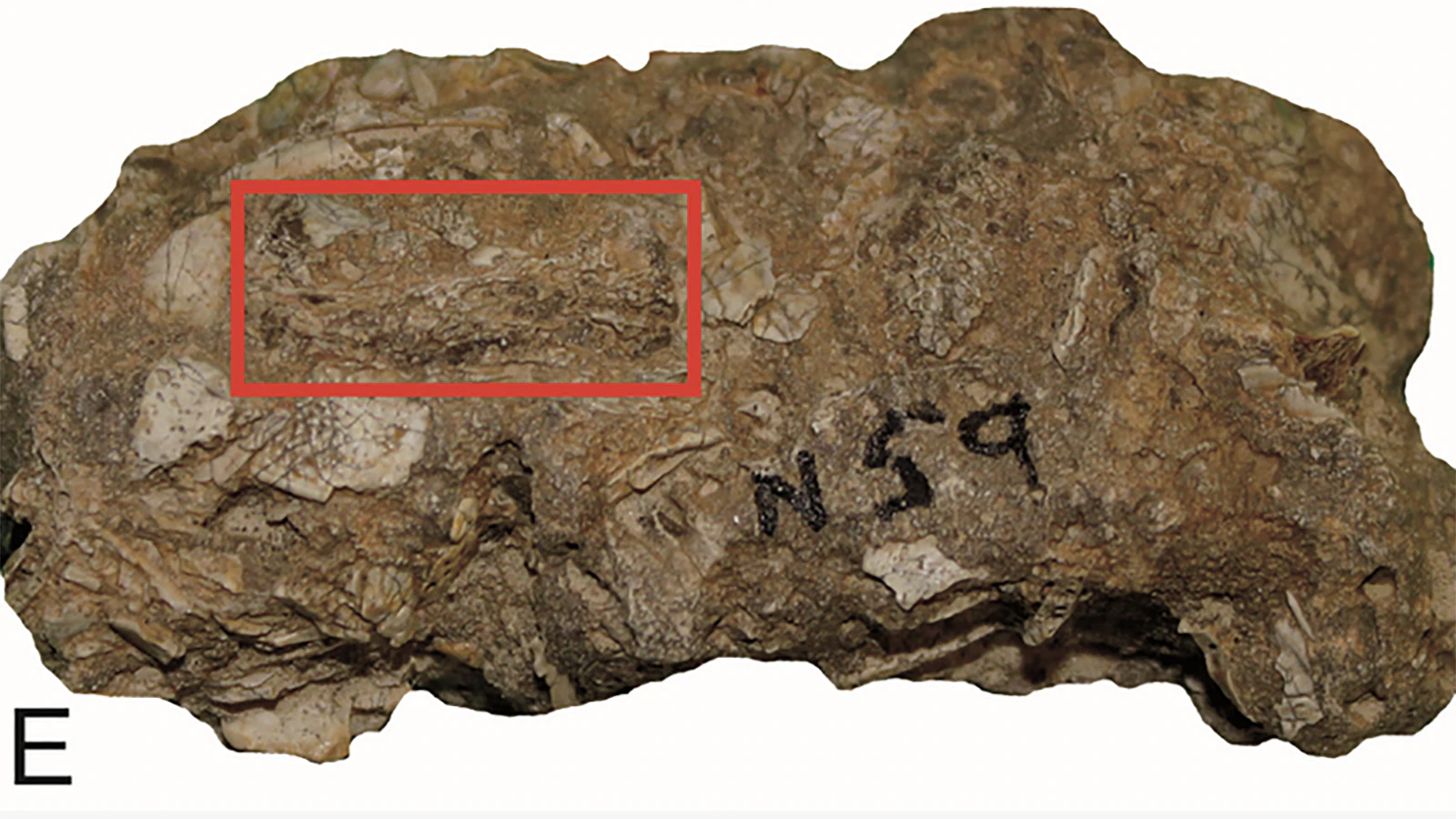
New research describes a “regurgitalite” from the Early Eocene Willwood Formation. It’s a mass of bones that was vomited out of the stomach of a prehistoric owl that lived and hunted in Wyoming around 54 million years ago.
For paleontologists, it’s an unexpected glimpse into the lives of the world’s earliest owls.
“It's a really cool specimen,” said Adrian Hunt, executive director of the Flying Heritage and Combat Armor Museum in Everett, Washington, and lead author of the new paper. “Most people don't take fossil vomit too seriously, but I think it's kind of cool. I can’t help but get excited about it.”
Pellet And Poop Professional
Hunt might be the leading expert on regugitalites. He coined the term in 1992 to describe the unique type of trace fossil.
Trace fossils are the preserved traces left by prehistoric animals. That could be anything from a prehistoric beach covered in dinosaur footprints to an horny rodent's intricate, corkscrew-shaped burrow.
The most famous trace fossils are coprolites, fossilized feces. That’s the term that Hunt used as a basis to coin “regurgitalite” for fossil vomit.
“I have a long-time interest in fossil vomit,” he said. “That’s why I came up with the term.”
Hunt was studying coprolites collected from the Willwood Formation at the University of Colorado Museum in Boulder when he noticed one that looked distinctly different.
“Regurgitalites and coprolites can look very similar, but regurgitalites tend to have lots more stuff in them,” he said. “They have more bones and pieces inside because it doesn't all get digested.”
After examining the fossil more closely, Hunt realized it had all the hallmarks of a pellet, not a poop. It’s believed to be the regurgitated stomach contents of Primoptynx poliotauros, a large owl found in the Willwood Formation.
“It’s the oldest owl pellet I’ve ever worked on,” he said.
Spencer Lucas, curator of paleontology at the New Mexico Museum of Natural History and Science in Albuquerque, is another author on the new paper.
He reiterated that what they’ve studied is a regurgitalite, not a coprolite.
“When owls eat small animals, they tend not to digest the bones,” he told Cowboy State Daily. “Most of what remains in this fossil is the bones of animals, it looks like a modern owl pellet, and we know there were owls in the Willwood Formation.
"Therefore, we think it's a reasonable inference that this is an owl pellet.”
Everyone Is Fond Of Owls
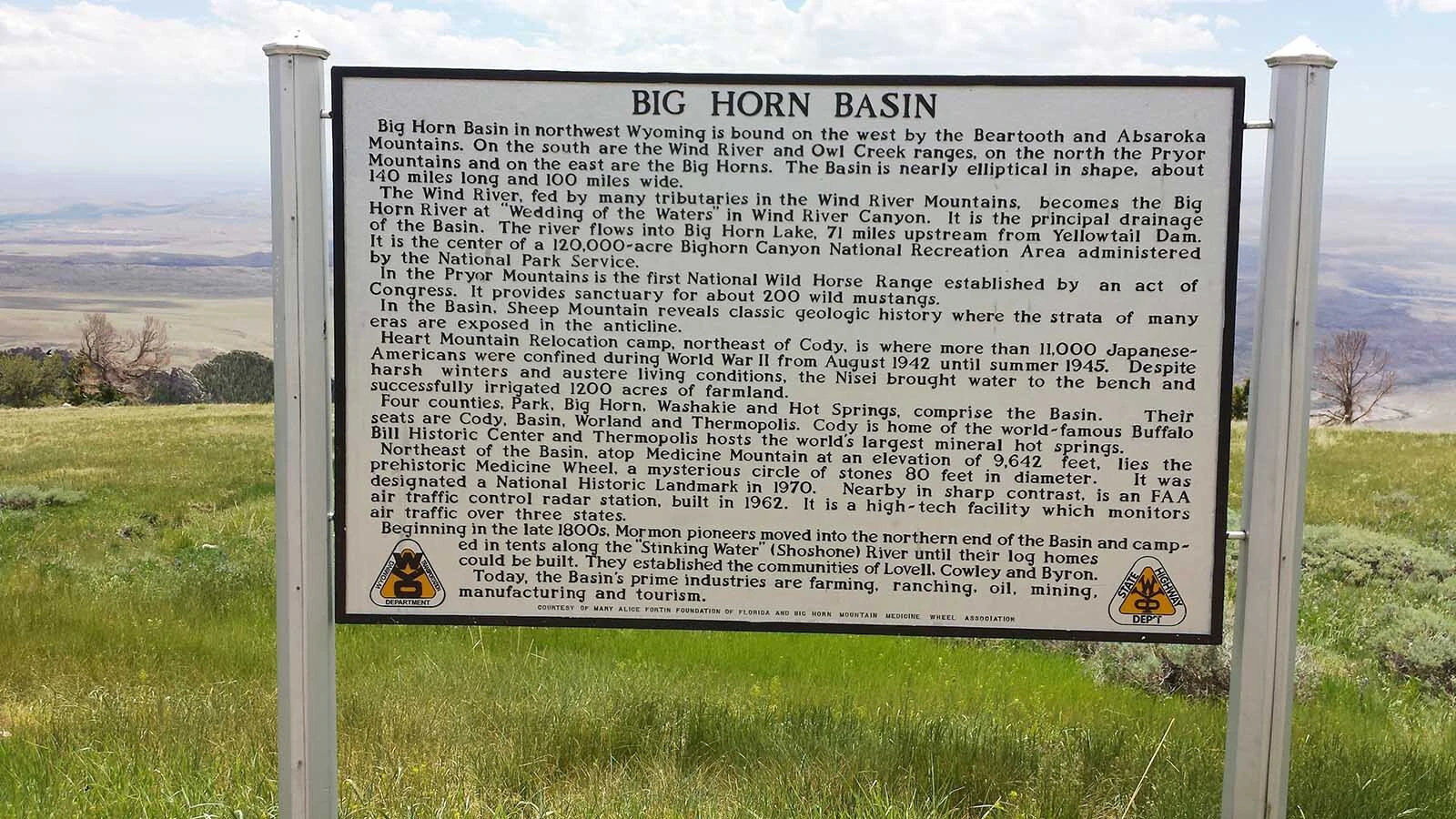
Paleontologists have found several fossilized skeletons of Primoptynx and other prehistoric owls in Early Eocene deposits worldwide. Some of the best fossils have come from Wyoming’s Willwood Formation, particularly in the Bighorn Basin, where the pellet was found.
“Owls only evolved right after the end of dinosaur time, and so this is kind of early-ish in owl time,” Hunt said. “We know there are owls from the Early Eocene, but they don’t look like modern owls.”
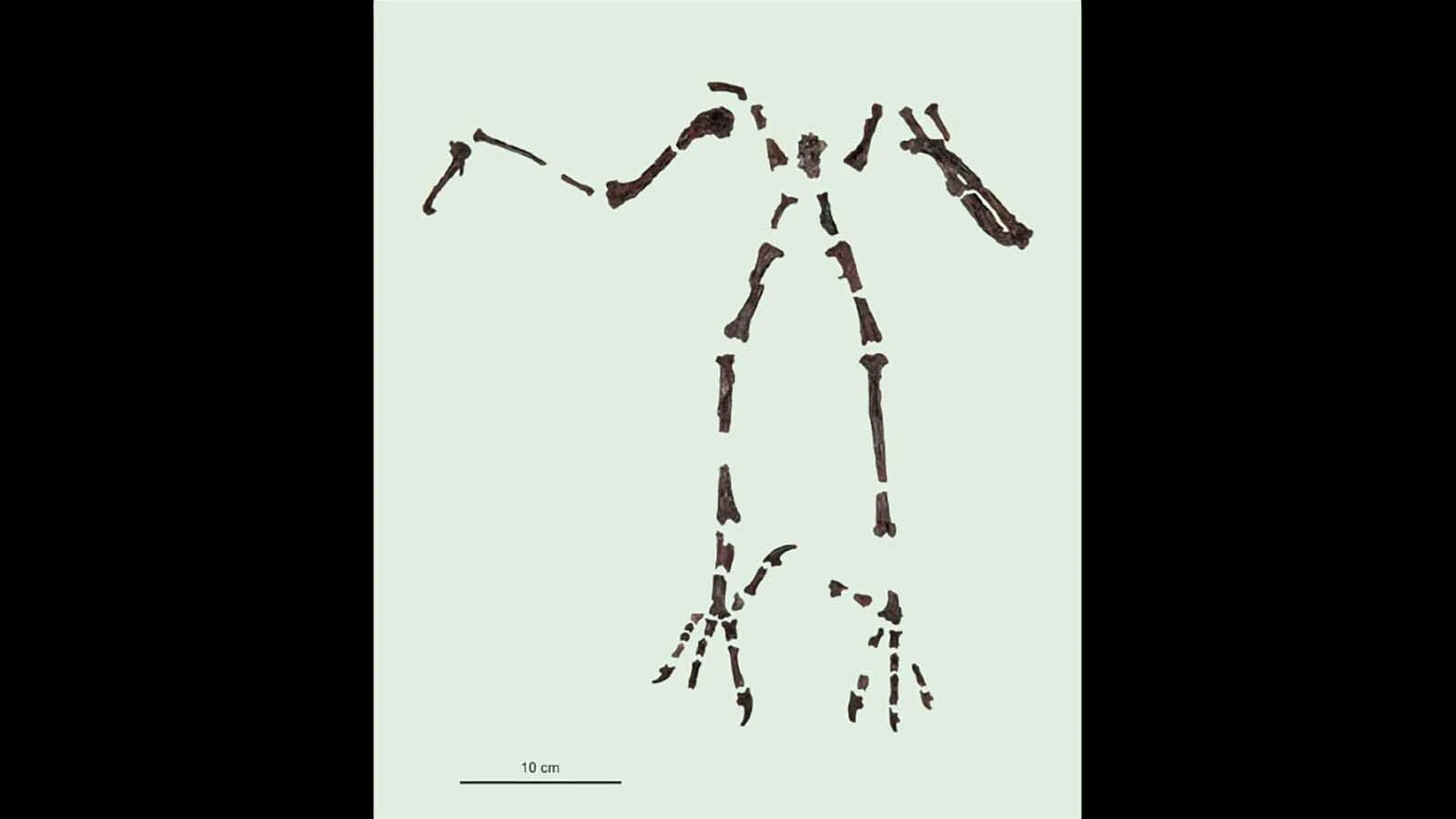
Early Eocene owls have skeletons more similar to those of modern hawks and eagles than to modern owls. The bone structure of Primoptynx led paleontologists to believe that the ancient owl hunted more like an eagle.
“When modern owls hunt, they kill with their beaks,” Lucas said. “We think there's evidence that these fossil owls actually were more like hawks and eagles, killing with their feet and talons.”
While they may have hunted differently, paleontologists believe Primoptynx and prehistoric owls consumed their prey much as modern owls do.
When owls eat, their gizzards separate the flesh and organs from the indigestible bones, fur, and feathers of their prey. They regurgitated the undigested mass of their meal as a pellet.
“These owls ended up eating the prey, swallowing it almost whole, keeping the bones in the crop or the gizzard, and eventually vomiting it up, because it's undigestible,” Lucas said. “That seems to have been going on for as long as there have been owls.”
Owl pellets are easy enough to find today. All modern owls digest, or don’t digest, their food like this.
It makes sense, then, that prehistoric owls had similar digestive systems and behaviors.
That’s where the newly described regurgitate has some incredible insights into Eocene owls.

No Graveyard Shifts
When Hunt and Lucas studied the petrified pellet, they found it was filled with osteoderms. These were bony plates that protected the bodies of glyptosaurids, an extinct group of small, heavily armored lizards from the Eocene.
The abundance of glyptosaurid osteoderms in the pellet confirms a long-held theory about the life and behavior of prehistoric owls. For one thing, it shows that Primoptynx was primarily eating lizards, not rodents.
“There are no rodent bones inside the pellet,” Lucas said. “Owl pellets today are filled with rodent bones, and there were plenty of small rodents 50 million years ago.”
The first discovery led to the second. Modern lizards are diurnal, meaning they are active only during the day.
Most small rodents, meanwhile, are nocturnal. That’s why modern owl pellets mostly contain rodent remains.
Modern owls have large eyes, asymmetrical ears, and specialized, fringed feathers, which make them virtually silent in flight. These are adaptations ideal for nocturnal hunters.
“When you look at an owl, you're looking at an extremely sophisticated and specialized hunter,” Lucas said. “It's an animal that can find mouse-sized prey in the dark. It’s an amazing example of evolution.”
If prehistoric owls were primarily eating diurnal lizards, it makes sense that they would have been diurnal as well.
Ergo, prehistoric owls weren’t creatures of the night. They were daytime hunters.
“Looking at the bones of early owls, it looks like they lived during the day,” Hunt said. “Modern owls have huge eyes and can turn their head around in weird ways, and that's so that they can hunt at night for rodents.
"Early owls didn't have those kinds of things going on in their heads, so they probably weren't nocturnal.”
That’s where trace fossils can fully confirm theories that body fossils can’t. The skeleton of Primoptynx and other prehistoric owls suggested that they weren’t nocturnal hunters, but the contents of the newly discovered pellet seemingly confirm it.
“We can’t be 1,000% certain, but the owl would have been eating rodents if it were nocturnal,” Lucas said. “That's the whole chain of reasoning that gets us from the pellet through various behaviors, how it killed, what it ate, and how it processed and regurgitated its food.”
Coming Back Up
Hunt was thrilled to get his hands on a 50-million-year-old owl pellet. It’s an incredible piece of evidence into the life and times of Earth’s earliest owls.
“Primoptynx doesn't look like a nighttime owl,” he said. “It has strange feet with big, long claws. The people who found this owl thought it was specialized for hunting something that was hard to kill during the day, and this pellet seems to confirm that.”
Now, Hunt and Lucas are hoping the pellet will provide more insight into the evolution of owls from daytime talon thrashers to nighttime beak bashers.
“When you go far enough back, you're going to get to a less specialized owl, an owl that wasn't hunting at night the way modern owls do,” Lucas said. “The pellet fits our current understanding of owl evolution. We’re able to add a whole new piece of evidence to a story that isn’t based on skeletal structure.”
This is the oldest owl pellet ever studied, but it wasn’t the first. Hunt already has a collection of Bubobromus regurgitalites, thrown up by an owl that lived around 40 million years ago during the Oligocene.
Based on their contents, Hunt said these regurgitalites are the earliest-known nocturnal owl pellets. That means owls transitioned from diurnal to nocturnal hunters in the 14 million years between the Eocene and Oligocene.
“I name those regurgitalites after my wife,” he said.
Volumes From Vomit
Remarkably, the Bubobromus regurgitalites that Hunt is studying are also important Wyoming fossils. The oldest owl pellet came from the Bighorn Basin, but these young nocturnal pellets were collected from a site near Douglas.
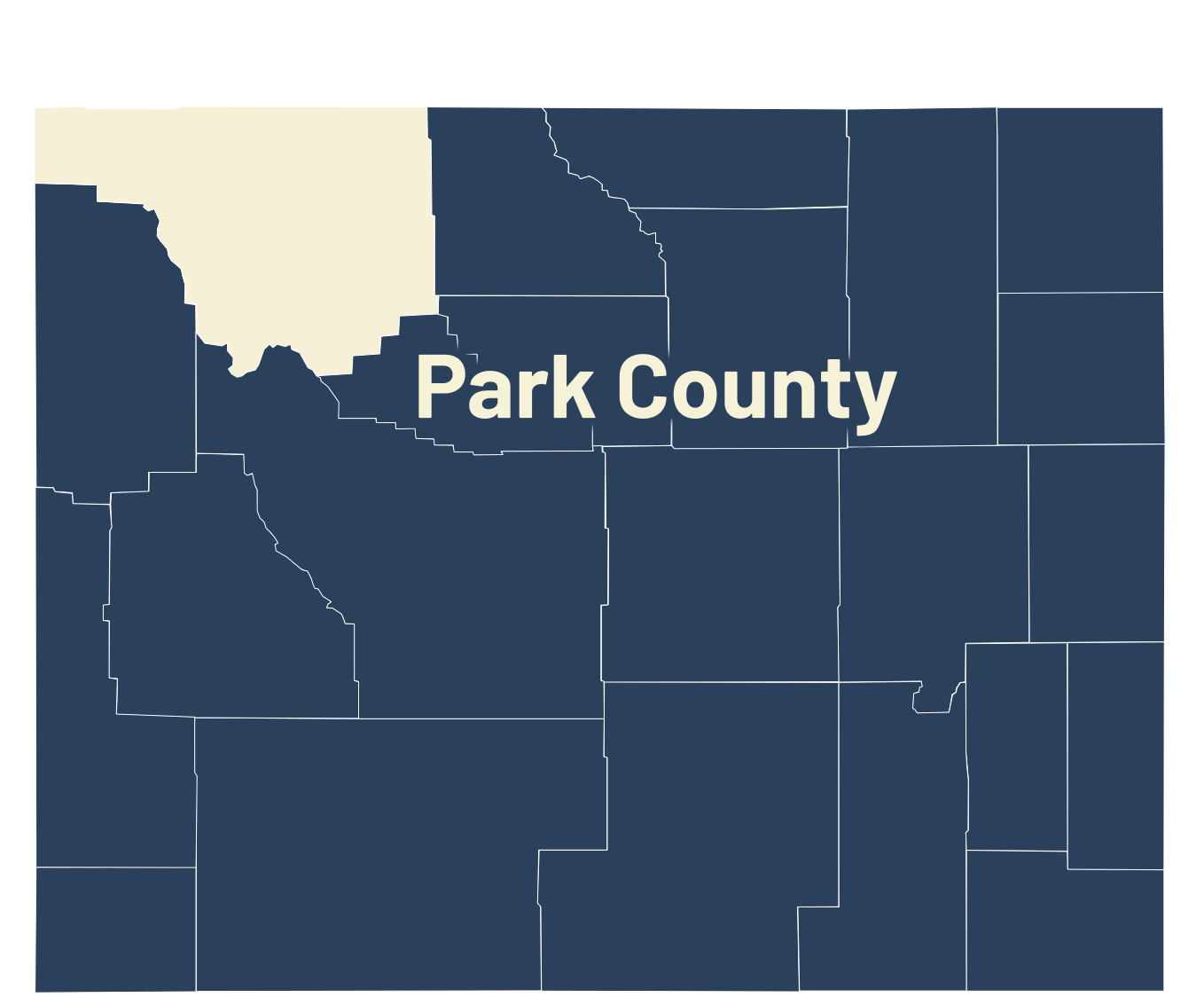
Wyoming’s fossil deposits attract paleontologists of all stripes. Lucas said the Eocene Willwood Formation in the Bighorn Basin, where the pellet was found, is “world famous.”
“It has one of the best records on Earth of life between 50 and 55 million years ago,” he said. “It's been studied by paleontologists going all the way back to the 1800s, but this kind of fossil had never been identified before in the Willwood. It brings a whole new piece of data to the story.”
Hunt’s research is focused on “the food products” of prehistoric animals. That’s why he’s spent so much time sifting through petrified poop and vomit and “consumulites,” the fossilized remains of an animal’s stomach contents.
Now that he has a wider range of prehistoric pellets, Hunt hopes to understand when, how, and why owls transitioned from diurnal to nocturnal hunters.
“That’s why I’m really into these things,” he said. “They tell you something about digestion, hunting, and feeding that you can guess what they're eating by looking at their heads and claws.”
Lucas hopes paleontologists will use their pellet paper to acquire a new set of eyes and on-site strategies. The only thing better than one Eocene owl pellet would be two or more.
“We want more of these,” he said. “There cannot be just one regurgitalite out there.”
Ornithologists regularly collect owl pellets to study everything from diet and predation pressures to population demographics and environmental changes in modern ecosystems.
With enough fossilized pellets, Lucas believes the same types of studies could be done with prehistoric ecosystems.
“If we had a big sample of regurgitalites, we would learn much more about these ancient owls and their diets,” he said. “If you’re collecting in the Willwood, let's find more of these so that we can analyze them in a quantitative way.
"Then, we can get a much more precise handle on who was eating whom.”
Different Stories
Hunt can’t help but laugh at the nature of this discovery.
His fascination with fossilized vomit continues to contribute to paleontology’s understanding of prehistoric worlds. So much about the lives of Eocene owls has been discovered thanks to this cigar-shaped rock that was once a slimy, regurgitated mass of an owl’s undigested dinner.
“It's a very exciting discovery, and a wonderful story of the different kinds of stories we can tell with different types of fossils,” he said.
Andrew Rossi can be reached at arossi@cowboystatedaily.com.


