
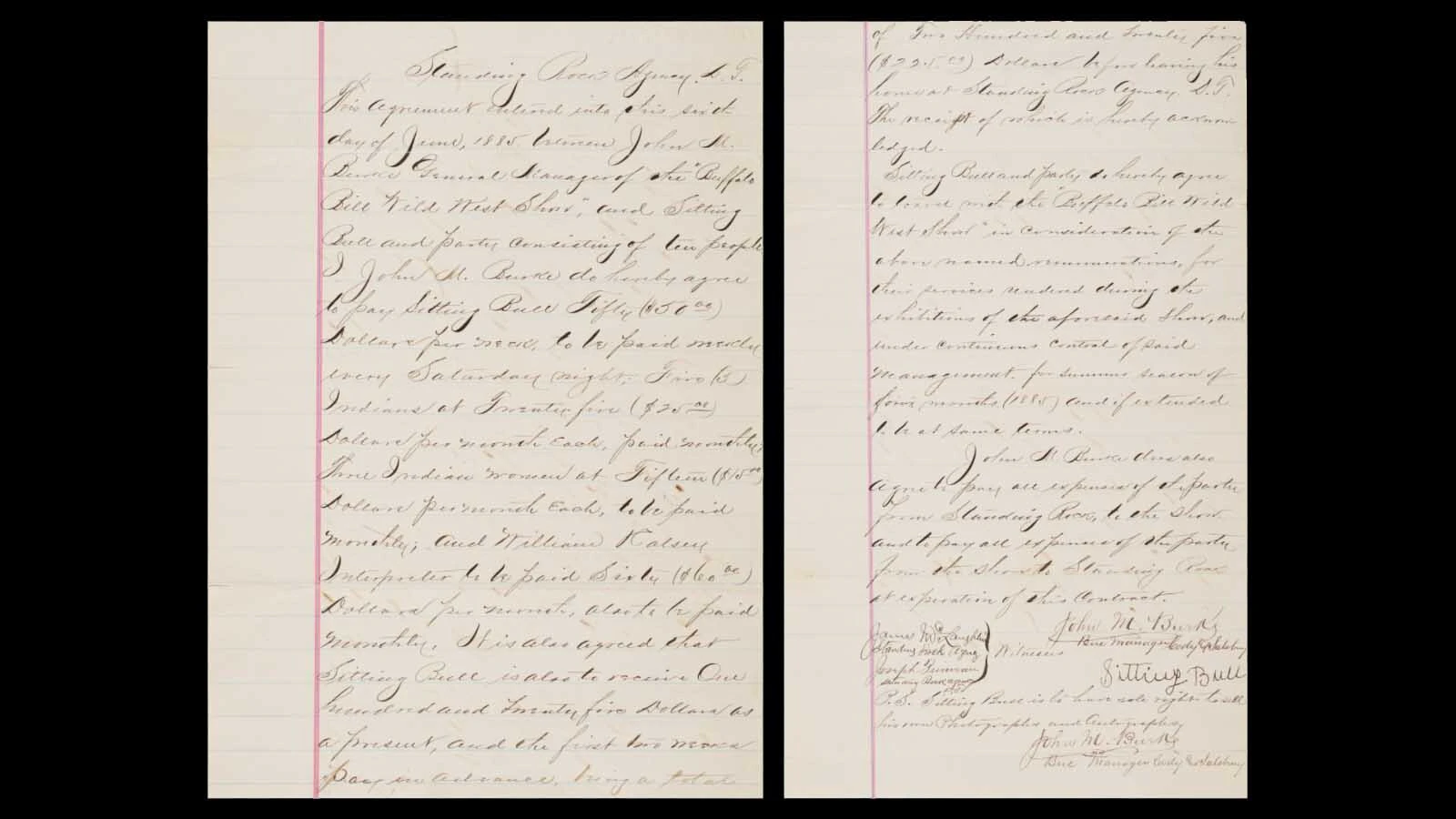
Eye-catching pieces of Wyoming’s Wild West history are hitting the auction block, including a glass plate negative of Butch Cassidy’s prison photo, a contract between Sitting Bull and Buffalo Bill’s "Wild West Show" and more.
But at least one Wyoming historian is suspicious that Cassidy mugshot negative is not as authentic as portrayed, and other Wyoming museum directors say they likely cannot afford to buy any of the items to bring them home to the Cowboy State.
The sale is being handled by RR Auction and includes what the auction house describes as 170 high-end pieces of Western Americana drawn from the private collection of former Harley-Davidson CEO and conservationist Jochen Zeitz, who is selling the items to support nonprofit work in Kenya.
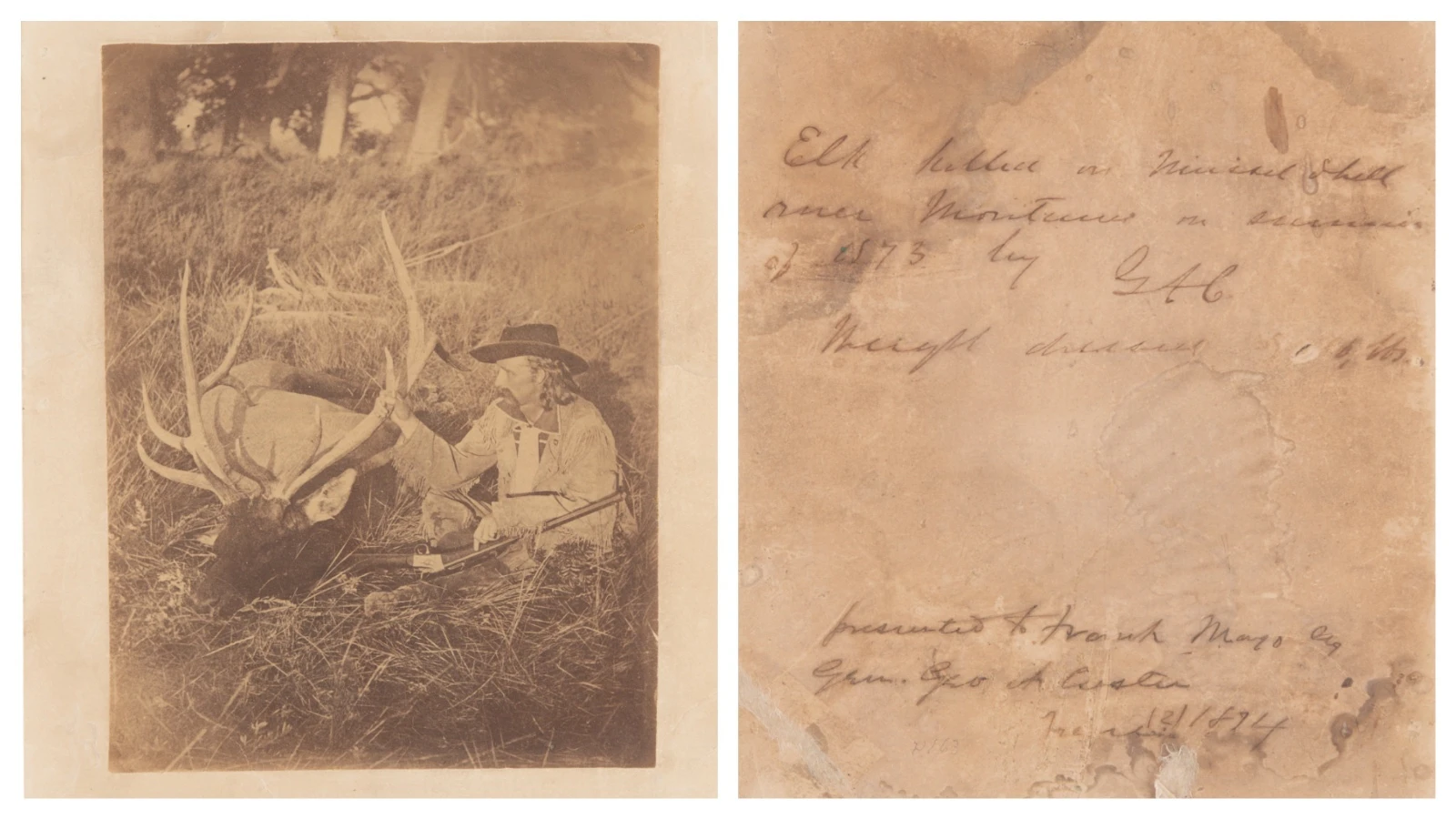
The pieces in the collection are a who’s who of the Wild West.
Signed documents and letters from the likes of Wyatt Earp, Wild Bill Hickok, Kit Carson and Davy Crockett, as well as photographs and memorabilia from prominent Western figures like Gen. George A. Custer, Annie Oakley, Texas Jack Omohundro, Frank James, and John C. Fremont.
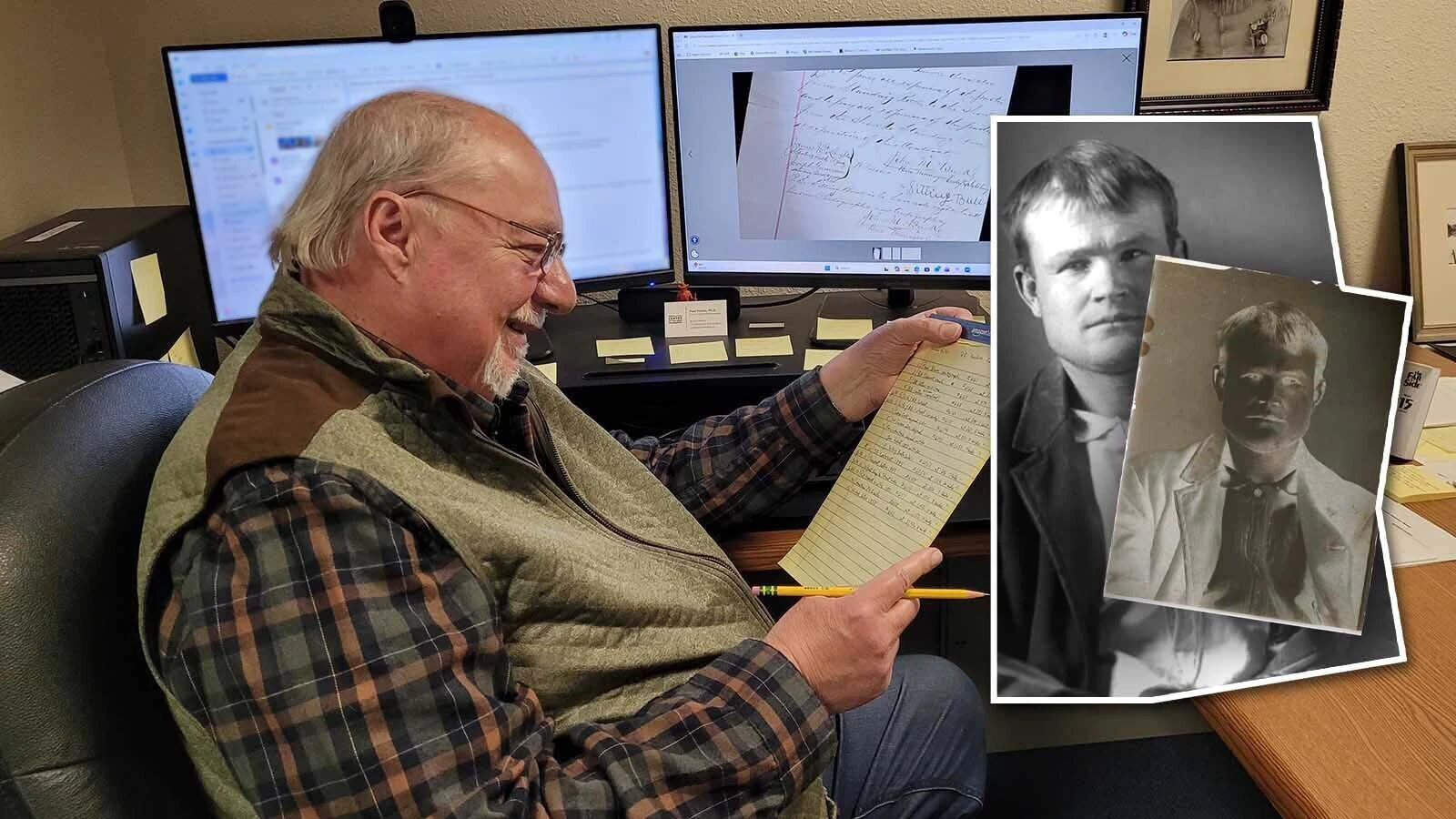
The Butch Cassidy mugshots and the Sitting Bull contract are two items that have really caught Paul Hutton’s attention, though he said he wouldn’t buy them.
He’s the Tate Chair of Western History and curator of the Buffalo Bill Museum and Buffalo Bill Center of the West.
“Our museum doesn’t have the resources institutionally to purchase anything,” Hutton told Cowboy State Daily. “But I’m talking to some people who do have the resources, because the Sitting Bull contract is like a piece of the true cross for us.”
Hutton has also written to the auction house about the contract’s provenance, and plans to call it to talk about what kind of authentication work has been done, such as whether the age of ink or paper have ever been tested.
“It looks very authentic, but their AI email back to me was that it cannot be authenticated in terms of chain of ownership,” Hutton said. “Which is very important.”
The contract is something Hutton has seen once before when it was at a museum near Hardin, Montana, run by a man named Court Lander.
“That must have been 15 years ago,” Hutton said. “And I knew him and had visited with him several times. He had shown the contract to me, and then he put it up for sale with Heritage Auctions.”
The document was flagged at the time for potential purchase, Hutton added, but the museum didn’t have enough money.
“Apparently, it was bought by this German businessman, whose collection is comprised in this big auction that (RR Auction) is doing,” Hutton said. “And (Zeitz) is the real deal. I mean, he’s a fabulously wealthy businessman.”
Questions Cloud Cassidy Mugshot
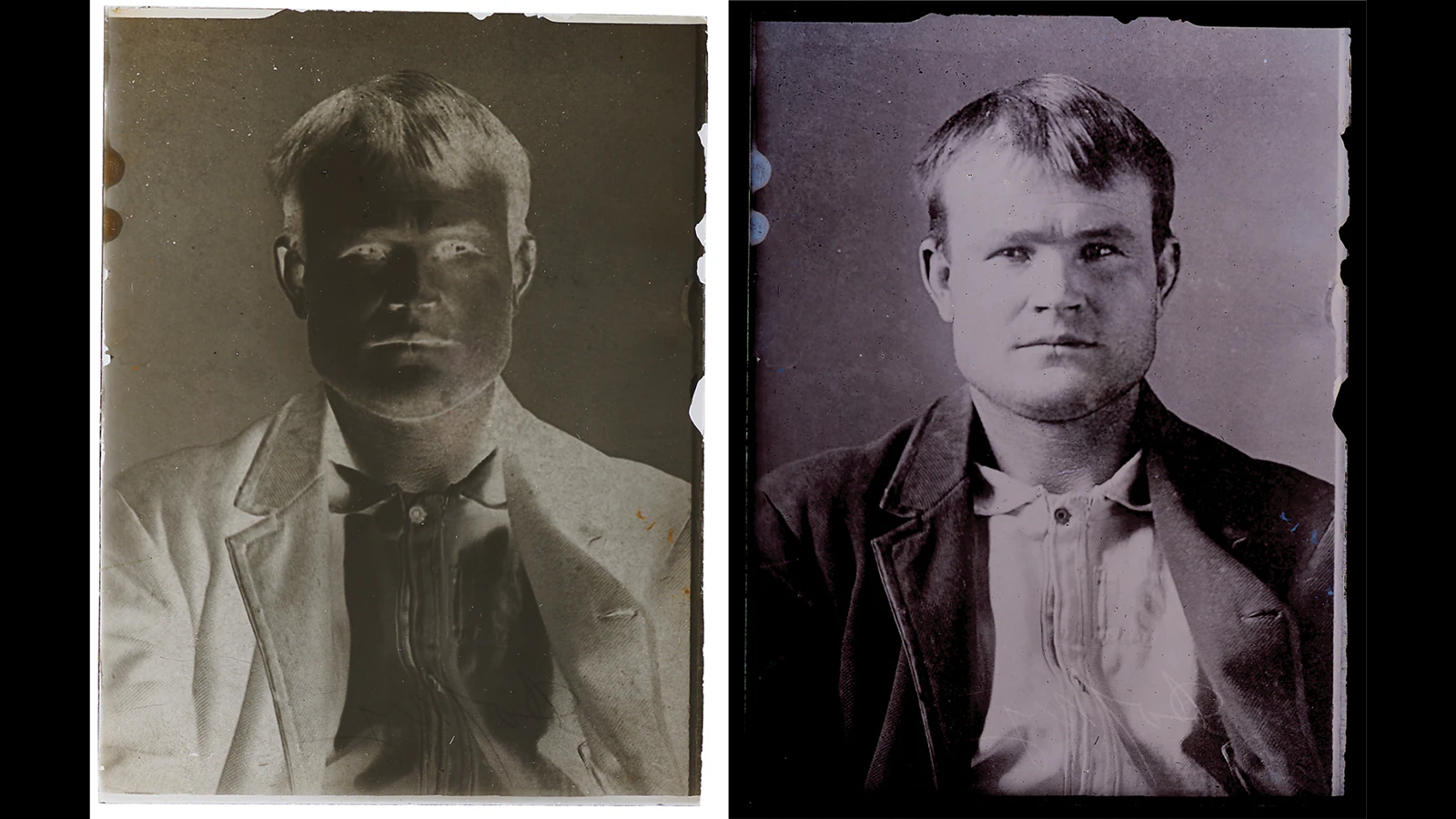
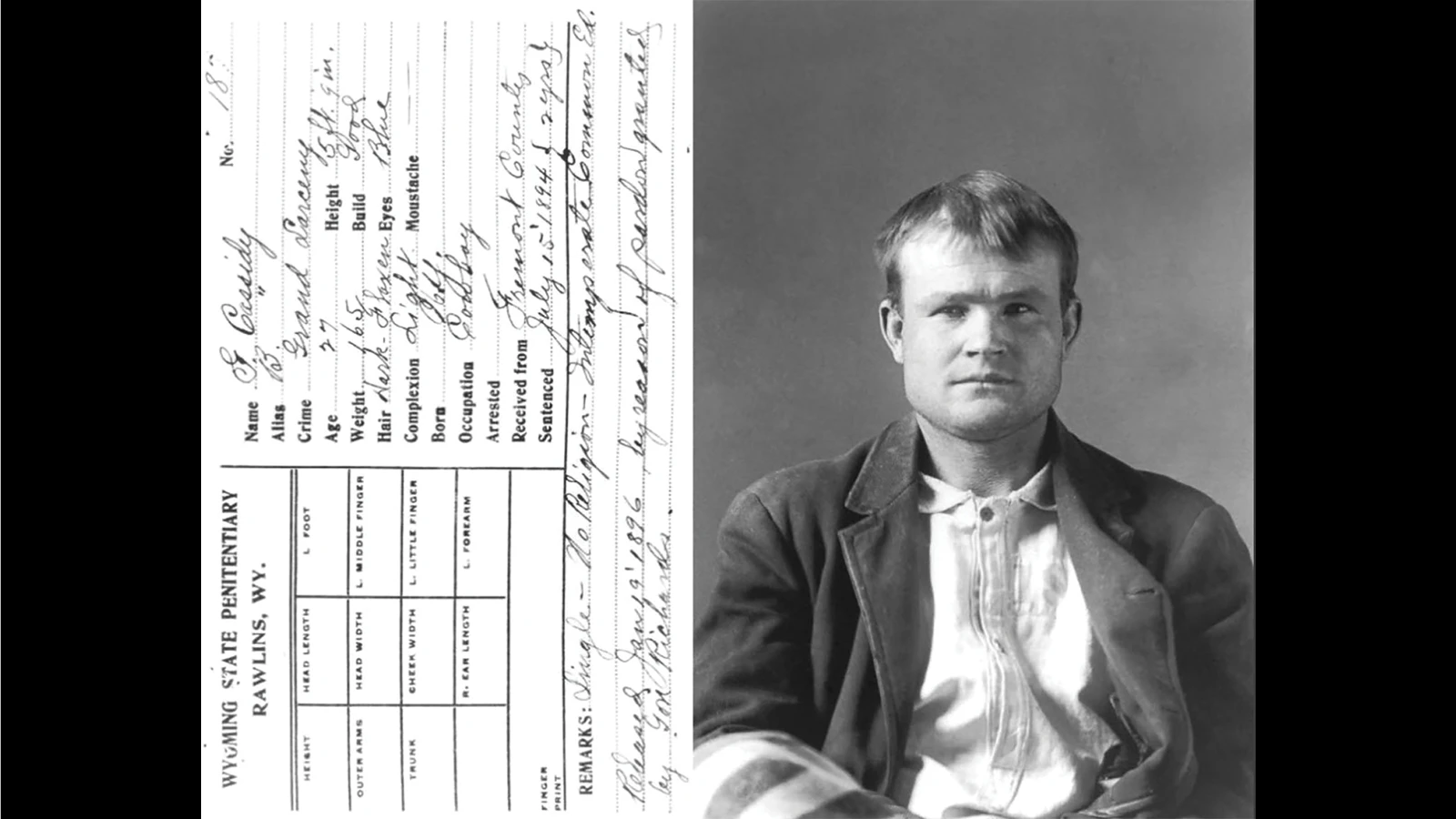
The Butch Cassidy lot, meanwhile, is described on the auction site as offering the glass plate negative for America’s last cowboy outlaw’s prison mugshot.
The mugshot is one of only two photographs taken of Cassidy before the infamous Fort Worth, Texas, photo that ultimately led to the gang's downfall.
The negative is roughly 3.25 inches by 4.25 inches, and shows a relatively clean-shaven Cassidy, along with some related documents and booking details.
The auction house’s listing suggests the negative was likely provided to the Pinkerton Detective Agency, which was hired to track down Cassidy. That could help explain how an artifact created in a Wyoming prison somehow migrated into private hands and ultimately into a Utah-based collection.
Historian and Cassidy expert Mike Bell, however, sees a number of problems with the mugshot and questions its authenticity.
“The (prison) photograph of Cassidy was taken in May 1895 by Laramie photographer Louis Heyn,” he told Cowboy State Daily. “The original shows a wider view of Cassidy, including part of his leg in striped pants. The picture was then cropped to show the head and torso version that is well-known and was widely circulated.”
The glass plates shown on the auction site do not look like the original negatives, Bell said. That raises questions about their authenticity.
“The original Heyn plate would have been of the uncropped version,” he said. “So there are two possibilities here.
“One is that the original plate no longer existed, so the cropped picture was rephotographed at a later date. The other possibility is that this is not a contemporary artifact at all and has been fabricated.”
When Prison Mugshots Were Rare
In Cassidy’s day, it was actually unusual to photograph outlaws, even those sent to prison, Bell said.
“Before 1895, only a handful of forgers and counterfeiters were photographed at the request of the Secret Service,” he said. “When William Alford Richards became governor in 1894, and took over the Board of Charities that oversaw the prison, he insisted that all prisoners were photographed because there had been so many escapes.”
In fact, an outlaw named Kinch McKinney escaped the very day Richards was visiting the penitentiary in his new role.
“Heyn got the contract because he had photographed prisoners at the Detroit House of Corrections and had photographed a couple of prisoners in Laramie,” Bell said. “The 1895 date also explains why Cassidy’s hair is not close-shaved. It had grown out since he was imprisoned in July 1894.
“If you look at all the prison pictures, most have shaved heads, because they were photographed after May 1895. But some, like Cassidy who were already in the pen, have longer hair.”
Unlikely to Ever Return To Wyoming
For Wyoming State Museum Director Kevin Ramler, the Cassidy mugshots and other Wyoming-realted artifacts, real or not, highlight a common problem that museums face as they try to build out collections on limited budgets.
So many items once treated as routine paperwork are often disposable before their true significance is understood. They then become high-dollar artifacts in far-distant markets, which means most of the home-based museums can never hope to reacquire them.
“It would be very cool to have those types of things in a historic collection in Wyoming,” Ramler said. “But just looking at the signed contract, it’s estimated at $125,000. The other things are well above our acquisition budget, too, which is more like $4,000.”
Wyoming State Museum has a budget of just $4,000 now to acquire artifacts — far too little to even begin to bid on any of the top items in the collection.
Proof That History Matters
Historian Janelle Molony, meanwhile, who was interested in the Wyatt Earp letter to author Stuart Lake, said she feels it’s a good thing there’s a fan base for the items, speaking to their importance.
“There is a pervasive idea that artifacts or other items with a distinct connection to a place ‘should’ be held in repositories that are local,” she said. “It’s a well-intended effort to preserve and enhance local history.”
Most of the local historical organizations have limited budgets for chasing after relics on an auction block.
“If no one is interested in these items, and willing to go out of their way financially for them, then the local museums might become a thing of the past,” she said. “Auctions like these are evidence that museum collections are desirable to see.
"These auctions prove the Western genre to be of continuing interest to collectors and on a bigger scale to authors, filmmakers and television producers.”
Property Of Wyoming?
Whatever the actual provenance of the mugshots turns out to be, Ramler believes it likely that Cassidy was seen at the time as just another outlaw, unworthy of undue attention and glory.
His mugshot wouldn’t have been treated as a special keepsake and could have been discarded like any other prison mug.
Today’s market clearly sees it much differently.
Regardless of potential questions about provenance, the Cassidy negatives have been estimated at a value of $50,000 by the auction house, and bidding on them has already climbed to $28,624. The deadline for new bids is May 21.
It is possible the glass-plate negatives of Cassidy were contemporary copies of the original photograph, Bell said, even if he believes they cannot be the original glass-plate negative as advertised.
“For example, Sheriff Louis Grant Davis of Sweetwater County got a copy,” Bell said. “He showed it to E.L. Carpenter, the manager of the Pleasant Valley Coal Company, which was held up by two men in 1897.”
Carpenter told Davis at the time that he recognized the photo of Cassidy as being one of the two men who had held him up.
But the paperwork accompanying the auction should raise other questions for auction buyers about the authenticity of these negatives, Bell added. That’s because the papers are dated after the penitentiary was moved to Rawlins in 1901.
“That suggests that the plate may be a copy of the original 1895 cropped print,” he said. “That raises the question of how the material came into the hands of a private collector. A copy of the original picture might have done so, as copies were circulated.
"But this claims to be accompanied by paperwork from the penitentiary in Rawlins, implying that the plate came from the same place.”
In that case, Bell believes the negatives are likely still the legal property of the state of Wyoming.
“The prison closed at the original Rawlins location in 1981,” Bell said. “Did someone give away or ‘borrow’ this material at that time? Either way, if it is authentic, then it belongs to the state. If it is not, then buyer beware.”
Renée Jean can be reached at renee@cowboystatedaily.com.


