
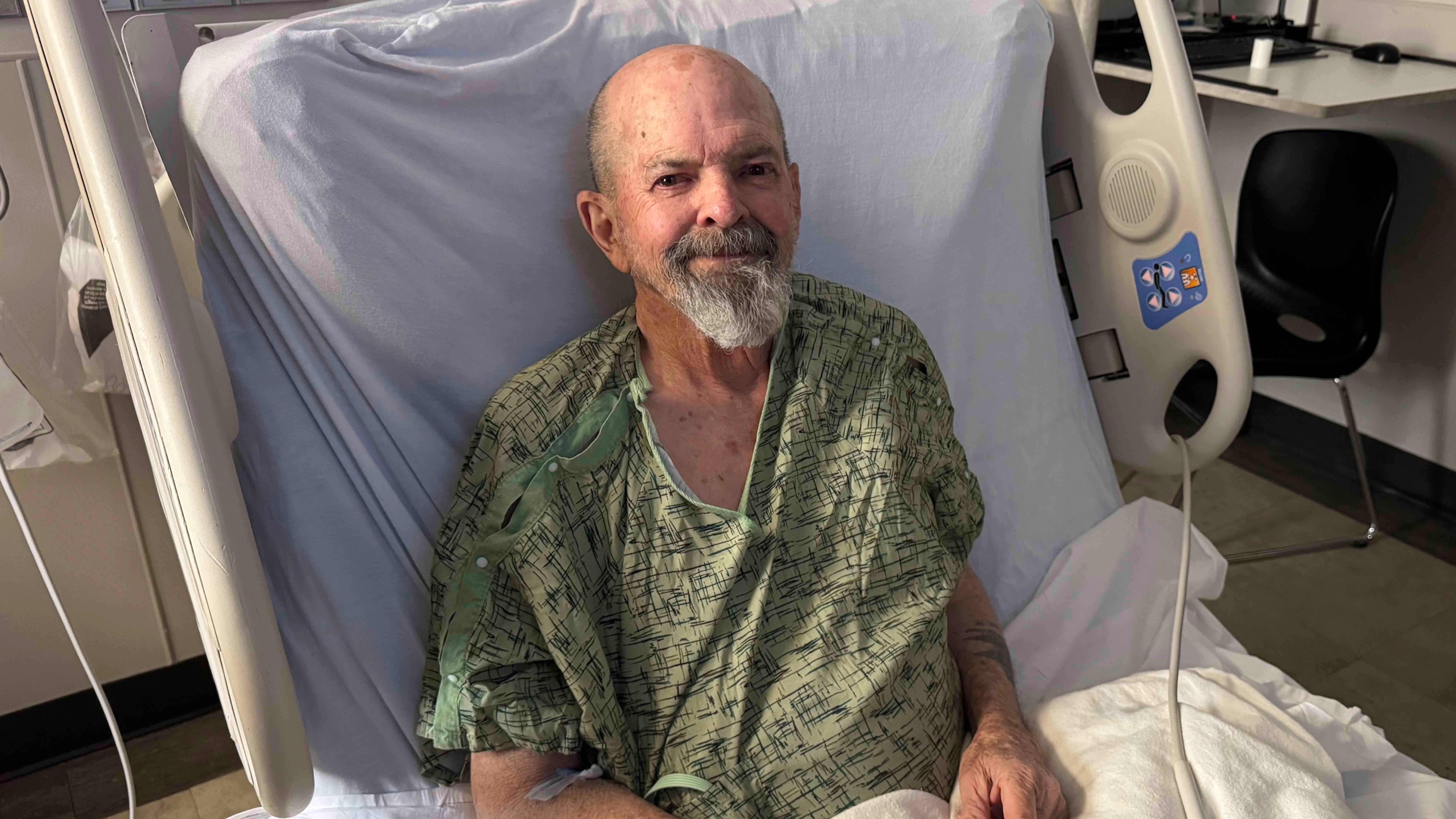
A Daniel, Wyoming man who narrowly averted a fire in his home last week after a lithium-ion battery spontaneously combusted has landed in the hospital with what he believes are complications from inhaling fumes from the burning battery pack.
“I’m a big puzzle right now,” Jack Morey Jr. told Cowboy State Daily. “They don’t know, long-term, what this is going to do to me. I’ve got several issues going on because of it.”
The worst of Morey’s symptoms started just after the battery incident, as he was driving to the post office.
“I’ve got the start of macular degeneration,” he said. “And Thursday, as I was driving to the post office, my brand-new glasses suddenly didn’t work anymore.”
The sudden onset of new sight problems worried Morey, who called his VA medical clinic immediately. When he explained that he’d been exposed to fumes during the battery fire, he was advised to immediately go to the emergency room.
Morey was then transferred by ambulance to a much larger hospital in Idaho for more advanced testing, including an echocardiogram, MRI, CT scans and extensive cardiac workups.
The bill of health from the tests has been clean so far, Morey said, even as no one can explain the sudden onset of his symptoms, which also include a gravelly, hoarse voice and tightness in his chest.
“My chest swelled up a little bit,” Morey said. “My throat’s still sore because I know I breathed the stuff. My whole body is just kind of not right right now. I kind of worry about if I’m going to have any long-term effects with this. Nobody can give me any answers right now.”
Morey said his main concern, a former firefighter, is getting the word out to the public about the dangers of these batteries.
“We were just charging this, that’s all we were doing. And this thing just literally blew up kind of in our faces,” he said. “And then it shot about 12 to 18 inches high flames and burned my floor.”
Girlfriend Recalls Rapid Decline
Morey’s girlfriend, Diana Gunderson, said Morey at first brushed off any symptoms, including a trip to the ER. But, by Friday, with his vision continuing to deteriorate, the couple decided it was time to call 911.
Doctors initially considered carbon monoxide poisoning, then stroke, before arranging for Morey’s transfer and further tests.
He was started on steroids for inflammation.
“He’s got a stuttering now, which he never had before,” Gunderson said.
Gunderson, who rushed into and out of the fume-filled home to rescue the couple’s cats and dogs, said she believes she escaped ill effects because she shielded her mouth and nose with a blanket when she went back inside.
Morey didn’t block his airways because “I was trying to chase cats and dogs out of the house,” he said, adding. “They kept coming in and so, there again, all my dogs and cats breathed in this stuff.”
Toxic Fumes Common To Lithium-Ion Battery Fires
The fumes from lithium-ion batteries are highly toxic, Sublette County Unified Deputy Fire Chief Bob Kladianos told Cowboy State Daily in previous interviews about the battery fire.
The accident happened last week on Tuesday morning as Morey and Gunderson were drinking their morning coffee and feeding their animals.
Firefighters who responded to the scene dressed in a full, self-contained breathing apparatus to go into the house, so they could implement positive-pressure ventilation to remove fumes from the home. The fire department’s report also noted that Morey had some difficulty breathing after inhaling the toxins.
Kladianos is calling for people purchasing lithium-ion batteries to look for products tested and approved by Underwriters Laboratories. The battery that caught fire at Morey’s home did not have a stamp from them.
“That will give them some assurance that the product has been manufactured up to current safety standards,” Kladianos said, adding that the batteries do become intensely hot very quickly. “When they’re burning during thermal runaway, they’re anywhere from around 390 degrees Fahrenheit at the beginning and they can go all the way up to 1,800 degrees.”
Toxic chemicals are one of the reasons water isn’t recommended when a lithium-ion battery catches fire, he added.
“If you put a bunch of water on them, now you’ve got a hazmat incident where you’ve got these gallons of very contaminated water,” he said. “So the best thing to do is just let them burn out.”
How The Fire Started
The morning of the fire on Tuesday felt like a typical morning for Morey and Gunderson. Then they noticed a strange, paint-like smell coming from Gunderson’s work area.
At first she thought she’d spilled some paint, but then she noticed a lithium-ion battery she’d been charging was visibly swollen. The battery was a general-purpose battery, useful for charging a wide variety of electronic devices.
She picked the charger up and was taking it to the door when it started smoking and sparking, right in her hand.
She dropped the battery, which was rapidly heating up, on a rug by the door. Seconds later flames at least a foot tall were shooting out of it, scorching both the rug and the floor.
“The flames, my God, I couldn’t believe it,” Morey told Cowboy State Daily at the time. “It just blew up and shot flames I’d say about a foot up.”
Morey took a nearby towel to smother the battery, and tossed it outside onto a concrete pad well away from the house while Gunderson called 911.
Growing Concern Over Battery Fires
Lithium-ion battery fires have become more and more common across the nation, a product of cheap imports, Kladianos said.
The rise in lithium-ion battery fires has small fire departments playing catchup when it comes to these kinds of fires, Rock Springs Fire Chief Jim Wamsley has told Cowboy State Daily.
“That lithium just wants to continue to burn,” he said. “It’s a series of small cells or interconnected cells.”
If one cell suffers damage and reacts, that will often trigger the next cell to do the same, leading to an unstoppable chain reaction and an intense, runaway fire.
Wamsley and Kladianos both said their departments are seeking a dedicated facility where such batteries could be placed, so that such chain reactions can safely proceed.
Wamsley’s department, meanwhile, has purchased blankets for EV fires, to help reduce the radiant heat coming off the fires. They aren’t ideal, however, because they can trap potentially flammable gases that are being released by the burning battery.
Lifelong Complications Possible
Morey said he’s been told no one can tell for sure if he’ll have long-term issues from breathing in fumes from the lithium-ion battery.
He’s had headaches and dizziness, confusion, and burning sensations in his throat, nose, mouth, and eyes. Other symptoms from exposure to the fumes from lithium-ion batteries can have a delayed onset, which is worrisome, Morey said.
Right now doctors are telling him he “checks out” as OK.
“But I might have problems down the road, and they can’t tell me when, how long, or anything like that,” he said. “They just don’t know. So hopefully, we can get the word out about these batteries. I mean, this is just pretty crazy stuff.”
Morey said many people have been messaging him on Facebook, letting him know they plan to set up special charging areas using ceramic tile after reading about his story.
That’s a good idea, Morey believes, but he wants to stress that the fire burns too hot to leave the batteries charging unattended.
“If we hadn’t been there when this happened, our house would be gone,” he said. “We had these for about four or five years and they’d been just fine. Then, all of a sudden (they weren’t)— and we haven’t dropped them, damaged them, or anything like that.”