A corrupt Cheyenne mayor and his chief of police ran a protection racket in 1944 that extorted money from black bar owners and encouraged prostitution, leading to their own criminal convictions.
A new book about how their criminal operation unraveled because of a sting operation is coming out soon.
While working at the University of Wyoming’s American Heritage Center as its associate director, now-retired Rick Ewig remembers longtime Laramie County Attorney Byron Hirst mentioning his prosecution of Cheyenne’s former mayor in 1944.
Hirst, who served as county prosecutor from 1943 to 1947, was filing his papers with the American Heritage Center around 2000 or 2001 and Ewig helped him with the project.
The topic about the mayor came up more than once.
“I thought, that’s really kind of interesting,” Ewig said. “I thought, when I retire, I should write something on that.”
After retiring in 2016, the historian came back to the idea around the time of the pandemic and, once he started digging into the story, found that there was a “lot more to it than just corruption.”
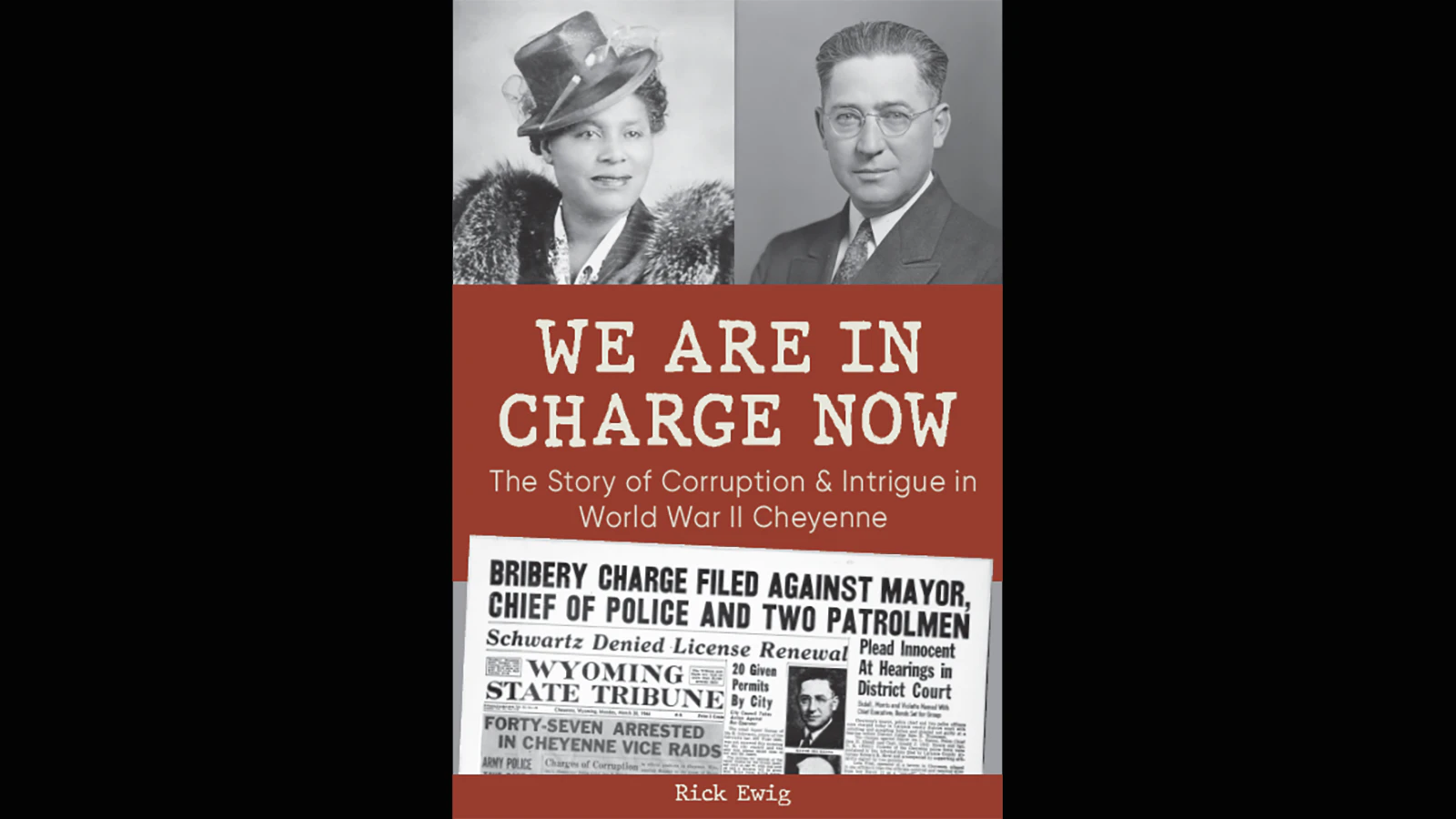
Four years later he is coming out with his book titled “We Are In Charge Now, The Story of Corruption & Intrigue in World War II Cheyenne.”
The 200-page history delves into the election of Ira L. Hanna and how after arriving in office, along with his police chief and two officers, they attempted to extort “protection money” from black businesses in the city.
Ewig’s research sent him into Hirst’s papers that were at the American Heritage Center and the Old West Museum in Cheyenne as well as through the daily newspapers to get the context of wartime Cheyenne in 1943 and 1944.
“It turns out that Cheyenne was segregated at that time,” Ewig said. "If you were African American, you lived on the west side and that’s where Lola West ran the Black and Tan Club (Cafe), and there was another African American bar owner, Pop Grimes.
“He ran the Porters and Waiters Club.”
Hirst had kept the information he compiled for his prosecution case, although there was not a trial transcript, Ewig said.
A New Mayor
Hanna, who had served as the Laramie County treasurer and then was elected as the county assessor, ran for the mayoral office in 1944.
After becoming mayor he appointed Jesse Ekdall to be his police chief.
Shortly after coming to power, he and Ekdall approached the two black club owners to sell them protection as well as encourage prostitution, gambling, and illegal liquor sales, Ewig said.
They were told they would be protected from the Cheyenne Police Department and the military police at Fort F.E. Warren.
“Hirst had kept all those documents related to that,” Ewig said.
The “most fascinating” one he found was related to West and Grimes going to Hirst after being instructed by the mayor and police chief to “not tell anybody” about his protection offer.
A sting operation was set up between Hirst, two federal IRS agents, and the club owners.
Hirst and the feds were able to obtain a dictaphone device and place a microphone under Pop Grimes’ desk at the Porters and Waiters Club and recorded a meeting between the two black club owners, Hannah, Ekdall, and the two officers in his department.
During the hours-long meeting, Hanna and Ekdall were recorded saying that: “This is what we are going to do. We are in charge now. You have to pay us. If you don’t pay us we are going to shut down your business,” Ewig said.
Ewig said there is no evidence showing that the mayor or police chief attempted to strong arm any white business in town.
Due to the war and the soldiers at Fort Warren in addition to the other war-support efforts that brought workers to town, prostitution was an issue.
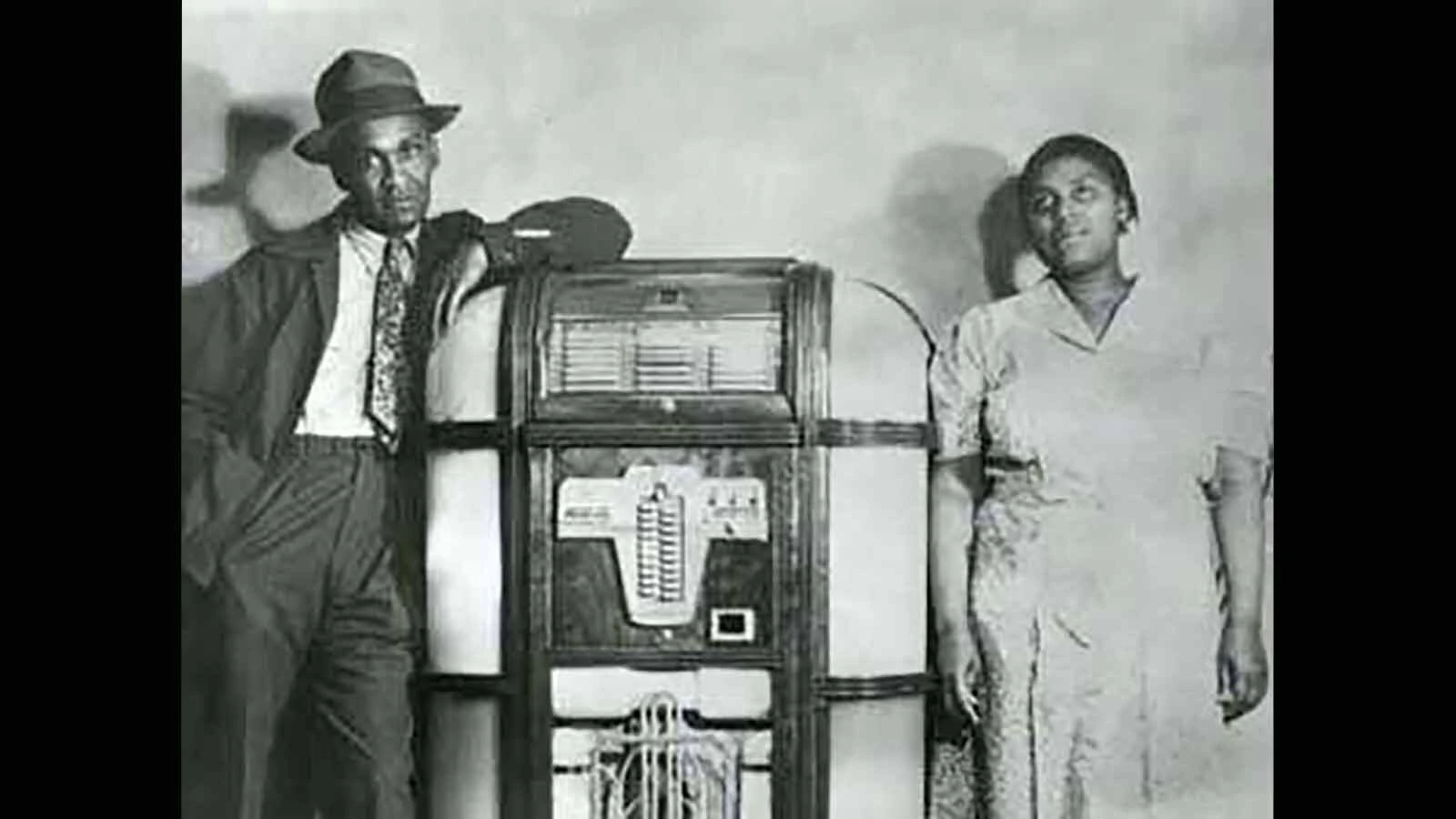
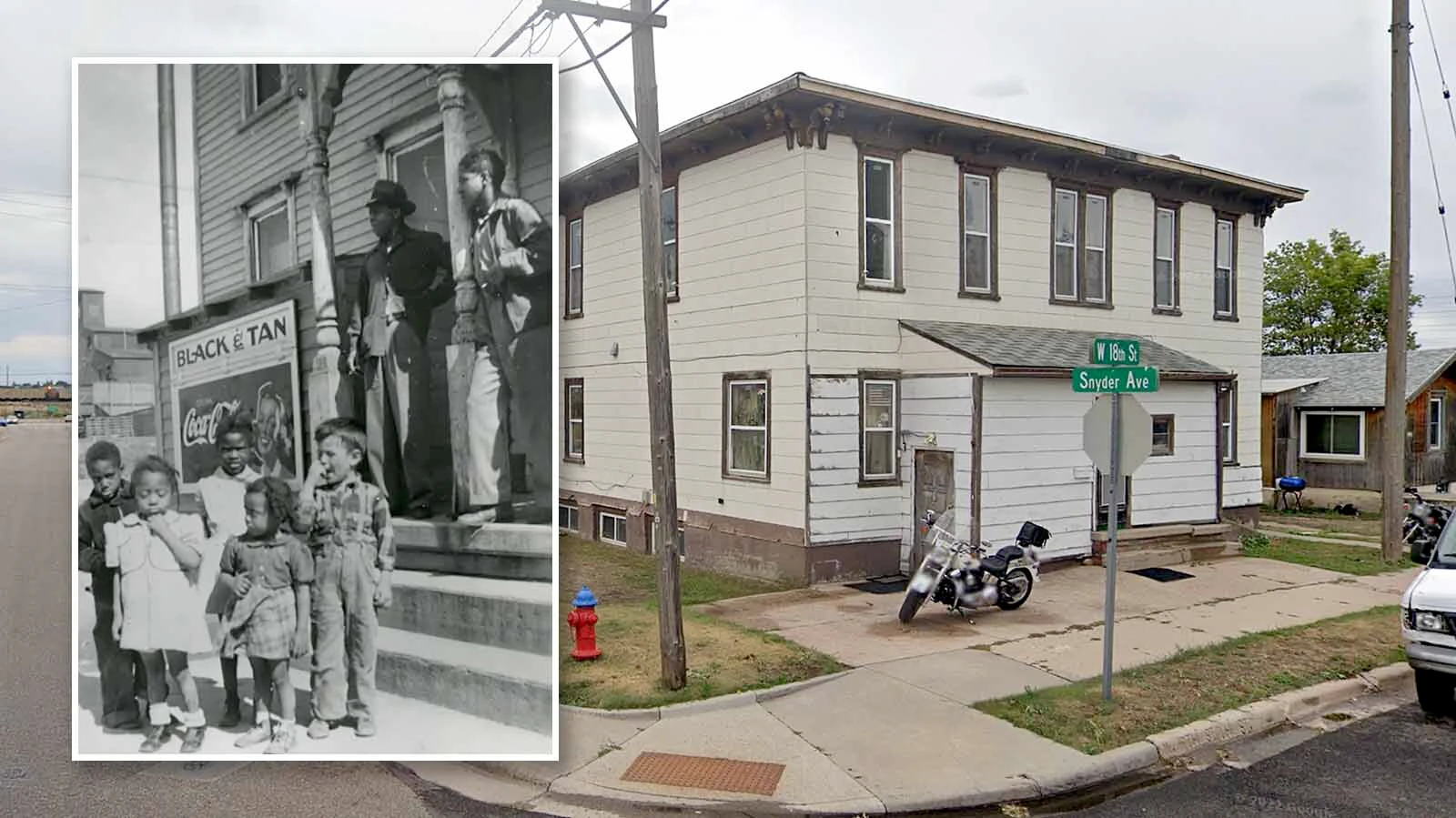
Lola West, who ran the Black and Tan Cafe in Cheyenne in the 1940s, was a key figure in prosecuting the city's mayor and police chief for shaking down Black businesses and promoting prostitution. Her former club is still standing at 901 W. 18th St. at the intersection of Snyder Avenue. (Courtesy Wyoming State Archives) 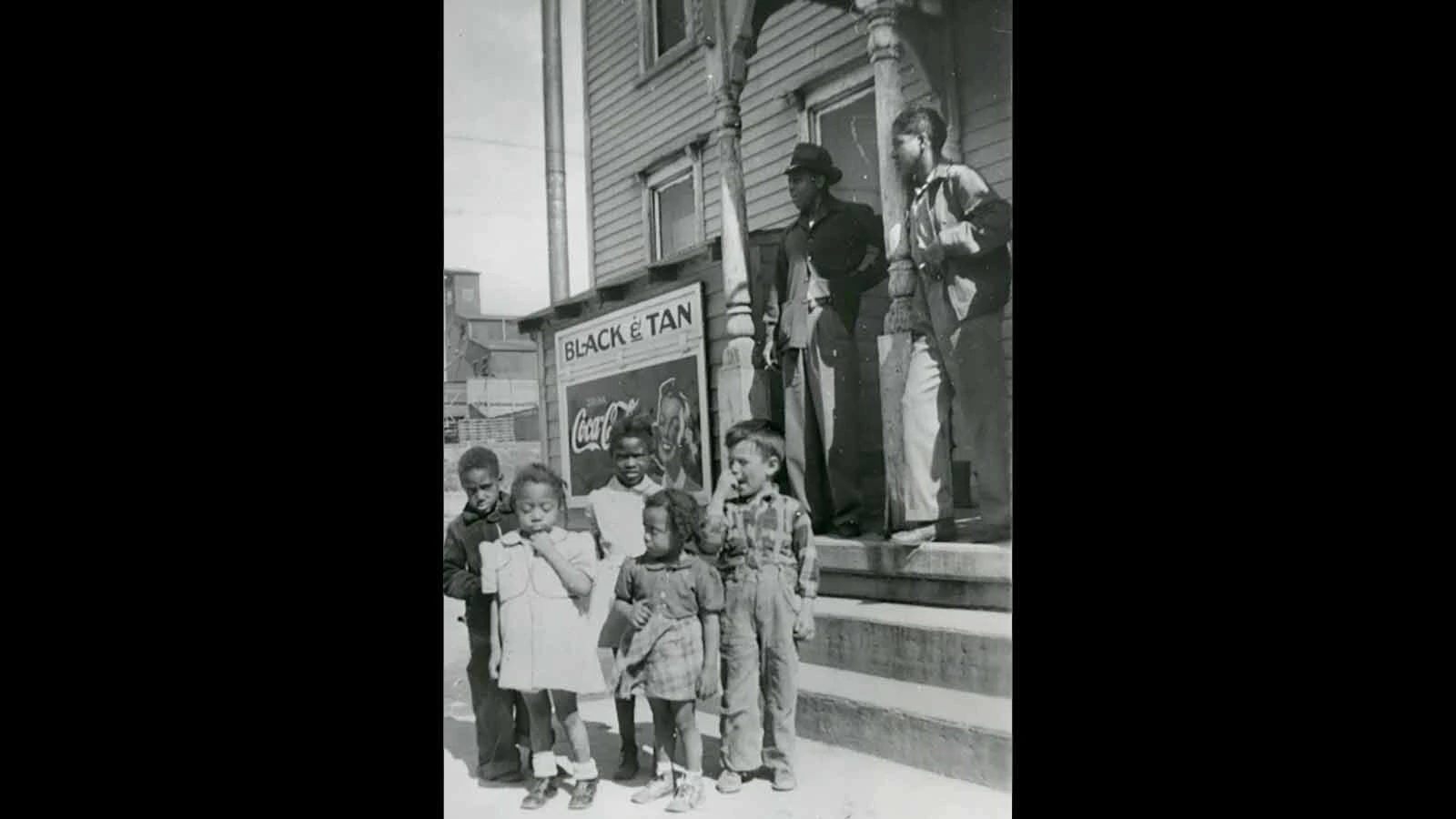
Lola West, who ran the Black and Tan Cafe in Cheyenne in the 1940s, was a key figure in prosecuting the city's mayor and police chief for shaking down Black businesses and promoting prostitution. Her former club is still standing at 901 W. 18th St. at the intersection of Snyder Avenue. (Courtesy Wyoming State Archives) 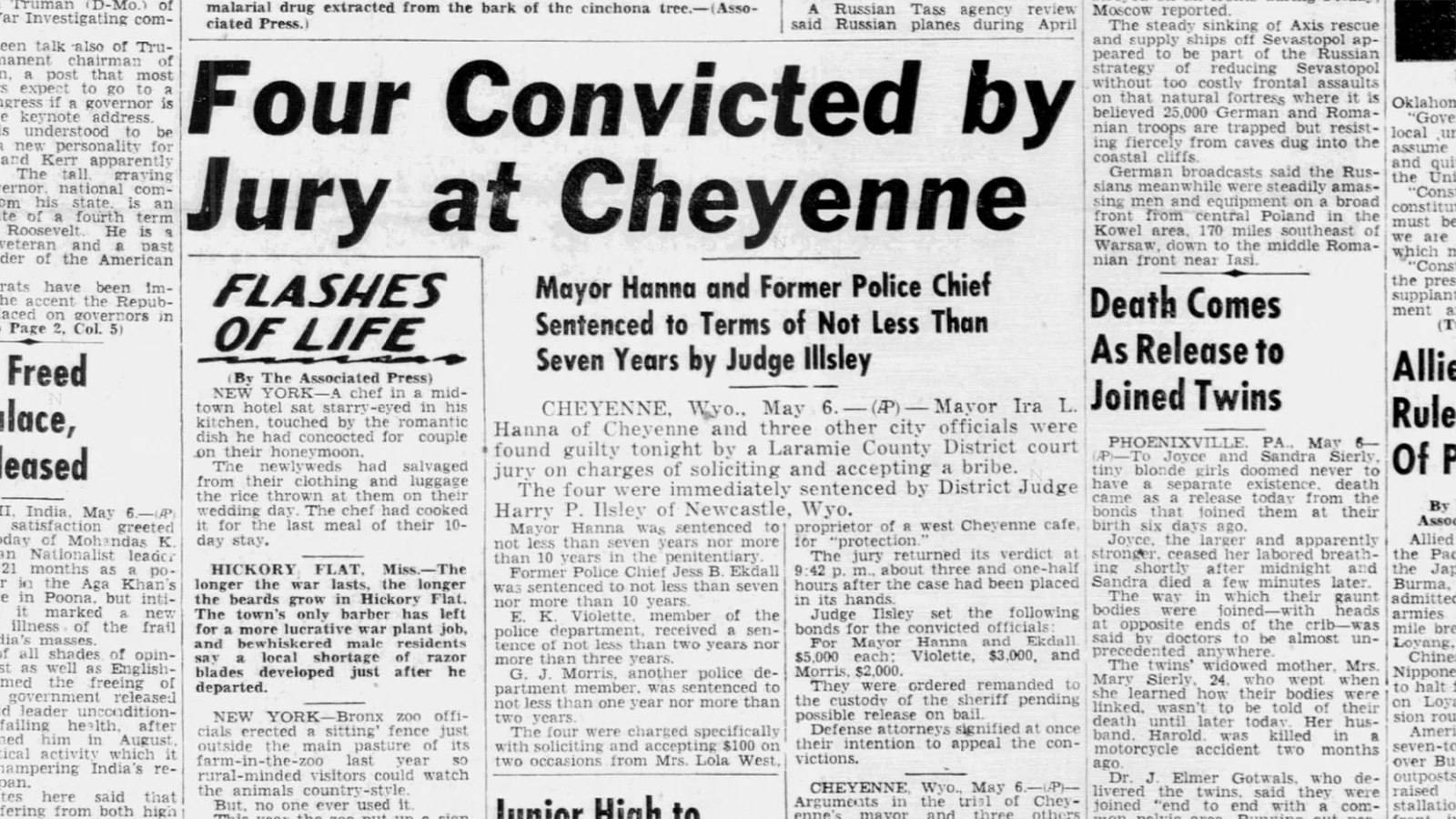
The Casper Daily-Tribune put the conviction of Cheyenne’s mayor and his police chief on its front page on May 7, 1944. (Courtesy Newspapers.com) 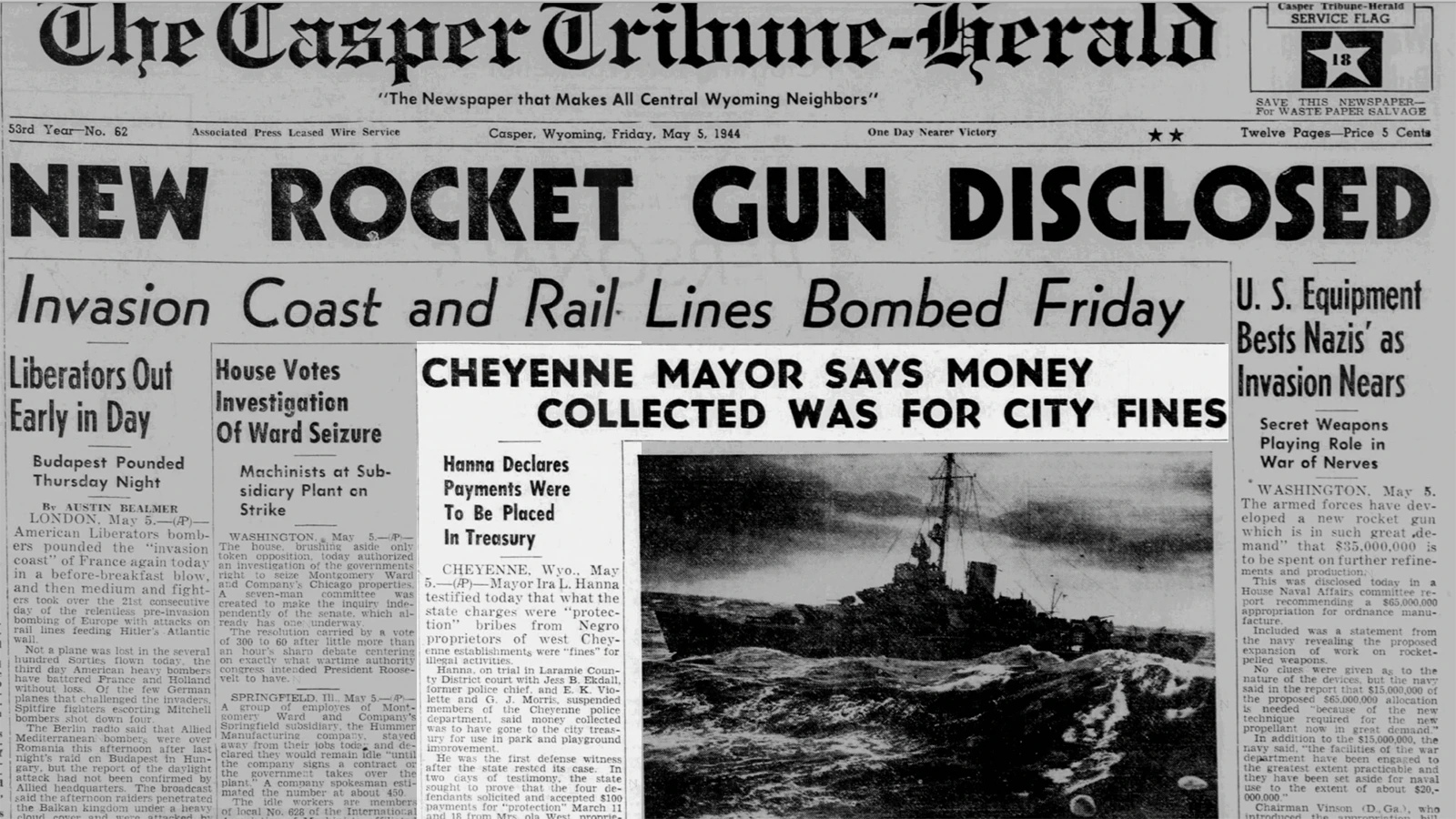
When Cheyenne’s mayor took the stand in his own defense, he said the money collected from black businesses was for fines. (Courtesy Newspapers.com) 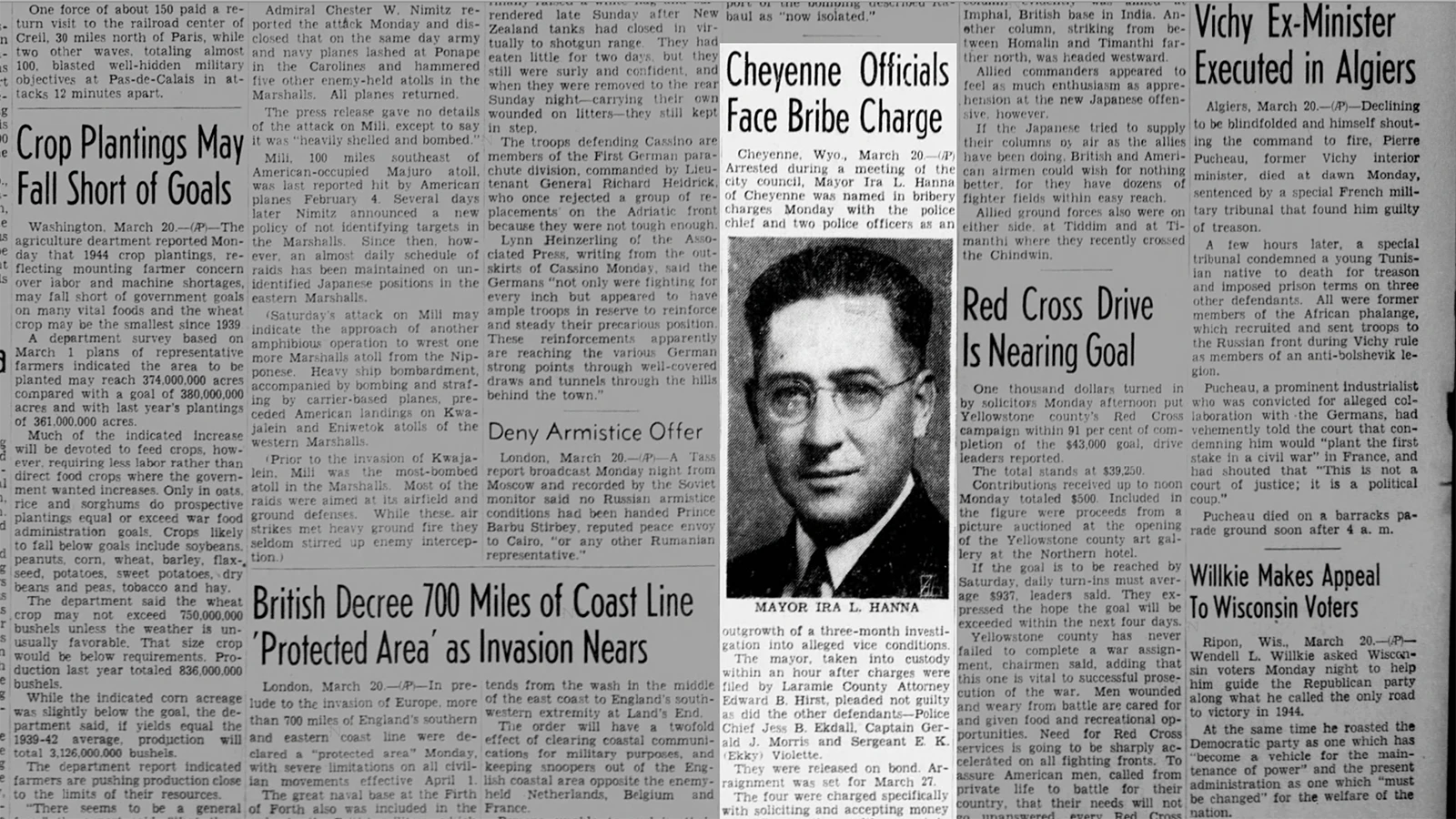
When Cheyenne’s mayor took the stand in his own defense, he said the money collected from black businesses was for fines. (Courtesy Newspapers.com)
Money Changed Hands
Newspaper trial accounts show money was paid by West and Grimes to the mayor and police and the serial numbers of the bills were recorded.
Fort Warren was putting pressure on the city to get rid of all prostitution due to issues with venereal disease among the troops that hampered training, Ewig said.
But Ewig said the mayor and new police chief were trying to “open up” the city to more prostitution and illegal money to bring in funds despite the city’s stance against it.
His research found newspaper ads from Hanna as he ran for office that promised voters “good, clean government.”
Although all he had was the old newspapers to go by, Ewig did not find any evidence of any election manipulation that may have brought Hanna to power.
Hanna’s record of public service to that point as the county assessor appeared above board.
“I didn’t find anything that really explained why after 20 years of not any issues at all, all of a sudden, he sees an opportunity to extort money from a certain group in Cheyenne,” Ewig said.
“In the last part of the book, I do provide answers to what other people thought, but I never found anything that explained it directly,” he said.
During the trial of the quartet, the Casper Tribune-Herald reported on May 5, 1944, that Hanna testified that the money collected were “fines” for illegal activities and were destined for the city’s park and recreation fund.
Hanna said he and Ekdall decided to make the black business owners “pay fines” if the Fort Warren military police allowed prostitution, gambling, and the sale of liquor in the businesses, the newspaper reported.
Hanna testified he received $340 from his police chief and put it in an envelope with other funds collected and a list of “from whom for what.”
Hanna testified he was found with three $5 bills that had been paid by West on his person because he wanted to “get a $5 bill to contribute to the Red Cross.”
He exchanged a $20 bill for four fives that were in the envelope, he said.
West’s daughter testified at the trial and said she paid $100 on two different dates to police for protection.
One of the officers on trial told her that if she received a phone call and “told us to wash our necks, there was going to be a raid,” the newspaper said.
Ewig said all four men were convicted.

Sentenced And Commutation
The Casper Herald-Tribune reported on May 7, 1944, that both Hanna and Ekdall were sentenced to not less than seven or more than 10 years in prison on charges of soliciting and accepting a bribe.
The officers and E.K. Violette received a sentence of two to three years, and officer G.J. Morris a one to two years.
However, on Oct. 4, 1945, the Casper Tribune-Herald reported that both Hanna’s and Ekdall’s sentences had been commuted by a state board of pardons and they would be eligible for parole on Dec. 15, 1945, and discharged from parole on Dec. 15, 1946.
The newspaper reported the board of pardons had received more than 200 letters encouraging the commutation of their sentences.
While in prison, both men quickly obtained trustee status with Hanna keeping the books for prisoner accounts at the prison and Ekdall serving as a caretaker for the governor’s mansion.
Ewig said his research did not corroborate something that Hirst had told him a couple of decades ago about mafia from Denver and Chicago being involved with criminal activities as well.
He said there is a chapter devoted to one individual who may have had ties to the mafia, but he could not prove it.
The book is about more than the corruption of the mayor.
Ewig said he tried to portray the whole atmosphere of Cheyenne during that time in the war.
“I’ve done a lot of Wyoming history, and this one was so Cheyenne specific that it was fascinating about life in World War II Cheyenne,” he said. “It’s not only the story about Ira Hanna and Lola West, I also look at what Cheyenne was like during World War II.
"It was a boomtown, and there was a housing shortage, and all these issues come up.”
The book, Ewig’s third, is published by WordsWorth Publishing of Cody and will be available in bookstores in the next week or two, he said. It can be ordered now from Amazon.com.
A bonus from his research led to a friendship with Lola West’s grandson, Leon Reed of Cheyenne, Ewig said.
“He allowed me to use some of the family photographs in the book,” he said. “I’m going to sit with Mr. Reed and do and oral history with him because he would like the story of the African American community in Cheyenne to be better known, and to be explored more. So, that is going to come out of this research as well.”
Dale Killingbeck can be reached at dale@cowboystatedaily.com.