
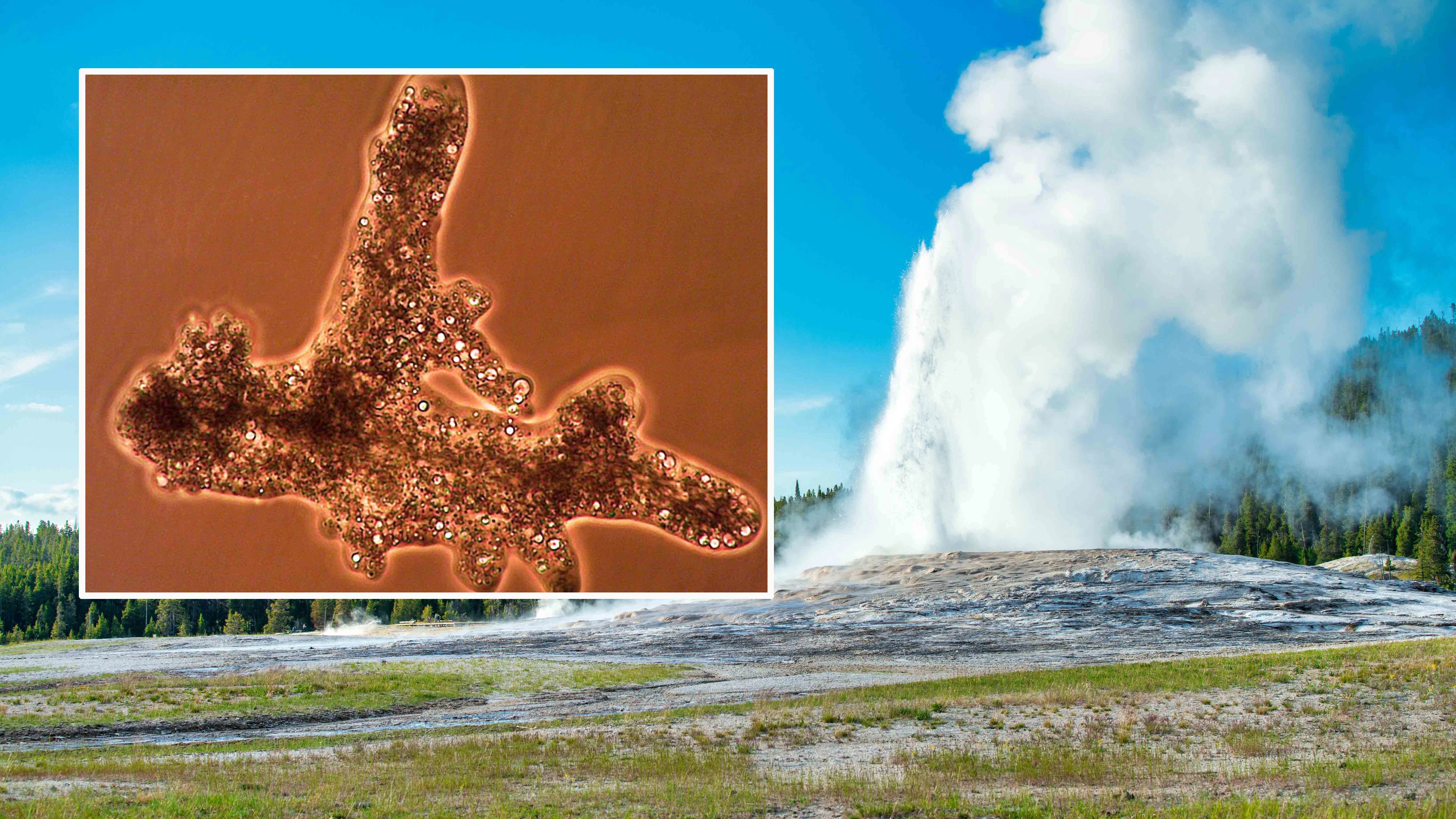
Brain-eating amoebas are thriving in Yellowstone and Grand Teton National Parks, and they’re probably more widespread than most people and many scientists realize.
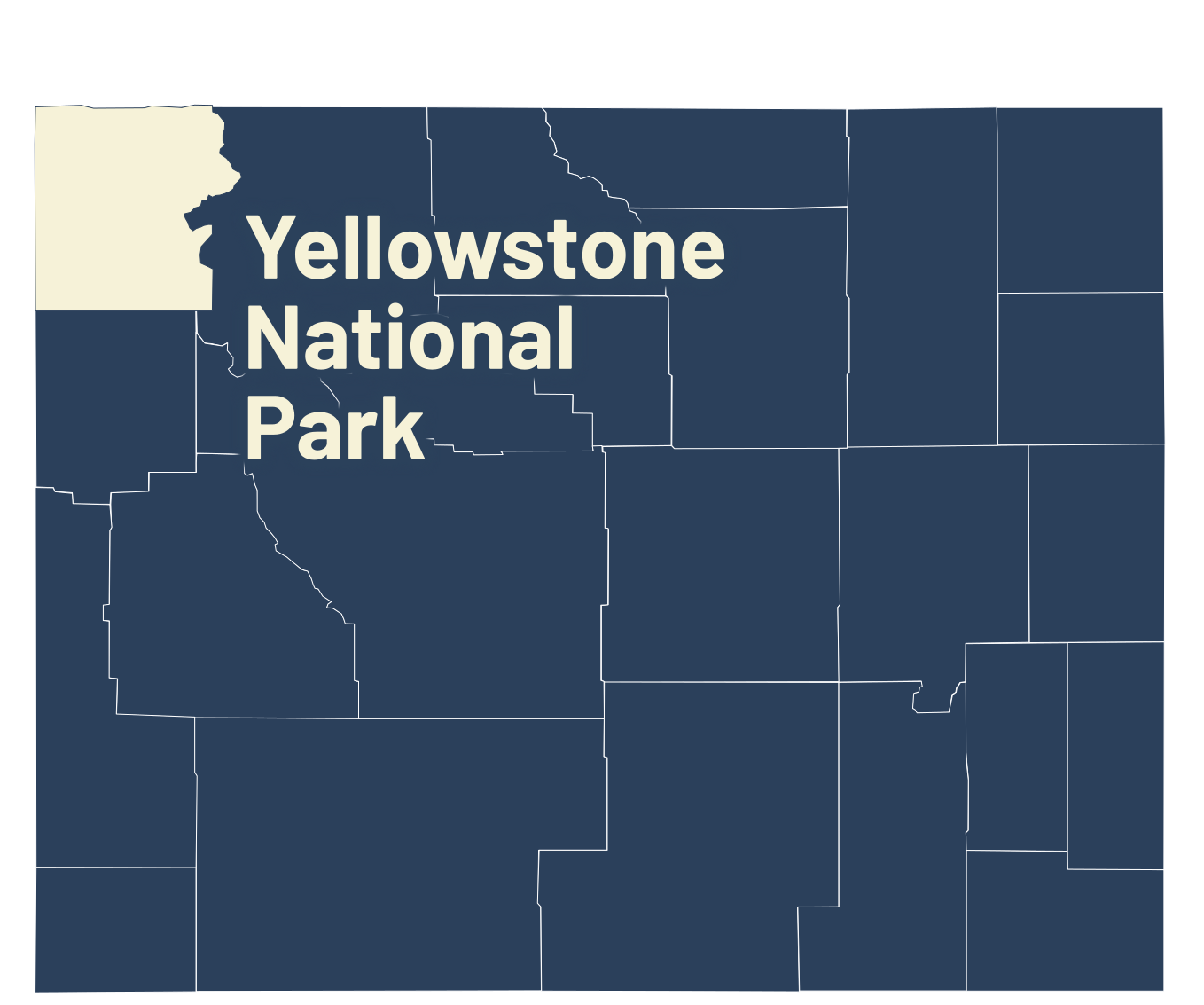
New research confirmed the presence of Naegleria fowleri, a microscopic amoeba, in several spots in Wyoming’s two national parks. Those spots include Yellowstone’s Boiling River and the Huckleberry and Polecat Hot Springs in Grand Teton.
Naegleria fowleri is the cause of a fast-acting brain infection that has an average mortality rate of 97%. Infections are extremely rare, but possible wherever the amoeba is known to exist, and there’s no known cure.
This research confirmed that this alarming amoeba is more common in Yellowstone and Grand Teton than previously realized. While that’s concerning, it’s far from a death sentence.
“Just keep your head above water,” said Elliott Barnhart, a microbiologist and research hydrologist with the U.S. Geological Survey, and one of the authors of the new paper. “Infections are very rare, but it's important to learn as much as we can about these systems so people can stay safe.”
Finding Naegleria
The presence of Naegleria fowleri in northwest Wyoming isn’t a new discovery. The thermophilic amoeba can be found in waterways worldwide.
“It’s been found in every country except Antarctica,” Barnhart said. “It’s a widely distributed and naturally occurring organism.”
Naegleria fowleri is called “the brain-eating amoeba” because it is the confirmed cause of primary amoebic meningoencephalitis (PAM).
PAM cases have been reported in the U.S., primarily in the southern states. A PAM exposure has never been reported in Wyoming, despite the presence of the amoeba in Yellowstone and Grand Teton.
Naegleria fowleri was first confirmed in Yellowstone by scientists in the early 2000s. A 2003 study confirmed the free-living amoeba existed in Boiling River, Seismic Geyser, and Mallard Lake Trail.
The newest study is the first comprehensive look at Yellowstone’s thermal features since 2003. It also revisited spots where the amoeba was confirmed to exist in Grand Teton’s thermal springs in the late 2010s.
“We don’t know what role it serves in these environments,” said Brent Payton, a professor of chemical and biological engineering at Montana State University, and another contributor to the research. “What we're trying to do is study the environments and microorganisms that this amoeba eats as food and see if we could use those as indicators of where the amoeba might be found.”
For this study, scientists collected and analyzed 185 water samples from Yellowstone, Grand Teton, and Fort Meade National Recreation Area in South Dakota. They concluded there were “widespread detections” in 34% of those samples.
Payton said finding widespread Naegleria in both parks wasn’t a huge revelation. The study focused on areas where the amoeba had already been found or was suspected to be.
“We're not the first to show that it's present in the parks,” he said. “We’ve known that for 20 years. Ours was the most extensive sampling in terms of the number of years and locations.”
Death Guaranteed
When it's in water, Naegleria fowleri is inert and harmless to humans. When it enters their body, it can and usually is lethal within two weeks.
When the microscopic amoeba reaches the brains of humans and animals, it feeds on their nerve tissue. This causes extensive damage to the brain and central nervous systems, which had proven fatal in over 95% of confirmed cases.
According to a 2025 study, 488 cases of PAM have been reported worldwide since 1962. During that same period, 167 reported cases of PAM were reported in the United States.
Of those cases, only seven people survived.
Last year, a 71-year-old Texas woman died of PAM after using a sinus rinse with water contaminated with Naegleria fowleri as part of a religious ritual.
Barnhart and Payton have doctorates in their fields, but they aren't medical doctors. Neither could comment on how the amoeba impacts the human body, but its only method of entry into the nervous system is well known.
“The only exposure route we’re aware of is through the nose,” Barnhart said. “As long as you keep your head above water and don’t stick moss or seaweed up your nose, the chances of exposure are very low.”
Confirming (And Assuming) What’s There
Many people might see the confirmation of Naegleria fowleri in more places and think it’s spreading like a pathogen. Barnhart said that shouldn’t be the takeaway from their new research.
“We expanded our detection where we knew it would be,” he said. “We tried to pick areas where people are found soaking, and areas we were more likely to detect it.”
The critical factor for this research was the availability of enhanced, affordable DNA testing to identify the amoebae’s unique genetic signature. That’s possible thanks to advances in polymerase chain reaction, a revolutionary breakthrough discovered in another Yellowstone thermal pool (where the amoeba has yet to be identified).
Barnhart said it’s entirely possible that the brain-eating amoeba is much more widespread in both Yellowstone and Grand Teton. It just hasn’t been detected yet.
“We’re hoping to investigate other places in the parks to create a better understanding of ecosystems and microbial communities where they exist,” he said. “We’re still learning a lot about its role in its ecosystem.”
Payton agreed, saying the reason it hasn’t been confirmed in other parts of the parks is that samples and studies haven't yet been taken there.
“There are a lot of places where nobody’s ever looked for it,” he said.
Amoebic Mysteries
While its lethal effects on humans are well known, Barnhart and Payton said there’s much scientists don’t fully understand about Naegleria fowleri. What they do know is that it’s only lethal to humans in one of its three forms.
“It has a cyst stage, a trophozoite stage, and a flagellate stage,” Barnhart said. “It’s not a danger in its cyst form, and can be transported across wide distances, but it’s not as detectable. The trophozoite phase is the eating phase.”
Payton said their study was done in conjunction with researchers in Australia, where Naegleria is a more common and potent threat.
“N. fowleri is pretty common in some of their water systems, and studies are showing it's present in some drinking water systems in the southern U.S., too,” he said. “It takes a sophisticated lab to confirm it, so what we're looking for are any other indicators that you might need to identify it.”
Payton said the presence of Naegleria was confirmed in a third of the hot springs they tested in Yellowstone and Grand Teton. However, that doesn’t mean the rest of their sampling sites are devoid of the amoeba.
“What we don’t know is whether we just didn't pick it up that day, or if it comes and goes throughout the year,” he said. “That’s why we're trying to learn what microbial communities they like to live in or live with. There are just so many questions.”
You And Amoeba
People tend to sensationalize Naegleria fowleri as “the brain-eating amoeba,” despite the extremely low numbers of infections. However, some people still struggle with its tragic consequences.
“We have been contacted by parents of children who died because of this amoeba,” Payton said. “They wanted us to just help raise awareness, and there are simple things you can do to prevent it.”
People who have contracted and died of PAM got it through recreational swimming and diving, bathing, and some water sports like jet skiing and wakeboarding. While Naegleria has been detected in drinking water, the only known route of exposure to PAM is through the nose.
Fortunately, most Yellowstone and Grand Teton visitors won’t risk exposure because soaking in hot springs is strictly prohibited, and the spots where people used to be able to swim and soak, like the Boiling River in Yellowstone, are indefinitely closed.
People keen to swim need only wear a nose clip to prevent water from flowing into their noses. With a closed nose, the extremely low chance of a Naegleria infection gets even lower.
Of course, the simplest solution is the heads-up approach. Barnhart, Patyon, and the other scientists hope their ongoing research will be a heads-up for people worldwide.
“If you keep your head above water and don’t snort the water, you’ll be fine,” Barnhart said.
You Can Still Soak
When the team was collecting water samples for their study, Barnhart said they kept encountering the same people at the same spots where they confirmed widespread Naegleria concentrations.
Fortunately, they were fine. And they stayed fine because they were aware of the risks and how to keep themselves safe.
“We've seen the same people soaking every single time we go to this hot spring, and they've been going there for many, many years,” he said. “We talked with them, and they were educated about keeping their head above water. That’s our goal. To increase awareness.”
Hopefully, there will never be a PAM-related death in Yellowstone or Grand Teton. Both Barnhart and Payton believe Naegleria is more widespread than we realize, but near-certain death is entirely avoidable with some simple precautions.
One thing they don’t want to do is alarm anybody to the point that they avoid the places where they can soak, inside and outside the parks. Naegleria and PAM needed to be studied and taken seriously, but they’re also extremely easy to avoid and coexist with.
“I still go swimming in hot springs every chance I get, and I know what's possible,” Payton said. “PAM is extremely rare but obviously devastating if it happens. If you do these simple things, you can avoid it.”


