
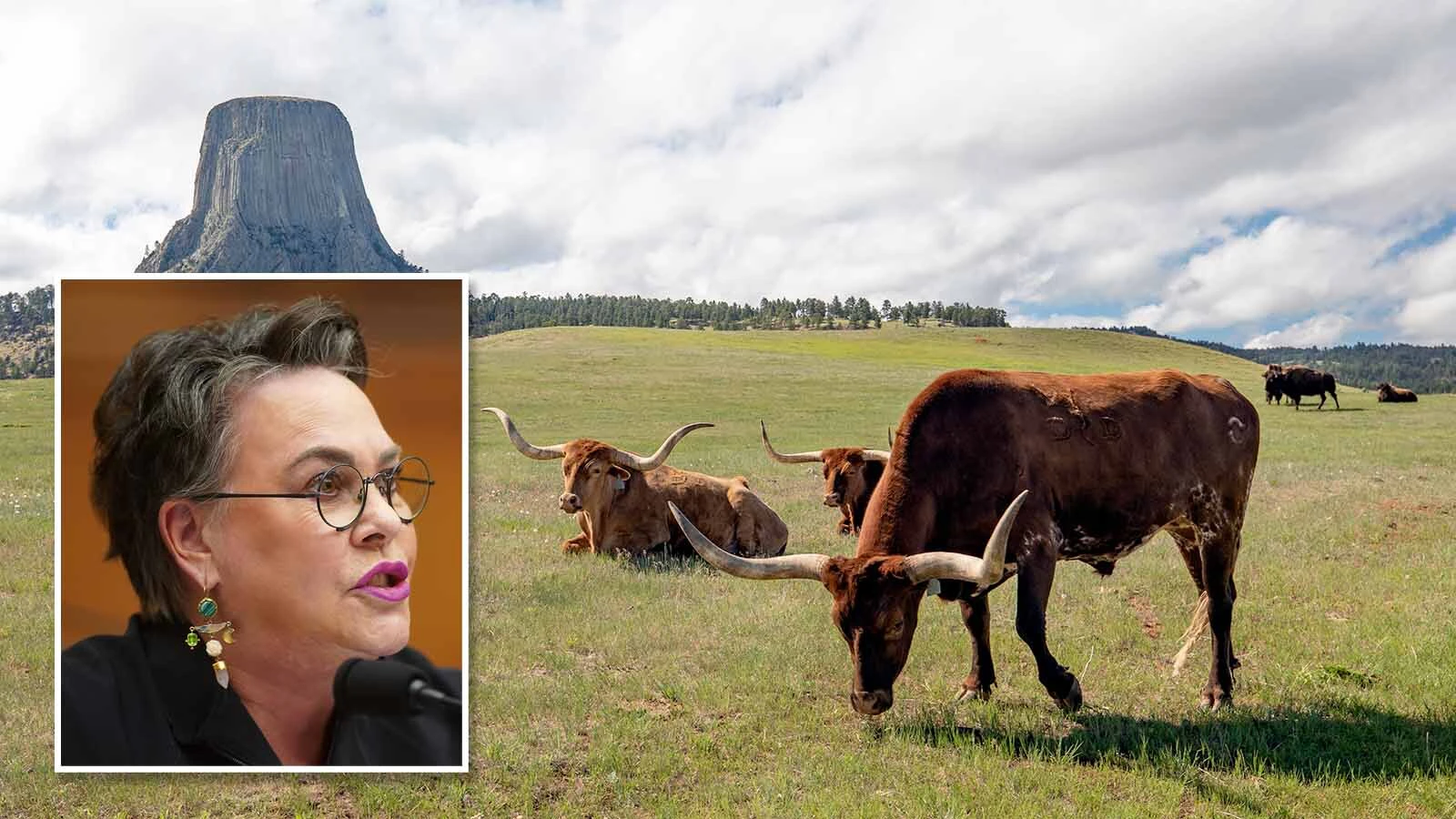
A newly passed five-year farm bill that includes wide-ranging provisions for financing, research and rural health care contained “too much bloat” for Republican U.S. Rep. Harriet Hageman to vote for it, while the Wyoming Farm Bureau praised the legislation’s focus on rural communities.
Hageman was one of three GOP House members who voted Thursday against the Farm, Food, and National Security Act of 2026, along with 197 Democrats in the 224-200 final tally. Fourteen Democrats joined Republicans to pass the bill.
Hageman criticized the sweeping legislation, telling Cowboy State Daily in an emailed statement that “special interests have taken over this critical agenda and filled the legislation with so much bloat it is impacting our producers and their ability to feed and fuel the nation.”
Meanwhile, Wyoming Farm Bureau president Todd Fornstrom praised the bill, saying that, “Wyoming defines what it means to be rural, and these policies matter deeply to our way of life."
What’s In The Bill
The bill, which advanced out of the House Agriculture Committee in March with bipartisan support, reauthorizes and modifies Department of Agriculture programs across 13 categories, including nutrition assistance, rural development, forestry, energy and foreign investments in U.S. agricultural land.
The committee held more than 150 listening sessions as the bill worked its way to a vote.
The bill aims to reduce barriers for beginning farmers, with relaxed USDA loan eligibility rules and greater support on crop insurance premiums, increased loan limits and access to credit.
The bill also supports wildfire risk reduction by calling for reducing forest fuels (dead and dying timber) to prevent catastrophic wildfires. It directs the U.S. Forest Service to implement strategies that allow livestock grazing to reduce vegetation.
The Grasslands Grazing Act, authored by Hageman to help grazers on national grasslands, passed the House as an amendment to the bill.
Fornstrom said the act aligns grazing permits on national grasslands with other federal land uses, providing greater consistency for livestock producers.
The bill also addresses rural development by prioritizing funding for rural health facilities and addresses the critical shortage of childcare in rural areas with initiatives to prioritize funding for childcare-related projects.
It would support strengthening local infrastructure by investing in rural water and wastewater projects.
E-15 Provision Fails
Lawmakers widely debated a provision to allow the year-round nationwide sales of E15 (15% ethanol) fuel. Proponents argued that year-round sales of the fuel would boost demand for corn and lower fuel costs.
Hageman said that “efforts to jam through” the provision “would have devastated Wyoming’s small refiners. This provision was not germane and was added on in a back room deal."
She said she led opposition to the provision to protect 750 Wyoming jobs and “prevent constituents from additional price hikes at the pump.”
Ultimately, the E15 measure was stripped from the main bill and is scheduled for a separate, standalone vote on May 13.
Mixed Bag
Hageman was critical of the farm bill overall, saying it fails “to adequately address the waste, fraud, and abuse running rampant in institutional programs throughout the Department of Agriculture.
“I will continue my fight see that Congress produce legislation that has been put through regular order and is given the scrutiny required to craft good law,” she told Cowboy State Daily.
Fornstrom, who operates a farm and feedlot in Laramie County, hailed the bill as a “modernized” piece of legislation.
“The Farm Bill serves as a critical part of the toolbox for farmers and ranchers,” he said.
He called the increased lending limits for government-backed loan programs an important tool for Wyoming farmers and ranchers.
“The legislation provides much-needed stability and flexibility for Wyoming agriculture in an increasingly unpredictable environment,” he said.
What’s Next
The Farm Bill is typically reauthorized every five years and has been active under an extension since 2023.
“After three years of extensions and eight years since a farm bill was passed, we’re grateful the House found a bipartisan path forward,” said American Farm Bureau Federation president Zippy Duvall in a statement. “Food security is national security, and investing in America’s farmers and ranchers is an investment in America’s families.
"We all benefit from a reliable and affordable food supply.”
The bill now moves to the Senate Agriculture Committee, where Chairman Sen. John Boozman, R-Arkansas, said he hopes to move the legislation forward in the coming weeks.
Kate Meadows can be reached at kate@cowboystatedaily.com.


