
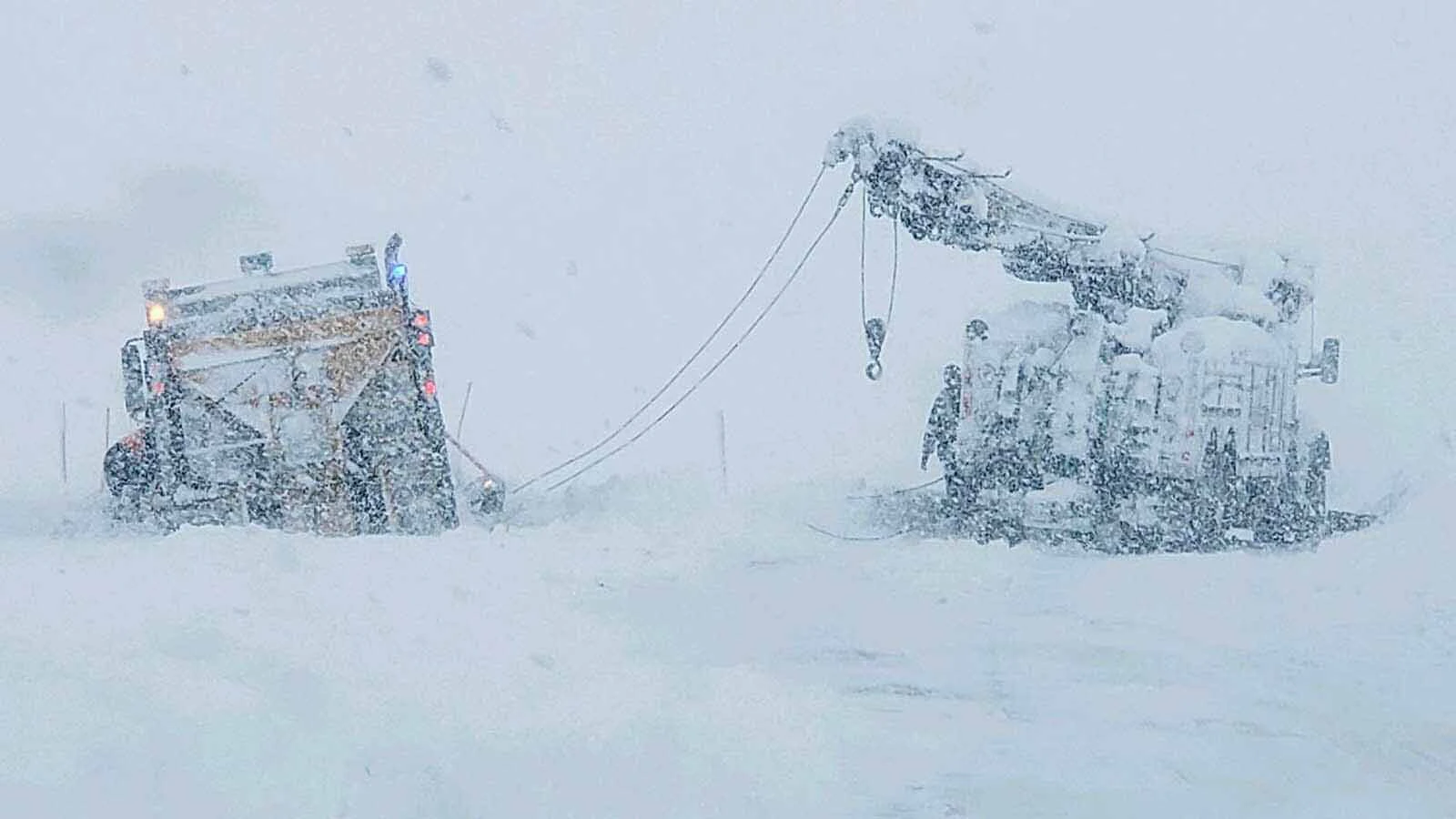
A wave of cold, wet weather is headed for southeast Wyoming with what could be 10+ inches of snow, which would be more than most storms during this past historically warm, dry winter.
If everything lines up just right, it could be the most moisture in the drought-stricken region in months.
The National Weather Service (NWS) has issued a Winter Storm Watch for central Laramie County between Monday night and Wednesday morning.
Up to 8 inches of heavy, wet snow could fall during that duration, accompanied by a 30-degree drop in temperature.
“This may be its biggest one-time event of the season for southeast Wyoming,” said Cowboy State Daily meteorologist Don Day. “I don't want to jinx it, but if it comes to fruition, it's going to be really helpful.”
With heavy snow and moisture comes multiple weather-related hazards. Wyomingites in Cheyenne, Laramie, and other southeast communities should be prepared to dodge falling tree limbs, power lines, and vehicles sliding across slick pavement.
“The ground zero of the worst drought condition areas in Albany, Laramie, Carbon, Goshen, and Platte counties are going to benefit from this,” Day said. “The snowfall rate, combined with temperatures near or below freezing, is likely to cause problems for traveling.”
Winter In May
Matt McLaughlin, general forecaster with the NWS office in Cheyenne, said this incoming system has plenty of action behind it.
“That means we’re in between the class of two low-pressure systems,” he said. “When they combine, they’ll have a lot of lift to help facilitate rain and snow coming to our area.”
According to McLauglin, the forecast indicates that the systems will combine to form bands of enhanced snowfall and rainfall across the tri-state region of southeast Wyoming, northeast Colorado, and western Nebraska.
How and where these bands form will be critical to understanding the impact.
“Most of the dynamics are concentrated in the southern portion of southeast Wyoming,” McLaughlin said. “It gets a little bit more hit or miss once we get into central Platte and Goshen County, but we are going to see some positive impacts, regardless.”
If it rains before it snows, the moisture could cool the already-warm ground enough to allow any subsequent snowfall to stick. That means the first week of May could look more like winter than most of this past winter season.
Day is focusing on water rather than snow. That’s the important moisture metric, especially at this time of year.
“I'm more concerned about the water content than inches of snow,” he said. “In early May, you tend to get heavy, wet snow that melts as it falls. You could stack up to 9 inches, and then an hour later it’s down to 4 because of how wet it is.”
Research indicates that the snow-to-water ratio is 10-to-1 or 12-to-1. That means 10 to 12 inches of snow translates to roughly 1 inch of water.
Day said the indications are already showing, by any metric, a significant amount of water in the mountains of southeast Wyoming. There could be up to 2 inches of snow water equivalent in the Snowy and Laramie ranges from this incoming system alone.
“It's a foregone conclusion that there's going to be a small area of moderate to heavy precipitation covering southeastern Wyoming, northern Colorado, parts of Southwest Nebraska,” he said. “It's just a matter of where the bull's eye is going to be.”
Rapid Descent
While the snow and moisture forecasts favor southeast Wyoming, Day said the entire state will feel the impact of this winter weather event.
“We’ll see some scattered showers and thunderstorms as the cold front pushes in on Monday afternoon,” he said. “The more concentrated precipitation is in the southeast corner, hands down, but here will be a myriad of rain and snow showers in central and northern Wyoming on Tuesday, and Bighorns and Wind Rivers will get some snow out of this.”
Meanwhile, there will be a dramatic statewide drop in temperature.
Everyone will notice the sudden shift from sunny springtime highs into near-freezing lows.
“We have mostly clear skies and high temperatures in the 60s on Monday,” Mclaughlin said. “By tomorrow, we'll be dropping into the 30s and 40s, possibly even the low 30s, within six hours.”
That’s good news for accumulation.
The drop in temperature, accompanied by rain and snow, will ensure that any snow that falls sticks around for a bit.
That’ll also mean it’s more than likely that Wyoming’s highways will be impacted, particularly the Interstate 80 corridor.
“This will be a very impactful system for travel,” Day said. “The I-80 corridor from Cheyenne to Rawlins, even I-25 from Chugwater and Wheatland to Denver, Colorado, is all going to get snowed on, and it's going to be enough to be a problem.”
Day said the concern isn’t flash-freezes of black ice on the highway, but slippery slush. That tends to be the primary road hazard during winter storms in May.
“When you start to get a heavy, wet snow falling, you get a layer of slush on the road surfaces,” he said. “When it comes down, it's starting to melt, but the rate of snow coming down, that next layer of snow doesn't melt, and it starts to pile up. That’s going to cause travel hazards.”
Good News, Regardless
This week’s weather won’t be enough to reverse the ongoing exceptional drought in southeast Wyoming, but it'll do a lot to improve the shocking-dry conditions.
Day is encouraged even while exercising caution and skepticism.
“It's going to be a really big shot in the arm for the suffering snowpack in the North Platte and South Platte basins, which have been really hard hit this winter,” he said. “This is the second week in a row that the mountains are going to get a good chunk of precipitation.
"This is by no means going to end the drought, because we need more of these. This is exactly what you want in May.”
McLaughlin said Wyoming will warm up into the 50s and 60s by Friday. This return to winter will be brief but impactful, and that’s a net positive across Wyoming.
“Preparation is always key,” he said. “This won't necessarily end the drought, but it will put a decent dent in it.
"We are going to see some positive impacts from the snowfall and drop in temperature, and more cloud cover and snow accumulation could help us cool off even more.”
Andrew Rossi can be reached at arossi@cowboystatedaily.com.


