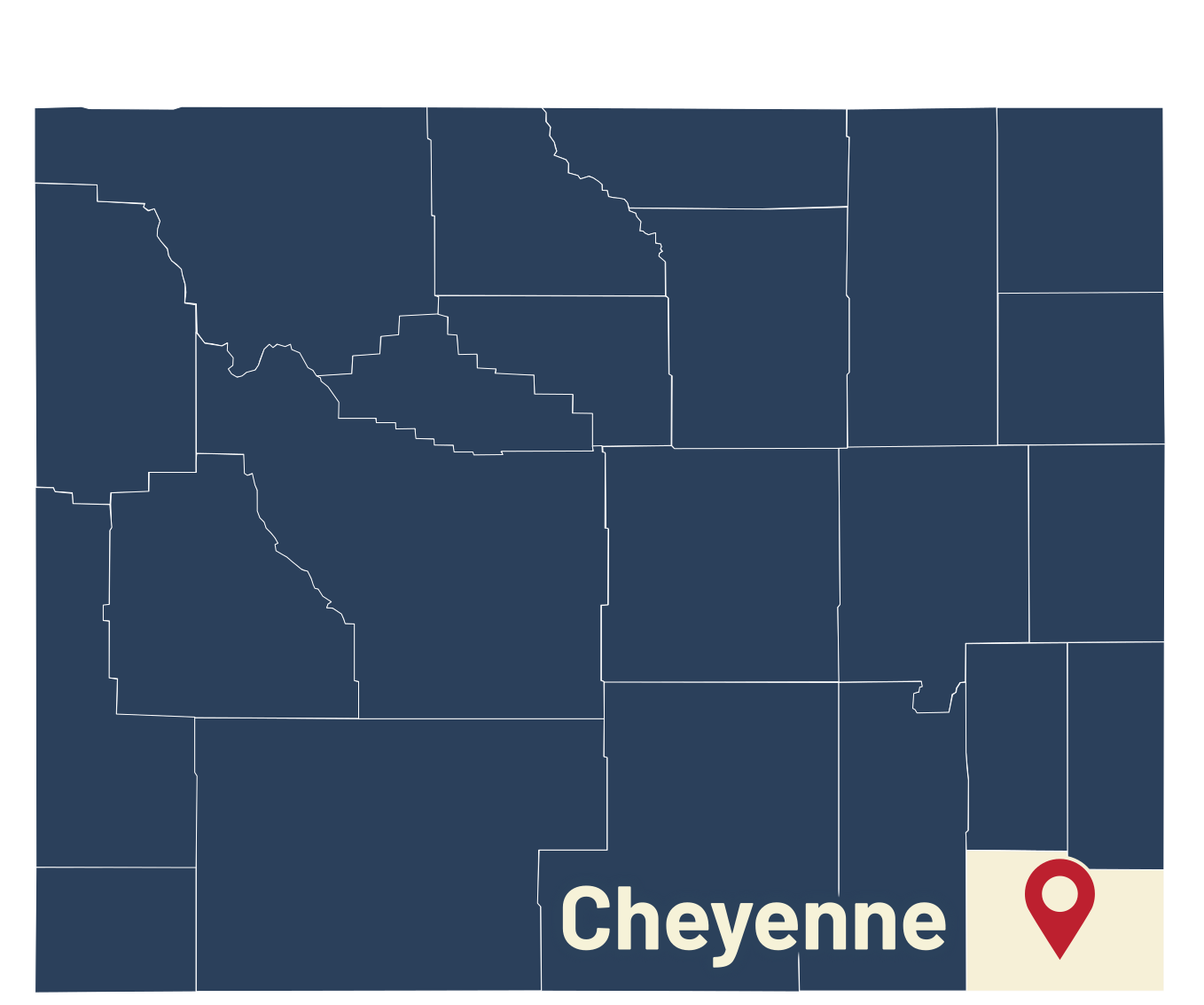
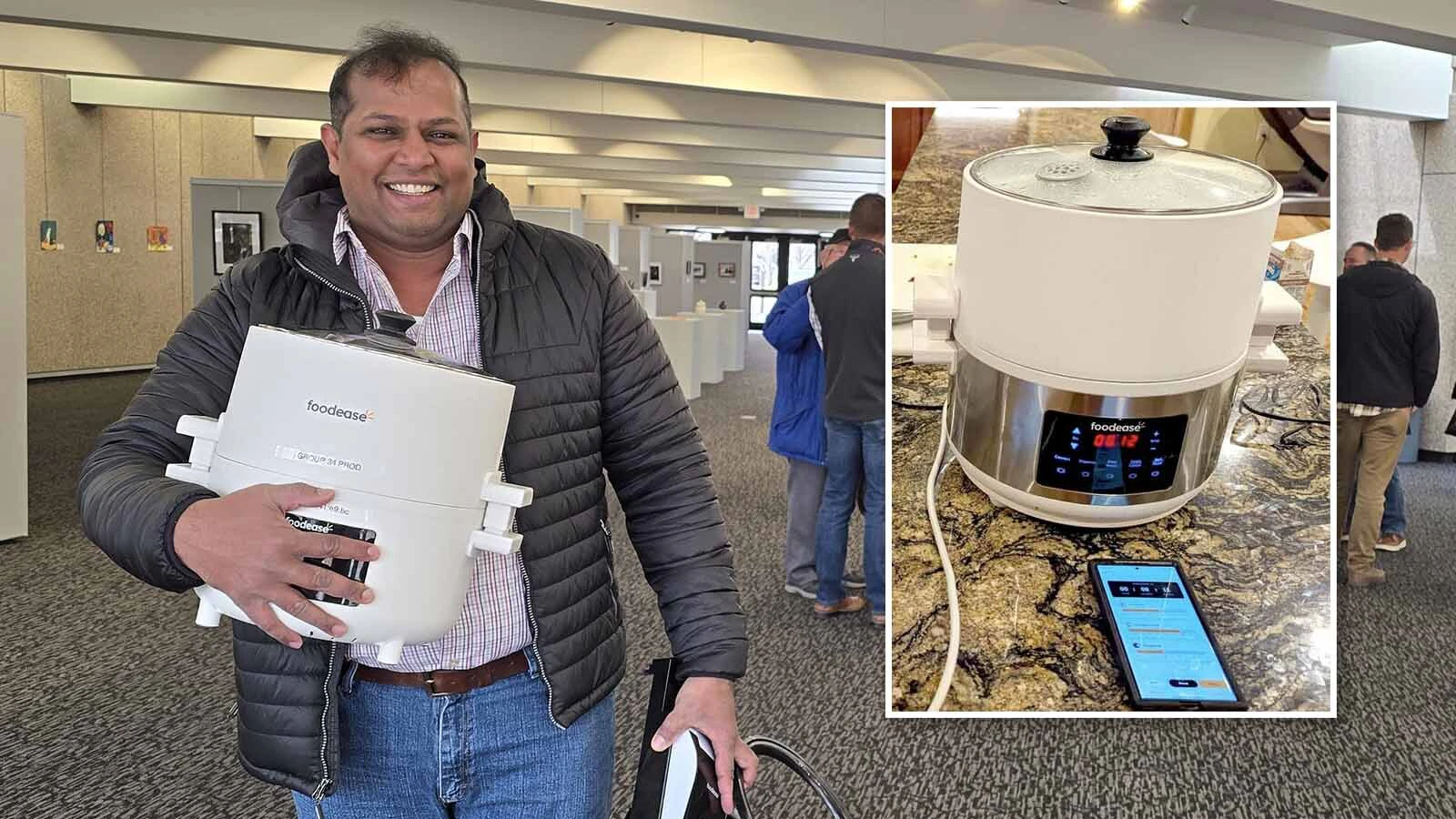
The robots are coming for your kitchens. Sleek and white, they’re sitting in a warehouse in Cheyenne, hiding inside nondescript cardboard boxes.
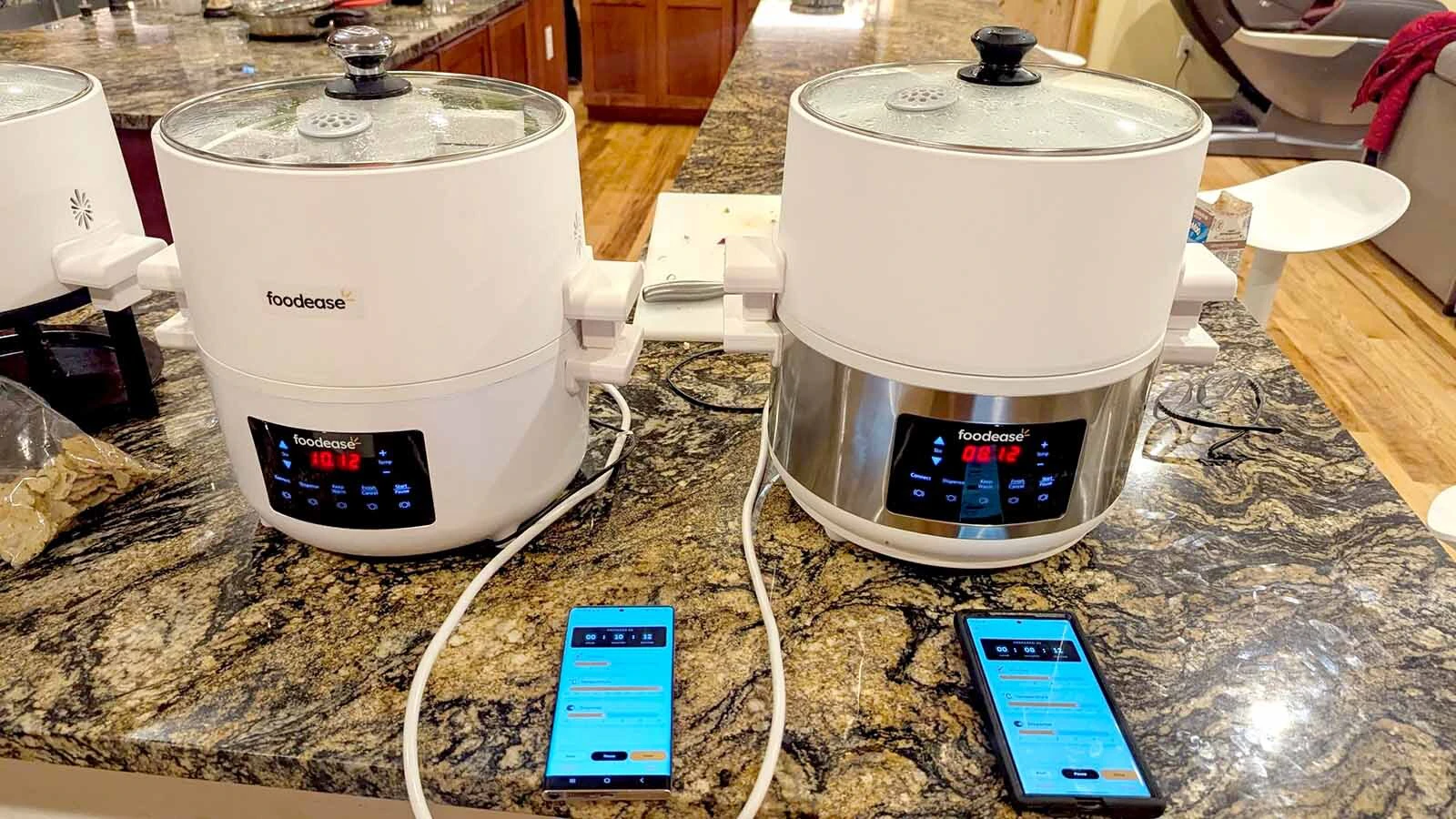
They don’t even really look like robots, they more resemble an Instant Pot or a slow cooker.
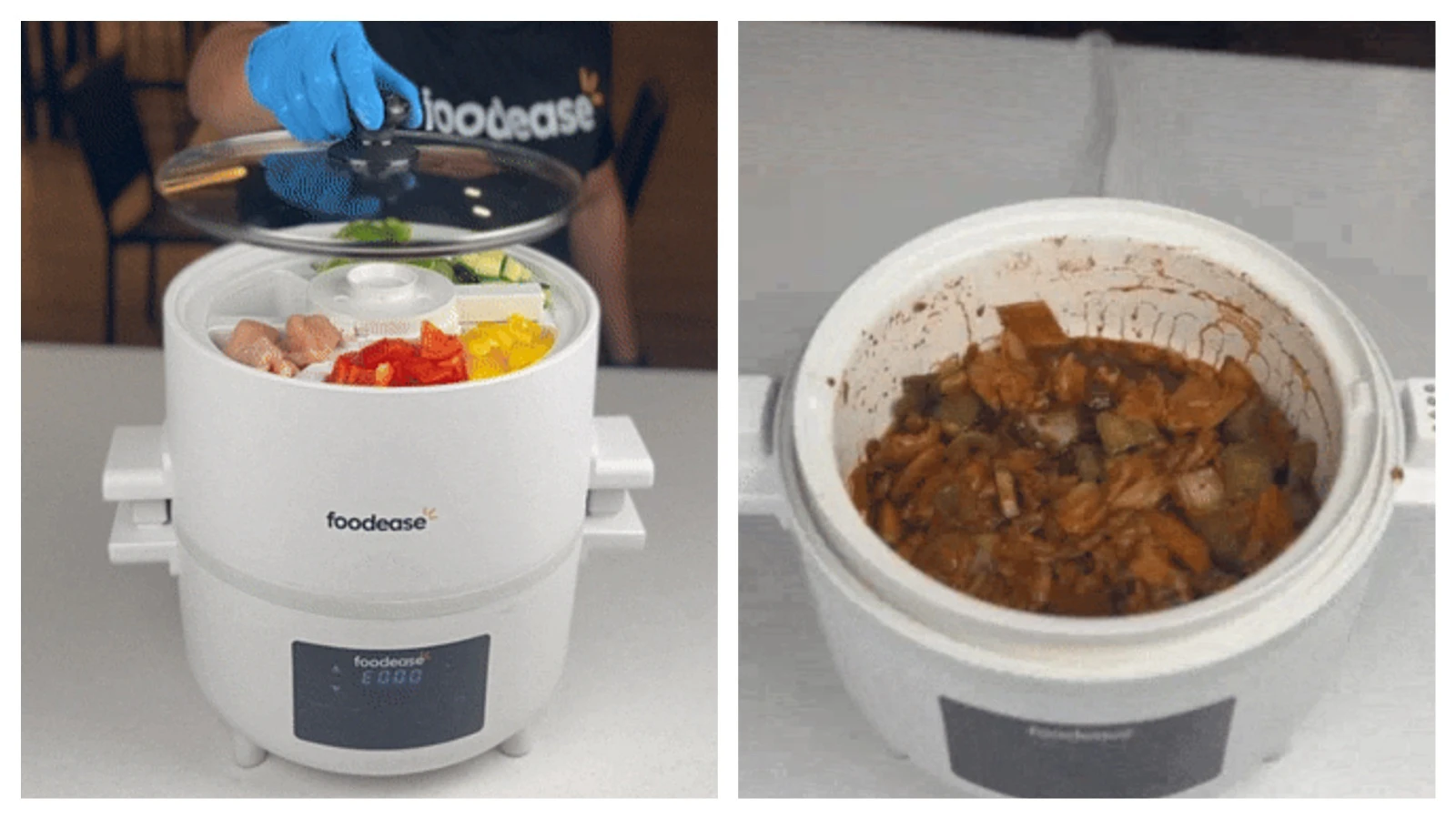
But this gadgets isn’t a glorified crockpot or a multicooker. It's an AI-assisted robot that can make your choice of dishes from start to finish at the push of a button.
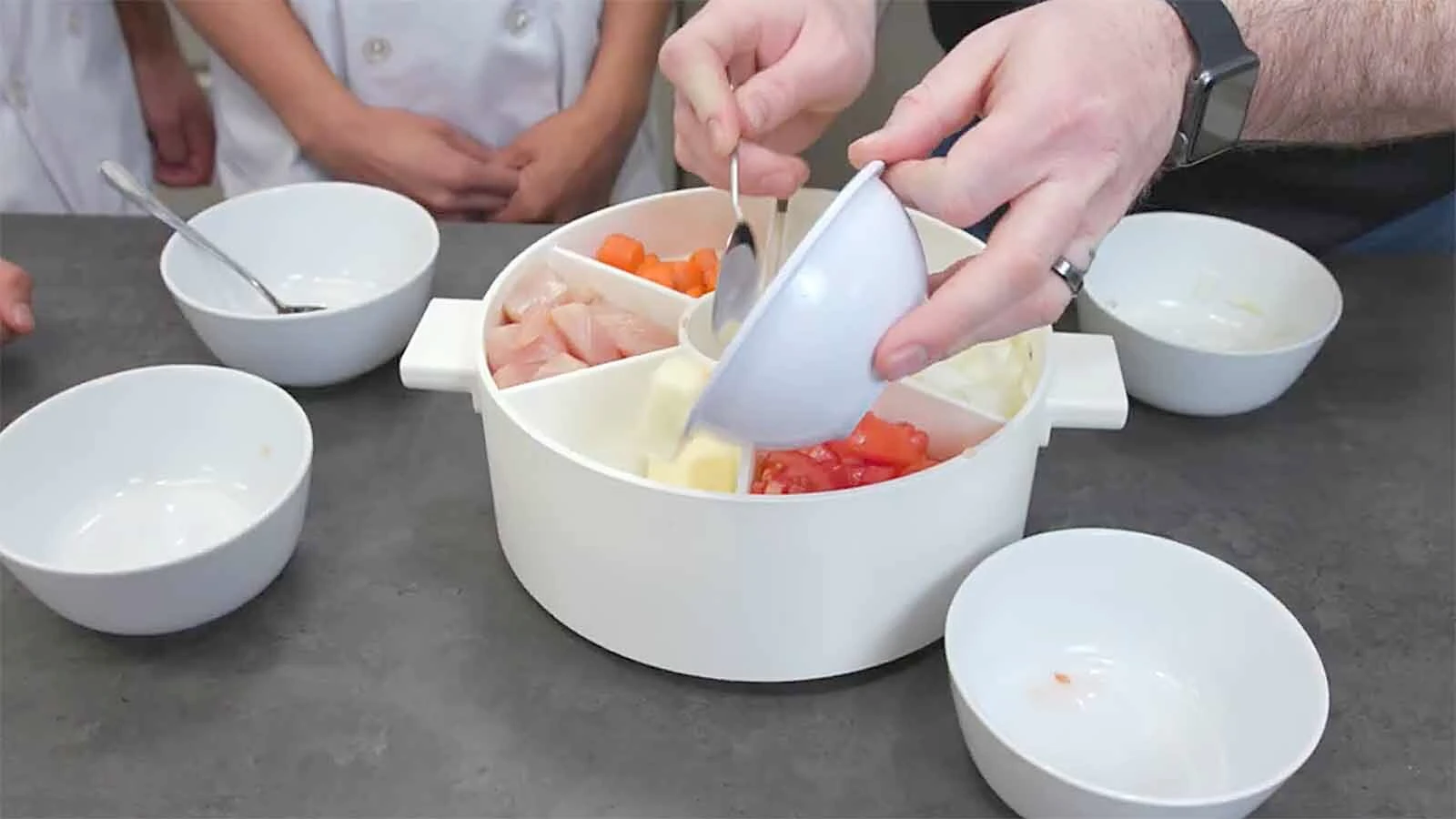
The concept is simple, even if the engineering for designers was anything but. You chop up the recipe’s ingredients, placing them in one of six dispensers plus an additional liquid reservoir.
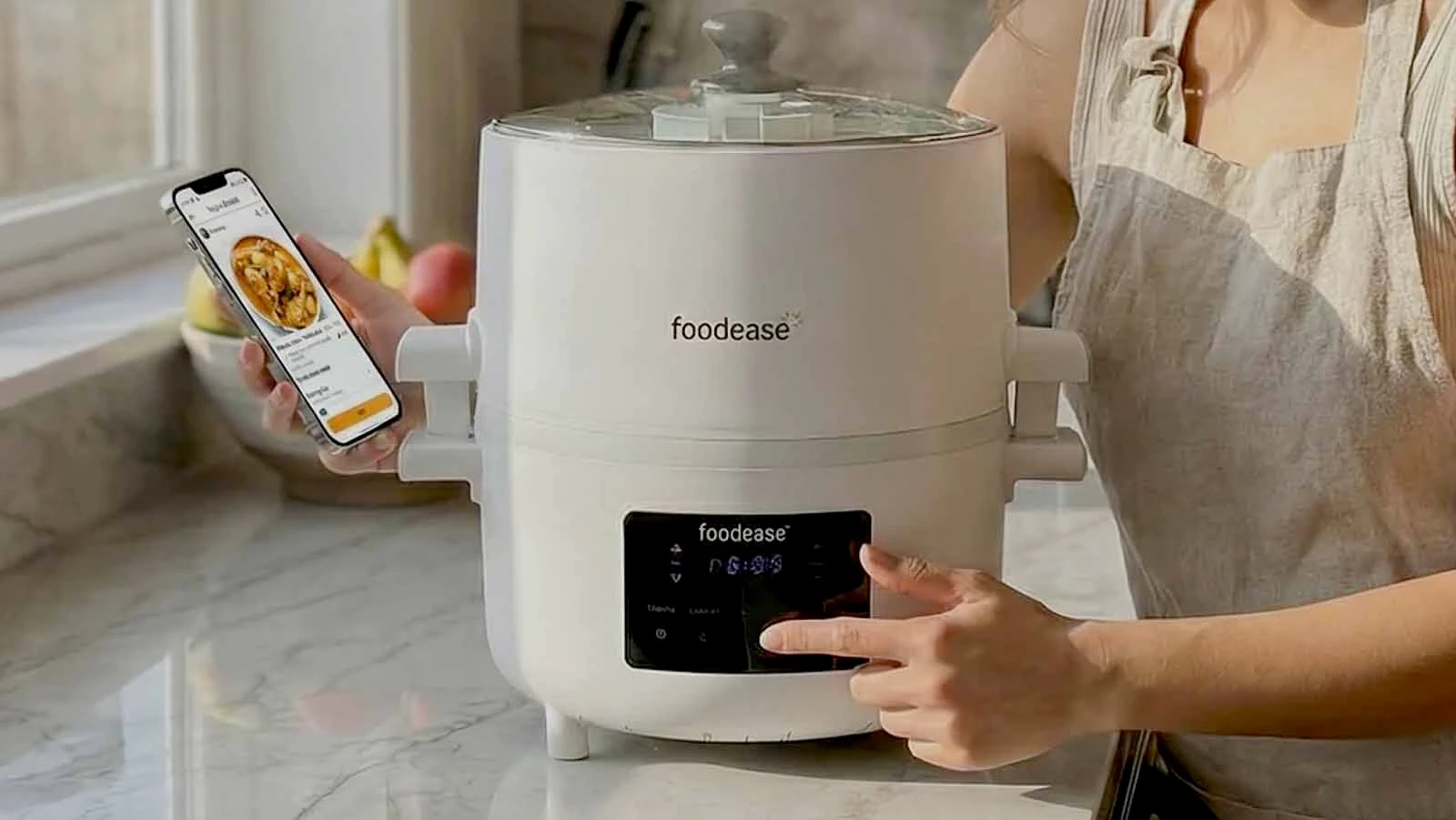
Then, when you’re ready, push a button and let the robot chef do the rest.
It will dispense the ingredients into a cooking pot below at the proper time. It will do all the stirring, too, so that nothing burns and everything cooks evenly.
All you have to do is return with a plate once the app has notified you that dinner is served.
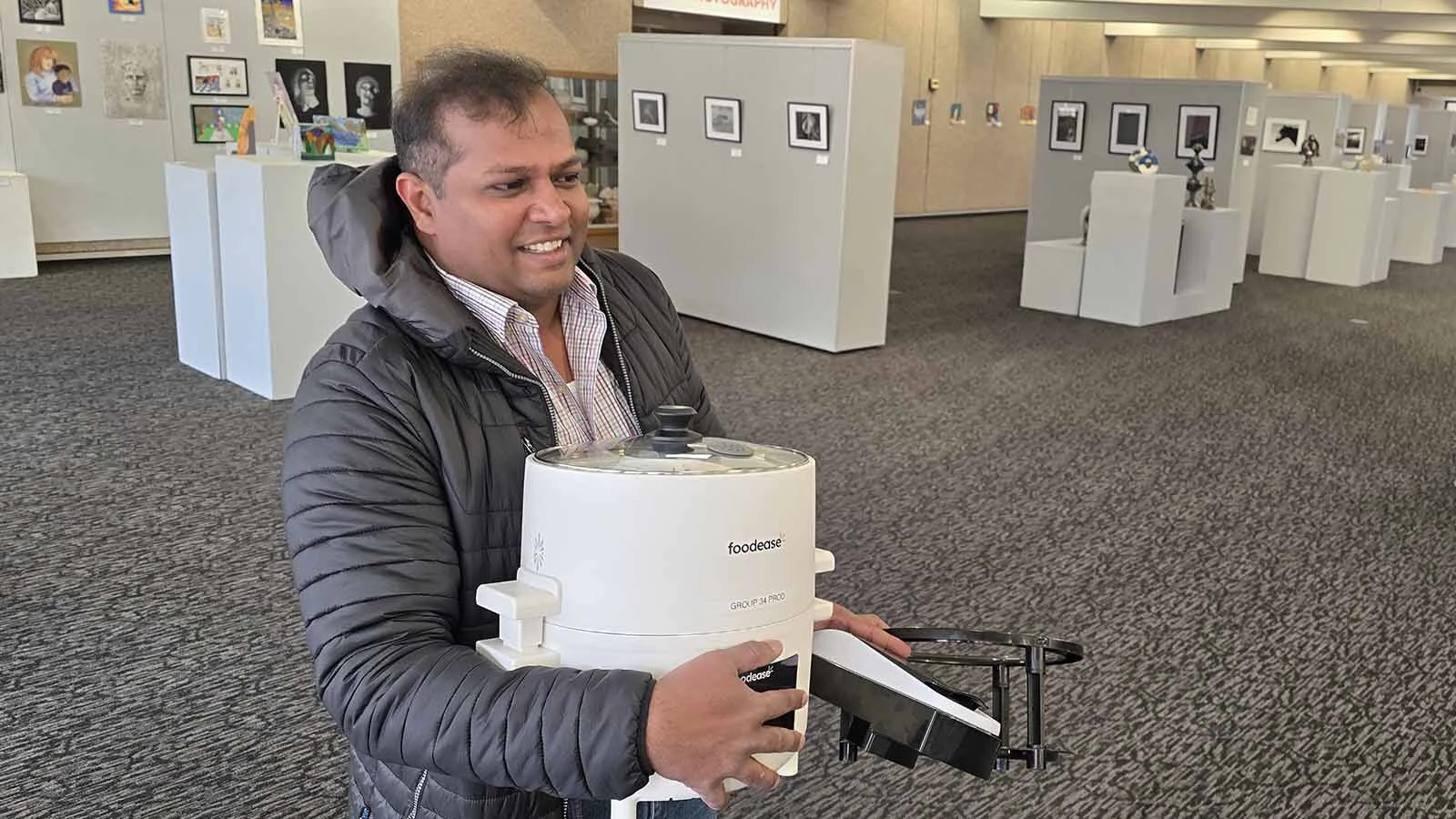
The robot chef can cook lots of things, Foodease CEO Kishore Kodru told Cowboy State Daily.
Kodru is normally a real estate developer and business owner in Cheyenne, but has lately become one of Foodease’s primary beta testers.
He wants to be sure the device is really as easy to use as his marketing promises.
He’s used it to make everything from Kung Pao chicken and Thai red curry to chicken Alfredo and Mexican rice.
While his favorite dish is chicken pepper fry, the fettuccini Alfredo has been the most popular with people by far, Kodru said.
“That one had 70 million views on our Instagram page,” he said. “It’s one single dish, so you don’t need a side dish.”
The second most popular is butter chicken with 50 million views.
Seeing that kind of interest and engagement was when Kodru decided, “We’re going to put our lives into this.”
From 'Made In China To 'Made In Cheyenne'
All of Kodru’s Foodease devices now are labeled “made in China.”
But if he and his business partners have their way, the kitchen gadget will soon have a different label on the bottom.
It’ll say, “Made in USA” or maybe even “Made in Cheyenne, Wyoming.”
Kodru is betting that if the dinner-making robot really takes off, new federal tax breaks will give him enough financial room to uproot his manufacturing from China and transplant it in Cheyenne.
He’s already bought a warehouse for the incoming units that are now being manufactured in China.
The warehouse is large enough to house everything he needs to make the device in Wyoming, including the $600,000 molds that the company already owns outright.
The Chinese company contracted to make it was so impressed with Foodease, it offered to cut the mold’s cost in half in exchange for the rights to market the product in Asia.
But Kodru decided not to do that. He really wants the product to be American made.
The pull toward Wyoming is partly emotional, but the numbers line up since the passing of the Big Beautiful Bill, he said.
“It’s the driver behind it, I’m not going to lie,” Kodru said. “Tariffs is another thing.
"I’m not going to go too much into detail, there, because it’s not just the tariffs, but the Big Beautiful Bill is definitely the biggest driver.”
The bill includes a provision that Kodru said will allow him to write off certain costs of standing up his manufacturing facility in Cheyenne.
“That’s a great thing, because it fuels more investments and also creates more jobs here,” he said. “And then the shipping cost is also saved.”
Manufacturing here will also bypass shipping time, allowing him to get to market faster.
“You have to plan two and a half, three months ahead, depending on when your container gets loaded up to ship,” he said. “So, you’re paying a little more (to manufacture in the U.S.), but it’s just what do you want to trade off.”
What It Takes To Flip The Switch
The threshold for uprooting Foodease from China and transplanting it in America is at least 3,000 orders, and the company has 330 without doing any kind of advertising yet.
Rather than sales, Kodru is now focused on beta testing with the first 1,000 manufactured units. Those have been shipping out from his Cheyenne warehouse a few dozen at a time.
“Eventually, our plan is to order 3,000 more units from China,” Kodru said. “And when those 3,000 hit sold and our KPIs are met and we know we actually have good traction — like absolute need, it’s going to take off — that’s the point we will want to manufacture here.”
It’s important to establish that this is a product the market really wants, Kodru said, before putting in the huge investments it will take to move the manufacturing to America.
“I think if we did this math right, once we meet that 3,000 mark, if we’re doing 5,000 units per month, we’ll be employing close to 50 to 60 people. That’s just an estimate,” he said.
Headwinds Against American Manufacturing
Upfront capital to build a manufacturing facility isn’t the only headwind the company will face as it seeks to bring a slice of manufacturing back to America, Wyoming Works Director Rocky Case told Cowboy State Daily.
One of the first big questions will be just how many components can be sourced and made in the United States.
“Here in the U.S., and particularly in Wyoming, there are parts that we cannot be competitive making right now,” he said. “So, you have to have an international supply chain, which is fine, if you’ve got a product that’s going to scale and sell.”
Legal risks are another big headwind that Brian Gross, a Cheyenne resident who has built factories around the globe, sees with American manufacturing. Gross is one of Kodru’s advisors.
In America, everyone connected to anything that goes wrong can find themselves the subject of an expensive lawsuit, Gross explained in a recent video about one of his companies, Brewista.
“Whenever there’s a house fire in the United States, they sue the coffee maker guy, the microwave guy, the toaster oven guy — there’s five things they go after every time,” he said. “So, I have to defend myself against that.
"I have to pay my insurance company to investigate,” he continued. “It’s $20,000, $30,000, and not one time has it been our fault, but I have to eat that cost. There’s no kickback if I get accused of something and defend myself and they’re wrong.”
Mitigating Labor Costs
One of the most often cited reasons for moving manufacturing to China is the cost of labor.
That’s an issue that’s being weighed with Foodease as well, Kodru said.
“We haven’t done the labor part, but we’re working with LCCC (Laramie County Community College) on robotics, the arms, and they have several grants to help small businesses taking that big leap,” he said. “So LCCC is helping educate us to understand how to be productive with robotics. That is also going to help upskill the labor that we’re going to hire.”
By using some automation, Kodru hopes that will shave enough labor cost to keep the product’s price point very competitive with other units that are trying out their own approaches to robotic kitchen chefs.
Case and Gross, who are veterans in the manufacturing sector, both believe Foodease has what it takes to break down the barriers and reshore some American manufacturing.
“You’ve got a trend where folks don’t necessarily want to do traditional meals at dinnertime anymore,” Case said. “With this, you’re not doing the whole spread with the pots and the pans, the three courses and the whole bit.”
Busy Americans, Case believes, could be very attracted to this concept, if it is executed well.
“What I love about it is that they not only have the appliance, but they have recipes you can apply to it,” he said. “So, it really is unique in that respect. He’s got a very cool product.”
Making It Through The Valley Of Death
The stage Foodease is in right now is commonly referred to by many entrepreneurs and investors as the “valley of death.”
It’s a crunch phase where an emerging business faces huge, expensive hurdles, even as they’re trying to ramp up production to meet rising demand.
The expense of manufacturing in the U.S. deepens that valley, Gross said, but he believes it’s a smart idea these days to mitigate the risks of producing from any one single country.
“From the beginning of the project, Kishore requested we look for any opportunity to bring components and assemblies to Wyoming for final assembly,” Gross said.
“All the tooling is built to USA machine standards, meaning that they can be shipped to the USA with very little modification and run on USA-specified injection molding machines,” he said.
Long-term diversifying the supply chain, while basing most of the manufacturing in the U.S., is one way Gross believes companies can minimize future risk.
Kodru, meanwhile, is realistic about it reshoring rhetoric. It strikes an emotional chord, but he has to be a practical businessman first, and a reshoring champion second.
Still, Kodru believes he is seeing many positive signs that he’s on the right track, from the millions of views for Foodease recipes to the positive response from those who have already tried out the device.
Busy Cheyenne professionals, Wendy Volk and her husband Todd, are among these early testers.
In a video of the demonstration, Volk and her husband are shown enthusiastically placing ingredients into the machine, then controlling it from their phone to make dinner.
“It was fun to learn about how to make a wide variety of dishes,” Volk told Cowboy State Daily. “We look forward to getting our own and testing more recipes!”
Renée Jean can be reached at renee@cowboystatedaily.com.