Eighteen months ago, a lifetime in Washington, President Donald Trump launched the Department of Government Efficiency -- the most ambitious and committed initiative in modern history to rein in rampant government waste, fraud and abuse.
Where previous administrations -- former Presidents George W. Bush and Bill Clinton -- dabbled at the edges of big government's growth, DOGE, an effort so pertinent it became engrained in popular lexicon, took aim at wholesale reform.
Elon Musk, the antithesis of the Washington swamp -- a self-made billionaire who is keenly focused on the bottom line -- was perhaps the only person up to the job.
And he set admirable goals: Slash up to $2 billion in government spending, eliminate burdensome regulation and right-size the workforce at bloated federal agencies.
From the outset, the left tried to sabotage the mission.
They staged protests, held hearings and fired up the spin machine to convince the public that America simply could not survive should the spigot of federal largess be dialed back.
Of course, America needs a fiscal diet and will be leaner and meaner as a result.
DOGE put the out-of-control government growth Democrats worked years to erect on the chopping block. It threatened to wean the public off the welfare state, undermining their steady creep toward socialism.
Sadly, the initiative was short-lived. Mr. Musk conceded that the effort was only "somewhat successful" and, although he probably wouldn't say it, at great expense to himself. That's the effect of the left's ruthlessness when their vision of an all-powerful government is threatened.
Mr. Musk's assessment is modest.
In fact, DOGE delivered $215 billion in taxpayer savings by reducing extraneous workforce and providing buyouts to federal workers; canceling outdated and redundant contracts; and eliminating programs that would confuse, if not incense, any reasonable taxpayer -- $50 million spent on "condoms to Gaza," $4 million to advance "global LGBTQI+ awareness," or $400 million per year to peddle green-energy grift projects, to name only the tip of the iceberg.
Perhaps most consequential, however, DOGE sparked a movement.
It invigorated projects, led by ordinary citizens, that have uncovered flagrant government waste and abuse -- from Minnesota's $9 billion of handouts to Somali swindlers, to California fraud that could cost residents $425 billion over five years.
There is no longer a question of whether fraud and waste are running amok in government. The conspiracy theories have been proven true.
The Government Accountability Office identifies hundreds of billions in potential savings from duplicative federal programs alone, and it estimates taxpayers lose over half a trillion dollars to fraud each year. The writing is on the wall.
DOGE also revealed a hard truth: The executive branch can only do so much.
Congress -- which rejected almost every proposed spending cut last year and actually raised spending in the current fiscal year -- controls the purse strings. The onus is now on it to continue this important work.
That's a tall task.
Congressman Tim Burchett, chairman of the U.S. House Subcommittee on Delivering on Government Efficiency, called it out plainly. Congress suffers from "too much talk," he said, and chasing "shiny objects" instead of producing real results. He is right.
Lawmakers, even on the left, pay lip service to making government more efficient and fiscally responsible.
But lawmakers don't get elected on promises to eliminate programs and gut spending; they get elected by doling out more federal bounty, even when the money is not there to pay for it.
The result is a national debt that's drowning our economy -- and hardworking Americans -- while killing opportunity for future generations.
We need leaders who have the courage to cast votes that are good for our country rather than good for their political careers.
That begins with voters who demand results, not just hearings.
It's exactly the kind of fight Americans for Good Government is built for -- arming citizens with the knowledge to hold their elected representatives' feet to the fire.
The baton has been passed, and Congress has the tools to finish the job -- if conservatives will step up and deliver.
The real measure of DOGE's success won't be what Musk found; it will be whether Congress has the resolve to act on it.
And that depends entirely on whether the American people demand it.
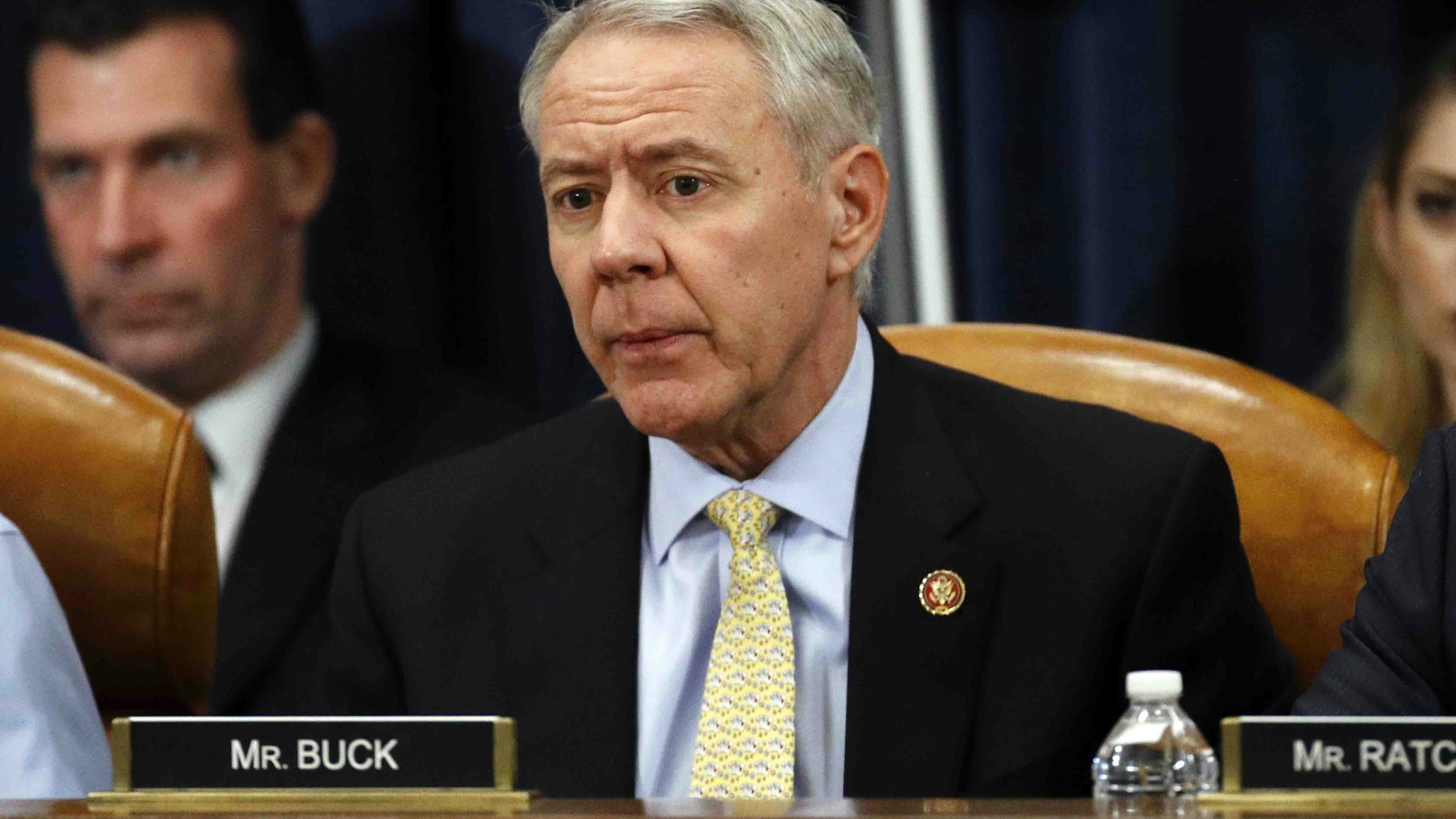
Ken Buck received his law degree from the University of Wyoming and served in the United States House of Representatives from 2015-2024 representing Colorado's 4th congressional district.