Battle, Wyoming was a town that was aptly named according to historians. The residents had seen a lot of death in their community’s short lifetime from gunfights.
Now a ghost town in the Medicine Bow National Forest, Battle had once been a bustling remote copper mining town in the Sierra Madres that survived just over a decade located high in the snow-packed mountains.
Gunfights and murder were so commonplace that editor of the The Battle Lake Miner newspaper at the time admitted that he tried to paint a picture of a successful town full of “entertainment.”
Instead of reporting on the fights in the saloons, he wrote how Battle was a “lively town” and everyone was becoming an expert at snowshoeing in the area's perpetual snow.
But he did report on how one miner made an explosion of snow inside a dance hall in retaliation for being kicked out for unruly behavior in December 1900.
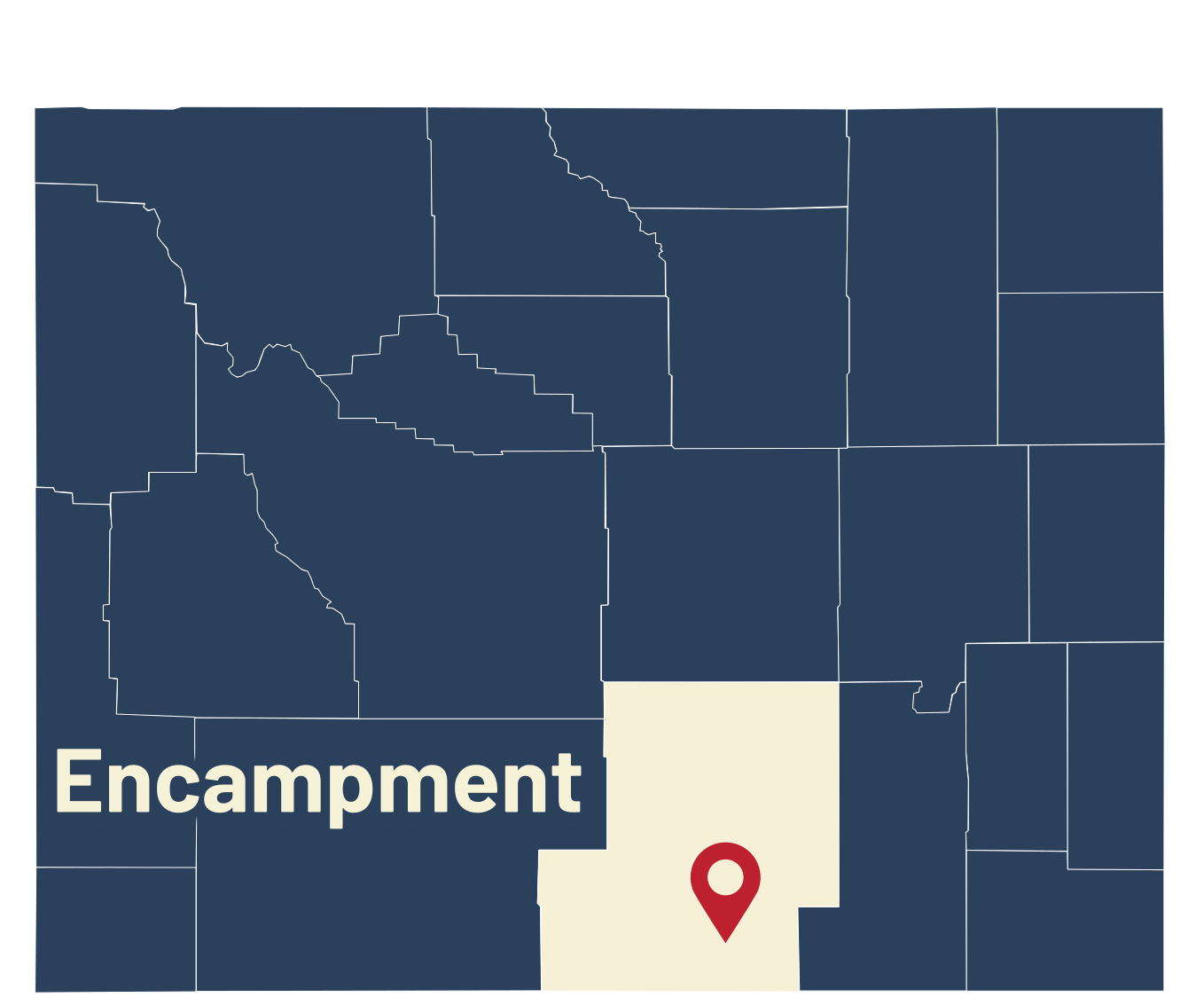
Established in 1898, the town of Battle was one of the earliest settlements in the Encampment district, according to Western Mining History.
Battle was located on the wagon road between the Ferris-Haggarty mine and the town of Encampment. It was a freighting stop and a place for rest and revelry for the teamsters and miners of the district.
In the 1950s, historians Mary Lou Pence and Lola M. Homsher visited the site of Battle and interviewed anyone they could find who remembered the town.
In their 1957 book “The Ghost Towns of Wyoming,” they shared the firsthand information that they had discovered in their efforts to bring the rough-and-tumble mining town back to life.
Battle, a hamlet of Encampment, was located on top of world, according to Pence and Homsher. They described ascending the serrated Sierra Madres for about 14 miles and standing on the windswept, blizzard-ravaged crest where Battle once perched within sight of Bridger Peak and Sheep Mountain.
Battle Earns Its Name
Battle was named for a battle fought between 500 Sioux, Arapaho and Cheyenne and 23 Rocky Mountain Fur Company trappers
Pence and Homsher wrote about how trapper Henry Fraeb, along with the 22-year-old mountain man Jim Baker, hewed an outpost in the shadows of Battle Peak.
In August 1841, the warriors launched a surprise attack on the men.
“Actual facts concerning the gory battle that ensued are scant, but records tell us the defenders had the vantage point, looking down upon the besiegers,” Pence and Homsher said.
Henry Fraeb, the leader of the trappers, was almost instantly killed. The horses had been hit by flintlock lead and lay dead in the corral according to the historians. Baker took command against the overwhelming force.
“Make every bullet count,” Baker was said to have told his surviving comrades.
The ammunition was getting low but they were able to hold their ground. When darkness came, the attackers retreated but set fire to the forest in a last act of vengeance.
Under the protection of the night, Baker and his band made their way by foot toward the safety of Jim Bridger’s camp. From this bloody battle, the creek, lake, mountain and future town were all named Battle.
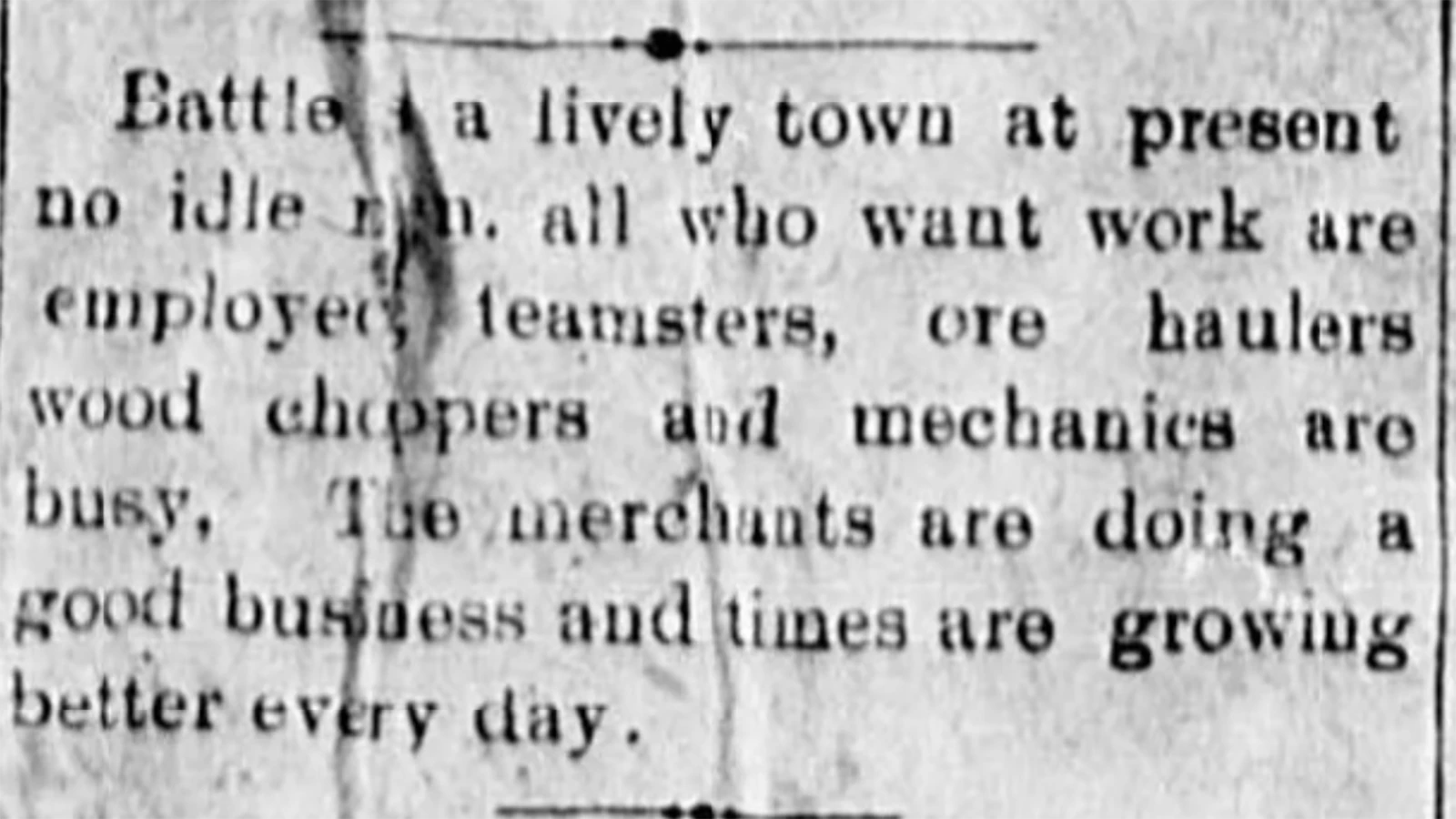
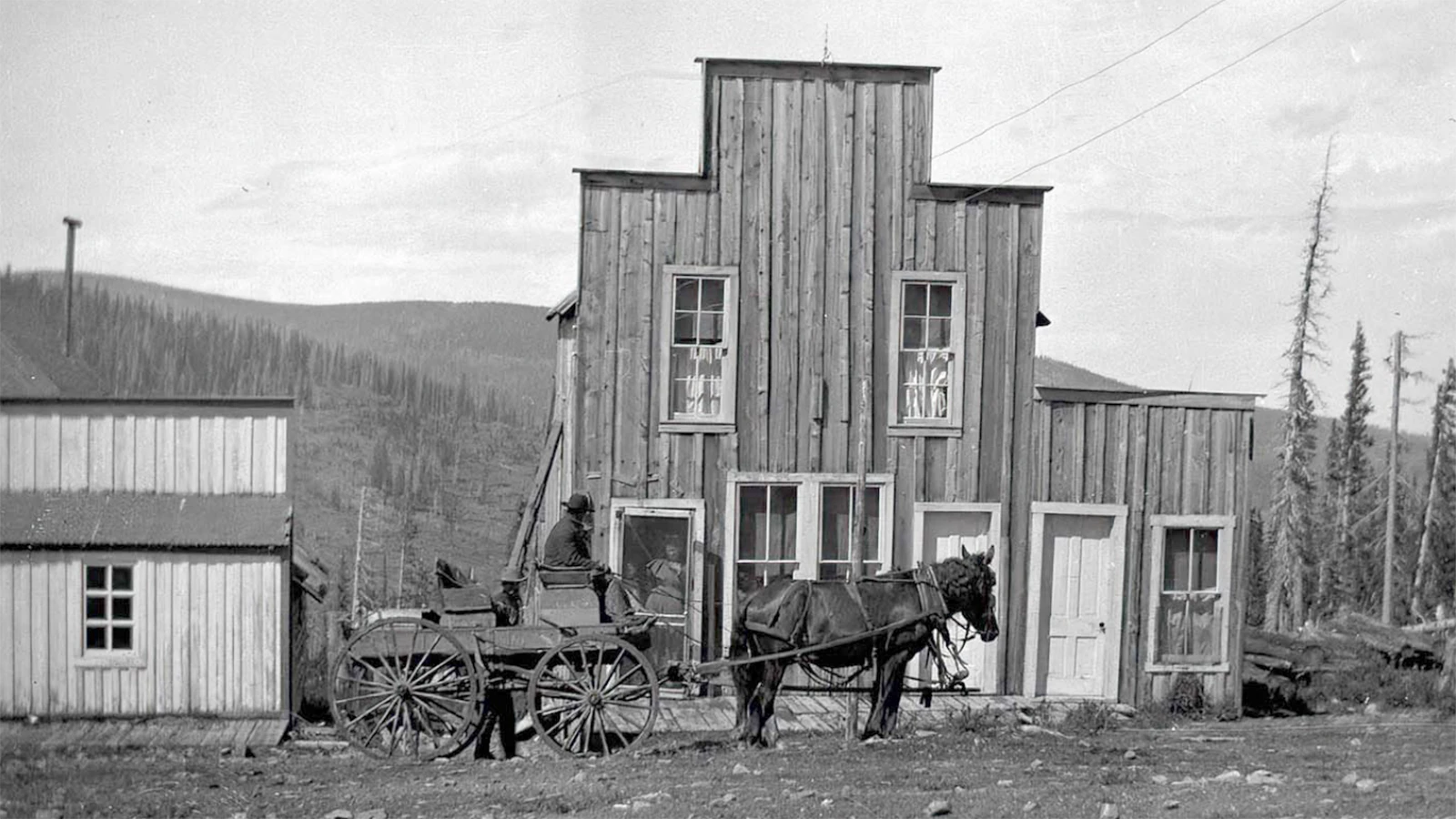
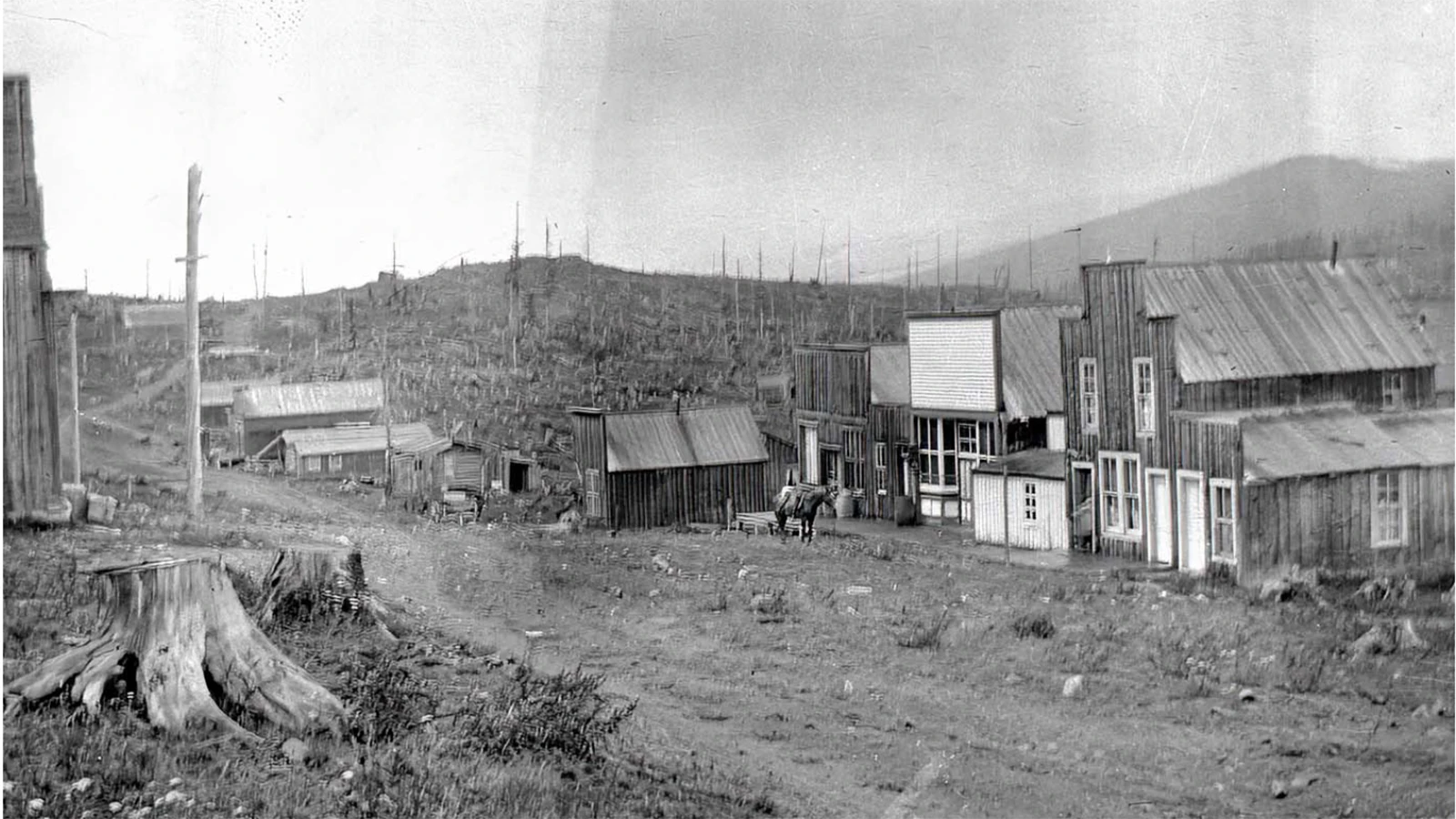
The town of Battle boasted a newspaper, The Battle Lake Miner, which shared the local gossip, talked about mining prospects, the snow and avoided including stories about the violence between the sheepherders, cowboys and miners. (Courtesy Western Mining History) 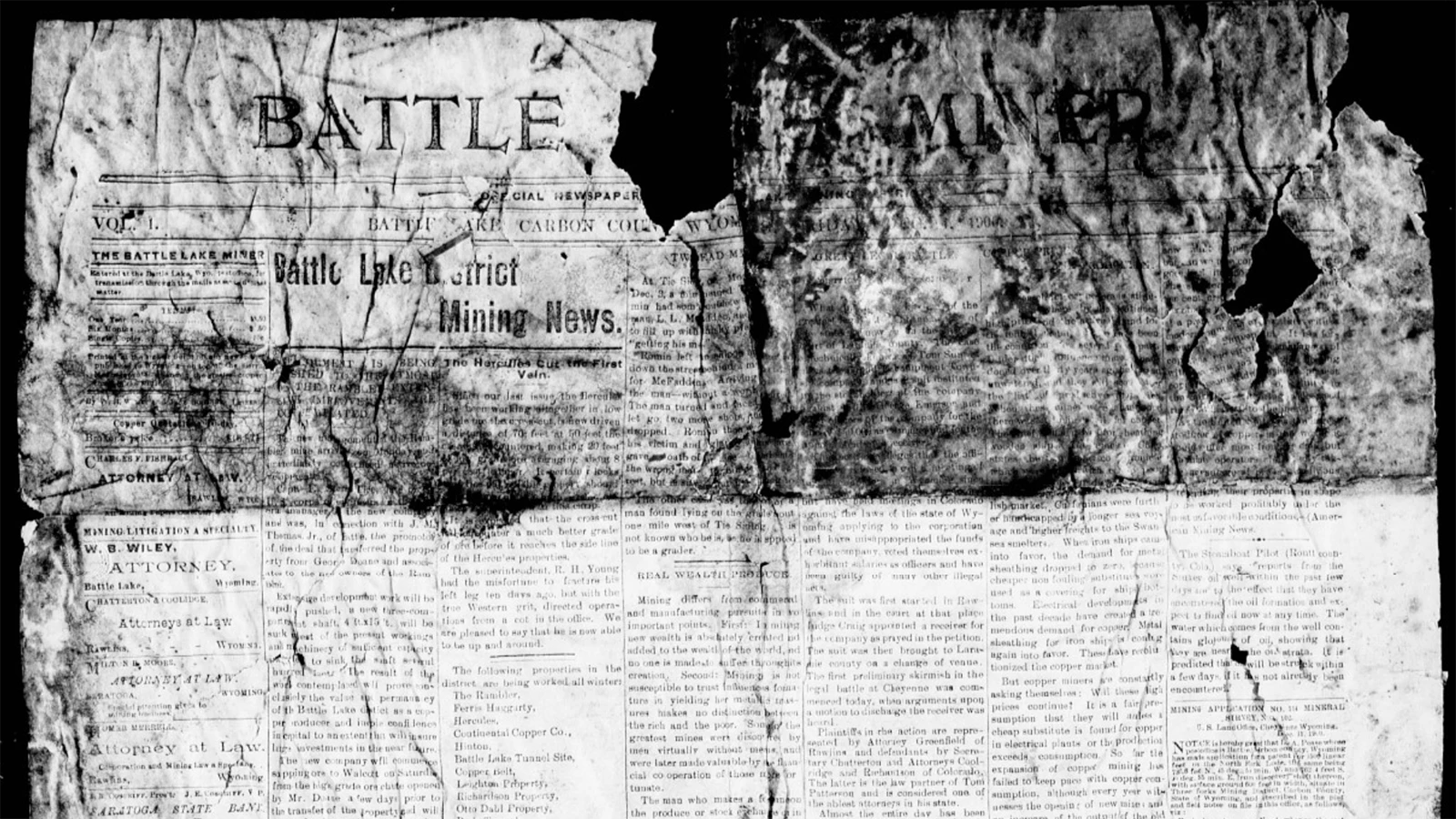
The town of Battle boasted a newspaper, The Battle Lake Miner, which shared the local gossip, talked about mining prospects, the snow and avoided including stories about the violence between the sheepherders, cowboys and miners. (Courtesy Western Mining History) 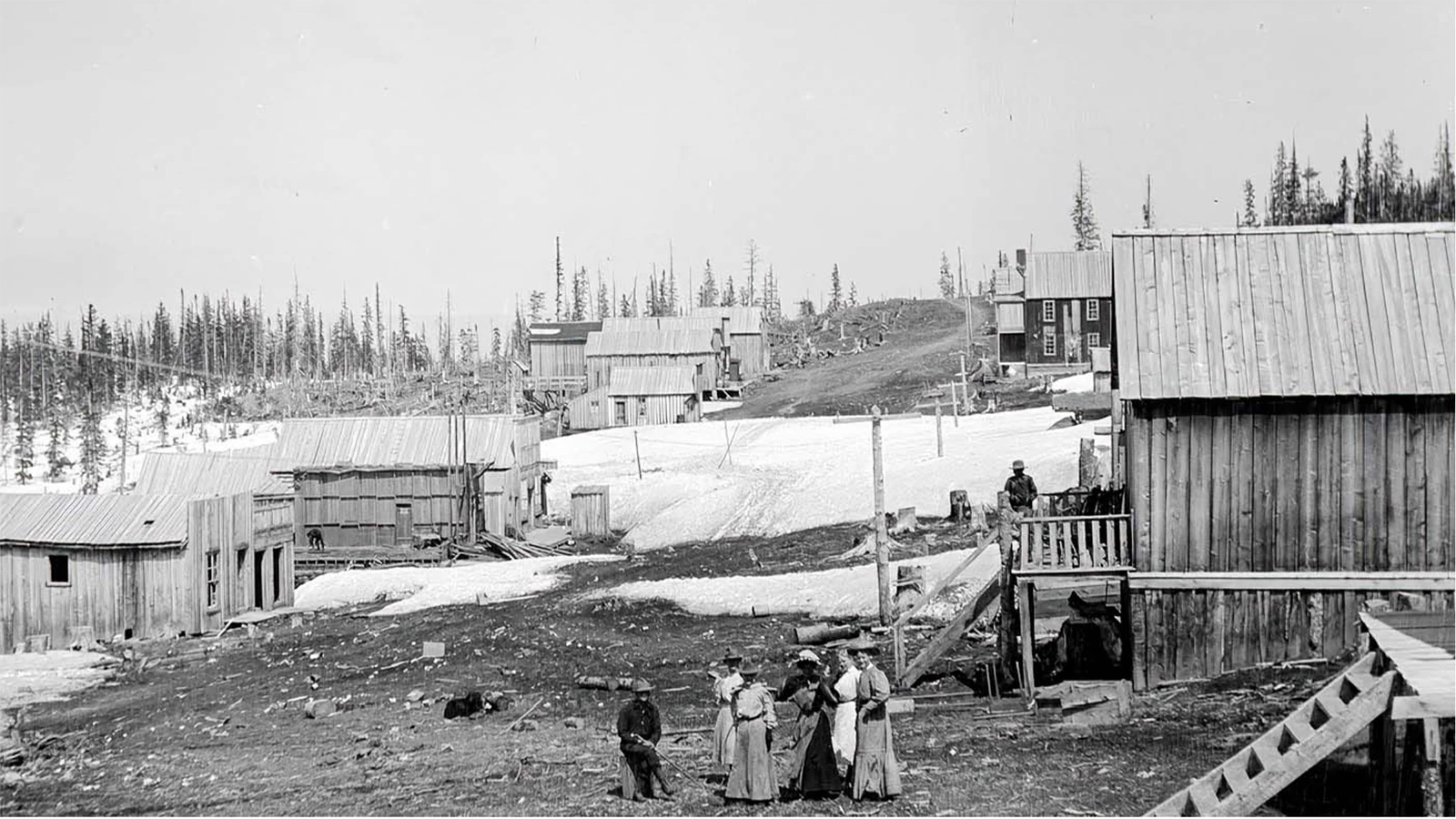
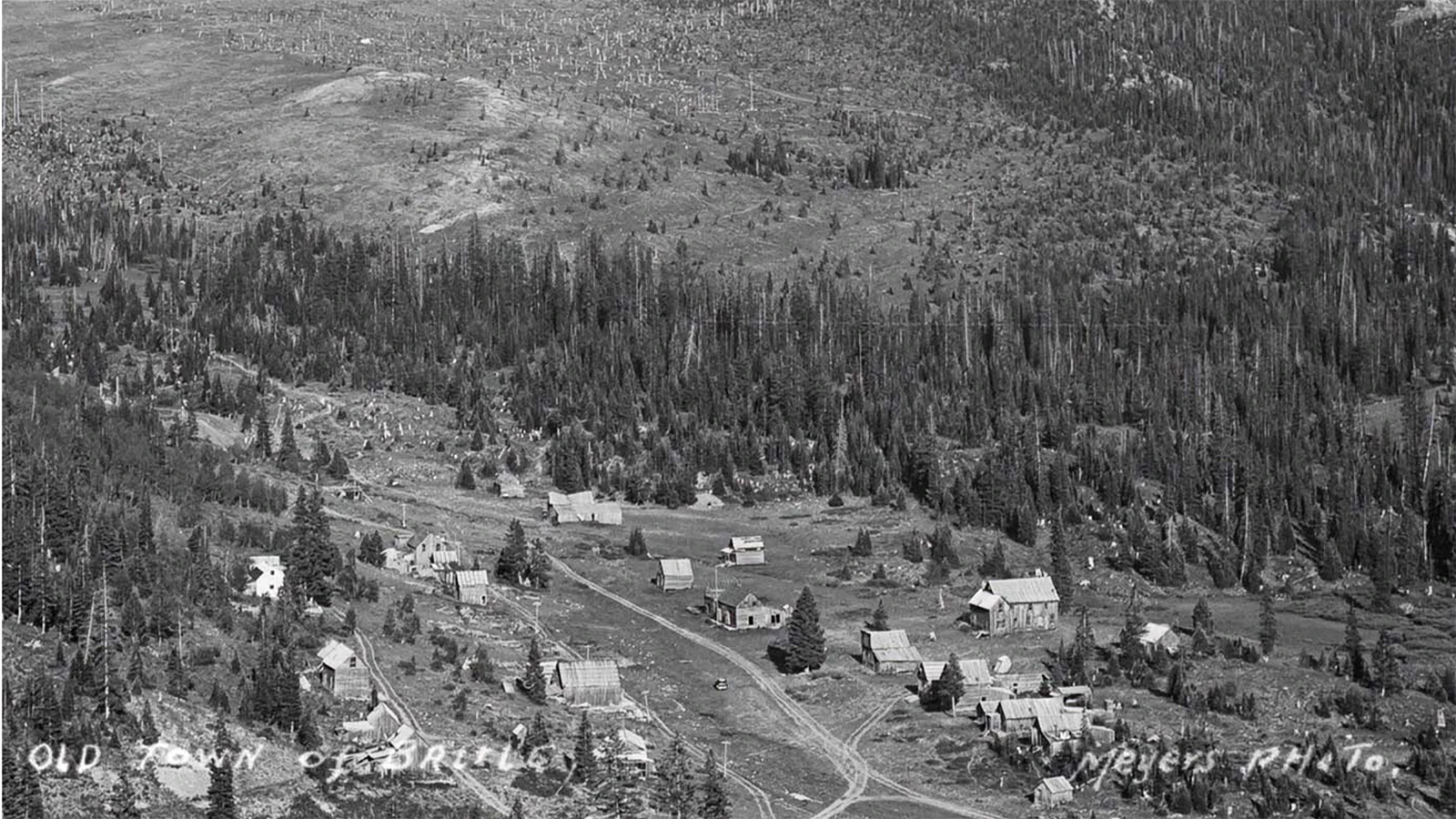
In 1903, Battle was a lively mining town in the Sierra Madres of Wyoming near Encampment. Snow remained in this isolated hamlet until June and the miners and sheepherders of the region found their entertainment in the saloons and brothels. There was also plenty of shopping in Battle and even a schoolhouse for the children. (Courtesy Western Mining History)
The Copper Rush
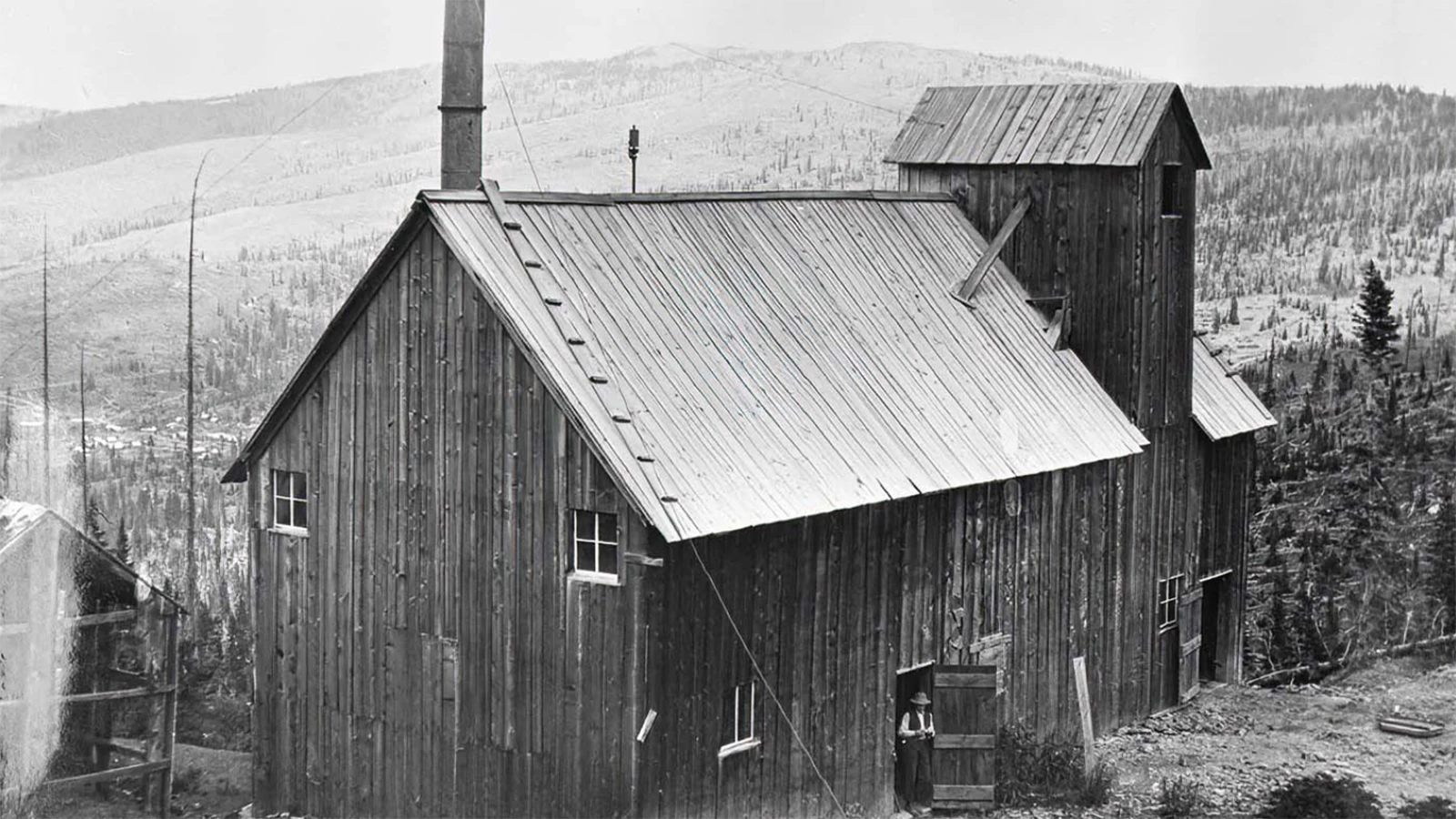
When copper was discovered, the difficult access in the mountain range did not deter the miners. Hundreds of miners were soon pickaxing away in ravines and gulches and eight small towns sprung up in the region.
Battle, proximate to the Portland mine vein, began as a stop-over for freighters enroute to the Pacific slope camps.
After the weary teams were bedded, the teamsters, and passengers could whoop it up all night at the town which had sprung up quickly to accommodate their needs.
The corporate platting in 1898 was carefully planned and included the “necessary graveyard.” Otto Dahl and Mrs. Kinsella opened competitive hotels, the Maine and the Kinsella. “Old Paste-Faced Camilles” opened up a couple of houses of forbidden pleasure along the principal drag of Battle.
Pence and Homsher said that several stores were opened that first year including a Men’s Apparel Shop by Miss Elizabeth Pettengill, who had been “deprived of the joy of choosing a husband’s clothes and found vicarious satisfaction by dispensing masculine attire from the false front of her store.”
The hamlet town also had a newspaper, The Battle Lake Miner, and a schoolhouse.
Despite boasting of the “only automatic water system in the world” which was a gravity flow through sunken pipes, the miners quenched their thirsts at five busy saloons.
Miners V. Sheepherders
The ranchers didn’t like the presence of these rowdy miners and told their herders an occasional shot or two might correct the situation. The miners returned this lack of love in kind.
“When the town of Battle was officially founded, resentment flared openly for a time, with six guns speaking commandingly,” Pence and Homsher said. “The raucous music of its honky-tonks was interrupted more than once by a miner-herder foray.
"The imposing city hall might well have displayed a sign, “Sheepherders and Cowboys, Beware!”"
The highland sheepherders came to town despite the animosity between them and the miners, seeking companionship.
However, the women at the bawdries complained about the sheep ticks the herders left in their perfumed beds. Gregarious but hot-headed by disposition, the sheepherders got into trouble more than once in Battle.
One memorable fight that was told to Pence and Homsher “smoked Mr. Smyzer’s bar blue.”
Kid Blizzard, a gambler and gunman, who was believed to have spent time terrorizing the Union Pacific and Fort Steele, had arrived in Battle.
In Smyzer’s one night, the Kid took a sudden dislike to several Mexican herders who’d just stepped in. When one of them walked up to the bar and ordered drinks, a single gunshot cut through the tobacco fog.
The sheepherders tried to run out the door but miners blocked the way.
As the gun battle raged, some of the sheepherders escaped on their rearing and pitching mounts, leaving behind several of their dead comrades.
“Kid Blizzard, swearing into space, fell flat, blood dripping on the ground,” Pence and Homsher said. “The gaping barkeep, bending over him and wiping him with his bib, raised his head and said that the poor guy had been shot in the heel.”
Sheriff Ed Wood, who knew Battle well and would later be Laramie’s Keeper of the Peace, remembers the marshal calling him the next day to help clean up the mess.
The inquest on the sheepherder’s deaths read: “From cause unknown.” They were buried in one large, unmarked grave.
The Demise of Battle
The completion of the Southern Wyoming Tramway in 1902 greatly reduced the number of freight teams coming through Battle, according to Western Mining History.
Between the loss of ore teams and the general decline of the district, the town was largely abandoned by 1905, the year the post office was closed.
“Looking down from its high perch, Battle had a magnificent view of the vast terrain where millions of dollars went to pot,” Pence and Homsher said. “True, after the inevitable crash, many of the principal players in this record of tragedy disappeared.
"But flitting and whispering ghosts, back from south of the border, hint that those ambidextrous stock manipulators are down there yet, living the life of Riley.”
The remaining buildings of Battle were removed by the government who deemed it a firetrap.
By the 1950s, Pence and Homsher said that only seven graves were discernible and only two had headstones.
Despite the buildings and graves of Battle disappearing, the memory lives on thanks the efforts of these two historians and others who captured the stories of Battle before they were lost.
Jackie Dorothy can be reached at jackie@cowboystatedaily.com.