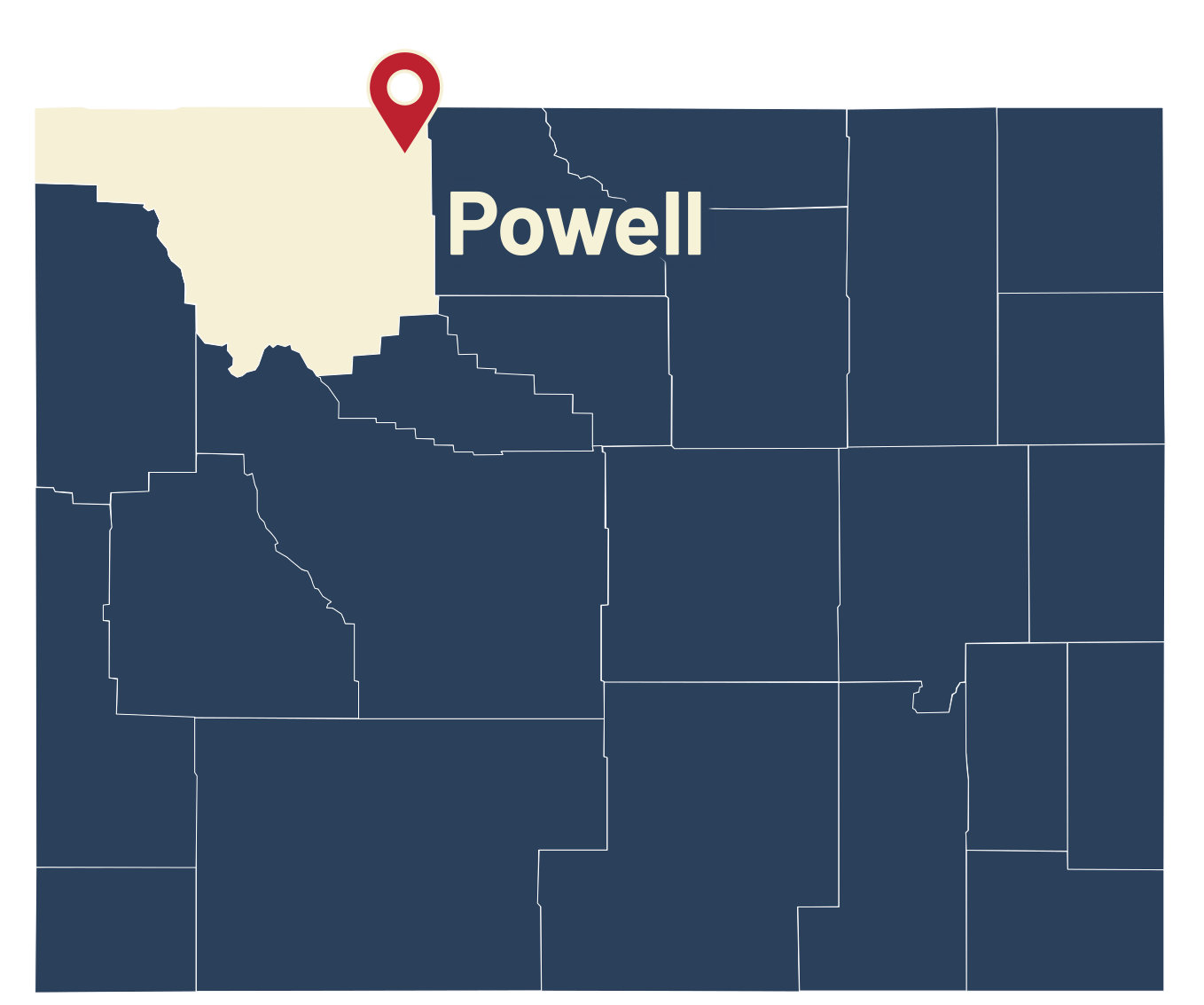
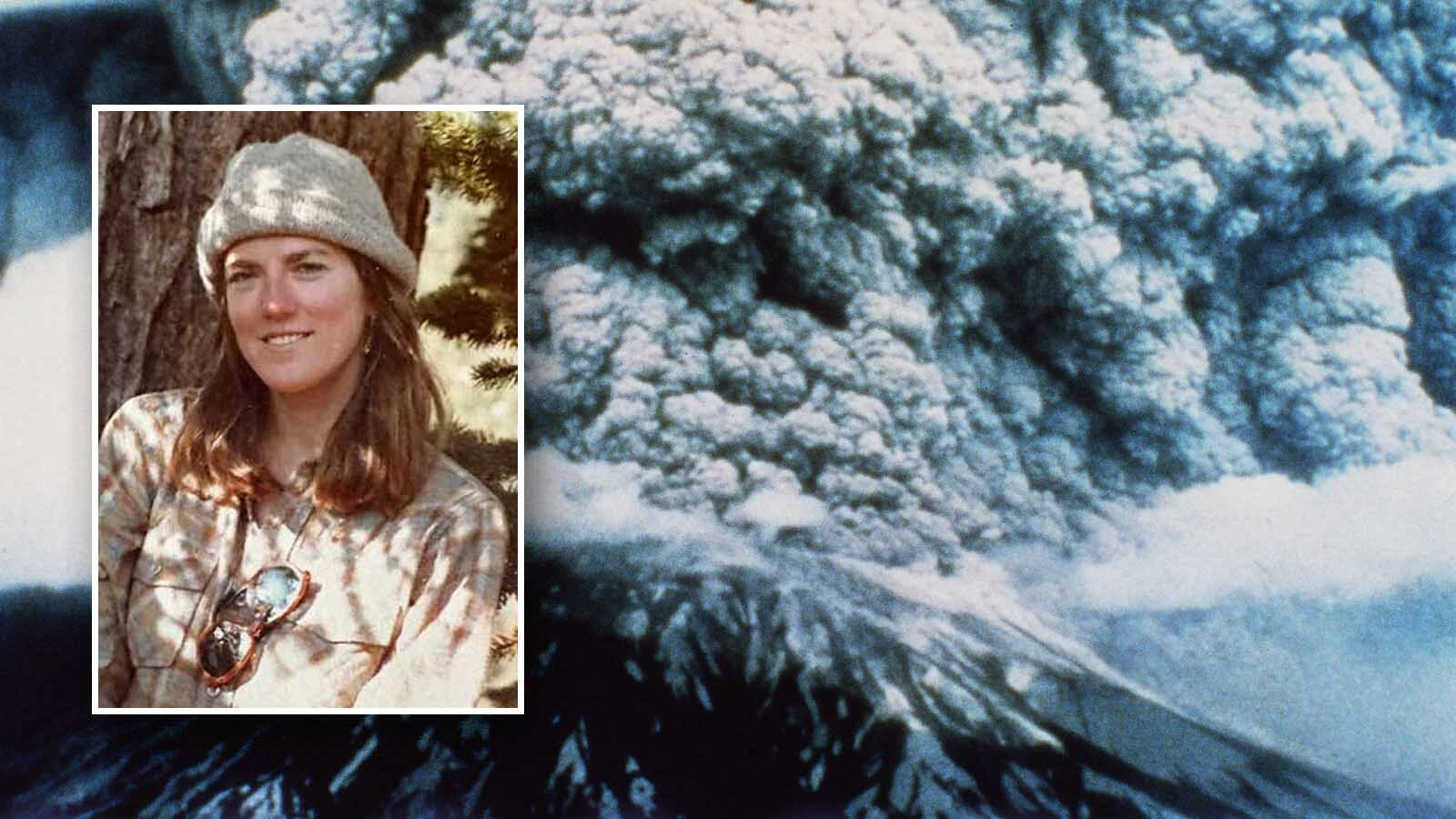
A short stop at her desk the morning of May 18, 1980, saved Valerie Pierson’s life, and the lives of a dozen of her crew members who were working at the base of Mount St. Helens that fateful day.
The former Powell resident had a terrifying front-row seat to the historic eruption.
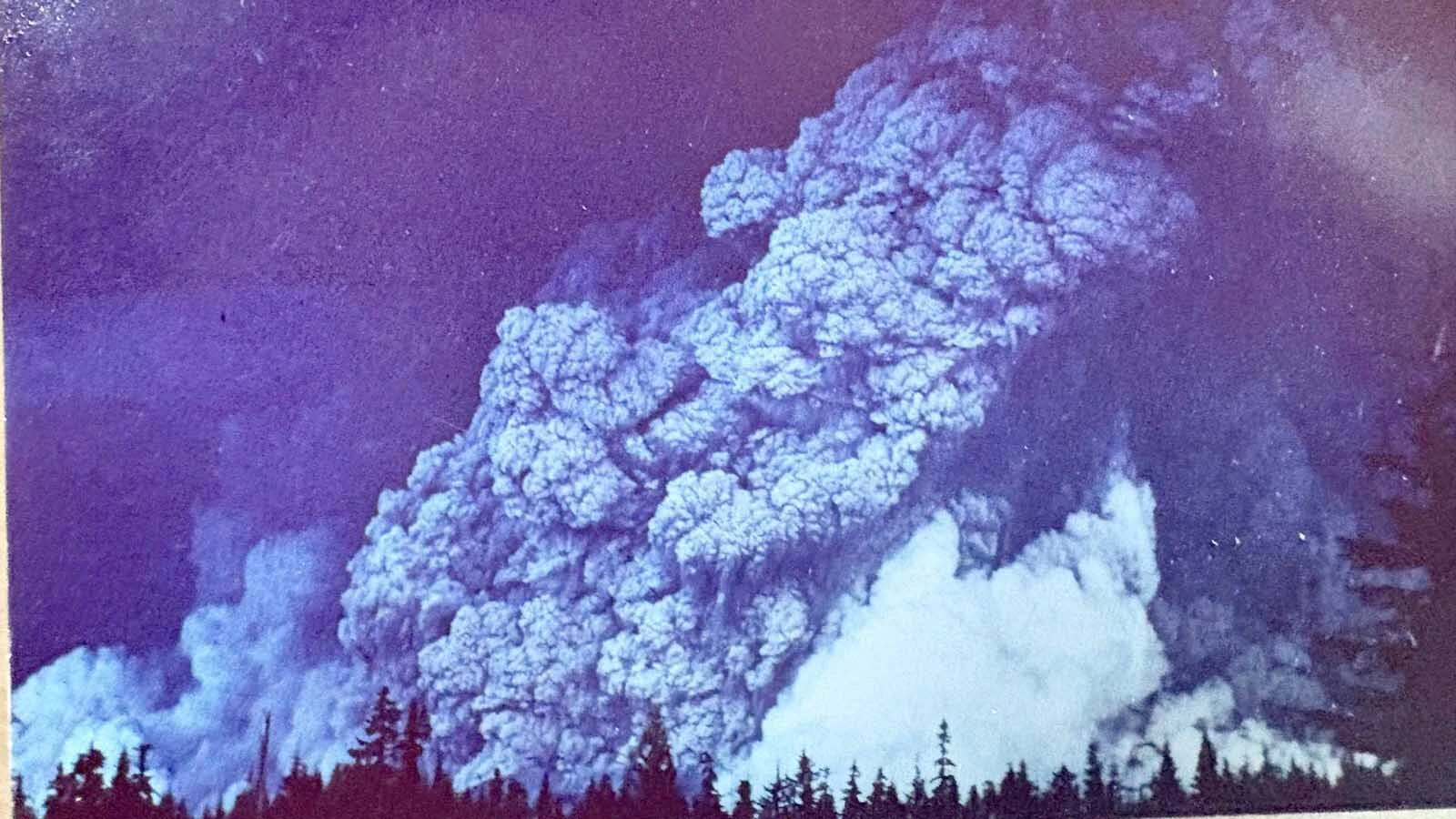
That was the day a magnitude 5.1 earthquake triggered a massive landslide on the north slope of Mount St. Helens in Washington state. The event unleashed a blast of hot gas, ash, and rock, devastating 230 square miles of forest north of the mountain.
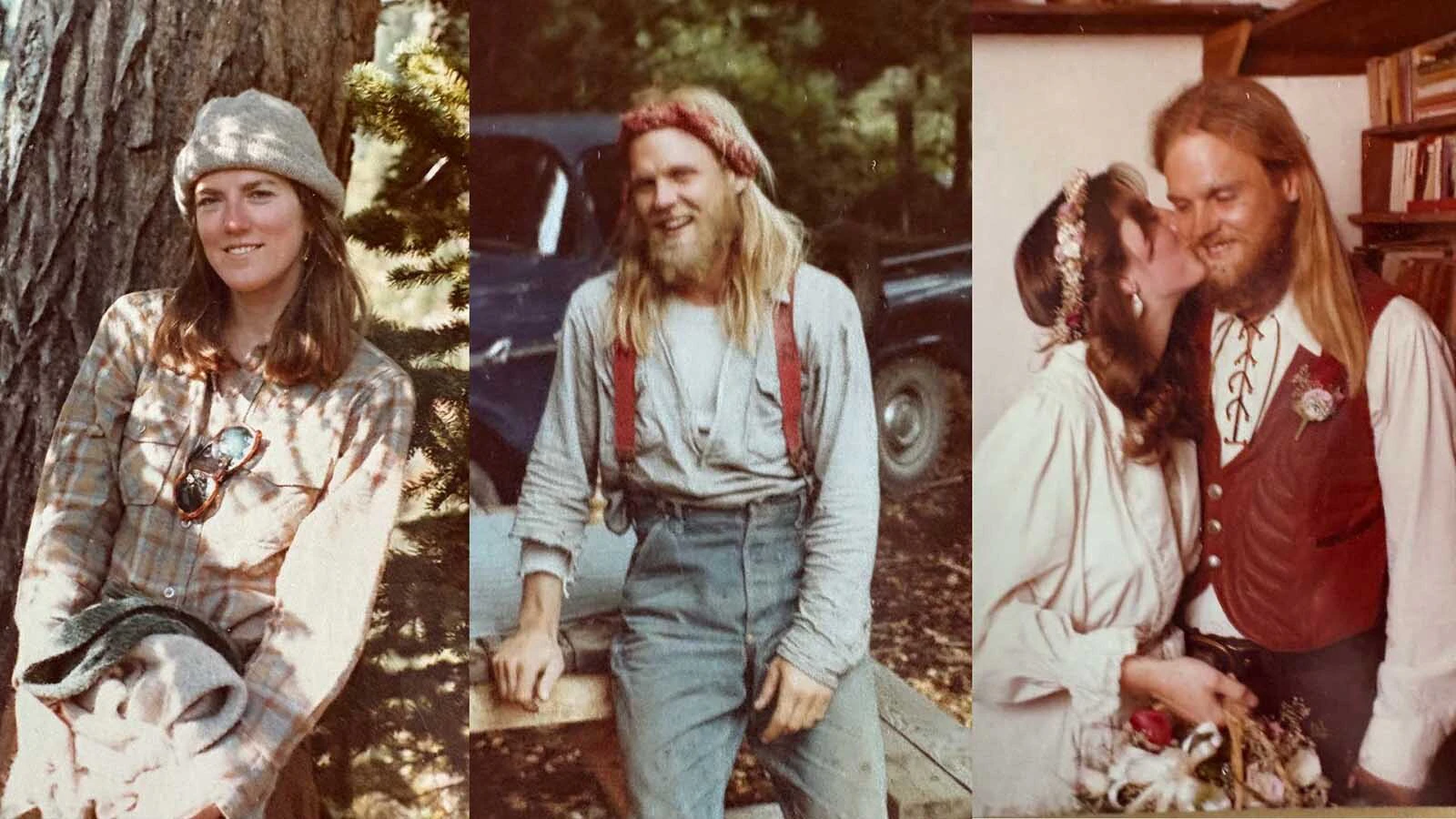
Valerie Sigfridson (later Pierson) was a young forester who experienced the historic eruption as it happened, and it changed her life in more ways than she could imagine.
By the end of the day she would meet the love of her life, and their adventures would take them from the ash cloud of one of the biggest volcanic eruptions in the country’s history to the Beartooth Mountains and Bighorn Basin of Wyoming.
A Trip To the Bathroom Saved Her Life
Pierson had begun work in the Spirit Lake area near Mount St. Helens in the summer of 1979 as a tree planting inspector working at the base of the mountain in the spring of 1980.
On the morning of May 18, Pierson had stopped in to her district office before taking off for the Clearwater section on the north side of the mountain, where her crew had been working the day before.
“I had already loaded my truck to go back to the Clearwater area,” Pierson told Cowboy State Daily. “At the last minute, I thought, ‘That's a drive, I should go the bathroom.’”
When she came out of the restroom, Pierson noticed a note on her desk that directed her to change the location of their project that day — not because of danger from the volcano, but because of the temperature that day.
“It was going to be hot and sunny, and you can only plant when there's a certain amount of humidity or temperature,” said Pierson. “So I had to unload the truck, reload the truck with the right trees for that area, and so we got up there late that day.”
The Signs Were There
Mount St. Helens was given its name during a survey of the northern Pacific Coast between 1792-1794, named for British diplomat Alleyne Fitzherbert, whose title was Baron St. Helens.
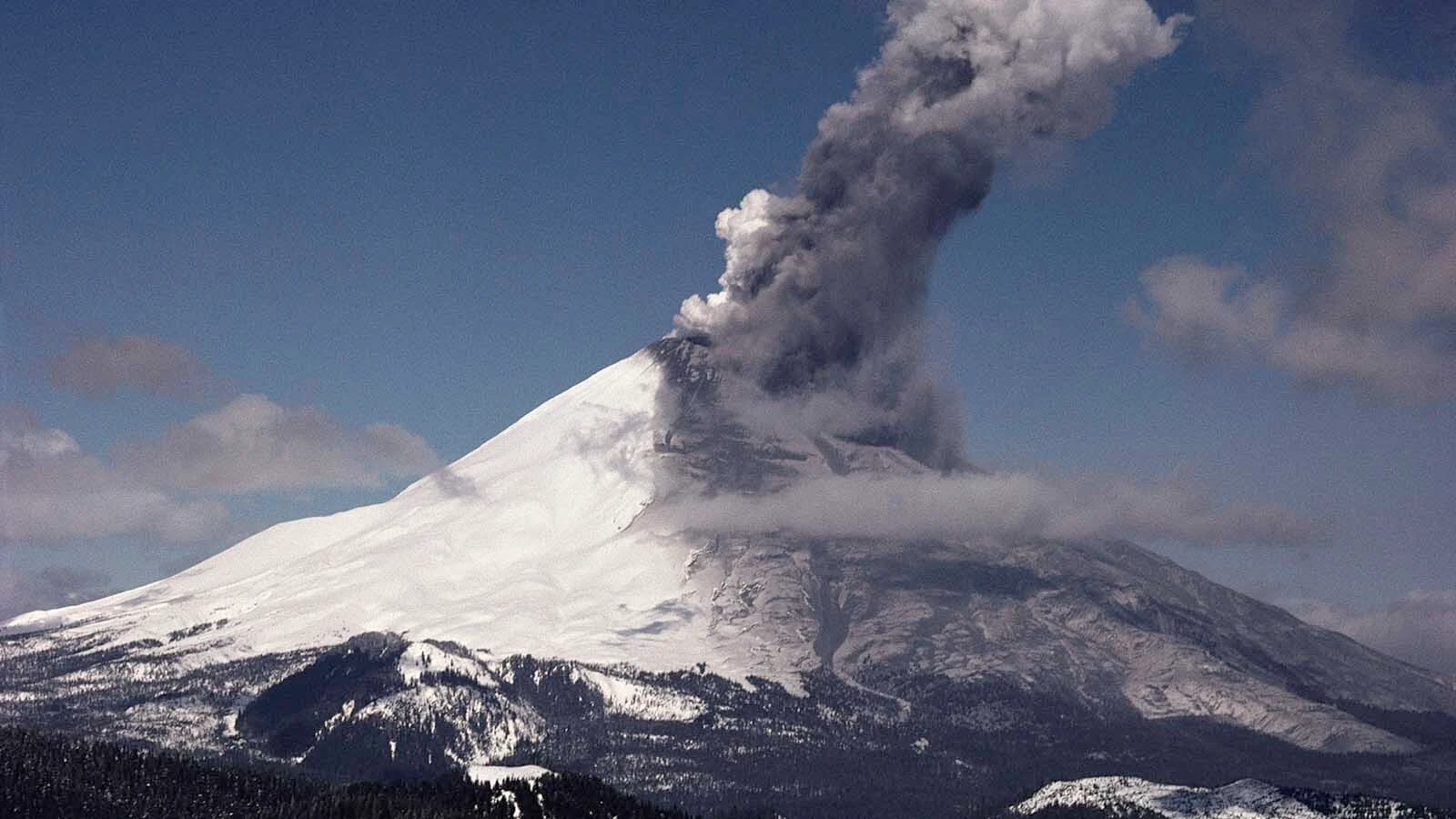
Even then, the volcano was active. U.S. Geological Survey (USGS) data shows that in 1800 there was an explosive eruption, followed by several additional minor explosions and extrusions of lava, but there had been no volcanic activity in the area since 1857.
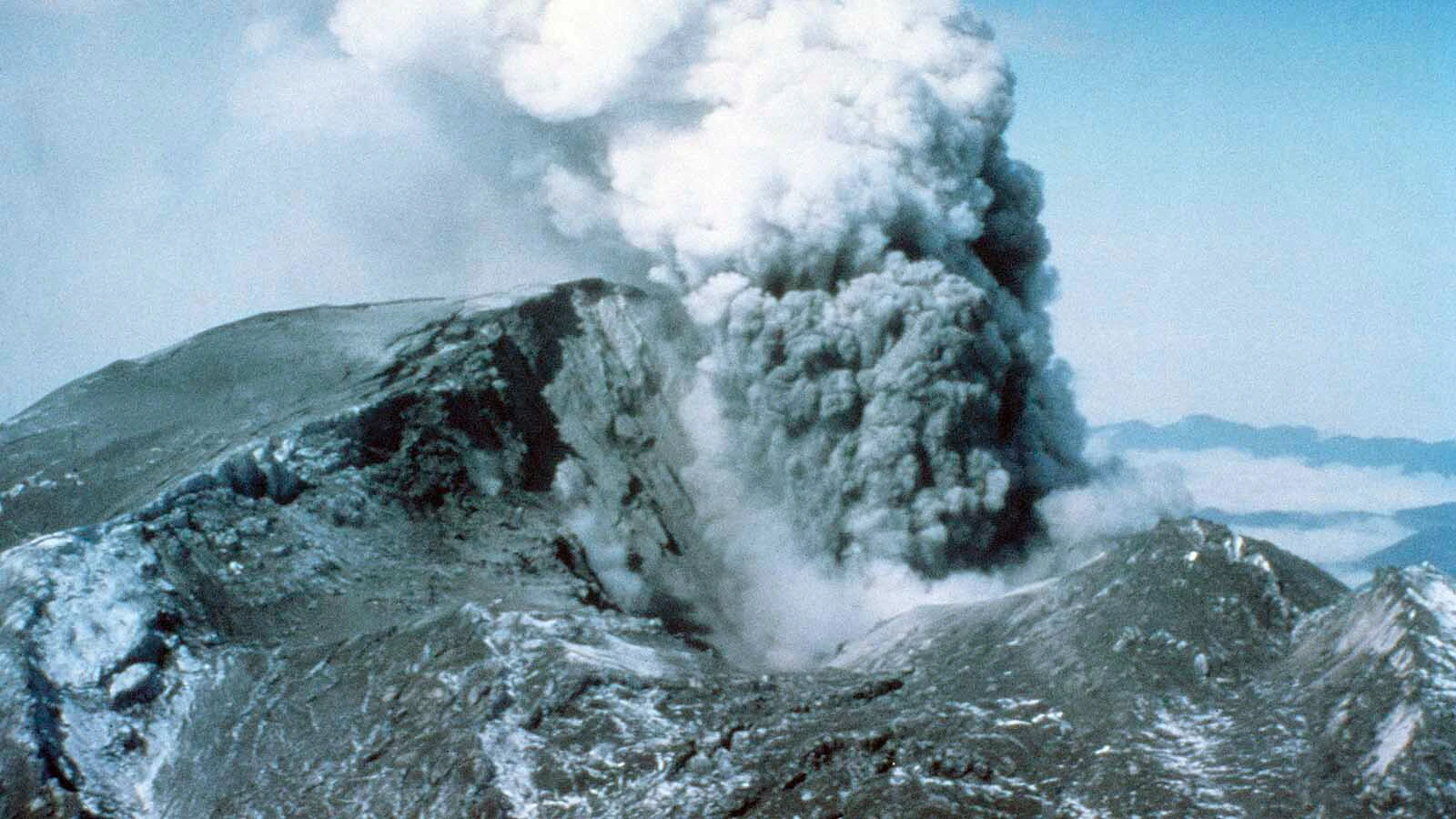
That is, until March 1980. Pierson said there were signs in early March that the sleeping volcano was beginning to awaken.
“It started having what they called harmonic tremors, which are really tiny earthquakes, so they were kind of suspecting,” she said. “And it started developing a bulge on the north side of the mountain. It started growing like a dome, and then it started having steam events.
"The last time I went to Spirit Lake was April 18, a month before it went off, and we could see the bulge.”
In the two months before May 18, the USGS logged more than 10,000 earthquakes, hundreds of small steam-blast explosions, and the volcano's entire north flank grew by more than 260 feet.
“In March they called me back to work, to work in the red zone,” said Pierson, referring to an area 14-20 miles around the perimeter of the mountain restricted to public access because of imminent danger from the volcano.
“It was all shut down, pretty much, except a few people that had red zone cards could get in,” she said.
That was the status of Mount St. Helens at 8:30 a.m. the morning of May 18, when Pierson and her crew were planting trees on the southeast side of the ticking time bomb.
'I Don’t Want To Die Running With My Back To It'
Pierson said they had only been on the job a mile and a half from the southeast base of the mountain for about an hour when the ground began to shake.
“(The crew wasn’t) doing a very good job, so I was running to go find the foreman and say, ‘Hey, we’ve got to improve this or I'm going to have to shut you down for the day,” she recalled.
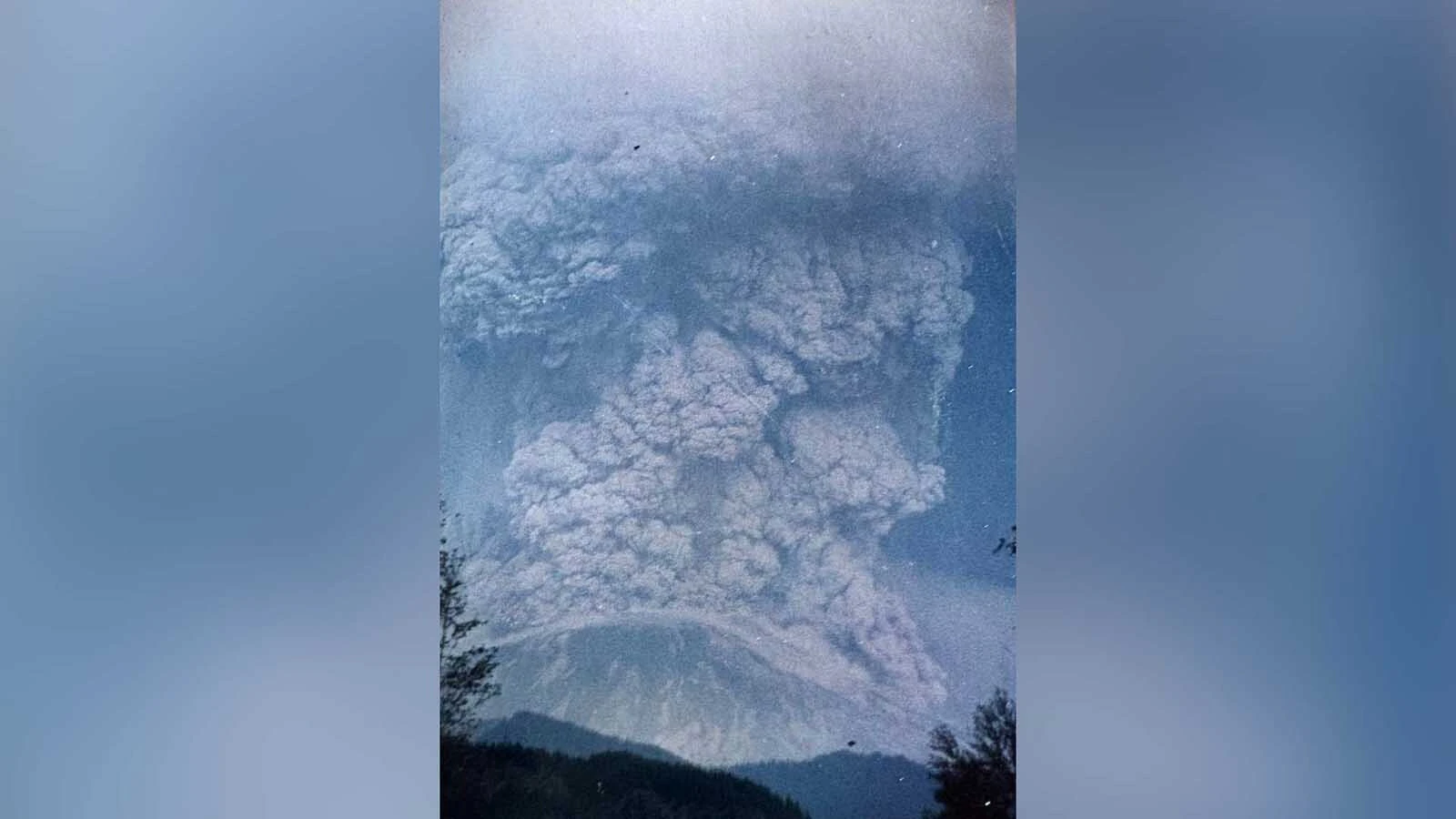
“And so I'm running down this log, but the log starts moving, and I'm thinking, ‘Oh, it must not be on stable ground, I’d better be careful.’” she added. "And I glanced up at the mountain, and I saw the top of it, kind of like shimmering and shaking.
"And then I watched the whole thing come right off.”
Pierson described the giant cloud of gas and ash billowing up over their heads and the surrounding area.
“There’s lightning striking, there's so much static electricity in there,” she said. “And I just started yelling for everybody to just run.”
Pierson said she and her crew called their head office in Vancouver, Washington to report the eruption — but their report was met with disbelief at first.
“We said, ‘Hey, the mountain’s erupting, what should we do?’” she said. “And they're like, ‘We haven't heard anything from the geologists.’ And we're like, ‘Just look out your window. I'm pretty sure you're going to see it from there.’”
The crew was directed to return quickly to their vehicles, but something made Pierson turn around.
“I was running to the truck, but I stopped because I thought, ‘If I die today, I don't want to be running with my back to it. I want to stand here and watch it,’” she said. “But then I remembered that I was responsible for this crew of 15 people.
"And I thought, ‘Well, I'm not dead yet, so I guess we just keep on keeping on.’”
Within seconds of the earthquake, the volcano's north flank slid away in the largest landslide in recorded history.
That landslide triggered a lethal blast of hot gas, steam, and rock debris that traveled as fast as 680 mph. Within minutes, a massive plume of ash flew 15 miles into the sky.
Pierson realized that, had she and her crew followed their original plan that morning, they would have been directly in the blast zone.
“If we would have gone back where we were the day before, we would have been instantly killed,” she said. “The force of super hot gasses called a pyroclastic flow toppled huge trees, just all in a row, just like, bam, bam, bam, bam for, I think it was 20 square miles.
"If I hadn’t gone to the bathroom and seen that note, I would have just gone right ahead and gone there.”
The Impact Of The Eruption In Wyoming
The Mount St. Helens eruption had an impact far outside of the state of Washington.
The prevailing winds carried about 520 million tons of ash across 22,000 square miles of the Western United States, including Wyoming.
Charlotte Fravel and her husband Gary were working at Jackson Lake Lodge in spring 1980.
Charlotte told Cowboy State Daily that the ash that spewed from Mount St. Helens didn’t take long to find its way to the mountains of Wyoming, 550 miles away.
“After it happened, the winds started changing, and the ash started moving this way,” said Fravel. “And we went outside and our car was totally covered in ash. And the ash was in the air so much, you didn’t go outside unless you had to be outside. It was miserable.”
Fravel said the fog of ash completely obliterated their views of the Grand Tetons, although Jackson Lake Lodge is situated directly across the valley from the iconic peaks.
Fortunately for the tourism economy, the eruption happened early enough in the spring that visitors hadn’t started arriving yet — however, the seasonal staff was on site preparing the property.
“All of our older couples that come to work there for the summer were there,” she said. “We were getting Colter Bay Village prepared, and they had to be outside, and it was tough. People were having problems breathing and coughing from the ash.”
Fravel said the air cleared in time for the tourism season to begin in earnest at the beginning of June, and the Tetons were visible again.
But they learned an unexpected lesson about the caustic nature of volcanic ash.
“We learned that the ash will eat the paint off your car,” said Fravel. “We had a special model Ford Maverick, and it was decked out with a white leather Landau top on it and beautiful paint. We had taken good care of it, and it was a mess to get it fixed again.”
A Love Story From The Ashes
When Mount St. Helens erupted on May 18, 1980, temperatures within the blast reached as high as 570 degrees Fahrenheit, which melted snow and ice on the volcano, forming flash floods of water and rock debris that swept down river valleys leading from the volcano.
Just outside of the path of the dangerous flooding was the town of Cougar, Washington, a town that had caught Pierson’s attention when she first arrived in the region in 1979.
“I had remembered a conversation I had with somebody about this incredible place called Cougar near Mount St. Helens,” she said. “I was driving, and I looked at a map, and I was right at the junction to turn there, so I drove up there and proceeded to get a job at Spirit Lake in 1979 the year before Mount St. Helens erupted.”
On the morning of the eruption, Pierson said it took about 45 minutes for she and her crew to escape the blast zone and reach the town of Cougar.
“Everybody's being told that they're probably going to have to evacuate, because there was all these drainages that flowed off the mountain into the reservoirs, and they didn't know if the dams would break,” she said.
“Luckily, most of the brunt of the debris and water and melted snow went down the Toutle River, which was to the west, so to the south and the east we were still OK.”
When she pulled into Cougar, she saw a friend of hers who also worked for the U.S. Forest Service.
As they marveled over the events of the day, her friend introduced her to another man that Valerie had never met — an encounter that would make her believe in the idea of love at first sight.
“He said to me, ‘Valerie, have you ever met Gerhard?’ And I was like, ‘No,’” she said. “And I looked at Gerhard, and I said, ‘Hi,’ and then the next thought that came up in my head was, ‘You just met the man you're going to marry.’”
When the town of Cougar was ordered to evacuate, Valerie packed up her pickup and headed out of town.
She got a few miles away and pulled over at a scenic view area with an incredible view of the erupting volcano, which was spewing ash and gases 15 miles into the sky. Then she spotted a familiar face.
“There's Gerhard again,” said Valerie. “He walked up to me and he said, ‘Hey, can I ride with you?’ And I said, ‘Sure.’ And he said, ‘Good, because I already put my bicycle in the back of your pickup.’”
In the chaos of the next few days, Valerie and Gerhard got to know each other.
“If you weren't a resident of Cougar, you weren't supposed to be in there,” she said. “But he smuggled me in for dinner one night, and then I just never left. And we were married for 36 years, until he died in 2017.”
Falling In Love With Wyoming
Pierson said had she had her way, the forests of Washington wouldn’t have been her first career stop.
In 1977, when she was just 19 years old, she took a road trip that brought her through Sunlight Basin and the Beartooth Mountains.
“I fell in love with the country, and proceeded to get my degree in forestry,” she said. “I tried to get a job at the Crandall Ranger Station and they basically said, ‘Well, women don't work in the woods. You can make us coffee or answer our phone.’”
That chilly reception turned Pierson away from Wyoming temporarily, just long enough to witness the events in Washington State that May 1980, and meet the man she’d spend her life with.
But the pull of the Beartooths would bring the couple back to the Cowboy State, this time to live.
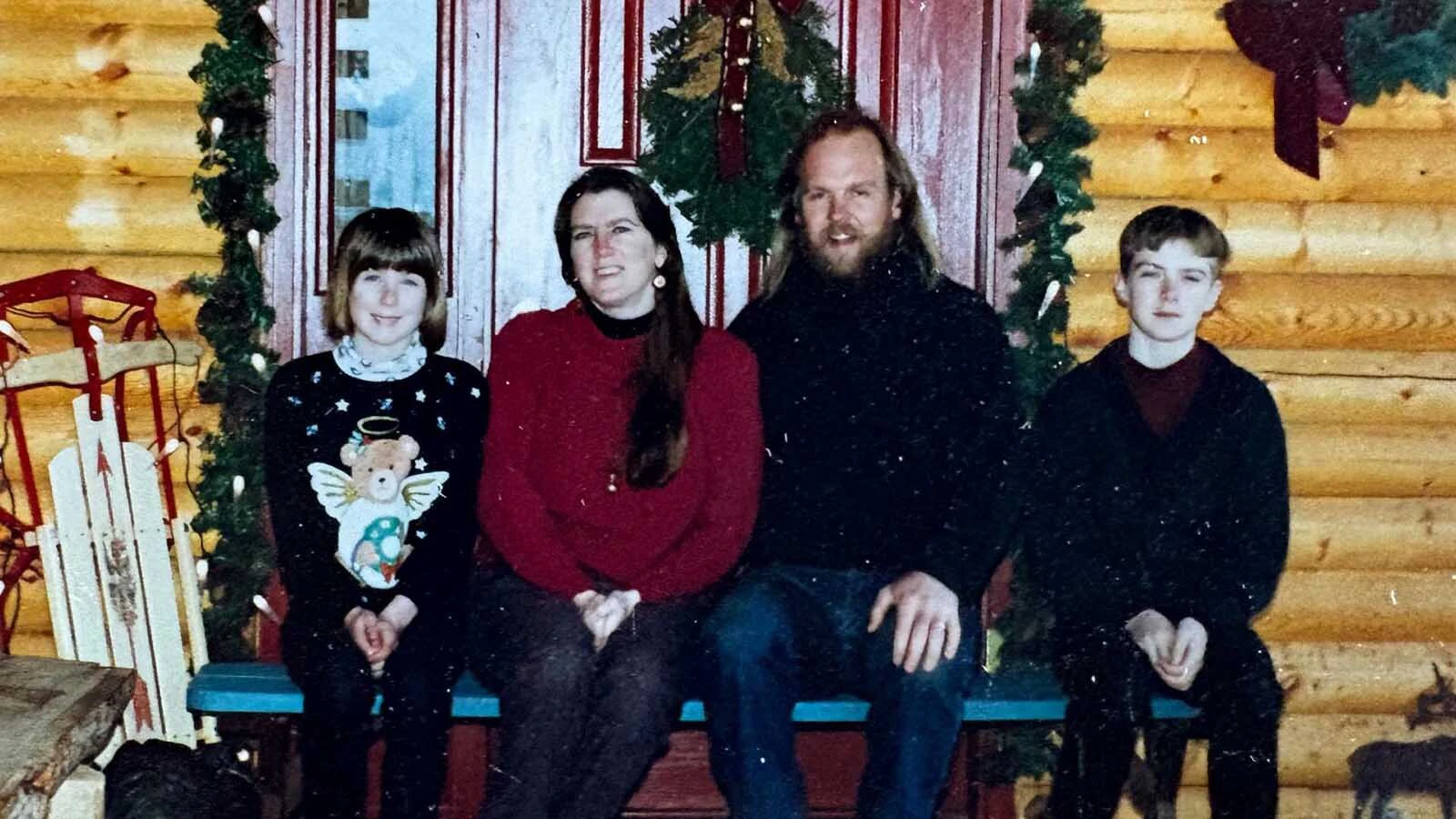
“I worked till 1993 for the Forest Service, and my husband was felling timber,” said Pierson. “But we had two kids, and I decided to go to nursing school, and I realized I can work anywhere I want.
"So I got my nursing degree, and my first job was at the Powell hospital in 1993.”
For the next 10 years, the Piersons lived and worked in Powell and Red Lodge, Montana, and purchased property in Clark. Gerhard pursued a degree in welding at Northwest College and became a sought-after artist.
“He did the mural at First Interstate Bank in Red Lodge, and was always a part of the Western Design Conference (when it was in Cody),” said Valerie. “He got commissioned for all sorts of things for people’s homes.”
The couple eventually returned to the Pacific Northwest to be closer to their now-adult children, who had found careers in that region.
“I sold the house in Clark five years ago in September, but I still have property on Bennett Creek,” said Pierson, adding that she was just in Wyoming earlier this month to visit friends and list the Bennett Creek property for sale.
“It gets harder and harder to come back to a place you loved, and it's just not the same. And I want to keep the memories intact, instead of seeing how everything changes,” she said.
The Memories Remain
Pierson’s experiences during the Mount St. Helens eruption followed her for years afterward, even in good-natured ribbing from friends.
“My nickname at Mount St. Helens was always ‘Volcano Valerie,’” she said. “And after I left to move to Wyoming, living very, very close to Yellowstone National Park, everybody was like, ‘Oh boy, what if she makes that one blow up, too?’”
Even now, she is still contacted by friends and acquaintances about being there then, because she was interviewed for a number of publications and documentaries about the event.
“‘Fire Mountain’ is probably my favorite (documentary), because I think it showed pictures of us during our wedding,” said Pierson. “But I was interviewed quite a bit for different magazines, and I still get approached years later, somebody will call out of the blue and say, ‘Hey, I saw you on TV.’”
Pierson said those life-altering days live fondly in her memory.
“Years later, I find the memories of that morning, the feelings of fear, awe and exhilaration are still vividly imprinted upon my mind,” said Pierson. “The month of May will always signal the awakening of the earth's power and spirit for me."
Wendy Corr can be reached at wendy@cowboystatedaily.com.