When Jasmin “David” Agovic and his wife Anika reopened longtime Italian restaurant L’Osteria Mondello in Cheyenne in 2023, some of the customers had a surprising question for them.
It didn’t deal with the menu, new hours, or reservations. The question was about a then 93-year-old singer named Rick French, known to his fans in Cheyenne as the tenor “Ricardo.”
“When are you going to bring him back?” they asked.
French is a classically trained opera singer who has performed with the Metropolitan Opera in New York City.
The now-Cheyenne resident is humble about his musical background and talent. It’s not the first thing he mentions to a stranger. He likes to let the singing do his talking for him, if it comes to that.
Before the restaurant changed hands, he’d been a regular at Mondello, starting sometime in 2015. He’d show up a couple nights each week in a snazzy suit and fancy hat to perform real Italian opera songs.
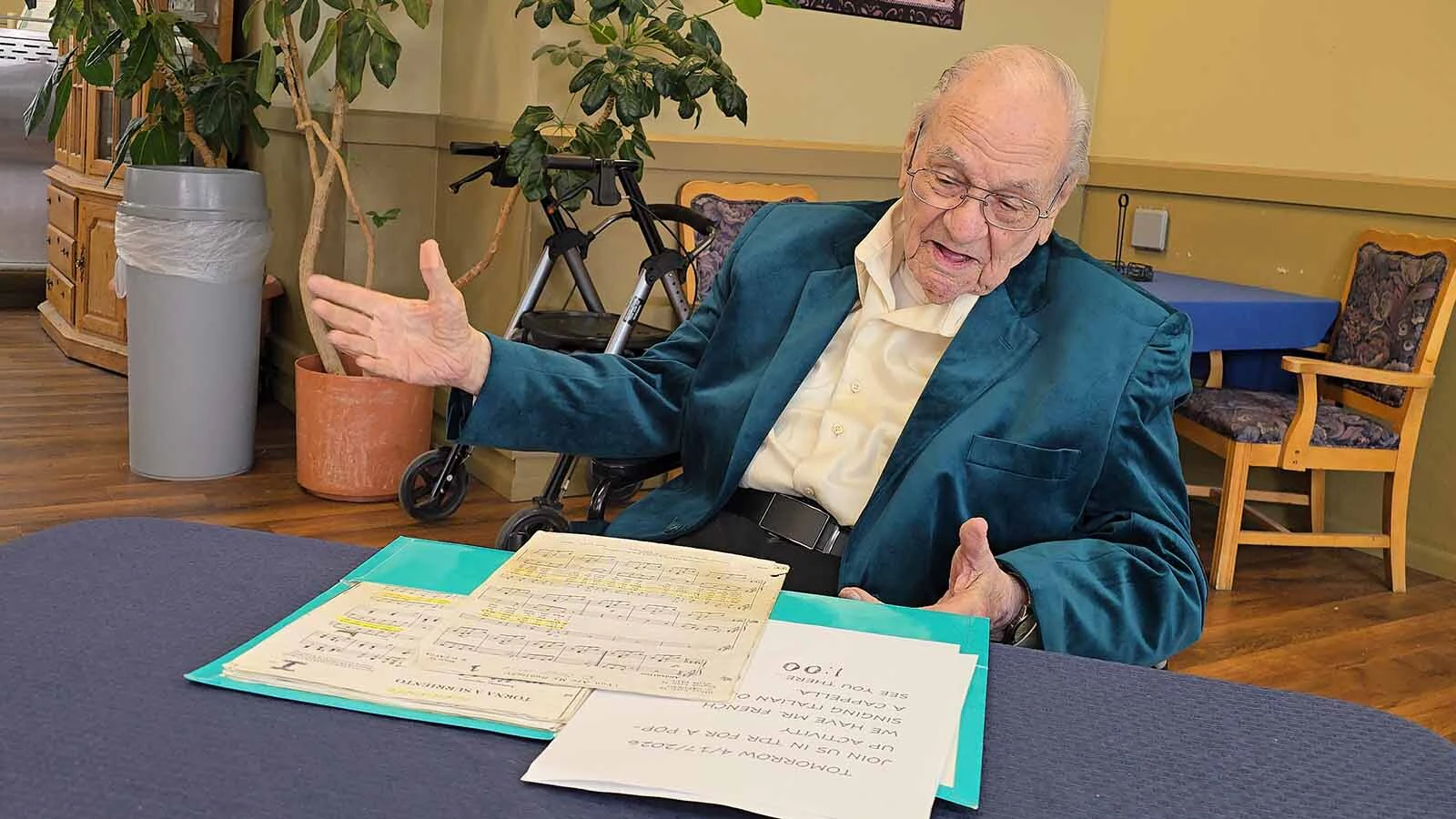
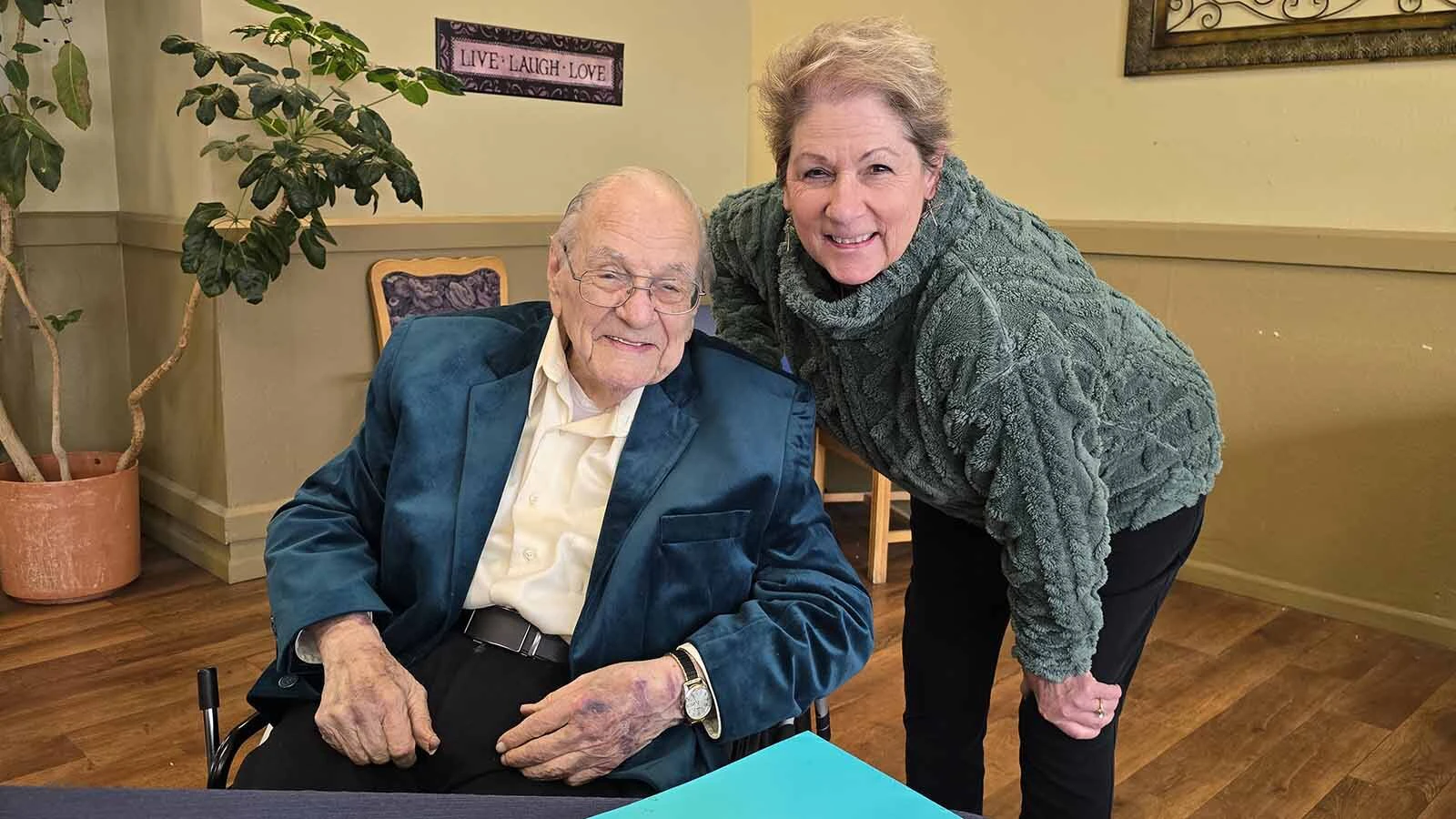
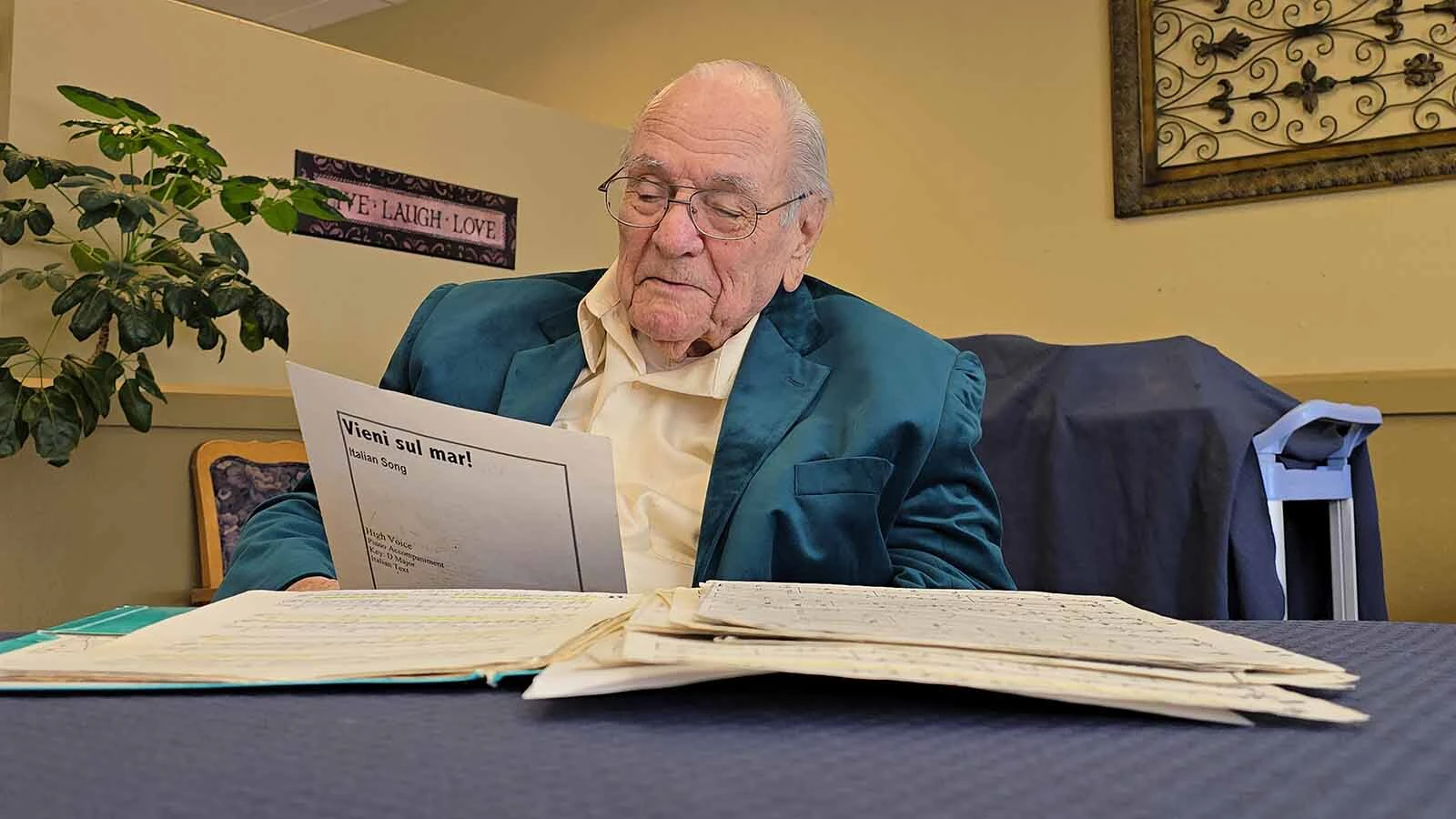
Now 95, French says he’s mostly done with public performances, though last week he did a special request performance for his fellow residents at Granite Rehabilitation and Wellness.
He also had a big encore performance a couple of weeks ago at Mondello, which packed the house.
“Ricardo is an extraordinary gentleman,” Agovic said. “I was so happy to bring him here where he can perform at least one more time.”
Singing For Supper
Years before Cheyenne ever heard of Ricardo, he was literally singing for his supper in restaurants across the country, including one South Carolina night he’ll never forget.
He was in a little Italian place called Cuoco Pazzo, which translates to “Crazy Chef.” As customers came in the door, he would introduce himself with a welcoming smile and let them know he would be singing for them that night.
One of the customers, however, happened to be a somewhat grumpy old man. So when Ricardo mentioned singing for him, the man snapped, “You!? Sing?!”
French didn’t let it ruffle his feathers. He gave the man his friendliest smile in return, and said, “Yes sir, that’s right. And I can probably sing anything you want to hear.”
The man’s “humph!” was visible, and was quickly followed by a challenge.
“Can you sing Nessun Dorma?” he said, in a tone that said just how unlikely he thought that to be.
French answered by launching into the song itself, whose name translates to “None shall sleep.” It’s a famous aria from the final act of the Italian opera “Turandot.”
The song, French said, is about a man’s efforts to woo the woman he loves, a woman who hates the idea of men in general, and the idea of marriage to any man in particular.
So, the man tells her if she can discover his name in the next 24 hours, he’ll let her out of the agreement she’s made to marry him.
But he also tells her that even though everyone will be searching and trying to discover his name to help her, not one of them will ever guess it.
Not even if they don’t sleep at all, and search throughout the night.
As the last notes of “Nessun Dorma” hung on the air, French felt he’d done the song as well as heever had. It was perfection.
Without another word, he went to sit at his own table, satisfied he’d shown this surly gentleman that he could indeed sing, and sing quite well.
An Apology, Of Sorts
As he sat down, though, he saw from the corner of his eye that the old gentleman had stood up from his table and was walking toward him.
French played it cool, but expected more trouble from this gentleman, who seemed determined to play sour notes all evening.
When the man arrived at the table, he laid something down, but French did not look down. He maintained eye contact, to let the man know, if nothing else, that he was a real person with real feelings.
Then he braced himself for whatever was about to be said.
“That was probably the best Nessun Dorma I’ve ever heard,” the man said.
Then he walked away, saying nothing more.
Only then did French glance down at the table to see what the man had left. It was a $50 bill.
After French picked it up, he saw another $50 underneath.
“It was a $100 tip!” French told Cowboy State Daily, laughing.
French nodded his head at the gentleman, acknowledging the gift. He knew that was the closest the man would come to an apology. French certainly appreciated its weight — even if it didn’t come with the actual words, “I’m sorry.”
Bravo Pavarotti!
That $100 tip was the most money French ever received for any one particular song, although the people he sang for were almost always quite generous to him, during a singing hobby that stretched across the country, starting in New York, winding through South Carolina and Colorado, and eventually landing him in the Cowboy State.
“(The tips) were never less than $200 a night,” he said. “And I’d sing from 6 to 8 p.m., twice a week.”
French has even sung in Roman restaurants, when he and his wife were touring Italy. There he was paid a compliment he considers among the highest. He was at a restaurant named after Grotta Azzurra, a sea cave on the coast of the island of Capri in southern Italy.
“So these guys are playing and they are looking over at me, because every time they played anything, I was able to sing it, and I can sing loud,” French said with a huge grin. “So they came over and got me at one point to sing with them, and so I think I sang an aria actually.”
At the end of the song, there was a gentleman sitting at a nearby table, dressed nicely in a tie and jacket, enjoying a meal of spaghetti and wine.
“When I came down the stage he says, ‘Bravo, Pavarotti!’,” French said.
Luciano Pavarotti was an iconic Italian tenor, and one of the most famous opera singers of the 20th century. He was renowned for his effortless high notes, and was particularly well-known for his signature aria, “Nessun Dorma.”
“I told my wife after that, ‘We are never going home,’” French said with a chuckle.
O Sole Mio
To be told by a native Italian that he had reminded him of the famous Pavarotti is a dear memory for French. It’s the highest compliment he thinks anyone has ever paid him.
It’s all the more notable because he is American and didn’t grow up speaking Italian. That matters when you’re singing an authentic Italian opera song.
“The Italian language comes differently from the throat than anybody else’s language,” French said. “That’s why they speak the way they do, and that’s why I was somewhat blessed, and most of the Italian people were kind of impressed that I had that kind of sound, the Italian sound.”
It’s difficult, if not impossible, to train that, he added.
“You either have it or you don’t,” French said.
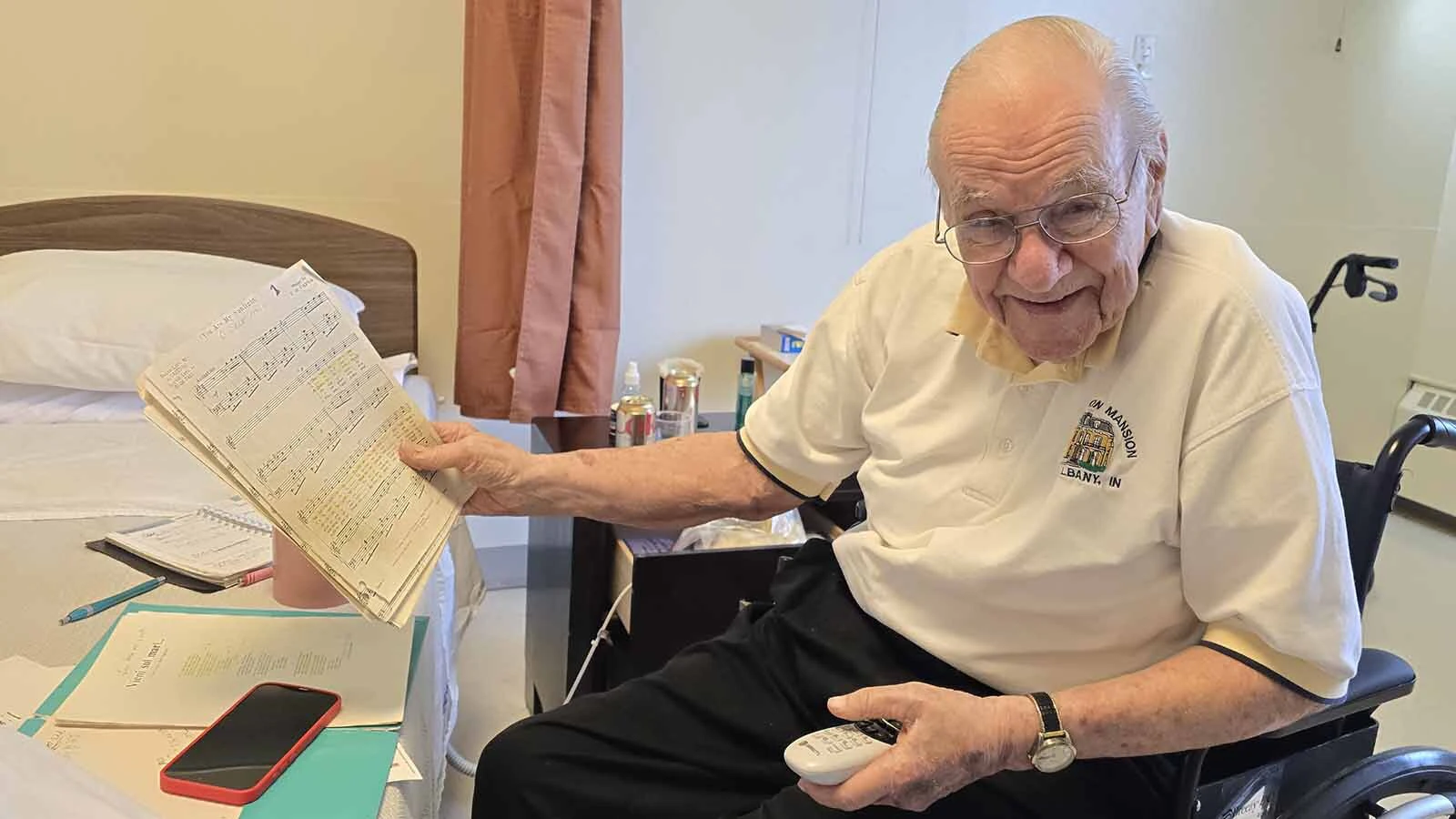
Although French doesn’t plan to do too many performances now that he’s turned 95 because his health has deteriorated, he can still belt out a few opera songs if the fancy strikes him.
For the small concert Friday at Granite Rehabilitation and Wellness, he did five or six numbers.
“I can still belt one out as loud as when I was 50,” he told Cowboy State Daily with a smile.
Even though it was a private performance for his fellow residents, French still dressed for the occasion just as he would any other performance.
He wore a sharp-looking dark green velvet suit jacket with a pair of crisply ironed black pants and a cream-colored shirt.
Singing opera isn’t just a skill, it’s a mindset, too.
The suit puts both him and his audience in the right frame of mind, as does his stage name, Ricardo, which he says with just a slight Italian “burr” on the second “r,” like “Ricarrdo.”
French sang several songs for the impromptu concert, including one of the most popular Italian songs of all time, “O Sole Mio.”
This, Ricardo explained to his audience, is an 1898 Neapolitan song composed by Eduardo di Capua with lyrics by Giovanni Capurro in Naples, Italy.
The title’s literal translation is “My Sun” or “My Sunshine,” and the lyrics compare the beauty of the singer’s beloved to the sun. In the song, he says that although the sun is bright, it still cannot outshine the light his beloved has brought to his life.
While many people, by now, may have lyrics running through their head that go something like this: “O sole mio, ciao ciao bambino,” those lyrics are completely wrong, as Ricardo is quick to point out, before singing it the right way.
The song’s most notable performers have been Enrico Caruso, Mario Lanza, Andrea Bocelli, and Pavarotti.
Music Lessons At 40
Although French doesn’t plan to perform publicly anymore, he has no intention of giving up his music altogether. Singing brings him joy, and it’s just something he has to do.
Despite that, his journey as a singer almost never was.
Like many 19-year-olds, French was flummoxed when his father asked him what he wanted to do with his life.
His instructor happened to be there at the time, and swiftly intervened, telling his father, “Mr. French, your son should be an actor or singer.”
French recalls his dad’s reaction as not only immediate, but quite negative.
“He can’t sing!” French recalls his father exclaiming with a tone that said “No way in Hell.”
“I don’t know why he took that attitude,” French said.
That could have been the end of it, but one day French, who was a representative for winemaking company Ernest and Julio Gallo at the time, got into a friendly argument with a client about opera.
The client was convinced that only Italians could be exceptional opera singers.
French was so mad about that, he visited the nearest payphone booth and started looking up opera singers, so he could take lessons.
“I’m getting goosebumps right here, telling this story,” French said. “But I remember thinking people tell me I have a great voice, and I sang at weddings and holidays like Christmas, and all of these things.”
French took lessons from the first opera singer who would have him, Michael Signorelli.
Two years later, Signorelli told French he had real talent, so much that he should quit his job and work with him for every day of every week the next year.
“I was now 42,” French said. “And he told me if I did that he’d get me to the Metropolitan Opera.”
But at 42, with a wife and three kids, and a job that paid such fabulous wages he could afford three cars and a four-bedroom home in New York, it wasn’t to be.
“If only that had happened at 20,” he said. “If only I had said to my father, ‘I don’t know whether I can sing or not. How do you know whether I could sing or not?’”
Still Singing
French did what he could with his circumstances as they were. He continued his lessons, and eventually, he tried out for a summer troupe that sang with the Metropolitan Opera. He was one of the few who made it in — not bad for the boy who “couldn’t sing.”
The lesson he took from that is one that’s carried him throughout his life, and it’s part of what’s kept him young all this time, even at 95 years and counting.
He learned to tune out all the external voices chiming in to say, “You can’t! You can’t! Don’t even try,” no matter who those voices came from.
He learned instead to listen to that “legato” voice inside himself — smooth and long — confidently singing, “Maybe you can. Just try.”
Ricardo was never a household name in opera, but there are plenty of pizza joints and wine bars from Wyoming to Rome whose owners were glad to have him come and serenade their customers for an evening.
That includes Cheyenne’s L’Osteria Mondello, where for years he turned a neighborhood Italian joint into his own little opera house, and had people begging him to come back and sing some more.
If French ever wants to come back to sing again at the restaurant, he’s more than welcome, Agovic says.
“For a 95-year-old guy, he’s still got it,” he said. “He’s still singing great.”
Life has ultimately been great for the boy who “couldn’t sing.”
He built a beautiful singing life alongside his successful business life. He married the love of his life, Barbara, with whom he raised three children.
No one ever gets the perfect timing, he’s learned. But the grandest stage of all is always the one you’re on, as long as you’re fearless enough to make it your own.
Renée Jean can be reached at renee@cowboystatedaily.com.