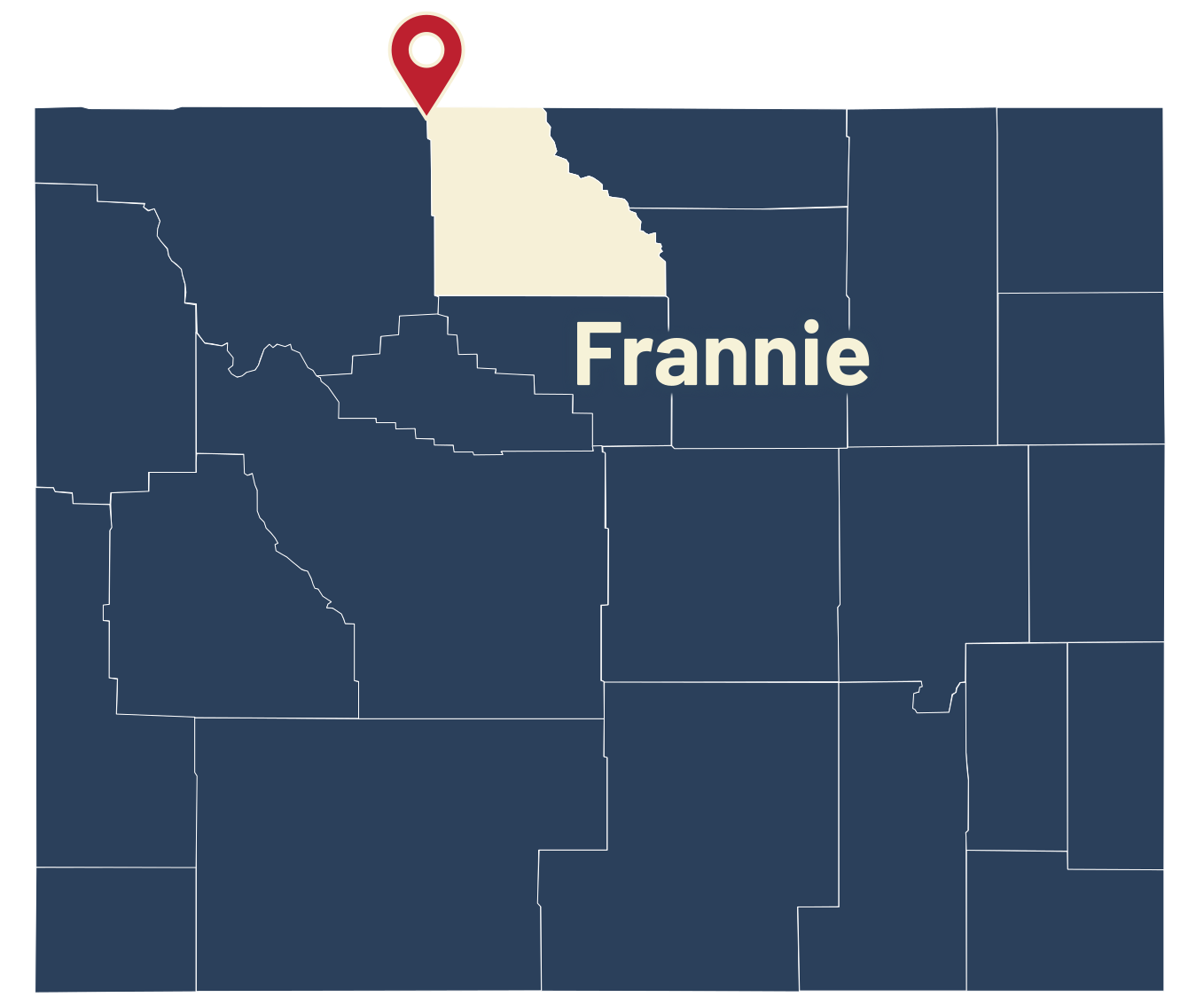
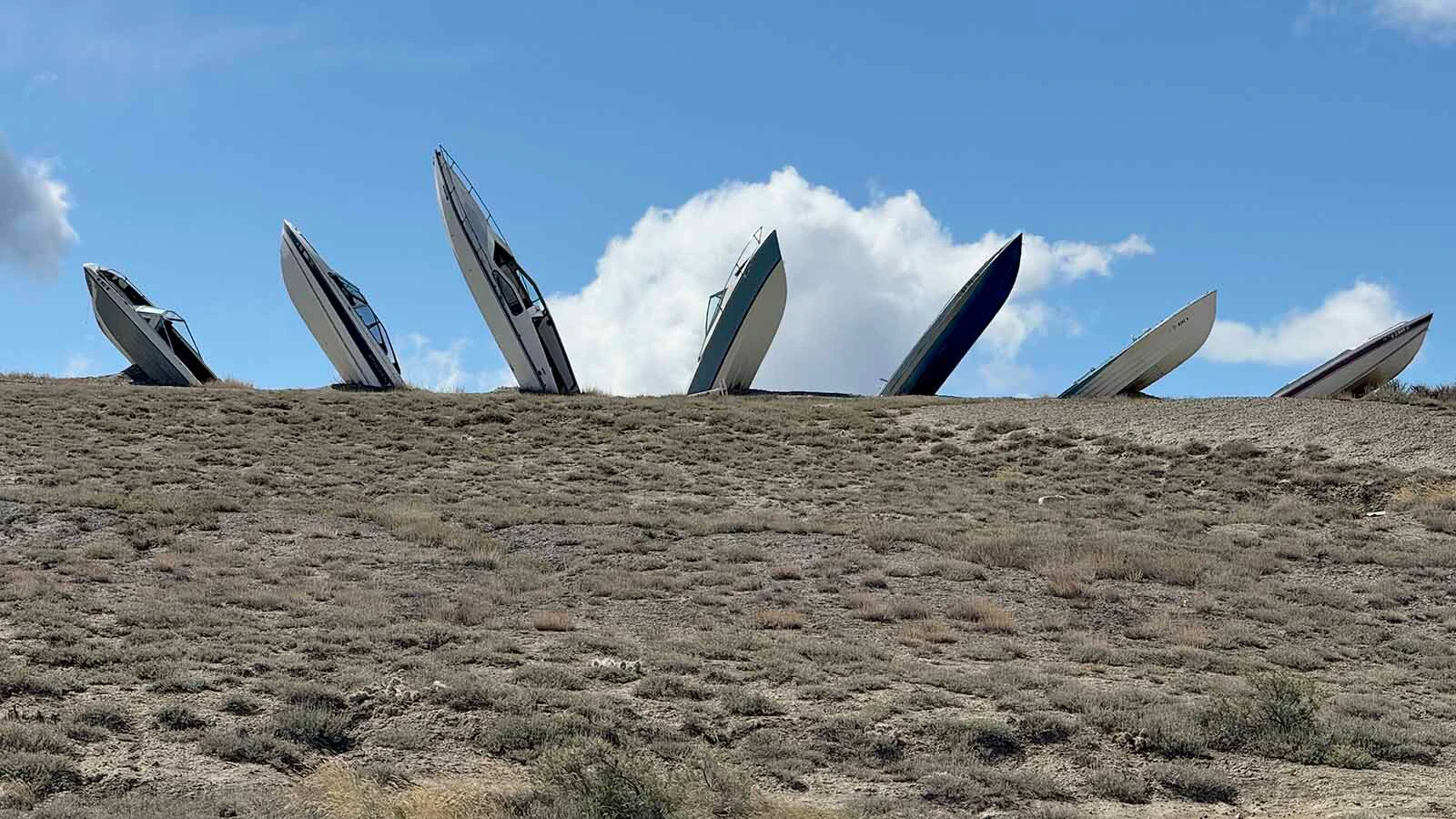
Anyone driving through the unassuming community of Frannie, Wyoming, just south of the Montana state line will notice the line of 12 half-buried boats alongside U.S. Highway 310.
Many people call it “Boathenge,” but that’s not its official name. The art installation’s full name is “Hull’s Half Acre: A Dozen Dinghys in the Desert,” by Greg Wymoing.
“It’s a 20-year dream of doing something in Frannie,” said landowner and former Frannie resident and Riley Cooke, the alter ego of Greg Wyoming.
Cooke is the Samuel Clemens to Wymoing’s Mark Twain, in that they’re one and the same.
“I don’t have my name on anything,” he said of his out-of-the-box art. “It's all from Greg. I'm claiming to be Mark Twain, or anybody even cool. It’s just all my work. It’s my artistic side.”
Hull’s Half Acre gained immediate notoriety when it appeared in 2020, but anyone curious enough to stop will see a growing collection of installations at what Cooke calls “the Skyline Gallery.” There’s a growing number of vintage vehicles and original poetry, all attributed to Mr. Wymoing.
Some people might see the collection as roadside eyesores. Cooke knows his work has naysayers, but he doesn’t care.
“If you haven’t got anything finished, and you’re going to come up here and have an opinion of what I've done, that makes this real simple: go to hell,” he said. "Don’t give me an opinion if you haven't walked in my shoes.”
A Dozen Dingles In The Desert
Cook moved to Frannie in 1997. He’s since moved to Billings, Montana, but is still building on what he started with the installation of Hull’s Half Acre.
The motivation for the art installation is simple. Cooke wanted to find a unique way to put Frannie on the map.
“Frannie is just another little know-nothing Wyoming town,” he said. “They closed the school. They've mostly closed the post office. There's no reason to even slow down, because we don't have a policeman. It’s a struggling town. It barely exists.”
Cooke chose a “boring bentonite hill” as the site for Hull’s Half Acre. He found 12 power boats and lined them up along the crest of the hill, standing vertically with their back ends buried in the ground.
“I owned the property, went out and found a dozen old boats, and got a buddy that could really run a backhoe,” he said. “I had no permission. I had no building permits. It’s just my own thing that I’ve done.”
Cooke has been accosted by people who claim he’s running the landscape by “parking that junk” up there. Cooke can’t help but laugh at that sentiment.
“I'm going, ‘Look around, you dumbass,'” he said. “‘You’re looking at bentonite hills. This is not a pretty landscape.’"
Art And Words
Six years since it appeared, Hull’s Half Acre still stands and hasn’t been forced down by bureaucracy or social media outrage.
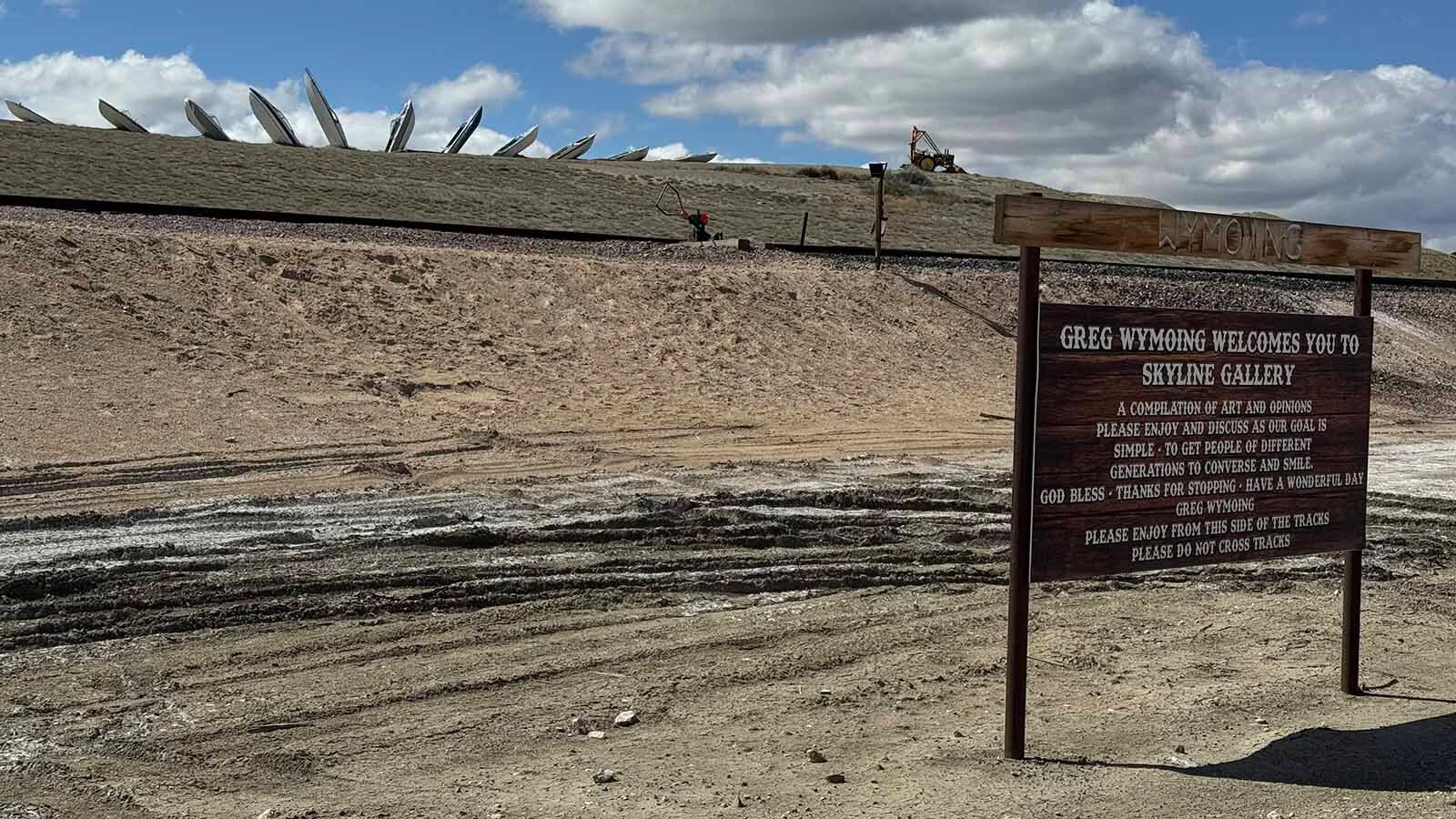
Cooke has even curated his Skyline Gallery so people can experience the whole thing without exiting their vehicles.
“I've made a driveway right down to them,” he said. “It says welcome and all that. You can drive down, read each sign, and look at the piece of art behind it while sitting in your car. You don't have to walk through sagebrush or anything else.”
Large panels with poems accompany each of Greg Wymoing’s art pieces. Hull’s Half Acre, “A Dozen Dighys in the Desert,” discusses a novel approach to water conservation in an alpine desert.
“Let’s start to solve the energy crisis, right here in the desert,” it reads. “Americans can save 850 million gallons of free water a day if the just the male population pees outside.”
Cooke hopes visitors won’t take his work or words as “a political statement,” but said that he hasn’t heard a better water conservation solution come out of Washington, D.C.
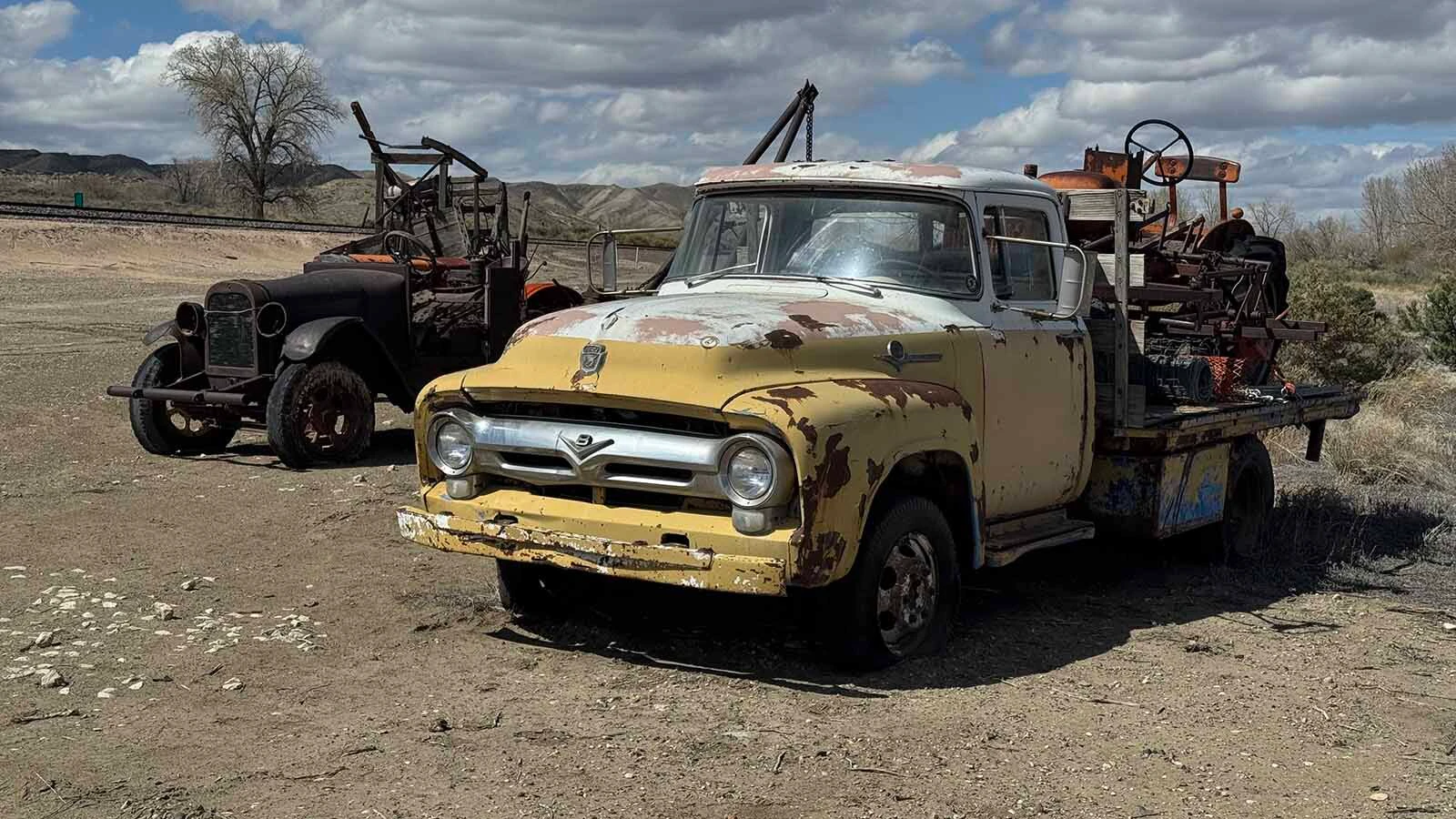
Next to the dozen dighys is a vintage Cadillac hauling a trailer. That’s the catalyst for “Cowboys and Cadillacs.”
“In the days before the decent 4x4 pickups, cattle buyers pulled their horse trailers with a Cadillac, the car of choice,” the panel reads. “They would stop on a hill in order to find the car after riding the unfamiliar open ranges, looking at cattle to be purchased.”
Cooke laments how the cowboy “never returned” and with him left “the handshake deal, kindness to others, and most common sense.”
“We pray for his early return,” he wrote. “Society needs desperately the traits he has with him.”
Cooke has been amused by the urban legends around the Cadillac in particular.
“You’ll find stories about the person who actually drove up there 50 years ago, and it quit,” he said. “They’re all wrong. I put it up there, but I never correct them.
"Do whatever you want to do. Make up your own stories. I love the people who make up their own crap.”
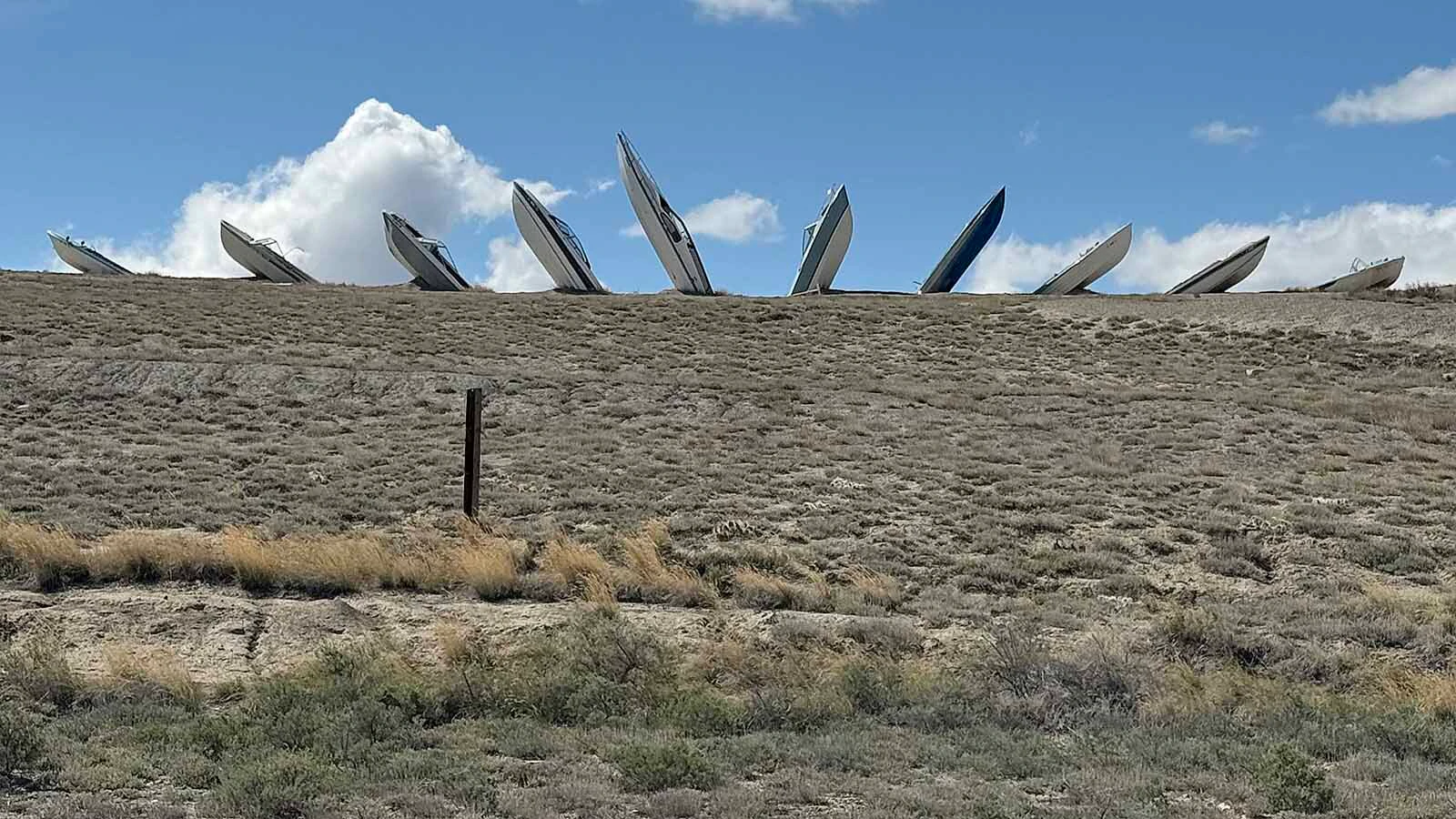
Hull’s Half Acre — many people call it “Boathenge” — gained notoriety when a row of half-buried boats appeared in the middle of nowhere outside Frannie, Wyoming, in 2020. The guy who put it there has a message for those who don’t like it: “Go to hell." (Andrew Rossi, Cowboy State Daily) 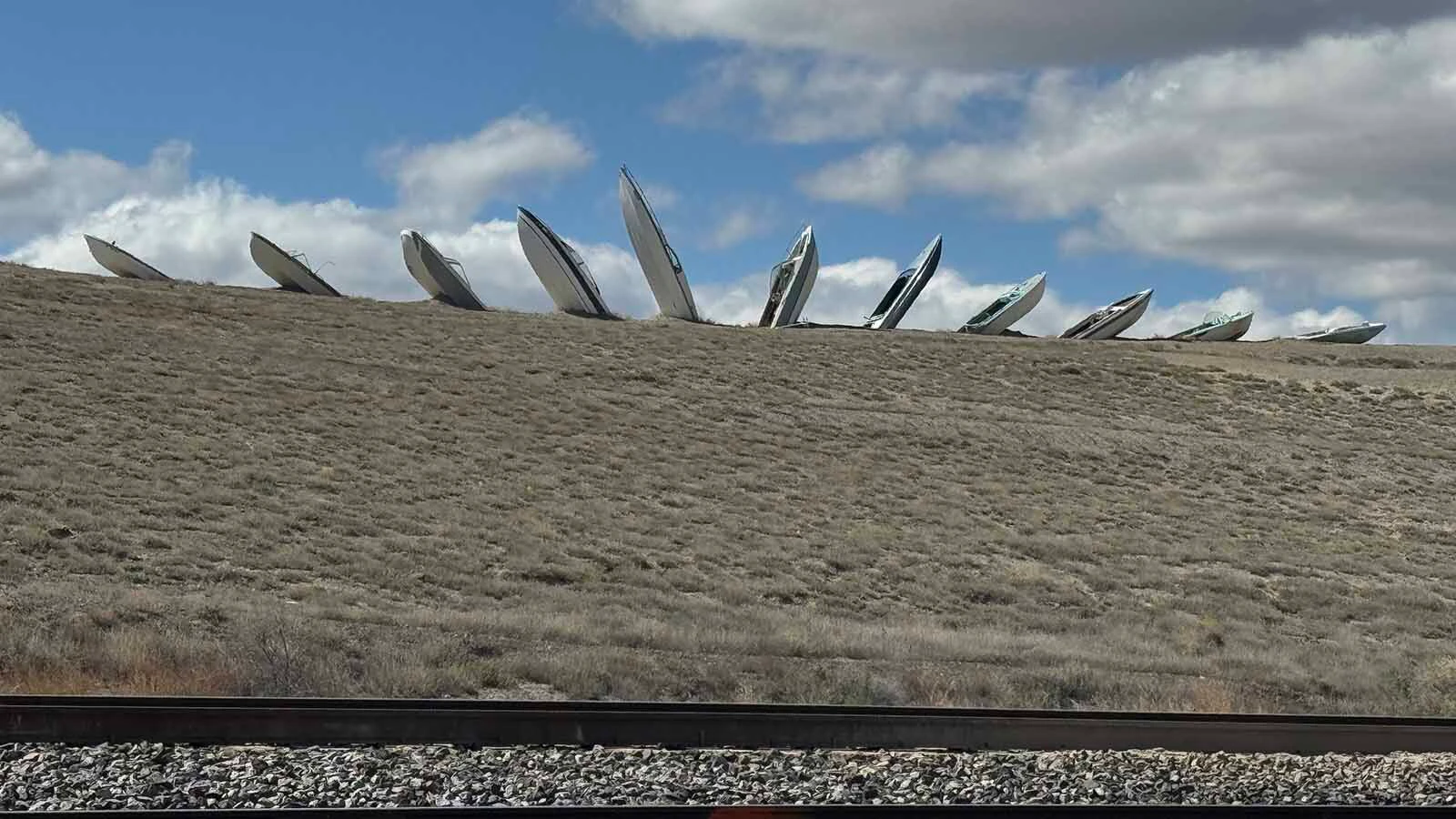
Hull’s Half Acre — many people call it “Boathenge” — gained notoriety when a row of half-buried boats appeared in the middle of nowhere outside Frannie, Wyoming, in 2020. The guy who put it there has a message for those who don’t like it: “Go to hell." (Andrew Rossi, Cowboy State Daily)
In Honor
Two fire trucks are next to the Cadillac and trailer. That’s Cooke’s tribute to the victims and first responders of 9/11, along with a poem discussing his experience on Sept. 11, 2001.
Then there’s “Food,” two tractors honoring American farm families and the “very tough lifestyle” they live to put food on millions of tables.
“Right here in this high mountain desert, it is even tougher,” the poem reads. “And that is the reason for this tried tractor. To me, it represents many rancher/farmers I have known. Weathered. Old. Tired. But still ready to work. I have never missed a meal.”
The work-in-progress at the Skyline Gallery is a growing lineup of vintage trucks. Cooke is assembling them for a piece honoring the trucking industry.
“Everything we touch comes in a truck,” he said. “In the heyday, the 1950s and stuff, the truckers were a unique breed that's all gone, like so many industries in our country. They were the tough cowboys of the day, and those old trucks were rough.”
Cooke already has all the trucks he wants to place at the gallery at the bottom of the hill where the boats are buried. He just needs to get them to Frannie.
“The guys that made a living in these rucks were men,” he said. “I’ve got a 1920s truck there with a wrecker that didn't even have a top on it. If you leaned against that wrecker and screwed up, it killed you. There was no safety to any of this equipment.”
Accompanied by his words, Cooke sees all the vehicles as relics of people worth remembering and honoring. Others might not see it that way, but he feels that’s how people engage with art, whether it's an old truck or the Vatican.
“Take it for what it's worth,” he said. “It's opinions, art, garbage, whatever you want to call it. I just want to honor these people.”
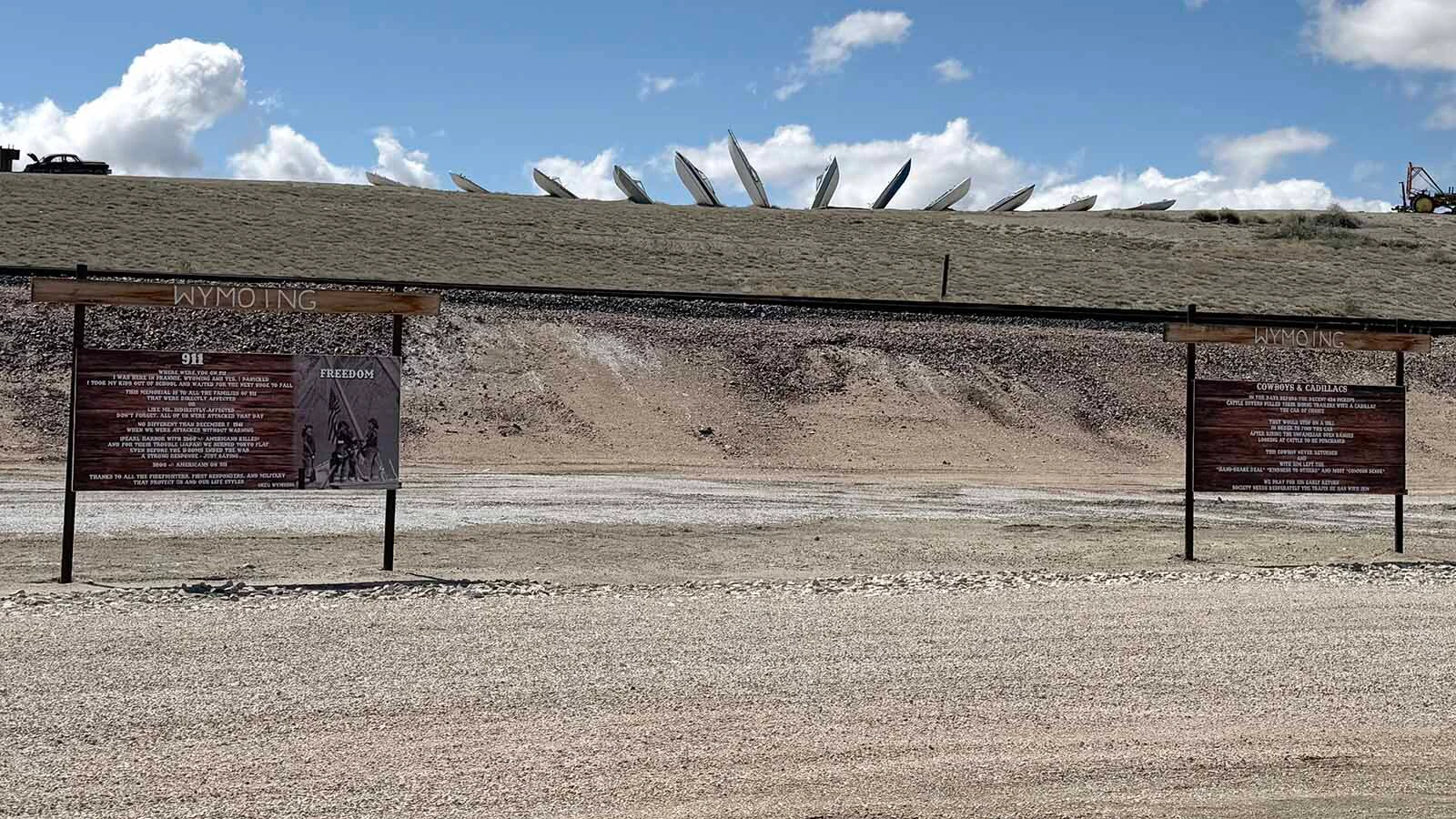
Hull’s Half Acre — many people call it “Boathenge” — gained notoriety when a row of half-buried boats appeared in the middle of nowhere outside Frannie, Wyoming, in 2020. The guy who put it there has a message for those who don’t like it: “Go to hell." (Andrew Rossi, Cowboy State Daily) 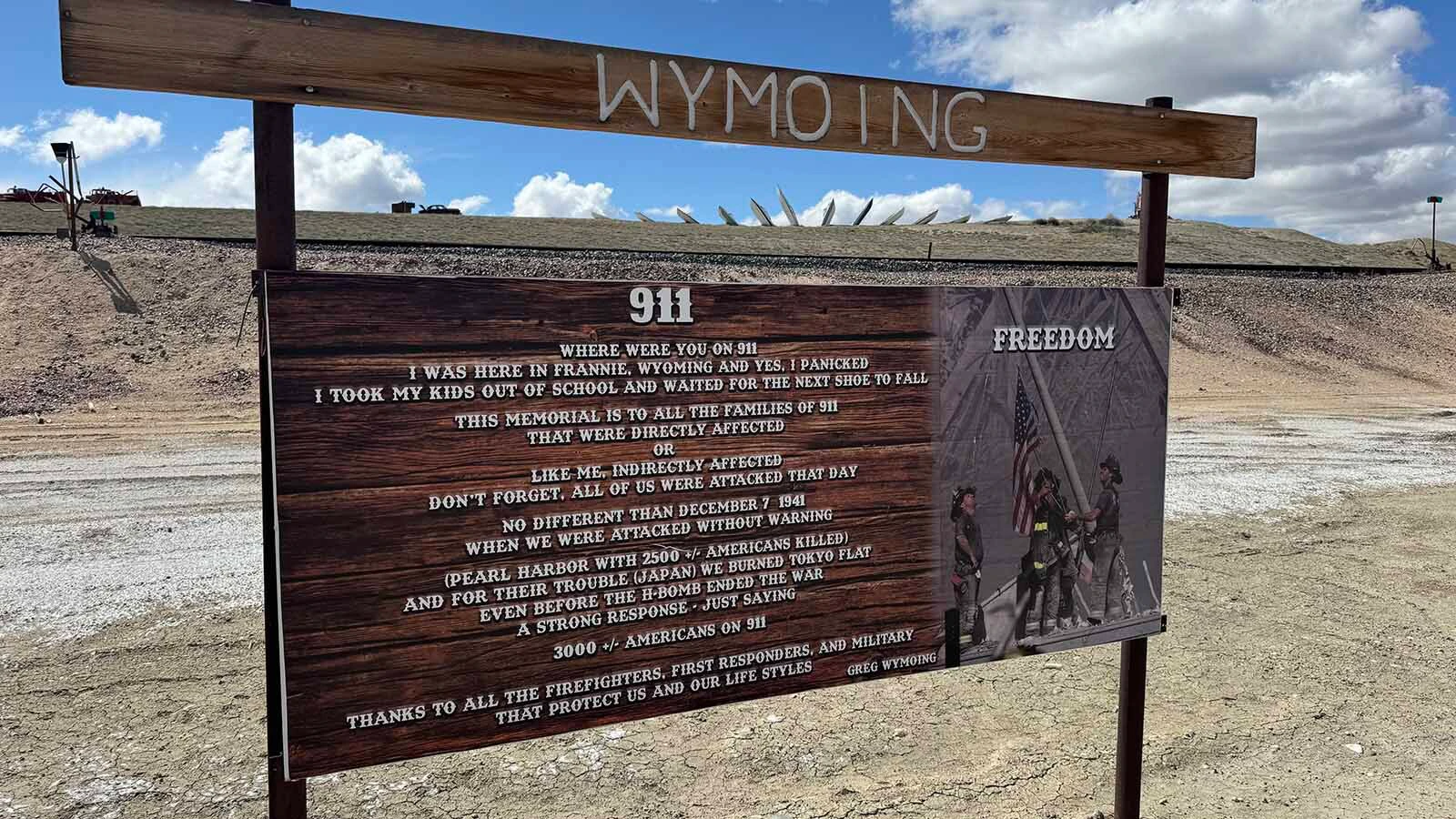
Hull’s Half Acre — many people call it “Boathenge” — gained notoriety when a row of half-buried boats appeared in the middle of nowhere outside Frannie, Wyoming, in 2020. The guy who put it there has a message for those who don’t like it: “Go to hell." (Andrew Rossi, Cowboy State Daily)
Slight Unseen
When it comes to art, everyone’s a critic.
Cooke said he's heard plenty of feedback from “the drive-by Boathenge people,” and he doesn’t care.
“They have it all figured out, even if they won’t take the time to stop and read the signs that are set right there,” he said. “That makes this really simple: go to hell.”
Cooke doesn’t claim to be anything or anyone special. He’s speaking from his heart with boats, tractors, and trucks rather than paintings or sculptures.
The Skyline Gallery began as a way to keep Cooke busy during the COVID-19 pandemic. He keeps adding to his collection of thought-provoking pieces near Frannie because he has more to say.
“I’ve always been a builder,” he said. “I’ve built a lot of cool cars in my life, but I don't want to talk about my cars. I built the damn things. I want to talk about what you're building.
"Show me something you've got done. I'm excited to see what you've built. Show me what you’ve finished.”
That’s a critical component of the Skyline Gallery, and one Cooke wishes more people would realize before offering commentary. Even if he’s still building on his original waves of inspiration, he’s finished what he started.
“How can you say anything about this without ever being there?” he said. “You haven't got anything finished, so now you're going to come up here and have an opinion of what I've done? Hull’s Half Acre isn’t about boating.
" It's about spending time with family and friends. It’s all there. Don't give me an opinion if you haven't walked in my shoes.”
Andrew Rossi can be reached at arossi@cowboystatedaily.com.