
The five pallets recently delivered to a South Dakota warehouse had about 4,500 pounds of moose antlers that had traveled roughly 4,000 miles from the lower Yukon of Alaska.
They went to a shipping dock, across the Pacific Ocean to the Lower 48, and then onto a FedEx truck to Sioux Falls, South Dakota.
For Derek Klawitter and Tony Nogy, unloading the pallets was another normal day at work for the owners of Dakota Antlers, the largest antler dealer in the state.
The pair runs their antler operation as a side gig, buying and selling 120,000 pounds of antlers from elk, deer and moose every year.
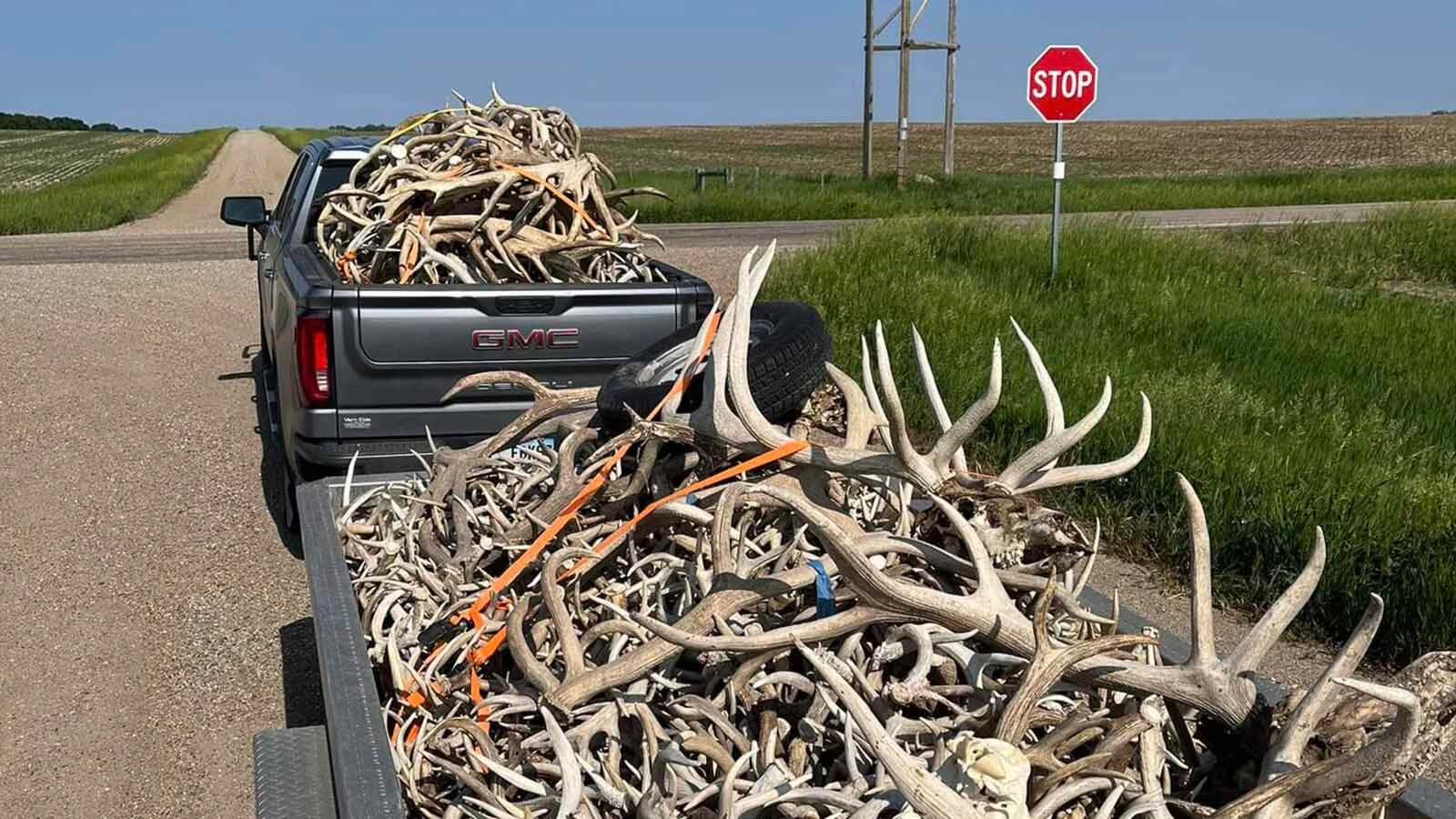
A side gig for a pair of South Dakota men has exploded into a booming business selling 60 tons of elk, deer and moose antlers a year. Some prized specimens can sell for thousands of dollars each. (Courtesy Dakota Antlers via Facebook) 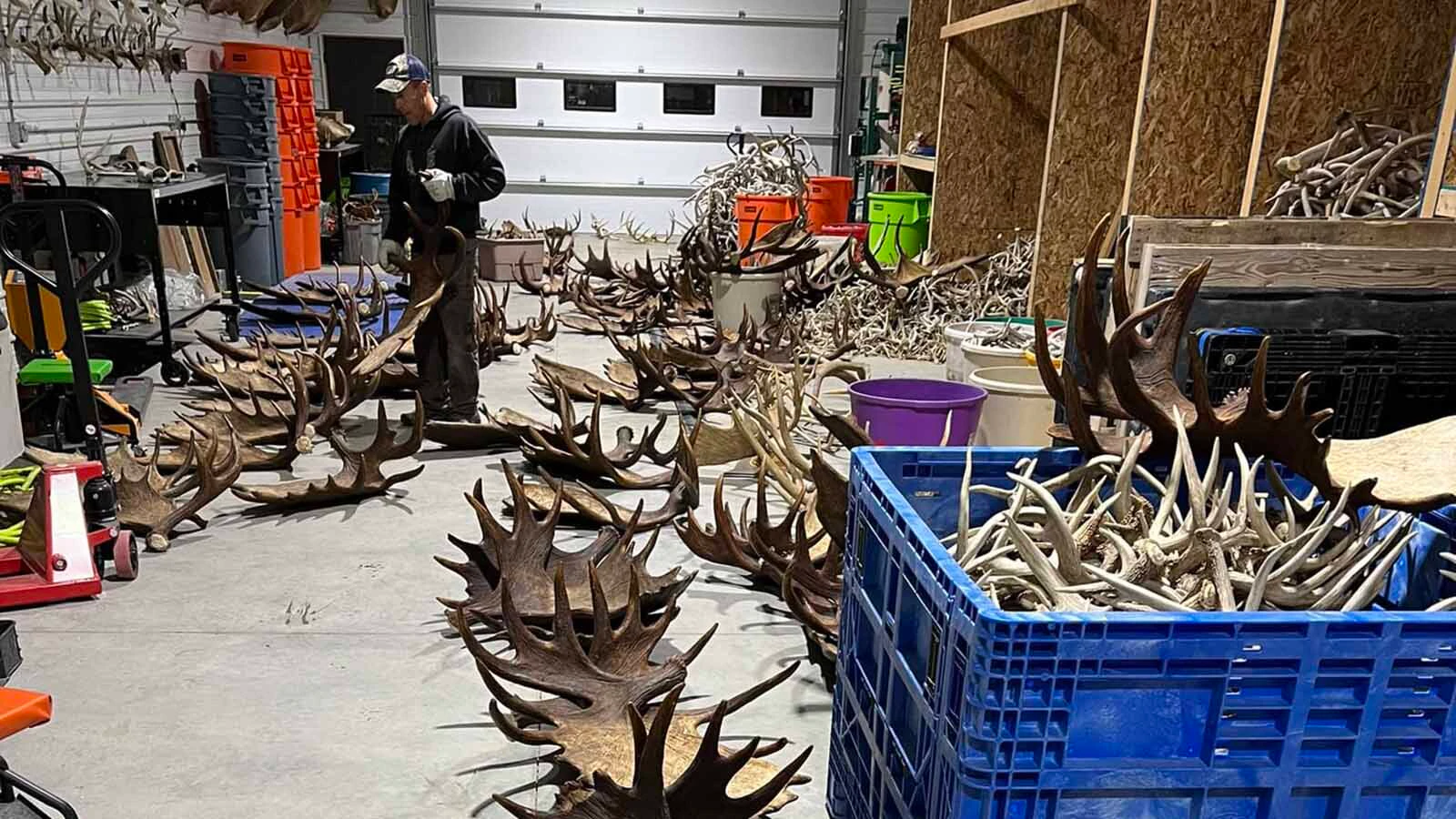
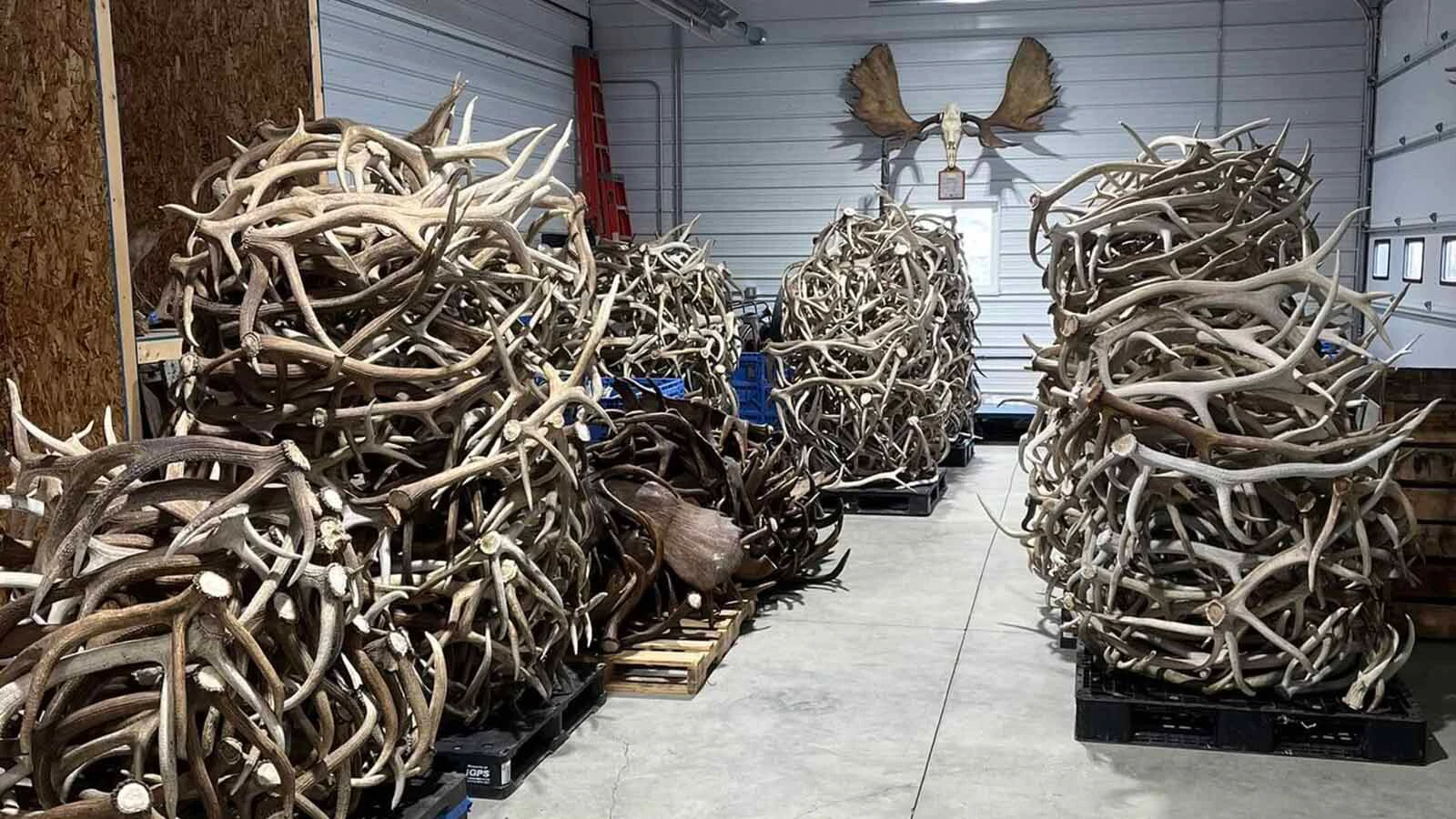
A side gig for a pair of South Dakota men has exploded into a booming business selling 60 tons of elk, deer and moose antlers a year. Some prized specimens can sell for thousands of dollars each. (Courtesy Dakota Antlers via Facebook) 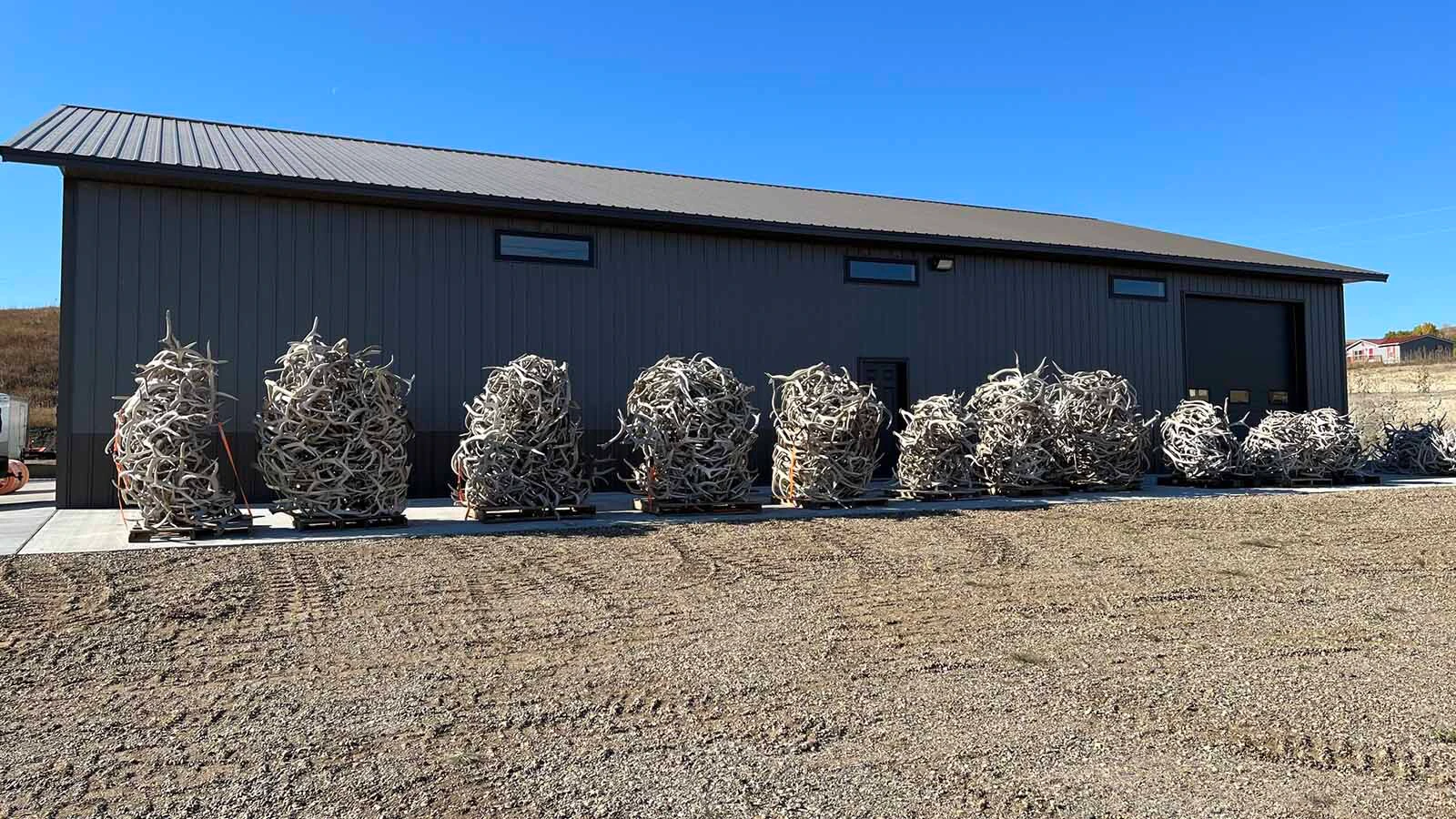
A side gig for a pair of South Dakota men has exploded into a booming business selling 60 tons of elk, deer and moose antlers a year. Some prized specimens can sell for thousands of dollars each. (Courtesy Dakota Antlers via Facebook)
You Can Find It On Craigslist
Klawitter grew up hunting and fishing in South Dakota, and he saved antlers from his hunts while also collecting shed antlers.
As Klawitter’s antler collection grew, he said he realized there was a market for them on Craigslist. He listed antlers for sale not knowing at the time just how many people wanted what he had.
A side gig of buying and selling antlers “just sort of snowballed after that,” Klawitter said.
It was one of those Craigslist ads that connected him to Nogy.
Nogy said he has always had a fascination with antlers and has been shed hunting — collecting antlers that wildlife drops naturally — for 25 years.
Klawitter was looking for a buyer for a bunch of moose antlers. Nogy, who told Cowboy State Daily that, “I feel like I never have enough antlers,” called about them.
Klawitter made the two-and-a-half-hour drive to Oacoma, South Dakota, from Sioux Falls.
On that first visit, Klawitter realized he was face-to-face with someone who was as passionate about antlers as he was.
“He’s a hardcore shed hunter,” Klawitter said of Nogy. “His garage was plumb full of antlers.”
Among Nogy’s collection were exotic antlers and one of the largest accumulations of drop-tine antlers Klawitter had ever seen. A drop tine is a non-typical growth on an antler where a spike points down instead of up.
Klawitter’s business was growing, and after a couple of years of buying and selling antlers as a side gig — what he called a “hobby job” — he was having trouble keeping up.
“I got too busy where I couldn’t handle it myself,” he said, adding that was when he asked Nogy if he wanted in on the business venture.
Nogy couldn’t say no.
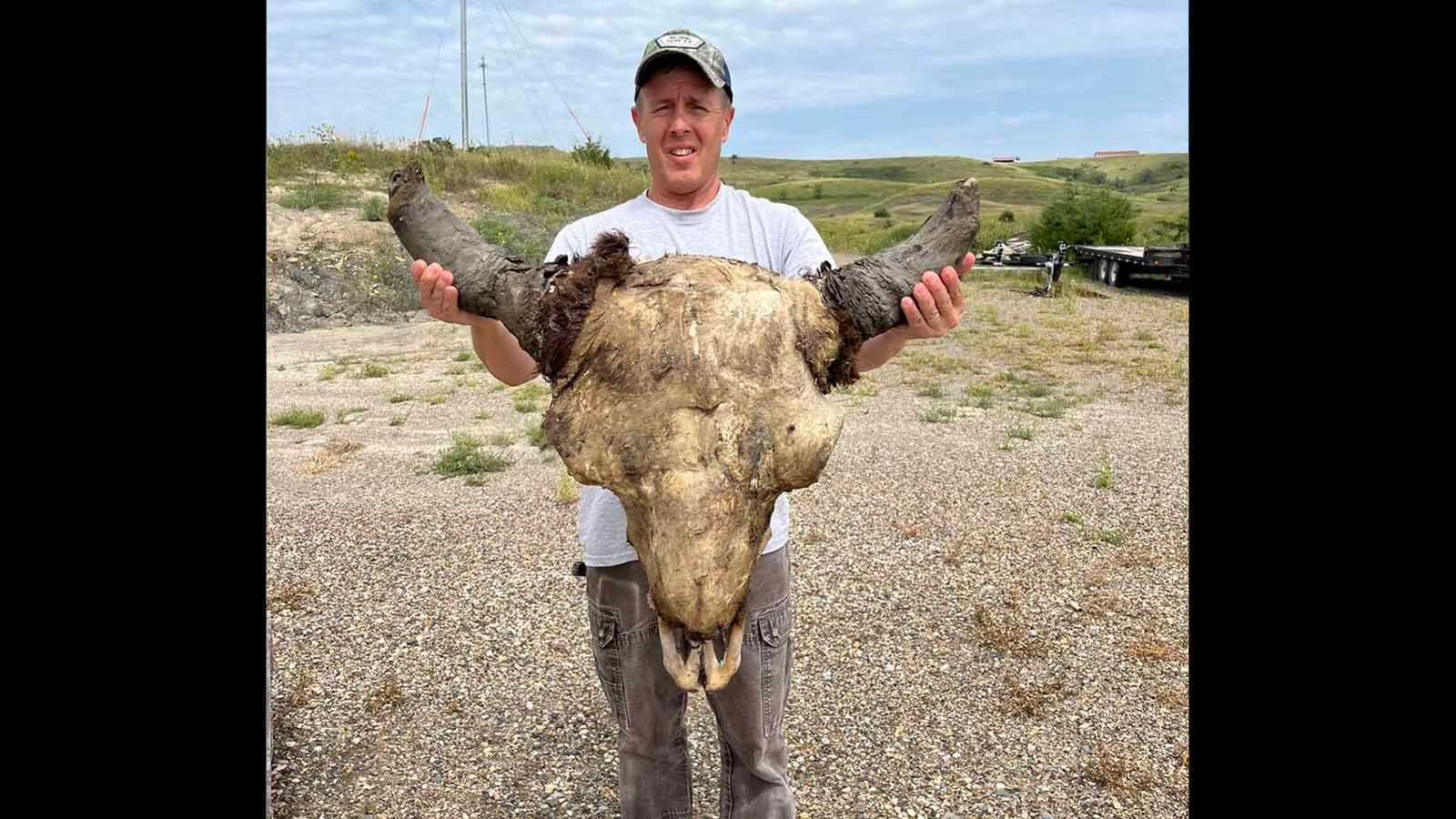
A side gig for a pair of South Dakota men has exploded into a booming business selling 60 tons of elk, deer and moose antlers a year. Some prized specimens can sell for thousands of dollars each. (Courtesy Dakota Antlers via Facebook) 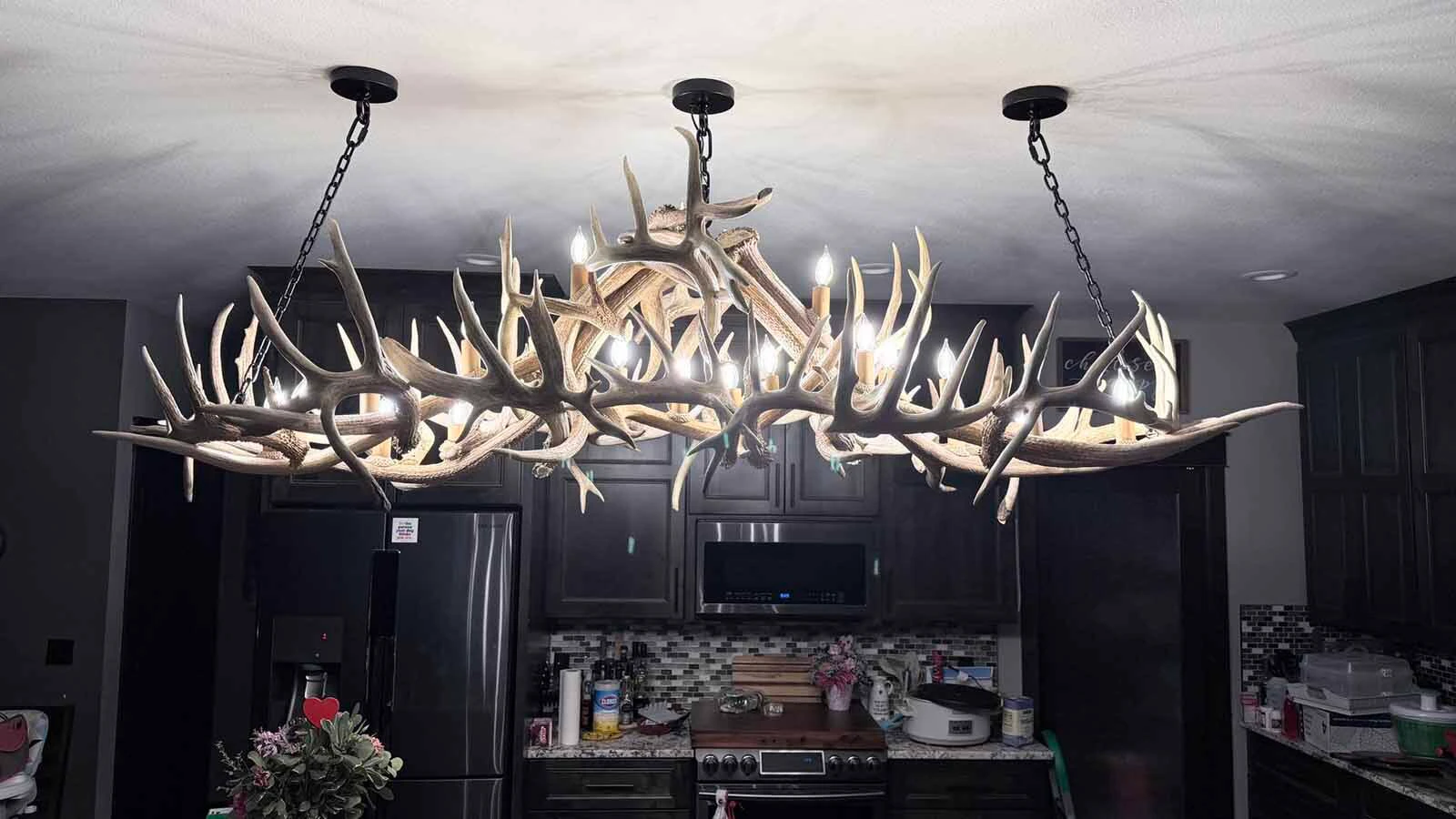
A side gig for a pair of South Dakota men has exploded into a booming business selling 60 tons of elk, deer and moose antlers a year. Some prized specimens can sell for thousands of dollars each. (Courtesy Dakota Antlers via Facebook) 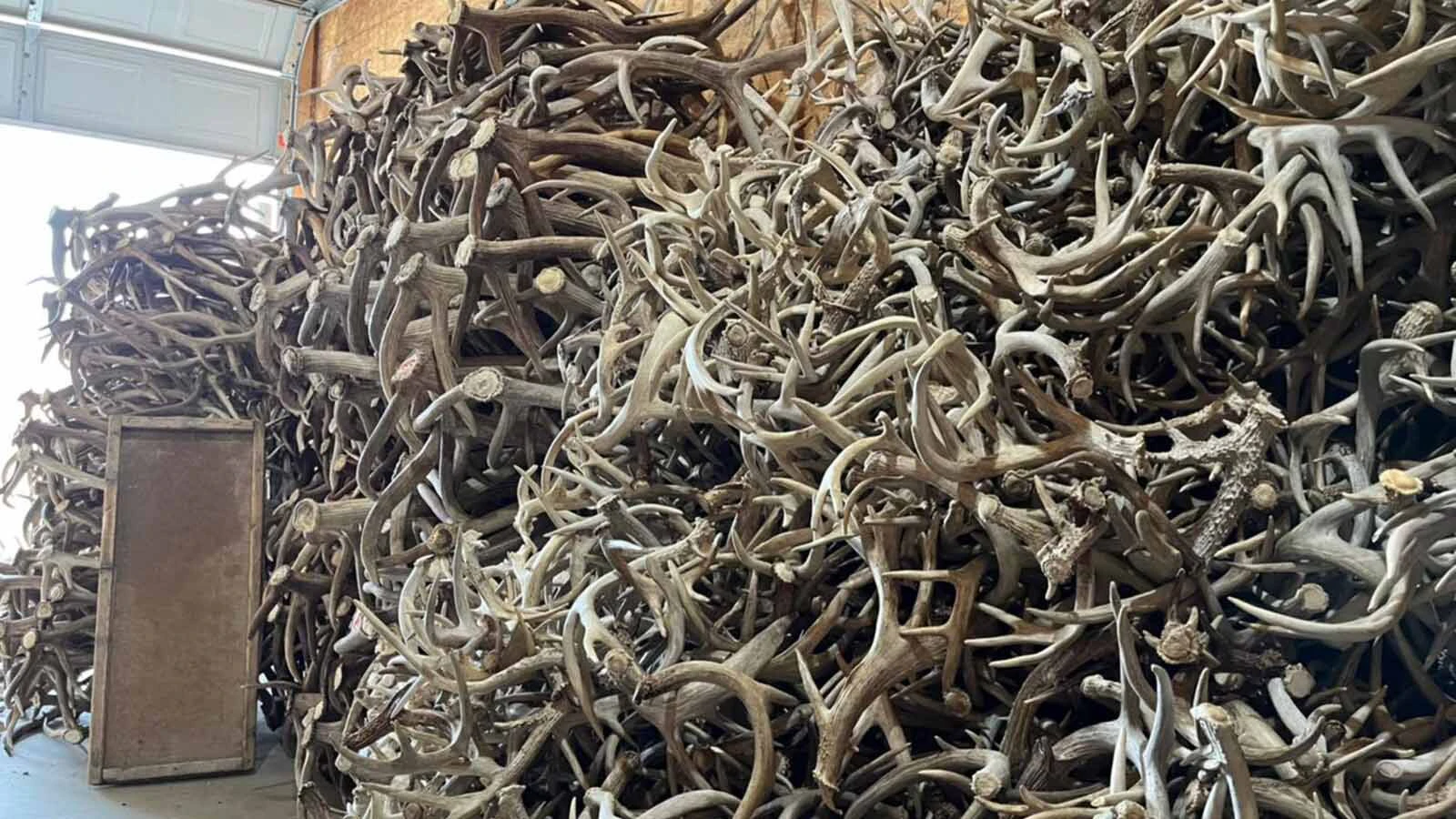
A side gig for a pair of South Dakota men has exploded into a booming business selling 60 tons of elk, deer and moose antlers a year. Some prized specimens can sell for thousands of dollars each. (Courtesy Dakota Antlers via Facebook)
From Yukon To South Dakota
One of Dakota Antlers’ more unique offerings is moose antlers from Alaska. That connection happened not through Craigslist, but through eBay.
The search bar on the eBay home page says, “Search for anything,” and it isn’t kidding.
Search for “moose antlers” and up pops all kinds of options.
A taxidermized pair of moose antlers listed in “new” condition would ship from Alaska for $599. The seller does not accept returns.
Klawitter found his Alaska moose antler dealer this way. He learned that Native Alaskans in the Yukon travel miles on snowmobile to collect prized moose sheds.
They bring home their hauls and stack them up by the pallet.
“It’s an art,” Klawitter said. “It’s like Tetris getting them stacked on there.”
The stacks are wrapped in plastic, and their long journey across the Pacific and to the Great Plains begins.
Occasionally, record-breaking antlers show up on the pallets. The last haul of Alaska moose antlers included several of the largest ever recorded, Klawitter said.
Moose antlers are prized by collectors and as valuable materials for craft art and as a natural canvas for painting.
Nogy makes Christmas trees out of moose antlers and sells them in two sizes at Al’s Oasis, a tourist stop off Interstate 90 in Oacoma.
A small moose antler tree sells for $5,000, while large trees can go for as high as $15,000.

A side gig for a pair of South Dakota men has exploded into a booming business selling 60 tons of elk, deer and moose antlers a year. Some prized specimens can sell for thousands of dollars each. A small tree of elk antlers costs about $5,000, while a large one can go for $15,000. (Courtesy Dakota Antlers via Facebook) 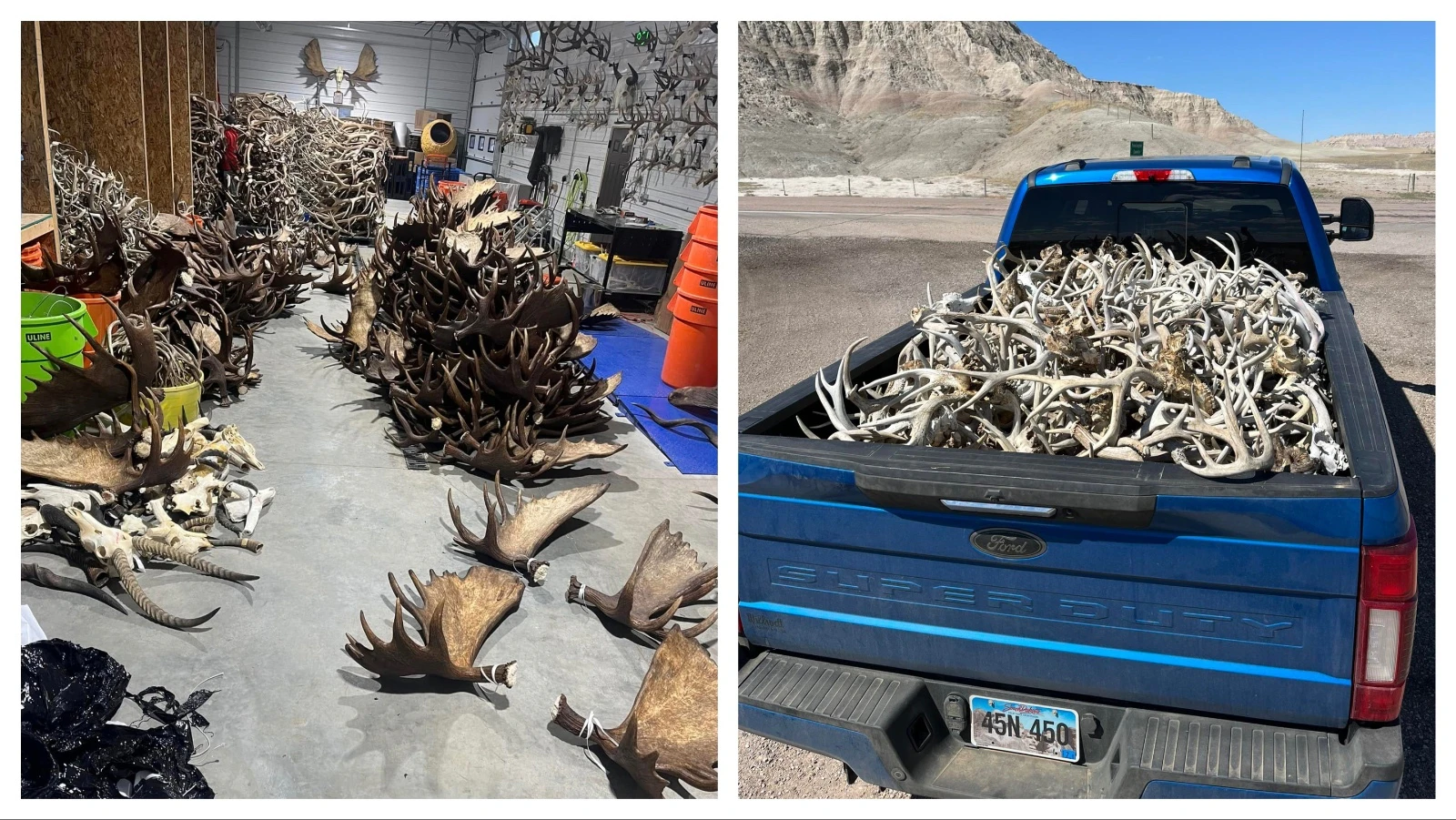
A side gig for a pair of South Dakota men has exploded into a booming business selling 60 tons of elk, deer and moose antlers a year. Some prized specimens can sell for thousands of dollars each. (Courtesy Dakota Antlers via Facebook) 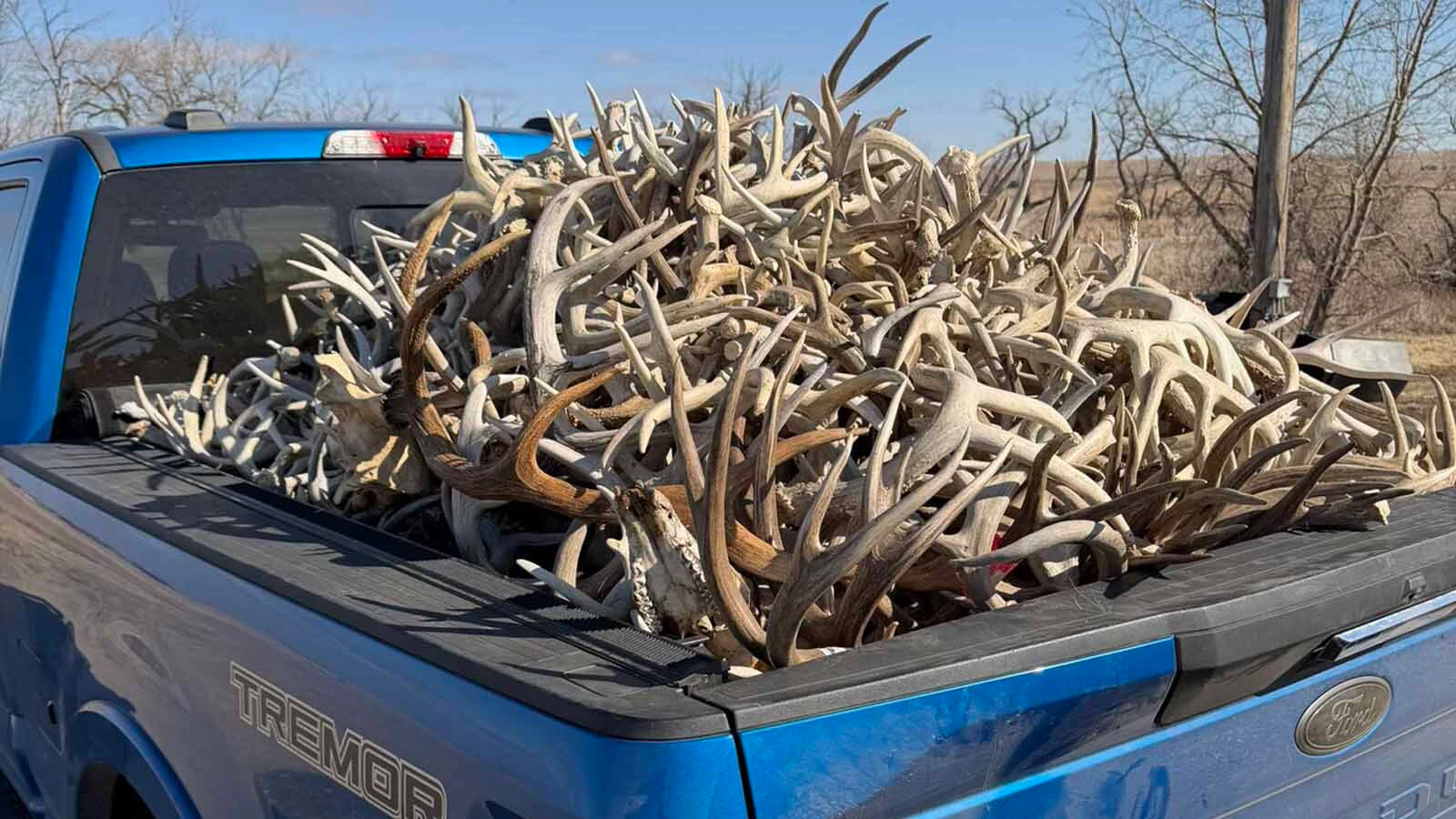
A side gig for a pair of South Dakota men has exploded into a booming business selling 60 tons of elk, deer and moose antlers a year. Some prized specimens can sell for thousands of dollars each. (Courtesy Dakota Antlers via Facebook)
The Antler Run
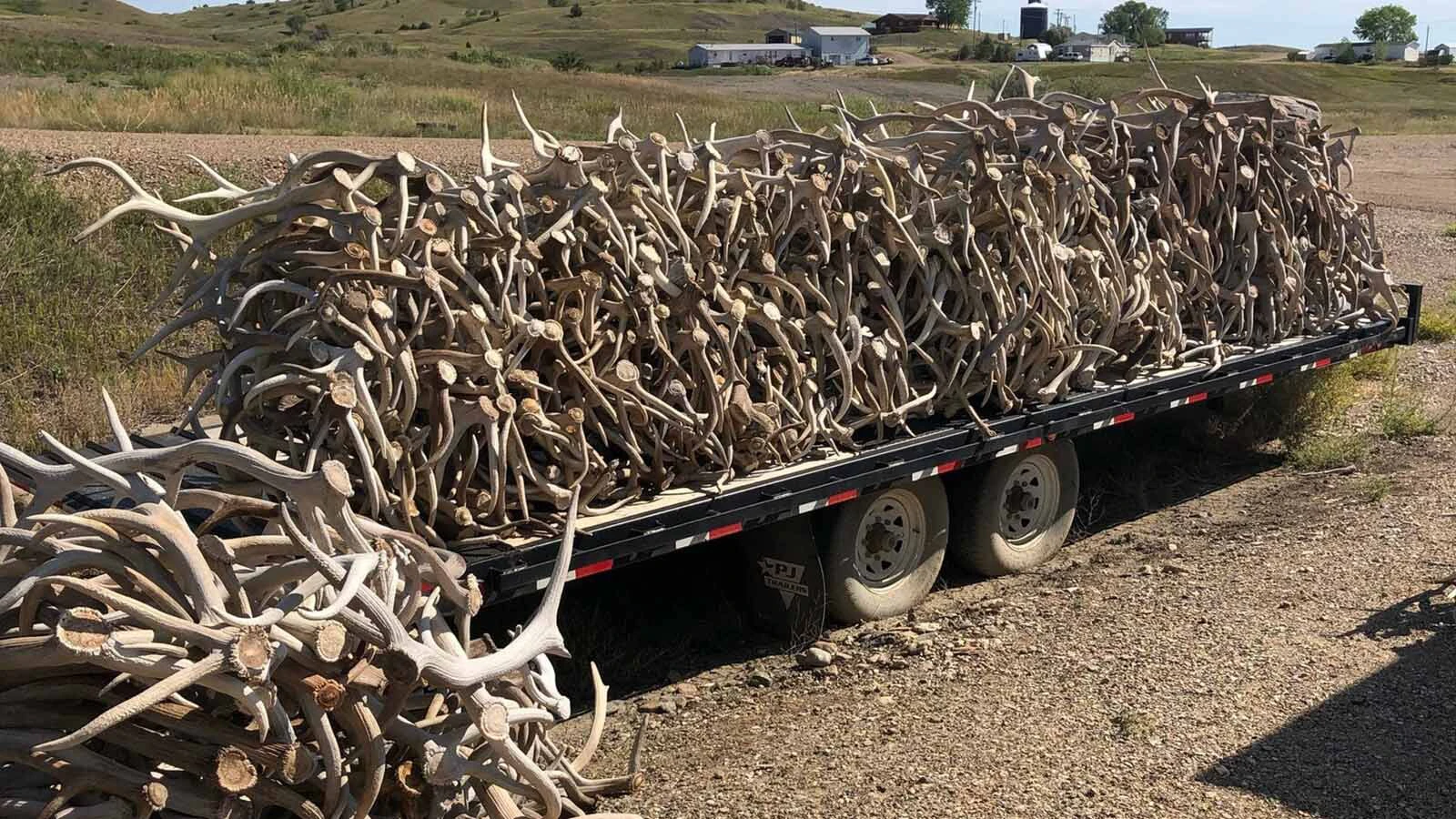
Nogy and Klawitter pay cash for antlers and arrange runs that often amount to a 500-mile round trip to western South Dakota, eastern Wyoming, and throughout the Midwest.
Dakota Antlers has earned a reputation that prompts farmers, ranchers and hunters to call when they have antlers to sell.
“When 10 or 15 people call, we just kind of put our notes together and try to organize a big loop,” Nogy said.
Along the way, the antlers pile up in the bed of a Chevy pickup and in a walled trailer.
Usually, the stops become more than the pair plans for as word spreads that they’re coming.
“This guy will call his neighbor,” and so on, Nogy said.
“We literally buy everything,” added Klawitter.
Elk antlers are scarce in South Dakota, which doesn’t have a huge elk population. However, deer antlers are abundant, and Klawitter said he and Nogy often trade with antler suppliers further west.
They offer deer antlers to Western dealers in exchange for elk antlers. An individual elk antler can be worth $100 to $400, Klawitter said.
Dakota Antlers pays cash for antlers by the pound for all kinds, including elk, deer and moose, as well as horned sheep, buffalo skulls and even taxidermy mounts.
Antlers of all types are valued by their size and degree of uniqueness.
Home With The Stash
Once they return to the “antler barn” — Nogy’s warehouse where his massive collection is stored — a long process of sorting and washing the antlers ensues.
Nogy and Klawitter sort them into bins according to their grades and animal type.
Antlers are classified by three grades — “A,” “B” or “C.”
A-grade antlers are brown or lighter-colored antler with no cracks from weathering. An antler with light cracking from weather and/or ground stains is classified as B grade.
C antlers are considered junk, Nogy said, yet he and Klawitter still pay $2 a pound for any C grade antler, regardless of the animal.
Once the antlers are sorted, the cleaning process begins, Nogy said. Sometimes antlers are dusty because they’ve been sitting in a barn for months.
Many of the antlers become dog chews. Others land in a “craft grade” bin and can be used to make lamps, chandeliers, baskets or for any other form of art or décor.
The men use hoses and scrub brushes to wash off the mud and dust. Then the antlers are cut into various sizes with saws, depending on what they will be used for.
From there they go into a big tumbler that smooths the razor-sharp edges left from the cutting and also knocks off remaining mud and dust.
Like Baseball Cards
Klawitter said shed hunting is becoming more and more popular as a hobby, and some people collect them like baseball cards.
Dakota Antlers’ most loyal customer is Scheels, the sports and outdoor recreation megastore.
“Everyone thinks you can buy antlers and just get rich,” Nogy said. “But for us, it is a process.”
No two antlers are ever exactly the same.
Kate Meadows can be reached at kate@cowboystatedaily.com.


