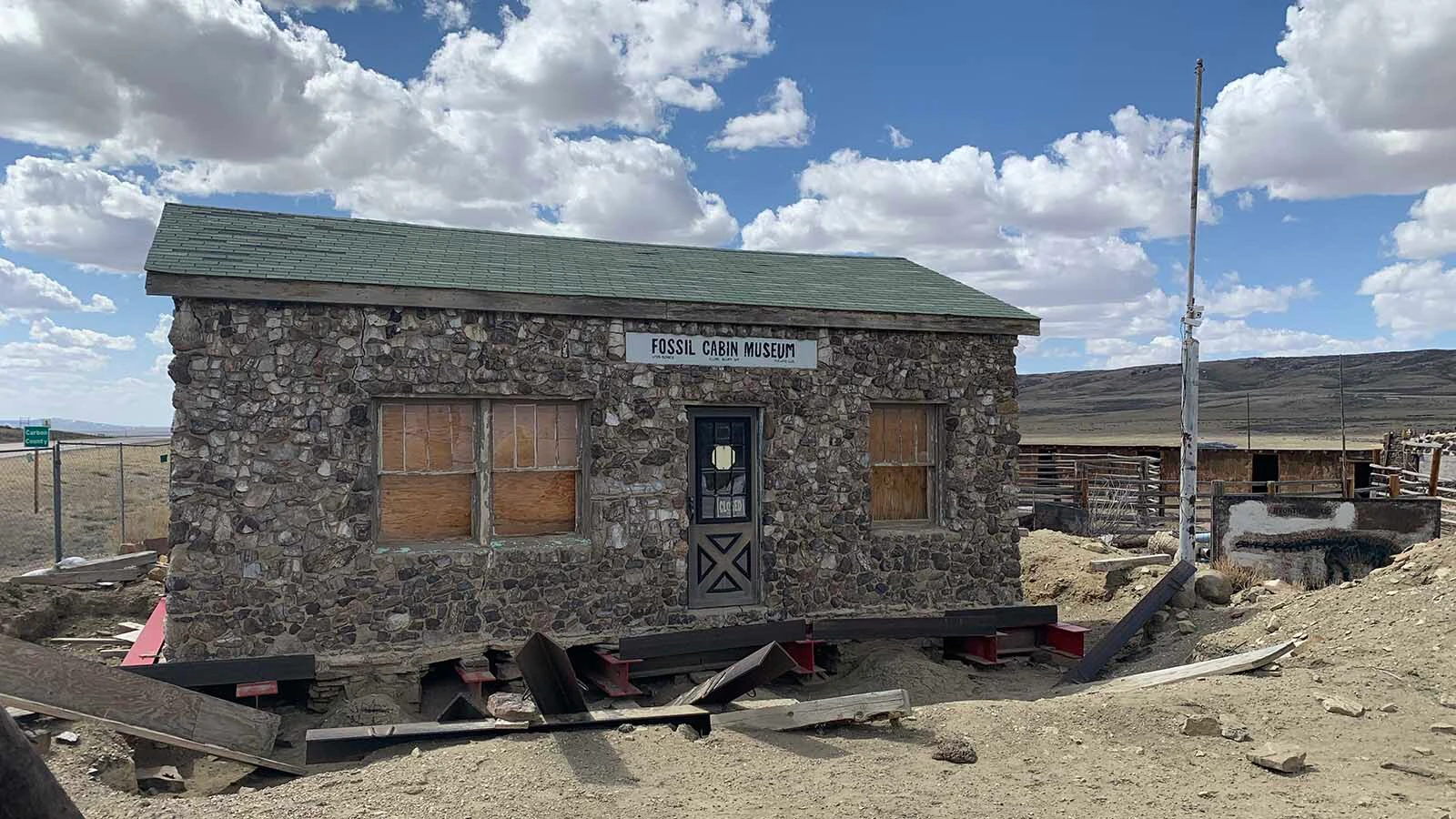
Allosaurus, stegosaurus, apatosaurus — name a favorite dinosaur, and there’s a chance at least one or two of their bones are cemented together on what is not only literally the world’s oldest cabin, but one of the strangest.
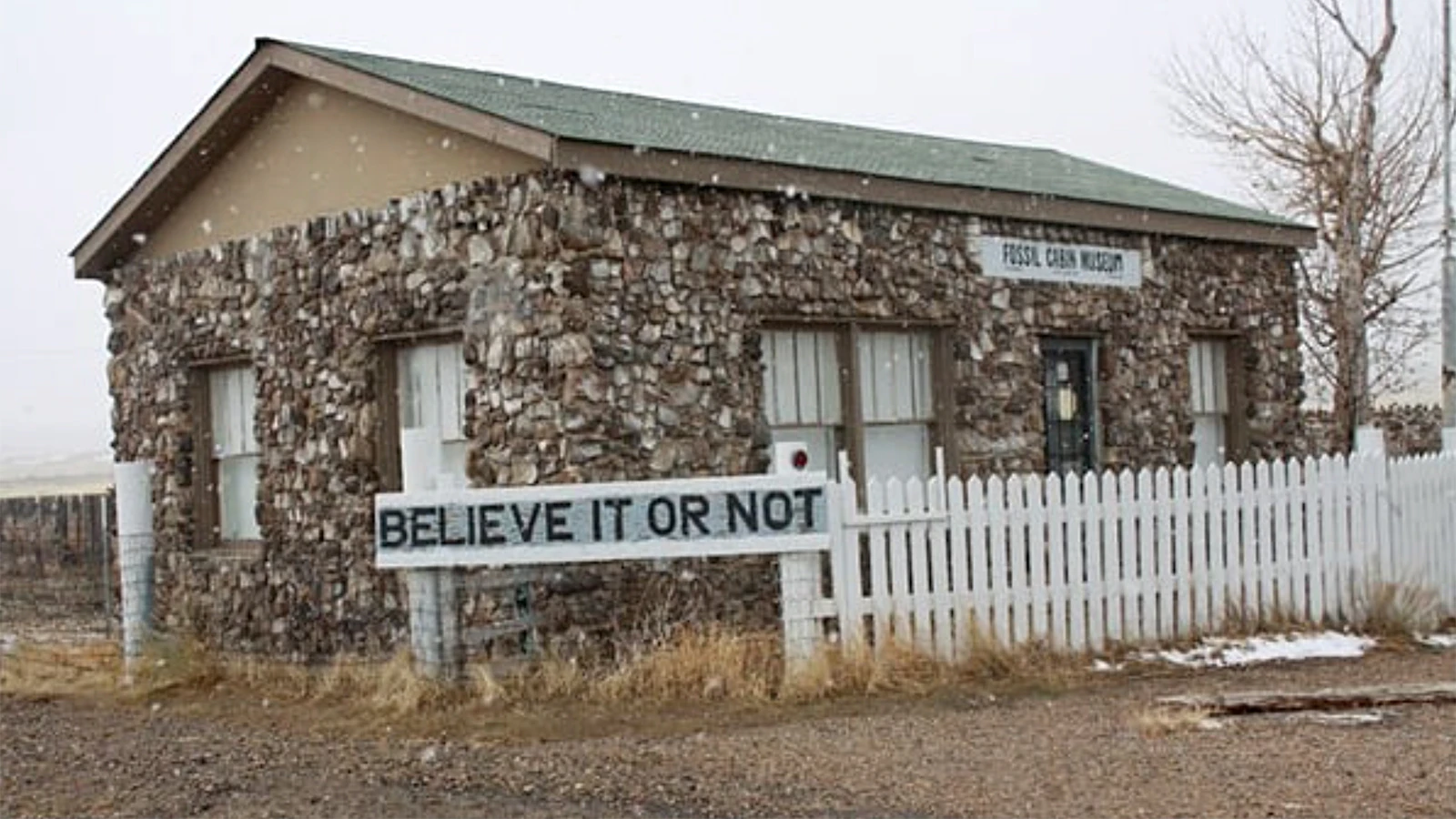
Wyoming’s Fossil Cabin was once featured by Ripley’s Believe It Or Not as the “World’s Oldest Cabin" because of its building materials — 6,000-some dinosaur bones mortared together by Thomas Boylan in 1932 to create a unique roadside attraction for his gas station along U.S. Highway 30 near Como Bluff.
Now the world-famous cabin has just pulled off a move that feels ripped from the pages of another Ripley’s Believe It Or Not story.
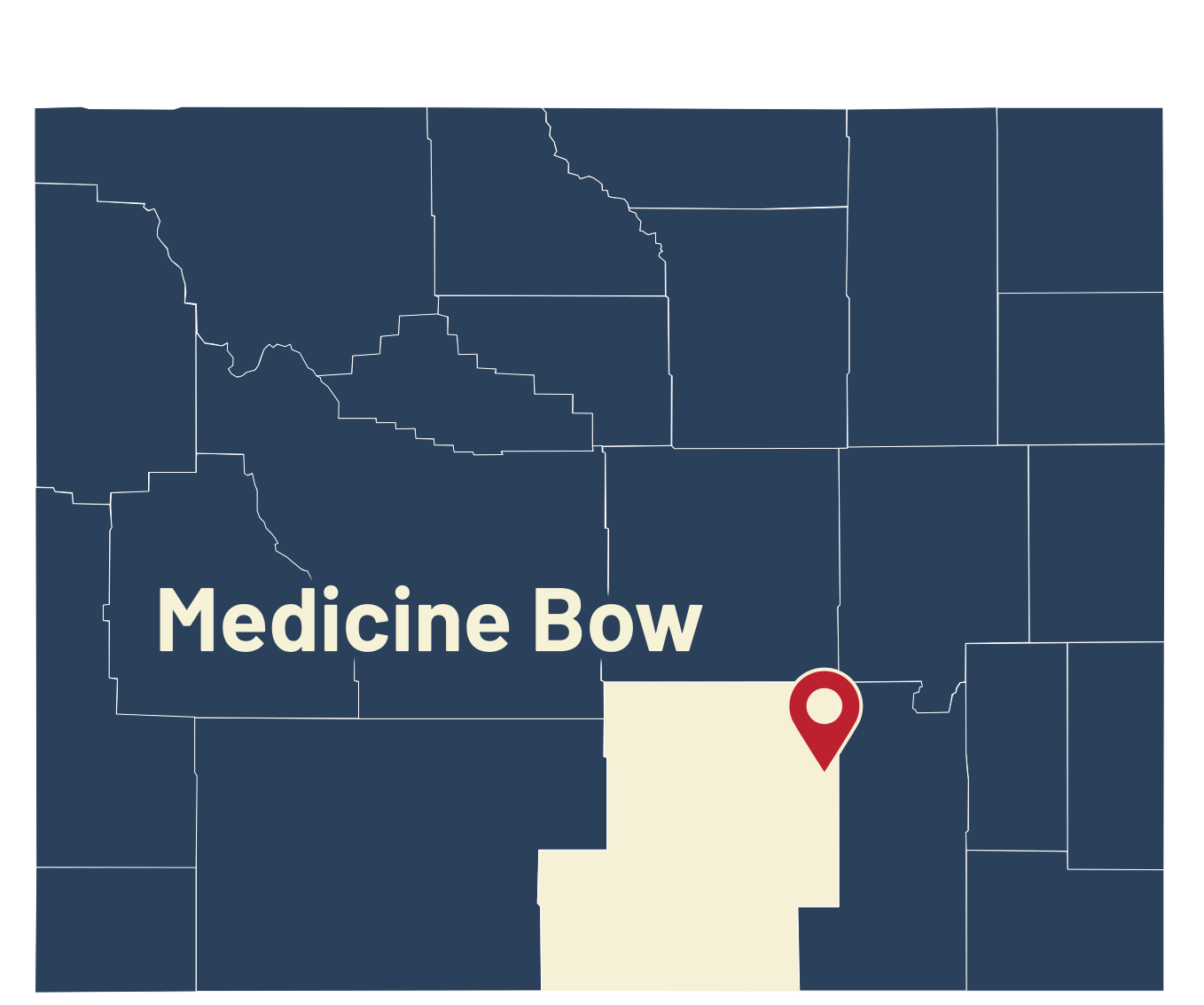
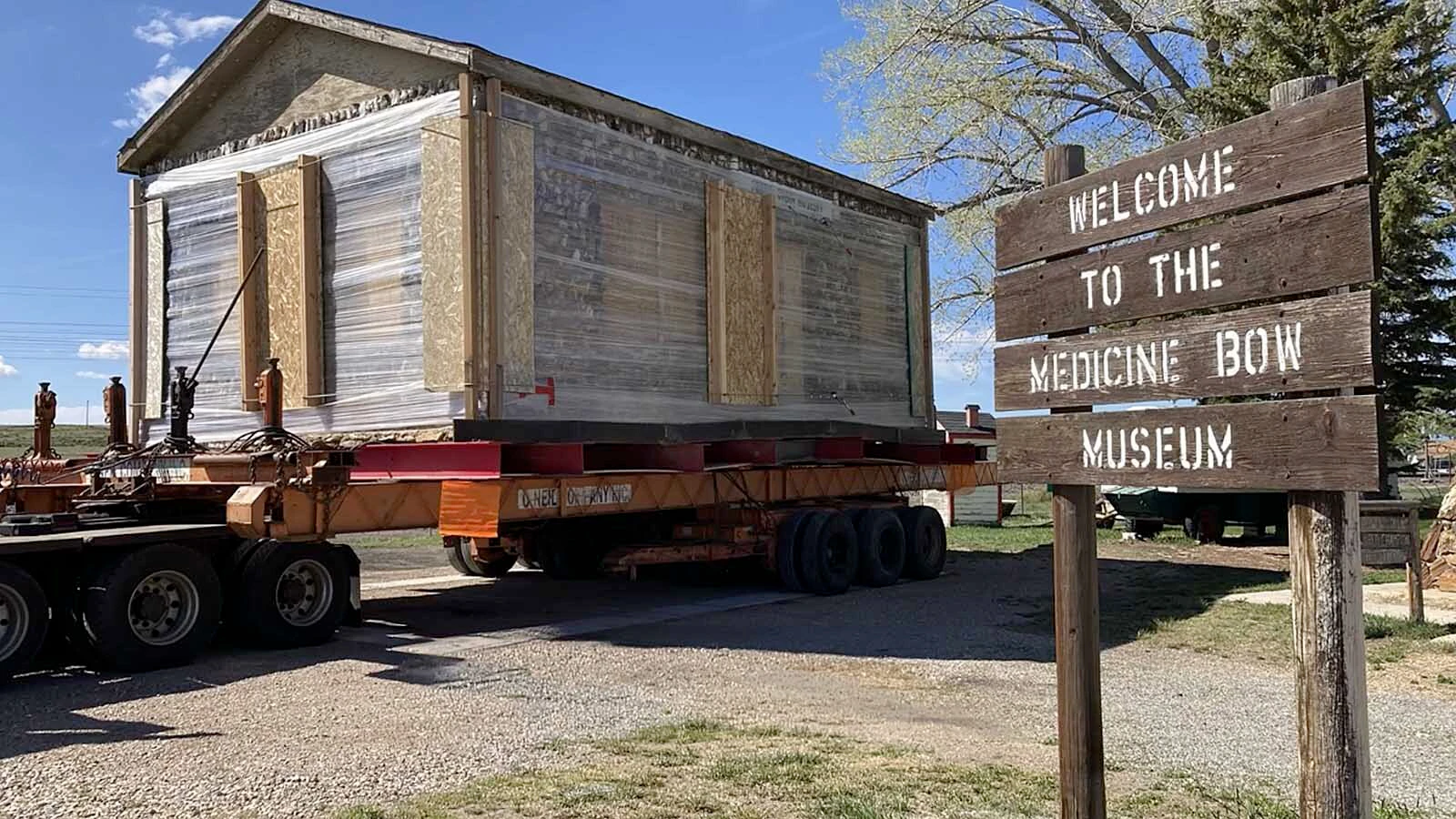
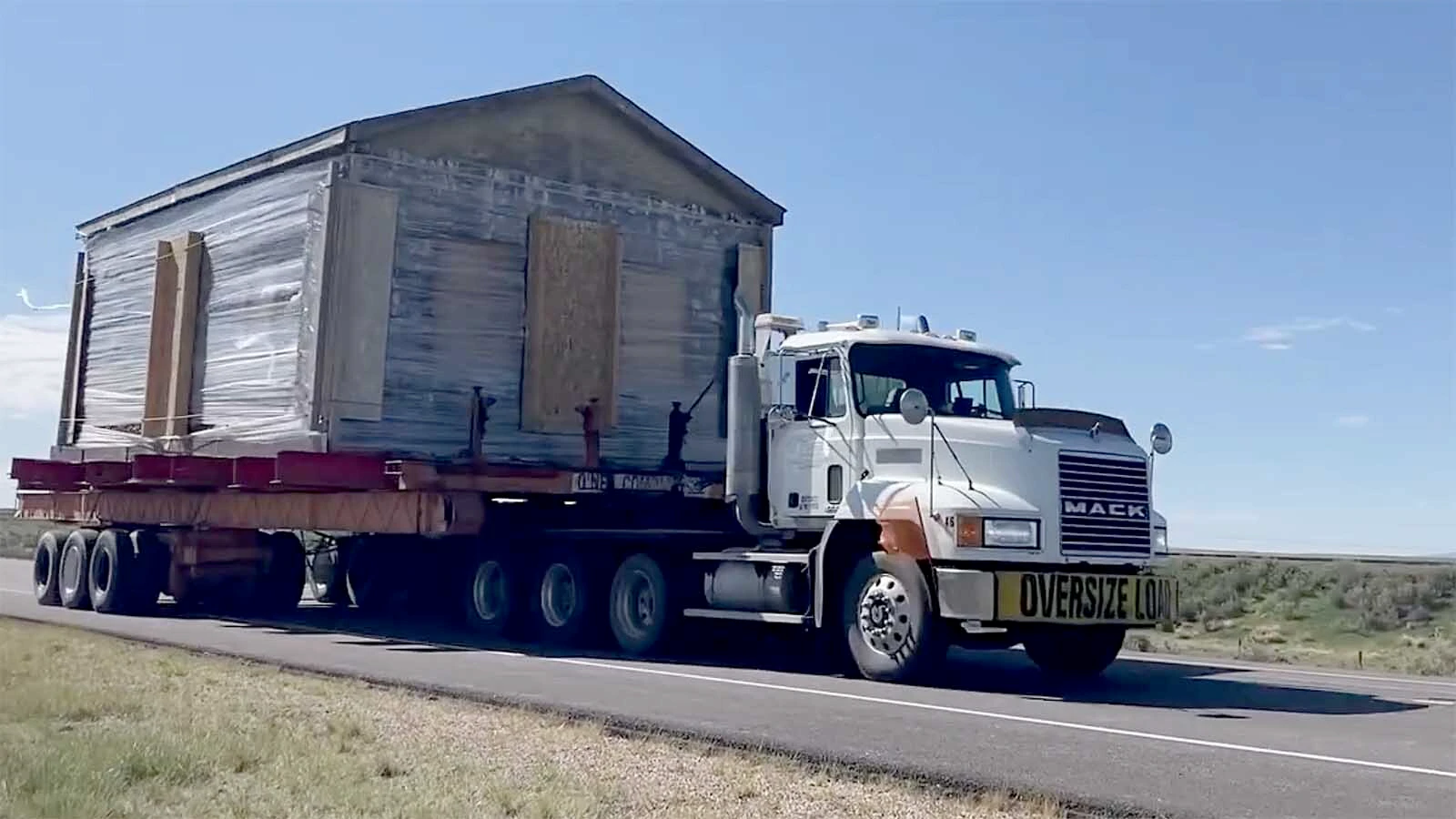
The roughly 52-ton cabin and all 6,000 of its dinosaur bones were quietly moved from its original site to Medicine Bow on Wednesday.
It was an epic slow-motion crawl and a nail-biter, Alliance for Historic Wyoming’s Megan Stanfill told Cowboy State Daily, who was among those to watch the historic building’s move to a new home.
“One of the biggest challenges is dealing with the type of materials being used in the construction,” she said. “Fossils are brittle. They’re very easily crumbled.”
Not only that, but the mortar in between those fossils also is a worry.
“It looks like concrete,” Medicine Bow Mayor Justin George told Cowboy State Daily. “But from what I understand, it doesn’t have any Portland (cement) in it, which helps hold things together.
"So if you think about shaking something like that? It’ll just turn to sand and fall apart if you shake it too much.”
A Tourism Draw
The situation had everyone on edge in Medicine Bow on Wednesday, George said, as the cabin finally made a short, but long and slow, journey from its 94-year perch by Como Bluff, long famous for the roll call of Jurassic dinosaur bones that were first discovered there.
“We didn’t advertise the move at all because we didn’t want U.S. 30 to get clogged up with cars watching the move,” George said. “So it was kind of done on the down-low.”
The company doing the move framed the cabin inside and out to reinforce it. Steel bracing and supports were also welded in place between I-beams placed underneath the cabin, which did not have a proper foundation.
They also had to excavate substantially around the cabin so they could build a movable platform.
Right before the move, the entire cabin and its stabilizing boards were wrapped in plastic for the 7-mile move to help ensure the fragile fossil surfaces would not be battered by wind or debris during the journey.
George was pacing back and forth the entire time he was waiting for the cabin to appear.
When he finally saw it on the horizon — still intact — he breathed a sigh of relief. Finally, he could lean into some of the excitement.
There’s no other cabin like this in all of America, and now it has a home in Medicine Bow, right next to the museum.
It will even, once again, be near a gas station, echoing its history as a 1930s roadside attraction built to attract motorists on the Lincoln Highway.
George is certain it will prove to be a tourism draw.
“I drive this country all the time,” he said. “And there are always vehicles stopped there where it used to sit at Como Bluff. I think, with it being here, having a museum right next to it, being more organized and accessible, I think it will increase tourism here.
"There are a lot of people who are really into that archaeological part of history.”
Years Of Planning, Fundraising To Move 52-Ton Relic
Moving a 105,116-pound cabin that’s a giant dinosaur bone puzzle wasn't a smooth and easy process, former Medicine Bow Museum Director Sharon Biamon told Cowboy State Daily.
“We started this, I don’t know, seven, eight years ago, and I had a fundraiser for what the original mover quoted,” she said. “But it turned out that he couldn’t do it. It was just too heavy. He didn’t have the equipment.”
That led to hiring a much more expensive mover out of North Dakota and pursuit of grant money to pay for it.
Biamon wouldn’t say how much more the move cost, though she described it as a “tremendous” amount.
It’s money she believes is well-spent to save this unique cabin. Where it had been sitting, the cabin was being vandalized.
Some tourists chipped fossils straight out of its walls, and displays inside the cabin were stolen.
Now the cabin will be inside a community that cares about its history, Biamon said. It will stand a much better chance of not being vandalized and destroyed.
The museum also plans to tighten up the structure, weatherizing its windows and its roof, and ensuring the cabin can stand for another 100 years.
Biamon agrees with George that having the cabin will be a boost for tourism.
“We’re on the map for the Virginian,” she said. “And we have the Owen Wister cabin that he built up by Jackson. This fossil cabin, it’s just a fantastic addition. I think it’ll be a big boost for Medicine Bow’s economy.”
Where The Bone Wars Began
Dawndee Yocom, Medicine Bow’s new museum director, said she’s not sure yet what programs they’ll develop around the cabin, though she’s excited about its history, as well as the connection to Como Bluff, which has a unique place in the world of paleontology.
The windy ridge overlooking a sagebrush sea was one of the first places on Earth where large numbers of dinosaur skeletons were found and systematically quarried in the late 1870s and 1880s.
It’s also where the infamous Bone Wars happened, Stanfill added.
“It was so important to the region’s growth,” she said. “There were fossils found out there that contributed to some of the largest collections in the world. That whole region up there is just so rich in history.”
The Bone Wars grew from a 19th century rivalry between Othniel Charles Marsh and Edward Drinker Cope, who descended on the area not long after Union Pacific workers building the transcontinental railroad noticed large bones eroding out of the bluff in 1877.
The observation prompted a letter to Marsh at Yale University, who immediately saw the importance of the discovery and started sending work crews West.
Proximity to the train depot in Medicine Bow meant dinosaur bones could be easily shipped east in bulk. Marsh instructed his workers to excavate as many dinosaur bones as quickly as possible and ship them to him via rail.
It didn’t take long for Cope to hear about Marsh’s new find through the paleontological grapevine. Soon he was sending his own teams to collect specimens, as well as to spy on and sabotage Marsh’s camp.
Silly Names, Serious Insults
Cope and Marsh had once seemed cordial — trading specimens, visiting each other’s digs, and even naming species in one another’s honor —albeit sometimes names that seemed to have a snarky bit of humor.
Cope started it off with a tiny amphibian that he named Ptyonius marshii in 1869. Marsh fought back with a gigantic serpent he named Mosasaurus copeanus.
The insult here was also salt in a wound. The fossil came from a quarry Cope had once shown Marsh as a friendly gesture.
Marsh then promptly snatched the quarry out from under Cope by buying off the landowners, paying them for exclusive access and cutting Cope out.
Ultimately, though, it wasn’t petty games and silly names that doomed the men’s friendship.
It was when Marsh publicly humiliated Cope, pointing out he’d put the head of a marine reptile called Elasmosaurus on the wrong end of its spine.
The embarrassing mistake eventually went out to all the newspapers, and by the time Como Bluff was discovered, the two had become bitter enemies.
Each was determined to discover more species and name more dinosaurs than the other, as well as to control a larger piece of the fossil-rich West than the other.
Destroying Fossils Rather Than Share
What followed Cope’s arrival at Como Bluff looked less like scientific endeavor and more like guerrilla warfare.
Each man instructed his camp to spy on the other and to commit sabotage whenever possible, including stealing bones if they could.
The camps armed themselves and frequently brandished weapons at each other, as well.
Marsh and Cope bribed workers to steal fossils from each other. If one side had to leave a quarry, they would bury, smash, or even blow up the bones with dynamite, rather than allow their rival any chance to claim something significant.
The two men took to writing lengthy diatribes about the other, assassinating each other’s character in a sensational press that was eager for such popcorn-worthy controversy.
In the end, both Marsh and Cope paid a heavy price for their personal war.
Each man burned up a fortune trying to outdo the other, and the speed with which they named new species led to numerous errors, and a taxonomic tangle that took decades to unravel.
Their feud is part of the reason why there’s still a lot of debate around apatosaurus and brontosaurus.
The misnaming and their questionable methods tarnished both men’s reputations, and ultimately ruined them both.
Digging In Medicine Bow Region Continues
The quarries they fought over endured, though, and Como Bluff has been recognized as one of the world’s first great dinosaur bone beds.
The fossils Cope and Marsh found became centerpieces in major museums, and their work ultimately did help write the history of the Jurassic Age.
While Como Bluff is seldom visited by paleontologists these days, there are still several active dig sites in the Medicine Bow area, George said.
“I think there are three or four different crews here that have dig sites going currently,” he said. “And some of them are aren’t projected to be done for 15 years. There’s a bunch of university students who come out of Sweden every year.
"They’re here every summer, six or eight of them, working on a dig site out north on Marshall Road.”
With the Fossil Cabin in Medicine Bow, George believes there will be chances to connect some tourism dots for dinosaur enthusiasts by building upon the region’s resources, which are like no other in the world.
Renée Jean can be reached at renee@cowboystatedaily.com.