When water seeped down the face of the historic mural at the Wyoming Veterans Memorial Museum, marring the depiction of the first territorial governor’s face on the southwest wall, the facility’s director knew action was needed soon.
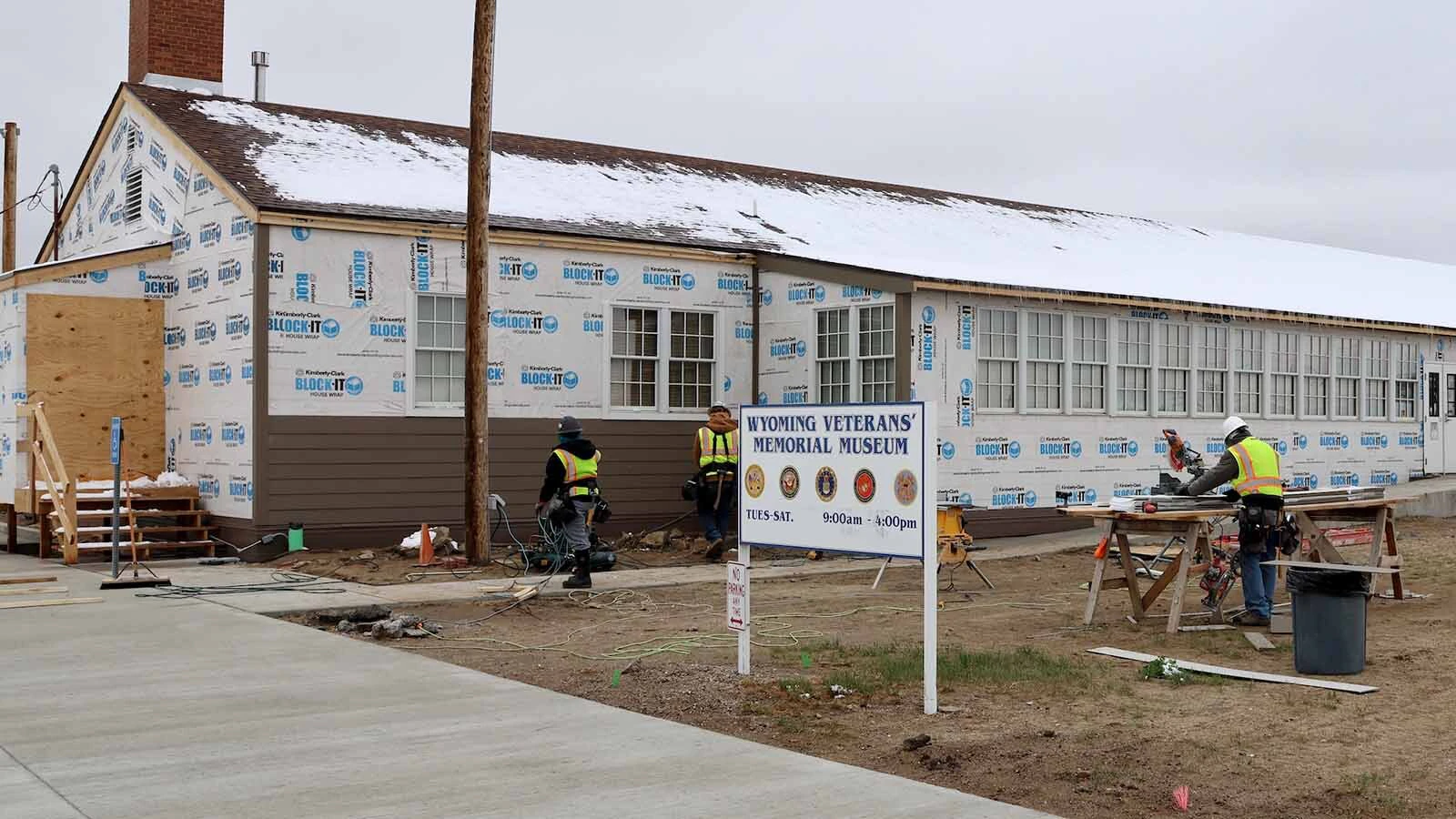
Now the 84-year-old former World War II enlisted man’s club built for the Casper Army Air Base is nearing the end of a five-month, $2.6 million renovation that brings it into compliance with standards for those with disabilities and creates more space inside to commemorate and celebrate the contributions of state veterans.
Director John Woodward said the major reason and purpose for the project is to make the building last longer.
“We looked at systems like the roof, the building’s siding and we looked at accessibility, making sure that people with mobility issues could get into the museum and use the museum’s facilities more easily,” he said.
Workers from Sheridan-based Dick Anderson Construction have been at work over the past four months replacing the 6,000-square-foot building's roof, building new bathrooms in the interior, ripping out the old ceiling inside and plywood that served as wainscoting on walls, and installing sheetrock.
Construction Supervisor Bill Street said one the challenges that became apparent immediately was that the building’s roof has trusses that were 13-feet apart instead of 16-to-24-inches that should have been used to ensure longterm viability.
He had to bring in a construction engineer to determine if the HVAC system and ductwork he was supposed to install in the attic and drywall on the ceiling would be too heavy for the trusses to bear.
The ruling was the trusses would work — especially when contractors found that there were four layers of shingles on top of the roof already proving the wooden support structures could endure a heavy load.
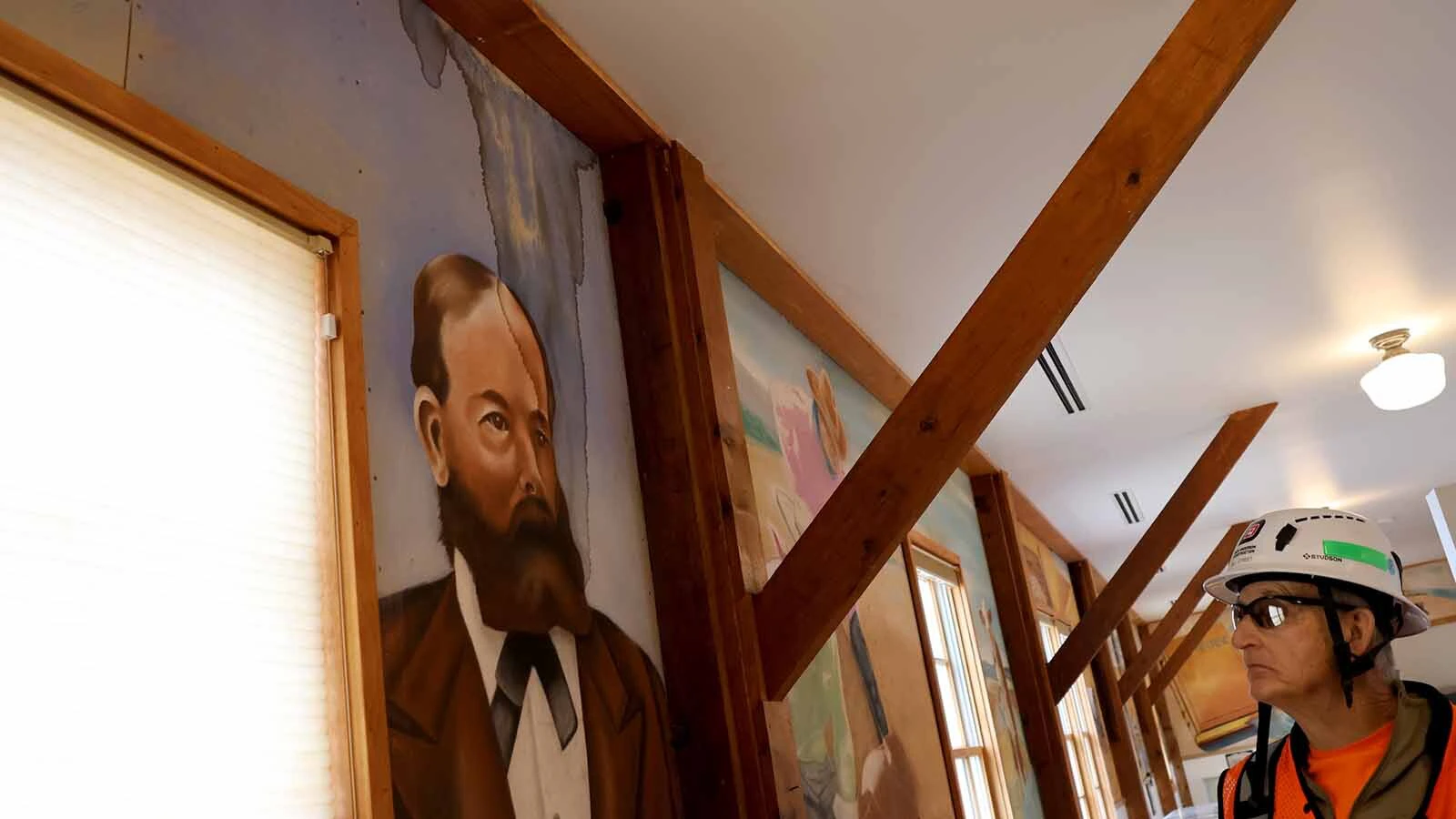
The damage to the mural of Wyoming’s first territorial governor spurred action by the Wyoming Veterans Memorial Museum’s director to renovate and save the murals. (Dale Killingbeck, Cowboy State Daily) 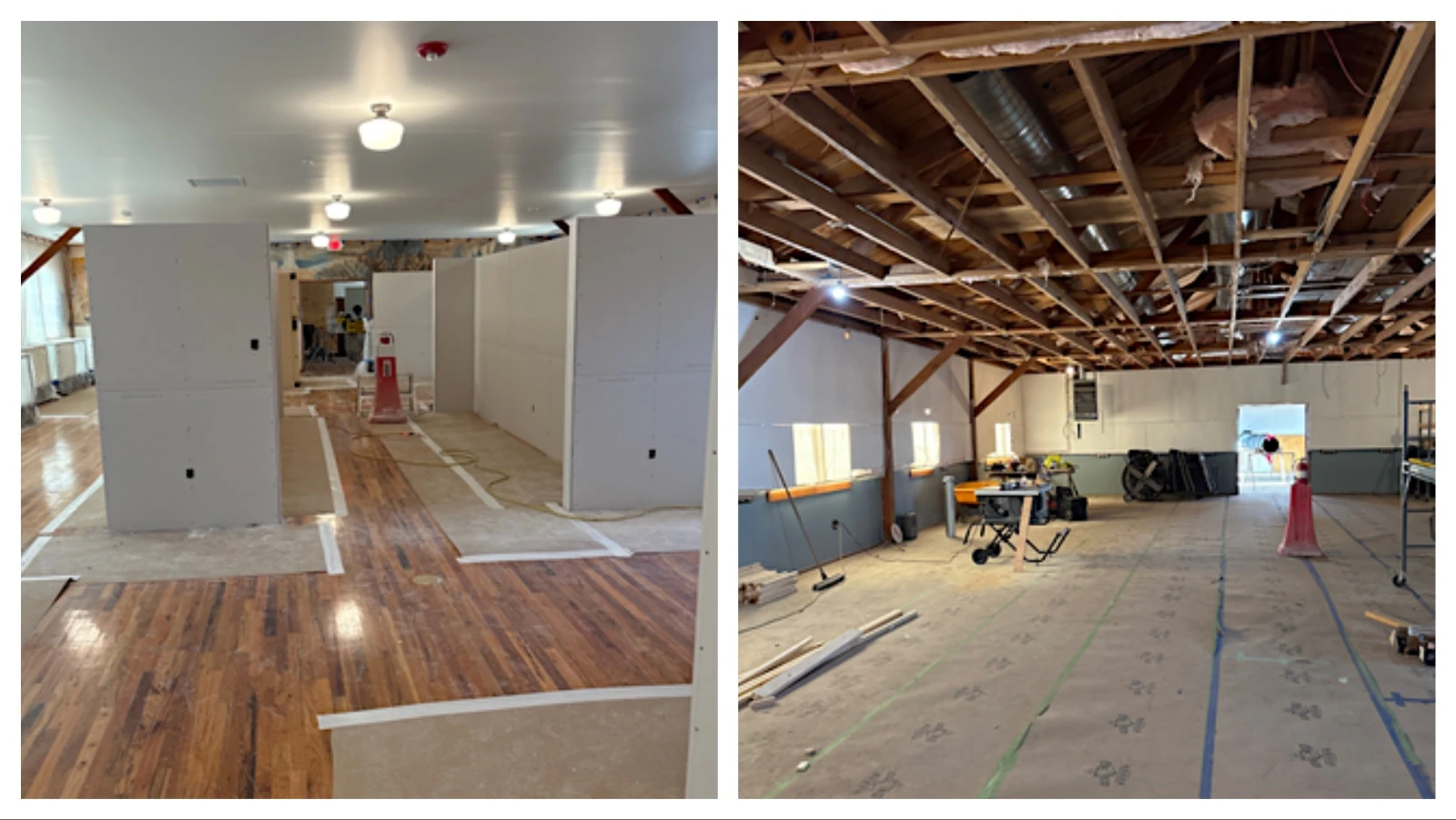
Special block walls covered by drywall have been installed. But the walls can be reconfigured easily in the future by removing the drywall. Work by Dick Anderson Construction on the museum involved taking out the ceiling and installing duct work and a new ceiling. (Courtesy William Street) 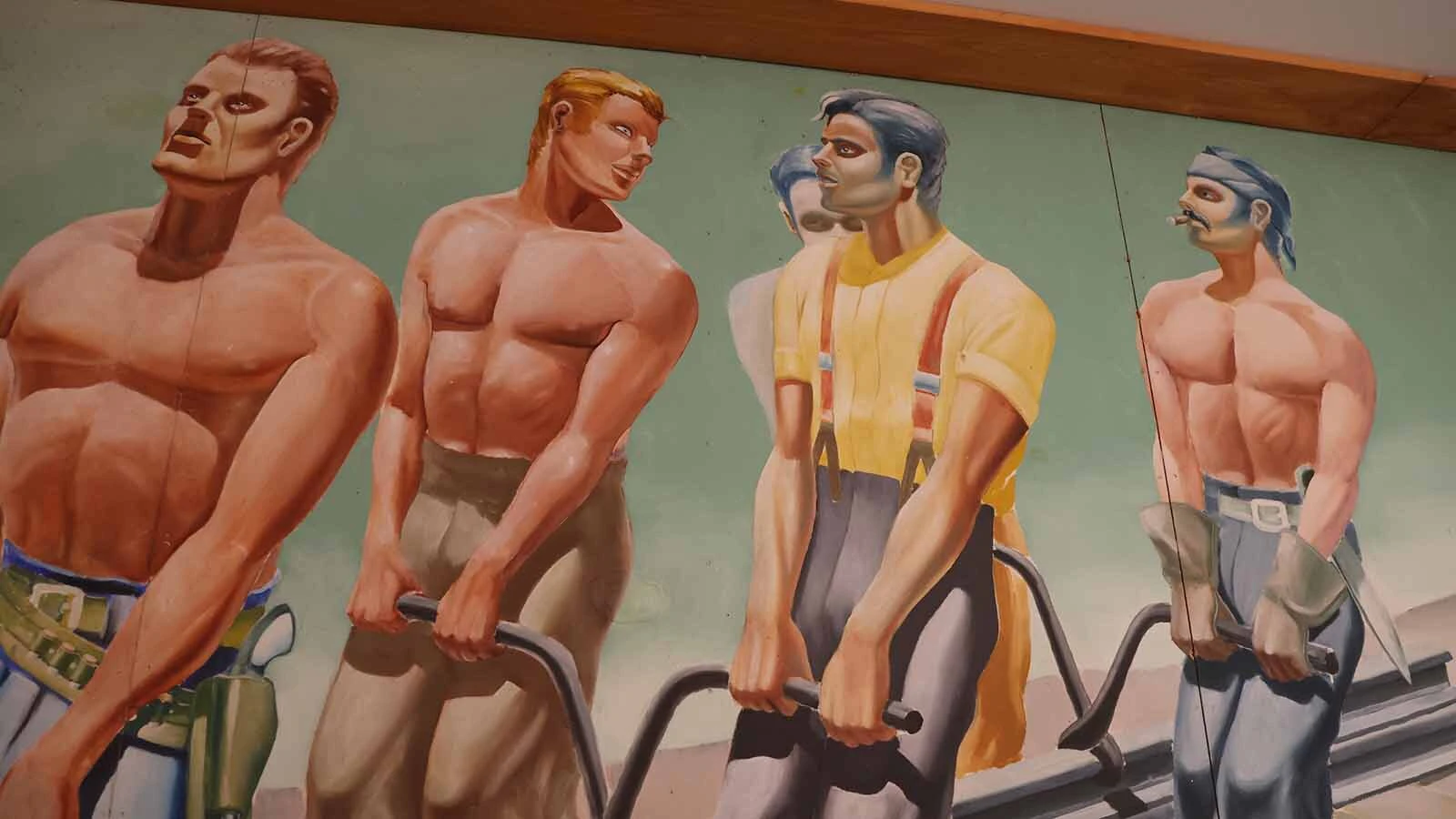
A mural showing a railroad crew laying track across the state is one of 15 preserved at the museum. (Dale Killingbeck, Cowboy State Daily)
Not Built To Last
“It’s a prime example of how the U.S. Army conserved materials during wartime,” Woodward said. “They didn’t expect the building to last very long, so why invest in lot of extra wood when it's only going to be torn down at the end of the war or a few years afterwards.”
Instead, the structure endured, and over the following decades was a venue for square dances and other events until in 1998 a nonprofit was formed to create the museum.
The Wyoming State Parks and Cultural Resources Commission took it over in 2000 and the Wyoming Military Department in 2008.
Walls inside the building display 15 murals of Wyoming’s history painted by four U.S. Army airmen during World War II.
The mural of Wyoming’s first territorial governor, John Allen Campbell, still shows a water stain from the roof leak that prompted the renovation.
Street estimated to repair and remove the stain would cost $20,000.
Efforts to protect the murals as the roof was replaced and ceiling taken down involved covering them with layers of plastic, Street said.
Both Street and Woodward said the only reason the murals have stood the test of time is because the exterior walls of the building never had any insulation allowing them to “breathe” and eliminate condensation that would wreck the artwork.
The renovation project includes new siding to replace the old, rotted cedar siding, but again no insulation to help protect the murals.
Woodward said the new heating and cooling system and ductwork will also allow the museum to maintain an inside temperature to help preserve them as well.
The original oak floor that was refinished about five years ago was covered by workers to protect it during demolition and work to install the drywall and ductwork.
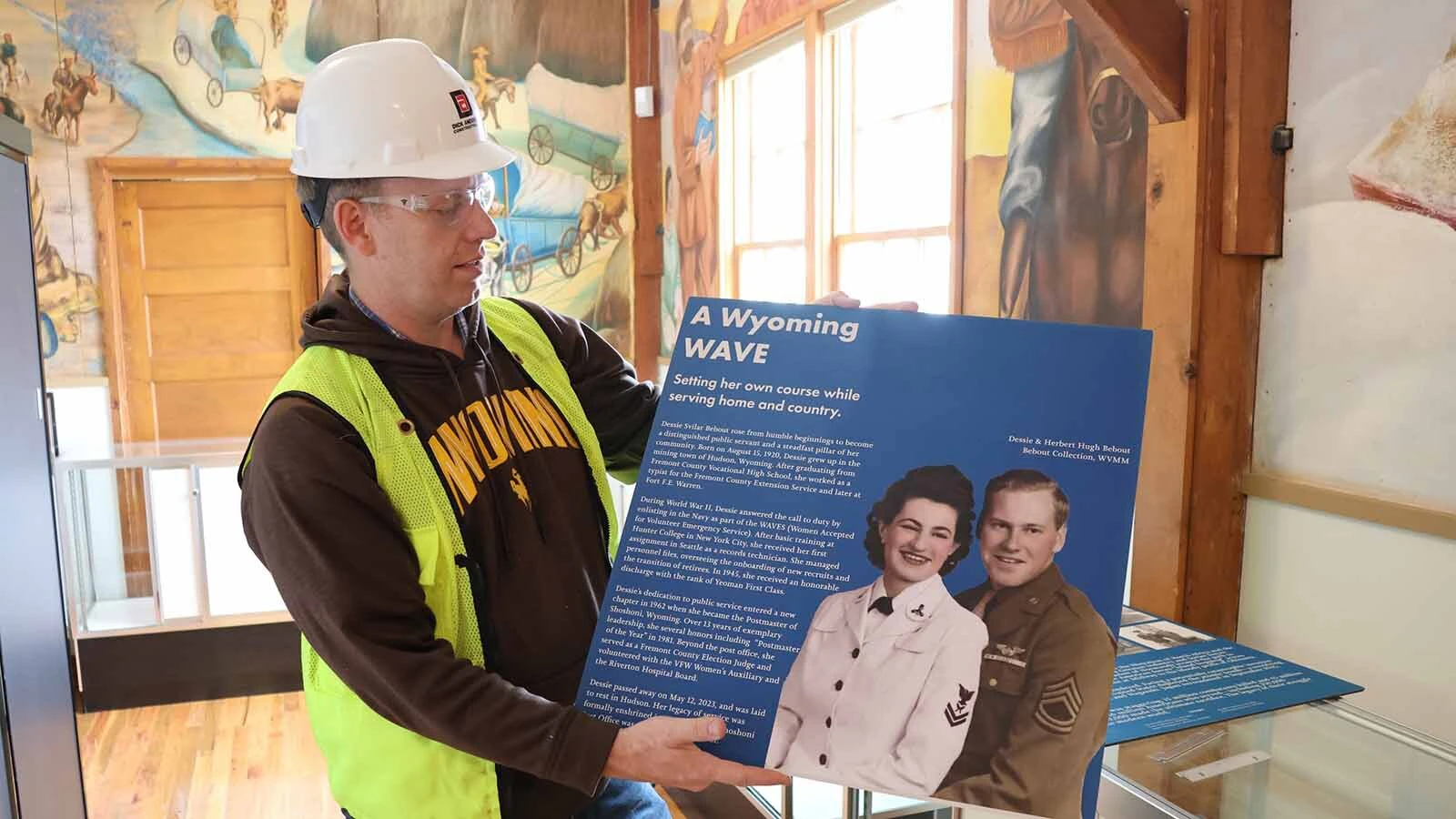
Museum Director John Woodward holds up a new exhibit panel that will be installed. There are nearly two dozen others celebrating and chronicling Wyoming veterans that will be installed. (Dale Killingbeck, Cowboy State Daily) 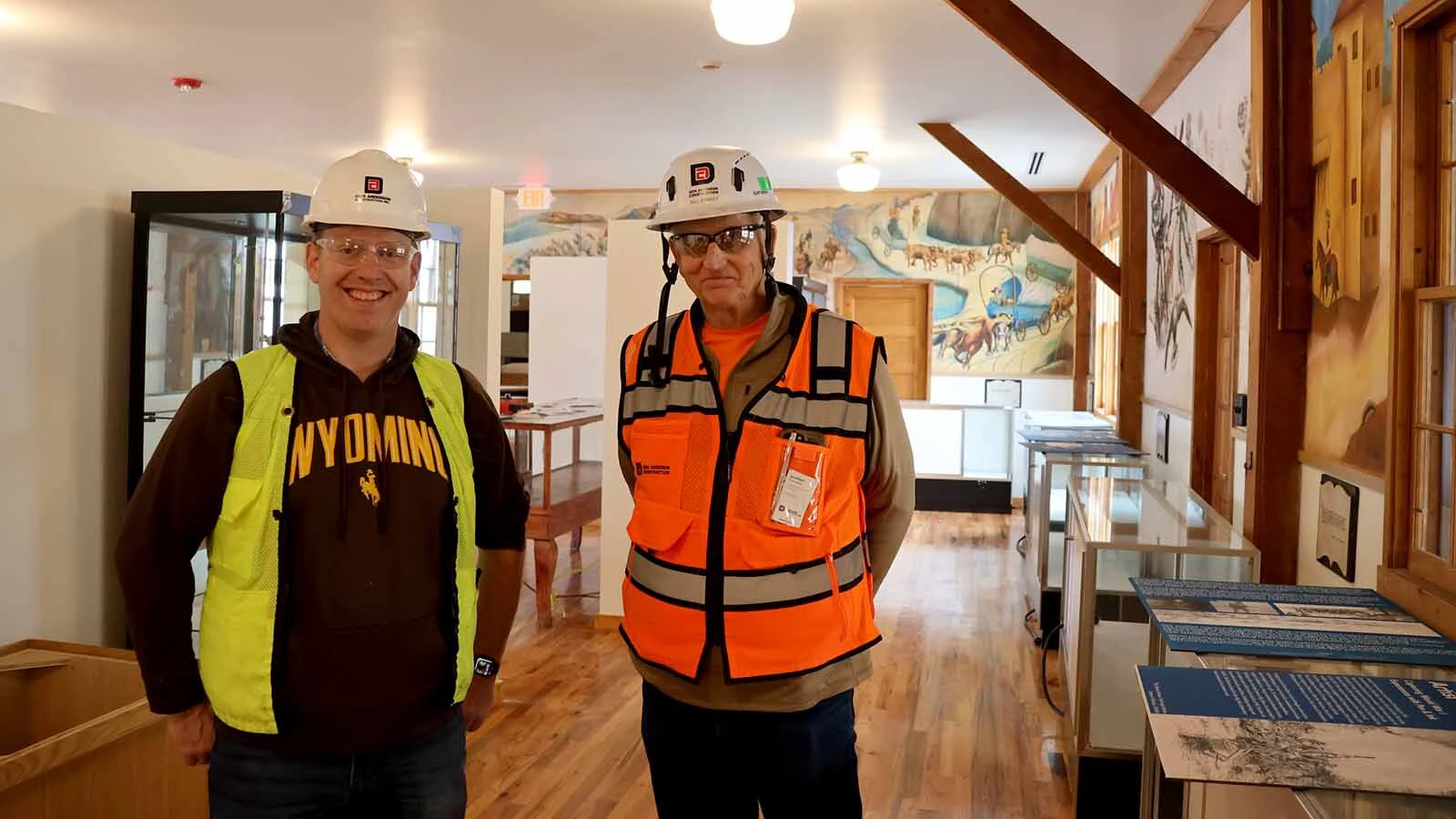
Museum Director John Woodward and Construction Supervisor Bill Street of Dick Anderson Construction pose in the nearly renovated museum’s interior. (Dale Killingbeck, Cowboy State Daily) 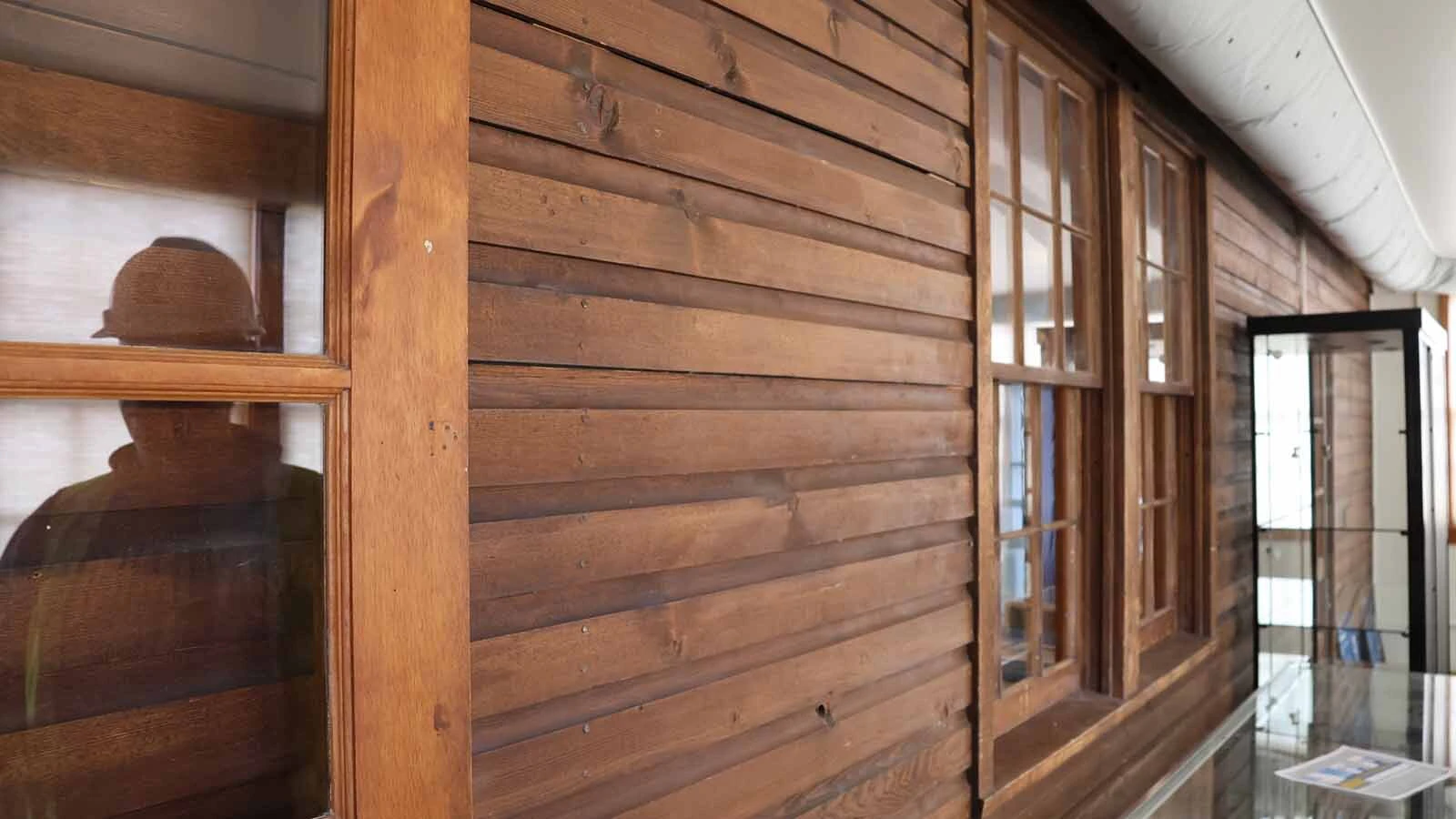
Original siding that was installed on the 1941 serviceman’s club remains in the porch area of the museum. (Dale Killingbeck, Cowboy State Daily) 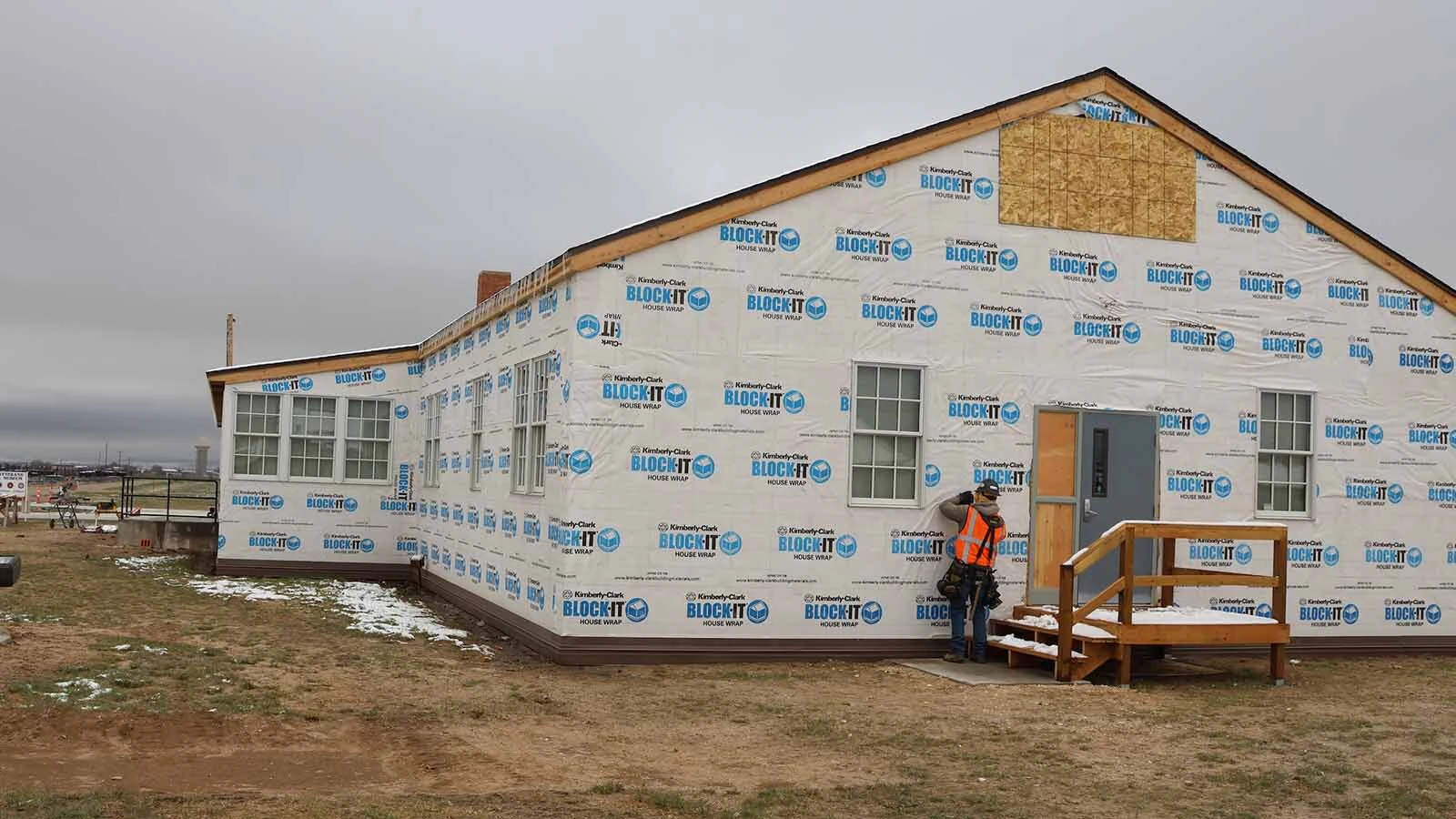
A new door has been installed on the northwest side of the museum. (Dale Killingbeck, Cowboy State Daily)
Original Globe Lights
Following the renovations, the museum’s main display room still features its 1942 globe lights and now boasts specially made “Lego-like” brick walls covered in drywall that can be moved or reconfigured in the future according to needs, Woodward said.
Street said the bricks used for the walls are hollow inside and allowed for wiring to be installed through them. Prior to the renovation, nothing could be put on the room’s interior walls because they were covered with the murals.
Portable displays and curtains were used to fill the interior space.
“This allows to really use this wall system, to mount things on the walls and make better use of the space in this gallery,” Woodward said.
Since last July, Woodward and the museum’s curator have been busy researching and writing 21 history panels and six “context” panels to be displayed on the walls that involve Wyoming veterans.
Woodward said the panels are meant to share not only the veteran’s contributions during his or her service, but also after the war.
One panel reflects the life of Walt Bailey, who served as a radioman on bombers in World War II and who after the war taught at Casper College and led its mountaineering club.
The museum team’s research uncovered that he climbed Devils Tower and died on an expedition to Mount Alpamayo in Peru.
Another example is new panel honoring Hudson, Wyoming native Dessie Svilar Bebout who served as a U.S. Navy WAVE during World War II and went on to become the postmaster of Shoshoni, Wyoming.
More Exhibits
More exhibit cases also will be added to the redesigned display space along the interior walls.
“All items going inside the cases are new,” Woodward said. “We have some of the items that have been exhibited before but many have never been exhibited in my time here in the past 10 years.”
The revamped museum includes a new door on the northwest side of the building for fire purposes, but more importantly a new concrete parking area and ramp to enter the building for those with mobility issues.
Later this spring, landscapers will be on site to enhance the exterior look of the building along with the new roof and siding.
Street praised the collaboration of the Wyoming Military Department and project manager Jane Miller for the way the project has dealt with the hurdles and challenges of the old structure.
One thing Woodward is grateful for is that the old 4-by-6-foot Celotex fiberboard panels that made up the interior walls and ceiling, are gone from the ceiling. He said the fiberboard in 1942 was nailed to the walls but only stapled to the ceiling.
“We had problems in the past, especially in the office with the ceiling panels working their way out or the panels degrading around the staples,” he said. “Panels were falling. No one was ever hurt, but it certainly scared us a couple of times.”
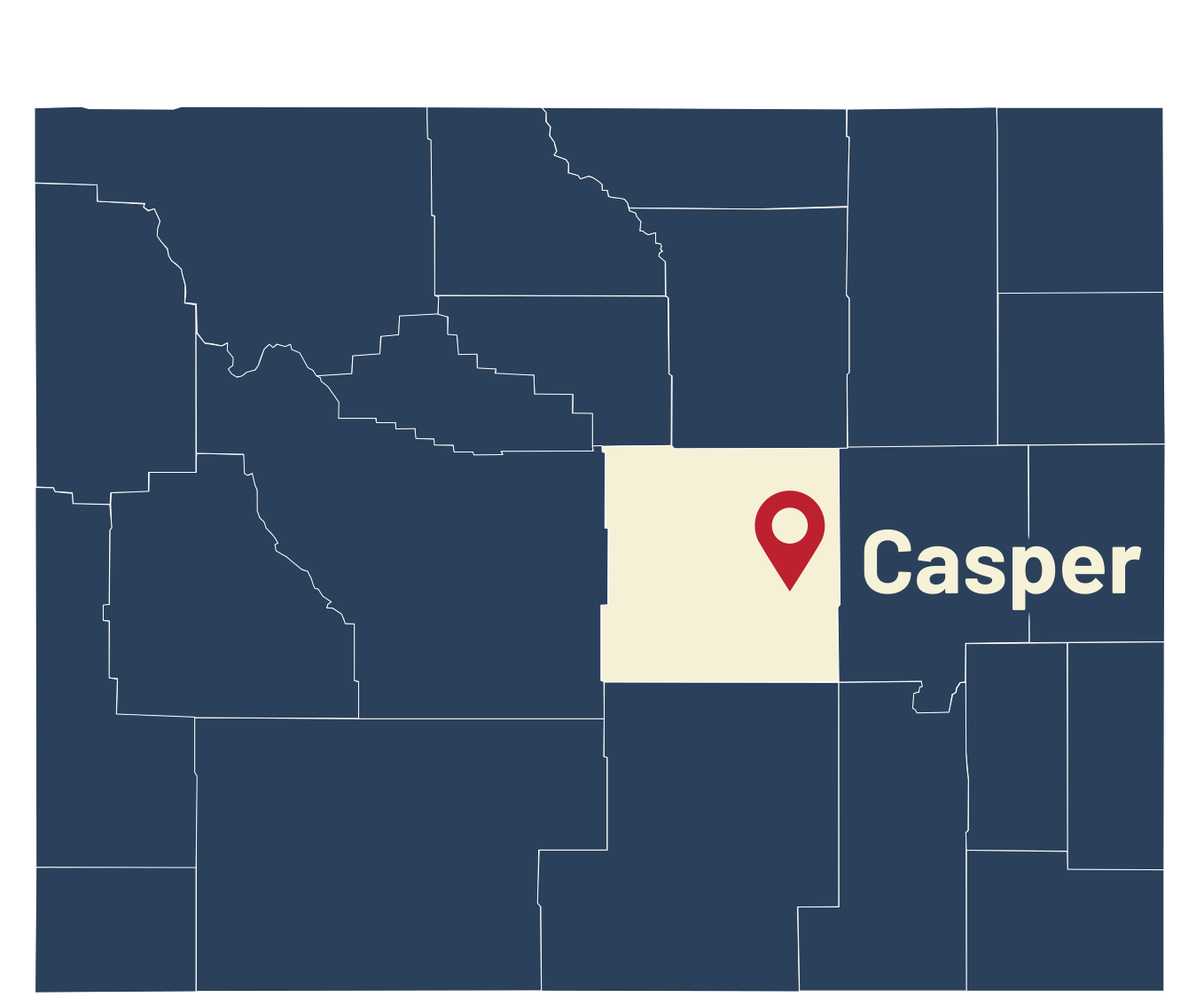
The museum will reopen with a special ceremony at 2 p.m. on May 16. It is located at 3740 Jourgensen Ave. adjacent to Casper/Natrona International Airport.
Woodward said with all the changes, the old 1942 club’s transformation will be “more welcoming” for those who have experienced the museum during a prior visit.
“They will know they’ve reached a museum,” he said.
Dale Killingbeck can be reached at dale@cowboystatedaily.com.