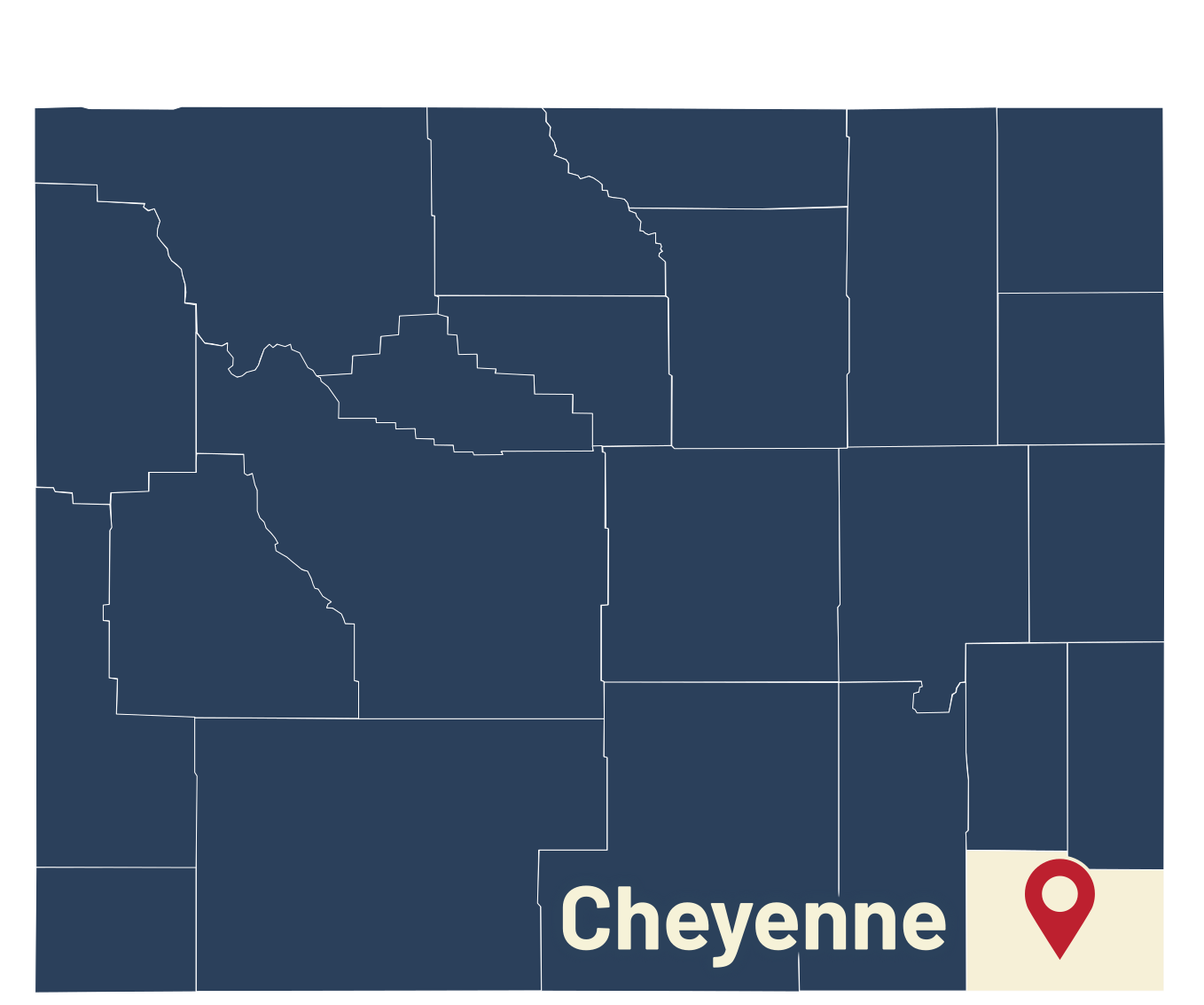

CHEYENNE — Residents of the south side of Cheyenne have been bullied repeatedly in the past.
Whether it was the Union Pacific Railroad or the federal government, stronger forces reduced its size over time, and inhibited its development.
The expansion of the railroad yards in the 1920s and the construction of Interstate-80 - with its dual viaducts - in the 1960s cost the historic district a school, a public library, a drug store, a grocery store and various small businesses, including tourist stops and restaurants.
According to history collected by the Wyoming State Historic Preservation Office, the district “embodies Cheyenne's ‘blue-collar’ side, contrasting sharply with the more upscale northern neighborhoods and commercial offerings across the tracks.”
“This isolation cultivated strong community cohesion among working-class residents, including multi-ethnic groups of railroad workers, craftsmen, and immigrants from Europe and Asia, who developed their own commercial ventures, churches, and cultural traditions independent of the city's northern sections. The barrier reinforced a sense of distinct identity, positioning the South Side as a hub for those tied to rail employment and manual labor.”
In the 1970s I wrote some stories for the Casper Star-Tribune about racial discrimination in Cheyenne.
The Capital City years earlier had a “red line” that ran east to west and barred African Americans from living north of it. The line was in place until after World War II.
Because of the red line, many African Americans and their VFW post located on the west side of Cheyenne.
Meanwhile, many Hispanics who worked for the railroad and later for the refinery, settled on the south side.
In the late 1970s, Johnson Junior High School, built on the south side in 1923, closed.
A company came forward with a plan to rehab the building into apartments for low-income people through the Section 8 voucher program.
The residents of the south side objected. They organized; they had been dumped upon enough.
A church group and other organizations now occupy the old school.
The south side district has changed radically since then with two high schools, six elementary schools and businesses that have moved south, as well as various residential housing developments for young families.
And so it is not surprising to see the uprising against a developer’s plan to build 800 units for 5,600 construction workers who will move here to build data centers.
According to accounts in Cowboy State Daily, the opponents object to the bump in crime and general disruption they expect from the influx of so many male workers.
But this plan may be way too big for any local group to stop.
Justin Arnold, Director of Laramie County Planning and Development, said the man camp is intended to serve projects developing in Cheyenne, including Meta, the proposed data center Jade and Cowboy Solar.
The applicant, Iron Guard, wants to build the man camp on unincorporated county land in the High Plains Business Park near the Meta data center under construction.
Without the camp the workers would come anyway and flood the housing and hotel markets.
The neighbors don’t like any of it.
In a letter to the Laramie County Planning Commission, Elizabeth Marvin said the neighborhood cannot handle the influx of so many people with only one grocery store and one urgent care center.
The neighborhood, she said, cannot absorb the influx of that many people.
Heather Madrid said man camps in similar locations have resulted in an increase in property, drug and violent crimes and DUIs.
"This area of town is under-served and under-resourced as it is. How do you plan to keep our community safe?” she asked, according to the Cowboy State Daily’s David Madison
And Maureen Clifton wrote that she felt the south side was targeted as the location because “the south side is low income and they could not fight it coming here, say like the north side of town who would get their lawyers involved in the opposition.”
The spokespeople for Iron Guard rebutted by saying that the south side provides suitable land for large-scale modular, or temporary, secure housing developments.
Growth in Cheyenne, meanwhile, is limited on the west by Warren Air Force Base and on the north by a large number of ranchettes. This leaves the south and east sides to accommodate an increasing number of data centers.
Maybe too many.
Contact Joan Barron at 307-632-2534 or jmbarron@bresnan.net