Iron Guard Housing has applied to build an 800-unit man camp on the prairie just outside Cheyenne large enough to house up to 5,600 construction workers and other skilled specialists.
The proposal is prompting complaints from neighbors and Laramie County officials to weigh whether consolidating that influx of temporary labor in one fenced compound is preferable to letting it spread across local rental and hotel markets.
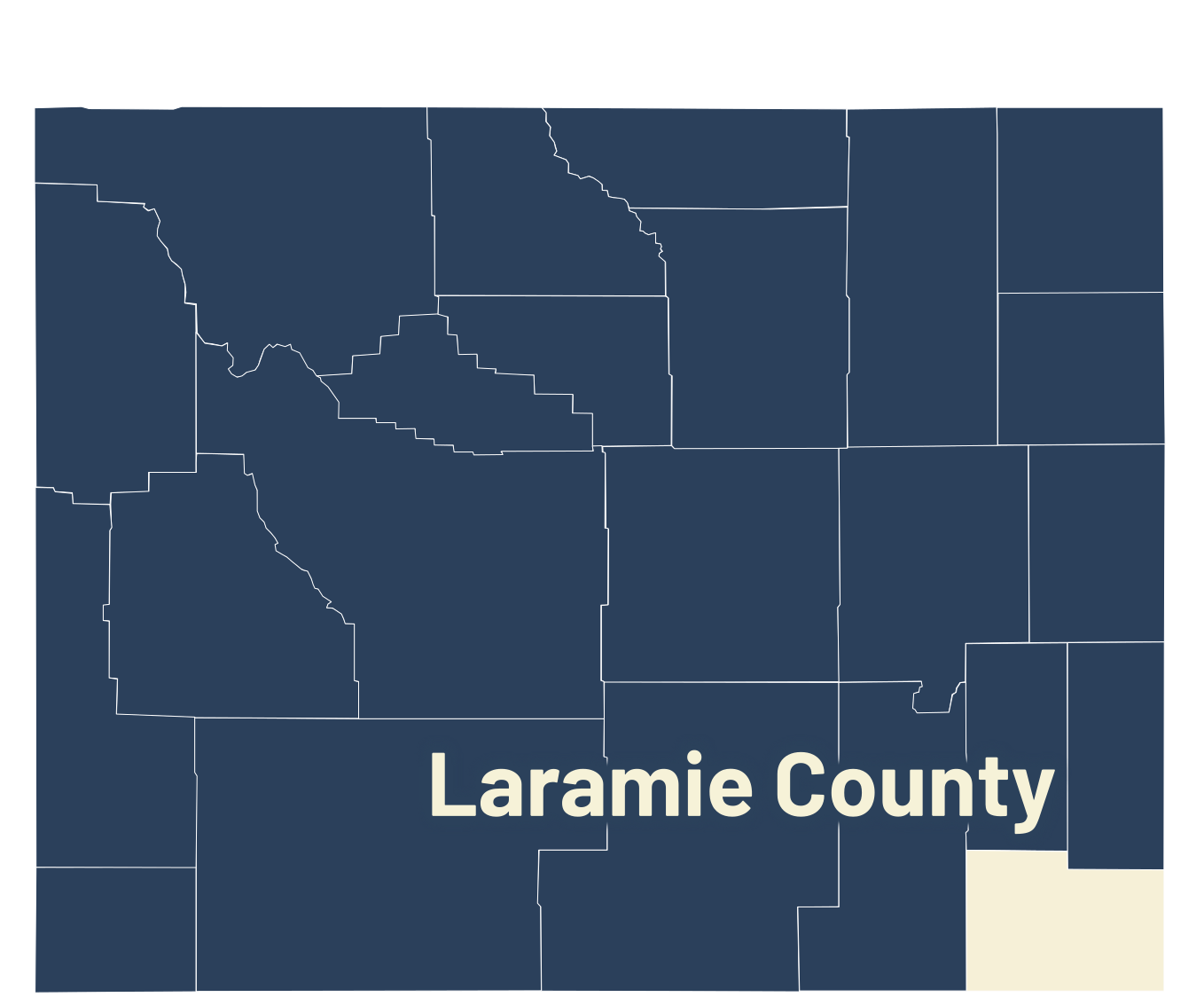
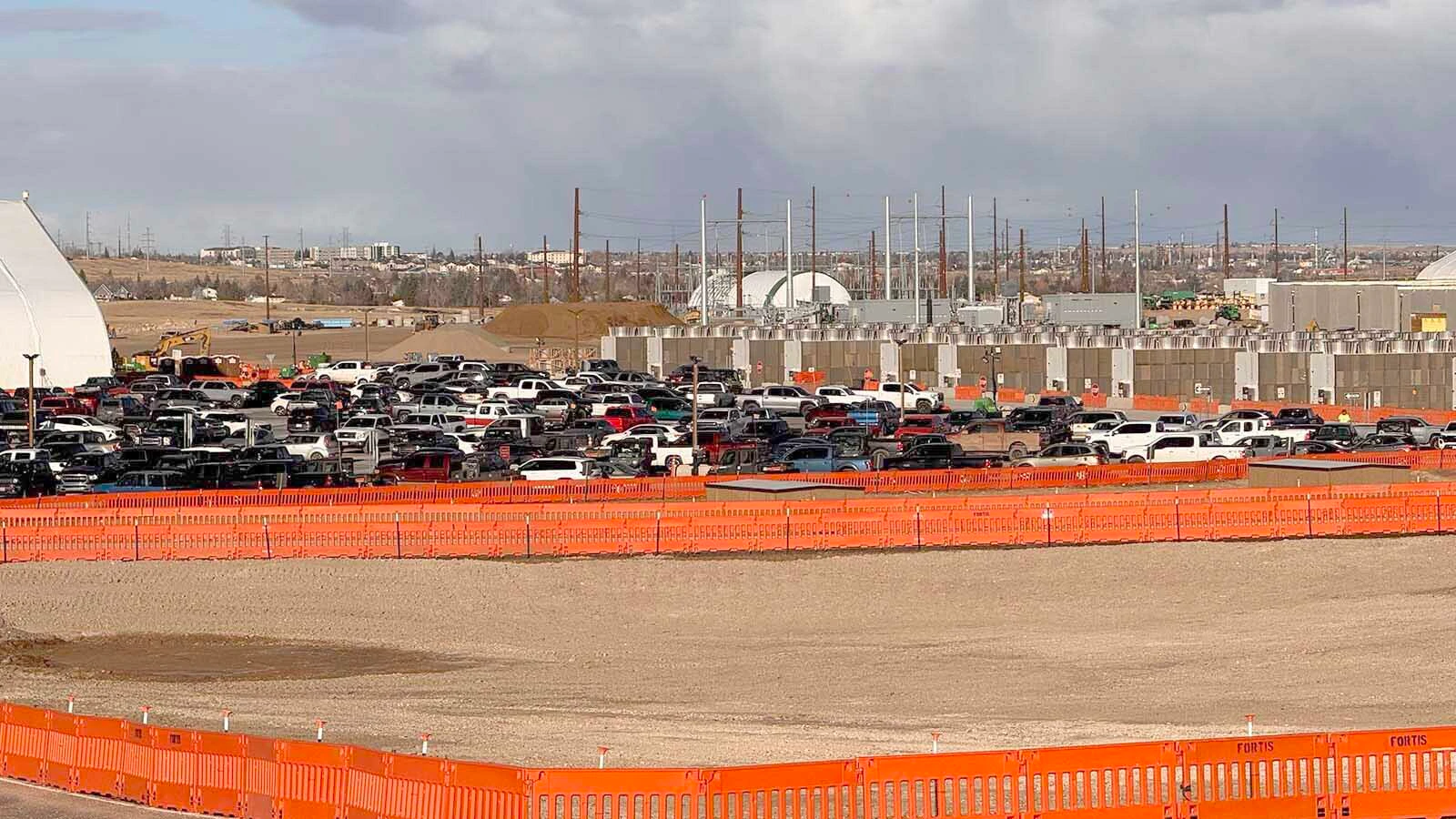
Filed by Palma Land Planning on behalf of Iron Guard, the application targets a parcel at 3312 York Avenue on unincorporated county land identified by the applicant as the High Plains Business Park. That’s also adjacent to the huge Meta data center already under construction.
No project of this scale has come through his office during his tenure, said Justin Arnold, director of Laramie County Planning and Development.
The camp is a response to several approved mega projects now converging on Cheyenne, including Meta, the proposed Project Jade data center and Cowboy Solar, he said.
"We don't want 10,000 to 12,000 people coming into the city of Cheyenne and or Laramie County, making six figures, because the people that are coming into that, this man camp, the vast majority, um, are going to be skilled laborers — i.e. they’re electricians, they're pipe fitters," Arnold said.
By his estimate, Project Jade alone could draw 7,500 to 10,000 workers, with several hundred more tied to Cowboy Solar.
"They're going to saturate our rental markets,” he said. "They’re going to saturate our housing markets, and they're going to saturate, um, our hotel markets, to the tune of thousands and thousands of workers."
The Iron Guard site sits roughly a mile and a half west of the future South High School and would be accessed from the south through Meta property rather than across residential streets, according to Arnold.
At full build-out, the campus would be fenced, fitted with credentialed access and operated under on-site rules, including a no-alcohol policy enforced by the developer.
True Scale
On March 25, a notice letter went out to adjacent landowners describing the application in stripped-down terms, telling recipients the project will "establish a secured, temporary, workforce housing campus serving contract workers supporting large-scale infrastructure construction projects in Laramie County."
The letter spells out three phases — up to 30 modular housing units containing a maximum of 210 dwelling units, then up to 150 RV spaces, then additional modular units "to reach the maximum campus capacity of 800 (units).”
The letter does not mention that each modular building is designed to hold seven people.
That omission is what Cheyenne Planning and Development Director Charles W. Bloom flagged in an April 2 email to Arnold.
"Their narrative is confusing as it doesn't clearly state that what they are calling is one unit is actually seven units which result in a total of over 5,750 beds (with the RV park)," Bloom wrote.
The neighbor letter, he added, "is fairly confusing and does not clearly state the full intent," and “the notice letter is circulating on social media, and it appears that the public may understand this as a smaller work camp."
Arnold confirmed each of the 800 modular structures would contain seven sleeping units of about 116 square feet each, he said.
Bloom's comments flag additional unresolved technical issues.
The application "does not currently address how fire protection standards would be met," he wrote, with "no mention of fire sprinkling systems, no fire hydrant plan, no secondary access."
Water and sewer service, landscaping, traffic analysis and building code compliance also remain open questions, and a proposed 10,000-gallon septic holding tank would likely trigger a state-level environmental review.
Bloom also raised a financial concern.
By his calculation, parking thousands of census-counted residents in unincorporated Laramie County would cost the city of Cheyenne roughly $46 million in lost per-capita funding over a decade.
He argued any path forward should route Iron Guard through the city's full planned unit development, site plan and annexation process.
Neighbor Backlash
In response to the neighbor letter, south-side resident Elizabeth Marvin told planners she was "extremely disappointed and angry" and "devastated that even the suggestion of building a work camp, that could house up to 1,600 men, would be considered."
The neighborhood, she said, cannot absorb the influx.
"There's only one grocery store on this side of town," Marvin wrote. "The next closest is Walmart clear over on Livingston off of I-80 east. There’s a single urgent care on this side of town. We don't have the infrastructure to support that many more people. We don't have the resources."
In an April 2 letter, Heather Madrid told planners the proposal echoes a similar fight from roughly a year ago, and listed traffic, utilities, public safety and property values as her chief concerns.
"Man camps in similar locations have led to an increase in property crime, DUI's, drug crimes, and violent crimes," Madrid wrote. "There are many schools in this area. Demographically, there are many single parent homes which means less supervision.
"This area of town is underserved and under-resourced as it is. How do you plan to keep our community safe?"
A third letter, sent April 4 by Maureen Clifton, told planners her basement has flooded with sewage twice since she moved in, most recently just months ago.
Hooking Iron Guard into the Board of Public Utilities, she said, would not fix the problem for existing homes.
"It feels like it is being proposed because perhaps the belief is, south side is low income and they could not fight it coming here, say like on the north side of town, who would get their lawyers involved in the opposition," Clifton wrote. "An 800 unit mancamp is not good for any part of town, and it is not a coincidence that this is not proposed on the northside of town where numerous more services exist."
County Counter
Arnold said he has read Bloom's email and met with him, but sees annexation differently.
"I'm not concerned about annexation. I'm not concerned about how taxation and all that stuff comes into play. That's a political thing. I'm a bureaucrat enforcing the land use regulations," Arnold said. "What I see is a need for housing now."
He said routing Iron Guard through the city would mean a planned unit development zone change and a fresh round of approvals that could push the project back a year and a half.
"We need housing yesterday," he said.
The technical concerns Bloom flagged — fire protection, water and sewer, building code — are addressed downstream in the commercial site plan process, not in the conditional use permit now before the planning commission, according to Arnold.
County regulations require a full commercial site plan, fire apparatus access meeting international fire code, grading and erosion permits and commercial building permits before any structure goes up.
Arnold said his broader concern is what happens to working Cheyenne residents if thousands of six-figure tradesmen enter the open rental market at once.
"I'm worried about the cashier at Safeway on South Greeley Highway, when his lease comes up for rent — and then he gets priced out by someone making $100,000," Arnold said.
The county's longer-term approach is to ask future data center developers to put workforce housing on site, outside the area the Board of Public Utilities has identified as serviceable for future residential expansion, he said.
Laramie County is bounded by 5-acre ranchettes to the north, leaving land south and east as the most feasible area to extend water and sewer for the denser housing Cheyenne will need a decade from now.
One More
On Line Avenue, near the Meta and Microsoft data center construction sites, Shelley Russell told planners April 3 the project would add to a commute she already finds difficult.
"This will already add to the hell that is my morning and evening commute every day," Russell wrote. "Tons of workers, trucks, dump trucks, cement trucks, and I could go on and on."
Russell described a recent prairie fire evacuation, writing that, "The semis and trucks racing out of Meta data center and Microsoft data was CRAZY!!!!"
Neighbors on Terry Ranch Road could not cross South Greeley Highway, she said, and ended up driving into Colorado to get out. The home she built in 2017, where she used to sit outside listening to meadowlarks, is one she now wants to sell.
The birds are gone, she said.
Whatever the planning commission and county commissioners ultimately decide, the underlying situation will not change, Arnold said. The data centers are approved. The workers are coming. The question is where they will live.
"I would rather have all these people living in a consolidated location where there's some oversight than disperse 10,000 to 12,000 people throughout our community in our markets," Arnold said.
A spokesperson for Iron Guard reached by Cowboy State Daily was unavailable for comment.
The Laramie County Planning Commission will hold a public hearing on the Iron Guard application May 14 at 3:30 p.m., with the Laramie County Board of County Commissioners scheduled to take it up June 2 at 3:30 p.m. Both hearings are set for 310 W. 19th Street, Suite 310, in Cheyenne.
Written comments are due to the planning department by May 4.
David Madison can be reached at david@cowboystatedaily.com.