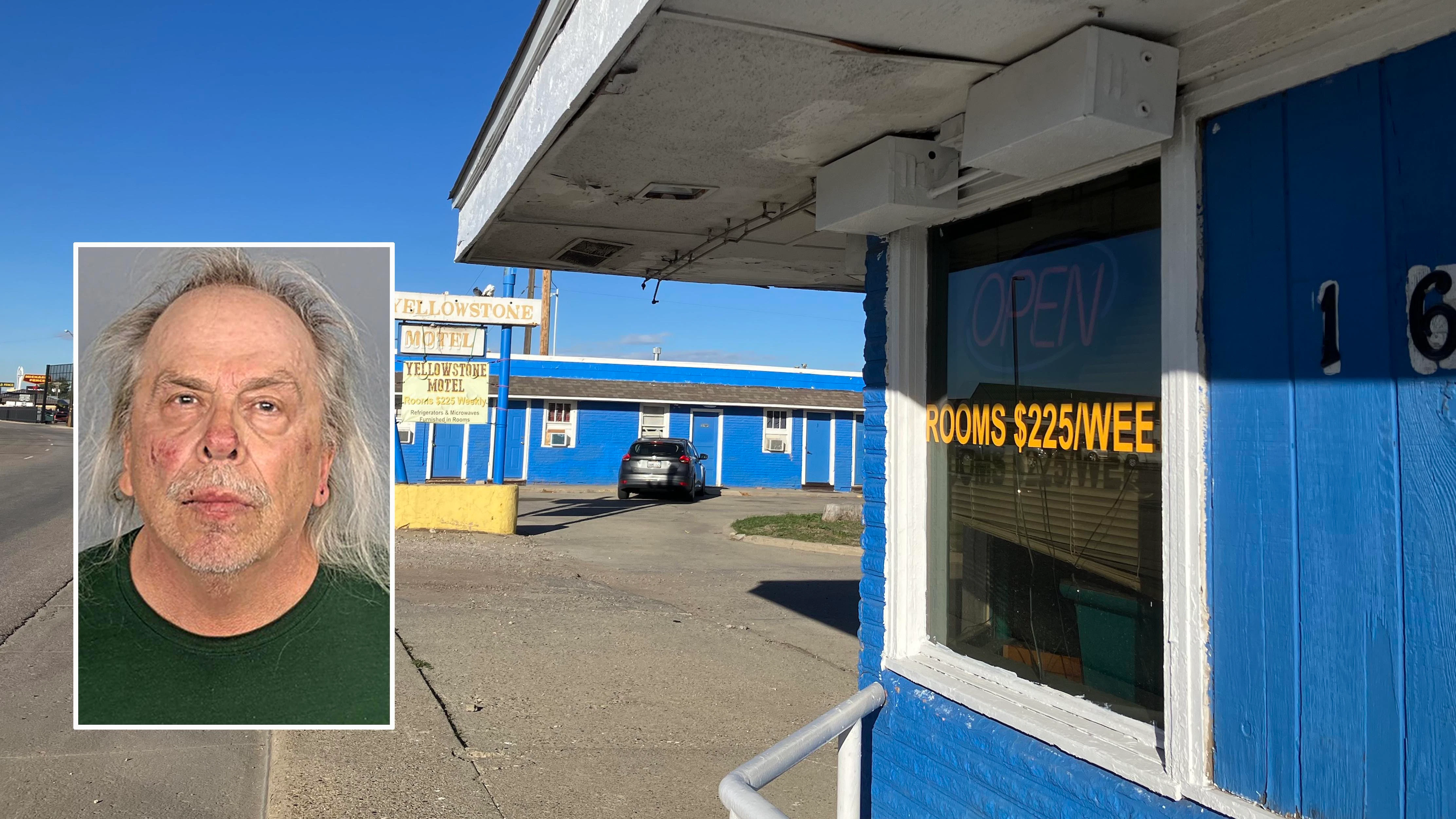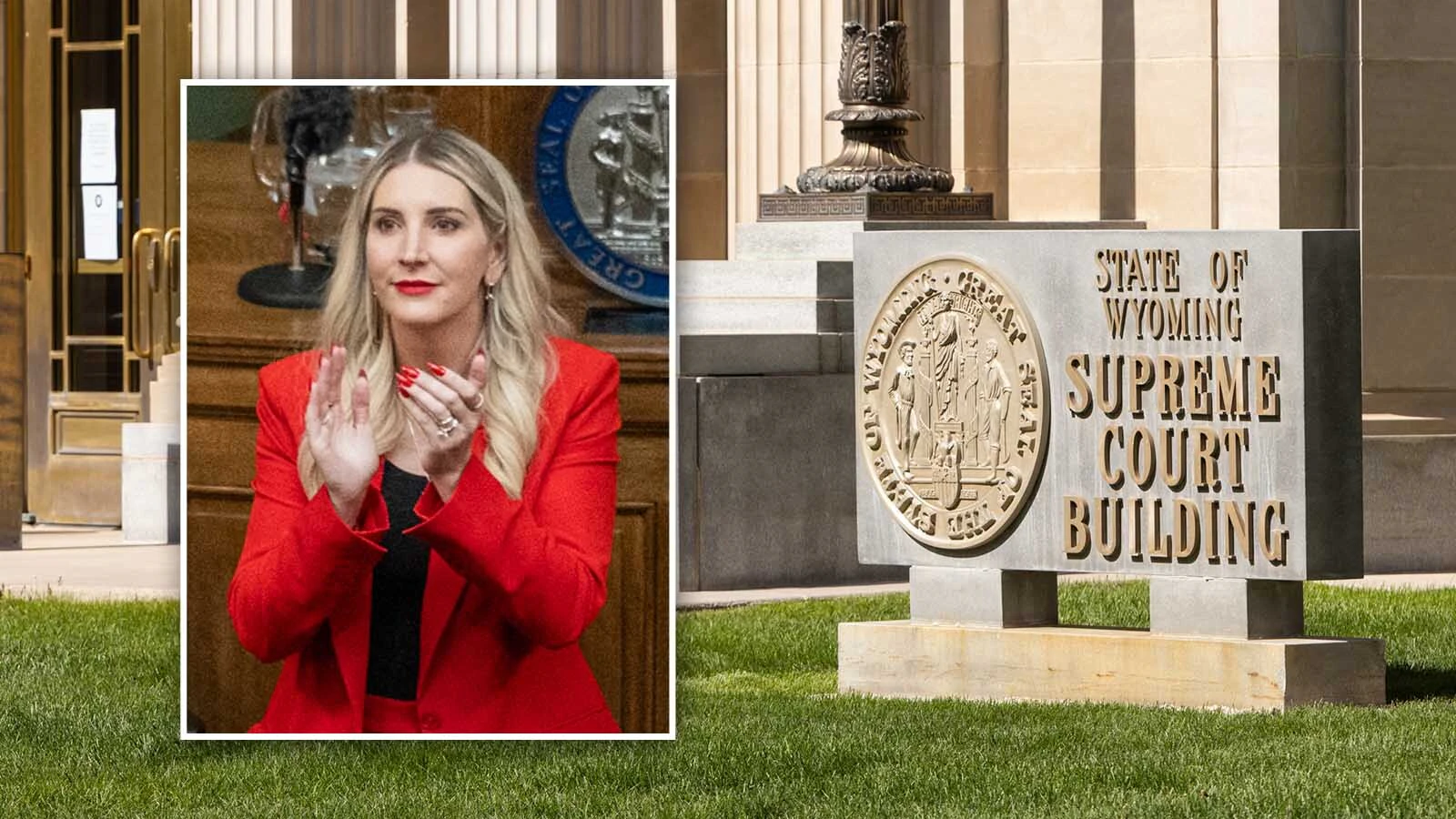
The Wyoming Supreme Court on Thursday overturned a Cheyenne-based judge’s temporary block on the state’s $50 million school choice program.
Laramie County District Court Judge Peter Froelicher abused his discretion by concluding that the Wyoming Education Association (WEA), which is a public school advocacy group, and a handful of teachers may suffer harm from the state's new school choice program, according to a unanimous Wyoming Supreme Court opinion by Chief Justice Lynne Boomgaarden.
Contrary to the lower court’s finding, WEA and the parents failed, rather, to show that the school-choice program could harm them in particular, the opinion says.
Boomgaarden, along with Justice Kari Gray, had grilled the Wyoming Education Association at length during the oral argument hearing on the case in February.
The high court sent the case back down into Froelicher’s court for further proceedings on whether the program is constitutional, and that challenge is ongoing.
In 2024 and 2025, the Wyoming Legislature crafted and funded the Steamboat Legacy Scholarship program, which sought to give $7,000 per family in public money to state-contractor held accounts, which then would transfer the money to approved private and homeschool programs for qualifying families.
The money was to be distributed on a first-come, first-served basis from a $50 million pot comprised of appropriations from two years. The Legislature budgeted that money from its checking account, called the “general fund,” rather than the accounts that fund public schools.
In the coming school year, Wyoming is paying an estimated $1.95 billion for K-12 public school, which is about $22,626 per student.
Degenfelder Thrilled
Wyoming Superintendent of Public Instruction Megan Degenfelder said Thursday she’s “thrilled by the unanimous decision” of the court and plans to restart the program immediately, while pursuing the ongoing case "diligently." She said interested parents can expect to see a call for applications or renewals ahead of the upcoming school year.
Though the district court hasn’t decided the case altogether, “this is an important step in allowing the program to proceed and for families to benefit in the meantime,” she said.
“This is a big win because the Wyoming Supreme Court made clear what we have known all along — this is not a school finance case,” she said.
Wyoming for more than 30 years has fought school finance cases, and courts have weighed in on whether the Legislature funds public education as well as it should.
“This is also a big win for Wyoming families and students who will enjoy expanded academic freedom and school choice as the ultimate decision on the case is made,” she said.
WEA Disappointed
WEA President Kim Amen voiced disappointment on the group’s behalf in a Thursday statement, and vowed to continue pursuing the case.
“WEA respects the Court’s opinion and its role in interpreting the law,” the statement says. “At the same time, this is a concerning result because it will allow, in the short term, public taxpayer funds to be spent on private schools — in conflict with the Wyoming Constitution — and not spent on the more than 95% of Wyoming students who attend public schools.”
The statement says Wyoming’s public schools “continue” to suffer.
“Right now, they are being told there is not enough money for student activities, athletics, music and arts programs, or nutrition services,” says WEA’s statement.
“Public schools serve every child who walks through their doors, regardless of background, ability, or circumstance,” the WEA continues. "These schools are at the center of Wyoming communities, and public education funding should reflect that priority.”
Back Up
Weeks before families were set to secure their first payments to private and homeschool programs in 2025, WEA and nine parents of public school children challenged the program in Laramie County District Court.
They said it would harm their children because many of them had individualized education plans, or identified as queer, nonbinary or transgender. And private schools don’t have to serve their children, while public schools do, they said.
The parents said they were unaware of any private school in their areas that would admit their children or be able to provide for their needs.
Froelicher blocked the program and its voucher payouts from going into effect, though he allowed the Superintendent of Public Instruction office to continue funding its administrative functions.
Nope, Not You In Particular
But the parents’ claims don’t prove the program could harm them, the high court countered in its Thursday ruling.
“A paragraph from the Plaintiffs’ complaint illustrates this point,” the opinion says, quoting where the parents said they “choose to send their children to public school” because of the federal services available there and what they called the “established, quality curriculum; certified teachers and other professionals; and public accountability” of public schools.
The parents said students like their children would be harmed by private schools rejecting them.
To get a law blocked during a case against it, however, plaintiffs have to show that the law can harm them in particular, said the high court.
“Their claim (that they’ll suffer) possible irreparable injury rests on the existence of policies they have not and do not intend to encounter,” says the opinion.
As for WEA’s claim that the law can harm it as well, that doesn’t survive this early phase of the case because the school choice money is coming from a different source than public school money, the high court reasoned.
“In other words, there is no possible injury to Plaintiffs simply because the Legislature could have spent this money on public schools — the same could be said of any legislative appropriation that does not go toward public education,” the opinion adds.
The public education advocacy group and parents had sued in June 2025 to block the Steamboat Legacy Scholarship program from going into effect.
The Probability Of Success
The fact that the parents and group challenging the program didn’t show how it could harm them in particular was enough to overturn Froelicher’s temporary block on the law, the opinion notes.
But Froelicher in his order of last summer had addressed the second category required for the injunction: whether the plaintiffs seemed likely to win the case on its merits.
Froelicher wrote that they did.
That’s because Article 3, Section 36 of the Wyoming Constitution bans legislative appropriations to entities not under the absolute control of the state. Froelicher reasoned that using the education superintendent’s office as a pass-through here could circumvent that requirement.
He also reasoned that the school-choice program may interfere with the challengers’ fundamental right to a proper public education.
“There can be no serious dispute that the Act is an aspect of the State's system for financing schools,” wrote Froelicher at the time.
The Wyoming Supreme Court has long treated the right to a quality education as a fundamental right.
It doesn’t always subject laws affecting that right to its most rigorous test, called strict scrutiny, Boomgaarden wrote in Thursday’s opinion.
Just Gonna Prod This One A Little
Boomgaarden’s unanimous court declined to say who should win this case.
But a couple of Froelicher’s points calling WEA and the public-school parents were likely to win “warrant mention,” the opinion says.
The first is that, “while the fundamental right to education is well-established, as with any other fundamental right, strict scrutiny only applies if the right is infringed," it adds.
Boomgaarden wrote that the parents failed to allege, and “the district court” — Froelicher — failed to explain how the school choice program infringes on the families’ right to education.
Next, the opinion addresses the Wyoming Constitution’s ban on the Legislature sending money to entities not under its control. That mandate has an exception for the “necessary support of the poor.” There’s a later carveout for economic development as well.
The high court’s Thursday opinion stresses that the court has to interpret “the plain and unambiguous language” of the Wyoming Constitution, and the Legislature has sent its school choice money to the office of the schools superintendent. That office is under the Legislature’s control.
Because the plaintiffs didn’t show how that language may be ambiguous, “we question the court’s authority to venture beyond Art 3, (section) 36’s plain language,” says the opinion.
It concludes: “We reverse and remand for further proceedings consistent with this opinion."
'Fantastic News'
Thomas Fisher, of Ed Choice Legal Advocate, called the remand a “fantastic victory for Wyoming parents looking for better ways to educate their kids,” in a Thursday phone interview with Cowboy State Daily.
Fisher represented a couple and another parent who sought to benefit from the program and send their kids to alternate non-public schooling options.
Those parents are gearing up to reapply for the scholarships, he said.
Fisher had engaged in an intense back-and-forth with justices at the oral argument hearing.
"This ruling dissolves the district court's ill-considered injunction and recognizes that the (school choice) program benefits many families, and poses no threats at all to public-school funding," said Fisher. "The court says this is just not a school finance case, which is what the plaintiffs had tried to make it out to be."
Clair McFarland can be reached at clair@cowboystatedaily.com.