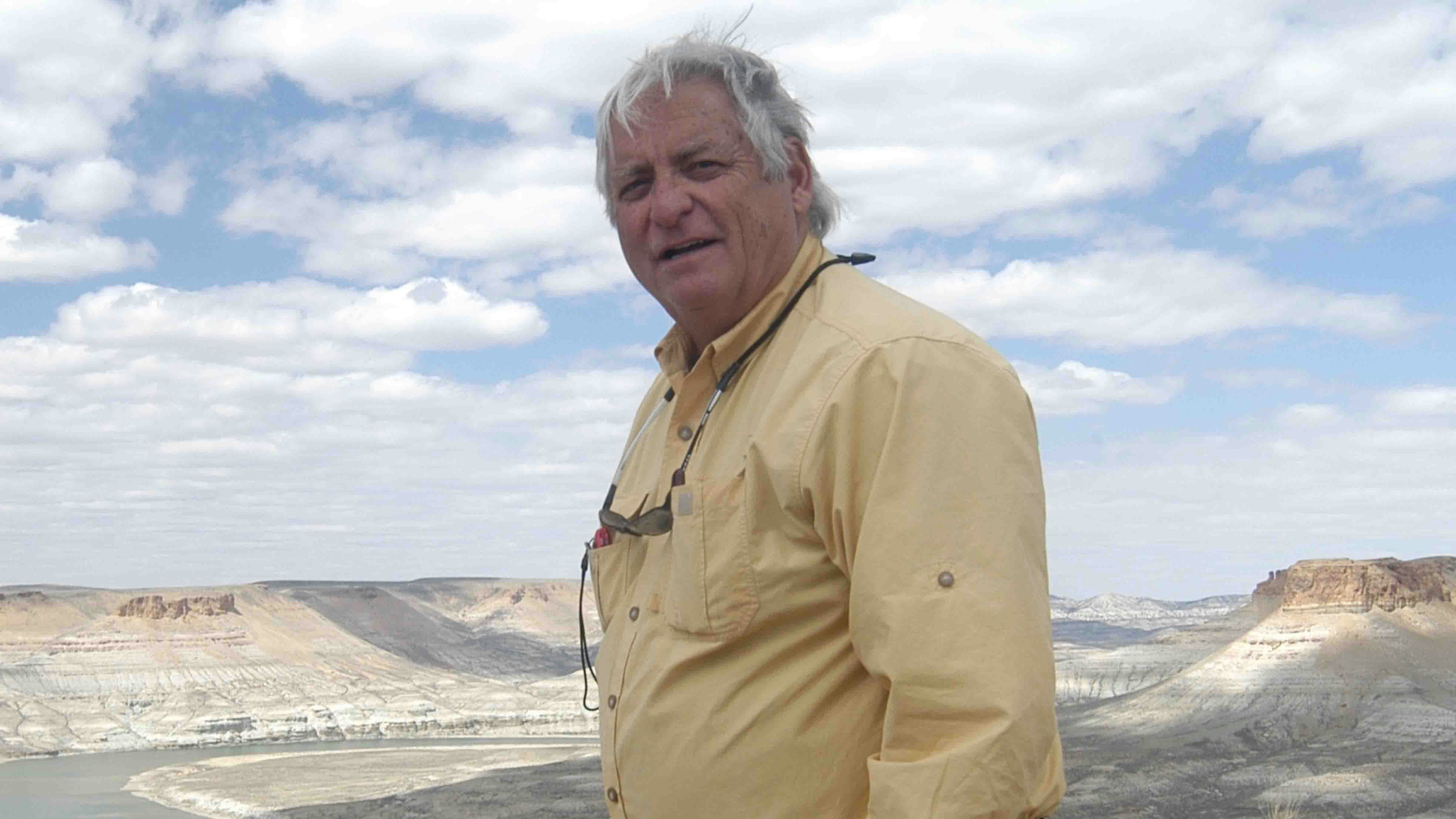
As the new editor-publisher of the Lander Wyoming State Journal in September 1970, I walked straight into the most notorious murder trial in the town’s history.
I was 24, the youngest person on staff, and the fifth publisher in just two years at a struggling twice-weekly newspaper. It was my dream job. I always wanted to be the boss.
But this story? It was overwhelming. And I had no one on staff equipped to handle something this big.
Set The Scene
In November, 1968, during Homecoming, a 17-year-old boy named Craig Sims stabbed two girls to death: Vicki Mather, 16, and Dee Ann Smith, 15. He dumped their bodies along Tweed Lane, three miles outside town. They were not found until the following Easter.
The crime shook Lander to its core. It also split the town.
On one side were the town’s established leaders. On the other were the blue-collar mining families who made up much of the population. That may be an oversimplification, but the divide felt real.
Among working families, there was deep concern that the accused, from a prominent family, might somehow “get off.”
Everywhere I went, people asked me the same question: Whose side are you on?
Side? I had just arrived. Back in Iowa, I had never covered a murder trial, let alone one like this.
Trying To Cover It
To make matters worse, the trial had been moved 114 miles north to Worland. We were so short-handed there was no way I could go cover it myself.
Fortunately, our pressman, Stan Rice, doubled as a capable photographer. On a day off from the press, he drove to Worland and came back with a good photo of Sims and his attorney, John Vidakovich.
Beyond that, we relied heavily on the Casper Star-Tribune, the Riverton Ranger, and wire services for daily coverage. I filled in gaps by calling sources in Lander. Compared to the big papers, our coverage was thin.
Truth be told, under normal circumstances we struggled just to get the paper out twice a week. Our equipment was outdated. Our staff was green. Trying to cover the biggest story in town history at the same time? That was asking a lot.
The Backstory
A recent story by Dale Killingbeck in Cowboy State Daily brought it all back. He described a community caught up in the turbulence of the late 1960s: drugs, drinking, and cultural change even in a small Wyoming town.
It was 1968. Vietnam was raging. Assassinations of Bobby Kennedy and Martin Luther King Jr. filled the headlines. “Hey Jude” by the Beatles was on the radio.
And in Lander, two teenage girls vanished after a homecoming rally.
Buzz Thurber, 75, was senior class president back in those days. “There was a lot of drugs and drinking going on with the high school crowd,” he said, now a Las Vegas resident. “Lander was well ahead of everyone else in the state of Wyoming. We were well-known for drug possession.”
A Divided Town
Sims’ father was a well-respected local businessman. He owned one of the largest contracting companies in the state. He was well-connected and spared no expense defending his son.
Meanwhile, Lander was the most mining-centric town in the state. The U.S. Steel iron ore mine employed more than 550 people and dominated local life. The miners made good money through their United Steelworkers Union contracts and life was good. Until it wasn’t.
Union members came into the newspaper office wanting to talk to the editor. That would be me. They were questioning our coverage. They worried their kids wouldn’t get a fair shake compared to “the rich kid.” They wanted justice. It was new territory for me. I did my best.
Looking back, our coverage was fair. But like most coverage in a situation like that, it probably upset both sides.
The Outcome
Sims was sentenced to 35 to 50 years in prison.
But later, his sentence was commuted by Gov. Ed Herschler. That stunned the community and reinforced what many working families had feared all along, that the system favored the well-connected.
Sims’ prison sentence was reduced by Herschler to a nine-year minimum term in July 1979 and Sims was sent to a psychiatric center in Denver.
Sims was out of the hospital and able to be a pallbearer at his grandmother’s funeral in October 1982. Sims’s sentence was commuted by Herschler on Dec. 5, 1986, to time served.
At the time, I was as surprised as anyone. There was never a satisfying explanation.
Sims died of natural causes three years later.
Looking Back
Reading Killingbeck’s story brought back a flood of memories.
I was just a young editor, wet behind the ears, trying to navigate one of the biggest stories of my career with limited tools and even less experience.
It was my trial by fire. And I never forgot it.
Bill can be reached at bill@cowboystatedaily.com