Tax Day is here. For most Americans, it's the single most hated day of the year. It's not hard to see why.
Americans will collectively spend almost 12 billion hours of uncompensated time preparing their income tax returns this year, on top of the $2.66 trillion they will fork over to the federal government.
I recently took some time and put pencil to paper to figure out how much of my income I lost to the government overlords.
Between federal and state income taxes, property taxes, sales taxes, gas taxes and all the hidden fees, I "voluntarily" give the government more than half of my income -- which probably tracks with many Americans.
The IRS labels me as a self-employed individual. That's nonsense. If more than half of my income goes to the government, then I must be a government employee. And, in that way, so are most Americans.
There's another day that falls on April 15: Tax Freedom Day. That's when the average American finally earns enough to pay the tax man all their combined taxes for the year.
Or, stated more optimistically, Tax Freedom Day is the day when you start to keep the fruits of your hard-earned labor.
In Sweden, Belgium, France and Denmark, Tax Freedom Day falls somewhere between June 10 and June 22. It's hard to remember when Americans thought that being just marginally less burdened by an overbearing government was a win.
To ease the pain, but not the affliction, in 1943 the government started withholding money from wage earners' paychecks. Washington bureaucrats believed that death by a thousand cuts is better than a swift decapitation.
Having employers direct-deposit our monthly wages makes us even more clueless about how much the government takes. Today 45% of Americans say they don't know how much is withheld from their paycheck.
The money the government will collect is already appropriated, and - spoiler -- it's not pretty. This year the U.S. will run a projected $1.85 trillion deficit, equal to nearly 6% of our country's total GDP.
Said another way, lawmakers will spend over $1.35 for every dollar they collect, driving up the federal deficit -- which surpassed $39 trillion last month, a new high. Experts estimate that the national debt will exceed $40 trillion by this fall.
Servicing that debt will cost $425 billion this year -- the third-highest federal outlay behind only Social Security and Medicare.
For ordinary taxpayers, that means almost 20 cents of every dollar the federal government takes out of their wallet will be used to pay the interest on Washington's overdrawn credit card. And unless lawmakers have a come-to-Jesus moment, it's only going to get worse.
The nonpartisan Congressional Budget Office forecasts that the annual deficit -- the difference between what Washington collects and what it spends each year -- will increase from $1.9 trillion in 2026 to an average of $2.4 trillion annually over the next decade, adding over $24 trillion to our country's debt load.
Worst of all, we are borrowing on our children's and grandchildren's future -- digging a hole they may not be able to climb out from under, if we do nothing.
This intergenerational debt transfer means that, as the Peter G. Peterson Institute puts it, instead of investing in their future, they will be paying for our past.
The left has no interest in getting this problem under control.
Their tax-and-redistribute strategy consolidates power in government, giving them greater control over the public and reinforcing their aspirations of turning the United States into a socialist country.
But as British Prime Minister Margaret Thatcher famously explained it, "The problem with socialism is that you eventually run out of other people's money."
That's the path Washington is on; it's running out of your money.
As a country, we can no longer afford to kick the can down the road. Policymakers must get serious about cutting spending -- not with a scalpel but with a chainsaw.
President Donald Trump's Department of Government Efficiency initiative was well intentioned but short-lived. Washington needs real, lasting reform that puts all entitlements on the table.
This week, millions of honest, hard-working Americans will file their tax returns. They should rightfully ask where's it going. Unfortunately, the answer is, by and large, nowhere that will make their life better.
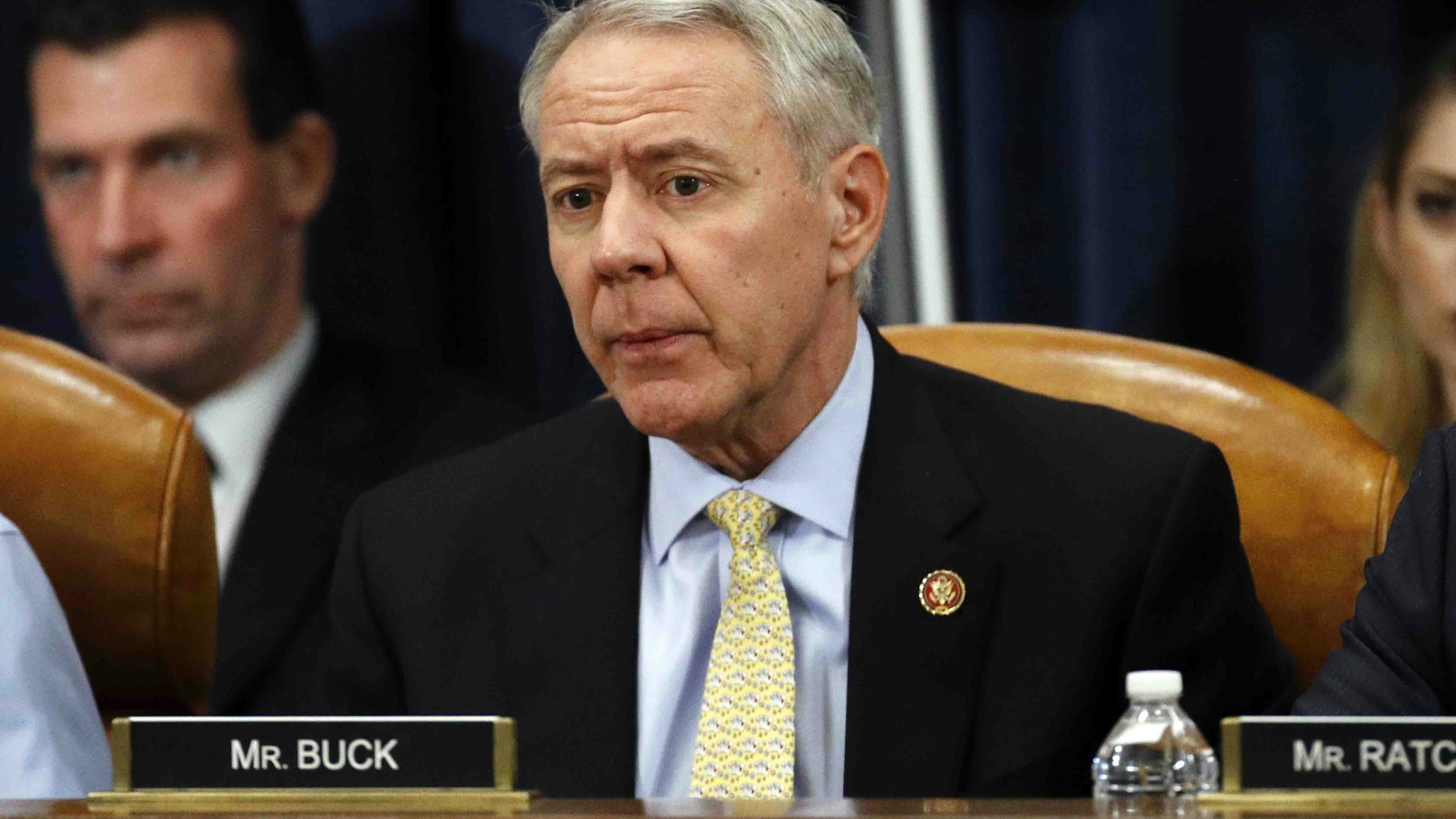
Ken Buck received his law degree from the University of Wyoming and served in the United States House of Representatives from 2015-2024 representing Colorado's 4th congressional district.