
An old observation holds that England and America are two nations separated by a common language. Something similar is happening inside the Wyoming Republican Party.
Wyoming Republicans still use the same words.
Liberty. Limited government. Local control. Accountability. Republican.
The problem isn’t the vocabulary. The problem is the meaning underneath it.
Last week, I compared the Wyoming Republican Party platforms from 1994 and 2026. Both were conservative. Both used words familiar to Wyoming Republicans.
But the difference was hard to miss. The 1994 platform sounded like a party preparing to govern Wyoming. The 2026 platform sounded like a party defining who counts as Republican.
That shift explains a great deal about why so many Republicans now talk past each other.
Long-time Wyoming Republicans often see themselves as the Republican base.
They register Republican. They vote in primaries. They support GOP candidates. They believe in property rights, low taxes, gun rights, local control, natural resources, family, work, personal responsibility, and competent government.
They don’t see themselves as moderates. They see themselves as practical conservatives.
The current party-structure majority also sees itself as conservative, but from a different starting point.
They see themselves as the people who showed up when others stayed home. They believe the Republican label needs defending. They view platforms, bylaws, resolutions, county committees, and conventions as tools for party accountability.
That difference matters because both groups often use the same language while meaning different things.
Take liberty.
For many long-time Wyoming Republicans, liberty means being left alone. It means owning your property, running your business, raising your family, worshiping as you choose, and trusting local judgment.
For the party-structure majority, liberty often means defending a defined constitutional, religious, cultural, and moral order against institutions the party stalwarts believe threaten it.
Both say liberty. They aren’t always talking about the same thing.
Take local control.
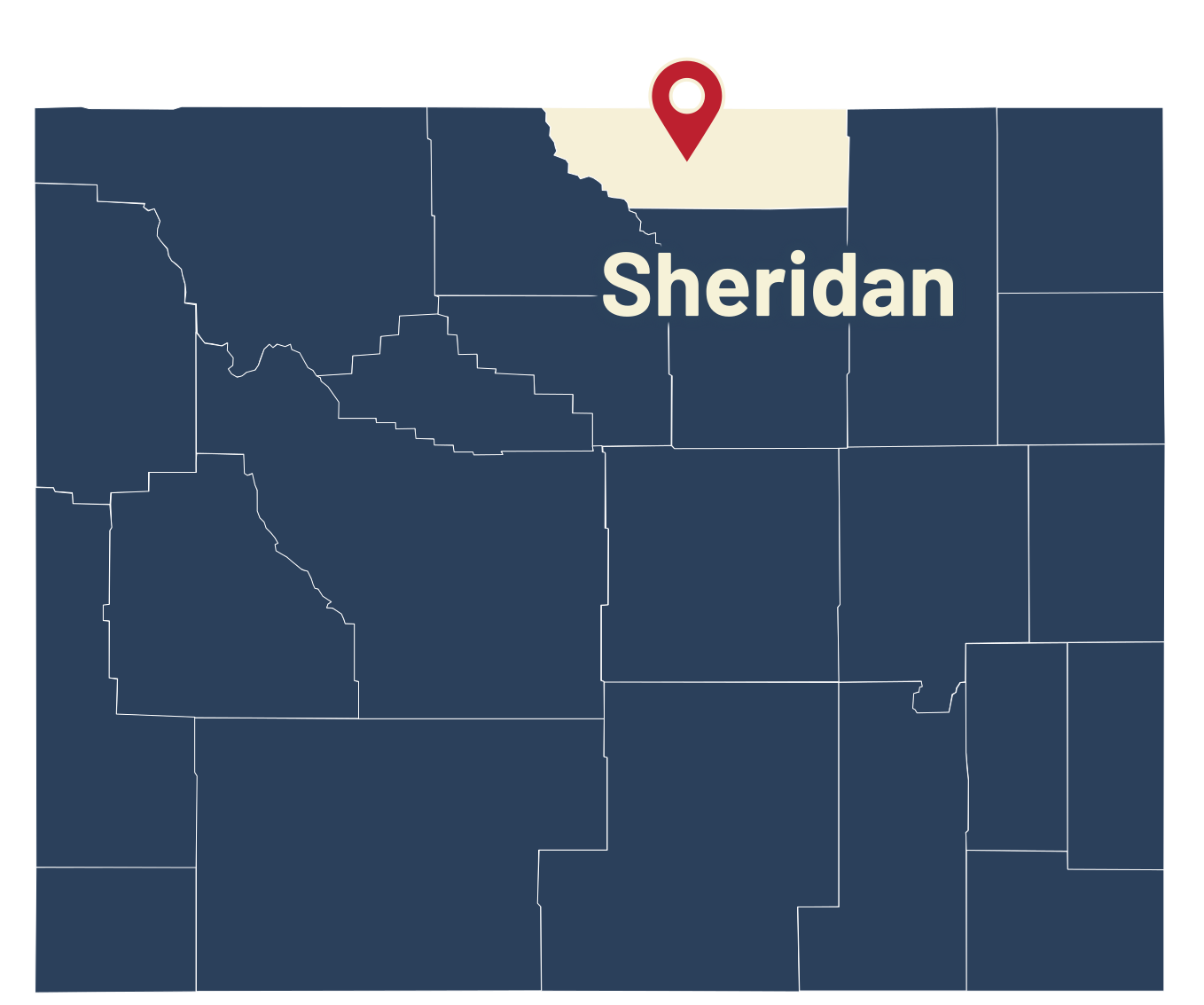
For many Wyoming Republicans, local control means county clerks, school boards, town councils, county commissioners, and local voters making decisions close to home. It means people in Sheridan, Greybull, Torrington, Kemmerer, and Lusk know their own communities better than distant officials do.
For party-structure activists, local control often means precinct people, county parties, delegates, and party officers exercising authority inside the Republican structure, ultimately to bend those local board officials to the party’s dogma.
Again, same words. Different meaning.
Take Republican.
For many voters, Republican means the people who register Republican, vote Republican, support GOP candidates, and expect elected officials to use judgment once in office.
For the party structure, “Republican” increasingly means alignment with the platform and loyalty to the formal organization.
That’s where the fight becomes more than a family argument. It becomes a fight over ownership.
Does the Party belong to Republican voters? Or do Republican voters belong to the Party structure?
Take accountability.
For many voters, accountability happens at the ballot box. Candidates make their case. Voters decide. Winners go to Cheyenne or Washington with the responsibility to listen, learn, and govern.
For party-structure activists, accountability also happens before the election, through platform tests, endorsements, financial support, and internal rules.
One group hears “accountability” and thinks voters should decide.
The other hears “accountability” and thinks candidates should answer to the platform before voters see the ballot.
Neither side changes this by complaining on Facebook. Definitions become power when they move into bylaws, platforms, resolutions, endorsements, convention votes, and county party leadership.
Here’s where the conversation becomes practical.
The platform didn’t write itself. The bylaws didn’t pass themselves. Resolutions didn’t adopt themselves. County and state party officers didn’t elect themselves.
People did those things.
People filed. People attended meetings. People became delegates. People voted. People stayed in the room.
That’s how party direction changes.
Precinct positions are the entry point into that structure. They shape county parties, which select delegates, who vote on platforms, bylaws, and leadership at the state convention. Those decisions shape the State Central Committee and the direction of the Party.
So if the broad, practical, Wyoming-centered Republican Party reflected in 1994 sounds more like you, voting in the primary isn’t enough.
Voting chooses candidates. Party positions shape the Party’s tenets, which its stalwarts now brandish as a litmus test.
The 1994 platform recognized room for disagreement on hard issues. It reflected a party broad enough to debate and confident enough to govern.
This is a call for Republicans who still believe in broad, practical, Wyoming conservatism to act like the Party belongs to them, too.
If you want a party grounded in Wyoming communities, local judgment, competent government, and real conservative values, take the seat. Show up. Vote inside the structure.
The people who define the Party are the people who file, attend, and stay.
File for precinct before May 29.
Gail Symons can be reached at: GailSymons@mac.com