
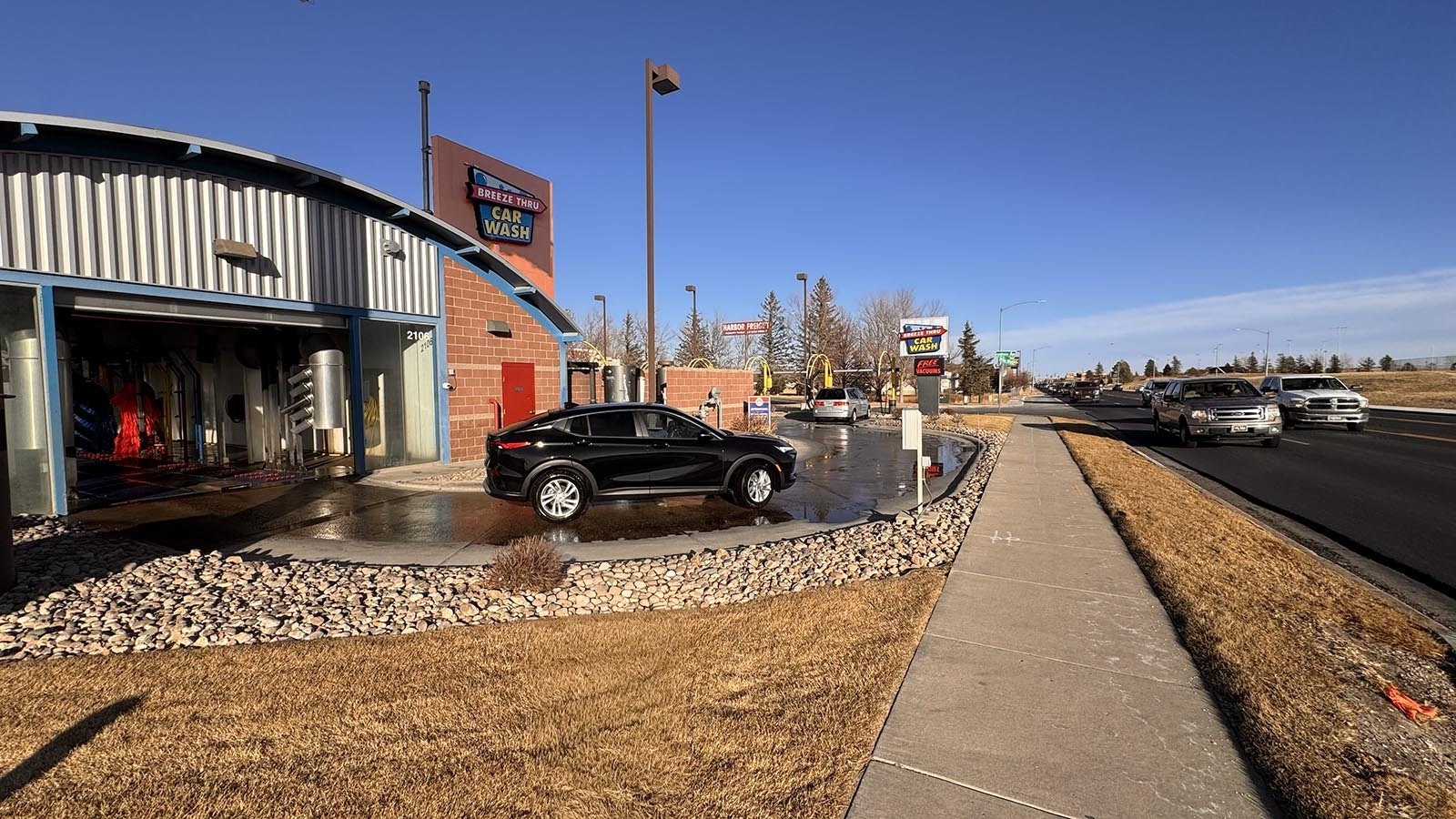
Wyoming’s winter has been a bust so far. After record highs at the end of December, the latest numbers show just how mild it’s been across Wyoming.
According to the National Weather Service (NWS) office in Riverton, most west-central Wyoming communities experienced their warmest winter ever between Dec. 1 and Jan. 31 in recorded history, by a significant margin.
Greybull had its warmest winter by 11.5 degrees, and Lander by 12.3 degrees, with records dating back to 1891.
Riverton and Big Piney topped the list with average temperatures that were at least 13 degrees warmer than normal.
“I would not blame anybody who has thrown in the towel on winter, because it’s for good reason,” said Cowboy State Daily meteorologist Don Day. “If we don’t see a change soon, that's going to be a huge concern, and I'm certainly in fear that it could happen.”
The good (or at least better) news is that the change seems to be on its way. The Groundhog Day prognosis is positive.
“Punxsutawney Phil saw his shadow for six more weeks of winter, but we haven't had any winter so far,” Day said. “I don't want to jinx anything, but perhaps what he's seen is that we're finally going to get six weeks of winter.”
Self-Fulfilling Prophecy
Meteorologist Noah Myers with NWS Riverton confirmed that the 2025-2026 winter season has been the “warmest” across most of western and central Wyoming.
“Some winters are warmer than others, but this one certainly stands out,” he said.
The NWS office in Cheyenne didn’t see anything record-breaking highs, but there’s no denying the warmer-than-average trend. Cheyenne was over 2 degrees warmer than average in January, while Laramie and Rawlins were almost 5 degrees warmer than average.
Laramie and Rawlins also set records for their ninth-driest January. That’s encouraging.
Myers said two dominant factors have kept Wyoming’s winter this warm: a lack of snow and a lack of cold air.
“Snow keeps temperatures down,” he said. “When we get early-season snowstorms, we stay much colder than we would otherwise. Without that snow, we just can't stay that cold.”
It’s not that the winter season forecasted by Wyoming and western meteorologists hasn’t come to fruition. It’s just missed the mark.
“Most of the winter storm systems have been going east,” Myers said. “The western U.S. has been, on average, warmer than normal, but that’s opposite as you get into the Midwest and eastern states. There were snow flurries in Florida in the last week.”
Without snow on the ground, the air over Wyoming has gotten warmer than average. That warmth has prevented cold, moist air from reaching the Rocky Mountain Region, keeping it warmer and drier than average.
“It just seems intuitive, but we are not having a normal winter,” Myers said.
Groundhog Gamble
Lander Lil and Punxsutawney Phil both saw their shadows (and another 10 years of election campaign season) this Groundhog Day. Meteorologically, that means nothing, but Day sees something bright in the shadow.
“All I can tell you is what the data shows,” he said. “The data suggests strongly, not weakly, that we’ve got a phase change coming next week, and it should stick around. We could have some really cold weather in February before the month's over.”
Long-range weather modelling suggests the high-pressure systems that have sent Wyoming’s weather 300 miles off course are weakening. That will leave the Rockies wide open for cold Arctic air to move in.
It’s not the first time that’s happened this season. Day said similar circumstances have aligned, but the western U.S. was blocked by “logjams” in the Jetstream that funneled the snow and subzero temperatures eastward.
“I’m losing count of the polar vortexes we’ve missed since November,” he said. “We build up a lot of cold in the northern latitudes, and we wait for the trigger to send it south. But we’ve been stuck in a pattern where every time the Arctic air reloads, it keeps going to the same place. That’s how you get snow in Florida and Georgia but none in Utah.”
Salt Lake City, Utah, received less than a tenth of an inch of snow this winter season. That’s the lowest snow amount on record.
Day compared this winter season to a slot machine, and Wyoming’s been on a losing streak.
“You're pulling the slot machine, the pattern’s resetting, and all you're getting is the bar with the X in the middle,” he said. “Every time we've pulled the lever, it's triple seven for the central and eastern United States, and the West keeps losing its quarter. You're not even getting that cherry that lets you get the extra turn.”
Quality Over Quantity
Meteorologically speaking, the 2025-2026 winter season is two-thirds done. With a month and a half left before spring, can any winter weather make up for the warmer-than-average winter in Wyoming?
That depends on what makes it to Wyoming. Both Day and Myers agreed that Wyoming will trend cooler in February, but there are many variables to consider.
“It will get colder before the month's over,” Day said. “What we want to root for is moisture. We need the precipitation.”
Getting more snow in February will be a mixed bag for many. Skiers, snowmobilers, and ice fishermen might be out of luck, but ranchers could make the most of “the silver lining,” according to Day.
“Ranchers want grass this spring,” he said. “Ask any rancher, and they’ll want a foot of very heavy, wet snow that shows up and disappears in a day rather than two days or three days of rain. We want that wet, heavy snow, and that appears to be the case in the next few weeks.”
Myers, meanwhile, was less optimistic. Even if Wyoming gets smothered in snow throughout February, conditions have progressed to the point where it’s overall unfavorable for it to accumulate.
“We’ve missed the mark to have really cold weather with snow on the ground in December and January,” he said. “We could have some big snowstorms that bring us back up to around average precipitation, but my best guess is that when it's all done, we'll still have above-average temperatures.”
Anyone looking for a glimmer of hope need only look up. Wyoming’s mountain snowpack is still doing fairly well, at or above average for this time of year, and that’s what counts when it comes to the rest of the water year.
“The mountains in central and western Wyoming are doing alright,” Myers said. “If people are concerned, I'd encourage them to look at the snowpack in the mountains, because that’s trending well.”
The Cusp
When it comes to weather, “next week” is still a long way off. Even with promising weather modelling suggesting a shift, Wyoming’s clock is ticking.
After months of above-average temperatures and below-average precipitation, February will be a critical month for the 2025-2026 winter season. Meteorologists aren’t concerned yet, but they’re watching with a lot of anticipation.
“We're really at that cusp,” Day said. “If we don’t see this phase change next week, that can continue into March, that's going to be a huge concern for the rest of the year. I'm certainly in fear that that'll happen, but the data suggests otherwise, but it starts next week.”
Andrew Rossi can be reached at arossi@cowboystatedaily.com.


