
George Jetson was a fantasy version of a world of robots that make our lives easier. Flying robot cars that take us to work, household robots that keep our houses clean, and maybe robots that can pave our roads at far less expense than human crews do today.
Wyoming faces a $400 million to $600 million budget shortfall for road repair, something officials have said is caused by a combination of factors, ranging from rising material costs to stagnant revenue, given that the last fuel tax increase was in 2013.
Could robots do the work faster and more cheaply?
Posing the question to several artificial intelligence engines, the answers were unequivocally enthusiastic, confidently certain that a George Jetson future for road repair is a few short years away.
By 2030, AI cheerfully predicted, roads will be repaired by zero-human fleets. Not only that, but these fleets would finish projects 40% faster at half the cost.
The answer did acknowledge one glaring complication with its own prediction. That is the high up-front costs — $500,000 for each robotic machine — for an operation that would require a small armada of as of yet untried and untested six-figure robotic machines.
That cost is a low estimate of what robotic machines suitable for road construction would cost, Associated General Contractors of Wyoming Executive Director Dan Benford told Cowboy State Daily.
Benford has been involved in many Wyoming road construction projects.
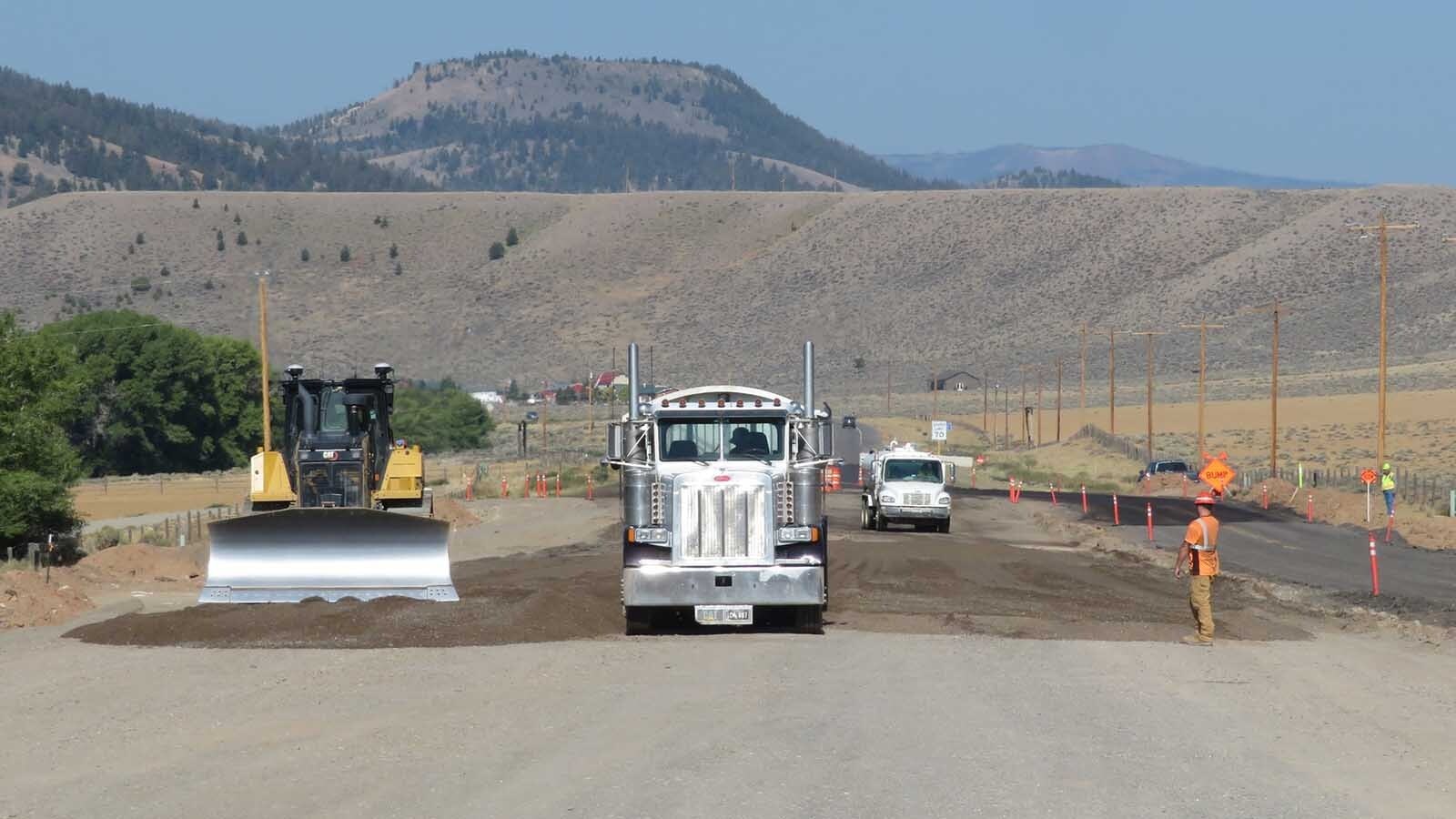
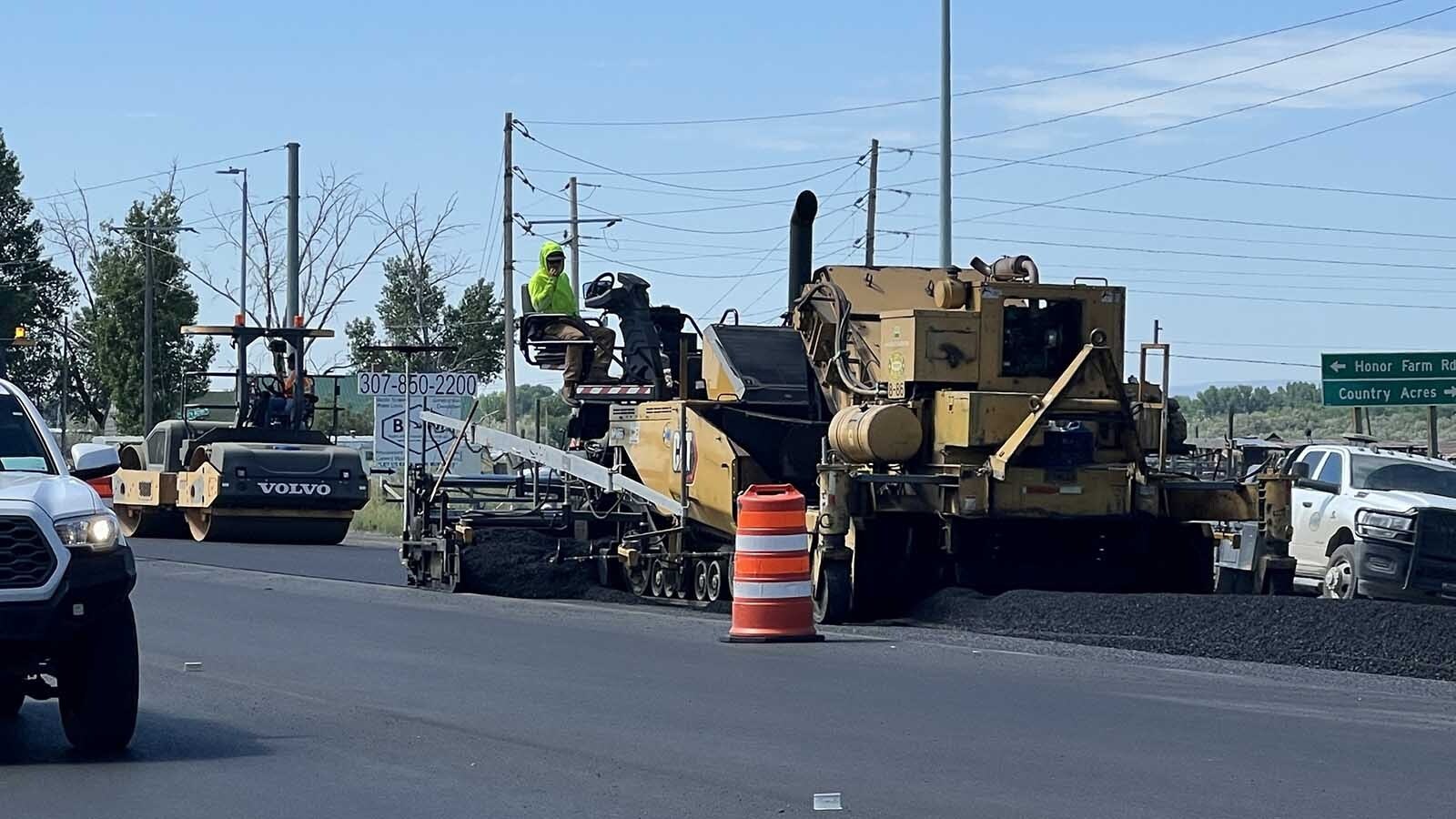
“On even a small paving project, you might have seven dump trucks out there going from the plant, back and forth, bringing their loads as the paver sets it down,” he said. “And then multiple rollers on site.”
That doesn’t include the robotic machines that would be necessary to prepare the base layer to receive the asphalt. That would include graders, dozers and other smaller — but still heavy, expensive machinery.
“I mean, a job site could have 10 to 15 different machines on it that all have a different job,” he said. “So, if you’re trying to automate every one of those … we’re looking at upwards of $5 billion to $7 billion in investment to have these machines on one job.”
Most Wyoming contractors have multiple jobs going at one time, Benford added.
“Are they moving these machines, or doing the jobs one at a time?” he asked. "Or are they still running multiple crews of machines? Because now you’re talking $10 to $20 billion of investment upfront.”
Road Repair On Google Maps?
Most Wyoming contractors wouldn’t be in a position to spend that kind of upfront money, Benford said. Particularly not for something that is untried and untested. A competitive bidding process forces many contractors to run on thin operating margins. That makes multi-million-dollar gambles on an all-robot fleet unattractive, particularly when the maintenance costs, downtime, and replacement costs are still unknown.
But, even if the huge cost wasn’t an impediment, there are other logistical hurdles that make him believe that an all-robot road repair crew is significantly further off than 2030.
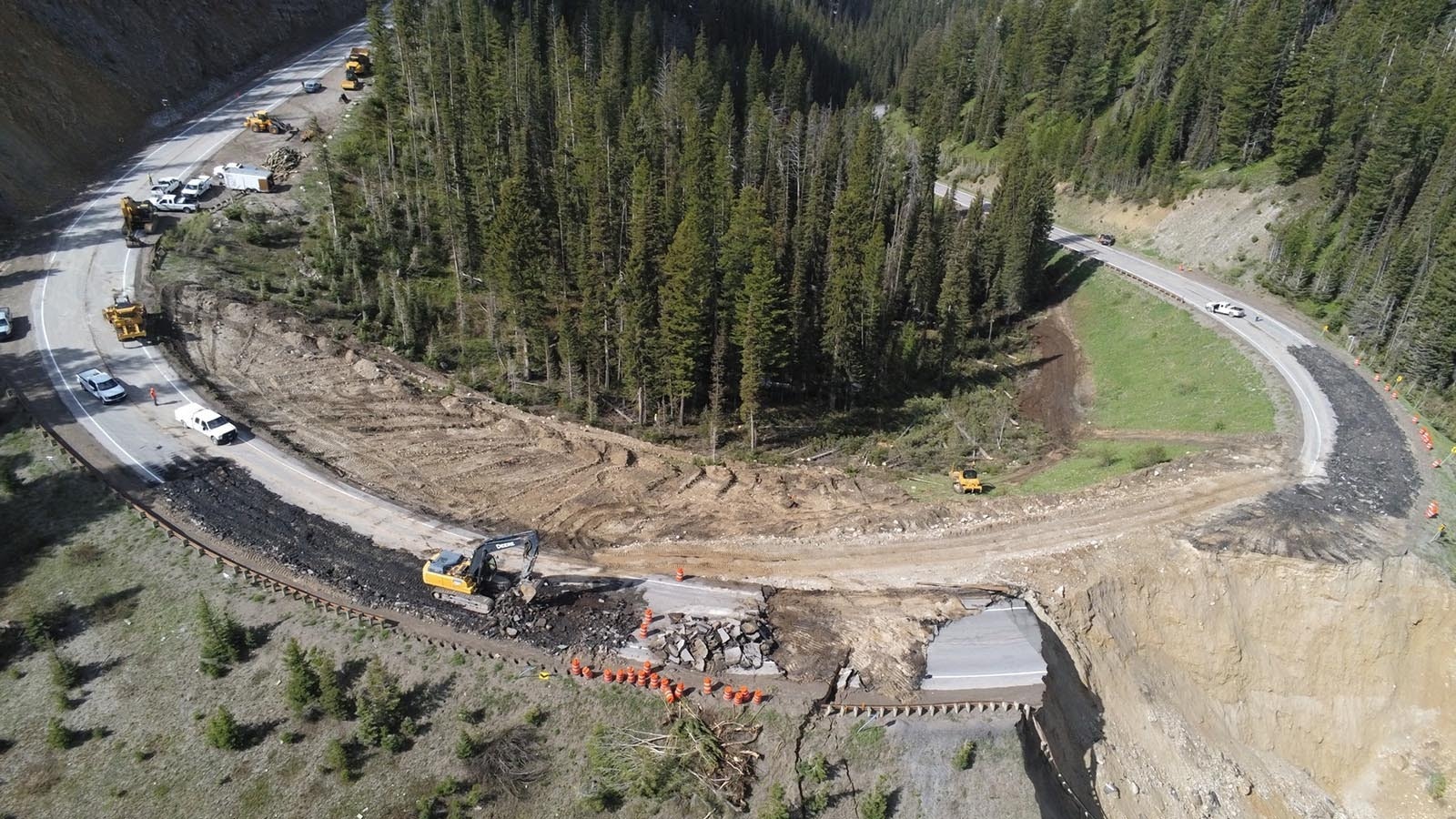
For one, there’s no infrastructure in place for robotic road crews yet. The robotic equipment would need some type of navigation system that would keep them on the right track, as opposed to landing, as some motorists directed by Google Maps sometimes do, at a locked, gated, dirt road in the middle of BFE Wyoming.
They’d also need sensors that work better than what’s currently available on self-driving vehicles, to detect that a child or a pet or something else is obstructing the roadway.
“We talk about this all the time, because those self-driving cars need very well-painted roads,” Benford said. ‘They struggle through work zones when they have signs and traffic control set up. So, if you’re asking if construction is going to transition in five years to fully robotic systems, we haven’t seen the self-driving car completely revolutionize driving yet.
"And I would imagine if we can’t get our self-driving cars to fully be autonomous and trustworthy, how are we going to let these heavy machines become that and build the roads? And then we’re putting those self-driving cars on (roads)? I think we’re going to have to have human oversight of construction for quite some time.”
Robot Construction Doesn’t Always Go So Well
That’s a concept that Rhett Carter, a plumber who has seen AI in action on various construction sites, agrees with.
Carter has been working in Wyoming lately in Kemmerer on a construction site, but recalls a job site in Utah, where he is from, where a robot was supposed to put up the walls.
“It looked kind of like a Roomba for your house,” he said. “And I don’t know how they put the information into it. All I know is that it was not what it was supposed to be. It was way off, way wrong.”
Because of its errors, all the work it had done to “streamline” things had to be torn out, and there were an awful lot of contractors on the job site who suddenly had little to no work they could do, other than sweep or clean to try to keep busy.
“I know they were all mad because they thought this was going to work and make their jobs a little easier,” he said. “So, it took them like an extra week to go back through and get everything where it was supposed to be.”
Meanwhile, plumbers like Carter had little they could do but wait.
“We can only do so much until the walls are put in,” Carter said. “Like drinking fountains, bathrooms, literally everything we do, other than roof drains, they have to come down through a wall.”
Experiences like that have made Carter believe that humans who do skilled, precision work like plumbers and electricians have nothing to fear from AI and robots yet.
Nor does he think road repair by robots would go any better, at least not as soon as 2030.
“Roads are different but not really,” he said. “Because I mean, walls have to be straight and roads aren’t necessarily straight, but they have to be in the right place. If it’s in the wrong place, that’s not going to work.”
Benford, who frequently attends conferences where the most cutting-edge technology is often presented, said he’s so far seen nothing that comes close to an all-robotics fleet — though robots are getting used here and there, for specific applications in a cost-saving way.
“We are using robotics and AI and GPS and different things to make our construction more efficient,” he said. “But the idea that it’s going to go fully robotic, I just don’t see that happening for decades.”
Not So Fast
Lynne Parker, a retired robotics professor from University of Tennessee, has done some work in the area of autonomous robots, including for things like road repair.
As a retiree, she’s not keeping up with what every company is doing in the sector anymore, but she does have insight into the kinds of difficulties ahead for a brave new world where robots are trying to repair roads autonomously.
She also feels the prediction that all-robot fleets would be repairing roads by 2030 at 40% less cost is overly ambitious.
What she sees as more likely are robots that are tailored to do narrow, discrete chores for humans, freeing them up for more precise, skilled work.
“For instance, there are in fact some active pilots in the United States to do things like detect potholes and then have a master list that the county can use to prioritize where the worst potholes are,” she said. “And then you would send a human crew to go do it.”
That’s an example Parker could see happening in the near term at a cost-savings.
“The gist of that is that you could put cameras on county vehicles that normally travel the roads, and I speak in terms of county just because that’s how we do things here in Tennessee,” she said. “And those county vehicles could be anything like waste trucks that go through the city.”
The camera would capture images that AI would scan for pothole issues that need attention, contributing to a master list of where all the problem spots are.
There are also pilots looking at robots that could seal up a crack in the road or a pothole.
But as far as a stage where robots could repave a particular road from a particular intersection to the next, that’s a “very long way from having that be fully automated,” she said. “Even by 2030, it’s not likely.”
Probably Won't Always Be Cost-Prohibitive
Parker thinks costs of individual units will likely come down to a more affordable range but agrees the upfront cost could be prohibitive for a while into the future.
“Somebody would have to do the whole economics thing,” Parker said. “I know here in my county in Tennessee, they repair the absolute worst potholes, but they leave a whole bunch of other stuff pretty bumpy. So maybe if you had these things working 24 hours a day or maybe not during rush hour, but they could get caught up. then you’d actually have something even better than what you’re able to maintain.”
But, she added, even that has a lot of ifs.
“The bottom line is, as far as I’m aware, there’s not really a commercial product you can go by right now that does everything you’d need,” she said. “It’s very challenging. Even, like, automated vehicles, they’ve come a long way, but they’re not across the country.”
They’re available in a large metro area, where they’re taking care of the last 5% of a journey.
“The challenge is all the uncertainties in that last 5%,” she added. “Say it’s raining, or a dog comes and gets in the way, or there’s a traffic accident, or the temperature or the sun might be shining in certain ways. There’s just a lot of constraints that make it hard for robot systems to do everything as perfectly as a human mind, so I’m not particularly optimistic that fully automated road repair systems will be ready any time soon.”
Did A China Road Repair Project Use Only Robots?
An article cited by AI online at highwaysindustry.com suggests China used an “impressive fleet of autonomous road equipment” from Sany, a state-owned manufacturer of heavy machinery, to pave a 98-mile stretch of the Beijing-Hong Kong-Macao Expressway.
According to the article, the equipment lineup included a 65-foot-wide unmanned paver, six 14.33-ton double-drum rollers, and three 33.07-ton rubber wheel rollers, operating in a synchronized formation.
That feat was accomplished with satellite positioning, as well as “advanced algorithms” that offered centimeter-level precision, along with a low-latency communication network to enable precise real-time control.
The UK, meanwhile, has been exploring drone surveillance to monitor construction sites and gather data on road conditions, as well as smaller-scale pilot projects to explore things like pothole detection and repair.
Benford said it sounded more likely to him that there was an operator behind the scenes on the China project, operating the machinery remotely.
“Remote operation like that does exist,” he said. “The mines have been using that, and we are seeing contractors look at how to utilize that.”
With those types of systems, operators sit inside a job site trailer, with a computer simulator, and control the machines that are on site. Often, it means fewer people are needed, as one person can often control more than one piece of equipment.
“if you had three pieces of machines, you could have one operator switching between the three,” Benford said. “Those are technologies that do exist. They exist much more in the mining industry here in Wyoming than they do in construction, but I could see those technologies in the next decade or so, coming in and being utilized more.”
Human Costs Have To Be Weighed
The other cost that Benford, Parker, and Carter all said has to be reckoned with is the human cost.
That ranges from theft of intellectual property, Benford said, to societal costs if large numbers of people lose their jobs.
“These are great-paying jobs for skilled people to come out and do,” he said. “And if you want to put robots out there, you’re eliminating jobs for humans. I think you’re going to find pushback on that as well.
“I don’t think we fully know what the cost of robotic construction would look like because it’s not prevalent right now,” he continued. “So, the idea that this is going to save labor costs? Well sure, you don’t have to pay a robot. You’re going to save on some labor costs. But what are the hidden costs that we don’t know about yet?”
Everything costs money, Carter added.
“I don’t think robots will be cheaper in the end. AI is supposed to be replacing all these jobs, so you’re taking those jobs away from people. How are people going to get paid? They still need to buy stuff. They still need to make their house payment or their rent. They still need to buy groceries, and gas. So, AI will be taking the job, making it easier for people, but we still have to figure out a way to still be paying people.”
Parker, meanwhile, said she doesn’t believe AI or robots will come in and destroy everyone’s job all at once.
“There’s a lot of hype of various types around some of the layoffs, like Amazon, for instance, and some of the other tech companies that are laying off people,” she said. “They imply that it’s because of AI, but it’s really not. It’s because they over-hired during COVID. So, there’s a lot of extreme conversation about this right now.”
Artificial Intelligence will be useful in many professions, Carter added, and will require workers to keep training themselves up on what’s new, as it is poised to change many workplaces from health care to road care.
Renée Jean can be reached at renee@cowboystatedaily.com.


