
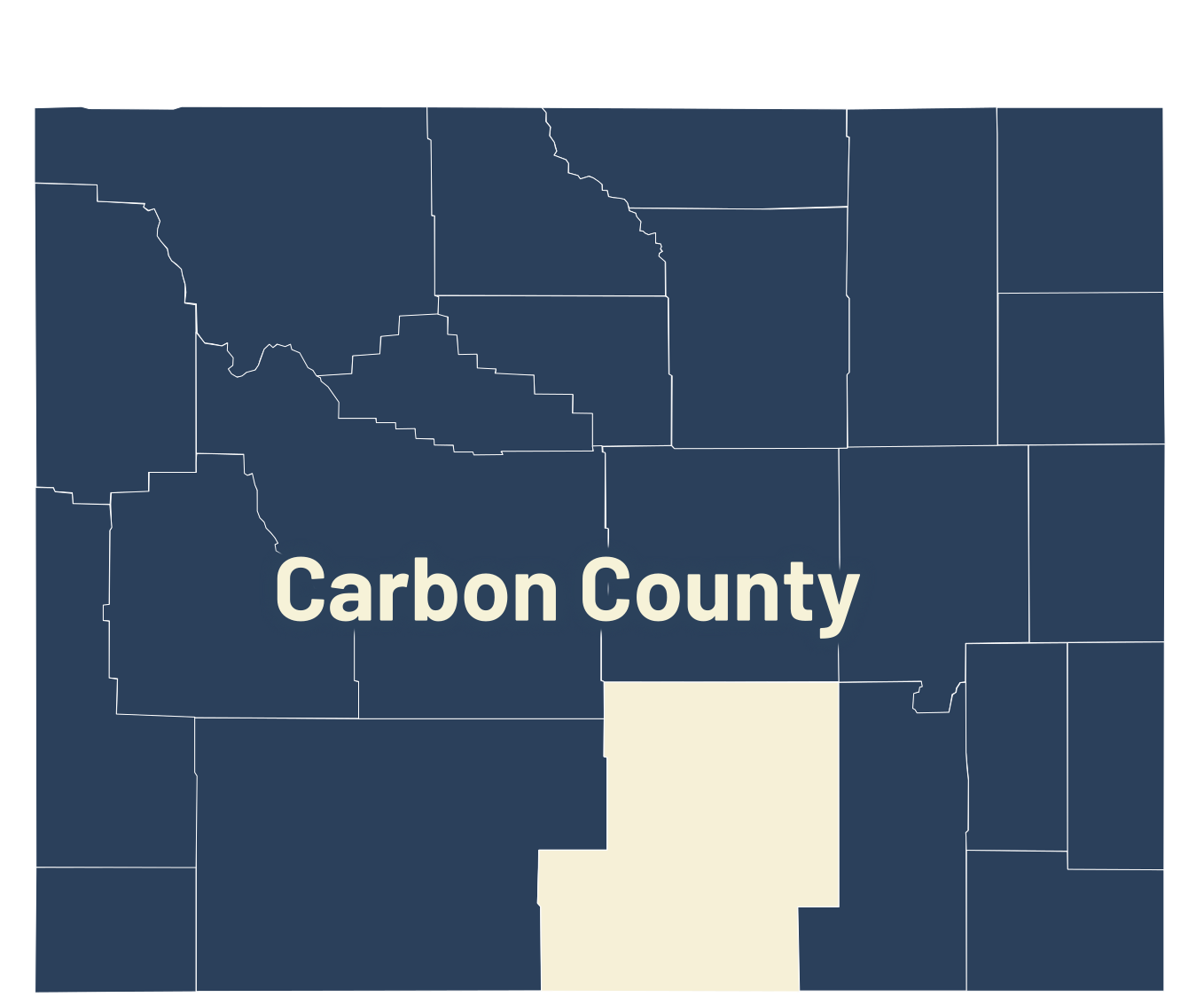
The effects of a proposed 972-megawatt power project at Seminoe Reservoir in Carbon County could reverberate downstream, threatening Casper’s water supply and the legendary Miracle Mile trout fishery on the North Platte River, critics told lawmakers.
For months, there have been concerns that the rPlus Hydro company’s Seminoe Pumped Storage Project could affect water temperatures and quality downstream on the North Platte, said Casper Mayor Ray Pacheco.
“These concerns are not theoretical for us, Casper relies directly on the North Platte River for drinking water, wastewater treatment, tourism and the quality of life,” he said.
Pacheco was among numerous Wyoming officials and residents who spoke before the Legislature’s Joint Travel, Recreation, Wildlife and Cultural Resources Committee Thursday in Casper.
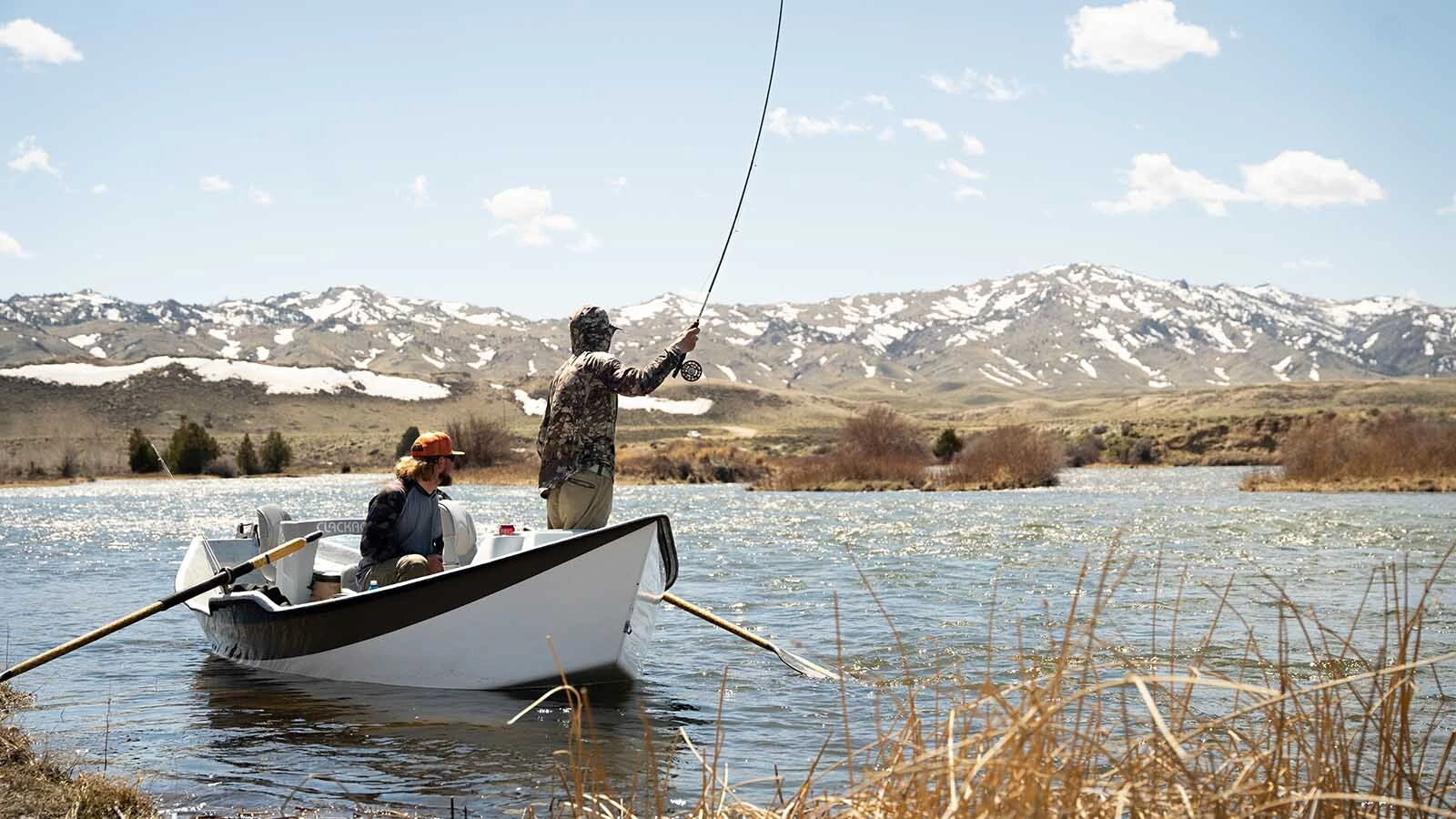
Other speakers noted that cold water is what lets trout thrive along the Miracle Mile, which is actually a roughly six-mile stretch of the North Platte below the reservoir.
Effects On Water Temperatures
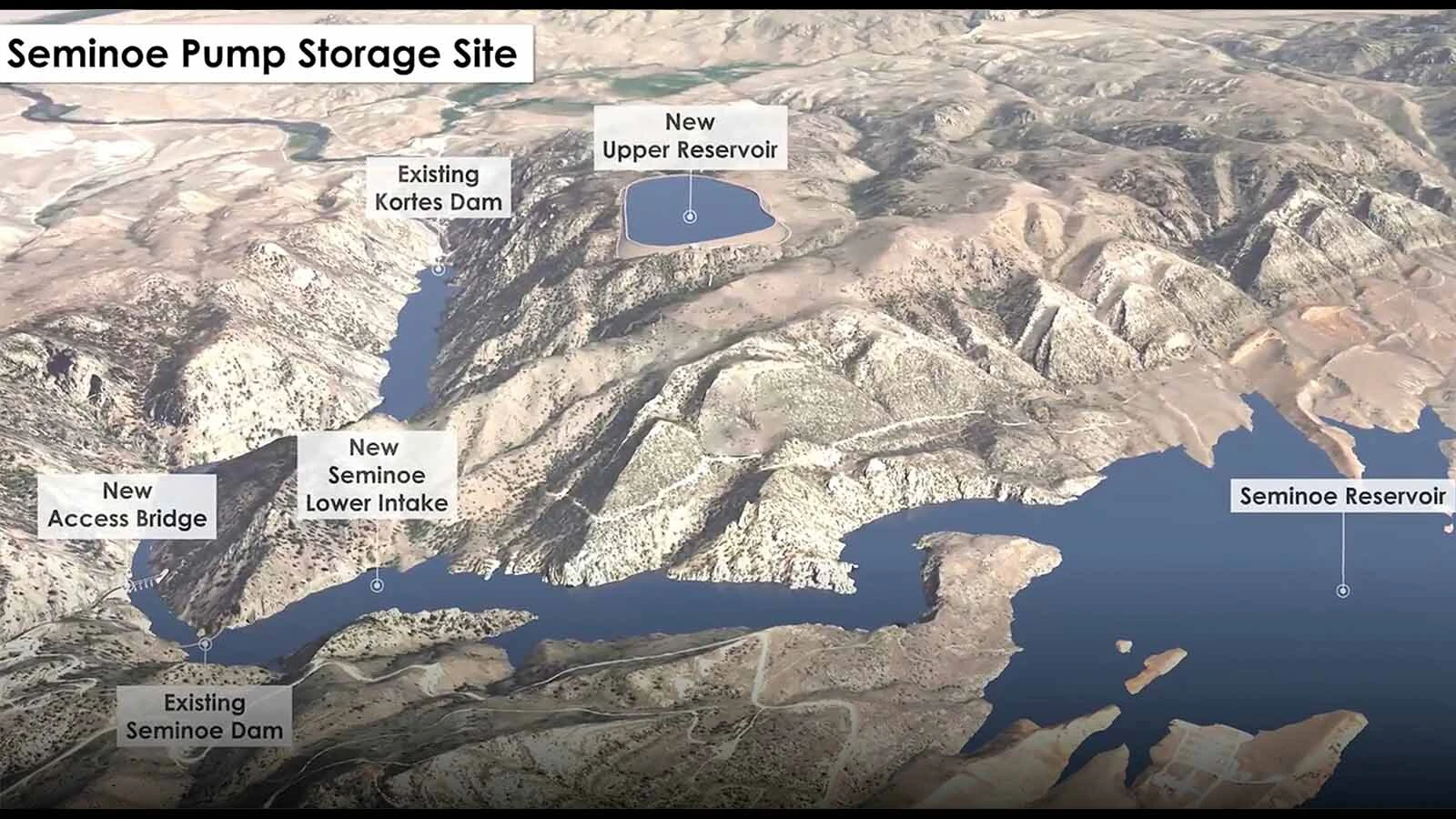
Kevin Baker, deputy general counsel for the Salt Lake City-based rPlus Hydro, said the project would entail water being pumped from the main reservoir into an upper holding reservoir.
As power was needed, water could then be released from the upper storage reservoir, passing down massive underground tunnels and through hydroelectric turbines, then back into the main reservoir, Baker said.
The project hinges on approval from the Federal Energy Regulatory Commission (FERC).
FERC released a draft environmental impact statement (EIS) in September 2025. A final EIS is expected in June, Baker said.
The legislative committee took no direct action on the matter Thursday. They voted to draft a letter to Wyoming’s Congressional delegates and others regarding residents’ concerns over the project.
There might also be further discussion about bringing possible state bills related to the project before the 2027 Legislature.
If and when construction starts, it’s expected to take roughly five years, Baker said.
The project would generate 300 to 500 jobs during construction, and 30 to 35 permanent jobs once it’s finished, Baker said.
FERC has determined that there are sufficient protections in place for the Miracle Mile and the Ferris-Seminoe bighorn sheep herd.
The proposed construction site is in the herd’s winter range, and some have expressed concern over how the project could hurt the bighorn sheep.
Pumped storage power generation has been proven to be efficient, long lasting and environmentally friendly, since most of the infrastructure is underground, he said.
Water Temperature Effects
Baker told the committee that there’s only a small risk of water temperatures being raised, about once per decade, in September.
The Wyoming Department of Environmental Quality (DEQ) granted the project a certification in March, said Water Quality Division administrator Jennifer Zygmunt. The certification could factor into FERC’s decision.
The certification came with conditions, she said.
These include that operations at the pumped storage site would have to be suspended if the water level in Seminoe Reservoir drops below 50%, or if temperatures on the Miracle Mile pass a certain threshold, Zygmunt said.
Such reassurances weren’t enough for some skeptics.
Natrona County Commissioner Dave North, who has a degree and working experience in wildlife and fisheries biology, said he doesn’t see how the Miracle Mile wouldn’t be drastically affected.
The project could entail “10,800 acre feet (of water) turned over every eight hours. That translates into two and a half gallons per minute, or 7.5 billon gallons every 12 hours,” he said.
And it would be drawn from “the depths” near the Seminoe Dam, where the coolest water is,” North added.
Trout Unlimited spokesman Patrick Harrington expressed similar concerns, telling the committee that he can’t see how the project wouldn’t regularly affect water temperatures on the Miracle Mile.
The Miracle Mile isn’t the Miracle Mile because fish are living right on the edge of dying. It’s the Miracle Mile because conditions are consistently exceptional for trout,” he said.
Concerns were also reiterated about the Ferris-Seminoe bighorn sheep, which are Wyoming’s premier, disease-free wild sheep herd.
“There are animals that don’t want to move away from the site that they’ve selected,” Wyoming Game and Fish Deputy Director Jeff Davis told the committee.
Game and Fish still has concerns about how construction might disturb the herd, he said.
Economic Boom, Or Bust?
Baker said the Seminoe Pumped Storage Project entails an investment of up to $4 billion into the regional economy.
It could also help keep electric rates low for customers in Wyoming and around the region, even as a surge in data centers could put massive new demand on the power grid.
“Wyoming is actually at an inflection point when it comes to its energy needs and its energy demands,” Baker said.
Critics told the committee that Casper, Carbon and Natrona counties rely heavily on a tourism and outdoor recreation economy, and the project could threaten that.
Mark Heinz can be reached at mark@cowboystatedaily.com.


