
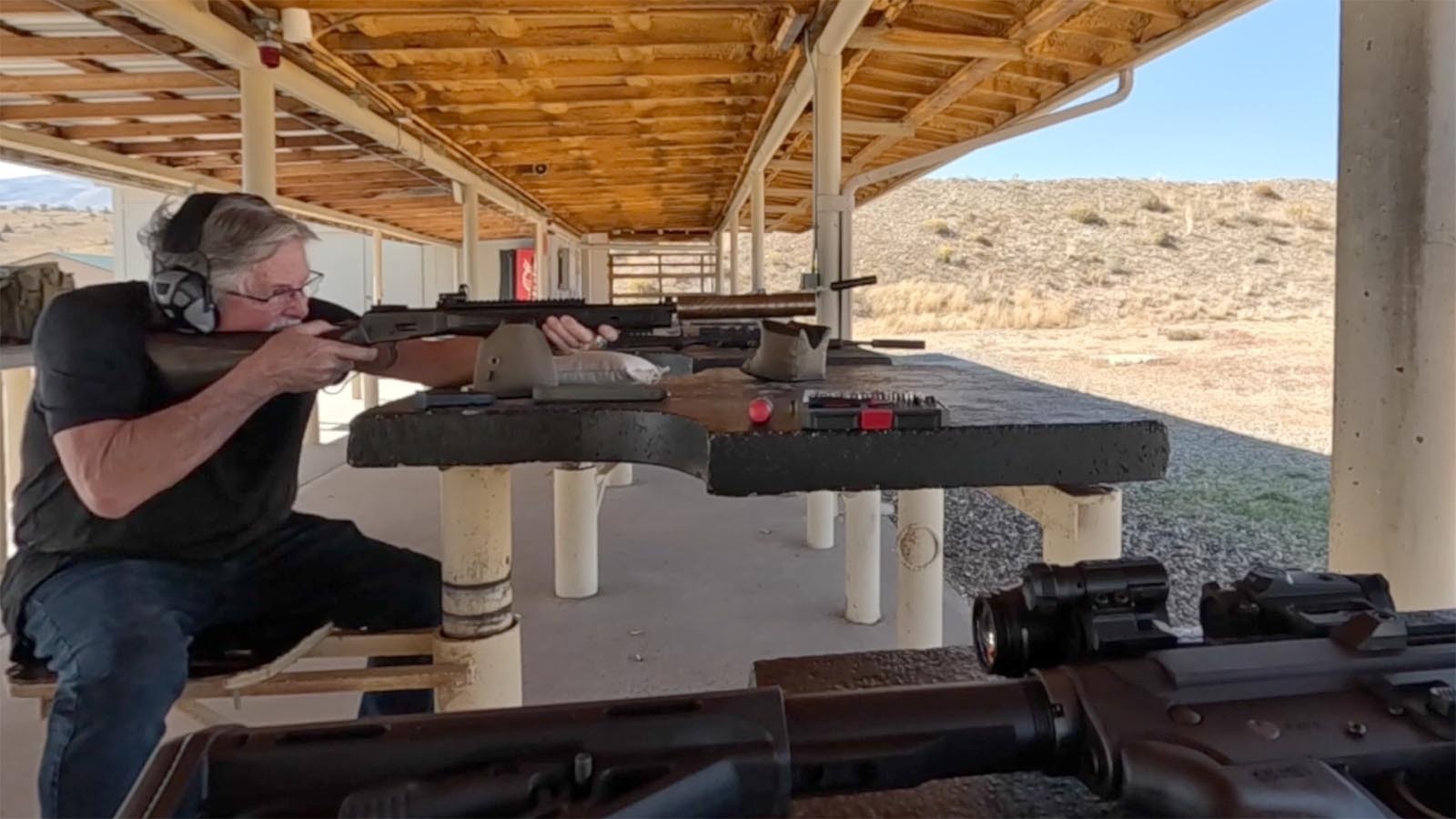
Just like there was a time when hunters with scopes on their rifles were few and far between, but now everybody has one, so too it could be with suppressors, a Cody manufacturer said.
That’s in large part thanks to the elimination of a $200 tax stamp previously required to own suppressors, which are sometimes called silencers.
That tax was rendered effectively null Jan. 1, Joshua Kinderknecht told Cowboy State Daily.
And firearms enthusiasts were ready.
“I started getting pre-orders in August and September,” said Kinderknecht, owner of Wyoming Tactical Firearms and W.T.F. Silencers.
“By the time Jan. 1 rolled around, I had a whole safe full of suppressors ready to fill orders,” he added.
Red Tape Is Still There
Gun owners shouldn’t go running to their favorite shop expecting to buy suppressors over the counter just yet, a Wyoming Second Amendment advocate said.
The red tape and waiting period associated with buying suppressors under the 1934 National Firearms Act (NFA) still apply, Mark Jones of Buffalo, a national director for Gun Owners of America, told Cowboy State Daily.
The battle to make suppressors available over-the-counter drags on, he said.
“The tax was dropped from $200 to $0, but all the federal paperwork requirements and regulations still exist. GOA has sued to overturn the situation, but that could take years,” he said.
“The Supreme Court upheld the National Firearms Act many years ago, based on the argument Congress has the authority to tax. Now that the tax is $0, the National Firearms Act is vulnerable to court challenges,” he added.
Suppressors For All
Despite the regulations still being in place, suppressors are starting to catch on, particularly among hunters, Kinderknecht said.
The elimination of the tax was apparently enough to open the floodgates, he said. Only a month in, he said 2026 is already shaping up to be a game changer for his suppressor business.
He founded his business about three years ago with two main goals in mind.
“To create manufacturing jobs in Wyoming and raise money for charity,” he said.
With suppressor sales ramping up, he’s confident he’ll achieve those goals.
Outdoorsman Olin Machen of Cody told Cowboy State Daily that if the dawn of the age of suppressors for everybody really is here, he was ahead of the curve.
“I’ve personally been using suppressors for over a decade for hunting, and I can’t imagine not,” he said.
Nefarious Past
The first commercially available suppressor was made in 1902 by American inventor and entrepreneur Hiram Percy Maxim. In 1909, he patented the moniker “Maxim Silencer” which is probably where the common term “silencer" came from.
They don’t make firearms silent, but they do reduce both noise and recoil when shooting.
Prohibition-era gangsters used suppressors for nefarious purposes, along with sawed-off rifles and shotguns.
That led to suppressors being regulated under the NFA.
To own one, civilians must go through the NFA registration process. That includes fingerprints and mug shots, as well as a background check and a 4473 form.
The tax on suppressors was eliminated by a provision in the so-called “One Big Beautiful Bill,” that stopped short of removing them from NFA classification, GunBroker reported.
What’s So Great About Suppressors?
The most obvious benefit of suppressors is that they cut down on the noise produced by gunshots, and thus they help protect hunters’ and shooters’ hearing, Kinderknecht said.
“We are starting to get rid of the stigma that they (suppressors) are a danger to society. They truly are a hearing safety device,” he said.
A suppressor can also reduce a rifle’s recoil, he said. And the combination of recoil and noise reduction can help children when they’re first learning how to shoot and hunt.
“With kids at the gun range, it’s not necessarily the kick of the rifle, it’s the noise that scares them,” he said.
Kinderknecht’s suppressors are handcrafted from components “all sourced in America,” he said.
Suppressors work by routing the “explosion of the gasses" from a firearm's muzzle through a series of baffles – effectively slowing the release.
That’s what reduces the noise and recoil, he said.
He designed a specific series of cone-shaped baffles for his suppressors.
In addition to hunters, his customers include tactical target shooters and some law enforcement agencies.
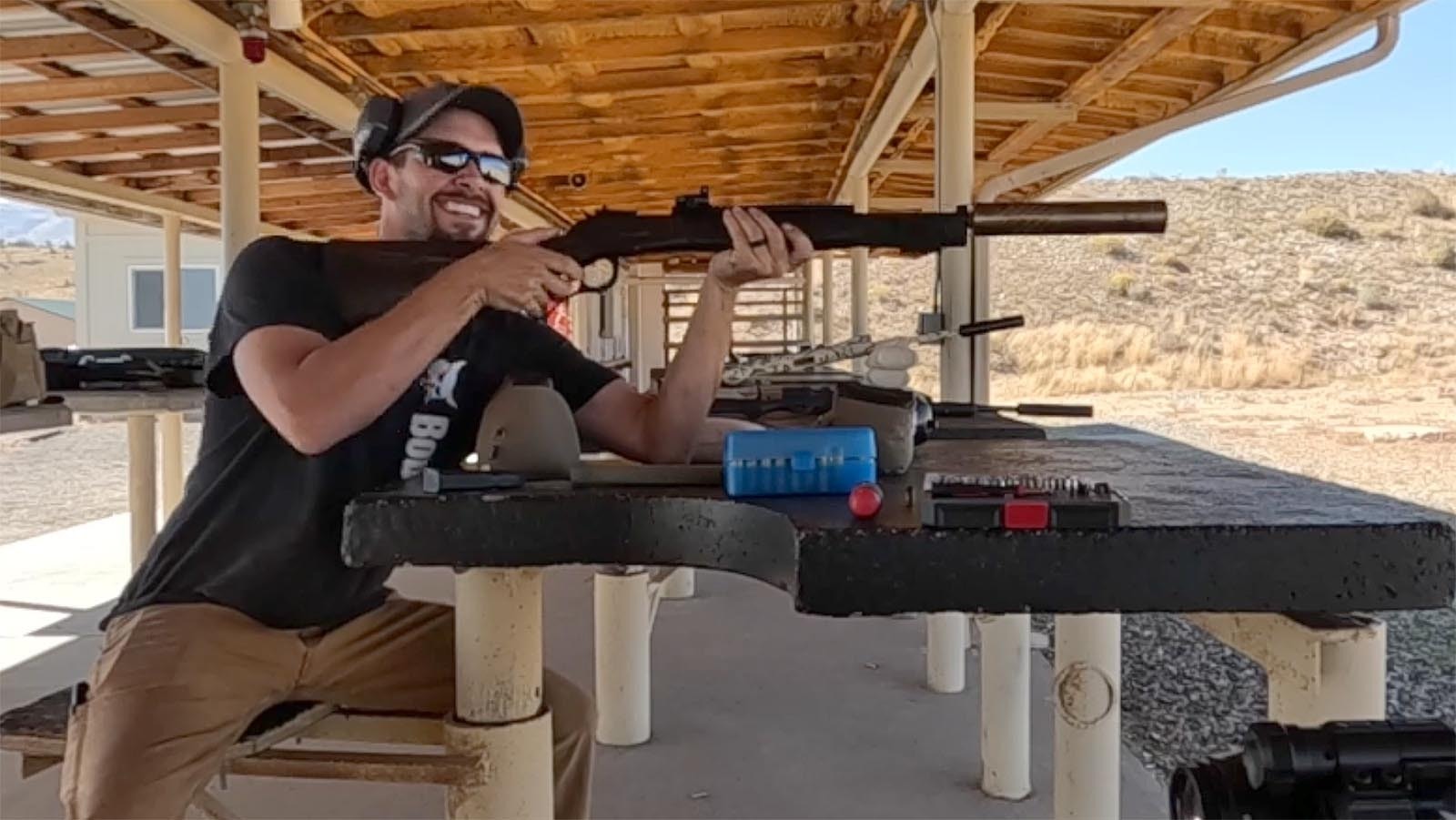
‘WTF Moment’
He added that his suppressor business’ title “W.T.F. Silencers” was a fortunate oversight.
The WTF was initially just supposed to be an acronym for his Wyoming Tactical Firearms business title. But about “30 seconds” after he came up with it, he realized that it mirrored another popular acronym.
“I thought, ‘hey, that’s marketable,’” he said.
And it seemed fitting, because many shooters, when first using one of his suppressors responded with “what the fuuu…” upon noticing how much it changed the experience.
“They had their ‘WTF?’ moment,” he said.
Easier On Wildlife
In addition to saving hunter’s ears, suppressors can also make things easier on wildlife, Kinderknecht, said.
A hunter targeting a specific deer or elk doesn’t have to subject the entire herd to a booming rifle shot echoing off the hillsides, he said.
Machen said that’s one reason why he uses suppressors for hunting.
“While it certainly does not make the shot “silent” like some people think, it does significantly reduce the amount of noise sent through the landscape. That far less disrupts other game or any people that may be in the area,” he said.
He added that he enjoys the other benefits of suppressors.
“Suppressors also do significantly reduce felt recoil, while not as well as a muzzle brake, it is far better than a normal gun barrel,” he said.
“Hearing protection is huge while hunting. If I had to guess, I’d say 60% of hunters don’t use hearing protection in the field or forget to use it when the moment comes. Suppressors take the noise down to at or very close to hearing-safe,” he added.
Mark Heinz can be reached at mark@cowboystatedaily.com.


