During the Battle of Lingayen Gulf in the Pacific Theater of World War II, twenty-two American ships were hit by Japanese kamikazes. Among the Navy sailors battling for their lives were two men from Campbell County, Wyoming: Enos Lyle Roberts and Bunny Harlow.
Today, both men are buried in the Mount Pisgah Cemetery, and their stories have been unearthed so that they are no longer mere names on a grave. This new life given to the soldiers is due to the efforts of Rockpile Museum Youth Coordinator Penny Schroder and veteran Greg Bennick.
According to Bennick, who is a volunteer at the museum, the two local men were Roberts, a chief storekeeper in the Navy, and Bunny Harlow, a Campbell County rancher, who was an aviation machinist’s mate, second class. Both men served on board the USS Columbia, which was a light cruiser, CL-56, during the Battle of Lingayen Gulf in the Philippines.
“Both of these guys served together on this ship at this particular time,” Bennick said. “One was killed and one was not.”
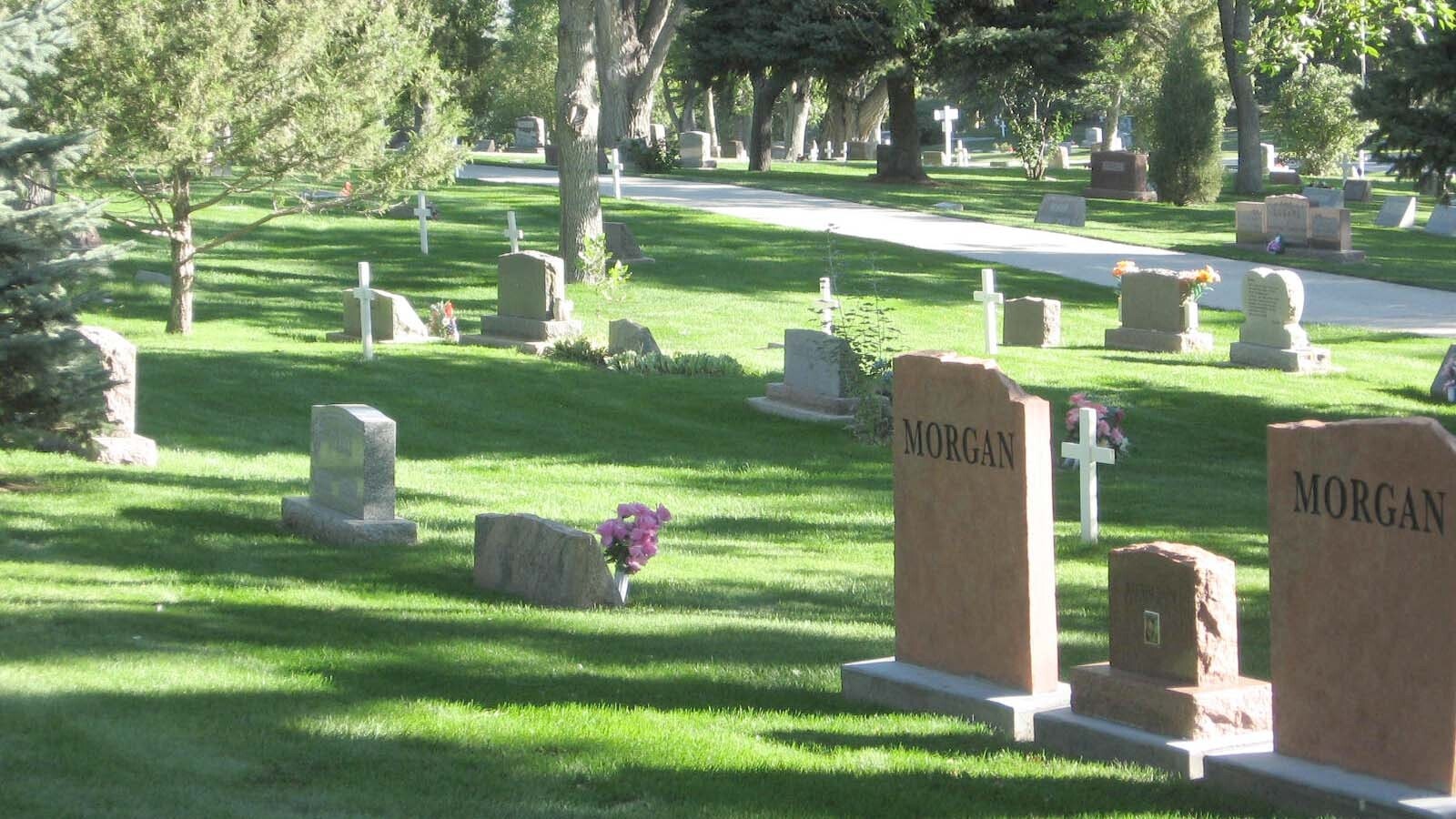
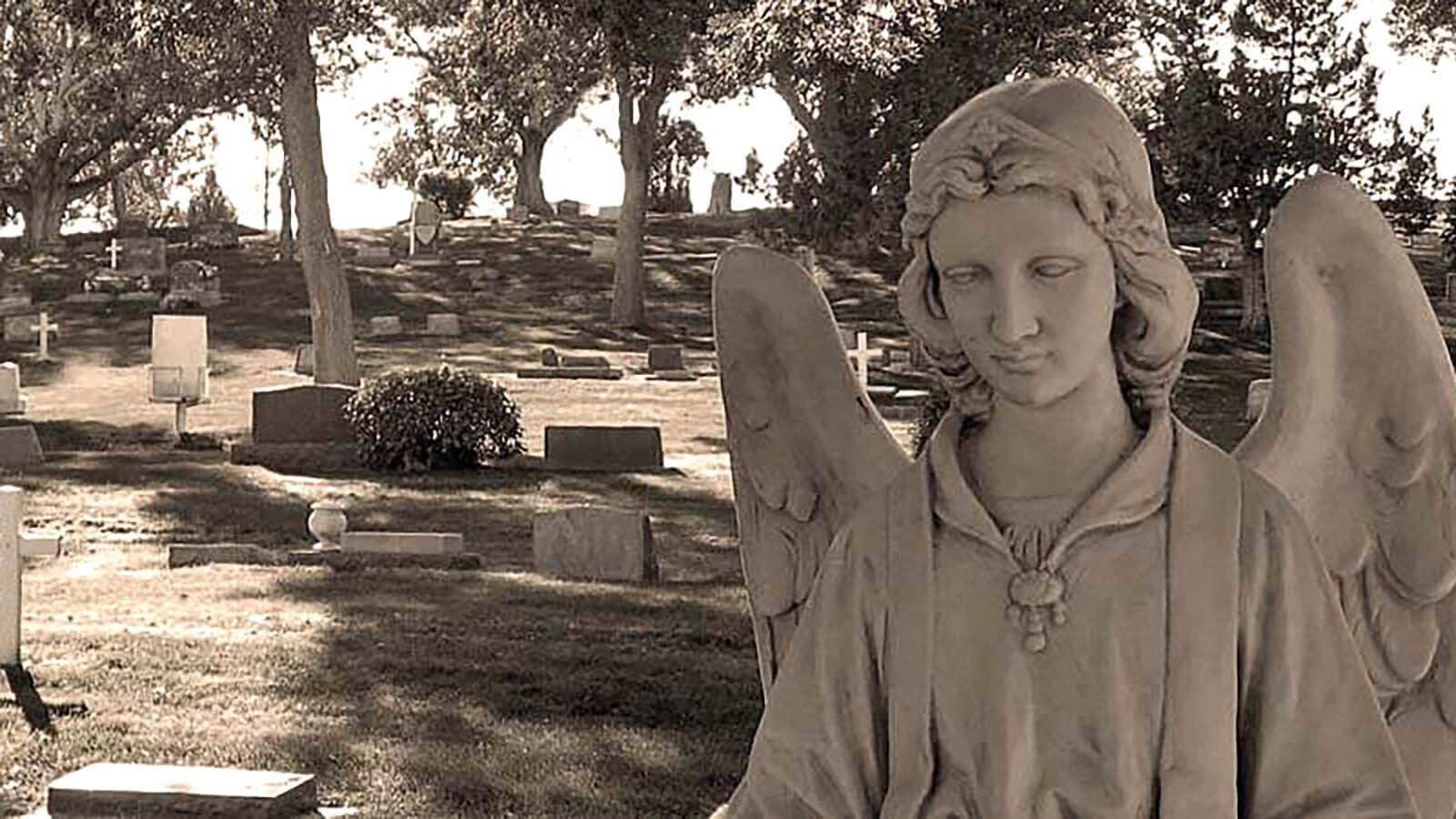
At Mount Pisgah Cemetery in Gillette, Wyoming, more than 1,000 veterans are buried. Two historians from the Rockpile Museum have been researching about 12 veterans a year to bring to life the names on the graves. These stories highlight the service and lives of the veterans and help to ensure that they are not forgotten. (Mount Pisgah Cemetery) 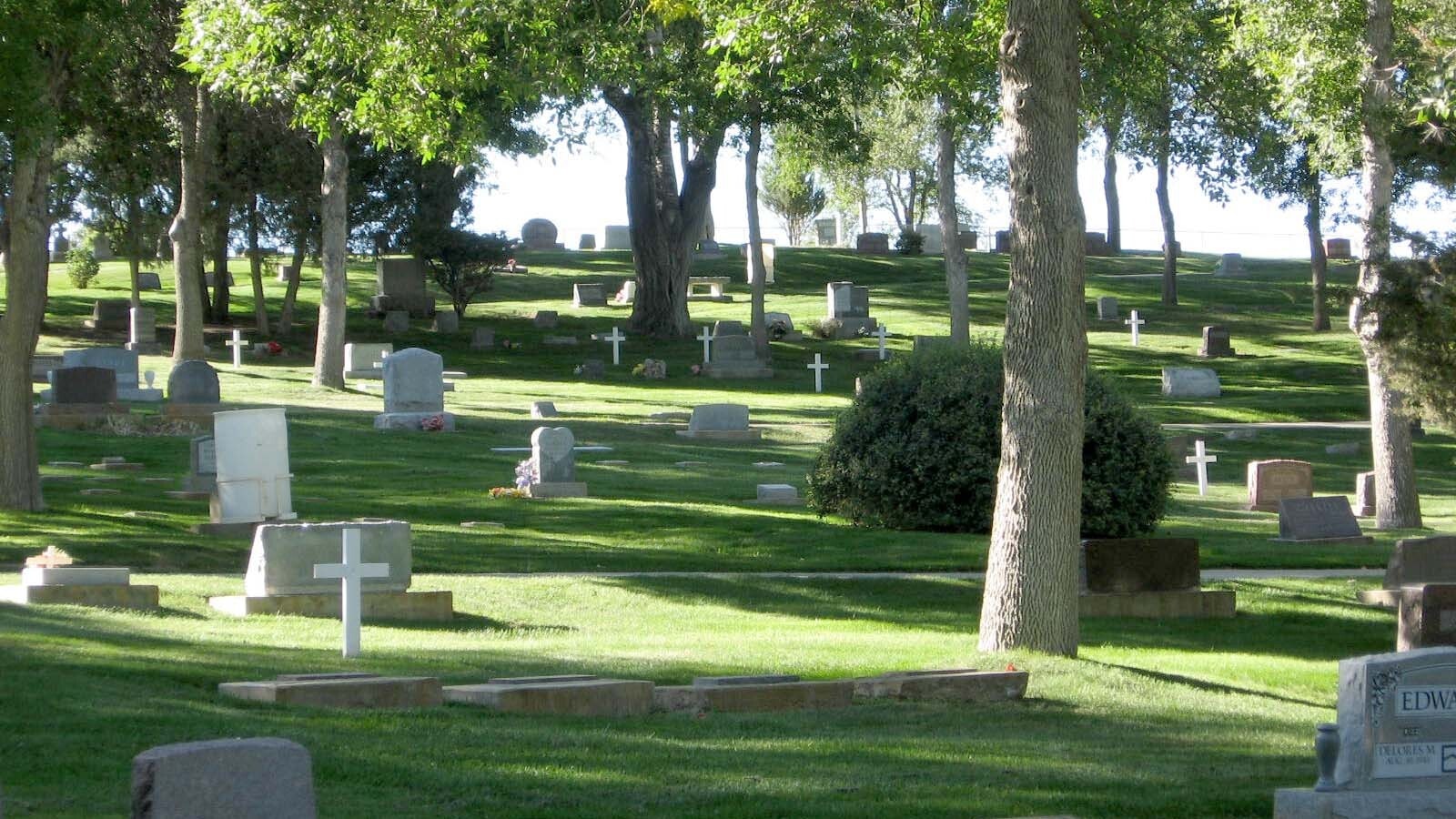
At Mount Pisgah Cemetery in Gillette, Wyoming, more than 1,000 veterans are buried. Two historians from the Rockpile Museum have been researching about 12 veterans a year to bring to life the names on the graves. These stories highlight the service and lives of the veterans and help to ensure that they are not forgotten. (Mount Pisgah Cemetery)
Battle On The USS Columbia
The USS Columbia was attacked on January 6 and January 9, 1945, by Japanese kamikaze aircraft.
Before these battles, Roberts had been wounded in December 1944 when a 40mm gun mount blew up and killed four other sailors. Despite his wounds, Roberts was not evacuated from the ship. He was tended by the medical team on board the Columbia and kept up his duties.
“On the 9th of January, when kamikaze aircraft hit the Columbia, Chief Roberts was killed in that combat action and was buried at sea the following day,” Bennick said. “Despite the loss of men, the Columbia didn’t stop its job.”
Their guns were still operational despite the damage sustained on their ship. The survivors were then able to continue to provide fire support for troops who were landing on the island. During this battle, nearly 200 sailors onboard the Columbia were either wounded or killed.
Harlow, the other Campbell County man, was blown overboard during one of the kamikaze attacks.
“The ship was ducking and dodging and trying to avoid these kamikazes,” Bennick said. “At the same time, there’s just a hail of gunfire going up to protect Bunny Harlow who was left bobbing up and down in the sea.”
Fortunately, Harlow hadn’t been injured and at some point in the next day or two, he was picked up by a passing American ship and then eventually returned to the Columbia.

Two men from Campbell County, Wyoming, served aboard the USS Columbia during the Battle of Lingayen Gulf in the Pacific Theater of World War II in January 1945. One man was killed and the other lived, returning to Wyoming to ranch and raise a family. Their stories were uncovered by Greg Bennick, a local volunteer at the Rockpile Museum. (U.S. Navy) 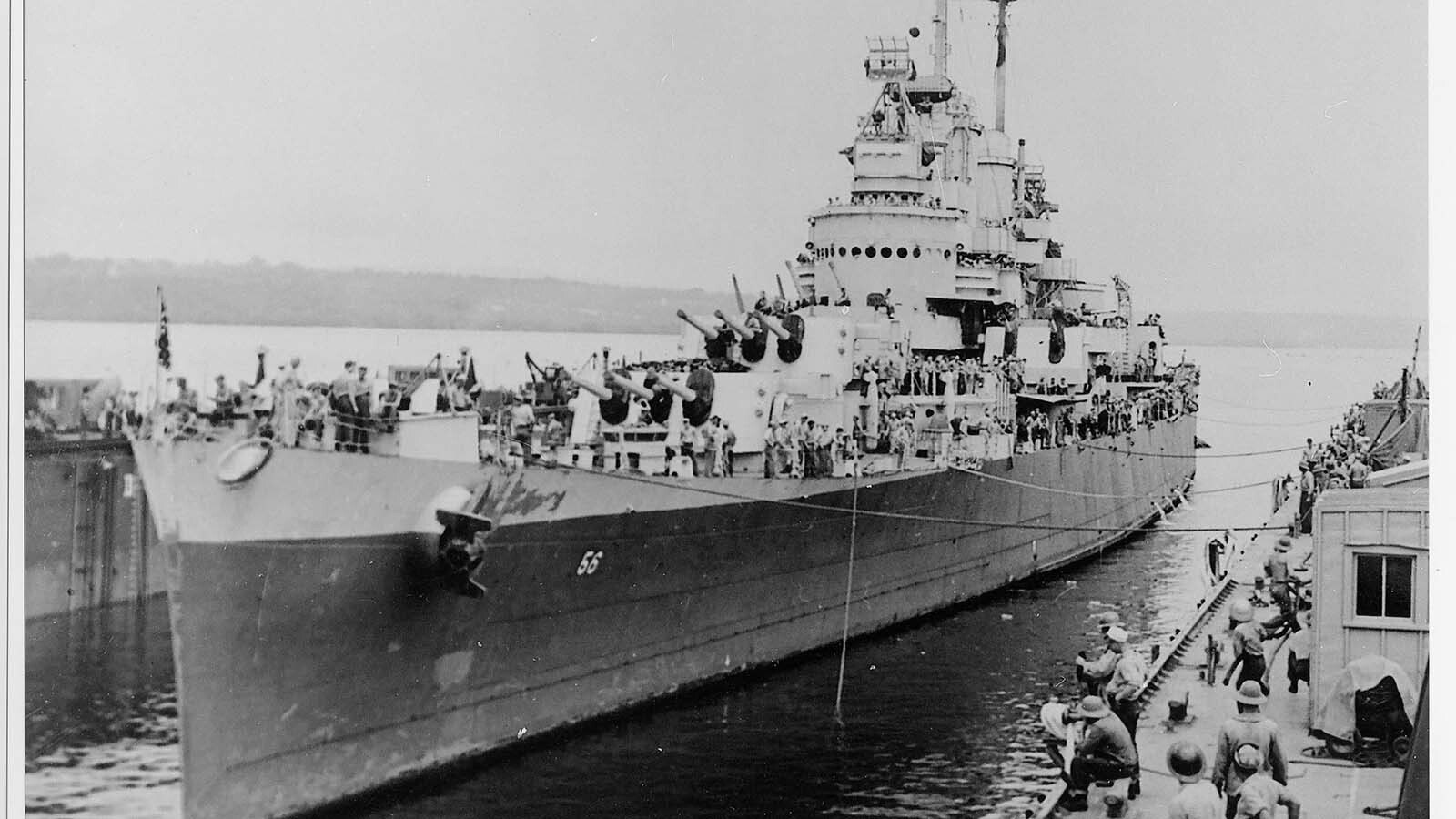
Two men from Campbell County, Wyoming, served aboard the USS Columbia during the Battle of Lingayen Gulf in the Pacific Theater of World War II in January 1945. One man was killed and the other lived, returning to Wyoming to ranch and raise a family. Their stories were uncovered by Greg Bennick, a local volunteer at the Rockpile Museum. (U.S. Navy)
The Forgotten
These are just two of the stories that Bennick and Schroder have spent the last year researching. Their goal is to have a dozen new stories to tell each year about the veterans buried at Mount Pisgah. They then give personal tours of the graves of these soldiers on important dates, such as Veterans Day, and share their extensive research with the cemetery through brochures for self-guided walking tours.
“In my experience, in most families the stories they tell about their veteran ancestors usually only last about two generations,” Bennick said. “What we find is that a lot of young people now don’t know what their grandfathers or great-grandfathers did in the Second World War.”
By the time you reach back to the First World War and the Civil War, Bennick said, families have lost all memory of their veteran ancestors.
“In doing this research, we can bring these guys back into the forefront a little bit,” Bennick said. “To remember them and remember their sacrifice.”
The soldiers that Bennick and Schroder choose to highlight are usually men who no longer have families in Campbell County, who are forgotten and whose graves are neglected.
“It’s all about paying them the respect they deserve, even though they’re long gone,” Bennick said.
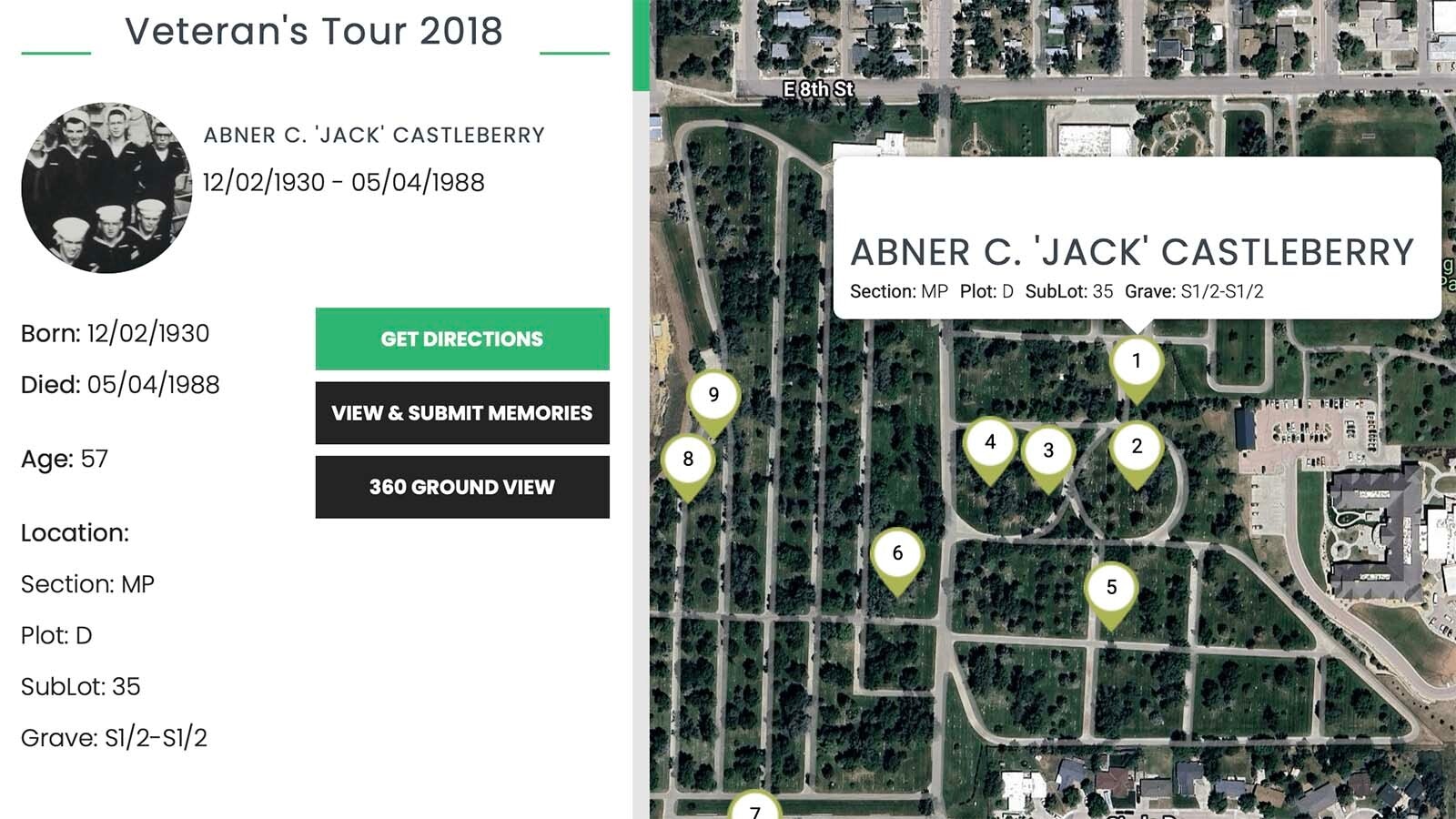
For several years, volunteer Greg Bennick and youth coordinator Penny Schroder have been researching veterans who are buried at the Mount Pisgah Cemetery in Gillette. Once they have the stories, the pair offer guided and self-guided walking tours to introduce the veterans to visitors so that they are no longer just mere names on the graves. (Mount Pisgah Cemetery) 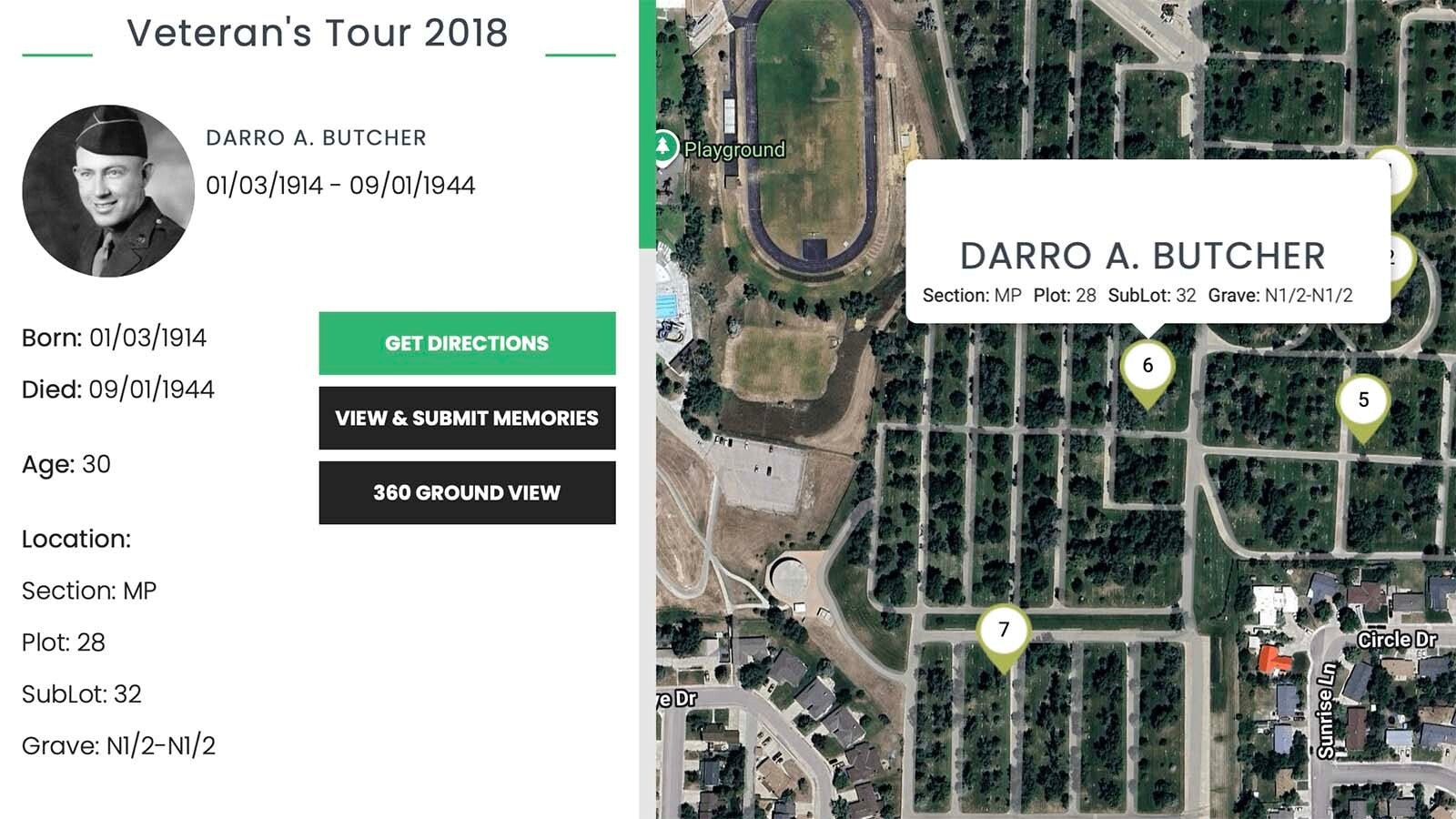
For several years, volunteer Greg Bennick and youth coordinator Penny Schroder have been researching veterans who are buried at the Mount Pisgah Cemetery in Gillette. Once they have the stories, the pair offer guided and self-guided walking tours to introduce the veterans to visitors so that they are no longer just mere names on the graves. (Mount Pisgah Cemetery)
Digging Into Their Lives
The other deciding factor in who to research is that they try to pick soldiers from different military occupational specialties.
“We want our audience to understand that it’s not just armor, artillery and infantry, but there are all kinds of jobs that have to be done in the military to support frontline operations,” Bennick said. “It takes about 25 individuals to support a single combat soldier in line.”
Bennick has researched soldiers who worked as fuelers, water handlers, transport, aviation repair, and ball turret gunners. Often, once he decides on who he is going to research, he only has the basic information and must build up the story from there.
“Once we find the individual, then we try to contact family members, if there are any, and see if they have any artifacts or stories about their veteran,” Bennick said. “Sometimes they do. Oftentimes they don’t have anything at all.”
Bennick spends an average of eight hours a week researching draft cards, chasing down newspaper articles, and speaking with families.
His best leads come from families who uncover cigar boxes belonging to the veteran. These types of stashes are especially exciting and can tell Bennick a lot about the soldier he is researching.
Uncovering The Stories
Bennick recently uncovered the story of a waist gunner on a B-17 bomber and said it was the crash information that provided the most detail.
“We were able to find out a ton of information about him such as what P.O.W. camp he was sent to,” Bennick said. “What I am doing is trying to fill in the blanks.”
Another goal for Bennick is to uncover stories from different wars, such as the Civil War veteran buried at Mount Pisgah. He discovered this soldier was wounded at the Battle of Spotsylvania Courthouse in Virginia and followed his regiment for more clues.
Bennick also includes stories about what life was like for the soldiers after the war, such as Harlow, who survived bobbing around the ocean under heavy gunfire. Still a young man, Harlow returned home to Campbell County, where he ranched and raised a family.
Other stories that Bennick has uncovered include the Campbell County soldier who died of Spanish influenza when he was serving with the veterinary unit over in World War I in France. Another soldier was killed at Bartley’s Ridge in New Georgia, on the Solomon Islands in the Second World War, and yet another was killed in the Ardennes in France during World War I.
“We need to remember who they were,” Bennick said. “Not just their names but their stories.”
Jackie Dorothy can be reached at jackie@cowboystatedaily.com.