
Wyoming’s oil, gas, coal, uranium and other minerals were not its only buried wealth from August 1933 through at least several months of 1934.
There was also a good portion of $90,000 in $20 bills buried somewhere near Cheyenne, part of a ransom payment in the July 22, 1933, kidnapping of an Oklahoma oilman.
Nearly a century later, it’s still not known for sure of all of that money has ever been found and there’s still loot still buried somewhere in Cheyenne.
The kidnappers were Machine Gun Kelly and Albert Bates, and the Cheyenne money represented Bates’ cut of the loot.
It was buried by Bates’ wife of three months and her 21-year-old son.
FBI documents from the time are not clear about whether all of that money was removed or recovered; however, a 1934 Oklahoma newspaper article seems to indicate the money was eventually dug up and taken to Oregon.
Regardless, the ground somewhere around the Wyoming Capitol in those months played a part in one of that decade’s notorious gangster sagas.
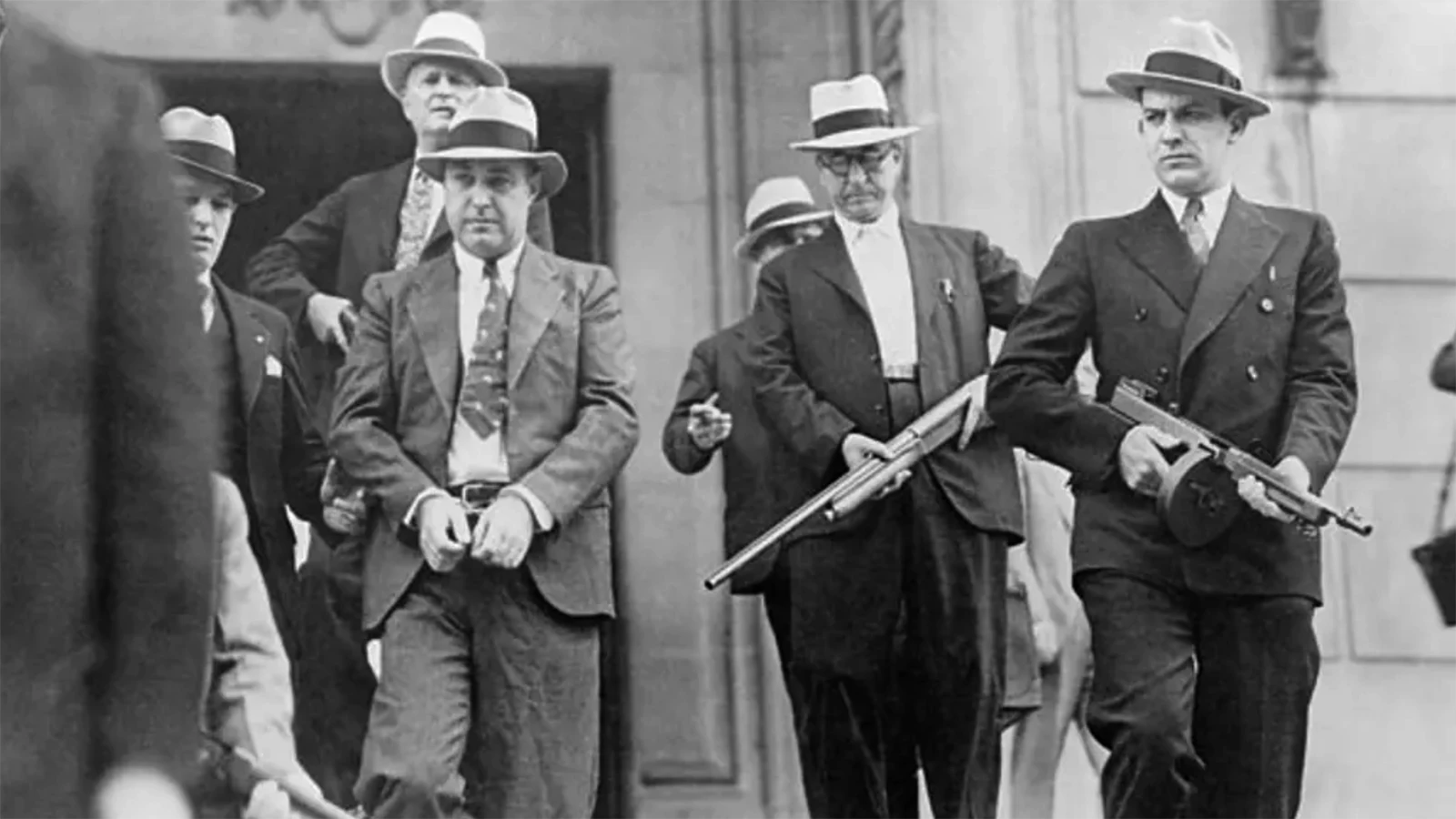
Machine Gun Kelly is escorted from a court hearing in handcuffs and guarded by armed agents. (Courtesy National Archives) 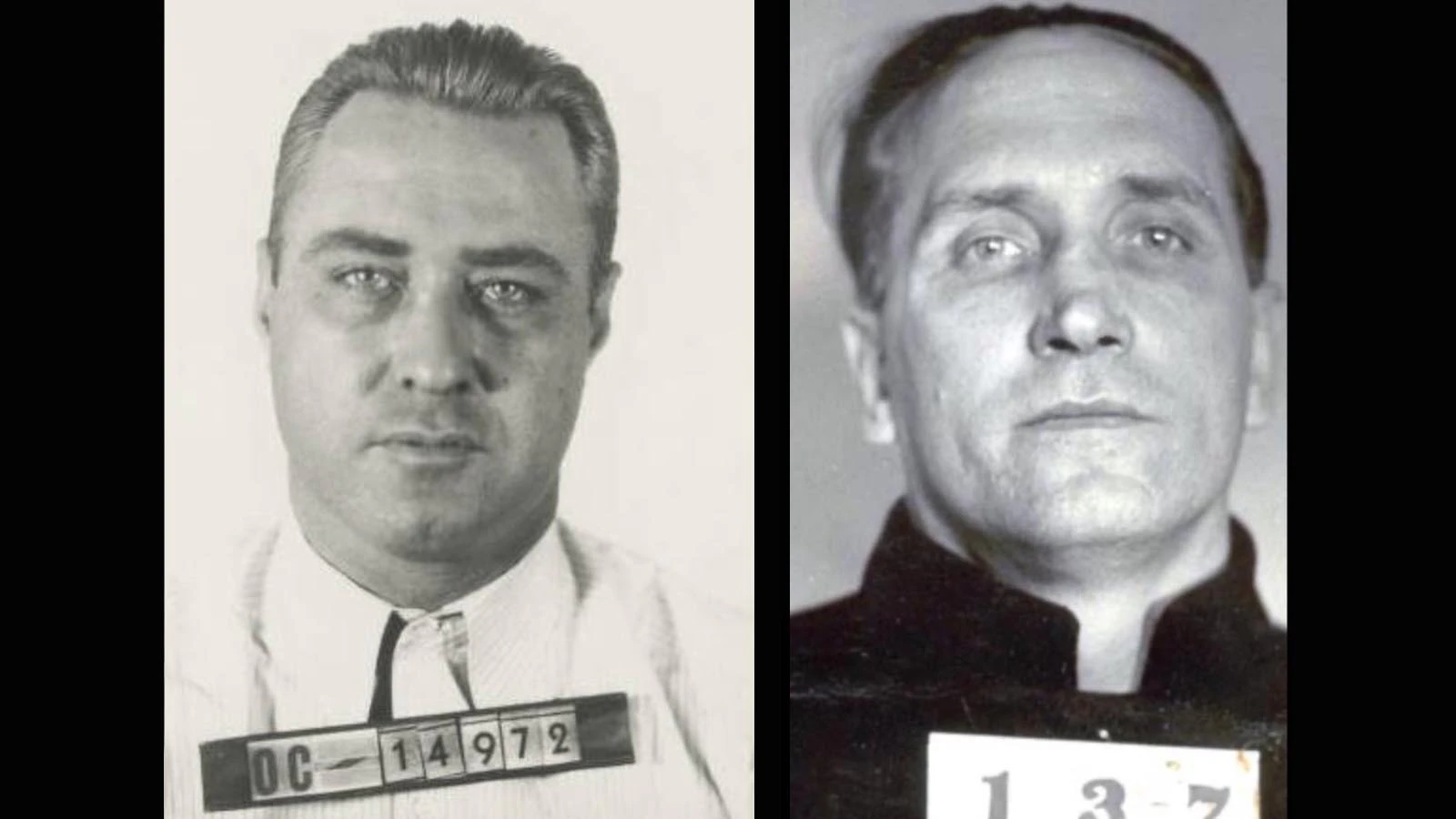
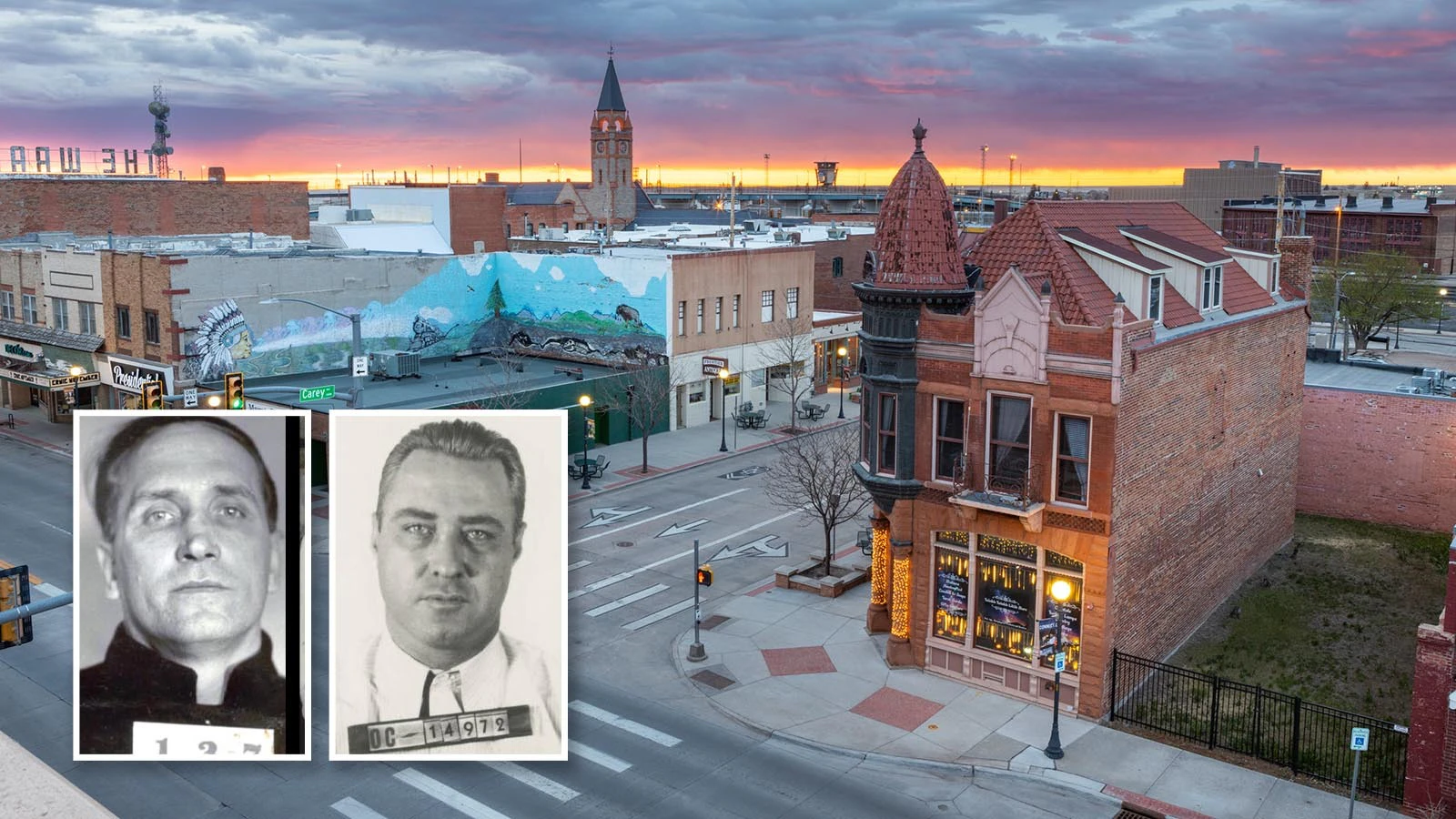
FBI files from 1933 reveal that a substantial portion of $90,000 in ransom loot stuffed in a suitcase ended up buried somewhere around Cheyenne. The plot was carried out by George "Machine Gun" Kelly, left, and Albert Bates. Whether all the loot was ever recovered remains a question.
The Kidnapping
One year after Congress passed the “Lindbergh Law” making kidnapping a federal offense if the victim is transported across state lines, Bates and Kelly went to the Oklahoma City home of Charles Urschel.
With his wife, Urschel was playing cards on a screened porch with Walter Jarrett and his wife. The Urschels represented millions of dollars in oil wealth.
Two masked men, one with a machine gun and one with a pistol, opened the door at 11:15 p.m. on Saturday, July 22, according to FBI documents dated Oct. 15, 1935.
The men asked Urschel to identify himself. When there was no response, they took both men.
“After warning the women against calling for help, they marched Urschel and Jarrett to where they had driven their car, put them into the back of the Chevrolet sedan and drove them away,” the FBI file states.
“Mrs. Urschel, in accordance with the (U.S.) Attorney General’s advice to the public, immediately telephoned J. Edgar Hoover,” the documents continue. "Special agents were sent to Oklahoma City where an extensive investigation commenced.”
Jarrett was released by the kidnappers 12 miles outside the city after they had identified him through his wallet and robbed him of $50.
$200,000 Demand
The FBI initially let the ransom process play out.
Another Oklahoma oilman friend was contacted days later through a Western Union package with a letter from Urschel detailing how the kidnappers wanted $200,000 and asking him to be an intermediary.
An elaborate scheme involving a newspaper ad, post office box, and train trip by Urschel’s friend carrying a new suitcase full of the cash in $20 bills was outlined by the kidnappers.
The FBI’s policy at the time was to try and ensure the safety of the victim.
When it came time to provide the money, the family, with counsel from the FBI, went to the Federal Reserve Bank of Kansas City and got $200,000 in $20 bills.
All the serial numbers on the 10,000 bills were recorded.
The train scheme to deliver the case was followed, and on July 31, Urschel was taken to Norman, Oklahoma, given $10 and released.
Though blindfolded and with cotton in his ears for some of his transport and captivity, the oilman’s description of sounds of oil rigs, airplanes and snippets of conversation helped the FBI pinpoint the Texas ranch of Machine Gun Kelly’s wife as the place he was held captive.
A raid on the ranch found Kathryn Kelly’s parents admitting that they had stood guard over Urschel and told agents that George “Machine Gun” Kelly and Bates had kidnapped him.
At their home, the agents also arrested a Kansas State Penitentiary escapee who had $700 worth of Urschel ransom money on him.
The FBI put out nationwide information for law enforcement to be on the lookout for Bates and the Kellys.
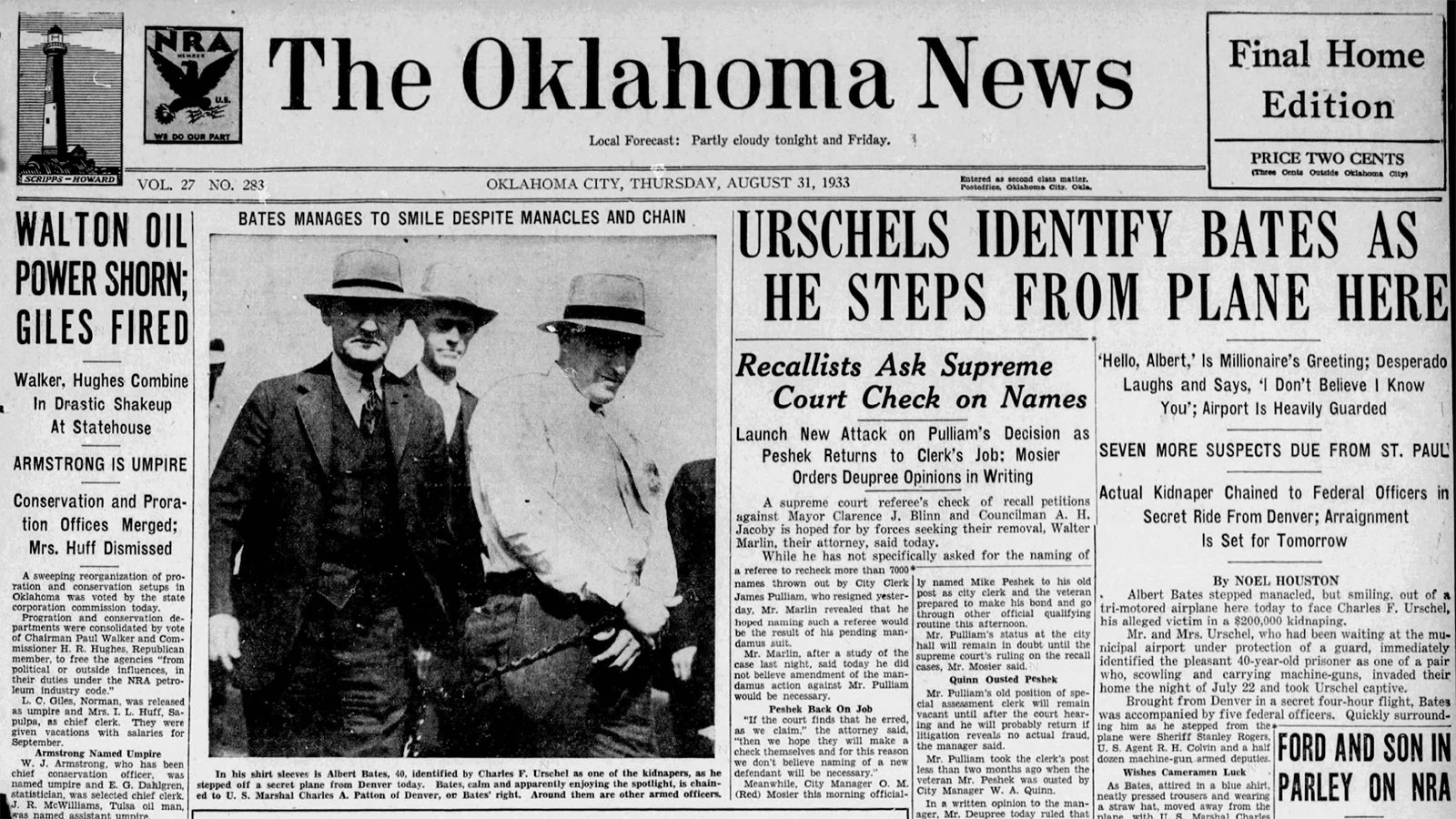
The Oklahoma News on Aug. 31, 1933, reported on Albert Bates being brought back to Oklahoma from Denver to face trial for the kidnapping. (Courtesy Newspapers.com) 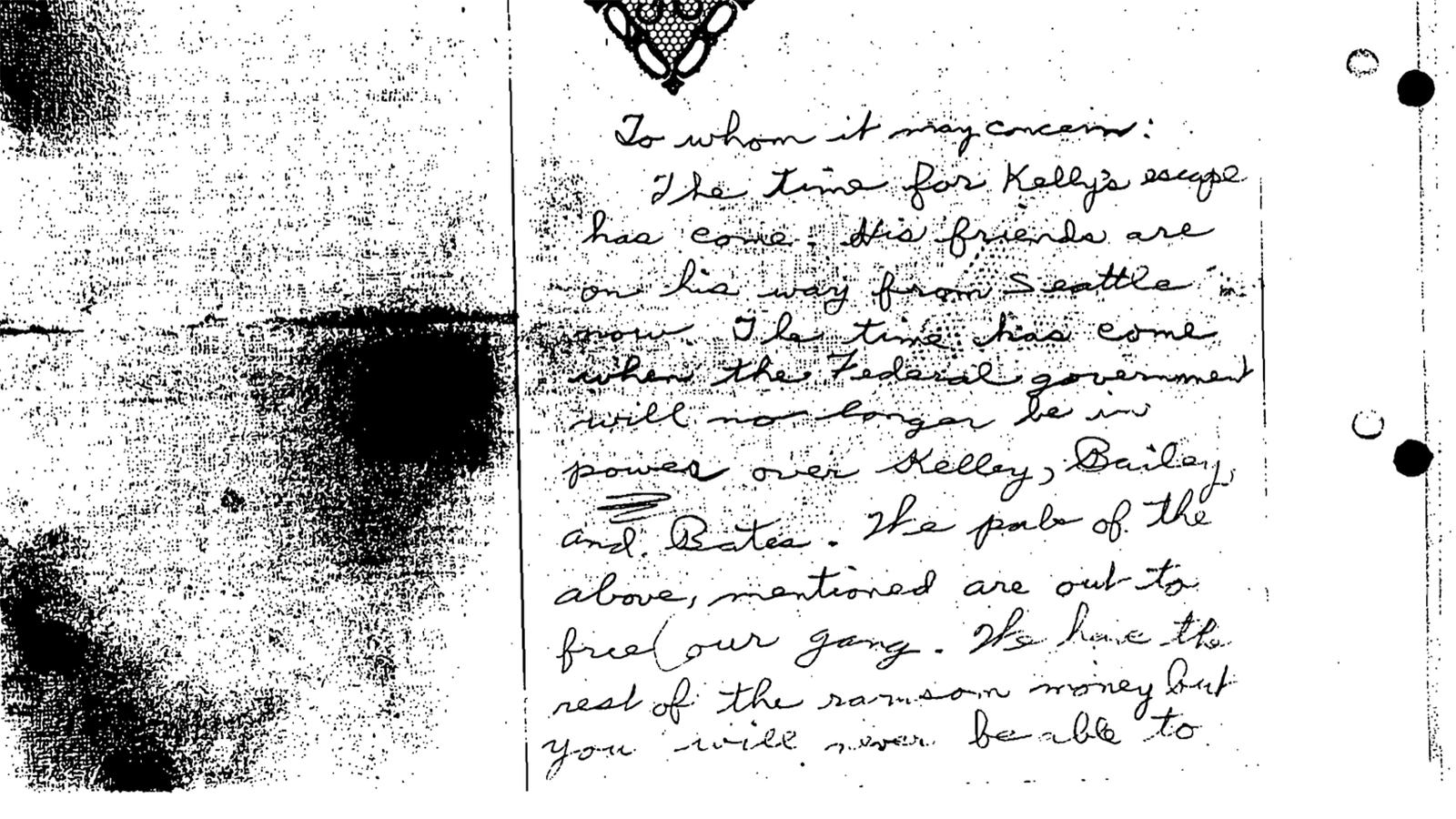
The FBI received a letter threatening to release Albert Bates and the Kellys during their trial. (Courtesy FBI) 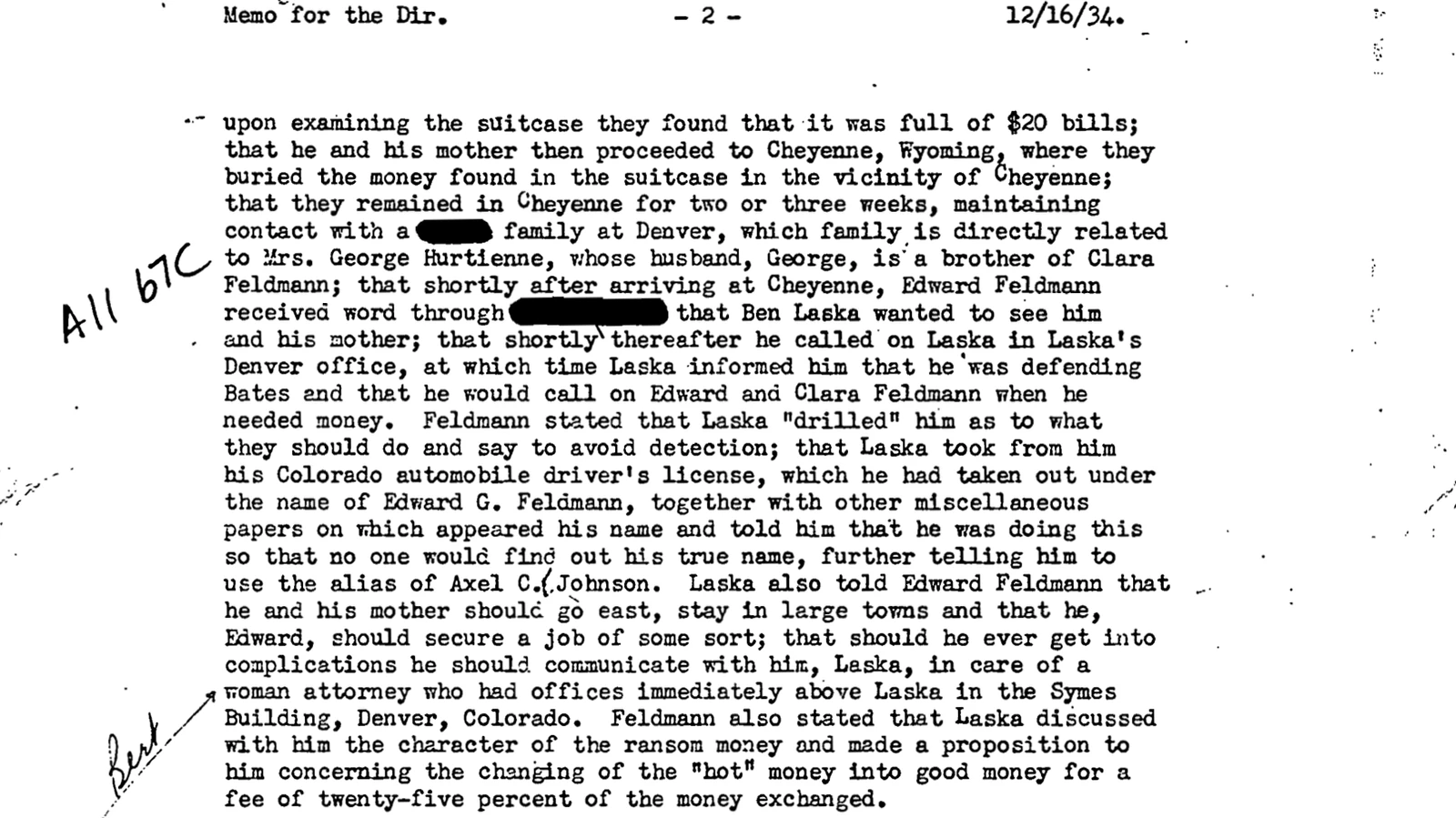
A FBI file from Dec. 16, 1934, contains Edward Feldman’s testimony about the burial of kidnapping cash in Cheyenne. (Courtesy FBI) 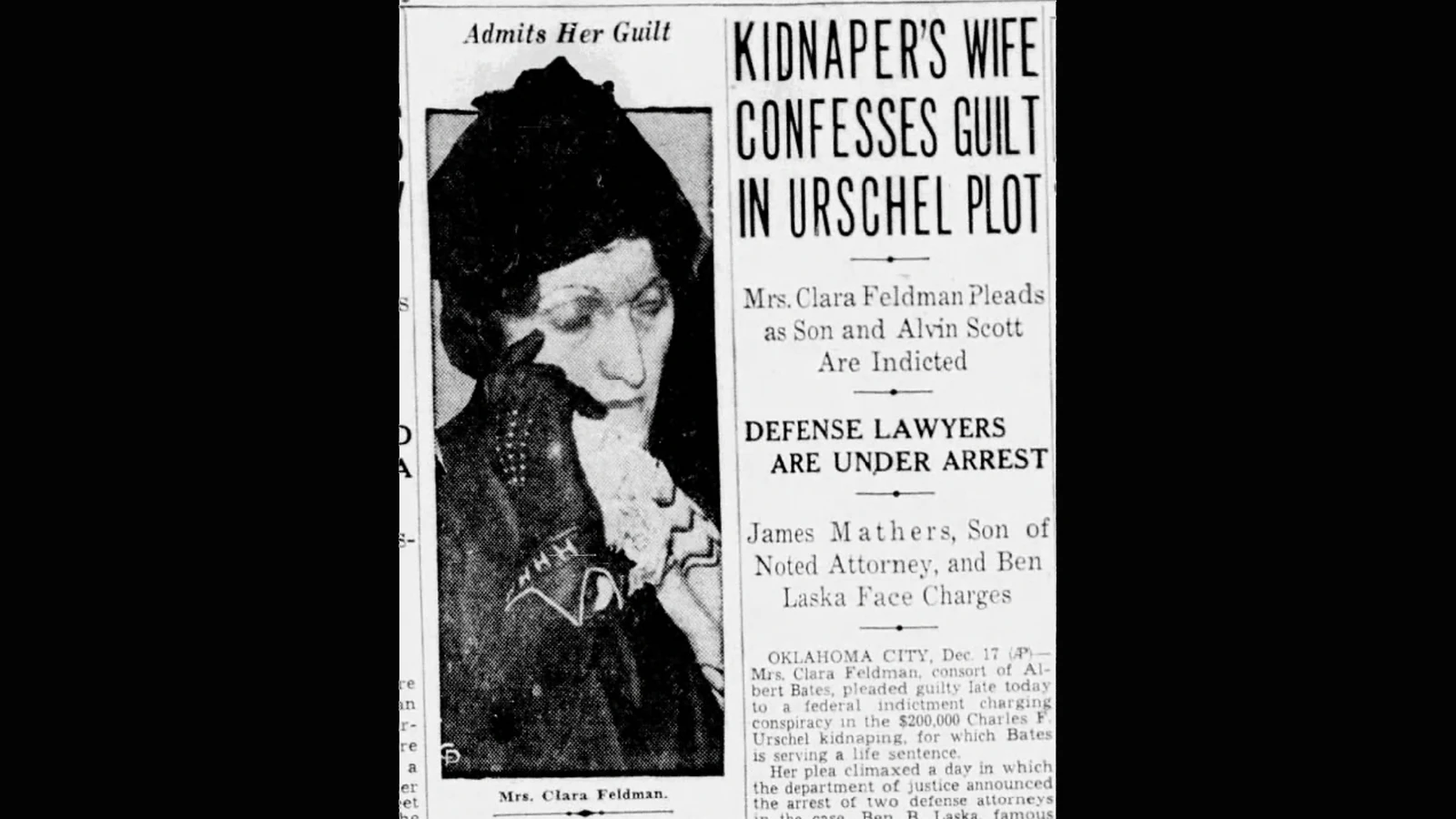
The Tulsa World newspaper on Dec. 18, 1934, reported on Clara Feldman’s guilty plea. (Courtesy Newspapers.com)
Bates Arrested
On Aug. 12, 1933, Bates was arrested in Denver after returning from a trip to Oregon.
Colorado detectives received a tip he has appeared at the train station and arrested him for robbing the First State Bank of Louisville, Colorado. They also started looking for his wife.
“Detectives Henry Tormay and Harry Bernstein, who arrested Bates, began a search here Friday for Bates’ wife, who is said to have come to Denver and is believed to be using the name ‘Mrs. George L. Davis,’ an alias police say Bates used,” the Fort Collins Coloradan reported on Aug. 18, 1933.
FBI documents dated April 25, 1934, from the agency's Salt Lake City office show the agency still actively looking for Clara Feldman, Bates' wife, who also was using the name Ruth Johnson.
Agents also were doing research trying to track a Chevy automobile. A Salt Lake City agent also was sent to Cheyenne to dig into “undeveloped leads.”
“Will secure all information possible, helpful in locating Ruth Johnson (Clara Feldman) and (the name was blacked out),” the agent wrote.
But Bates' wife was not found until months later.
The FBI’s tactic of copying the serial numbers of all the $20 bills and distributing that information to banks across the country paid off.
“Urschel Ransom Found In Oregon,” the Morning Oregonian newspaper reported on Nov. 8, 1934. “Officers take $1,360 off driver hurt in crash.”
The driver was Alvin Scott, 46, who on Nov. 2 was involved in a high-speed crash that put him in the hospital in critical condition.
Police found $1,360 in $20 bills linked to the kidnapping.
Clara Feldman’s sister, Margarette Hurtienne, was his housekeeper. His and Hurtienne’s arrests led agents to Feldman and her son, Edward, 21, and his wife, Betty, in Dunsmuir, California.
Clara Feldman, aka Clara Davis and Clara Bates, told FBI agents that she and her son had traveled from Denver to Oregon with Albert Bates in August 1933 — just after the kidnapping — to visit family and they had returned to Denver without Bates.
She had not been aware of her husband’s return to Denver until she heard from a released county jail cellmate who brought a message from Bates to her apartment.
The message was brief: “Look in the suitcase.”
When Feldman opened it, it was filled with $20 bills.
'Vicinity Of Cheyenne'
An FBI memo to J. Edgar Hoover on Dec. 16, 1934, states that Edward Feldman told agents that in the year prior they buried the money “in the vicinity of Cheyenne” and stayed in the area for two or three weeks, maintaining contact with a family in Denver connected to Margarette Hurtienne.
A Casper Tribune-Herald Article on Dec. 18, 1934, reported that Laramie County Sheriff George Carroll told local reporters that Feldman and her son were just a few steps ahead of the FBI and law enforcement in 1933 when they were in the region.
“The sheriff said he received information that persons sought in connection with the federal search for the Urschel ransom money were in Cheyenne,” the newspaper reported.
Both Clara and Edward Feldman told the FBI that once they buried the money, they were contacted by noted Denver attorney Ben Laska, who was going to defend Albert Bates at the kidnapping trial in Oklahoma.
Laska confiscated their identification papers and told Edward Feldman to use the name “Axel C. Johnson” and to go to big cities in the East to live.
Laska weeks later contacted them and asked for $10,000 to represent Bates. That would be the equivalent of $248,000 in 2026 purchasing power.
The Feldman’s delivered Laska $8,000 of the ransom money, they told the FBI.
“Laska then asked for a diagram of the place where the remaining ransom money was buried,” the FBI reports states. “Edward Feldman furnished him with a fictitious diagram.”
Edward Feldman told agents he later delivered $2,000 in additional ransom funds to Laska and another attorney while they were in Oklahoma defending Bates at the trial.
The Feldman’s and Hurtienne agreed to testify about those payments for the feds and were extradited to Oklahoma.
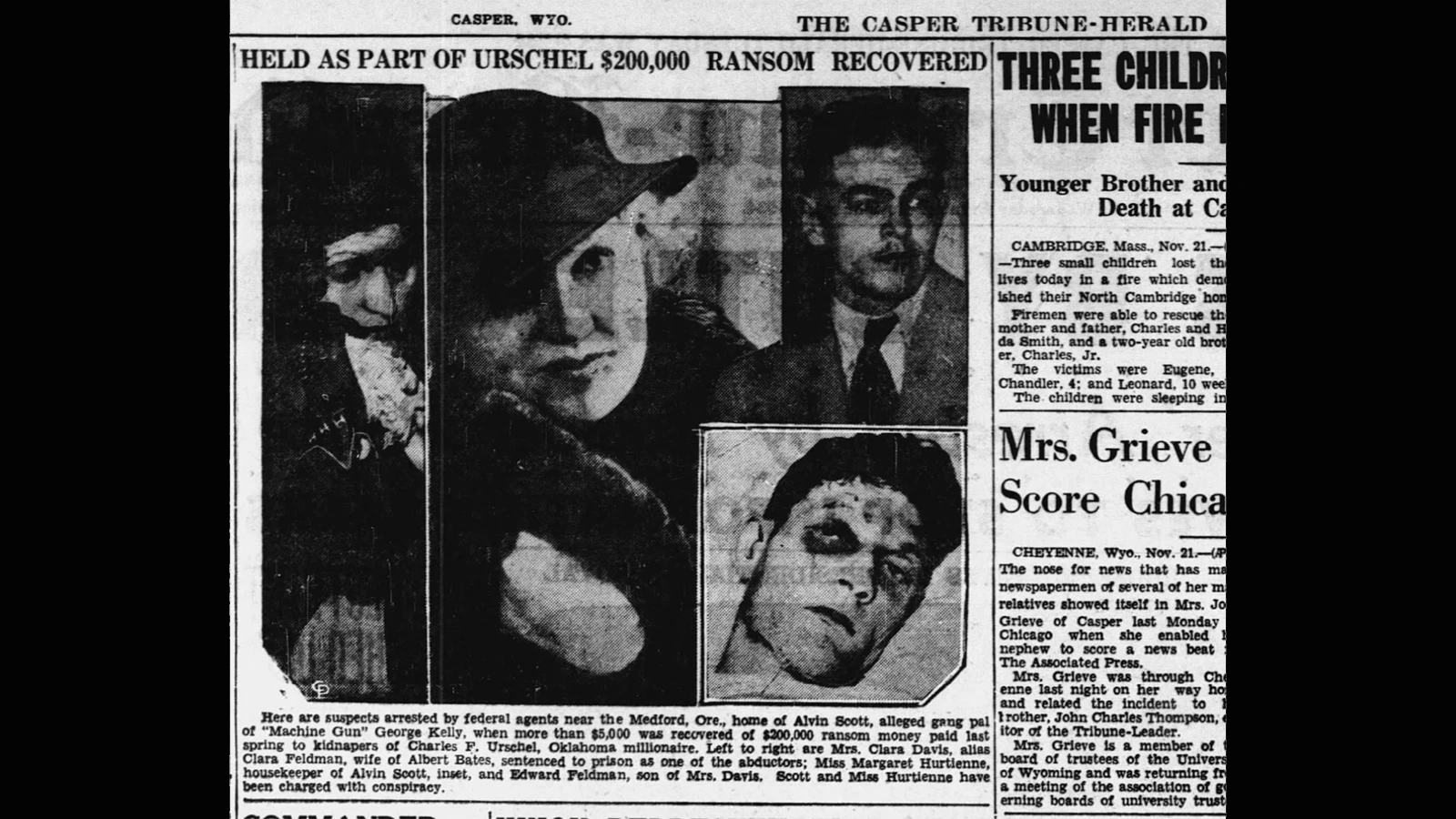
The Casper Tribune-Herald on Nov. 11, 1934, carried the news on the arrest of Clara Feldman and associates. (Courtesy Newspapers.com) 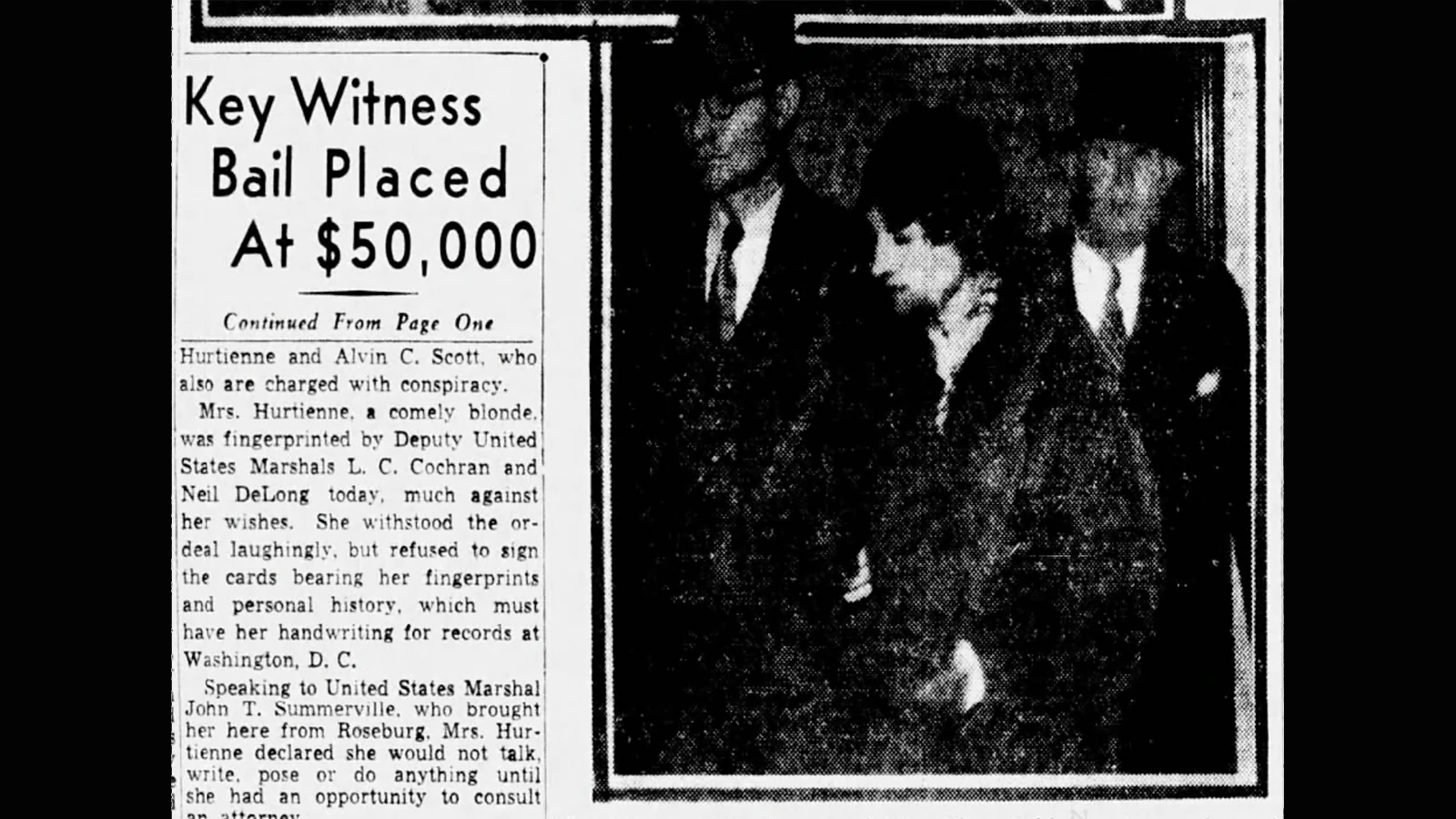
The Oregon Daily Journal on Nov. 10, 1934, reported the arrest and booking of Clara Feldman. (Courtesy Newspapers.com) 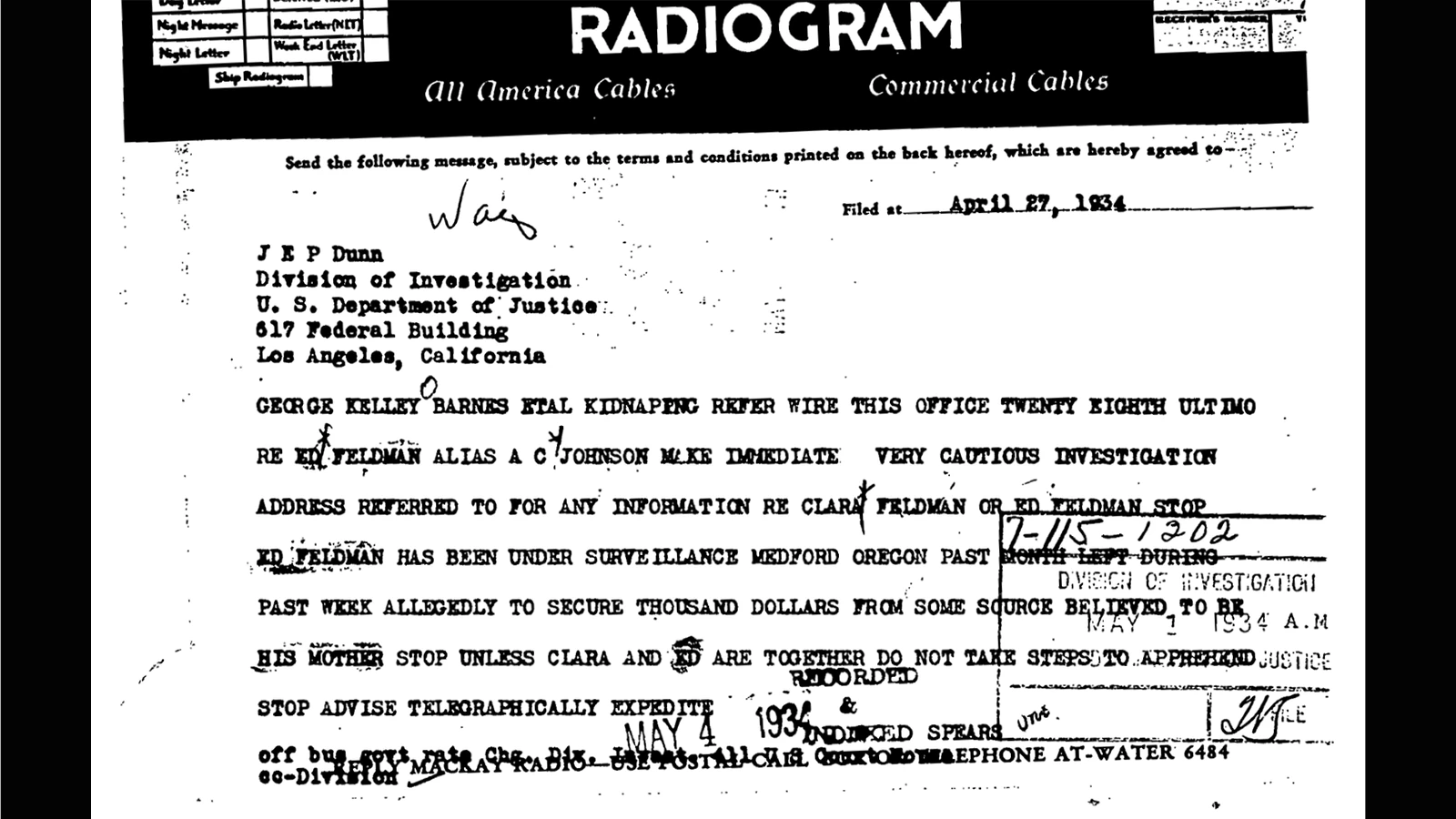
A telegram in the FBI files of surveillance of Clara Feldman’s family in attempt to find her. (Courtesy FBI) 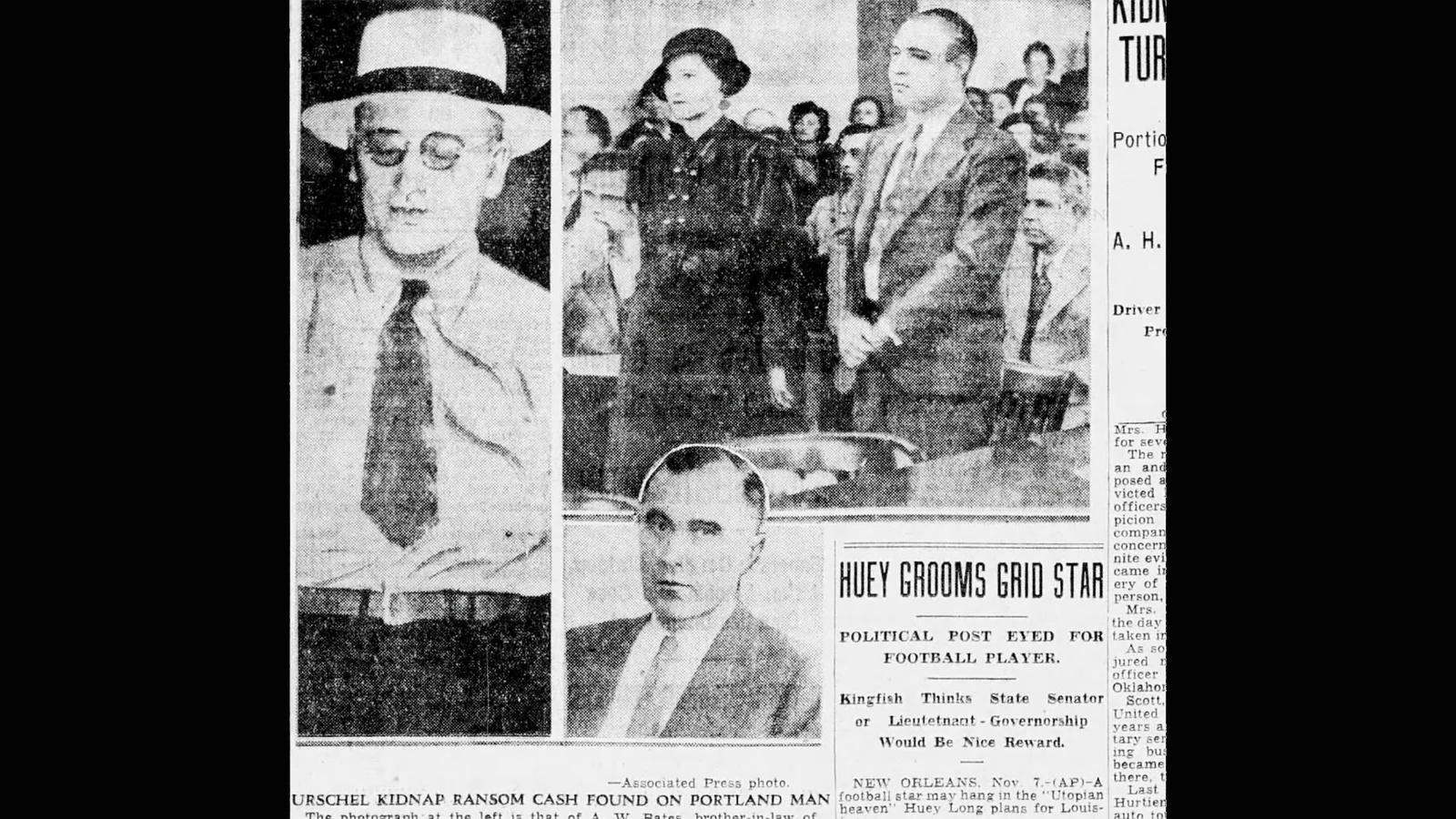
The Oregonian on Nov. 8, 1934, reported on the arrest of Clara Feldman and others who possessed kidnapping cash. The photo from left are Albert Bates, Kathryn and George “Machine Gun” Kelly, and an inset of kidnapping victim, Charles Urschel. (Courtesy Newspapers.com)
Guilty Pleas
Feldman and her son went on to plead guilty to conspiracy charges related to the kidnapping cash and testified against, Laska, who also had been charged for his part in accepting what he knew to be the ransom cash.
They were given five-year suspended prison sentences and placed on five years of probation.
Laska was convicted and sentenced to 10 years in prison.
FBI files in the case report that the Feldmans after their arrest gave agents information to where more than $38,000 of cash was buried.
But the FBI files do not make clear where they recovered the cash.
However, the Tulsa World reported on Dec. 18, 1934, that the cash ended up on the West Coast after reporting the amount the Feldman’s buried in Cheyenne was “about $75,000 of the money” from Bate’s $90,000 haul.
The newspaper reported that the Feldmans removed “the money after a year and transported it to Oregon and Washington.”
Cash Unaccounted For
FBI files do not account for the close to $25,000 not recovered from the Feldman’s or their associates such as Scott and Hurtienne that represented Bates’ haul from the kidnapping.
Clara Feldman and her sister may have used part of the funds for their wardrobe. During their first court appearances in Oregon following their arrest, The Oregon Daily Journal on Nov. 10 reported on their court attire.
“Both Mrs. Hurtienne and Clara Feldman are attractive women. They wore brown fur coats of expensive make and their entire ensembles were of corresponding color, even to their shoes, hats, dresses, scarves, purses, gloves and hosiery,” the newspaper reported.
For their actions in the kidnapping, Bates, George “Machine Gun” Kelly and his wife, Kathryn were sentenced to life in prison.
Both men were sent to Alcatraz. Bates died on July 4, 1948 of heart disease while at Alcatraz.
Kelly died on July 18, 1954, after being transferred Leavenworth prison in Kansas.
Kathryn Kelly was initially sent to a Milan, Michigan prison and was released in 1958. She died in Oklahoma in 1985.
Edward Feldman died on March 11, 1977 and is buried in Medford, Oregon. His mother was listed in the 1940 U.S. Census as living in Portland, Oregon. Cowboy State Daily could not determine her date and place of death.
Laska was paroled from prison in 1941 and later pardoned by President Harry Truman for his role in accepting the cash and directing the Feldman’s actions.
And decades later, it’s possible there's $25,000 still buried somewhere around Cheyenne.
Dale Killingbeck can be reached at dale@cowboystatedaily.com.


