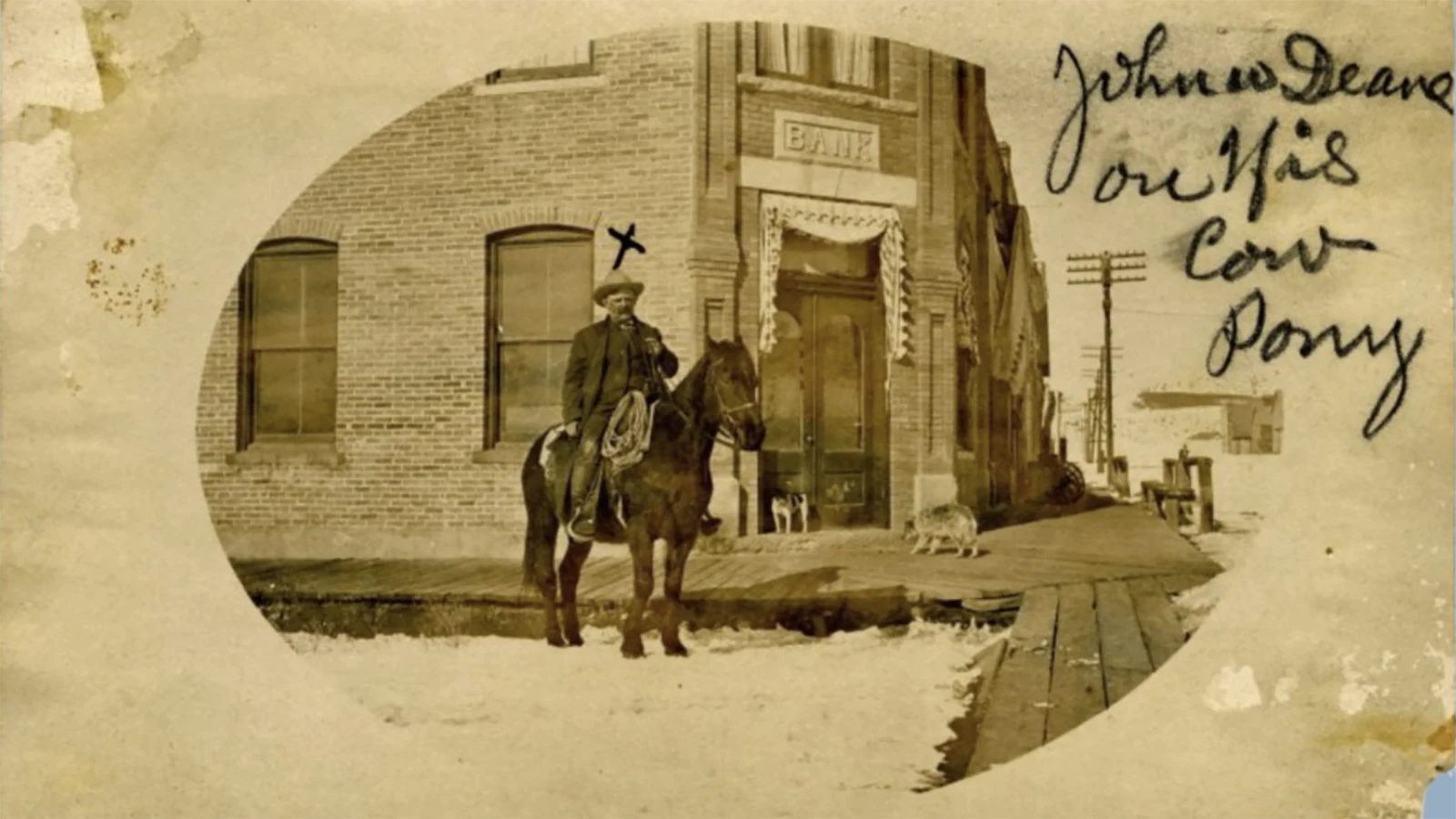
John “Josh” Deane was 16 years old when he left his home in Phoenixville, Pennsylvania, for the Wild West in 1872, lured there by the adventures he had read about in the 10-cent novels of his day.
Instead of the excitement he dreamed of, the teenager found life a struggle just to survive.
Deane eventually took a job for $75 a month driving freight, a profession known as "bull whacking."
By 1876, Deane was 20 years old and landed an opportunity that he considered an advancement in life.
He was hired as a government dispatch carrier at the princely sum of $125 a month.
In 1928, Deane told his story to a biographer about he carried one especially important dispatch, related in his own words in the book “The Mayor of Meeteetse.”
Rumors Of A Fight
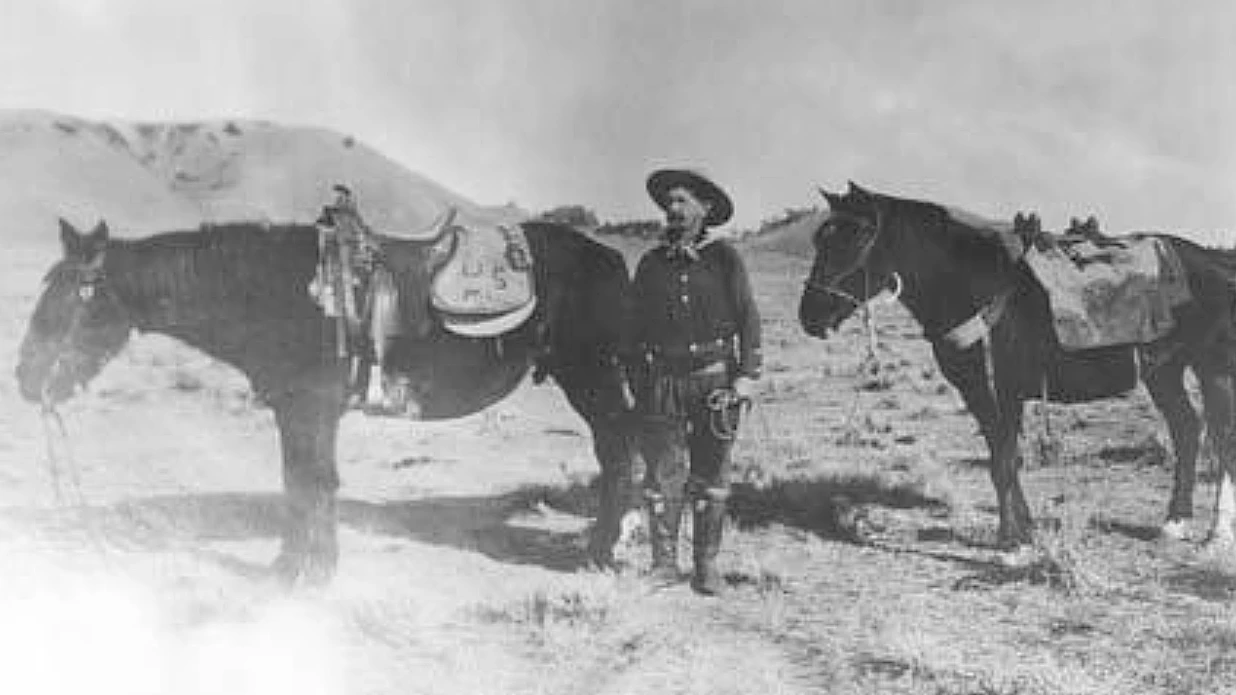
Deane had arrived at Fort Brown in the middle of June 1876 and was told by Col. Julius Mason to remain a few days.
Mason had just arrived himself from Fort Riley, Kansas, and was concerned because there were rumors of a fight with the Indians in the Rosebud country.
“A little later, he decided to send me to the camp of Custer and Reno and told me to select an Indian to accompany me,” Deane said. “I picked Niogen Doget, a Shoshone, and we started out on the morning of June 24, with our saddle horses and one pack horse.”
The two men had orders to reach their destination as quickly as possible, so they traveled fast and light.
Crossing Cottonwood Creek, they made our way up the slope of the Owl Creek Range.
On the summit of the mountains, Deane described pausing to look down for the first time into the Big Horn Basin which would one day be his future home.
“From my point of vantage, I could see the Big Horn River and could trace its course for many miles, by the line of cottonwood timber along its banks,” Deane said. “Not a human being, nor a sign of human habitation, was visible in all the valley.”
As Deane and Niogen Doget took in the view, they were unaware of the danger that Custer, Reno and the others would be facing the next day along the Little Bighorn River.
Deane said that the Pryor Mountains were dimly visible, and the Big Horn Range, with snow-capped Cloud’s Peak, rising in its midst, was easily discerned.
Only a few miles beyond the smooth northern slope of the range on which they stood, the men could see the peculiar, brick-red, conical hills of the hot springs region, in which the town of Thermopolis would later spring up.
They descended the northern slope of the mountains, passing close to the spot where Col. Torrey’s Embar Ranch would soon to be situated, the same ranch that Butch Cassidy and others of the Hole-in-the-Wall gang would be working on in the 1890s.
He forged unnamed creeks and swam rivers in his haste to reach the camps.
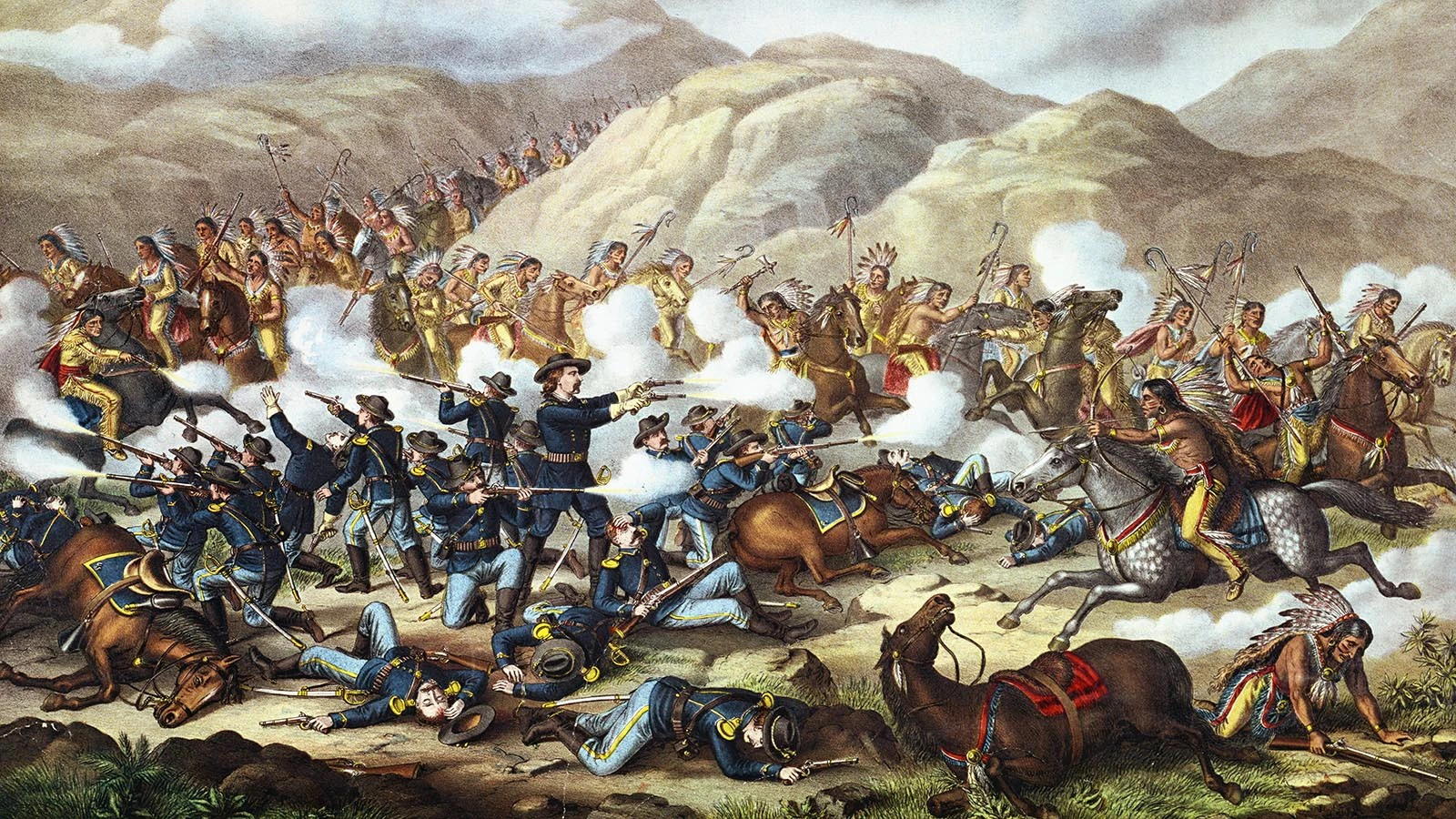
As the two men traveled with the dispatch from Fort Brown on June 25 and 26, they were completely unaware that the Battle of the Little Bighorn, known as the Battle of the Greasy Grass by the Lakota Sioux, Northern Cheyenne, and Arapaho tribes, was being fought.
Reno Sick in Tent
On June 27, Deane said that he and Niogen Doget reached the head of what is now called Reno Creek.
They followed down a long bench, hunting the camp of Custer and Reno.
“As we drew near the camp, which was on the bank of the Little Big Horn River, I could see dead horses and other traces of a fight,” Deane said years later in 1928. “Sergeant Ned Bowling, whose widow is still living in Lander, Wyoming, greeted me and pointed out Reno’s tent.”
Deane said he hurried over to the tent but was surprised when Reno’s orderly would not let him inside.
Deane was told that Reno was ill and unable to receive dispatches.
“I was sent to the second in command to whom I handed over the small locked pouch, used by the government for secret messages, and the sealed envelope containing the key,” Deane said. “As he tore open the envelope, I remarked that I would look around a little and return later.”
Deane was ordered instead to wait while the officer prepared dispatches about the battle to send back to Fort Brown. Deane was then told to start back with the messages at once.
“My curiosity was now thoroughly aroused, as well as some resentment,” Deane said. “When a man has just covered 170 miles, in two days, it must be a very urgent matter which sends him back over the same route, without at least, one night’s rest for himself and his horse.”
Deane could see that “serious things had been happening.”
He described how the faces of the officers were grim and haggard; there were dead horses and bandaged men, and Reno was evidently seriously wounded.
He pulled his friend Bowling to one side while waiting for the dispatches and asked what had happened.
Bowling told Deane that Custer and Reno had quarreled at Rosebud, and Custer, impetuous and hot-headed, had taken a small group and gone ahead to attack the Indians, without waiting for Reno’s support.
Deane learned that Custer and his men had ridden forth upon a rolling ridge and were going so fast that the ammunition wagon and Gatling gun could not keep up. Indians, outnumbering his forces 10-1, were in ambush in the timber along the Little Big Horn River, which paralleled the ridge.
Bowling said that Indians had pushed upon Custer’s little group, taking them by surprise, cutting them off from the retreat and from their ammunition, and had them at their mercy.
The soldiers had put up a brave resistance, but when their ammunition was gone, they were helpless and were slaughtered without quarter by the furious Sioux.
Battle Scene
Deane said that Reno, coming along later in the day, had a skirmish with the Indians, in which he lost a great number of men.
The rest of the soldiers were so exhausted that no attempt had as yet been made to bury the dead from the Custer massacre.
“As a matter of fact, except for a thin layer of soil thrown over the bodies where they lay, they were left untouched for many months and then buried in one huge pit, above which stands the Custer monument bearing their names,” Deane said.
According to Deane’s account, small stones were set up at the spot where each man fell, and where he lay before each soldier was given a permanent resting place.
Custer, alone of the victims of that day’s slaughter, is not buried on the field, Deane said. His body was removed to the East.
“Orders or no orders, I could not go back to Fort Brown without a glimpse of that battlefield,” Deane said.
When his dispatches were ready; instead of starting back, Bowling and Deane slipped away to the spot, only a short distance from the camp, where the soldiers lay dead.
“As we approached the scene of the massacre, we saw a horse quietly grazing on the hill side, apparently the sole survivor of the recent battle,” Deane said. “He had a bullet wound in his neck, but was not seriously hurt, and as I happen to know, died many years later, of old age.”
The scene that Deane observed before him was one that remained with him for the rest of his life.
He described how men and horses were lying where they had fallen, scattered singly or in groups of twos or threes, on both slopes of the ridge and on its summit.
“Most of the bodies were fairly close together, but occasionally we noticed small groups or individuals at some distance from the rest,” Deane said. “Piles of empty shells could be seen everywhere.”
As Deane walked among the battlefield, he said that none of the soldiers appeared to have more than two or three cartridges left.
The whole field, as indicated by the positions of the dead, was about a square mile.
He said that the bodies of the men were all on this unsheltered ridge, where sagebrush was the only vegetation, but dead horses were scattered through the timber close to the river.
There were no dead Indians to be seen, though they must have lost at least as many men as the whites.
They had evidently paused long enough after the fight to gather up their own dead, as well as to take the scalps of a good many of their victims.
“We came upon General Custer lying across the neck of his horse, a pistol in his hand,” Deane said. “The Indians must have respected his rank for he still wore his scalp.
“I remember noting that he had yellow hair, a fact which I have since had to dispute with several people who have insisted that Custer was dark.”
The scene Deane described decades after the fact matched that of Captain Frederick Benteen, battalion leader of Companies D, H and K who walked the battlefield on the same day.
“The only approach to a line was where five or six horses found at equal distances,” Benteen reported. “Ahead of those horses there were five or six men at about the same distances, showing that the horses were killed and the riders jumped off and were all heading to get where General Custer was.”
Delivered Dispatch
After walking the battlefield, Deane and Niogen Doget reached Fort Brown late in the evening of the second day. Deane went immediately to Mason and handed him the envelope and dispatch pouch.
“Huh! Hell of a note! Did you hear the details?” Mason said after reading the dispatch.
Deane repeated to him what Bowling had told me of the cause of the affair and described the battlefield as he had seen it.
Mason appeared disturbed but made no further comment, except to wonder if the news had been dispatched to other quarters.
Deane told him that dispatch carriers had been sent to Helena.
“I should have reached my destination, however, before they did theirs,” Deane said. “There was no telegraph line at Fort Brown so we were unable to pass the news along before it had reached the world through other channels.”
Robert Hall, the telegraph operator at Fort Stambaugh, about 50 miles south of Fort Brown, had the distinction of first wiring the news to the headquarters department at Omaha.
General Crook at Fort Rosebud had dispatched Shoshone Indian runners to Fort Stambaugh, as soon as he heard of the catastrophe.
Stambaugh had a telegraph line, but there was a break in the wire, just then, which had not yet been located.
The commanding officer had relays of horses sent out along the telegraph route and gave Hall the dispatches with instructions to ride along the route until he found the break in the wire.
He found it at a point about 50 miles from the Fort, and from there he sent his news to Omaha.
“Nothing more that was exciting or worthy of special notice occurred during my career as a government dispatch carrier,” Deane said. “I made only the usual routine trips from one fort to another.”
A year later, Deane had not saved much of his money and had grown weary of the monotony of the long, lonely rides over the hills. He quit the job of delivering messages for the military and headed to Green River.
Eventually, Deane returned to the Big Horn Basin during a more peaceful era and settled in Meeteetse where he was appointed mayor.
There, he lived his last years as an old timer of the region and became famous for his barbecues.
Jackie Dorothy can be reached at jackie@cowboystatedaily.com.