Despite a Monday decision by the Cheyenne City Council to consider increasing the fine for sleeping on city streets, members say they are unable to justify why it is needed.
The proposal, brought by Councilman Mark Moody, would see the penalty for sleeping in city streets jump from $50 to $750, representing a 15-fold increase.
The amendment would apply to the city’s current rules against “camping on public property.”
That ordinance finds that “camping on public property tends to endanger the health and safety of those engaged in such camping as well as the public at large.”
“Any unlawful campsite identified by a law enforcement officer or other Cheyenne city employee is subject to abatement by the (Compliance Department),” it reads. “Upon the identification of an unlawful campsite the law enforcement officer or Cheyenne city employee shall promptly notify the department of the campsite and its location.”
While camping on public property remains a misdemeanor, the amendment would make it so that sleeping on sidewalks, streets, alleys or within doorways would carry the maximum possible penalty of a $750 fine and six months in jail. The proposal also strikes language which could reduce an offender’s fine if they are seeking the assistance of a community aid group.
The amendment was introduced for a first reading Monday and referred to the city public services committee.
‘Absolutely Abhorrent’
Cheyenne City Councilman Mark Rinne told Cowboy State Daily he had not fully studied the proposal but said he too had questions on how it would be implemented.
“Most of those people can't afford a $50 fine, that's why they're living on the streets,” he said. “I'm not sure telling them they owe $750 is going to make a difference.”
Rinne also questioned how the jail would handle an influx of new arrivals that may be impacted by the proposal. He speculated this could take a toll on the city’s general fund and could hamper other projects in need of funding.
“If we’re worried about revenues, that maybe isn’t the ideal approach,” he said.
The councilman also agreed many of these individuals suffer from mental and physical health problems, which complicates their situation and makes treating the problem of homelessness difficult.
“There’s a segment of that population that doesn’t want to follow anybody’s rules,” Rinne said. “I was young and naïve my first time on the council and thought ‘why would you not want to be in a warm shelter with food and a warm bed?’ But some people just don’t.”
Councilwoman Kathy Emmons gave a much more forceful response, telling Cowboy State Daily she finds the proposal “mean spirited” and unlikely to solve the problem of homelessness.
“I think it’s absolutely abhorrent that we are even discussing this,” she said via phone.
“It's just ridiculous that someone who is unhealthy and living on the street is just doing it to violate some kind of ordinance or some kind of a rule,” she added. "And if certainly they can't afford a $50 fine, they're not going to be able to afford a $750 one. That in itself, is just ridiculous. Makes no sense at all.”
Emmons said she spoke with Moody about the proposal and voiced her concern. She said Moody had told her that he proposed the changes after receiving concerns from constituents.
Despite this, Emmons argued enforcing the proposal will prove nearly impossible.
“It's unenforceable,” she said. “If you read the resolution, it talks about if someone is trying to help from a community based organization, then the fine could be reduced or eliminated. Just from a practical standpoint, who's going to verify if someone didn't ask for assistance?”
Councilman Pete Laybourn told Cowboy State Daily the measure is more aimed at mitigating homeless encampments, rather than targeting individuals. Regardless, the councilman said the city’s current laws are more than adequate to address the problem and that he is not in favor of the amendment.
“It might be the most difficult thing in the city,” he said of homelessness. “It is just so sad and difficult. I think that the societal pressures and economic conditions today in the state of Wyoming and the city, I’m not sure what the ultimate answer is.
He added that Moody is “new to the council” and may find the process of proposing this amendment to be a “learning experience."
Moody acknowledged a request for comment from Cowboy State Daily on Tuesday, but did not respond to several questions regarding his proposal.
They Won’t Pay
Robin Bocanegra, executive director of COMEA homeless shelter, told Cowboy State Daily her shelter begins to fill up this time of year as the weather gets colder. This allows COMEA to work with new arrivals to help improve their circumstances.
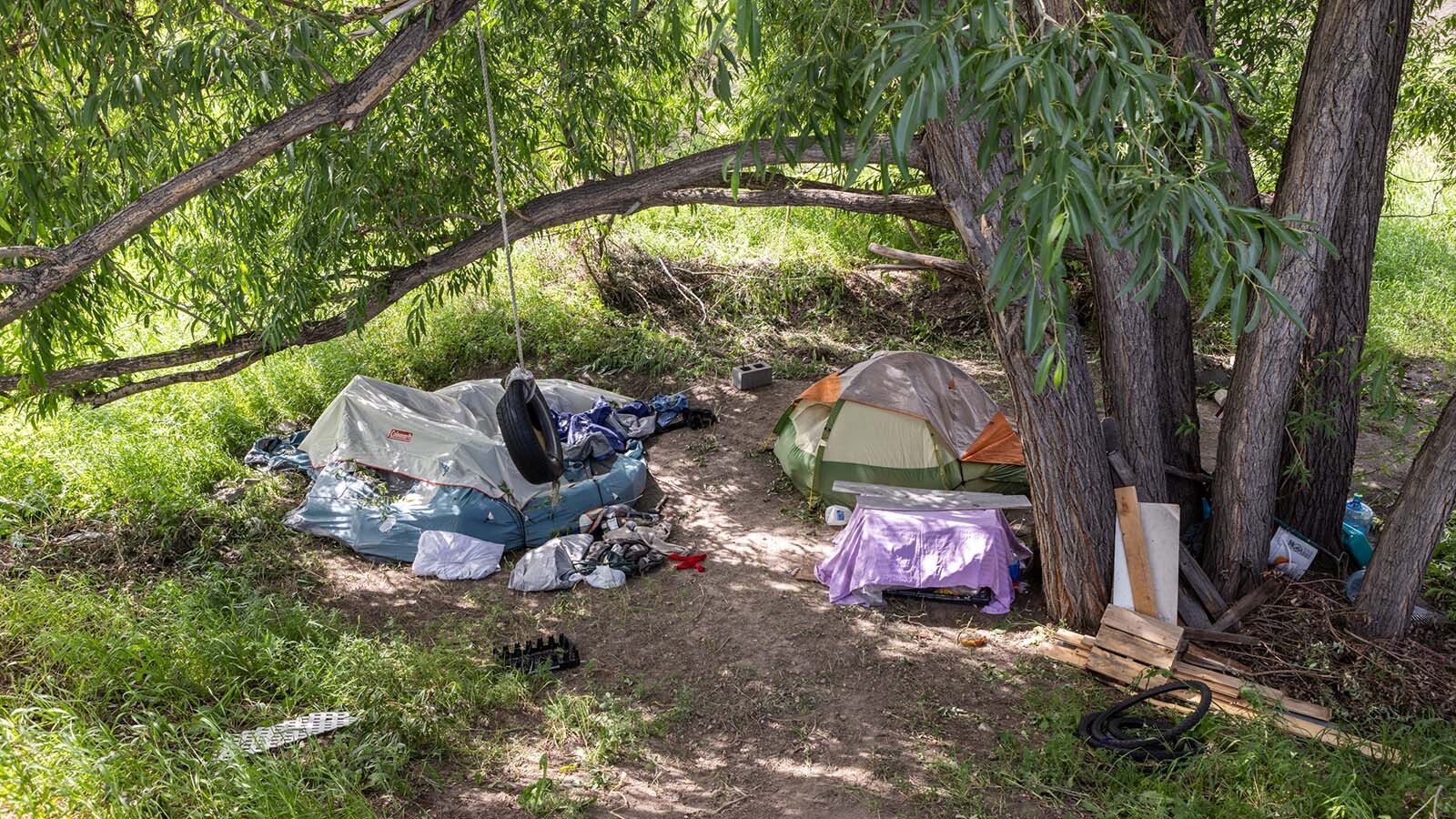
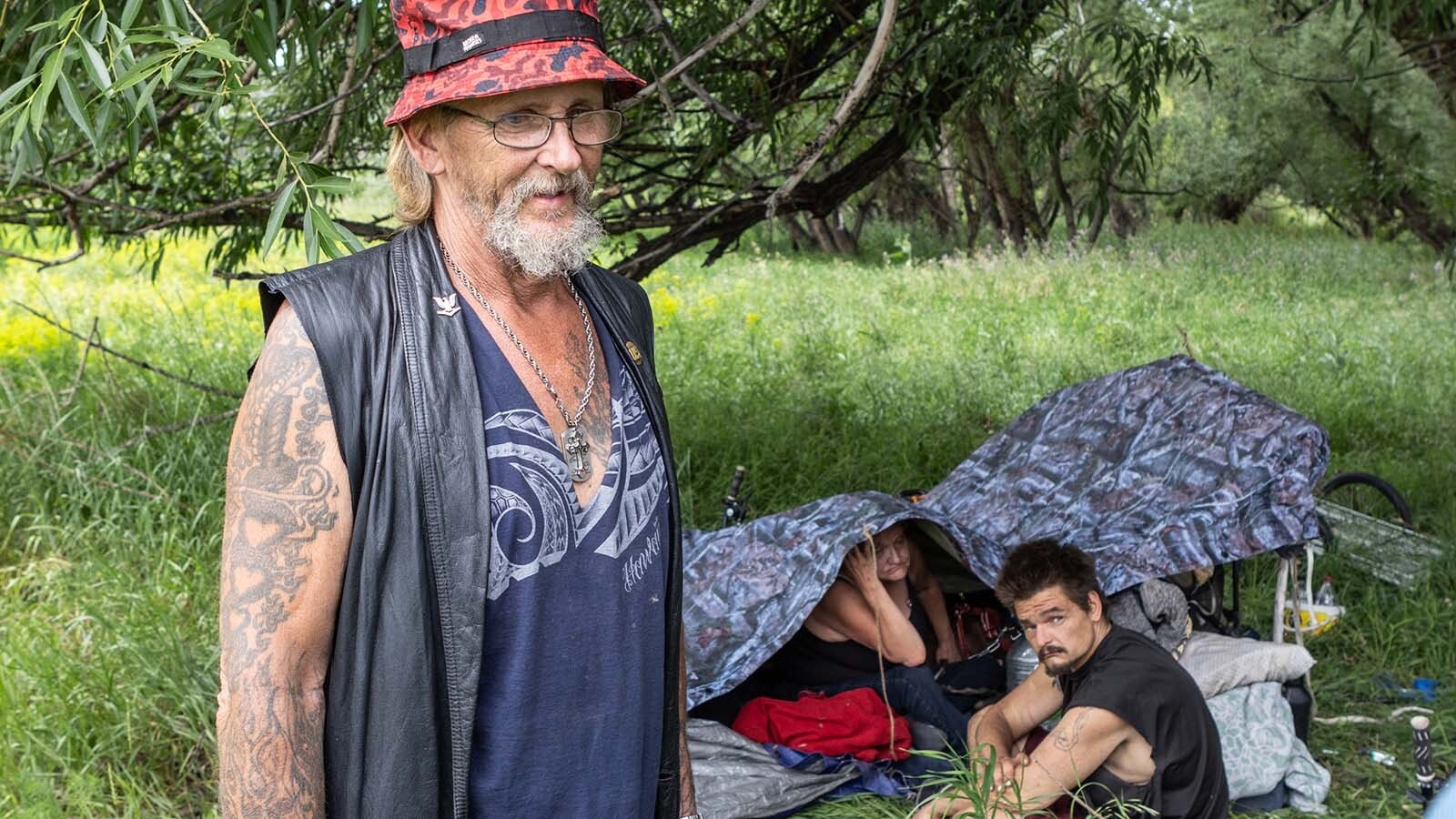
Despite her lengthy experience in shelter work, Bocanegra said she rarely encounters those living on the streets of Cheyenne. These people tend to gather at “off-the-grid” encampments, such as the one near Crow Creek.
“I've probably seen maybe a half dozen times in my 15 years at COMEA, where someone has literally been sleeping on a bench on a street corner like downtown Cheyenne,” she added.
Bocanegra said she would rather see city officials work toward supporting the homeless, rather than further complicating their lives.
“I understand the need to not have people camping in public areas because we don't want to end up looking like big cities that have tents everywhere, garbage everywhere,” she said. “I would rather spend the money on looking for ways to create more housing.”
Bocanegra said many homeless people suffer from early childhood trauma which alters the way they view their roles in society, and can lead them to feel alienated. She suggested pouring more resources into helping children could also make a sizable impact on the homeless population.
She said, however, that homeless people should face consequences that motivate them to seek help. Involving the criminal justice system, though, will only lead to an increased burden on taxpayers, she said.
“Plain and simple, they’re not going to pay it,” she said of the increased $750 fine. “If they get arrested, they’re going to sit in jail because they don’t have money. I would like somebody to explain to me the mindset behind who came up with this idea and what did they think they were going to accomplish by doing it?”
Bringing someone to a homeless shelter is far cheaper than placing them in jail and allows for a higher standard of mental and physical health treatment, she added.
“We can keep coming up with solutions, but it costs money to stay at the shelter,” she said. “Shelters are pretty affordable in the whole scheme of things, but we don't want them to be permanent, they're meant to transition people back, but you can't transition somebody out of homelessness if they can’t afford anything.”
'They’re Human Beings'
Businesses surrounding Cheyenne’s Martin Luther King Jr. Park told Cowboy State Daily they are aware of a large homeless population in the area but aren’t bothered by it and disagree with the proposed fine increase.
Diane Sluss of engineering consultant firm Terracon told Cowboy State Daily said she rarely encounters homeless people while working late at night. The ones she has come across are often “very nice."
“These people are homeless,” she said in response to the proposed fine increase. “It’s ridiculous. They’re homeless."
The business has never had a problem with homeless sleeping on the streets, partly due to the proximity to COMEA, Sluss said.
“You never see them meandering through the buildings over there,” she said. “They're not a problem all, for us anyway."
John Lee of Guest Ranch Motel said he also doesn’t support the change given that the homeless pose minimal impact to his business. Lee said that while some individuals have mistreated his motel rooms or brandished weapons outside his building, prompting calls to police, they have never done any substantial harm.
“I mean, they’re human beings,” he said. “They don’t come around often unless there’s people outside smoking."
Lee said some homeless receive money through their participation in social assistance groups or drug treatment programs, which they sometimes spend at his motel. He argued a $750 fine is too high for these individuals, but will not resolve the underlying issue regardless.
“That’s not going to solve anything,” Lee said of the elevated fine. “They can pay off the money if they get locked up. They‘re going to come back."
Lee suggested a fine of $250 may be more appropriate.
“Some of the homeless that come around here and spend the night, it’s always the second or third or the beginning of the month because that’s when they get money from the government,” he said. “Sometimes you get bad luck, your rooms get destroyed. That’s the risk we’re taking."
Jackson Walker can be reached at walker@cowboystatedaily.com.