Fifty years ago, the cameras rolled on “Close Encounters of the Third Kind” beneath the soaring columns of Devils Tower.
Locals are still talking about the summer when Steven Spielberg’s sci-fi vision transformed their corner of Wyoming into a cinematic landmark.
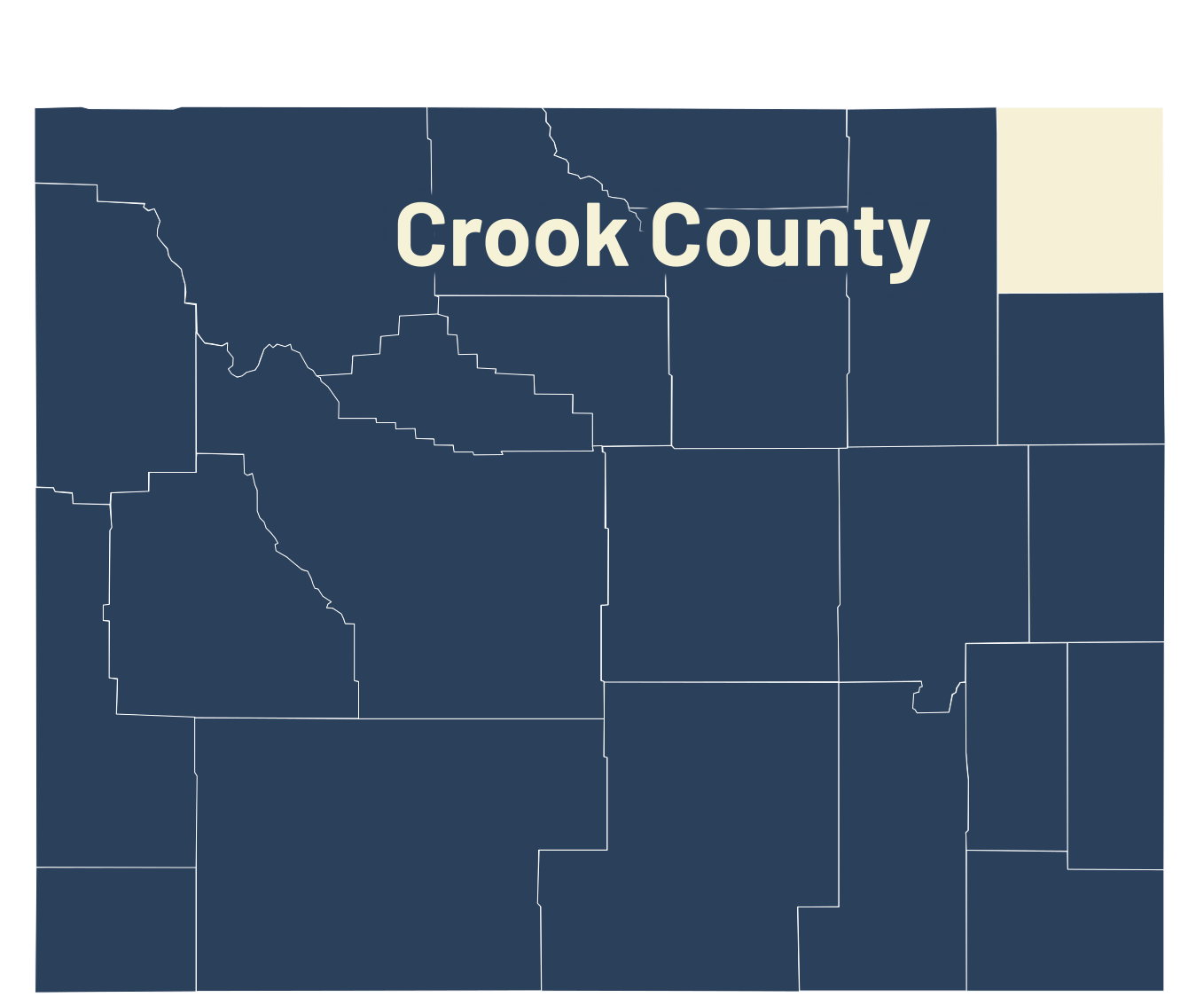
It all started in May 1976 after a quiet handshake between a young, then-unknown Spielberg and Crook County rancher Jesse Thomas Driskill. It would go on to completely reshape tourism in northeast Wyoming, though no one knew it at the time.
For the movie’s legions of fans, this anniversary will mark the making of a cult classic, which was released in 1977 by Columbia Pictures more than a year after filming its defining scenes of making first contact in Wyoming.
For people who live and work in the shadow of Devils Tower, this 50th anniversary marks the moment just before everything changed.
Thanks to the film, Devils Tower went from a curious landmark as the nation’s first national monument to a bucket-list stop for movie lovers — and believers in extraterrestrial life — from around the world.
A Hayfield
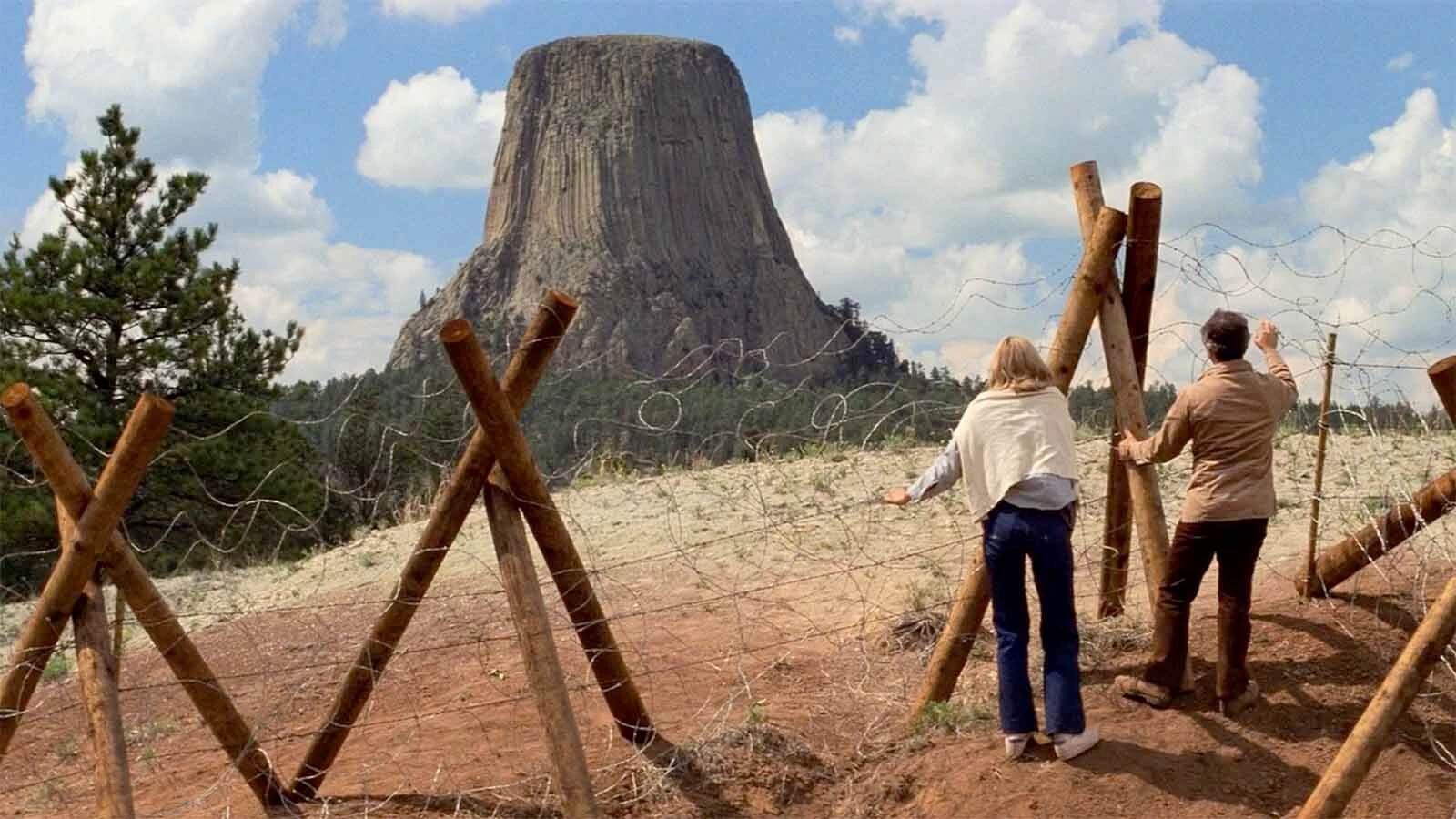
When Spielberg first showed up, though, the land around the monument’s boundary was just another hay meadow.
Since then, visitation has continued to grow.
Devils Tower hosts upward of 100,000 visitors per month in the peak months of July and August. It has seen as many as 509,000 visitors in a single summer.
The influx supports tens of millions in visitor spending in the surrounding communities, according to National Park Service and Wyoming Office of Tourism.
"'Close Encounters of the Third Kind' didn’t just film in Wyoming, it left a legacy behind," said Domenic Bravo, executive director of the Wyoming Office of Tourism. "Decades later, people still chase that feeling: the mystery, the landscape, the sense that something bigger exists around Devils Tower. That’s the power of cinema."
Crook County rancher Ogden Driskill, who is also a state senator, was a junior in high school at the time his family and Spielberg struck their bargain.
“They took the hay meadows at the entrance to Devils Tower and turned them into the decontamination base and the main base where the movie would be filmed,” Driskill told Cowboy State Daily. “And he swore us to secrecy at the time.
"He was determined that the world didn’t know about Devils Tower, and he wanted to keep it that way until the film happened.”
The Driskill family agreed to keep the secret, though they were sure Spielberg was wrong about all that. Surely everyone already knew about Devils Tower.
When the film finally came out in 1977, though, Spielberg’s instincts proved to be right on the money; it was a box office smash hit,
The first sight of the tower in the movie was mind-blowing for audiences, many of whom couldn’t fathom that such an unusual geologic feature existed in America. They had to go see it for themselves.
“That basically doubled tourism visitors,” Driskill said. “The movie really elevated Devils Tower to the next level. We are truly a nationally known destination at this point.”
Dreyfuss Vs. John Wayne And Mashed Potatoes
While Driskill watched his family’s hayfield turn into both a “Decontamination Unit” and the film’s headquarters, Barbara Wilson-Sowerwine was watching Hollywood drift in and out of her parents’ country store a few miles down the road.
No one had any idea that the movie was going to be a blockbuster.
Financial writer William Flanagan, in fact, predicted the movie would be a flop. Spielberg and George Lucas, meanwhile, decided to hedge their bets after visiting each other’s sets.
Each was so convinced the other’s movie would do the best at the box office they pledged to share 2.5% of their movies' profits with each other.
Close Encounters star Richard Dreyfuss was just a nice guy, Wilson-Sowerwine recalled, at the time the biggest “non-star” star she’d ever met.
“Dreyfuss just liked hanging out,” she recalled.
That’s what he was doing one night when a group of regulars came in for their usual broasted chicken dinner at the little restaurant where Wilson-Sowerwine worked.
He was standing by the counter when talk turned to the movie that was being filmed nearby, prompting one rancher to snort and say, “Well, it’d be one thing if they had some real actors like John Wayne,” Wilson-Sowerwine recalled.
Dreyfuss didn’t miss the comedic beat.
“He’s a character actor and he’s famous,” Wilson-Sowerwine said. “So I think he just thought it was funny. His reaction was like, ‘Well, I’m no John Wayne.’”
The funny story and the transformation of the hay meadow into a movie set, complete with a government “decontamination unit,” are the things Wilson-Sowerwine will never forget.
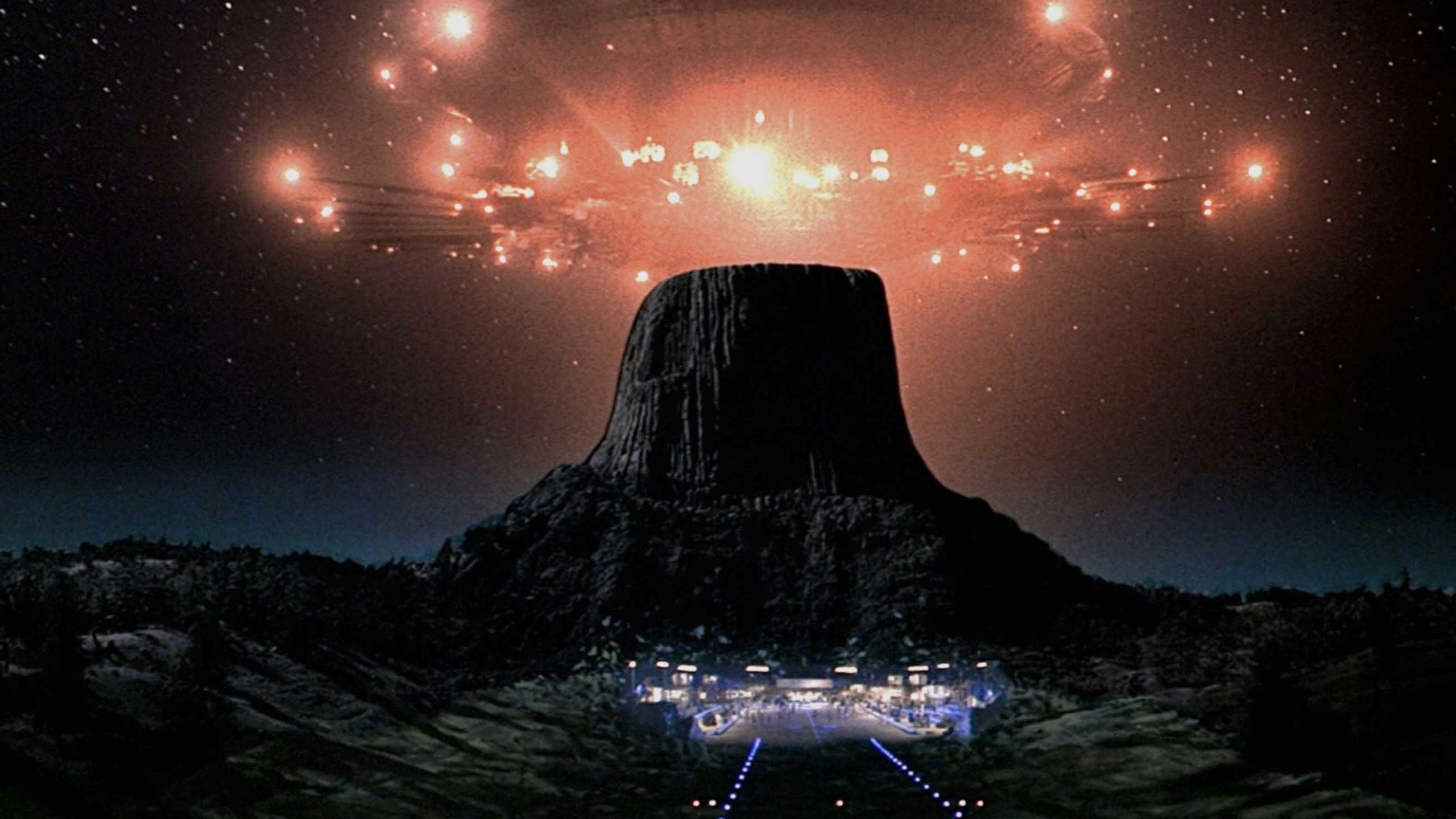
She’ll also never forget the mashed potatoes scene, when Roy Neary, played by Dreyfuss, uses a fork to shape his fluffy spuds into a miniature Devils Tower in front of his confused family.
Then he starts weeping and says one of the movie’s most classic lines.
“This means something,” he says, insistent despite their wild, wide-eyed looks. “This is important.”
Mashed potatoes have never been the same for her since, Wilson-Sowerwine said.
“I can’t look at a pile of mashed potatoes without wanting to make a tower,” she said.
The Campground Inspiration
Back when Spielberg’s crew rolled into town, there wasn’t much of a campground at all. Not like there is today.
There was an A-frame, Wilson-Sowerwine said. And there was the small country restaurant and a scattering of other campsites.
The movie crew slapped a “Decontamination Camp” sign over the front of the A-frame right away, then built out from there until they had the full-blown ground zero for alien invasion that’s so familiar in the movie.
It was amazing to see that come to life, Wilson-Sowerwine said.
Then, almost as quickly as they’d blown into Wyoming, the movie crew was gone, leaving behind a hayfield that was, to a farmer and rancher, a real mess.
Instead of simply reclaiming the hay field, the Driskills decided to use the cleanup money they’d been given to turn the film site into a campground, an idea that came from Ogden's mother, Ellen.
It turned out to be an incredibly smart move, Driskill said. One that’s been helping to sustain the family’s ranch land ever since.
In fact, the film has helped sustain many businesses in the community.
“It was incredibly game-changing,” Driskill said. “At the time the movie was filmed, the A-frame down there had maybe a couple of people working at it. Devils Tower Trading Post had a postmaster and a couple of people. The business on top of the hill wasn’t there yet.”
That was the extent of Devils Tower tourism before Spielberg’s movie came out. After, as visitors started showing up to see the tower, the community realized they had just struck tourism gold.
“We all ganged up together and the state invested lots to promote Devils Tower,” Driskill said. “So now those businesses employ more than 100 people, and I don’t know what the tax revenue is, but it would scare you. The gross income off of all those businesses is in the double-digit millions at this point.”
Driskill is among the first to grouse about bumper-to-bumper traffic from July to early September, but he knows it’s been good for the area. It’s a better economic avenue, in his opinion, than seeing ranchland and wildlife habitat fragmented by random subdivisions.
Cowboys And Aliens
Today, Devils Tower has become a pilgrimage for movie buffs who want to stand where Roy Neary’s mashed-potato vision finally made sense.
Once they get there, they’re greeted with a blend of “Cowboys and Aliens” kitsch that’s popped up all over the Devils Tower area, including at the Driskills’ campground at the tower’s base.
“People ask about that all the time,” campground manager Andrea Wood told Cowboy State Daily. “And we tell them, ‘Close Encounters of the Third Kind’ was filmed here, and that’s why we have aliens everywhere.”
This summer, there’s a mural going up on the pool house that fuses the theme of ranch hands and flying saucers. The swimming pool, meanwhile, is shaped like a cowboy boot, to honor the family’s cattle-trail roots.
Some new, life-size aluminum alien figurines have just been purchased for the golf course, which has nine holes devoted to the family’s ranching history, and nine for the campground’s Close Encounters story.
Driskill tracked the figurines down in Texas, buying up what he said will be that store’s last.
Tariffs and aluminum prices have made the statues much more expensive and harder to come by, so Driskill bought out the store’s remaining stock.
Heads turned all the way back home to Wyoming, Driskill said, and people tried to buy the aliens right off the trailer, but they were not for sale.
Wood said she is planning events to mark the 50th anniversary of the movie’s release next year, but will likely aim for September rather than the filming months of May, when the campground is already quite busy.
She’s also more likely to target the release date of the movie, rather than its filming.
There will likely be souvenirs, to mark the occasion, including T-shirts, ball caps, stickers and more.
“I know part of what we’re going to do is the 3K race, the CE3K,” she said. That’s shorthand for Close Encounters of the Third Kind. “That will require people to have a costume related to the film, and every 1K they’ll have to stop and do a movie-related activity.”
Where The Mothership Still Rises
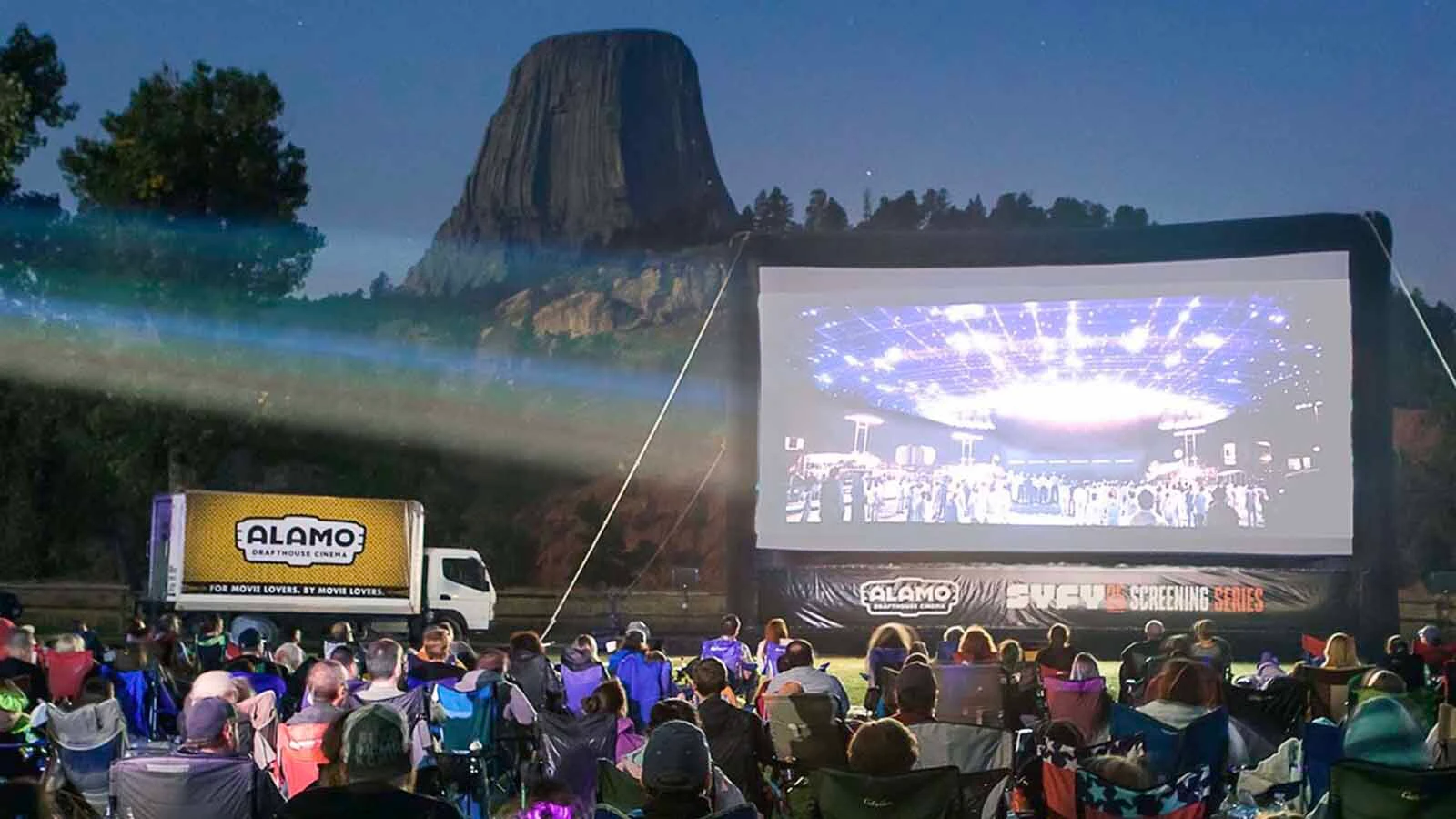
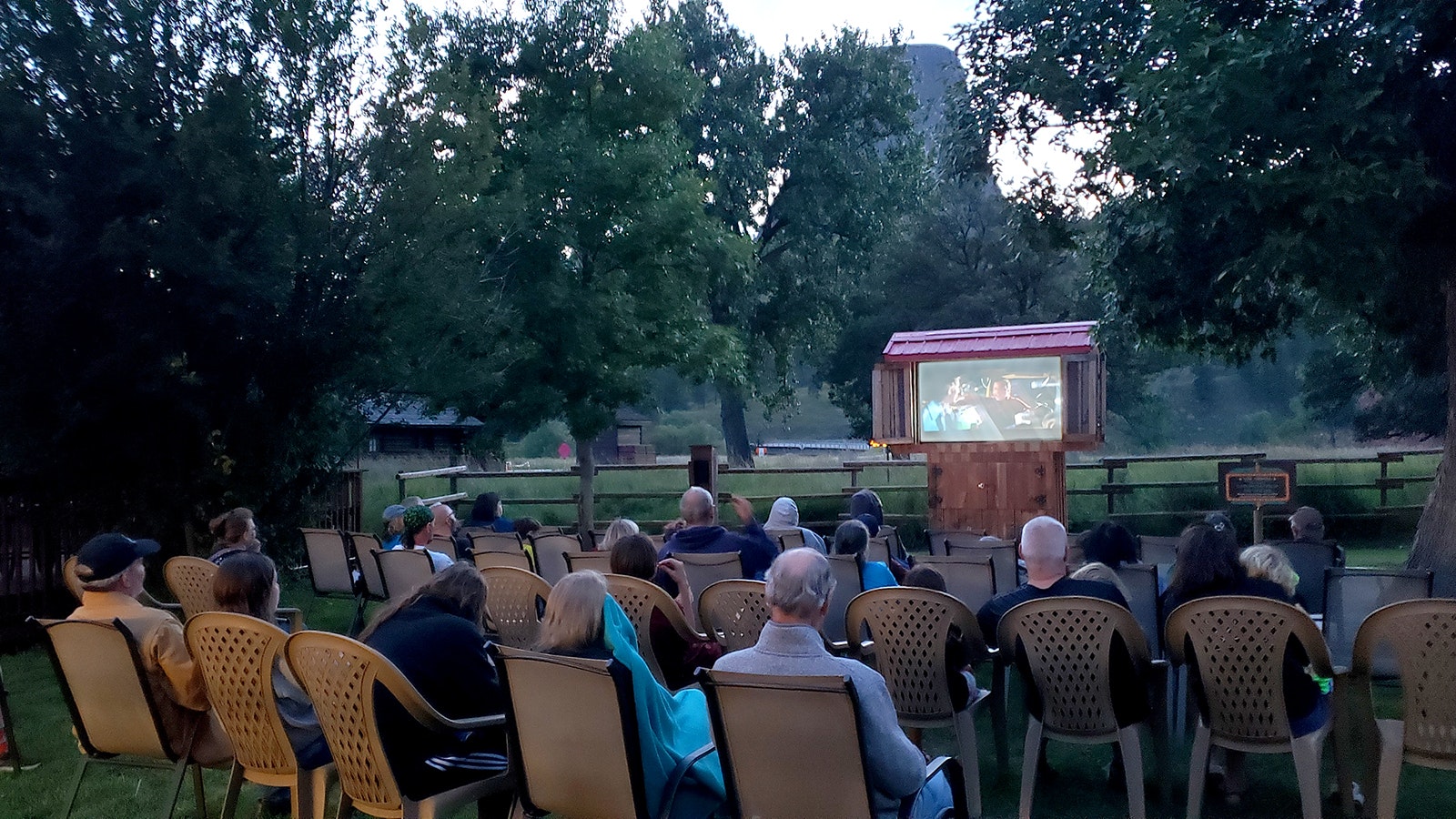
As dusk settles in over the Driskill family’s KOA campground and the stars come out, the film that inspired the campground and changed tourism in northeastern Wyoming flickers to life again every summer night.
The Driskill family has been showing "Close Encounters" every night of the summer for the last 40 or so years, and has no plans to ever stop.
“It’s the longest-running movie in a single location ever,” Driskill said. “We still show it every night.”
It’s a tradition that brings people back year after year, Wood added.
Some nights, the audience is two and other nights 200.
“There are tons of groups dedicated to 'Close Encounters' with people from all over the world,” she said. “People come to stay with us because it’s the filming location — and because we show that film every night.”
Wood, who has watched the movie more times than she can count, never gets tired of it.
“It’s such an interesting film from a humanitarian standpoint,” she said. “If you really think about, what that story is telling us about humans and other-worldly beings, and what our connection to them may or may not be — it’s just such an interesting concept.
"Spielberg was a genius in developing characters and plot lines that really make you think about things.”
Wood has been told by people inside Hollywood that Spielberg’s film still commands a lot of respect, not just for its emotional depth, but for the new ground covered by its cutting-edge special effects and soundstage work.
“When we went to California and listened to him talk about the movie, it was clear how much it shaped his career,” Driskill added.
Close Encounters came right after “Jaws,” when Spielberg needed to prove his success was no fluke, and right before “E.T. the Extra Terrestrial."
Driskill said he’d love to meet Spielberg again someday to tell him how much Close Encounters has meant to his family and to Wyoming.
It’s a story he and his family love to tell, about how a mysterious rock, a handshake deal, and a strange, little sci-fi movie quietly rewrote the destiny of an entire corner of the Cowboy State.
“On multiple levels, that film changed many things,” Wood said. “People come here from all over the world because of it.”
They come to sit under the stars and wonder as they watch Spielberg’s mothership rise up again in a film that’s stood the test of time, night after summer night.
Contact Renee Jean at renee@cowboystatedaily.com
Renée Jean can be reached at renee@cowboystatedaily.com.