

When retiring U.S. Sen. Cynthia Lummis ends her Senate obligations Jan. 3 and flies home from Washington, D.C., to Wyoming, she’ll be making two important stops along the way.
The first will be to the Meeteetse Chocolatier — a favorite chocolate shop — and the second will be her family’s brand-new, 96,115-acre cattle ranch.
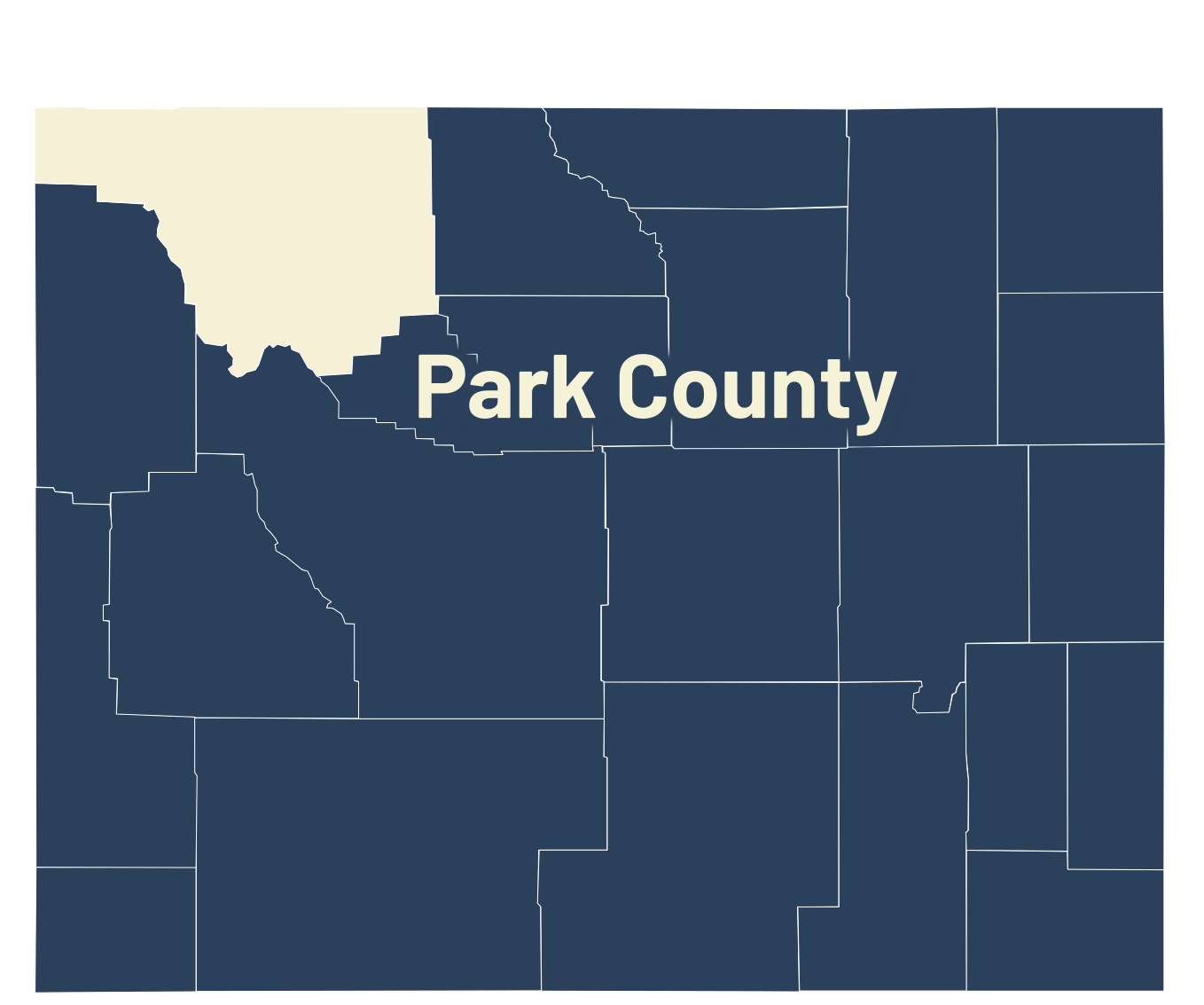
Lummis and her daughter, Annaliese Wiederspahn, closed Monday on the Pitchfork Ranch in Park County, after an earlier buyer’s deal fell through.
The property is one of the American West’s most storied spreads, beginning in 1878 as part of cattle baron Otto Franc’s eventual empire. It’s also where the Marlboro Man advertising campaign was filmed and where photographer Charles Belden made a name for himself.
It’s the history of the land that attracted the Lummis family to this ranch, Lummis and Wiederspahn both told Cowboy State Daily.
“Spending less time around politicians and more time around cows just seems to me to be the best last job in life that I could ever imagine,” Lummis told Cowboy State Daily on Tuesday.
Wiederspahn, who manages the family’s ranching operations and has three young sons, added that they couldn’t pass up the chance to steward this historic spread along the Greybull River, nor could she picture her mother slowing down.
“I couldn’t let my mom go into retirement just sitting around and knitting,” Wiederspahn said with a chuckle — words that were met with a bark of laughter from the background.
“I had struggled seeing her doing that,” Wiederspahn continued, holding back laughter. “So now she’s got a project! Especially, a project in the state that she loves, in a place that she loves, and that we get to do as a family, which is so cool, too.”
The Pitchfork Ranch — originally listed in late 2023 at $67 million before dropping to $52.8 million — was under contract with another prospective buyer earlier this year.
The final sale price to Lummis and Wiederspahn hasn't been disclosed.

Keeping A Wyoming Legacy In-State
Live Water Properties listing agent Latham Jenkins, who represented the ranch, said finding a buyer inside Wyoming’s borders was especially meaningful, given how deeply the property is woven into the state’s history — predating Wyoming statehood itself.
“What I understood was this need to pay reverence to something that was bigger than just another private ranch,” Jenkins told Cowboy State Daily. “It was really important to share with the outside world this legacy asset for the state, and all the better we ended up finding a buyer right there within our borders to appreciate it for what it is.”
Jenkins noted that the ranch’s historical footprint touches everything from early cattle-baron clashes — Franc was responsible for sending outlaw Butch Cassidy to prison — to aviation pioneer Amelia Earhart, who stayed in guest cabins before starting construction on her own cabin near the abandoned mining town of Kirwin.
“The Lummis family certainly represents a great next steward to not only the Pitchfork, but continuing on with such a great Wyoming family,” Jenkins said.

How The Deal Came Together
When Lummis and Wiederspahn first toured the property, they were told the sellers, Lenox and Fran Baker, were in the final stages of closing with that party.
“The first time I looked at it, I felt more like a tourist,” Lummis said. “Just seeing a pretty place that I’d always heard about, but never been on.”
When the earlier deal fell through, Lummis and Wiederspahn knew they needed to move quickly. They made a second trip to the ranch, this time with the realization they could become the fourth owners in this ranch’s 150-year history.
The second time, Lummis and her daughter paid more attention to the ranching details than to the jaw-dropping scenery. They needed to see how the nuts and bolts of the operation really worked, to be certain this was really the right opportunity for their family.
“If you’d asked me a year ago if this was on my radar screen, I’d have said ‘You have the wrong person,’” Lummis said. "But when we closed on it yesterday, it was just as if it was meant to be.”
Lummis said she’ll continue to operate the Pitchfork as a cattle ranch and added that she views ranch manager Ben Anson and his wife as a “dream couple” to run the place.
“I’m happy to use this conversation to say, ‘Please stay,’” she said. “Because at my age, we used to have cows and calves. Now we run steers. They’re very different operations and at my age, in my 70s now, I can’t do anymore what they are capable of doing.”

Keeping The Cheyenne Ranch
The Lummis family has been ranching southeast of Cheyenne for generations — dating back to when Cynthia's great-grandfather, Joachim Arp, bought out his hardware store partner and handed the cattle operation to his World War I veteran son-in-law, Doran W. Lummis.
Lummis did sell around 3,200 acres of her Cheyenne ranch to Microsoft for its data center expansion, but said she’s keeping the rest of the ranch in Cheyenne. It, too, will continue to operate as a cattle ranch.
Over time, however, the city has been encroaching on the Laramie County operation.
Two major pressures have pushed Lummis to look elsewhere in Wyoming for a more long-term future in cattle.
First, the city of Cheyenne installed its “purple pipe” for a non-potable water system to irrigate city parks, cutting off treated water the ranch had previously relied upon for irrigation, Lummis said.
Second, as the first ranch south of Cheyenne, the property has become a magnet for a variety of infrastructure projects.
“Everyone who wants an easement looks at that undeveloped parcel of land just southeast of Cheyenne and wants an easement,” Lummis said. “It is fiber-optic easements. It is oil and gas easements. It is pipeline easements. It is overhead transmission line easements. It is telecommunications easements. It is water and sewer easements. It never ends.”
Dealing with the constant right of way requests became time-consuming.
“We found ourselves spending more of our time working for other people trying to get an easement across our land,” she said. “It was just taking up the lion’s share of our time, and also diminishing the value of our ranch.”

Continuing The Legacy
The Pitchfork Ranch spans 13,886 deeded acres alongside more than 82,000 acres of Forest Service, state, and Bureau of Land Management grazing leases.
The separate, 288-acre Old Pitchfork headquarters next door listed last year for $7.95 million.
Wiederspahn, who previously refurbished legendary bucking horse Steamboat’s barn in Cheyenne, said the goal isn’t to overhaul the Pitchfork Ranch, but to preserve its working legacy and historic structures — including the old Stone House where Belden maintained an upstairs darkroom.
Jenkins said walking through that darkroom, where Belden processed the photographs that helped define the image of the American cowboy around the world, is like standing in the footsteps of Western history.
“Our goals with the place are ones of a continuation of legacy of stewardship, not a change,” Wiederspahn said.
They also hope to maintain the ranch’s popular Memorial Day ranch-horse sale, Lummis added, which draws crowds to the Meeteetse community every spring. They also want to continue the move to direct-to-consumer beef, started under the current management.
Both Lummis and Wiederspahn were enthusiastic about another experiment underway at the Pitchfork, the use of virtual-fencing technology. It uses GPS collars and smartphone-drawn boundaries to manage cattle without a physical wire.
Wiederspahn noted that the ranch’s location along the Greybull River offers natural shelter, winter open grazing, and calving ground — though its rugged setting also brings grizzly bears and elk that routinely tear down traditional fences.
“When they say it’s about to get Western, that place is pretty Western,” Wiederspahn said.

Valley Framed By Mountains
It’s also beautiful, she added.
“The way the mountains frame that valley is so interesting,” Wiederspahn said. “The history of that place is that Otto Franc went there because, in spite of the snow, there’s open grazing in the winter. And the times I have been in the summer, it seems shocking you’d have that much open grass.”
Talks with the cowboys who ride that area regularly, though, confirmed those pastures can indeed be open-grazed in winter.
“That’s just really amazing, and just speaks to sort of these German immigrants out there in these crazy high-altitude bowls and they spot this place that has both access to water and open grass even in the winter months.”
Lummis said she believes the smart collars could ultimately prove vital during wildfires, allowing ranchers to pinpoint herds on a phone and remotely disable virtual boundaries so cattle can escape approaching flames.
Even with high-tech grazing on the horizon, however, Lummis already has one traditional ranch chore at the top of her to-do list the moment she arrives in January.
“There is a barbed-wire fence near the Greybull River that I would like to relocate,” Lummis said with a chuckle. “Both times I’ve been there, that fence’s location has bothered me.”
Renée Jean can be reached at renee@cowboystatedaily.com.


