

Two days before Thanksgiving on Nov. 21, 1950, a plane load filled with Christian missionaries and supporters anticipated their landing in Billings, Montana, for a special rally.
The DC-3 had taken off from Chico, California, the headquarters of New Tribes Mission.
The trip to Billings — along withscheduled stops in Nebraska, Minnesota, Chicago, Michigan and other locations on the way to Florida — was planned to generate excitement and support.
In Florida, some of the passengers would disembark while others would continue on to assignments in Brazil and Bolivia.
Named the “Tribesman II,” the plane represented an attempted resurrection of New Tribes Mission’s ambitious effort to use air travel to reach far-flung mission fields and spread the Gospel.
Their previous effort ended in disaster just months earlier in northeastern Colombia, when the DC-3 the “Tribesman” crashed on a mountainside June 9 and went up in flames. It was the plane’s eighth flight, according to the account.
Fifteen people were lost.
Tribesman II’s passengers included the organization’s co-founder Paul W. Fleming, 39, and two widows and children whose husbands and fathers died in the June incident.
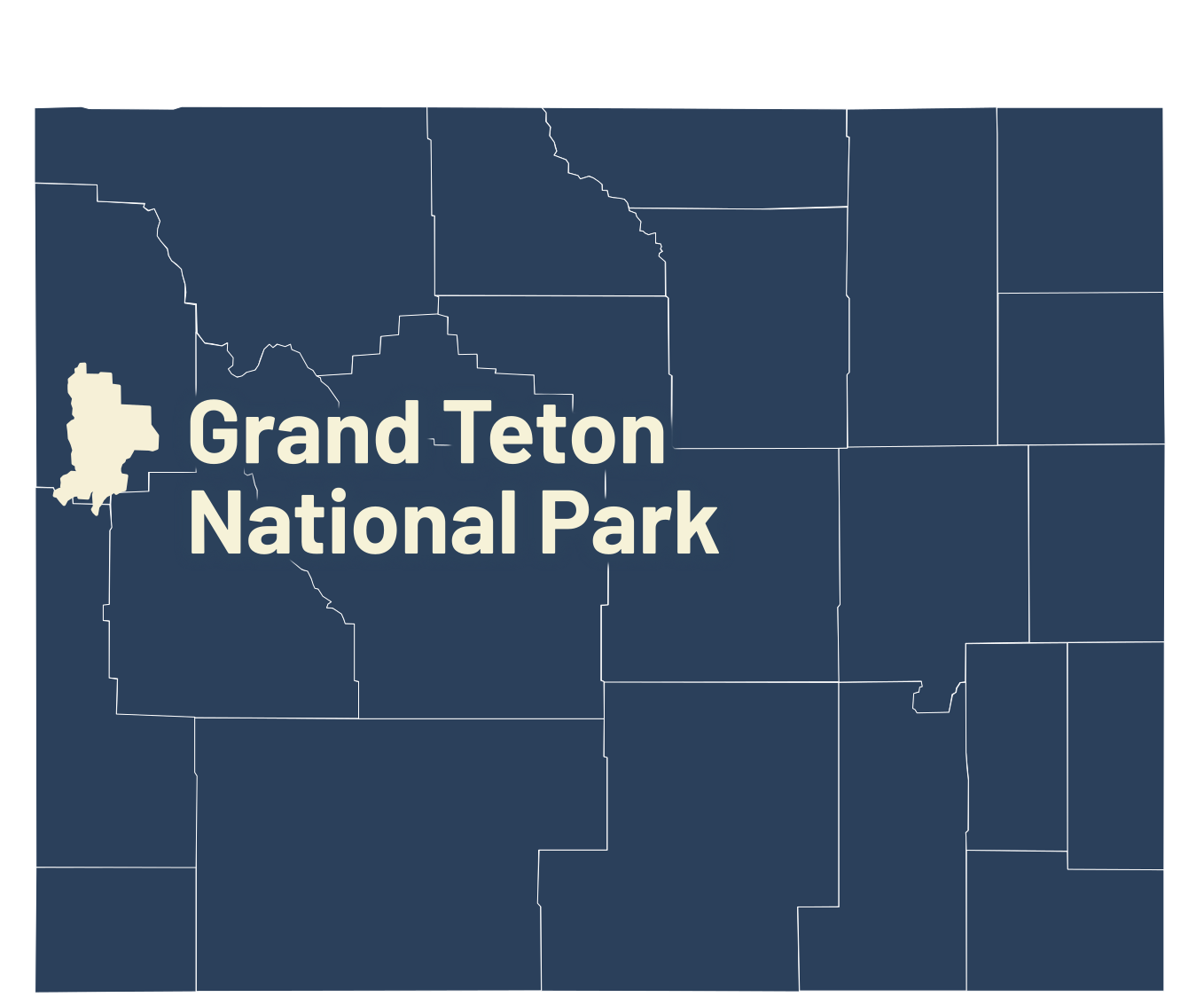
They were still eager to share the mission’s cause, but would shortly join their loved ones in eternity when the aircraft slammed into the top of Mount Moran in Grand Teton National Park.
“Plane Down in Tetons,” read the front-page headline of the Nov. 21, 1950, edition of the Casper Tribune-Herald. “Little Hope Any of 21 Still Alive.”
Like the plane lost in June, the DC-3 was miles off course.
A pastor and friends of some of the passengers at Evangelical United Brethren Church in Billings, who had planned a “preflight” rally for the mission’s cause, turned to prayers for the miracle of survival on a cold and dangerous night.

Plane wreckage on the side of Mount Moran and the crash site on the mountain. (Courtesy Photo) 
The Casper Herald-Tribune provided extensive coverage to the Mount Moran crash. (Newspapers.com) 
The Billings Gazette published a photo of the New Tribes Mission team by the Tribesman II prior to its takeoff on Nov. 21, 1950. (Newspapers.com) 
The New York Times published a photo with cutline after the climbers reached the wreck in August 1951. ((New York Times)
The Crew
The plane had a former B-17 bomber pilot named Sterling “Cy” Lowery at the controls. Jack Dennis was the co-pilot, and Bob Cramer was the third crew member. Both had wartime flying experience.
The aircraft was due in Billings at 6:30 p.m.
Instead, its twin engines were heard by residents around Moran, about 20 miles north of Jackson, just before 6 p.m.
Clarence Harris, owner of Signal Mountain Lodge on the other side of Jackson Lake from the mountain, told reporters he had heard a plane go over the area just before dark but could not spot it because of the clouds.
He thought it was too low to be flying around the mountains. Then, two hours later, a neighbor came to the lodge and pointed to a fire on the mountain.
“I got out some powerful field glasses,” Harris said in a story published in The Coeur d’Alene (Idaho) Press on Nov. 22, 1950. “You couldn’t see much but a big patch of fire. But in the center of it was this dark, oblong patch. It was on fire, it looked like the body of a plane.”
Grand Teton National Park Acting Superintendent Paul Judge told reporters that because no climbers were on the mountain he assumed it was a plane crash. He then learned about the overdue New Tribes Mission plane.
Weather conditions hampered any attempts to do something that night. The next morning the Wyoming Civil Air Patrol launched an aircraft, and special U.S. Air Force rescue teams in Denver and Washington state were put on alert.
The Background
University of Wisconsin-Milwaukee lecturer Lane Sunwall wrote about the crash as part of his 2018 doctoral dissertation in history at the University of Wisconsin-Madison. His research focused on missionary aviation, and one of the conclusions he reached is that the crash represented the ill-advised efforts of mission organizations, including New Tribes Mission, to take on airline-like flights without the experience, training and safety disciplines to be successful.
Sunwall told Cowboy State Daily that Fleming had a reputation as a hard-charging leader who had a big vision for his organization but was willing to cut corners and justify shortcuts to attain his end goal.
In late 1943, five of the newly formed organization’s missionaries were killed in Bolivia by Indigenous people.
By 1949, Fleming saw the value of aircraft as a public-relations tool and wanted to get the missionaries he was training into the field. New Tribes raised funds for the purchase of its first DC-3, Sunwall said.
“He was buying these airplanes and he got pilots who were Christians that had flown in the war, but hadn’t been continuing with their flights, perhaps, or hadn’t been flying much,” he said.
After the June crash, Fleming and the organization quickly raised $26,000 to buy another DC-3. When the plane took off Nov. 21, Sunwall said the crew had not flown together and there were later questions raised about the currency of their training and navigational competency.
Sunwall said his research showed there also could have been an electrical issue on the plane and the crew might have been trying to fly back to Idaho when they crashed. He was unable to locate an official crash investigation report.

A representative from New Tribes Mission leads a memorial service for the victims in the Tribesman II crash on the side of Mount Moran in August 1951. (Courtesy Photo) 
Paul Fleming, co-founder of New Tribes Mission, was on the plane that crashed on Nov. 21, 1950. (Ethnos360) 
The widows and their children of a June 9, 1950 crash, were on board the DC-3 that hit Mount Moran. (Courtesy, Lane Sunwall) 
Radio operator Jack Dennis, left, and pilot Sterling Lowrey both flew bombers during the World War II. (Newspapers.com)
The Search
Back on the ground on Nov. 22, 1950, the day after the crash, four climbers who initially attempted to reach the site were turned back by bad weather. An Air Force plane with search-and-rescue experts who planned to parachute onto the mountain had to be diverted to Idaho Falls.
It wasn’t until Thanksgiving Day, Nov. 23, that a plane piloted by Carl Peterson of Afton spotted the wreckage about 1,100 feet below Mount Moran’s 12,610-foot summit.
That day, a five-man team led by Paul Petzoldt, who years later founded the Lander-based National Outdoor Leadership School (NOLS), along with park ranger Blake VandeWater and three U.S. Air Force air rescue men, set out for Mount Moran’s timberline to form a base camp.
On Friday, VandeWater and Petzoldt got within 300 feet of the wreckage but had to turn back due to darkness. The next day, the pair reached the remains of the plane and found the wreckage and one charred body.
“The men reported that the plane was almost completely burned and there were no survivors,” The Casper Tribune-Herald reported on Nov. 26, 1950. “Mr Petzoldt and Mr. VandeWater reported the climb a very difficult and dangerous one and very time-consuming at this time of year.”
Judge, with agreement from New Tribes Mission’s acting director Russ Garber, agreed not to risk any more lives in trying to reach the plane or recover remains due to the conditions.
In 1951, after the snow and weather conditions improved, a party including Petzoldt, VandeWater, Garber, Peterson, a member of the Wyoming Aeronautics Commission, and officials from the Civil Aeronautics Board returned to the crash site.
Garber led a memorial service for the victims.
The Casper Tribune-Herald reported the next day that the men found bodies still lying in the snow where they had been thrown, and others burned beyond recognition. They made identifications of the victims through personal effects and papers..
Wyoming State Health Director Dr. Franklin Yoder used the information to sign death certificates for the eight children, 10 adults, and three crew members.
The climbers had to deal with rain and lightning while on the mountain, the newspaper reported.
“All the plane except the left wing and left motor was on the 30-degree, 100-foot ridge where the plane crashed,” the newspaper reported. “The wing and motor had plunged down the steep cliff at the edge of the ridge.”
Cause Undetermined
Officials at the site could not determine the cause of the crash from the wreckage, except that “apparently, the plane crashed head-on into the peak, which was hidden by clouds at the time,” the newspaper reported.
A prior agreement with families of the victims called for the bodies to remain on the mountain as their final resting place.
Judge restricted climbing to the site out of respect for the dead and to prevent further risk to climbers.
New Tribes Mission also pivoted from the sky to the sea as a means to deliver its missionaries to their posts. It purchased a former U.S. Navy submarine chaser boat, named it the Tribesman, and transformed it for its new mission.
“Missionary Group Converts a Sub Chaser for a Trip Up the Amazon,” the San Francisco Chronicle reported on May 20, 1951. “The Tribesman’s journey will take her (passengers) 150 miles up the headwaters of the Amazon River to the group’s newest mission settlement at Belem, Brazil.”
Sunwall said his research shows that the Assemblies of God had already ended its Ambassador aviation program in 1950, before the Mount Moran crash. The denomination had used a C-46 and a converted B-17 for publicity and missionary travel.
Other organizations, such as the Missionary Aviation Fellowship, whose leaders had questioned New Tribes’ aviation program, operated smaller planes with trained pilots and a greater emphasis on maintenance, and continued to succeed.
Sunwall said he believes the true cause of the crash, similar to the hype around AI today, was Fleming buying into “technological boosterism” around the excitement of aviation coupled with the zeal to spread his faith — while skipping over the “little details” that are important for safety.
“That is what makes aviation safe,” Sunwall said. “The constant maintenance, the constant flying, professionalism, being risk averse and not taking chances.”
Dale Killingbeck can be reached at dale@cowboystatedaily.com.


