

Just like other athletes, rough-and-ready 2,000-pound rodeo bulls that toss 170-pound cowboys as easily as swatting a fly require good treads for proper arena-style stomping.
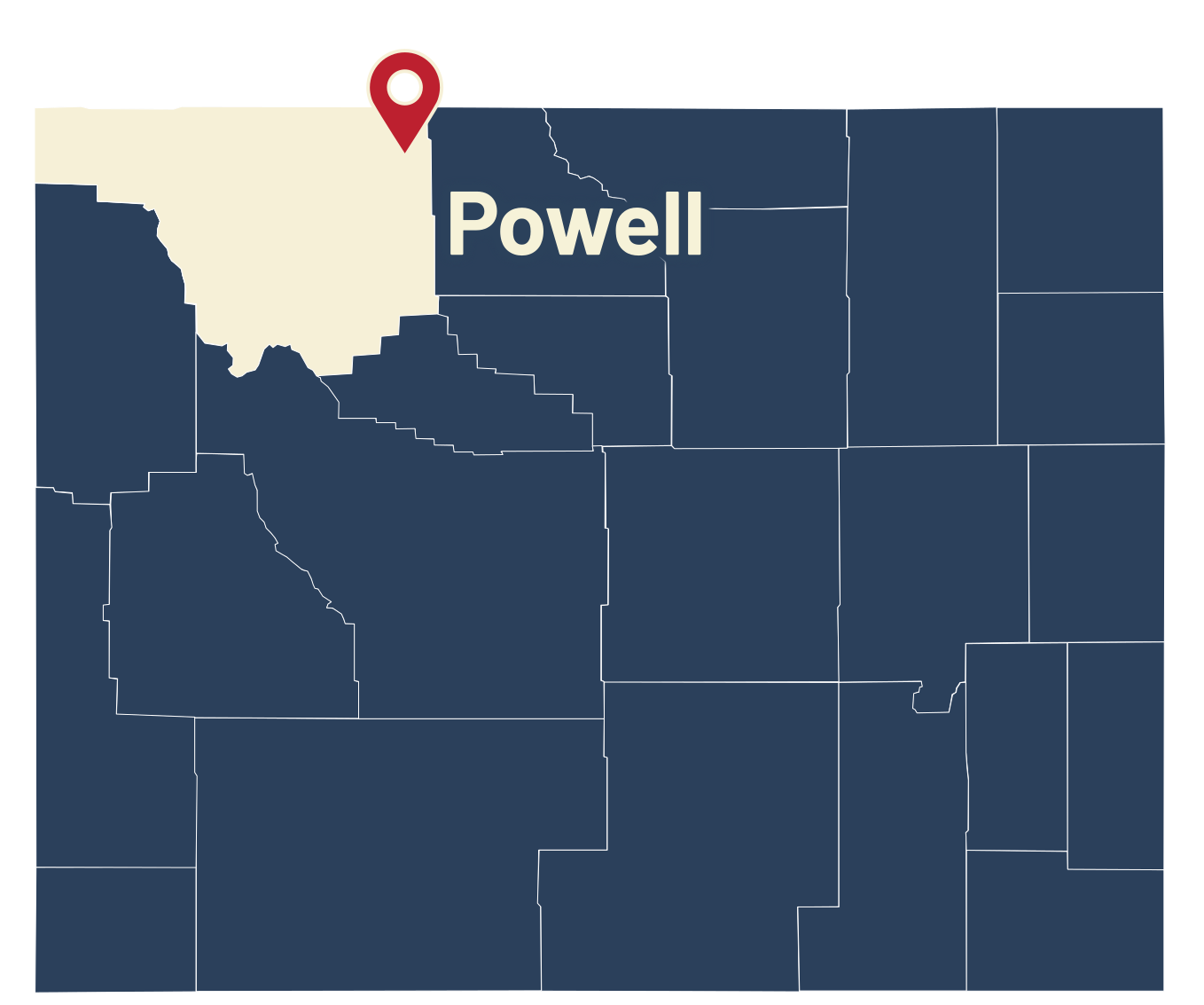
That’s why from time to time the snot-producing epitomes of brute force get a visit from guys like Kody Newkirk of Powell.
He provides them and other cattle the bovine version of a pedicure.
“We just trim cattle feet. I have a hydraulic chute that holds them and it lifts the legs one at a time up in a natural position, so they don’t really fight it,” Newkirk said. “You just kind of work them slow and not get them wound up.”
That’s usually how it works.
The 43-year-old’s Newkirk Cattle Services’ pickup with the license plate that spells “HOOF” and two-wheel, trailer-like chute have been traveling the state and into Montana and Colorado for nearly five years.
He brings dairy herds, ranch operations and, yes, sometimes rodeo-stock bulls an important service.
Cattle hooves need to be trimmed to prevent unequal weight distribution that can cause lameness as well as to prevent bacterial growth that also can make a cow or bull lame.
Casper’s Michael and Terra Oakley’s 1,800-pound Highlander bull, Dougal, is one of the recipients of Newkirk’s expertise.
Dougal has “some very large horns” and for the third time in his 8 years of life needed his hooves trimmed.
The Oakleys said a previous experience with a trimmer who didn’t have the right-size chute for their bull did not go well.
“He has a really bad problem where his toes want to cross over in the front and his feet are huge,” Terra Oakley said. “So as his toes grow, you get like an in-grown toenail, and it hurts him to walk. He really didn’t want to walk a lot.”

A longhorn somehow squeeze his horns through Kody Newkirk’s hoof-trimming device. (Getty Images) 
Kody Newkirk sands one of Dougal’s hooves. (Michael and Terra Oakley) (Courtesy, Michael and Terra Oakley) 
Dougal’s Dilemma
Michael Oakley said their search for another option led them to Newkirk, and both they and Dougal are happy with the result.
Michael Oakley describes Newkirk’s chute as a “very cool piece of equipment.” It took two times and some diversionary maneuvers for them to coax Dougal into it as the animal navigated the space with 3-foot horns.
Dougal had to put one side of his head up and the other down to walk into the device. Oakley said their bull is typically pretty “laid back” but, like an “elephant who never forgets,” due to a previous bad experience was wary of yielding his bulky frame into something that would allow the toe work.
“He knew the jig was up, we outfoxed him,” Michael Oakley said. “(Newkirk) did a fantastic job. This machine is amazing, stress free, lifts the animal up from the belly with a great big pad underneath so it takes all the stress off their feet. He did a super cool job and these people just aren’t everywhere.”
The Oakleys also characterized Newkirk’s charge for the bull’s toe trim as “super reasonable.”
Newkirk said he first became interested in trimming cattle hooves while in 4-H and his Future Farmers of America chapter.
“I just kind of got intrigued by it and kept learning more and more and asking other hoof trimmers and vets for tips and tricks (while) working on me and my wife’s cattle,” he said. “I just kept learning and (his business) got a little bigger and bigger and here we are.”

Dougal’s toes prior to Newkirk’s expertise. (Courtesy, Michael and Terra Oakley) 
Dougal had to be “tricked” into getting inside Kody Newkirk’s hoof-trimming device. But after that the experience went well. (Courtesy, Michael and Terra Oakley)
Each Hoof Unique
Newkirk said each cow or bull’s hoof is different and requires a case-by-case approach to trimming and the timing of each trim.
Dairy cattle typically don’t cover a lot of ground and may be on concrete surfaces, so rocks and stones are not naturally wearing their hooves down. Those herds may require trimming a couple of times a year.
Rodeo bulls and other cattle such as Dougal walking a pasture are on an as needed basis which could be a year or longer. Like human fingernails and toenails, each animal’s hooves grow at a different rate.
Newkirk’s chute made of steel from Appleton, Wisconsin, allows the animal to be directed into it from farm or ranch pens and chutes. Then, using ropes that are operated by hydraulics, their legs are lifted one at a time for the hoof trim.
“You want (the hooves) balanced and the same length from heel-to-toe,” he said. “And then the correct angle of the hoof so that it doesn’t hurt the leg structure at all.”
When animals like Dougal arrive in the chute with a “hook toe” that requires skilled use of his chipping disc on a grinder and 24-grit sanding disc to get the hoof functional again.
Newkirk said the process is similar to cutting human toenails and there is no pain for the animal. He cleans out the dirt and manure between the two toes on the hoof to make sure that the toes are not rubbing against or interfering with one another.
Depending on the animal, doing the hooves can be a fairly quick process. He’s done 80 dairy cows in a 12-hour day, with the owner helping move the cattle.
“They’re usually used to coming in and out of chutes. A lot of them I’ve done are halter-broke, so they’re really easy, laid-back cattle. They don’t get round up too much.”
He has been called to help get bulls in a feedlot ready for a sale by just touching up their hooves so they look good in the sale ring. He also has worked with veterinarians on cattle that have had injuries or abscesses on their feet.
Patience Required
Working with the bulls, particularly the rodeo bulls, requires patience. Just as in the rodeo arena, some of them don’t want to go in the chute.
Newkirk said the largest bull he’s pedicured weighed 2,300 pounds.
“Some of them throw fits, or temper tantrums, kind of like little toddlers,” he said. “(You) just let them throw their fit and kind of get it out of their system, and they’ll kind of behave.”
While the animal is in the machine, he continues to respect it because it is “a big powerful animal and they definitely can hurt you.”
Newkirk sees his niche business as something that he hopes to continue to do. The challenges that come with each animal and the opportunity to meet their owners have proven a good gig.
“I enjoy the people. Most ranchers and livestock owners are pretty awesome,” he said.
Dale Killingbeck can be reached at dale@cowboystatedaily.com.


