
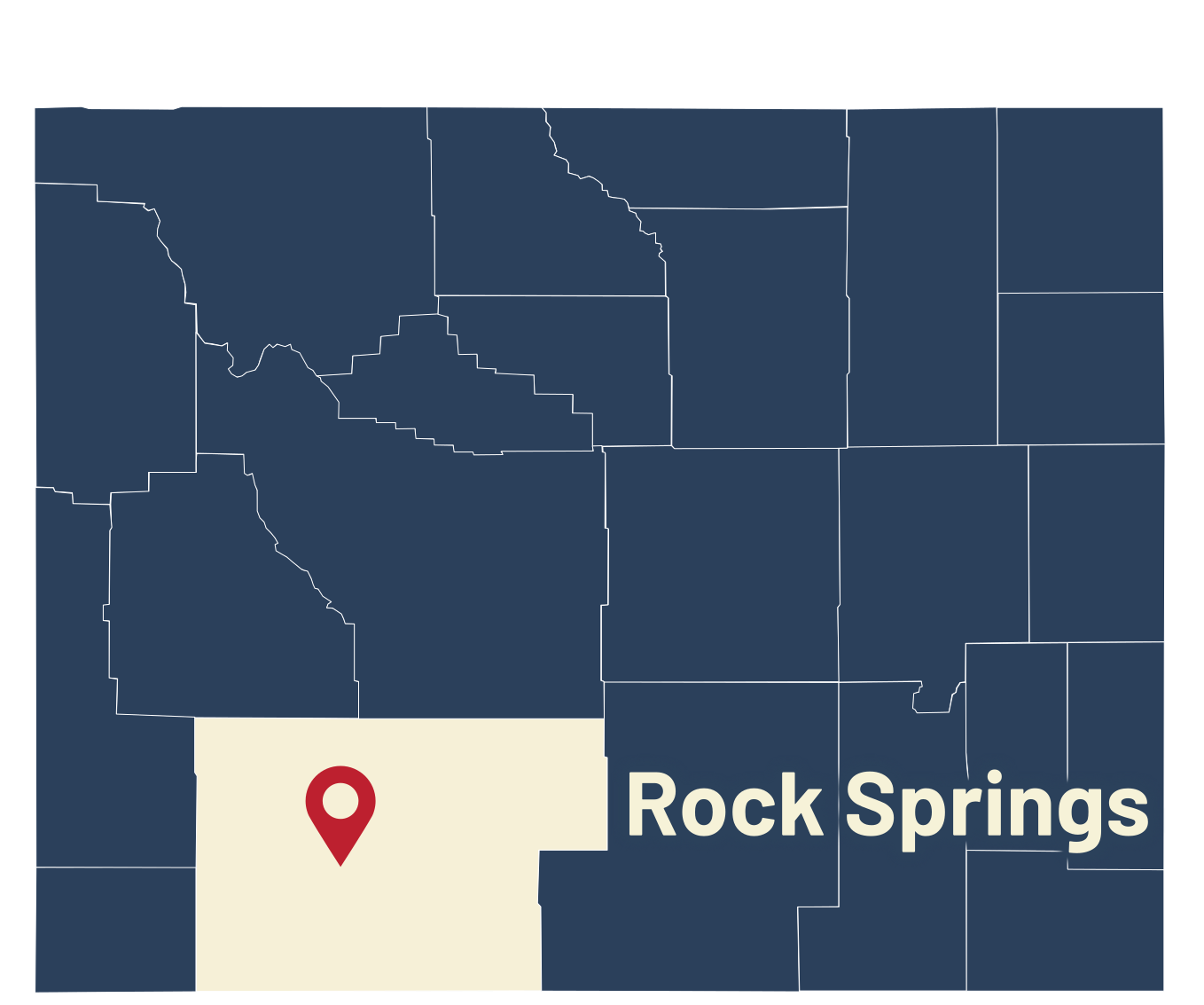

Food trucks are stirring up a big debate in Rock Springs over competition, private property rights and whether city government should get involved in deciding where mobile vendors can do business.
Some downtown business owners say food trucks and other mobile vendors are taking customers away from established businesses that pay rent year-round and depend on busy summer events to survive Wyoming's slower winter months.
Others argue that food trucks are small businesses, too, and that restricting where they can operate amounts to government picking winners and losers.
Rock Springs Mayor Max Mickelson says the city is caught in the middle.
"The issue is we are having conflict between mobile food vendors and brick and mortar businesses," Mickelson said during a Rock Springs City Council workshop Monday. "From my perspective, government's job is not to advantage one group over another. It is to ensure that our regulations are as equitable as possible."
The workshop was intended to determine whether the city needs to take a closer look at its ordinances governing mobile food vendors, not to consider a specific proposal, Mickelson said.
By the end of the discussion, Mickelson had called for a committee representing the city council, food truck operators and brick-and-mortar businesses to examine the issue and recommend a way forward.
But the conversation revealed just how difficult finding common ground could be.
A Growing Problem
Mickelson said the city has received complaints about mobile food vendors blocking access to established businesses and creating competition during downtown events.
The growing number of food trucks operating in Rock Springs has raised questions about whether the city should designate specific locations where they can park and sell food.
"Some of this comes down to being a good neighbor and government's ability to mandate how people behave as good neighbors is difficult," Mickelson said.
Councilman Rick Milonas said parking is already a challenge downtown, and mobile food vendors can make the situation worse.
"When you park a mobile food vendor downtown and they take up three or four parking spaces, that doesn't help any brick-and-mortar business in the city," Milonas said.
But some business owners say the conversation itself raises concerns about government interfering with free enterprise.
"Food trucks are small businesses, too. They pay taxes, create opportunities, attract customers, and benefit established businesses," Jesse Sloan, owner of Johnny Macs Good Time Tavern and Gateway Liquors, shared on social media. "If certain restaurants are whispering in the council's ear because they don't like a little competition, perhaps they should remind them that city government exists to support local businesses, not pick winners and losers."
Drew Cole, owner of the Street Meats food truck and co-owner of the Roasted Roadster Coffee truck, said he wants mobile vendors to have an opportunity to weigh in before the city considers restrictions.
Cole told Cowboy State Daily restrictions on where food trucks could park during events would affect both his businesses.
"It would affect both of my mobile businesses if they were to put ordinances into effect saying we couldn't park in certain places for events because it competes with businesses," he said.
'That's Not Fair'
For Tammy Johnson, who owns a downtown candy store, the issue isn't simply whether food trucks should be allowed to operate.
It's whether city-supported events should bring vendors downtown who sell the same products as existing businesses.
Johnson said events at Bunning Hall, a downtown venue, are supposed to attract customers and help surrounding businesses.
Instead, she said, some events bring vendors who compete directly with the shops already there.
"They're bringing in exactly the same thing we're selling," Johnson told the council.
She said her business depends on strong sales during downtown events to help carry it through the winter, when customer traffic slows.
But when vendors selling similar products are invited to those events, Johnson said, her sales can drop by 30% to 50%.
"We need that to get through our winters," she said.
Johnson pointed to Touch of Class Floral, another downtown business, which she said made just $100 during a recent weekend event.
"Is that going to keep our business going? No," she said.
Brick-and-mortar businesses have significant overhead costs, including rent, that don't disappear when customers shop elsewhere, Johnson argued.
"The city is supposed to help us and not make us compete in an unfair situation," she said.
Johnson asked the city to take a more active role in reviewing which vendors participate in events, particularly when those vendors sell products already available downtown.
"We want a seat at the table," she said.
Who Gets To Decide?
But determining which businesses should be allowed to compete — and where — raises another set of questions.
Emily Lopez, a downtown business owner and mobile food vendor who spoke during the workshop, questioned whether the government should have the authority to restrict a property owner's ability to host a legally permitted business simply because another business considers it competition.
Lopez pointed out that competing restaurants routinely operate near one another.
She challenged the notion that a candy store should have any greater protection from competition.
"If I bought the building right next to you and I want to open a candy store, legally you have no right to limit me," Lopez told Johnson.
Lopez said allowing one business to determine what another property owner can do creates a dangerous precedent.
"When someone says I own a candy parlor and I don't want another candy parlor to be here but I'm okay with BBQ, you're giving this person permission with what they can and can't do with their property," she said. "This is a slippery slope."
Lopez acknowledged that operating in a downtown district comes with certain limitations.
"I own a business downtown. I know that I don't own the street in front of me," she said. "If someone parks in front of my building, that's part of the decision I made by being downtown."
For Lopez, the larger concern is preserving the free-market principles that make Wyoming attractive to small business owners.
"One of the things I like about Wyoming is the lack of big government overreach into our small businesses," she said.
Public Vs. Private Property
That distinction between public and private property was also a sticking point for council members.
Councilman Randy Hanson questioned whether the city should have the authority to restrict food trucks operating on private property with the owner's permission.
"As long as they are permitted through the city and are providing services on private property with permission of property owner, does government have the right to infringe upon that property?" he asked.
Mickelson acknowledged the difficulty.
"I think we are at one of those moments in time when my right to swing my fist ends where your nose starts and that's the tension we're trying to walk through," he said.
Councilman Rob Zotti said he also struggles with finding the appropriate balance.
"I do believe that if it's on private property that if I want to have a mobile vendor there to promote my business or some special event I should have every right to do that," Zotti said.
At the same time, he questioned whether public money should be used to support events that benefit certain private businesses at the expense of others.
"I think you're going to see that argument if we try to do anything like that," he said.
Mickelson said he would prefer that government stay out of the dispute if possible.
"My preference is for government to stay out of it, because it's hard to do anything in a way that is equitable for everyone," he said. "When government becomes involved, you are essentially bringing in a sledgehammer into a solution."
Could A Food Truck Park Be The Answer?
One possibility discussed was creating a designated food truck park where mobile vendors could operate without taking up valuable downtown parking or blocking access to other businesses.
Milonas suggested the city could consider using city-owned property to establish a food court for mobile vendors.
But finding an appropriate location and making it financially feasible could be challenging.
Chad Banks, manager of the Rock Springs Main Street Urban Renewal Agency, said discussions have already taken place with a private downtown property owner about the possibility of developing a food truck park. He declined to identify the property owner.
Banks said existing city ordinances present significant hurdles, particularly requirements involving parking and restroom facilities.
Those requirements could make developing a dedicated food truck space prohibitively expensive.
If restroom facilities were required, Banks estimated the investment could reach $500,000 for what would essentially be a seasonal operation.
'All I Want Is Consideration'
For Cody Maynard, who owns Pin Up Coffee downtown, the debate is personal.
Maynard started his business as a food truck before moving into a permanent downtown location. He said he attended the workshop after watching the disagreement turn into what he described as a "dog fight" online.
“I believe the issue is being painted with too broad a brush,” he told council members.
There have been instances of food truck operators being inconsiderate, he said, but that doesn't mean every mobile vendor should be penalized.
He described an incident in which a food truck blocked the disability access ramp to his business and positioned a generator so its exhaust blew toward his door.
He also said restroom facilities at his business were left in terrible condition.
And after all that disruption, Maynard said, his business made just $30 that day.
But he doesn't believe the answer is necessarily to impose sweeping restrictions on mobile vendors. Instead, he wants business owners to recognize that everyone is working hard to make a living.
"No one is making as much money as others think they are," he said.
Maynard said his goal isn't to get rich. It's to build a business that contributes to downtown Rock Springs while allowing him to spend time with his family.
"I want to see downtown successful," he said.
For Maynard, the solution is less about passing new ordinances and more about treating neighboring businesses with respect.
"Everyone is trying to make ends meet and have a life that has value to it," he said. "All I want is consideration."
What's Next?
Mickelson repeatedly emphasized that Monday's workshop was intended to begin a conversation, not introduce a proposed ordinance or change any existing ordinances.
"My thought was to have a workshop about this to see whether we have reached a threshold where we need to more carefully think about how we can effectively support both groups of businesses," he said.
The council unanimously approved a motion to assemble a committee that includes representatives of the council, mobile food vendors and brick-and-mortar businesses to examine existing ordinances, identify where conflicts are occurring and determine whether changes are warranted. The committee is expected to begin meeting in December.
As the workshop made clear, the question isn't just where food trucks should park.
It's how a city can encourage small businesses to succeed without deciding which ones deserve the most protection.
Kate Meadows can be reached at kate@cowboystatedaily.com.


