

Veteran gold prospector Bill Threlkeld, with Seabridge Gold, doesn’t go after small nuggets.
He’s made a 40-year career out of finding some of the world’s biggest gold deposits, often in places so remote they could only be reached by helicopter.
After riding on Russian helicopters in Papua New Guinea — which he said were held together with duct tape — he kind of hates them. But he loves finding gold.
So, he'll trek through the jungle, climb icy mountain faces, and ride in a duct-taped helicopter if that’s what it takes.
“After you find one and it gets calculated, the only thing you want to do is go find another,” Threlkeld told Cowboy State Daily with a chuckle. “It’s really addictive, but a lot of fun.”
One example of the scale Threlkeld pursues is Seabridge’s KSM Project in British Columbia, which co-founder and CEO Rudi Fronk described as the largest undeveloped gold-copper project in the world.
The project has received major environmental and construction approvals, but is not yet producing.
About 400 people are working at the site this year to advance development of what could become one of the world’s largest gold-copper mines.

The Next Big Strike
Now Threlkeld is hunting for Seabridge's next big gold strike in Wyoming.
This time, he won’t need a helicopter, just a car. That’s because his new exploration field is near Encampment, where he believes the geology is similar to some of the world’s major copper-gold mines.
“We’ve purchased a property that Orogen Royalties had been working on for the previous three or four years,” Threlkeld told Cowboy State Daily. “And they developed that concept to the point where we became believers in what they were telling us was possible there.”
What Threlkeld is hunting for in the Sierra Madre Range is called an iron oxide copper-gold or IOCG system. The attraction there is both the size of the deposits and their concentration, Threlkeld said.
Some deposits of this type have been enormous, and they also tend to have higher grades of copper and gold than the large, lower-grade deposits much of the industry pursues.
Threlkeld said he believes southern Wyoming’s Cheyenne Belt is one of those rare places where all the right geological ingredients come together.
“Step across the border into Colorado, and the rocks are too young,” he said. “There’s a 3 billion-plus-ton version of this in Australia and then dozens of smaller ones.
"And then there’s a similar sort of belt in Brazil. There’s a two and a half billion-ton one there that’s of this style.”

A Copper Country Comeback?
The company’s transaction with Orogen underscores just how seriously Seabridge is taking Encampment’s potential.
The global heavyweight has agreed to pay $300,000 cash at closing for a 100% interest in the 163 mining claims that comprise the Slaughterhouse Project, with another $2.55 million tied to favorable future milestones.
For Encampment, a town born from the turn-of-the-century copper boom at the old Ferris-Haggarty Mine, a global player like Seabridge moving into the backyard is at least a nod to that area’s untapped potential.
If it pans out as hoped, Fronk sees potential for a huge new mining venture in the Cowboy State.
Asked how many people it could eventually employ, he pointed to KSM, where about 450 people worked this year on development and advancement.
For now, it’s early days, though. Threlkeld expects the first wave of Wyoming exploration to involve four or five people at most.

New Tools For Old Hunting Grounds
Like Relevant Gold, which is exploring the South Pass area, Seabridge is betting that newer exploration tools and a better understanding of geology can help identify deposits that earlier prospectors just couldn’t access with the technology of the day.
Threlkeld’s team will use more extensive chemical analysis, geophysical measurements and artificial intelligence to narrow their search.
“There’s a lot of new technology being brought to bear in the exploration business,” Threlkeld said. “And we’re expecting to deploy as much of that as we believe in.”
Artificial intelligence will sort through existing maps and data, while Threlkeld’s team will collect new data on the ground to add to that analysis.
“A lot of the work we’re planning for next year is non-destructive,” Threlkeld said. “So, it really doesn’t require a whole lot of permitting. But we’ve introduced ourselves to the Forest Service, who manage that land out there, and we’ve asked about their process in developing permits for drilling.”

Three Chasing Wyoming Gold
Seabridge is the latest arrival in a renewed hunt for Wyoming gold.
It joins Relevant Gold, which is at the exploration stage, and U.S. Gold Corp., which has a permitted mine and has begun preliminary site work but is still seeking financing for full construction.
Relevant has been exploring the South Pass area as well as the Seminoe Mountains in the Bradley Peak area and the Lewiston Mining District.
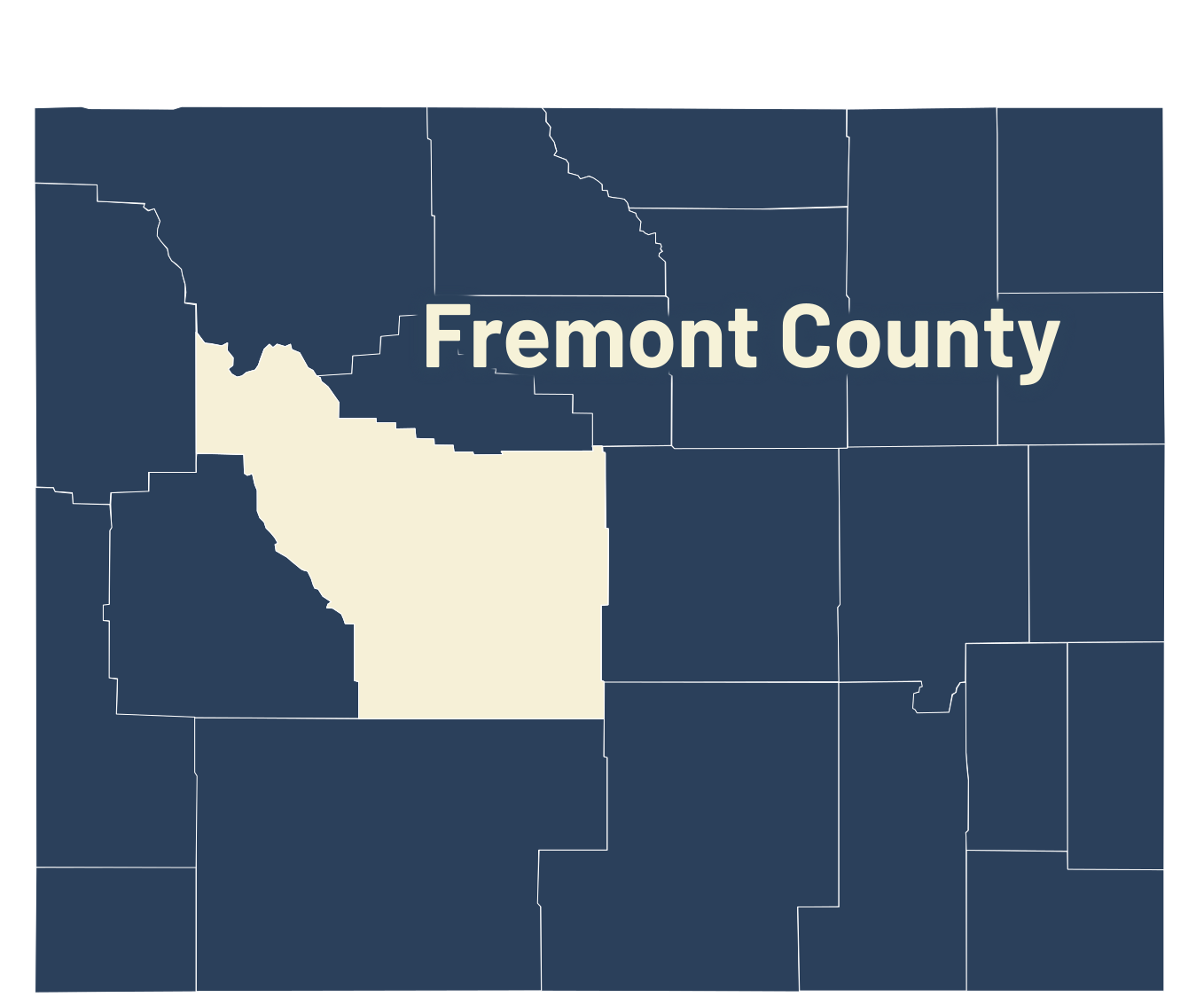
The company just announced Friday that it received federal and state approvals to expand drilling at the Lewiston Project in Fremont County.
These approvals provide up to 29 possible drill-pad locations along two exploration trends, giving the company more options for testing what lies beneath the surface.
The company plans additional holes before the end of the 2026 season, including one about 1.2 miles from its 2024 drilling area to test whether promising geology extends farther along the same trend.
Weather, safe access and drilling-equipment availability will determine whether that work can be completed this year.
Relevant also recently added about 5,800 acres of mining claims to Lewiston, bringing it to about 20,000 acres.
U.S. Gold’s CK Gold Project, about 20 miles west of Cheyenne, is further along. The company has completed a feasibility study and secured all major permits for its proposed open-pit copper and gold mine.
Initial capital costs are estimated at roughly $394 million, plus preproduction owner’s costs.
U.S. Gold Executive Chairman Luke Norman recently outlined hopes for an agreement around January to the company’s investors.

First Look Costs $1 Million
For Seabridge, test drills and construction are still well down the road. The immediate task is just determining whether the rocks near Encampment justify further exploration.
“It’s early days,” Fronk said. “But we’re hunters, right? And this is a good area to hunt in.”
Fronk estimates Seabridge’s initial Wyoming exploration program could cost roughly $1 million, although the company is still developing its 2027 budget.
Whether that program will include drilling depends on what new data collected on the ground shows.
“We can say today where we might want to drill, but after we get more data, that may be wrong,” Threlkeld said.
Initially, the company’s exploration will be people on the ground picking up rocks.
For now, Fronk isn’t putting a timetable on this new Wyoming prospect.
“Ask us in a year,” he said. “We’re just getting started. This is an earlier-stage exploration play that we think has tremendous potential, but we’ve got to go out and do the work now to show that the potential is real.”
Renée Jean can be reached at renee@cowboystatedaily.com.


