
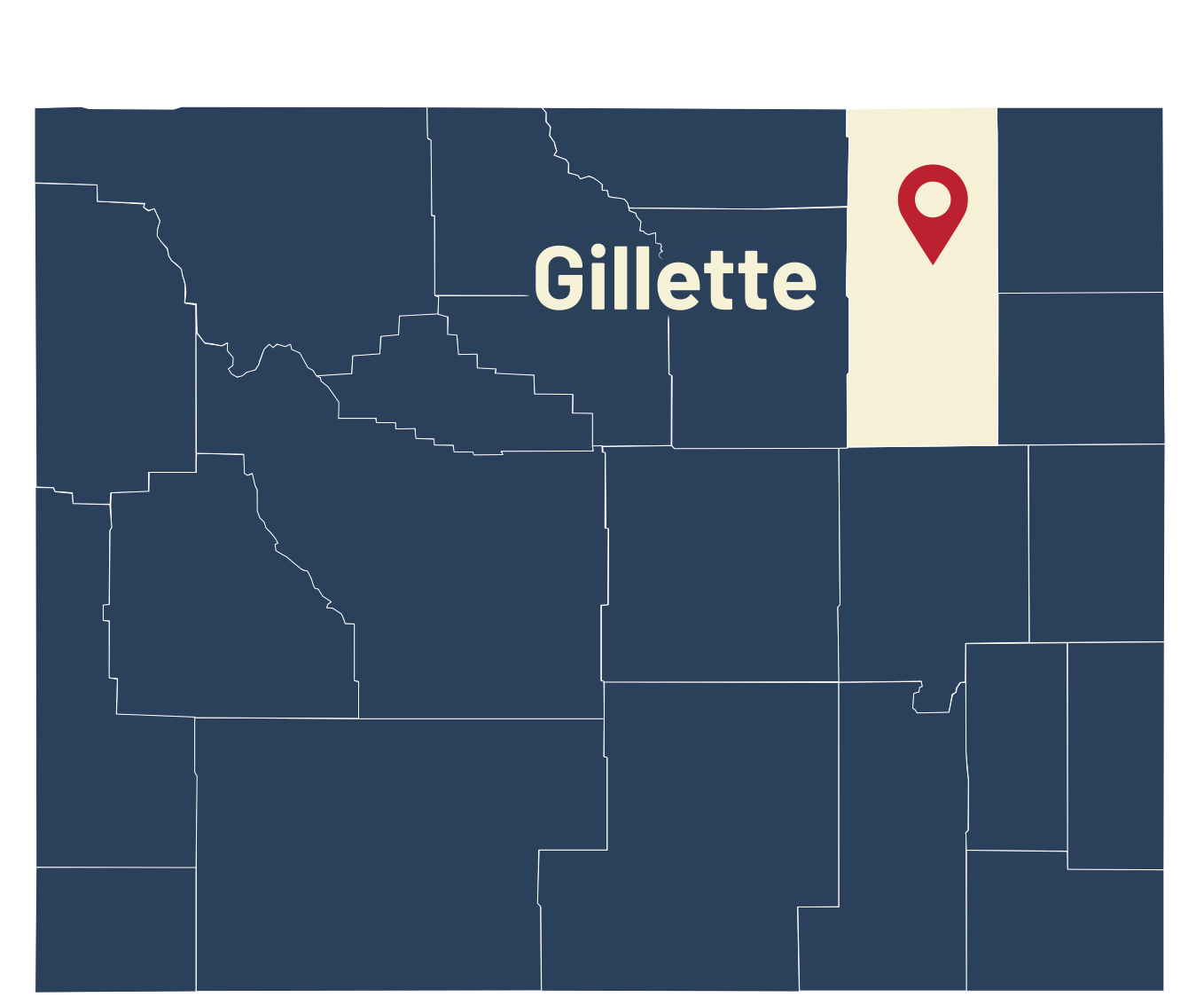

Gillette resident Clay Cundy hung up his motorcycle helmet and parked his bike this past summer.
It wasn’t because he had lost his love for riding Wyoming highways. He just could no longer afford a pastime that had become a huge gamble for him — riding his bike without health insurance.
Cundy, a self-employed IT consultant, is among millions of Americans no longer enrolled in Affordable Care Act (aka Obamacare) marketplace coverage after enhanced federal subsidies expired for those making more than 400% of the federal poverty level.
“After they ended those subsidies for the middle class, my health insurance went from $620 a month to like $2,200 a month,” Cundy said of the 350% increase. “You just can’t afford it.”
That amount was basically his wife’s entire salary, just for one insurance policy.
“We’d have had to decide, are we going to pay for her tuition? ” Cundy said. “Are we going to pay for health insurance?”
Department of Health and Human Services data puts the decline at roughly 3 million enrollees.
The Trump administration has said stepped-up efforts to remove improper marketplace enrollments also contributed to the drop, making it difficult to determine how much was driven by higher premiums.
Private Insurance Wouldn’t Insure Him
Cundy is one of the ones who dropped his ACA policy because of its cost and turned to the private insurance market.
But it proved much more difficult than he expected to find a replacement policy — at any price.
“We tried to get private insurance three separate times, and we were denied coverage all three times,” Cundy said. “We’re not willfully trying to go without insurance. I’m 55, so that’s kind of a bad time in your life to not have insurance.”
Cundy said he has eosinophilic esophagitis, or EoE, a chronic condition where white blood cells build up in the esophagus, the tube that carries food from the throat to the stomach.
The condition causes swelling, which makes swallowing difficult.
Cundy said the condition has required strict dietary management, as well as expensive procedures and medication.
“I have to take Dupixent, and it’s like $6,000 a month for that prescription,” Cundy said, adding that even with insurance, copays are still roughly $500 a month.
Ultimately, Cundy said, the family initially settled for an accident plan while his wife’s employer searched for other options.
Accident plans are supplemental policies that typically pay preset cash benefits for covered injuries. They might pay $1,000 for an ER visit, for example, or $5,000 for a broken bone.
Such policies do nothing, however, for sickness, cancer, chronic pre-existing conditions, or massive hospital bills. If an ICU stay ends up costing $150,000, for example, such a policy would still pay out the flat fee — even if that fee is just $5,000.
One-Year Policy Helping
Cundy was eventually able to get a short-term insurance policy through his wife’s employer, Step Stone Counseling, after several months of struggle.
The plan offers some protection for now, though Cundy and the business owner who obtained it say it has significant limits and may not be renewable after the year ends.
“My wife works for a small business, so my wife’s employer is working very hard to provide insurance for her employees,” Cundy said. “She really wants to make sure they’re taken care of. But it’s a minefield even for her, and this has been going on all year.”
It’s great, Cundy added, that she cares enough to invest in her employees like that.
“But it’s also just a mess,” he said.
It’s a mess that has him considering whether he should start job hunting for something with benefits, instead of being self-employed.
“There’s a state parks interpretive ranger position that probably pays half what I earn now,” Cundy said. “But it includes health insurance and state retirement benefits that would take its total value to about what I earn now.”
Small Business Insurance Issue
Lori Dougherty, who owns Step Stone Counseling in Gillette, said she began looking for health coverage about a year and a half ago, not long after her practice started hiring full-time staff.
She wanted the insurance both for herself and to help her business retain employees, but the available choices have been limited and often come with significant gaps in coverage.
“I feel awful as an employer, because I’m trying to do the best that I can within a certain price point that we can afford,” she said. “(The choices) are just not great.”
Dougherty first explored plans with Cigna and Blue Cross Blue Shield through a broker, then tried Medi-Share, a nontraditional health-care sharing arrangement. It turned out not to have many providers in network in Wyoming, and ultimately didn’t work out as an affordable option.
Another lower-cost option she explored also fell through because of pre-existing conditions, so, for now, she’s going with Pivot Health, a short-term medical insurance plan.
“It doesn’t cover anything preventative,” she said. “It covers one visit a year. Our deductible is only $2,500, but then we have to continue to pay 30% up to $5,500.”
After that, Dougherty said the insurer decides how much it will pay on a case-by-case basis.
Having to pay for preventative annual screenings like mammograms isn’t great either, she added, “especially with a team of women.”
Dougherty has the same insurance as the rest of her team. Even if she didn’t, though, she’s keenly aware her business needs to offer better health insurance to attract and retain good employees.
“It’s definitely something I’ll continue to shop around and look for,” she said.
Some of Step Stone's clients have also lost their health insurance, Dougherty added.
“They’re just scrambling to find something and trying to afford mental health at that point in time when it’s not covered by your insurance,” she said. “It’s one of the things that gets dropped the quickest.”
Thousands Left Wyoming Exchange
Cundy is far from alone in struggling to find coverage that fits his budget, Wyoming Insurance Commissioner Jeff Rude told Cowboy State Daily.
Rude said roughly half of Wyoming’s marketplace customers affected by the loss of enhanced premium assistance did not renew their plans.
“We know that has led to anywhere between 5,000 and 10,000 people in the state no longer getting insurance on the exchange,” he said. “We don’t know how many are going without insurance. That’s a real concern. But it’s hard to calculate because there’s nothing that reports that.”
Rude can look at the number of people insured by an ACA policy in any given timeframe, but he can’t tell whether those who dropped a policy obtained health insurance elsewhere.
Calls about health insurance have risen since the federal subsidies ended, he said. His office hasn’t tracked any specifics related to those calls.
Task Force Considering Affordability
Affordability of health insurance is, however, getting closer scrutiny.
“There’s the Health Insurance Affordability Task Force that’s been meeting this interim session,” Rude said. “And we’re meeting again on Oct. 6.”
Topics the group has discussed have included catastrophic care as well as the possibility of defraying the cost of insurance using some of the state’s federal funding for rural health.
“I don’t know if that’s feasible,” he said. “It’s one of the things we looked at. We’re looking at different health-insurance cost-sharing models in the Department of Health. We’re looking at hospital pricing. We’re looking at ways to get more physicians or doctors here.”
Wyoming isn’t the only state struggling with these issues, Rude added.
“If you look at the surrounding states, we all have about the same top three or four major medical health companies,” he said. “Those top three or four sell to probably 80%, 90% of the states. So it’s not like Alaska has that many more options than we do. They’re sort of in a similar boat that we are in.”
Population Works Against States
One reason health insurance costs tend to be higher in Wyoming, Rude added, comes down to population.
“Wyoming’s a wonderful place,” Rude said. “But many of the things we love about it can go against us. We have big spaces with a limited population. That means we have fewer doctors, fewer specialists, fewer healthcare specialty places here, because we just don’t have the population to support it.”
Rude said families facing this situation have to shop around and explore all options, as well as make sure they understand the risks of going without health insurance.
“We all know that a lot of everyday stuff we do, general checkups can help with prevention,” he said. “So if they’re not doing that in the long run, it can really hurt them and negatively affect their health.”
Taking The Prevention Plunge
Cundy said he has responded to the challenges he faces by prioritizing prevention.
He’s become stricter about his diet to manage his EoE symptoms, and he’s worked with his doctor and drug manufacturer to reduce medication costs as much as possible.
He exercises on a treadmill and takes regular walks with his dogs. He’s also tried sauna sessions and cold plunges, which he believes are helping him lower his blood pressure and inflammation.
“I feel good,” he said. “I mean, the biggest thing I have being 55 is cardiac risk starts to increase at this age. My blood pressure was coming up, my triglycerides were high. This is something genetic for my family.”
Genetics are difficult to overcome, Cundy said, but he is trying to give himself every advantage while his long-term insurance situation remains uncertain.
“We’re doing a lot of lifestyle stuff trying to mitigate (health risks),” Cundy said. “And then just avoiding any unnecessary risk, like not riding my motorcycle.”
Renée Jean can be reached at renee@cowboystatedaily.com.


