

As the Allies launched their invasion of Europe on the beaches of France on June 6, 1944, a nose-turret gunner in a U.S. B-24 bomber was scanning the skies for enemy fighters as his crew flew to bomb a major Nazi fuel hub on the other side of the continent.
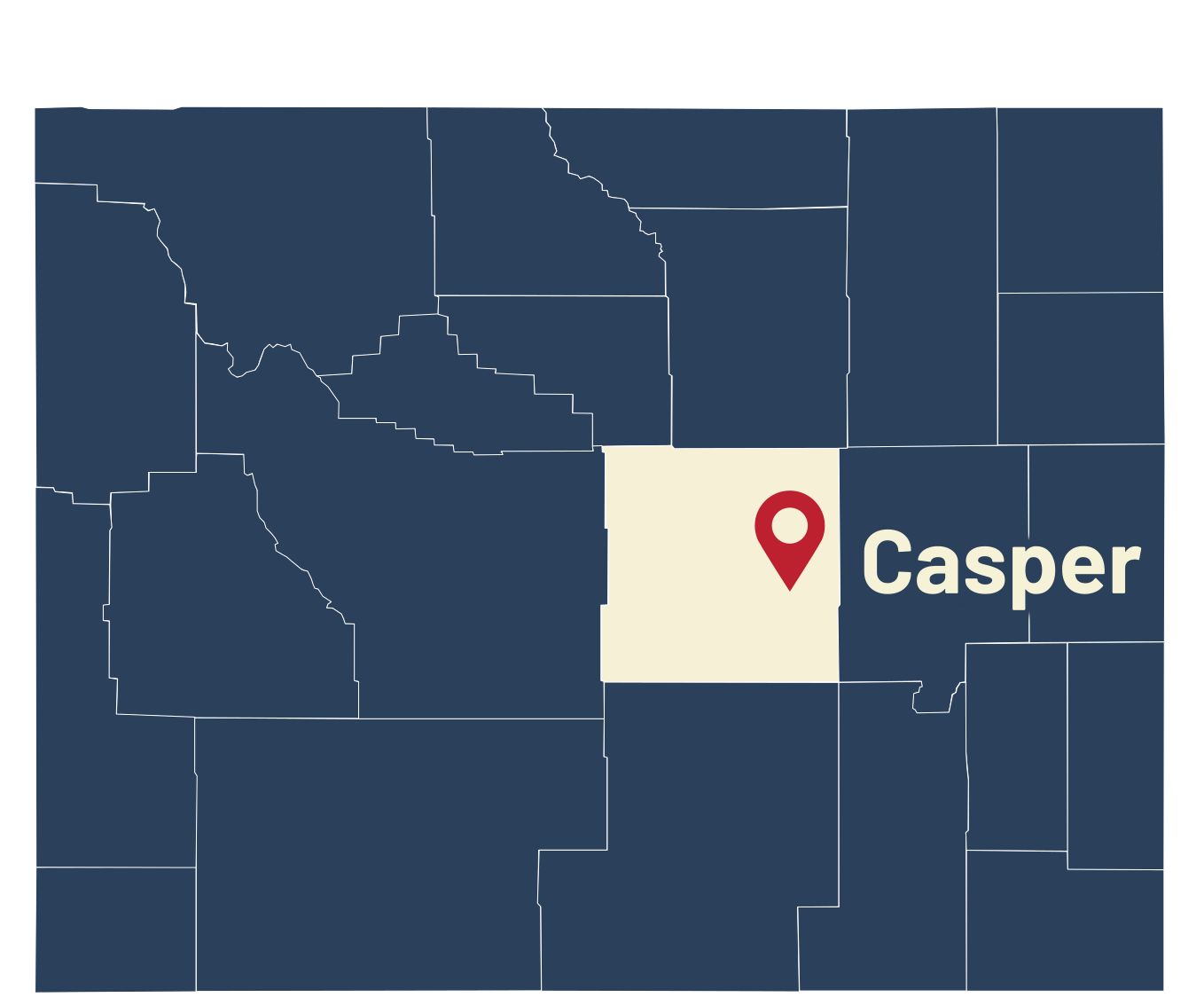
Staff Sgt. Robert Knowlton, who trained in Casper and married a Wyoming girl, was part of a 10-man crew that took off from Castelluccio Airfield in southern Italy.
Their orders, along with those of 37 other heavy bombers, were to drop 500-pound bombs on the Xenia oil refinery in Ploesti, Romania.
Attempts to destroy oil-refinery operations around Ploesti had been ongoing since August 1943, when the Allies launched Operation Tidal Wave from North Africa targeting the nine refineries around the city.
That operation resulted in the loss of 53 aircraft and their crews.
Like many of those crews in the months before him, Knowlton’s plane never returned to base. It crash-landed in central Serbia, near Čačak.
His crew was reported to have been rescued by Serbian nationals who supported Yugoslavia’s exiled monarchy and were associated with the royalist Chetnik forces.
“According to an Associated Press dispatch of June 13, Staff Sergeant Knowlton was one of 10 men in a B-24 bomber who were rescued by troops under Gen. Draja Mihailovic,” the Casper Tribune-Herald reported on June 22, 1944.
“The Yugoslavs sent word that the men were free to return to their bases if planes were sent for them," the story said.
However, the report also said Knowlton still was officially listed as missing in action.
On July 28, 1944, Edward J. Brown of Cody was part of another B-24 crew that took off on a similar mission.
His role inside the bomber is unclear, but what is known is that his B-24 ran into heavy antiaircraft fire and German fighter activity.
The plane never returned and was listed as missing in action.
Before the summer ended, both men’s futures went from bleak to blessed as the result of a secret mission organized by the U.S. Office of Strategic Services (OSS), the precursor to the CIA.
They, along with about 500 other U.S. and British airmen whose planes were shot down over the region, were plucked from behind enemy lines.

The Casper Tribune-Herald announced the marriage of Robert Knowlton to Betty Gilstrap in its March 23, 1944 edition. (Newspapers.com) 
The Casper Star-Tribune published a story following Robert Knowlton’s death on April 9, 2009. His children said he did not talk about his war experiences. (Newspapers.com) 
The first page of Robert Knowlton’s mission report on June 6, 1944. (Halyard Mission Foundation)
Operation Halyard
Their rescue, known as Operation Halyard, became one of the most successful and complex rescue operations of the war.
Retired U.S. Air Force Lt. Col. John Cappello leads the Halyard Mission Foundation in Washington, D.C., which seeks to bring to light the operation and foster relationships between second-generation Serbian families and the sons and daughters of U.S. airmen who were involved.
Those children might not have been born if not for the kindness and actions of Serbian families.
The operation was no easy feat.
“This was a rescue mission from behind enemy lines with the enemy less than 40 kilometers away,” Cappello said. “I do not know of a larger mission.”
For Knowlton, his crew’s B-24 had three engines shot out by enemy fire, leading to the crash landing.
The 10 men spent 66 days behind enemy lines before their rescue and rebuilt a radio that allowed them to communicate with a U.S. plane overhead, a Casper Star-Tribune story on April 9, 2009, recounted.
An official mission report, available online, states that of the 38 planes sent to the refinery on June 6, 1944, 34 planes dropped 336 500-pound bombs on target and four aircraft had other issues.
The report adds that the planes that dropped their loads experienced “heavy, intense, accurate” anti-aircraft fire protecting the location.
“Effective smoke screen precluded any evaluation of bomb damage,” Col. Robert Katoh, the Air Corps commander, wrote in his report. “New red type flak with long tails was used.”
For Brown’s mission, the bombers experienced “moderate” and “accurate” anti-aircraft fire on the way to the target and “heavy, intense, accurate” opposition over the city.
In addition to Brown’s B-24, three other aircraft failed to return to base.

A C-47 waits for takeoff as Serbian Chetnik troops pose in front. (Halyard Mission Foundation) 
Chetniks in a Serbian village in the fall of 1944. (Halyard Mission Foundation) 
An American movie was made celebrating the Chetnik guerrillas in 1943. (Imdb.com)
Politics Involved
The rescue of the airmen almost didn’t happen due to the politics of the war.
Before the 1944 missions, Britain shifted its support away from Mihailovic and his anti-communist fighters in favor of communist Josip Broz Tito, who would become the strongman of Yugoslavia for several decades.
However, U.S. insistence and the persistence of Italy-based OSS Capt. George Vujnovich in promoting a rescue of the downed air crews and maintaining a relationship with Mihailovic, prevailed.
OSS Lt. George Musulin, who parachuted into Serbia in 1943 and met with Mihailovic and his Chetniks, was put in charge of the mission.
Cappello said a three-man team consisting of Musulin, Master Sgt. Michael Rajacich, and radio operator Navy Specialist First Class Arthur Jibilian — all Americans of Serbian descent — parachuted into the region on Aug. 2, 1944, and scouted for a landing site.
They found a field near Pranjani, an area protected by royalist Chetnik forces under Mihailovic.
The field is now home to the Halyard Mission Foundation’s memorial complex fashioned like a C-47, the type of planes involved in rescuing airmen.
With help from the Serbs, the OSS team prepared the airfield under the noses of the Nazis.
“They didn’t have to disturb the physical nature of the hilltop, they had to harden it a bit by putting some rocks down,” said Cappello, who served as a pilot in the U.S. Air Force. “Those C-47s were pretty tough, they could land on an unprepared field.”
He said during conversations with WWII vets who were rescued during the operation in past years, several shared a story of a German plane droning over the field just before the rescue flights from Italy were scheduled.
As the German plane passed over the field a herd of cows wandered onto it — protecting its intended use.
There are no longer any veterans alive who were associated with the effort.
“I was honored to have had the opportunity to meet a lot of these airmen,” Cappello said. “They got emotional when they talked about the reception and the treatment they were given.
"You have to remember this was a very rural area during a war and (the Serbian people) didn’t have a lot, but they gave everything they had to those airmen.”

The Arizona Commemorative Air Force featured a display on the Halyard Mission last year. (Halyard Mission Foundation) 
Rescue of Allied airmen by Serb villagers during World War II in this unattributed photo. 
The draft registration card for Jerome Brown who was shot down in July 1944. (FamilySearch.org)
237 Rescued In Two Days
Knowlton and Brown were among 237 airmen saved during the Aug. 9-10 flights of C-47s to the little landing strip.
Their rescue kept them from being captured and sent to a Nazi POW camp or facing the possibility of execution.
Typically, the U.S. and British would send fighters to attack some other target in the region, drawing German attention away from the skies above Pranjani as the C-47s swooped in with engines running to load airmen aboard.
Cappello said the U.S. continued to use the field for downed airmen rescues through December 1944 and the Germans never caught on. More than 500 were saved.
On Aug. 25, 1944 the Casper Tribune-Herald carried a front-page article stating that Knowlton’s wife had received word that he had “reported back for duty.”
It is not clear whether he was sent back to the States or not after his rescue.
A previous article in the Herald-Tribune on Aug. 2, 1944, stated that Knowlton had completed 25 missions, the typical number qualifying airmen for a return stateside.
Cappello said some of the rescued airmen were put back into their roles, but others were sent to the U.S. — especially if they had been rescued by partisan fighters. To put them back in the air and subject them to capture meant those airmen could hurt the Serb effort.
“They had information that could result in jeopardizing future rescue efforts,” he said. “If they were gone a day or two and were picked up quickly, they went back (to flying).”
On March 21, 1945, the Tribune-Herald let readers know that Knowlton and his wife were in Casper visiting Betty Lou Knowlton’s mother and that Knowlton was on furlough.
“He was recently released from the hospital following his return from foreign service,” the newspaper reported.

An actual C-47 that flew the Halyard Mission still flies and can be seen at the Arizona Commemorative Air Force Museum. (Halyard Mission Foundation) 
U.S. airmen head for safety with the help of Serbian Chetnik forces in September 1944. (Halyard Mission Foundation) 
A squadron of B-24s bomb the Concordia Vega oil refinery in Ploesti, Romania, on May 31, 1944. The photo was taken by Richard Ganczak, who was a bombardier on 70 combat missions. (Richard R. Ganczak via Library of Congress)
Makes Casper Home
After his discharge, the Knowltons settled in Casper. His service honors included an Air Medal with two Oak Leaf Clusters.
His name did not disappear from the news pages. Tragedy struck the family in November 1958.
Local papers carried a photo of Robert Knowlton kneeling over his 4-year-old son, who wandered from the family’s house and had fallen into a pool on Garden Creek and drowned.
Knowlton’s obituary after his death on Feb. 27, 2009, mentions 66 days behind enemy lines and his rescue with the help of “local peasants” and “Gen. Mihailovic.”
It also noted that before his military service he worked in a Pennsylvania coal mine and was trapped in a mine collapse.
Information available on Brown shows that he married a Cody girl, who was 16, on Feb. 7, 1944, before he was shipped overseas. The couple divorced on May 28, 1948.
Brown died on Feb. 17, 1991, in Riverside, California.
Cappello said Mihailovic’s efforts to help downed airmen resulted in U.S. airmen lobbying the American government to do something on his behalf after his arrest by Yugoslavia’s communists following the war. Still, the general was executed in July 1946.
A C-47 involved in Operation Halyard continues to fly and is part of a display at the Commemorative Air Force in Mesa, Arizona.
Cappello said he first learned about the Halyard mission while serving as a U.S. Air Force attaché to Serbia.
Eight decades after those flights he hopes to continue to educate younger generations about the courage of the Serb people who saved American lives.
“The first week I was there I had a meeting with two Serbian producers and I couldn’t believe that I didn’t know this,” he said. “We started doing small things and then after I retired, started the foundation and we’ve been working to commemorate and tell the story ever since.”
Each year on the third Saturday of September, the Halyard Mission Foundation leads a ceremony in the village of Pranjani to honor the efforts of the locals in preserving the lives of American airmen.
Dale Killingbeck can be reached at dale@cowboystatedaily.com.


