

The pattern is almost always the same: missed jury duty, an active arrest warrant, and you better pay up now or go to jail.
The money might be demanded in gift cards, wire transfers, or deposits at a cryptocurrency ATM. The threats arrive by phone, text message, or in the mail, dressed up to look like an official notice from the courts.
Fear, confusion and a growing sense of dread take hold as the person on the receiving end scrambles to figure out how to stay out of jail for a crime they didn't even know they'd committed.
For some, the performance is so convincing that even people who know better begin to wonder whether they're actually in trouble.
Every few months, it seems, another Wyoming sheriff's office or police department is alerting residents to scammers impersonating officers of the law, threatening arrests and demanding money.
Agencies warn they're "once again" receiving complaints about the same old schemes, sometimes with a slightly different twist.
In Wheatland, it's fake federal warrants and demands for Bitcoin.
In Fremont County, it's a supposed sheriff's sergeant threatening an arrest over missed jury duty.
In Carbon County, callers have even pretended to represent the U.S. Postal Service, claiming people owe money for unpaid citations or missed court appearances.

A Very Convincing Caller
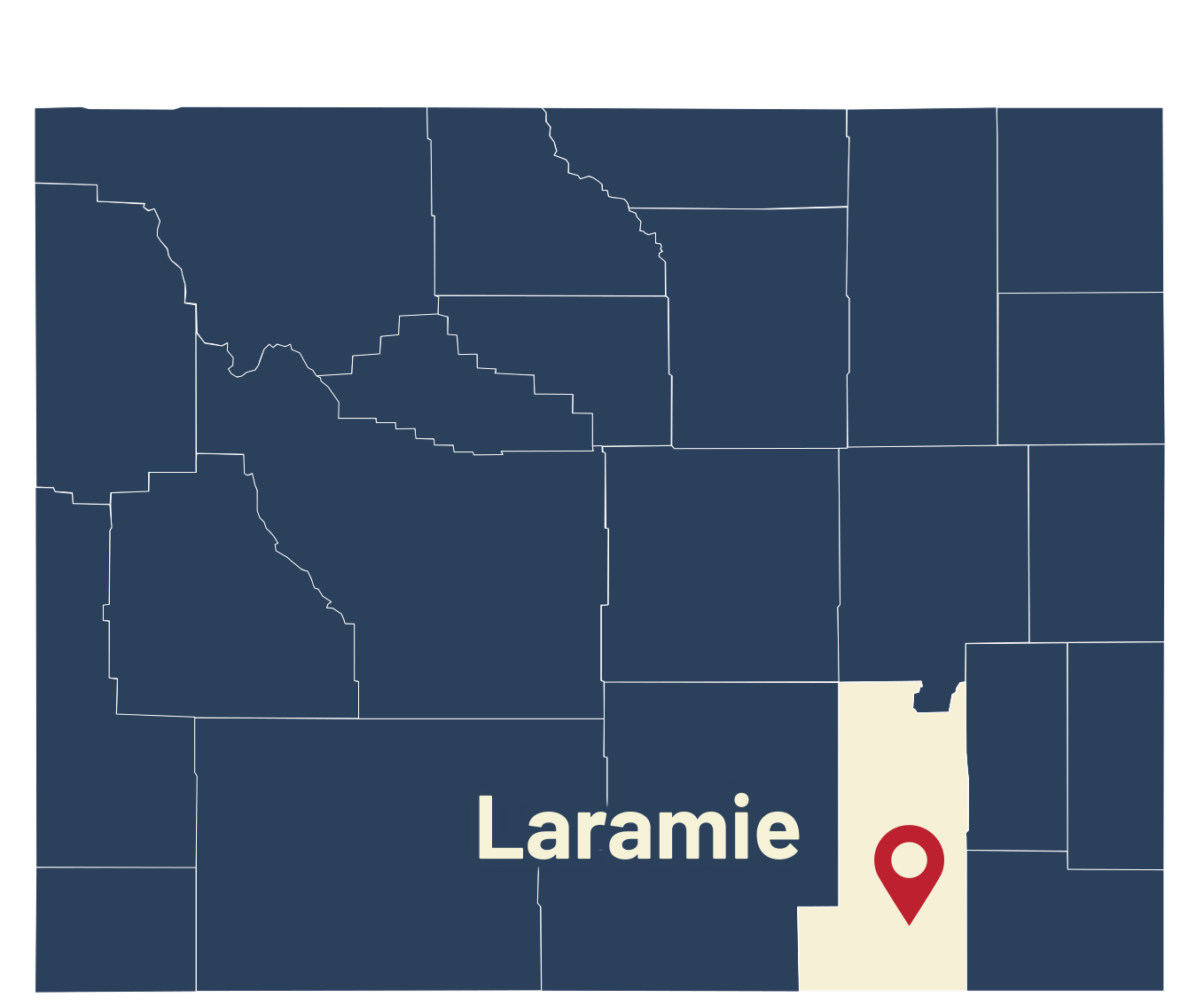
Laramie resident Jennifer Newcomb was taking a nap in the back of her car during a lunch break recently when her cellphone rang.
No caller ID, so she ignored it.
Then the phone rang again almost immediately.
Newcomb has an arrangement with her daughter: If she calls from an unfamiliar number and her mother doesn't answer, she'll call right back.
Newcomb picked up.
Instead, a man introduced himself as someone with the Albany County Sheriff's Office.
He spoke perfect English, sounded professional and wasted little time explaining why he was calling, she said.
He told her she had failed to appear for jury duty, there was a problem with a summons, and he had the paperwork to prove it.
Newcomb considers herself pretty good at recognizing scams. In fact, her first instinct was that the call sounded suspicious.
"But the man had an answer for everything," she said.
He claimed officials had delivered a certified notice to her home on Aug. 15 — he even recited her home address — and that she'd personally signed for it.
She racked her brain trying to remember if it had happened at all, or if she just couldn't remember.
"I have your signature right here," he insisted.
'I'm Really In Trouble'
The more Newcomb questioned him, the more aggressive he became.
At one point, she suggested going directly to the sheriff's office to straighten everything out. He told her if she did, they'd arrest her on the spot.
"I'm here trying to help you. This is my job," she recalled him saying.
By then, the conversation had become a dizzying exchange of accusations, explanations and threats.
"There was a period of time where I was like dizzy, like, 'Oh my gosh, this is real. Like, I'm really in trouble,'" Newcomb said.
What made the call especially confusing was that he hadn't asked for money up front, and she ended the call before the potential scammer could escalate to pressuring her for cash.
"Not only did he have an answer for everything, but his demeanor was very authoritative, and in the end got really aggressive," she said.
Finally, she'd had enough.
She told him she was already in her car and could be at the sheriff's office in five minutes, then Newcomb hung up.
She immediately called the real Albany County Sheriff's Office to ask if she needed to come down and turn herself in.
The dispatcher knew the score right away, asking, "Did you give him any money?"
Newcomb is relieved she had not. The call lasted only about five minutes, but it felt a lot longer. The experience left her rattled.
"I pride myself on not being scammed," she said. "I couldn't imagine some poor old lady that has no idea what's going on. I mean, he would have roped her in in 30 seconds."
Masters Of Manipulation
Tracy Swaim says that feeling is precisely what the criminals are trying to create.
She is a volunteer fraud fighter with AARP who spent 10 years investigating fraud in the banking industry and has seen just about every variety of consumer scam imaginable.
The stories change, but she says the psychological machinery behind them is consistent.
"These scammers are master manipulators," Swaim told Cowboy State Daily.
They rely on two principles of persuasion, she explained: authority and scarcity.
The authority comes from pretending to be a police officer, sheriff's deputy, judge or federal agent.
The scarcity comes from convincing the person that time is running out.
"So the false sense of urgency that they lean on too is part of that scarcity, that scarcity of time," she said. "It is act now, or you're going to get in trouble."
They hope that by scaring people, they won't think through the situation with logic.
"They want to interrupt any normal thought process and scare you into acting quickly," she said.
They might provide fake badge numbers, citation numbers and court dates. They might transfer someone to a supposed supervisor or recite personal information that makes the whole thing sound legitimate.
Some people have reported receiving calls displaying Wyoming's familiar 307 area code, making the calls appear local.
"While they often target the elderly, it's not exclusive, and anybody can be caught up in this kind of frenzy, regardless of whether you think you'll never fall for it or not," she said.
And the people running these operations aren't always sitting in overseas call centers.
Some are already behind bars.
Scammers Behind Bars
One of the strangest examples of just how organized these operations can become comes from Georgia, where federal investigators have uncovered inmates running elaborate nationwide fraud schemes using contraband cellphones.
Swaim said she is particularly familiar with operations involving fake jury duty warrants and demands for payment at cryptocurrency kiosks.
"Those are all being run out of the Georgia prison system," she said.
How do people who are already incarcerated manage to threaten people with arrest and collect their money?
"A lot of time and access to smuggled in phones and access to each other," Swaim said.
"There's a gang that's actually running this out of the state penitentiary, and so they're working together to kind of build up these scams and run these scams together," she said.
Swaim described theories that some corrections officers might be complicit because the phones aren't being confiscated. She did not identify specific officers or evidence establishing their involvement.
"They will commit just the right level of crime to actually get put into that prison so that they can continue these scams," she said.
Prison Phones, Fake Cops
On Oct. 14, two inmates at Calhoun State Prison in Georgia received additional federal prison sentences for running a nationwide scheme that impersonated law enforcement officers and threatened people with arrest for missing jury duty.
Lance Riddle, known as "C-Port," was sentenced to 16 years and eight months in federal prison.
Joey Amour Jackson, known as "Apeshit," got 10.
Both sentences were ordered to run consecutively to the state prison terms they were already serving.
Federal investigators identified 119 victims and more than $464,920 in losses.
Using contraband cellphones and internet-based calling technology, the inmates made their calls appear to originate from local law enforcement agencies.
They used the names of actual officers, told people they had missed jury duty and insisted that arrest warrants had been issued.
Victims were instructed to pay bonds to avoid being taken into custody. Some were told they were under a gag order and couldn't discuss the supposed warrants with anyone until they paid.
Others were directed to purchase gift cards and provide the numbers over the phone or to send money through wire transfers.
Federal prosecutors said some women were instructed to enter a Target restroom, remove their clothing and record themselves performing an invasive self-examination, supposedly as part of courthouse security procedures.
Then later, they received sexually explicit messages and violent threats.
The criminals primarily targeted professional women with prominent online profiles.
In September 2025, the U.S. Justice Department announced sentences for four men involved in another nationwide fake-warrant conspiracy.
Investigators discovered that cellphones had been delivered to a Georgia prison yard by drone.
Duck On The Line
FBI data looking at thousands of victims shows, on average, each person lost about $5,000.
"They call them a duck," said Swaim. "They'll actually go on social media and brag, 'I've got a duck on the line,' and they'll say, 'You know, I'm getting $20K out of this person.'"
For the criminals, it's a game of finding someone frightened enough to cooperate.
Swaim has spoken with victims who lost substantial amounts of money, and she says they often go through a period of grief and even an emotional breakdown.
"I've seen people manipulated into losing hundreds of thousands of dollars, and it's hard to recover from that," she said.
Swaim believes the way society talks about victims needs to change, too.
"They've been manipulated. They're not stupid for having been victimized by this."
The more she studies fraud, the more convinced she is that "we are all vulnerable to some degree at some point in our lives."
Law enforcement agencies across the nation are asking people to think twice before sending money over the phone.
"This is a scam 100% of the time," wrote the Natrona County sheriffs office in an older announcement.
The safest response is to hang up, find the agency's official telephone number independently, and contact it directly.
A real law enforcement agency will not require someone to purchase gift cards, make cryptocurrency deposits or wire money over the phone to avoid arrest.
Kolby Fedore can be reached at kolby@cowboystatedaily.com.


