

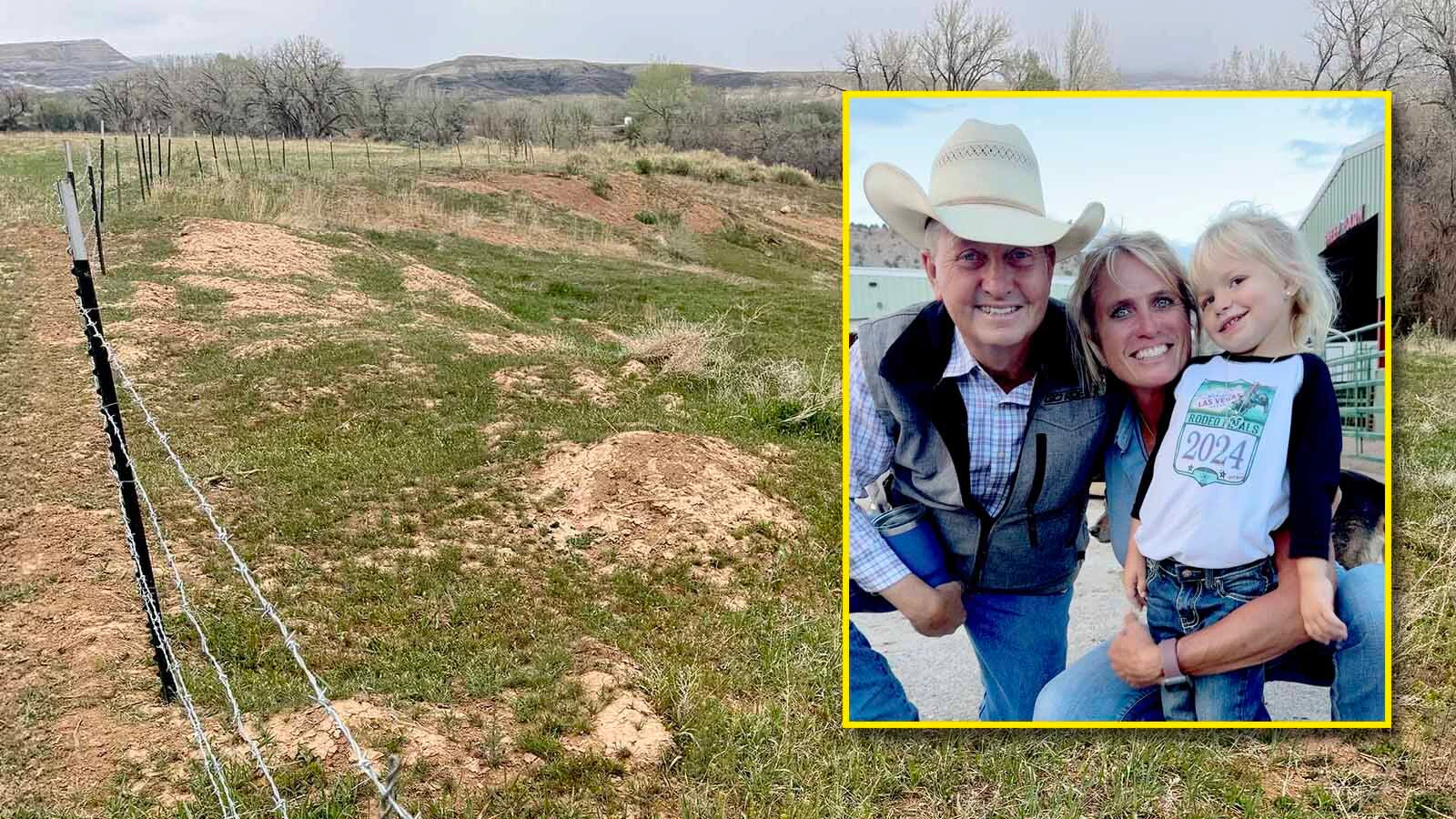
A bitter property dispute over buried tires on a piece of Big Horn County land has grown into a larger environmental concern, with neighboring landowners and county officials warning that digging into the property could unleash the very erosion its owners say they've spent years trying to prevent.
At the center of the dispute are Pablo and Danae Good, who bought nearly 40 acres in 2015 and say they have spent years rehabilitating severely eroded ground in the Red Gulch area.
Their efforts included burying old tires, concrete and other materials to stabilize the soil, a practice the Goods maintain was undertaken with the knowledge and permission of the property's former owner, Helen Saban.
But in the wake of Saban’s death, her daughter and estate representative, Alice Klostermann, alleges the Goods illegally dumped waste on the property and is seeking to have them removed from the land.
According to a complaint filed May 1, 2025 by Klosterman, the estate still claims an interest in the property.
She alleges that the Goods had express duties to maintain the premises and all improvements in good repair, to permit no waste of the property and to take the same care of the property as a prudent owner would take, and that any breaking of those promises would result in a default of the initial agreement between Saban and the Goods.
The Wyoming Attorney General's Office has also filed a civil lawsuit against the couple over the buried tires.
Now, as the legal battle continues, efforts to excavate test holes to investigate what's beneath the surface have alarmed neighbors and county officials, who fear the digging could destabilize a notoriously erosion-prone landscape.
"The county's concern is that those test holes will cause all kinds of permanent damage to the people's properties downstream," Big Horn County Commissioner Bruce Jolley told Cowboy State Daily.
County commissioners have asked the Wyoming Department of Environmental Quality and the Attorney General's Office to postpone any excavation until an independent expert can assess the potential damage.
"We understand land erosion and the power of water," Jolley said.
Decades Of Work At Risk
For those familiar with the Red Gulch area, the concern is not hypothetical.
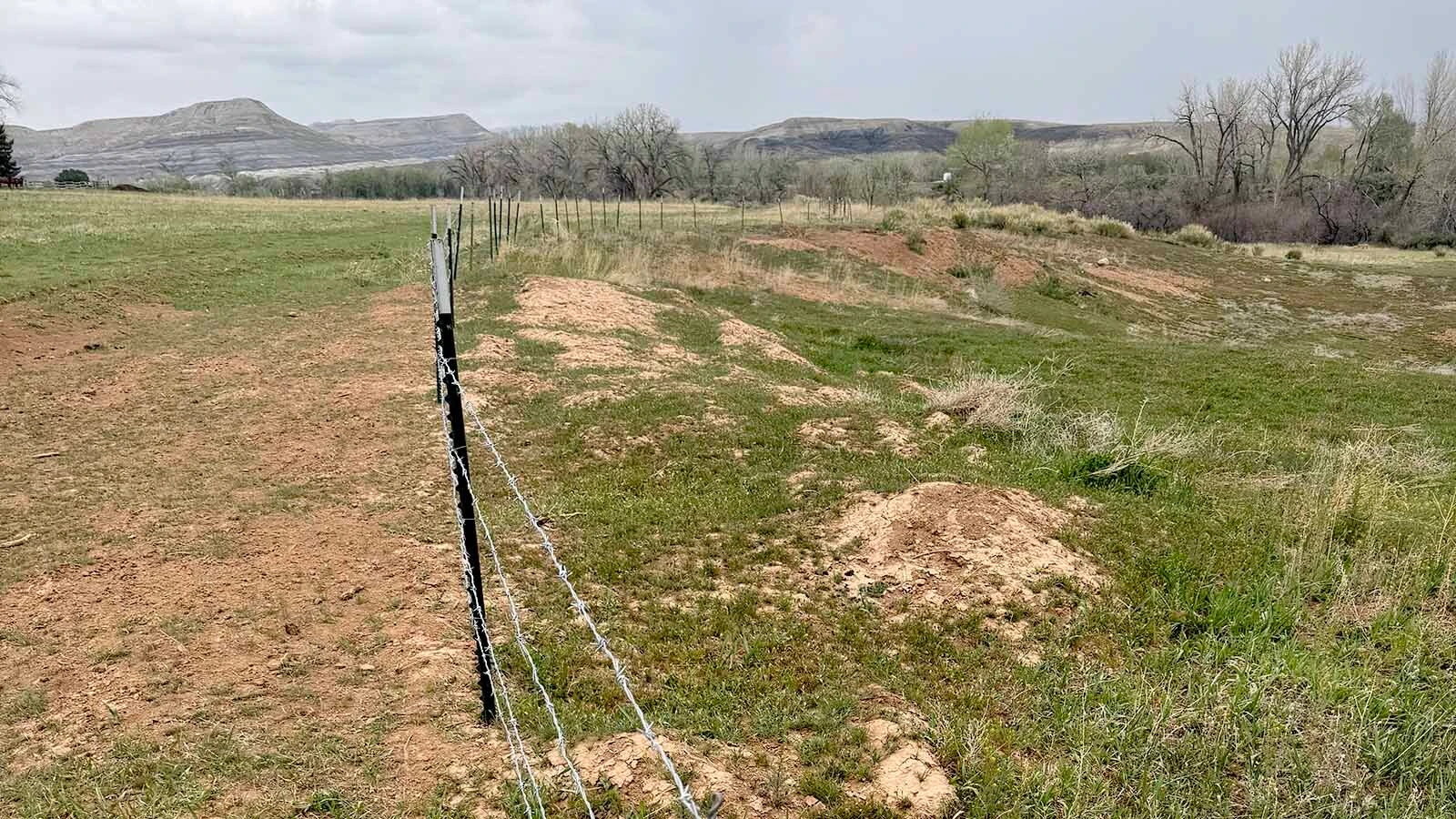
Tim Flitner, who lives nearby, said the area's unstable red soil is difficult to manage. Once disturbed, it can take decades for vegetation to return and stabilize the ground.
His rule of thumb is simple: Don't dig unless absolutely necessary.
"We don't put a shovel in it unless it's an emergency," Flitner said. "We try to get vegetation on it and then we try to live with it for decades."
That is precisely what the Goods say they have accomplished.
Pablo Good said the land suffered significant erosion for years before he and his wife purchased it from Saban in 2015.
"It's a delicate ground to irrigate," he said. "You have to watch it very carefully."
In an affidavit viewed by Cowboy State Daily, Danae Good said Saban asked Pablo if he had any ideas of how to help the erosion because she was losing more and more of her hay field every year.
Pablo suggested tires, concrete and packing with fill dirt.
"Beginning in 2020, we undertook a deliberate, methodical erosion remediation project," Danae stated in the affidavit.
The Goods purchased used tires from Rimrock Tire Inc. in Cody and buried them as part of what they describe as a comprehensive erosion-control effort.
Pablo said the practice was undertaken with Saban's blessing and continued after the Goods purchased the property.
By the time Saban died in 2022, he said, the formerly damaged land had been stabilized and was productive again.
"The ground where we put these tires is stabilized now," Danae said.
But whether that work constituted legitimate erosion control or illegal waste disposal is now at the heart of two lawsuits.
A Property Sale Turns Sour
The Goods purchased the property from Saban for $159,340 under a 20-year contract that prohibited them from paying off the balance during the first 10 years.
According to court records reviewed by Cowboy State Daily, they were eligible to pay off the property in May 2025.
But just before that deadline, the couple found themselves facing legal action.
On April 15, 2025, the Attorney General's Office filed a civil complaint against the Goods over the disposal of tires on the property.
On May 1, Alice Klostermann, Saban's daughter and the representative of her estate, filed a separate lawsuit against the couple.
The complaint alleges the Goods illegally dumped waste tires without Saban's permission and used heavy equipment in fall 2024 to cover the tires with dirt.
It also alleges that the Wyoming Department of Environmental Quality began investigating the dumping in 2021.
The lawsuit seeks to have the Goods ejected from the property, recover payments as liquidated damages, require removal of the buried tires and obtain reimbursement for attorney fees.
The Goods dispute those allegations.
They maintain that Saban knew about and approved the erosion-control work and that the materials were buried to save the land, not to dispose of waste.
The couple also say they paid the remaining balance on the property in May 2025. Although the payment was deposited, they say they have not received the deed.
In June, their attorney, Letitia Abromats, asked the court to dismiss the Klostermann lawsuit, arguing that the Goods had fulfilled their contractual obligation by paying off the property.
The ownership dispute remains unresolved.
State Gets Involved
The Attorney General's Office has filed its own civil action against the Goods, alleging violations related to the buried tires.
According to court records, the DEQ also issued a notice of violation to David Daniels of Rimrock Tire in Cody for alleged open dumping of solid waste on the property.
However, affidavits reviewed by Cowboy State Daily indicate the Goods themselves did not receive a notice of violation from the DEQ.
The distinction raises questions about the state's enforcement actions and the relationship between the two lawsuits.
Abromats said her research revealed that Alice Klostermann's husband, Scott Klostermann, a magistrate judge in Cheyenne, had communicated with the DEQ about the matter.
"These folks were acting in conjunction with one another," Abromats alleged.
Pablo Good shares her concerns.
"It seems like they're trying to work together to take our land," he said.
Those allegations have not been independently established.
Scott Klostermann declined to comment when Cowboy State Daily called his office.
The DEQ also declined to comment, referring questions to the Attorney General's Office.
The Attorney General's Office did not respond to requests for comment about its involvement in the case or its communications with the parties.
What's Beneath The Surface?
One of the latest points of contention involves a request to inspect the property by digging the test holes, reportedly as deep as 30 to 40 feet.
The proposed excavation would allow investigators to examine what has been buried beneath the surface.
The Goods say they have already disclosed what materials were used and question why extensive digging is necessary.
"Now they want to come in and dig it up to see what's there," Danae said. "We told them what's there."
Jolley expressed similar frustration.
"It's not a secret of what's down there in the first place," he said.
But for the plaintiffs, the buried materials are central to allegations of illegal waste disposal and damage to the property.
The question is whether excavation can be conducted without creating additional environmental damage.
Jolley said county officials sent a county engineer to inspect the site. Based on that assessment, he said, the county is concerned excavation could create significant erosion problems.
Several residents attended a recent county commission meeting to express concerns about the consequences for downstream properties and infrastructure.
Abromats warned that the damage could be enormous.
"It will be astronomical, the damage they will do," she said.
Pablo Good described what happens when heavy rain hits the area's fragile soil.
"When it really rains hard in that country, it's red dirt and that soil gets into the water and the whole crick turns red," he said.
Flitner said the risk is particularly troubling because established vegetation can take decades to replace.
"If you have vegetation growing there, do not mess with it," he said.
Court Battle Drags On
The fight over access to the property has also become a point of contention in court.
In July 2026, Klostermann's attorney filed a motion to stay proceedings, arguing that the Goods should not be permitted to interfere with efforts to inspect the property.
Abromats said a hearing was held in July, but District Judge Bobbi Overfield had not issued a ruling as of her interview with Cowboy State Daily.
She described the delay as unusual.
"There are a lot of things that are happening that are not typical," Abromats said.
Meanwhile, the Goods' frustration has spilled into their communications about the proposed excavation.
In a Sept. 2 letter, Danae Good warned that digging could undo years of work and threaten neighboring properties.
"It will be over my dead body I pay to have someone come onto my property and destroy what we have worked so hard for," she wrote.
She also warned that downstream landowners could pursue lawsuits if excavation triggered erosion and damaged their properties.
Danae was subsequently charged with contempt of court by the state of Wyoming, records show.
Risk Versus Reward
For Flitner, the question extends beyond who prevails in court.
He worries that people unfamiliar with the area's soil conditions could make decisions that have lasting consequences.
"God forbid if they got all those test holes dug," he said. "There should be a lot of thought and a lot of preparation before you just go dig holes, especially decisions made from far away."
The county commissioners have asked the state to hold off on excavation until an independent expert can evaluate the potential effects.
Flitner said the question is whether the reward of digging into the property is worth the risk of undoing decades of stabilization.
Kate Meadows can be reached at kate@cowboystatedaily.com.


